News

$50 Million Gift to Penn Arts & Sciences Supports the William J. Levy Endowed Scholarship Fund

Throughout his lifetime, and now through an estate gift of over $42 million, Penn alumnus William J. Levy has contributed $50 million in support of undergraduate students in the College of Arts & Sciences at the University of Pennsylvania who have demonstrated a desire to contribute to society.

“During his life, Bill Levy was a Penn student, alumnus, and dedicated friend to Penn,” said Interim President J. Larry Jameson. “Generously establishing the William J. Levy Endowed Scholarship over two decades ago, he shared our belief that service-oriented leadership is crucial to making headway on the great challenges of our time. I am deeply grateful for this gift that will support deserving undergraduates with a proven commitment to their communities. His legacy will not only uplift future leaders, but it will also touch societies far beyond Penn’s campus.”

The William J. Levy Endowed Scholarship Fund will support over 40 civic-minded students with financial need in CAS annually, providing an opportunity for them to receive a Penn Arts & Sciences education.

“Bill’s gift will directly impact the lives of undergraduate students at Penn for decades to come, ushering in a new generation of service-oriented leaders that will help change the world for the better,” said Steven J. Fluharty, dean of SAS and the Thomas S. Gates, Jr. Professor of Psychology, Pharmacology, and Neuroscience.

Mr. Levy grew up in Pittsburgh, where his family owned the Warren Grocery Company, a chain of stores. He graduated from the Wharton School in 1957 and then served in the Navy for two years. After briefly working for his father, Mr. Levy returned to Penn to attend law school, graduating in 1964. He went on to work in the Philadelphia Public Defenders office and the U.S. Attorney’s office in Washington, D.C., and eventually founded the private investment firm of Warren-Potomac, Inc.

A private man with a dry wit and an avid art collector, Mr. Levy was a dedicated friend and mentor who never missed an opportunity to attend scholarship events and meet with students. His philanthropy extended beyond Penn, including contributions to various organizations supporting the arts and championing equal rights for the LGBTQ+ community.

Josephine Nock-Hee Park: SAS Associate Dean for Arts and Letters

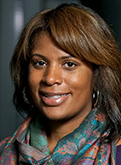
caption: Josephine ParkJosephine Nock-Hee Park, the President’s Distinguished Professor of English in the School of Arts & Sciences, will become associate dean for arts and letters in the School of Arts & Sciences, effective January 1, 2025.

In this role, Dr. Park will oversee the school’s humanities departments, including Africana studies; cinema and media studies; classical studies; East Asian languages and civilizations; English; Francophone, Italian, and Germanic studies; history; history of art; Middle Eastern languages & cultures; music; philosophy; religious studies; Russian and East European studies; South Asia studies; and Spanish and Portuguese. She will also oversee the school’s humanities research centers.

A scholar of modern and contemporary American literature and culture, with a focus on American poetry and Asian American literature, Dr. Park has served two terms as director of the Asian American Studies Program. She is also chair of the Committee on Undergraduate Education and was a member of the Presidential Commission on Countering Hate and Building Community. In addition, she serves on the executive committee of the Kim Center for Korean Studies and as co-chair of the advisory board of the Sachs Program in Arts Innovation. Dr. Park was awarded the Ira Abrams Award for Distinguished Teaching, the school’s highest teaching honor, in 2019, and is the recipient of multiple David Delaura Teaching Awards, sponsored by the English Undergraduate Advisory Board, and the Kahn Award for Outstanding Teaching by an Assistant Professor.

Dr. Park will succeed Jeffrey Kallberg, who is transitioning to the role of interim dean of the School of Arts & Sciences after having served as associate dean for arts and letters since July 2010.

“Jeff has made great strides in strengthening our humanities programs,” said Steven J. Fluharty, dean of the School of Arts & Sciences and the Thomas S. Gates, Jr. Professor of Psychology, Pharmacology, and Neuroscience. “Given Jo’s exemplary record as a scholar, educator, and academic leader, I have every confidence she will make an outstanding successor.”

Dr. Park’s scholarly works include the award-winning Apparitions of Asia: Modernist Form and Asian American Poetics, and she has served on the editorial boards of numerous multidisciplinary journals.

Penn Engineering and Weitzman School Faculty Receive 5-Year, $3 Million NSF Traineeship Grant

A cross-disciplinary team of architects and engineers from Penn has been selected to receive a $3 million NSF Research Traineeship (NRT) Award from the National Science Foundation, which will involve a total of 56 students (36 doctoral and 20 master students) participating in the project from Penn Engineering and the Weitzman School of Design over the course of the next five years. Students in this program will be able to pursue research across engineering, architecture, and design.

Shu Yang, the Joseph Bordogna Professor in Materials Science and Engineering and Chemical and Biomolecular Engineering, is the principal investigator of the grant. Dr. Yang will work with William Braham and Dorit Aviv from the Weitzman School of Design’s department of architecture and with Paulo Arratia and LeAnn Dourte from Penn Engineering to make up the leadership team of CLIMATE-CARE, as the initiative is called. Laia Mogas-Soldevila, an assistant professor at Weitzman, will also collaborate with the team on this grant. They will welcome PhD and master’s students to submit their interest in the program this fall and anticipate students to commence the program in 2025.

Drs. Aviv, Braham, Yang, and Arratia have collaborated on several research projects, such as on the integration of hydrogel membrane into building facades, the use of evaporative cooling in data centers, and the thermal performance of carbon-absorbing concrete. Through the NSF CLIMATE-CARE grant, they plan to extend their cross-disciplinary work into the education of graduate students.

Students participating in CLIMATE-CARE will pursue research across engineering and architecture. They will attend seminars and take a number of different courses that touch on both disciplines. Students will be mentored by different faculty members across Penn Engineering and Weitzman and will have access to the program’s independent advisory board, which is composed of experts in industry, national labs, nonprofits and architecture firms, giving them opportunities to attend field trips, learn from guest speakers, and pursue a variety of internships.

“This is the first formal collaborative graduate program across engineering and architecture at Penn,” said Dr. Yang. “I’m excited to welcome our first cohort of students into this program early next year and formally guide them in interdisciplinary real-world problem solving and innovation.” As Dr. Braham observed, “architects and engineers follow different formal curricula but work together on the built environment throughout their careers, so learning each other’s language and conventions while in school can only help in the collective effort to address the climate emergency.”

At Weitzman, the NSF grant will support the studies of both master and PhD level students in architecture, who will specialize in the development of state-of the art strategies to reduce both operational and embodied carbon in buildings through cross-disciplinary education and research.

“The building sector is responsible for a significant portion of energy-related global GHG emissions, and if we want to see a significant change in the near future, a tight collaboration between architects and engineers is necessary,” said Dr. Aviv. “The students trained through this grant can become the leaders of the necessary transition to carbon-neutral or even carbon-negative buildings in the coming decades.”

Penn GSE Collaborates with the School District of Philadelphia to Launch Pioneering AI in School Systems Program

Penn’s Graduate School of Education, in collaboration with the School District of Philadelphia (SDP), has announced the pilot launch of the Pioneering AI in School Systems (PASS), a professional development program addressing the transformative impact of artificial intelligence on education. This innovative program is designed to equip educators, school leaders, and district administrators with the skills and knowledge they need to effectively integrate AI tools into classrooms to accelerate learning and prepare students for the future of work. This initial pilot of the program will be free to the SDP and is being developed in partnership with Catalyst @ Penn GSE. The program is made possible by a gift from the Marrazzo Family Foundation.

Since the launch of ChatGPT in late 2022, there has been a significant shift in public awareness of machine learning and AI, sparking an explosion of interest in how these technologies can be leveraged to address challenges in education. AI applications, especially those built on large language models, have the potential to reshape the educational landscape by alleviating hurdles faced by educators today—limited time, difficulty customizing instruction to each student’s needs, restricted access to quality teacher aides and tutors, and difficulties in tracking student progress.

“At Penn GSE, we recognize the critical need to prepare a well-trained and well-supported educational workforce,” said Katharine O. Strunk, dean of GSE and the George and Diane Weiss Professor of Education. “Every student should have the opportunity to develop essential skills to engage with today’s society and shape tomorrow’s world. Our goal is to leverage AI to foster creativity and critical thinking among students and develop policies to ensure this technology is used effectively and responsibly—while preparing both educators and students for a future where AI and technology will play increasingly central roles. We are delighted to be able to do this work in partnership with the School District of Philadelphia.”

Nonetheless, implementing AI in schools comes with challenges, including equity of access and usage, data privacy, model bias, and ethics concerns. Educators and administrators face uncertainty about AI’s implications for student learning, limited resources for understanding the rapidly advancing technology, and a need for coherent guidance on how to approach AI adoption. The PASS program was developed to address these challenges and support the transition to student-centered learning environments that promote growth mindsets and develop essential skills and attitudes.

“We are grateful for the collaboration with the University of Pennsylvania, dean Katharine O. Strunk, and the Marrazzo Family Foundation for paving the way for the integration of artificial intelligence in our classrooms,” said superintendent Tony B. Watlington, Sr. “The digital divide is real in Philadelphia. Partnering on the PASS program will help advance academic achievement for our students by equipping our educators, school leaders, and district administrators with tools needed to make sure our students graduate college or career-ready.”

PASS’s innovative three-tiered structure is designed to serve various stakeholder groups within the district:

  • For District Administrators: The program will focus on strategic planning, governance, and policy development to help administrators create a solid framework for AI integration that aligns with educational standards and goals.
  • For School Leaders: PASS will guide principals and other school leaders on implementing AI tools in schools and aligning these new technologies with instructional and student support goals.
  • For Educators: Teachers will receive practical training on using AI tools in the classroom to personalize learning, enhance instruction, monitor student progress, and provide timely support.

“Our foundation is committed to ensuring that Philadelphia youth reach their full creative potential, a critical skill in this quickly evolving, technology-driven world,” said Jeffrey D. Marrazzo of the Marrazzo Family Foundation. “Supporting this collaboration between Penn GSE and the School District of Philadelphia—a first-of-its-kind professional development program—fits squarely within our mission. Understanding the challenges and opportunities that AI has to offer will inspire educators to think creatively about their approach, enhance how students learn, and prepare youth for the future of work. We are excited to see what emerges from this pilot—it can be taken in so many directions, all of which will amplify the creativity in our classrooms.”

The PASS program is a testament to the shared vision of Penn GSE and the School District of Philadelphia, aimed at fostering equitable access to cutting-edge educational tools that empower both teachers and students. The program’s pilot phase is set to launch in March 2025 in a phased approach. It will be rolled out in select schools across the SDP, with plans to expand the program as a model to other districts, both regionally and nationally.

The announcement of PASS follows Penn GSE’s recent introduction of the Ivy League’s first education degree in artificial intelligence. Launching in the fall of 2025, the pioneering master’s program—Learning Analytics and Artificial Intelligence—underscores Penn’s dedication to leading the future of education through innovative technology and groundbreaking research. Penn also recently announced a new initiative, AI @ Penn, which aims to accelerate AI’s potential and Penn’s deep and cross-disciplinary expertise in the rapidly evolving landscape of AI.

Governance

From the Faculty Senate Office: Faculty Senate Executive Committee Actions

The following is published in accordance with the Faculty Senate Rules. Among other purposes, the publication of SEC actions is intended to stimulate discussion among the constituencies and their representatives. Please communicate your comments to Patrick Walsh, executive assistant to the Senate Office, by email at senate@pobox.upenn.edu.

Faculty Senate Executive Committee Actions
Wednesday, December 11, 2024

Tri-Chairs’ Report. Faculty Senate Chair Eric Feldman announced dates for three spring 2025 colloquia organized by the Faculty Senate on “The Future of American Universities.” The first, on January 30 at 4 p.m., will examine “Higher Education and the State: Are Politicians Reshaping America’s Great Universities?” The second, on February 26 at 4:30 p.m., will consider “The Value of Higher Education: Are Four Years of College Worth the Cost?” The third, on April 9 at 4:30 p.m., will address “The Future of Higher Education.” More information is available on the Faculty Senate website.

Update from the Penn Libraries. H. Carton Rogers III Vice Provost and Director of the Penn Libraries Brigitte Weinsteiger and Assistant University Librarian for Collection Strategy Holly Zerbe discussed the Libraries’ strategic priorities, including expanding access to Penn scholarship by making Penn researchers’ publications openly accessible at no cost to authors or readers (at the option of the author).  These efforts are intended to ensure wider dissemination and citation of Penn scholarship, aid in the democratization of access to knowledge, enhance global research collaboration, and comply with mandates from funding agencies. Libraries staff welcome opportunities to support faculty members in understanding Open Access, navigating the publishing process, identifying journals and publishers with which to publish, and transitioning journals from commercial to nonprofit publishers. A list of open access agreements is available on the Penn Libraries website.

Update from the Office of the Vice Provost for Research. Senior vice provost for research Dawn Bonnell and associate vice provost for research Michael Borda discussed strategic initiatives in data science and artificial intelligence. In Principle and Practice, Penn’s strategic framework, describes Penn’s goal to “lead in data-driven research, teaching, and applications while cultivating leading expertise on how society can develop and deploy powerful technologies beneficially and justly.” This year, the Penn AI Council was launched, Amy Gutmann Hall, dedicated to data science and AI, was opened, the Exploring New Frontiers in AI at Penn website was introduced, and the Penn Advanced Research Computing Center (PARCC) was created as a shared generalist research computing center for all twelve schools. 

Board of Trustees Meeting Coverage

During a meeting of the Executive Committee of the Board of Trustees on December 12, Interim President  J. Larry Jameson offered a resolution to appoint Jeffrey Kallberg as interim dean of the School of Arts & Sciences effective on January 1, 2025 (Almanac December 10, 2024). The resolution was approved.

Policies

CCTV Locations: University of Pennsylvania Cameras

The Division of Public Safety is committed to enhancing the quality of life for the campus community by integrating the best practices of public and private policing with state-of-the-art technology. A critical component of a comprehensive security plan using state-of-the-art technology is Closed Circuit Television (CCTV).

As prescribed by the University Policy “Closed Circuit Television Monitoring and Recording of Public Areas for Safety and Security Purposes” (Almanac April 29, 2008), the locations of all outside CCTV cameras monitored by Public Safety are to be published semi-annually in Almanac. The locations and descriptions of these cameras can also be found on the Division of Public Safety website: www.publicsafety.upenn.edu/about/penncomm#cctv.

The following existing cameras meet those criteria:

University of Pennsylvania Cameras

39th St. & Baltimore Ave. 

(Vet School, Hill Pavilion)

40th St. & Baltimore Ave.

41st St. & Baltimore Ave.

42nd St. & Baltimore Ave.

43rd St. & Baltimore Ave.

31st & Chestnut Sts. (Left Bank)

33rd & Chestnut Sts.

34th & Chestnut Sts.

36th & Chestnut Sts.

38th & Chestnut Sts.

40th & Chestnut Sts.

4040 Chestnut St. (front)

41st & Chestnut Sts.

43rd & Chestnut Sts. 

46th & Chestnut Sts.

Steve Murray Way & Chestnut St.

38th St. & Hamilton Walk

36th St. & Locust Walk

37th St. & Locust Walk (1&2)

38th St. & Locust Walk

39th St. & Locust Walk

40th St. & Locust Walk

41st & Locust Sts.

42nd & Locust Sts.

43rd & Locust Sts.

39th & Ludlow Sts.

40th & Ludlow Sts.

34th & Market Sts.

36th & Market Sts.

38th & Market Sts.

40th & Market Sts.

40th & Pine Sts.

41st & Pine Sts.

42nd & Pine Sts.

36th & Sansom Sts. (Franklin Bldg.)

38th & Sansom Sts.

39th & Sansom Sts.

4040 Sansom St. (rear)

Steve Murray Way & Sansom Sts.

33rd St. & Smith Walk

34th & Spruce Sts.

36th & Spruce Sts.

37th & Spruce Sts.

38th & Spruce Sts.

39th & Spruce Sts.

40th & Spruce Sts.

41st & Spruce Sts.

42nd & Spruce Sts.

43rd & Spruce Sts.

31st & Walnut Sts. (Left Bank)

33rd & Walnut Sts.

34th & Walnut Sts.

36th & Walnut Sts.

37th & Walnut Sts.

38th & Walnut Sts.

39th & Walnut Sts.

40th & Walnut Sts.

41st & Market Sts

41st & Walnut Sts.

43rd & Walnut Sts.

4119 Walnut St.

100 Block of S. 37th St.

Blockley Hall (bike racks 1-8)

Blockley Hall (roof)

Boat House (exterior cameras 1-4)

BRB II (loading dock–exterior)

BRB II (roof–rear and front)

Caster Building (rear entrance)

Caster Building (bike racks 1&2)

Chemistry Building (bike racks 1-4)

CineMark

College Green (1&2)

College Green (lower)

College Hall (exterior basement)

CRB (roof)

CRB-Stemmler Hall (main entrance)

CRB-Stemmler Bridge (interior)

CRB-Stemmler Bridge (main entrance hall)

English House (Law School bike rack)

Fels Center (bike rack)

Fels Institute of Government

Fisher-Bennett Hall (overseeing Levine Bldg.)

Franklin Building

Franklin Building Annex

Franklin Field

Garage 40 (rooftop)

Generational Bridge (1&2)

Gittis Hall (Chestnut Street Basement Stair Door)

Gregory College House (bike rack)

GSE on Plaza 1

GSE on Plaza 62

Harnwell College House

Harrison College House (1&2)

Hayden Hall (east door & west door)

High Bay Garage (entrance)

Hilton (Homewood Suites–1&2)

Hollenback (lower level rear parking)

Hollenback (rooftop)

Houston Hall/Penn Commons

Irving & Preston Sts.

James G. Kaskey Memorial Park (BioPond & Trail)

Jerome Fisher (main entrance)

John Morgan Building (Hamilton Walk)

Jon M. Huntsman Hall (Bike Rack)

Jon M. Huntsman Hall (Loading Dock)

Jon M. Huntsman Hall (NE corner)

Kane Park (Spruce Street Plaza)

Law School (Sansom St.)

Left Bank (loading dock)

Levy Dental (loading dock)

Love statue

Meyerson Hall (bike racks 1&2)

Mod 7 (North)

Mod 7 (SE)

Mod 7 (West)

Museum (33rd St.–exterior)

Museum (Kress entrance–exterior)

Museum (Kress entrance–interior)

Museum (loading dock–exterior)

Museum (upper loading dock–exterior)

Museum (Warden Garden–main entrance)

Museum (Stoner Courtyard–lower courtyard) 

New College House West (Bike Rack)

Old Vet Quad (west gate)

Osler Circle Courtyard

Palestra (1&2)

Pennovation Works

Pennovation Works (gate)

Pottruck (bike racks 1&2)

Public Safety Annex Building (2-5)

Richards Labs (rear door)

Ringe Squash Court Parking

Rodin College House (bike rack)

Rosenthal (parking lot)

Ryan Vet Hospital (main entrance area)

Schattner (coffee shop)

Schattner (bike rack)

SEAS (Courtyard)

Shoemaker Green (1-8)

Singh Center (courtyard)

Singh Center (east loading dock)

Singh Center (Nano roof terrace north)

Singh Center (nitrogen loading dock)

Singh Center (roof terrace south)

Singh Center (west loading dock)

Solomon Labs (1-4)

Spruce 38 Garage (Entry/Exit)

St. Leonard’s Court (roof, rear)

Steinberg Conference Center

Steinberg Hall-Dietrich Hall (Joe’s Café)

Steinberg Hall-Dietrich Hall (trolley)

Stellar-Chance Labs (loading dock)

Stellar-Chance Labs (main entrance)

Stellar-Chance Labs (roof–rear)

Stellar-Chance Labs (roof–front)

Tandem Accelerator Laboratory

Translational Research Labs, 30th St. (lower level South)

Translational Research Labs, 30th St. (lower level North)

Translational Research Labs, 31st St.

Translational Research Labs, 31st St. (upper level)

University Meeting & Guesthouse Courtyard

University Meeting & Guesthouse Parking Lot

Van Pelt-Dietrich Library (Button)

Van Pelt-Dietrich Library (Ben Statue)

Van Pelt-Dietrich Library (Mark’s Café 1&2)

Van Pelt Manor (bike rack)

VHUP (bike rack)

VHUP (dog walk 1&2)

W.E.B Du Bois House (Bike Rack)

Weiss Info Commons (front door)

Weiss Info Commons (rear door)

Wharton Academic Research Building Bike Racks

Wharton EMBA (loading dock)

Williams Hall (bike racks 1-3)

WXPN/World Café Live

WXPN/World Café Live (SW side–lower level)

1920 Commons (38th & Spruce roof)

Penn Park

Field 1

Field 1 (bike rack)

Field 2

Field 2 (bike rack)

Field 2 (NE corner)

Field 2 (SW corner)

Field 2 (north bike rack)

Field 4 (South Street Bridge)

Lower 30th & Walnut Sts. (1&2)

Paley Bridge (1&2)

Paley Bridge (entrance walkway)

Paley Bridge (walkway to Penn Park)

Parking Lot (SW corner)

Parking Lot (NE corner)

Penn Park (NE corner)

Penn Park (North)

Penn Park (Plaza)

Penn Park Drive (entrance)

River Field

Ropes Course

Ropes Course Maintenance Bldgs.

Softball Stadium (bike racks 1&2)

Softball Stadium (men’s restroom)

Softball Stadium (women’s restroom)

Tennis Center

Tennis Center (Field 4)

Tennis Center (Field 4 walkway)

Tennis Center (Transit Stop)

Utility shed

Walnut St. Bridge (Pedestrian Walkway)

Walnut St. Bridge (Upper)

Weave Bridge (Bower Field) 

Weave Bridge (East)

Weave Bridge (Hollenback)

Weave Bridge (Penn Park ramp)

Penn Medicine Cameras 
Hospital of the University of Pennsylvania

33rd Street (facing South St.)

33rd Street (facing Civic Center Blvd.)

34th St. Pedestrian Bridge

Alley between Pavilion and Penn Museum (facing South St.)

Convention Ave. (facing Health Sciences Dr.)

Convention Ave. (facing SEPTA station)

Convention Ave. (SEPTA station stairs)

Convention Ave. (stairs to Pavilion walkway)

Convention Ave. and Civic Center Blvd.

Convention Ave. and Health Sciences Dr.

Driveway between Penn Museum and Lot 7

Dulles Bldg. (bike racks-Spruce St.)

Emergency Department (driveway 1-4)

Emergency Department (ambulance entrance/exit)

Emergency Department (driveway)

Emergency Department (entrance/exit)

Gates Bldg. (fire exit door-Spruce St.)

Lot 7 Parking Garage (driveway entry/exit)

Lot 7 Parking Garage (entrance from Pavilion walkway)

Maloney Bldg. (entrance–36th & Spruce Sts.)

Miller Plaza (adjacent to Stemmler)

Pavilion (employee entrance)

Pavilion (main entrance/exit)

Pavilion (outdoor seating area, corner of Convention Ave.)

Pavilion (valet driveway/patient & visitor drop-off entrance/exit)

Pavilion (walkway between Pavilion and Penn Museum)

Penn Tower/HUP Bridge/Civic Center

Penn Tower Bridge (Hospital side)

Ravdin Bldg. (Driveway–Civic Center Blvd.)

Rhoads Bldg. (1st floor–Hamilton  Walk)

Rhoads Bldg. (1st floor–patio)

Rhoads Bldg. (basement–dock ramp)

Rhoads Bldg. (loading docks 1&2)

Rhoads Bldg. (loading dock ramp)

Rhoads/Stemmler bike rack

Security Booth (top of loading dock ramp)

SEPTA walkway

Spruce St. between 34th & 36th Sts. (facing east)

Spruce St. between 34th & 36th Sts. (facing west)

Spruce St. (Maloney entrance & morgue driveway)

Spruce St. (Morgue, Maloney Ground –36th St.)

Spruce St. (west fire tower door)

Stair Tower between Penn Museum and Lot 7 from Pavilion walkway

Stair Tower to loading dock 

White Bldg. courtyard

White Bldg. (entrance–Spruce St.) 

Perelman and Smilow 

3600 CCB Building and Garage

3600 CCB-Ll01 (NW Corner E/W)

3600 CCB-Ll01 (NW Side E/W)

3600 CCB-Ll01 (SW Corner E/W; 

entrance to Lot 51)

3600 CCB-Ll01 (SW Side E/W; loading Dock)

3600 CCB-L1 (NE Entrance)

Civic Center Blvd. at East Service Dr.

Convention Ave & Health Science Dr.

Discovery Walk (between Museum and Pavilion)

East Service Dr. & Health Sciences Dr.

East Side of Pavilion 

Emergency Department Driveway

Entrance to Loading Dock (Health Sciences Drive)

Health Sciences Dr. (outside loading dock–1& 2) 

Health Sciences Dr. and Convention Ave (NW)

Main Entrance

Main Entrance Driveway along Convention Center

NE Entrance

Perelman (front door)

Perelman (loading dock)

Perelman Parking garage entrance (Health Sciences Dr.)

PCAM staff entrance (Convention Ave.) 

Southwest Health Science Drive\

West Service Drive

West Side of Pavilion

Penn Presbyterian Medical Center

Advanced Care Canopy (bench)

Advanced Care Canopy (ED 1&2)

Advanced Care Canopy (Trauma 1-4)

Cupp Lobby (entrance)

Heart and Vascular Pavilion (front entrance)

Heart and Vascular Pavilion (rear entrance)

Heart & Vascular Pavilion (rooftop)

Helipad

Mutch Bldg. (roof)

Presby Garage (9 floors)

Powelton Ave.

Powelton Ave. (dock)

Wright/Saunders Bldg. (main entrance)

Wright/Saunders Bldg. (Powelton Ave. entrance)

38th St. (Healing Garden)

38th St. (Advanced Care Building)

3930 Chestnut Street

39th & Chestnut Streets (intersection)

Front Main Entrance

Loading Dock Entrance

Patio Seating Area

Parking Lot Bike Rack

Parking Lot (Front) 

Parking Lot (Rear) 

Substation #4
Honors

J. Margo Brooks Carthon: Claire M. Fagin Distinguished Researcher Award

caption: J. Margo Brooks Carthon

Penn Nursing’s J. Margo Brooks Carthon will receive the 18th Claire M. Fagin Distinguished Researcher Award. The biennial award honors the best scholarly qualities that Dr. Fagin, the school’s third dean, exemplified. It is given to a Penn Nursing faculty member, or a graduate from the school’s doctoral program, who has made a distinguished contribution to nursing scholarship. J. Margo Brooks Carthon, the Tyson Family Endowed Term Chair for Gerontological Research; a professor of nursing in the department of family and community health; associate director of the Center for Health Outcomes and Policy Research; the incoming director of the Bates Center for the Study of the History of Nursing on January 1, 2025; and a Penn Nursing PhD alumnus, is an acclaimed nurse scientist with national and international stature and expertise. She is renowned for her program of research that advances health equity through innovative models of care for vulnerable older adults. The award presentation will be on April 9, 2025.

Dr. Brooks Carthon’s scholarly work in the realm of health disparities and workforce diversity has positioned her as a trailblazer in addressing critical issues in healthcare delivery. For over a decade, her research has significantly contributed to scientific understanding of the structural and social determinants of health, advocating for policies and practices that promote equity and inclusiveness in healthcare settings.

In her work, Dr. Brooks Carthon examines the association between quality of nursing care and racial inequities in health outcomes. Her mixed-methods work has acknowledged the racial/ethnic disparities experienced by older racial/ethnic minority patients when compared to white patients. Aware of the limited research on how to tailor discharge support for chronically ill, low-income individuals insured by Medicaid, Dr. Brooks Carthon convened an interdisciplinary academic-clinical partnership with the goal of developing an intervention, THRIVE, to reduce disparities and support transitions for low-income individuals with multiple chronic conditions. Given the impact of this effort, the THRIVE model was designated as an Edge Runner by the American Academy of Nursing in 2024.

Dr. Brooks Carthon is an expert in an array of research methods including historical approaches, health services, and implementation science aimed at advancing health equity. This expertise led to her recent appointment (beginning January 1, 2025) as the new director of the Barbara Bates Center for the Study of the History of Nursing.

Vijay Kumar: John Scott Award for Robotics Advances

caption: Vijay KumarOn November 20, scientists, academics and members of the Board of Directors of City Trusts gathered at the  American Philosophical Society in Philadelphia to honor the 2024 recipients of the John Scott Award, one of the oldest and most prestigious science awards in the United States.
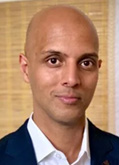
Among the honorees was Vijay Kumar, a professor and the Nemirovsky Family Dean of Penn Engineering, who was recognized alongside robotics pioneers Daniela Rus of MIT and Takeo Kanade of Carnegie Mellon University.

Endowed in 1815 by Scottish chemist John Scott, the John Scott Award honors scientific achievements that contribute to the “comfort, welfare, and happiness of mankind,” in the spirit of Benjamin Franklin. Over the years, this prestigious honor has been given to luminaries like Marie Curie, Guglielmo Marconi, and recent Nobel laureates Katalin Karikó and Drew Weissman of Penn’s Perelman School of Medicine.

Bernard W. Smalley, president of the Board of Directors of City Trusts, praised Dean Kumar and his fellow awardees for their visionary work: “We congratulate the 2024 winners on the potential of their research to change the world and improve people’s lives in the process.”

The Honorable Michael Nutter, W’79, the board’s vice president and a former mayor of Philadelphia, emphasized the degree to which the awardees embody Benjamin Franklin’s legacy as an inventor, noting, “He spurred the advent of electricity and the Industrial Revolution, but it all started with this: harnessing the power of imagination.”

Marsha Lester, the Christopher H. Browne Distinguished Professor in Chemistry in Penn’s School of Arts & Sciences and secretary of the John Scott award committee, noted the impact that past awardees have had on society. “The past winners are like a Who’s Who of the prominent scholars in science, medicine, and engineering,” she said.

George Pappas, the UPS Foundation Professor of Transportation in Electrical and Systems Engineering and Penn Engineering’s associate dean for research, introduced Dean Kumar. “Particularly fascinating is his work of understanding how biological organisms like ants work together and then using those principles to develop algorithms for aerial robots,” said Dr. Pappas. “These robots are now being used in numerous application domains such as agriculture, manufacturing, logistics and many others.”

Tariq Thachil: Two Book Awards for Migrants and Machines

caption: Tariq ThachilTariq Thachil’s book, Migrants and Machines: How Political Networks Form in Urbanizing India, co-authored with Adam Auerbach of Johns Hopkins University, has been awarded the 2024 Giovanni Sartori Book Award from the American Political Science Association (APSA)’s Qualitative and Mixed-Methods Section and the 2024 Best Book award from APSA’s Experimental Research Section.
Dr. Thachil is the director of the Center for the Advanced Study of India (CASI) and an associate professor of political science in the School of Arts & Sciences. As director of CASI, he also holds the Madan Lal Sobti Chair for the Study of Contemporary India. He studies political parties and political behavior, social movements, ethnic politics, and urban migration, with a regional focus on South Asia.

Migrants and Machines discusses the transformative potential of urbanization in India, which, the authors argue, hinges on whether and how poor migrants are integrated into city politics. The book shows how slum residents in India are actively constructing and wielding political machine networks to demand important, albeit imperfect, representation and responsiveness within the country’s expanding cities.

The Giovanni Sartori Book Award honors Dr. Sartori’s work on qualitative methods and concept formation, especially his contribution to helping scholars think about problems of context as they refine concepts and apply them to new spatial and temporal settings. The Best Book Award recognizes a work that uses experimental research methods in the study of politics.

Features

Medical Miracles at the School of Veterinary Medicine: Copper's Jaw-Dropping Experience

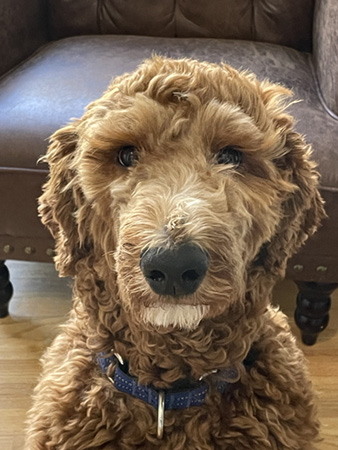
caption: CopperWhat’s better than a week away from it all? Parents. Kids. Dogs. Nothing but together time on an island accessible only by ferry. Just what the Weisman family planned for their summer 2023 vacation. But life had other plans.

Every summer, Ainsley and Ken Weisman, their children, Ryan and Leah, and their four dogs drive nine hours from their home in Connecticut to Ocracoke, a little island off the coast of North Carolina. Last July, they had a new member on the trip: Copper, a three-month-old Goldendoodle who’d joined the family a month earlier.

“We got Copper for Ryan on his 12th birthday,” said Ainsley. “He’s our fourth dog and the family baby.”

The trip started off idyllic, but one dog walk changed everything.

“I was walking the dogs and heard something behind me. I turned around; an unleashed dog was coming toward us,” said Ainsley.

“I thought to myself, don’t overreact, stay calm; it’s probably going to be fine.” And it was. At first.

“The loose dog sniffed our older girls with mild curiosity then got to Copper and just sort of set in on him.”

After a few chaotic minutes, the attacking dog ran away. Ainsley and Ken assessed the damage. It was bad—Copper’s jaw and tongue hung loose from his little face.

Fortunately, there was a veterinary practice on the island. “We put a terrified Copper into our truck and drove to the clinic,” Ainsley said.

The island vet provided pain meds, wrapped the broken jaw, and sent the family to an off-island surgical hospital, an hour-and-a-half ferry ride and a drive of equal time away. “It was one of the longest days of my life.”

He’s Just a Baby. Please Try.

By the time they reached the mainland hospital, “Copper was starting to decompensate,” said Ainsley. “My husband’s a physician, I’m a physician assistant, and we saw the signs. It was terrifying to see this little guy struggle so hard.”

The news was bleak. “His care team was candid and said it didn’t look good,” Ainsley said. “They asked if we wanted them to try everything. We said, ‘Yes, he’s just a baby; please, please try.’”

The hospital’s surgeons placed two plates to stabilize Copper’s mandible, and he was hospitalized for a few nights before heading home.

During the nine-hour drive to Connecticut, Copper had a feeding tube, and the family administered morphine. “He was such a little fighter,” Ainsley said.

As each day passed, the Weismans had more hope for his survival. But Copper hadn’t yet been to a dental specialist, and his regular veterinarian recommended specialty care. “She told us to go to Penn Vet,” said Ainsley.

So, a few weeks after the attack, Copper and Ainsley were back in the car. Ryan joined them.

caption: A CT image of Copper’s skull.

What Lies Beneath

At Penn Vet’s Ryan Hospital, Esther Choi, a dentistry and oral surgery resident, led Copper’s exam.

“We weren’t too alarmed by anything,” she said, noting that the puppy was very lucky to have received treatment immediately after the attack.

“His teeth had come in a little bit weird, but that’s to be expected with trauma to a young jaw. This can result in malocclusion—when teeth don’t quite line up on the upper and lower jaws. Really, by the time we saw Copper, he was at an age where his teeth should have come out fully and been sitting correctly in the mouth.”

Dr. Choi and the team were concerned about the risk of periodontal disease: “Having teeth at different angles and not in the appropriate place predisposes the teeth and oral tissues to periodontal disease, which can lead to more serious problems down the road.”

Dr. Choi scheduled Copper for an anesthetized oral exam, dental X-rays, and a CT scan for a more thorough look at his mouth. “What we see externally in the oral cavity is only the tip of the iceberg because most of the tooth structure lies underneath.”

Seeing the Root of the Problem

Ainsley, Ryan, and Copper returned to Ryan Hospital in October.

“We saw on the CT scans that he needed further treatment to correct jaw instability,” Dr. Choi said.

A multidisciplinary team of specialists from Penn Vet’s dentistry and oral surgery, radiology, anesthesia, and nursing teams prepared to repair the jaw.

First, they removed the original plates which, said Dr. Choi, “helped him heal as well as he had,” and placed an interdental splint to align loose jaw fragments and stabilize the young jaw.

Using a restorative procedure called vital pulp therapy, the team turned to saving one of Copper’s teeth. The therapeutic approach aims to preserve a tooth structure rather than completely extract it.

“There was one big molar that was weirdly angled, and we saved half of it to provide anchorage for the splint,” Dr. Choi said.

Imperfect alignment stresses the temporomandibular joint (TMJ) that connects the jawbone to the skull, so improving stabilization by removing the plate and having the bone heal itself is ideal. “In the long run, he’ll have less of a risk of developing osteoarthritis of the jaws and periodontal disease,” said Dr. Choi.

The Calm—Challenging—Road to Recovery

Copper sailed through surgery, and his healing is on track. But the family now faces another challenge: keeping a lively puppy relatively still during recovery.

“He’s not even a year old, and he has to stay calm,” said Ainsley. “No playing with the other dogs or running in the yard. Ryan and I have been walking him up to 10 miles a day to help work off some energy. Until a few weeks ago, he couldn’t even have a soft toy to chew. Imagine how hard it is for a puppy!”

But she has no regrets, and the family is excited to slowly start integrating Copper into the pack as he gets stronger.

“I feel fortunate to have had access to Penn Vet’s dental expertise,” she said. “We sometimes wondered if we did the right thing by putting him through all this. Should we have considered euthanasia? But this worked out well, and Penn Vet made it happen—at every point, Copper’s dental care team reassured us that he had every chance of healing and having a healthy, happy life.”

caption: Doctors Haixia Kong and Esther Choi were part of Copper’s care team at Penn Vet’s Ryan Hospital.

A Field for the Future

By all accounts, Copper received excellent care where and when he was attacked, but the Weismans’ regular veterinarian knew he would need specialized dental care for the best possible outcomes.

As the first veterinary school in North America to offer an organized veterinary dentistry and oral surgery program, Penn Vet has pioneered the field for nearly half a century. In 1989, it established one of the first veterinary dentistry and oral surgery residency training programs nationwide. The school remains one of the few U.S. vet schools with a strong curriculum in the specialty and a wide variety of clinical cases in dentistry and maxillofacial surgery.

“Our dental and oral surgery service is sought by clients from across the nation and attracts the finest residents from around the world,” said Brady Beale, hospital director and chief medical officer at Ryan Hospital.

The service sees roughly 700 cases annually, and a robust clinical research program focuses on preventing dental disease and optimizing patient care. The program is set to expand with a new services suite that’s coming soon.

“I’m grateful to do my residency in facilities with such progressive, hardworking, intelligent individuals in so many different fields,” said Dr. Choi. “Penn Vet offers amazing niche services and has all these specialists across different disciplines collaborating on cases. It’s an exciting, interesting place to work in dentistry, especially given Penn Vet’s game-changing history.”

Time will tell, but Copper’s case may have inspired a future veterinary dentist. Ryan Weisman, who insisted on accompanying Copper on every visit to Penn Vet, said to his mom on one trip home, “I might want to be a vet. It seems really cool.”

Dentistry’s Future Cutting-Edge Space

This spring, Penn Vet will begin renovating and expanding its dentistry and oral surgery suite. The space will be called the Richard Lichter Advanced Dentistry and Oral Surgery Suite at Ryan Hospital after its namesake, a longtime philanthropic partner of Penn Vet.

When completed, the state-of-the-art clinic for comprehensive oral and restorative small animal patient care, clinical instruction, and clinical research will feature more dentistry and oral surgery stations, helping to shorten wait times and offer care to more patients.

Additionally, a new cone-beam computed tomography system will significantly enhance clinicians’ diagnostic imaging ability to plan for complex surgeries, like cleft palate repair, oral tumor removal, and maxillofacial trauma surgery. And the imaging technology’s proximity to nine other surgery suites will provide more efficient care for other surgical patients, such as in neurology and orthopedics.

In addition to enabling Ryan Hospital to accommodate more dental patients, the suite will serve as an arena to further clinicians’ understanding of various oral diseases and conditions, including cancers in the head and neck.

“I have witnessed firsthand the role Penn Vet veterinarians play in saving the lives of animals who come to Ryan Hospital in dire circumstances,” said Richard Lichter, who, in 2018, helped establish the Richard Lichter Emergency Room at Ryan Hospital. “It was natural for me to want the hospital to have the most modern and state-of-the-art dentistry and oral surgery capabilities.”

Adapted from a Penn Vet press release by Sacha Adorno. Other Penn Vet medical miracle stories include helping a horse named Atticus and Cat the cat.

Medical Miracles at Penn Medicine: Breaking Through the Mysteries of Predicting Coma Recovery

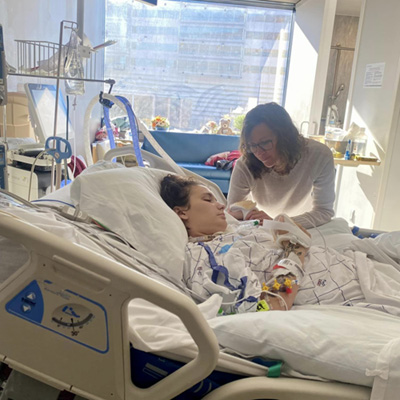
caption: In November 2023, Cassie Wolfe’s mother, Ann Louise, spent long days by her bed, holding that she would regain consciousness.

The last time the world saw Cassie Wolfe as she used to be—a vibrant, stylish, independent young woman—was October 19, 2023. One minute, the 23-year-old was enjoying a restaurant’s line dancing night with her sister near their home in Lebanon, Pennsylvania. The next, she was lying unconscious on the bathroom floor.

Ms. Wolfe had suffered both a sudden cardiac arrest and stroke caused by an undetected genetic condition called arrhythmogenic cardiomyopathy, affecting the heart’s muscular wall. She was airlifted from a local hospital to the Hospital of the University of Pennsylvania's (HUP) heart and vascular intensive care unit and remained in a coma for two months. 

During that time, Ms. Wolfe’s mom and caregiver, Ann Louise, begged for answers. Would her brain recover enough for her to wake up? If she did, what would her life look like? Would she be the daughter that her mother knew? As she wondered, a team of experts worked behind the scenes to predict how Ms. Wolfe’s recovery might look.

Comas aren’t like what you see in the movies, where patients either wake up with all their memories and skills intact or don’t wake up at all. Consciousness, said HUP neuro-ICU physician David Fischer, is less like a light switch that turns off and on and more like a dimmer, with gradations of light to dark. And knowing who will wake up, who will have a meaningful recovery, and what that will look like is an area where medical knowledge is still limited but growing. 

Dr. Fischer has devoted himself to finding better ways of detecting consciousness and predicting recovery, so caregivers like Ms. Wolfe’s mother have more certainty and support. To do this, in the summer of 2022, he created the RECOVER (REcovery of COnsciousness Via Evidence-Based Medicine and Research) program to provide specialized, comprehensive, and ongoing care for coma patients.

Every Expert Matters When Predicting Patient Outcomes

Each Wednesday afternoon, specialists from across the hospital meet to share their observations, insights, and recommendations about the state of recovery for patients who are in various stages of coma recovery, often due to a cardiac arrest or stroke. The team includes representatives from physical and rehabilitative medicine, radiology, palliative care, physical and occupational therapy, ethics, social work, and others.

“We have many goals, but the most important, ultimately, is that patients and their families get the support they need when potentially making the biggest decision of their life—deciding whether to continue or stop life support for their loved one with a brain injury,” Dr. Fischer said. “We want to identify the patients who have a chance of a meaningful outcome ... and for the patients who don’t, give their families the support to transition them to hospice and allow them to pass away peacefully.”

They review the data on each patient, talk about the family’s goals, and discuss the resources needed to support them once they leave the hospital. Blood tests, brain scans, and assessments of how the patients are moving and communicating—as well as the available facilities for post-hospital care, and the anticipated financial costs—all come into play. In Ms. Wolfe’s case, her various tests and scans suggested her brain would recover to a point her mother thought Ms. Wolfe could live with.

“It’s the ideal that we aspire to at Penn Medicine: People with very different training and thought processes offering suggestions for how we can approach a case differently and best support the family,” said Rachel Klinedinst, director of palliative care for HUP and Penn Presbyterian Medical Center (PPMC). “Dr. Fischer wants to hear everyone’s ideas ... It really feels like a community.”

William Pino, one of the lead physical therapists at HUP, said he appreciates that Dr. Fischer wants him and his non-physician colleagues at the table. Physical therapists, for example, can share insights into the patients’ likely rehabilitation needs if they survive their hospitalization, and the team can weigh that information against what a patient would find acceptable. 

“It’s encouraging to hear everybody’s viewpoint,” Mr. Pino said, “because these types of patients have so many needs.” 

No matter the prognosis, having so many specialists share their expertise gives the neurologists the confidence that they’re giving the family the best possible information to decide about their loved one’s care.

“These conferences allow us to adopt a more holistic, consensus-based approach to anticipating what these recoveries are going to look like,” Dr. Fischer said. “It helps to prevent the potential error associated with any one person or team making a decision on their own.”

In Ms. Wolfe’s case, Dr. Fischer—armed with the brain scans, experience with previous patients, and the insights from the weekly conference—told her mother he believed Ms. Wolfe would eventually wake up and go on to live a meaningful life, albeit with some executive functioning deficits and a need for some assistance.

Creating the Infrastructure

The seeds of the RECOVER program were planted during Dr. Fischer’s neurology training, when he observed how life-and-death predictions were typically made by physicians who often didn’t see the long-term recoveries they were trying to predict.

Most patients seen by the program are at HUP, but Dr. Fischer plans to expand the program to PPMC in 2025 and eventually to other hospitals throughout the University of Pennsylvania Health System. At the same time, he is working to share the model with other medical institutions across the country.

In addition to the multidisciplinary meeting, Dr. Fischer and neurology residents staff an outpatient clinic that supports patients and families for as long as needed. More than any tests a neurologist could run, seeing patients over the long term and understanding how families feel about the pace and challenges of recovery gives the team “that first-hand experience and intuition about what recoveries tend to look like,” Dr. Fischer said.

The Spectrum of Recovery

Since the start of the program, Dr. Fischer has seen the entire spectrum of coma recovery in patients, from those with zero or mild deficits, to those who can say simple things but require round-the-clock nursing care, to those who never wake up.

So far, all signs point to the team’s predictions about Ms. Wolfe’s recovery being true.

After more than three months in the hospital and rehab, she had lost her short-term memory, and even her personality and voice were different. But by early 2024, her motor skills, memory, and other functions were slowly returning, and her mother was grateful for a front-row seat to her daughter’s recovery, as challenging as it was.  

“While we are so thankful to have her—and it is a miracle—with every brain injury patient who recovers, there’s still so much grief. She’s a different version of herself,” Ms. Wolfe’s mother said. Still, she wrote in late May on a Facebook page chronicling her daughter’s recovery, “even though some, or many, things are not possible today doesn’t mean they won’t be possible further along the path.”

Dr. Fischer has continued working with Ms. Wolfe and her family through the challenges of recovery and offered resources where needed. Every patient who came before her helped Dr. Fischer and his team predict what her recovery would look like and know how to support her family, he said. And her family’s experience, in turn, will help him and his colleagues best care for future patients.

“By learning more about recovery from these conditions,” Dr. Fischer said, “we are always improving our ability to make more precise predictions for the future.”

Adapted from a Penn Medicine press release by Daphne Sashin.

AT PENN

January AT PENN 2025 is Now Available

The January AT PENN 2025 calendar is now online! Click here to view the calendar, and click here to view a printable PDF.

Events

Update: December AT PENN

Fitness & Learning

17        Penn English Program in London Fall 2025 Zoom Info Session; English majors and minors who would like to study abroad in London at King’s College in fall 2025 are invited to an introductory meeting; 11 a.m.; Zoom webinar; join: https://upenn.zoom.us/j/98224933959 (English).


Penn Libraries

Various locations. Info and to register: https://www.library.upenn.edu/events.

19        End of the Year Printshop Refresh; 10 a.m.-4 p.m.; Common Press, Fisher Fine Arts Library.


Talks

17        AI at Penn: Insights from Penn's Principal Technology Advisor; John Mulhern III, ISC; noon; room 209, College Hall and Zoom; register: https://shorturl.at/KmPKu (PPSA).

18        Shifting Abortion Policy: Consequences for Reproductive Health Outcomes; Alice Abernathy, Perelman School of Medicine; 9 a.m.; room 701, Blockley Hall, and Zoom webinar; join: https://pennmedicine.zoom.us/j/96442998641 (Center for Clinical Epidemiology and Biostatistics).

            Sea Urchins and Their Developmental Symbioses; Tyler Carrier, University of North Carolina at Charlotte; noon; room 109, Leidy Laboratory, and Zoom webinar; info: https://www.bio.upenn.edu/events/2024/12/18/sea-urchins-and-their-developmental-symbioses (Biology).

19        Lighting Up the Force: Remote Detection of Multiple Scales of Force by Photon-Avalanche; Natalie Fardian-Melamed, Columbia University; 11:30 a.m.; Carolyn Hoff Lynch Lecture Hall, 1973 Chemistry Building (Chemistry).

            Unraveling Clinical and Molecular Pathways of Periodontitis Progression; Flavia Teles, Penn Dental Medicine; noon; room LL-20A, Evans Building, and Zoom webinar; register: https://tinyurl.com/teles-talk-dec-19 (Penn Dental Medicine).


Penn Libraries

Various locations. Info and to register: https://www.library.upenn.edu/events.

18        The Hiromi Washi Tour 2024; Tessa Gadomski, Penn Libraries; noon; room 241, Van Pelt Library.


This is an update to the December AT PENN calendar. To submit events for future AT PENN calendars and weekly updates, email the salient details to almanac@upenn.edu.

Crimes

Weekly Crime Reports

Division of Public Safety

University of Pennsylvania Police Department Crime Report

About the Crime Report: Below are the Crimes Against Persons and/or Crimes Against Property from the campus report for December 2-8, 2024. The Crime Reports are available at: https://almanac.upenn.edu/sections/crimes. Prior weeks’ reports are also online. –Eds.

This summary is prepared by the Division of Public Safety (DPS) and contains all criminal incidents reported and made known to the Penn Police, including those reported to the Philadelphia Police Department (PPD) that occurred within our patrol zone, for the dates of December 2-8, 2024. The Penn Police actively patrol from Market Street to Baltimore Avenue and from 30th Street to 43rd Street in conjunction with the Philadelphia Police.

In this effort to provide you with a thorough and accurate report on public safety concerns, we hope that your increased awareness will lessen the opportunity for crime. For any concerns or suggestions regarding this report, please call DPS at (215) 898-7297. You may view the daily crime log on the DPS website.

Penn Police Patrol Zone
Market Street to Baltimore Avenue and from 30th Street to 43rd Street

Crime Category

Date

Time

Location

Description

Assault

12/05/24

11:59 AM

1 Convention Ave

Complainant was assaulted by known offender


12/06/24

1:23 PM

3000 Chestnut St

Reports of threats subsequent to a road rage incident


12/06/24

9:46 AM

3220 Market St

Report of harassment

Auto Theft

12/02/24

5:34 PM

3820 Locust Walk

Secured scooter taken from bike rack


12/02/24

6:47 PM

3714 Spruce St

Unsecured electric bike taken from outside restaurant


12/04/24

11:13 AM

3901 Locust Walk

Secured scooter taken


12/04/24

9:57 PM

3231 Walnut St

Secured electric bicycle taken from area around building

Burglary

12/03/24

7:52 PM

119 S 31st St

Burglary at a residence

Retail Theft

12/04/24

9:36 AM

4001 Walnut St

Retail theft of over the counter medication


12/06/24

10:29 PM

3744 Spruce St

Retail theft of consumable goods


12/08/24

8:40 PM

3744 Spruce St

Retail theft of candy and soda by two offenders

Robbery

12/02/24

2:41 PM

4100 Spruce St

Three unknown offenders took complainant’s electric scooter and iPhone

Theft from Building

12/02/24

2:26 PM

214 S 42nd St

Package taken from hallway of building


12/02/24

6:37 PM

3939 Chestnut St

Package taken from lobby


12/06/24

6:54 AM

3565 Sansom St

Unsecured coat taken from cafeteria


12/06/24

8:45 AM

51 N 39th St

Unsecured cell phone taken from desk


12/06/24

4:15 PM

51 N 39th St

Unsecured iPad taken from reception area


12/06/24

7:14 PM

119 S 31st St

Theft from a building


12/07/24

10:12 AM

121 S 41st St

Package containing passport taken from vestibule area


12/07/24

11:17 PM

51 N 39th St

Handbag taken from work station area


12/07/24

2:15 PM

3701 Walnut St

Apple iPod taken from secured locker

Theft from Vehicle

12/02/24

12:24 PM

1 S 38th St

Laptop and money taken from parked vehicle


12/05/24

1:24 PM

4000 Chestnut St

PA registration license plate taken from vehicle

Theft Other

12/07/24

10:53 PM

3731 Walnut St

Handbag unlawfully taken from restaurant

Vandalism

12/02/24

10:23 PM

3930 Irving St

Black marking found on building


Philadelphia Police 18th District
Schuylkill River to 49th Street & Market Street to Woodland Avenue

Below are the Crimes Against Persons from the 18th District: 1 incident was reported for December 2-8, 2024 by the 18th District, covering the Schuylkill River to 49th Street & Market Street to Woodland Avenue.

Crime Category

Date

Time

Location

Assault

12/02/24

2:37 AM

4615 Spruce St

The Division of Public Safety offers resources and support to the Penn community. DPS developed a few helpful risk reduction strategies outlined below. Know that it is never the fault of the person impacted (victim/survivor) by crime.

  • See something concerning? Connect with Penn Public Safety 24/7 at (215) 573-3333.
  • Worried about a friend’s or colleague’s mental or physical health? Get 24/7 connection to appropriate resources at (215) 898-HELP (4357).
  • Seeking support after experiencing a crime? Call Special Services - Support and Advocacy resources at (215) 898-4481 or email an advocate at specialservices@publicsafety.upenn.edu
  • Use the Walking Escort and Riding services available to you free of charge.
  • Take a moment to update your cellphone information for the UPennAlert Emergency Notification System
  • Download the Penn Guardian App which can help Police better find your location when you call in an emergency.
  • Access free self-empowerment and defense courses through Penn DPS.
  • Stay alert and reduce distractions; using cellphones, ear buds, etc. may limit your awareness.
  • Orient yourself to your surroundings. (Identify your location, nearby exits, etc.)
  • Keep your valuables out of sight and only carry necessary documents.

Bulletins

Special Winter Vacation for Fiscal Year 2025

Each year, the President, Provost, and Senior Executive Vice President assess the feasibility of observing Penn’s traditional Special Winter Vacation. This year, the Special Winter Vacation granted to faculty and staff will be on December 26, 27, 30, and 31, 2024. If an employee is required to work to continue departmental operations for part or all of this period, they may reschedule time off at a later date within ninety (90) days of the Special Winter Vacation period.

Staff members who are absent from work either the workday before a holiday, the workday after a holiday, or both days, will receive holiday pay if that absence is charged to pre-approved paid time off or to sick time substantiated by a written note from the staff member’s healthcare provider.

Vacations and holidays for hospital employees or those staff members in collective bargaining units are governed by the terms of hospital policies or their respective collective bargaining agreements.

The complete list of recognized holidays for this fiscal year is available on the Holidays policy page.

Call for Nominations for Penn Alumni's 2025 Faculty Award of Merit

The Faculty Award of Merit was established in 2014 by Penn Alumni and the Office of the Provost. It is presented annually to an individual or group of collaborators who have made an outstanding contribution to alumni education and engagement at Penn by sharing their unique scholarship work with the alumni community. Special emphasis is placed on faculty members who go above and beyond the call of duty by engaging Penn alumni with the University as their intellectual home and who educate the faculty community about the alumni engagement opportunities available to them. The 2024 honoree was André Dombrowski, the Frances Shapiro-Weitzenhoffer Associate Professor of 19th Century European Art in the department of the history of art in the School of Arts & Sciences. The award consists of a formal citation and will be presented during the fall Alumni Award of Merit Gala.

All Penn faculty, staff, and alumni are eligible to nominate a faculty member for this award. For more information about award criteria and eligibility, or to nominate a faculty member, visit www.alumni.upenn.edu/FacultyAwardofMerit. Nominations are due by February 1, 2025.

Winter Break Hours of Operation for Penn Facilities and Services 2024-2025

Arthur Ross Gallery: The Arthur Ross Gallery is closed for renovations until January 10, 2025. New exhibition, After Modernism: Selections from the Neumann Family Collection, opens January 17, 2025.

Hospitality Services: Closes December 25; reopens January 2, 2025 at 9 a.m. Info: www.upenn.edu/hospitalityservices.   

Hilton Inn at Penn: Open and operating on a regular schedule. Info: www.theinnatpenn.com.  

Houston Hall and Irvine Auditorium: Info: https://spaceandevents.universitylife.upenn.edu/contact-us/.

LUCY (SEPTA Loop Through University City): Closed Saturdays and Sundays as well as December 25 and January 1, 2025.

Morris Arboretum: Open to the public daily 10 a.m.–4 p.m.; last entry is 3 p.m. Closed December 24-25 and December 31, 2024-January 1, 2025. Info: www.morrisaboretum.org. The Garden Railway will reopen for Holiday Garden Railway on Saturday, November 23–Monday, December 30.

Off Campus Services: Closes December 25; reopens January 2, 2025 at 9 a.m. Info: www.upenn.edu/offcampusservices.   

Penn Admissions: Closed beginning at 2 p.m. on December 24. Reopening at 9 a.m. on January 2, 2025.

Penn Bookstore: Open 8:30 a.m.-6 p.m. December 24. Open 10 a.m.-5 p.m. December 26-31. Closed December 25 and January 1, 2025. Normal operating hours resume January 2, 2025. Info: www.upenn.edu/bookstore.

PennCard Center: Closes December 25 and reopens at 8:30 a.m. on January 2, 2025. To report a lost or stolen PennCard when the PennCard Center is closed, please call Penn Public Safety at (215) 573-3333. www.upenn.edu/penncard.

Penn Children’s Center: Closed December 24 through January 1, 2025. Reopens on January 2, 2025, from 7:30 a.m.-6 p.m.

Penn Dining: Dining cafés will be open for the fall through December 19. All cafés will be closed December 20-January 5, 2025. Cafés will begin to reopen with limited hours/locations on January 6, 2025. Once available, a complete list of Winter Break hours for all residential and retail dining facilities will be posted here.

Penn Home Ownership Services: Closed December 25 and reopens at 8:30 a.m. on January 2, 2025. Info: www.upenn.edu/homeownership.

Penn Ice Rink at the Class of 1923 Arena: Closed December 24 and 25. Closed January 1, 2025. Check public skating and freestyle sessions at www.upenn.edu/icerink.

Penn Live Arts Box Office: Closed December 21-25, December 31, and January 1, 2025. Open December 26, 7-8:30 p.m.; December 27, 1-8:30 p.m.; December 28, 1-5:30 p.m.; December 29, 4-5:30 p.m.; December 30, 1-2:30 p.m.; January 2, 1-2:30 p.m.; January 3, 7-8:30 p.m.; January 4, 1-8:30 p.m.; and January 5, 1-2:30 p.m. The Box Office will resume normal business hours on Tuesday, January 7.

Penn Mail Services: Closed December 25 and January 1, 2025 with regular scheduling resuming January 2, 2025. Important information regarding delivery times, services, and limitations over special winter break, including a required form for requesting departmental mail delivered during that time, is available by clicking on the Special Winter Break Mail Form. The form is required to receive delivery and must be received no later than December 13 at 4 p.m.

Penn Museum: Closed December 24-25 and December 31, 2024-January 1, 2025. Closed on Mondays.

Penn Parking Services: Closes December 24 at 5 p.m. and reopens January 2, 2025 at 8:30 a.m. Permit holders will always have access to their garage during the winter break. Contact the operations office at (215) 898-6933 should you require operational assistance to access your parking garage during this period. December 24 through January 1, 2025 (excluding December 25 and January 1, 2025, on which all parking garages are closed), the Penn Museum, Chestnut 34, and Walnut 40 parking garages will be open for visitor parking from 8 a.m. to 10 p.m. Regular hours resume on January 2, 2025.

Penn Transit Services: Closes December 24 at 6 p.m.; regular hours resume on January 2, 2025 at 3 a.m. Limited transportation service is available December 25 to January 2, 2025, 6 p.m.-7 a.m., excluding December 31; request service on PennTransit Mobile or call (215) 898-RIDE (7433). Info: www.upenn.edu/PennTransit.

Procurement and Travel Services: Open Monday through Friday from 9 a.m. to 5 p.m. (excluding official University holidays).

Residential Services Offices: Closes December 25 and reopens January 2, 2025. Info: www.upenn.edu/housing. Building access will require a valid PennCard and is restricted to residents and authorized staff. Access to Gutmann, Radian, Axis, Harnwell, Harrison, and Rodin will be restricted to only those residents who have registered with residential services as staying in the building during the break. Sansom West will be restricted to residents of that building only (typically approved and temporarily relocated closed building residents ). PennCard access for live-in faculty or staff will not change. Residential services, college houses, public safety and facilities services staff, and any University office tenants, such as those in Sansom Place, will also have PennCard access. Allied Universal security staff will be visually checking PennCards at the building entrances as they monitor swipe access. Information Center and residential mail and package operations will be available in these buildings on a limited basis; hours are posted at www.upenn.edu/housing

Resources, Mail & Packages: Facilities issues in a residence hall during the break should be called in directly to facilities services at (215) 898-7208.

During the break, the front desks of open buildings will be staffed around the clock. Additionally, a housing manager on duty may be reached in an emergency by calling the Harnwell Information Center at (215) 898-6873.

Sheraton Philadelphia University City Hotel: Open and operating on a regular schedule. http://www.philadelphiasheraton.com/.  

Student Registration and Financial Services (Student Financial Services and Office of the University Registrar): Closed December 25, 2024-January 1, 2025.

Student Health Services: https://wellness.upenn.edu/winter-break-hours.

World Travel: Agents available 24 hours per day, every day; book travel online through Concur or call World Travel directly at (888) 641-9112.

Van Pelt-Dietrich Library: Info: https://www.library.upenn.edu/about/hours/vp.

For additional information about Winter Break Operations and Services, visit https://www.evp.upenn.edu/pdf/2024-2025-Winter-Break-Information.pdf.

One Step Ahead: Do Not Get Scammed By a Spoof

One Step Ahead logo

Another tip in a series provided by the Offices of Information Security, Information Systems & Computing and Audit, Compliance & Privacy

Many scams or attempts to steal personal information start out with phone calls. Your phone rings with a number that seems to be from an organization you know. It might look like it is coming from your bank or credit card company. So, you answer.

But wait—that phone call might not actually be from your financial institution.

Caller ID spoofing happens when hackers imitate the phone numbers and caller ID of legitimate businesses and then use that fake information to try and get your personal information. This kind of spoofing is illegal.

These kinds of attacks are hard to determine in the moment, so you should approach any such unsolicited calls with extreme suspicion. The best course of action is not to answer the call, but let it go to voicemail so you can evaluate the situation at your leisure and without time pressure. Don’t call any phone numbers or visit any websites the message may direct you to; instead, use the published phone number from your financial institution’s website or from the back of your credit or debit card to find out if the call is legitimate.

If the call isn’t legitimate, report the spoofing incident to the Federal Communications Commission and your phone provider.

Federal Communications Commission: https://www.fcc.gov/spoofing.

For additional tips, see the One Step Ahead link on the Information Security website: https://www.isc.upenn.edu/security/news-alerts#One-Step-Ahead.

Call for Information on Penn Summer Camps and Programs

Almanac publishes a supplement early each year featuring the camps and programs taking place at Penn over the summer. It lists camps for children, teens, and young adults, representing an array of activities, from academic enrichment—including anthropology, business, law, veterinary medicine, and music—to recreation and sports camps. To submit information about a camp, email almanac@upenn.edu with the following information:

  • Name of camp
  • Dates held (if multiple sessions, indicate dates for each)
  • Age range for participants
  • Short summary of the program
  • Cost (note any scholarships, financial aid, or discounts available)
  • URL for enrollment/application forms
  • Deadline to apply/enroll (if applicable)
  • An email, link, and/or phone number to obtain more information

If possible, please submit information by Monday, January 20, 2025. If additional time is needed to gather submission details, please email almanac@upenn.edu.

Almanac Publication Schedule

This is the last issue of Almanac of the fall 2024 semester. The first issue of the spring 2025 semester will be published on January 14, 2025. Send news stories, honors, obituaries, policies, bulletins, events, and other pieces to almanac@upenn.edu by January 6, 2025 for inclusion in that issue.

Back to Top