
News

Penn and CHOP Researchers Awarded $14 Million NIH Grant for Gene-Editing Research for Rare Metabolic Diseases

A $14 million grant will fund research on gene-editing therapies for rare metabolic diseases at the Perelman School of Medicine at the University of Pennsylvania (Penn) and Children’s Hospital of Philadelphia (CHOP). The research will focus specifically on developing therapies for urea cycle disorders, which impact roughly 1 in every 35,000 children. Using a form of CRISPR technology, the ultimate vision of the four-year grant is to create a platform for rapid development of personalized gene-editing therapies for a wide range of rare genetic disorders.

The grant, funded by the National Institutes of Health through its Somatic Cell Genome Editing Program (SCGE), will support research to further advance prime editing, a new and more versatile form of CRISPR technology. Unlike previous gene-editing methods, prime editing allows precise changes to the genome, correcting any genetic mutation rather than just swapping out individual chemical bases of DNA. This technology holds the promise of personalized treatments for patients with rare metabolic diseases such as type I citrullinemia, ASA lyase deficiency, and CPS1 deficiency. These life-threatening conditions, characterized by the body’s inability to fully break down proteins, often lead to toxic ammonia buildup, causing brain damage, coma, or even death if untreated.

Despite previous attempts to treat these diseases through gene therapy, success has been limited due to immune responses to current therapies. Prime editing could change this by enabling permanent genetic corrections. “With this technology, we hope to not just manage symptoms, but offer a durable, potentially lifelong cure for these children,” said Kiran Musunuru, a professor of Cardiovascular Medicine and Director of Penn Cardiovascular Institute’s Genetic and Epigenetic Origins of Disease Program.

“We’re not just focusing on one specific disease,” said Rebecca Ahrens-Nicklas, an attending physician with the Metabolic Disease Program and the Division of Human Genetics at CHOP. “We’re focusing on the patient in front of us, whatever variant they have. This approach enables us to treat a wider array of patients who’ve previously had no options.”

The SCGE program is designed to address diseases caused by genetic changes. During its first phase (2018-2023), the program developed tools to perform genome editing in somatic cells which are non-reproductive cells in the body. Now in its second phase, SCGE seeks to bring genome-editing therapies from the lab to the clinic.

The team, which has previously received funding from the SCGE, aims to begin clinical trials within the next four years, marking an exciting new chapter in the field of precision medicine.

From the President and Provost: A Message to the Penn Community

October 21, 2024

To the Penn Community:

We write today regarding the 2024 Higher Education Sexual Misconduct and Awareness Survey. Along with nine other institutions, Penn engaged with this survey—as we did in 2015 and 2019—as a critical part of our longstanding commitment to protect and support students.

The goal of this survey was to gather information from our undergraduate, graduate, and professional students about sexual misconduct on campus, assess our education and prevention strategies, and guide our efforts moving forward. We thank the more than 7,300 Penn students who responded this year, updating this important data about students’ experiences.

With this year’s results, we note that prevalence rates have declined since 2019. However, we are deeply disturbed by the fact that high rates of sexual misconduct continue. Even one instance is too many. Sexual harassment and violence cross all lines of identity, ability, and background and disproportionately affect the marginalized and vulnerable among us.

In recent years, Penn has done much in collaboration with key campus partners to combat such violence and educate our community since 2019, notably:

  • Invested in new staff positions in Penn Violence Prevention, the Office of the Associate Vice President of Equity and Title IX Officer, Restorative Practices@Penn, and Special Services in the Division of Public Safety.
  • Enhanced programming for incoming students during New Student Orientation.
  • Expanded partnerships and workshops across campus to provide immediate support for well-being as well as ongoing education for awareness and prevention.
  • And increased student leadership, including the outreach and advocacy of the Penn Anti-Violence Educators (PAVE) and Abuse and Sexual Assault Prevention (ASAP), as well as establishing a Student Advisory Board for Penn Violence Prevention.

Despite these important steps forward, this year’s survey results show that we still have much to do to achieve our shared goal of eliminating sexual misconduct on our campus.  

While there is much that these offices and interventions can do to mitigate sexual misconduct, this is an issue that requires our entire community to address.  We urge all members of the Penn community to read the survey results, which can be found at https://ira.upenn.edu/surveys-penn-community/campus-climate-survey-sexual-assault-and-sexual-misconduct.  Institutional initiatives and resources are crucial, and we rightly concentrate on healing and justice. But our goal must be prevention through education and intervention. We need every member of campus to join in. We strive to be a campus where all are safe and can thrive. So, it is incumbent upon all of us to partner toward prevention.

We also want to remind anyone who has experienced sexual misconduct—or knows someone who has experienced it—of the confidential resources available on campus:

Penn’s HELP Line is also available every day of the year, 24 hours a day at (215) 898-HELP (or 215-898-4357) to assist members of our community who are seeking help in navigating campus resources to support health and well-being.

Sexual misconduct is utterly unacceptable. We must and we will redouble our efforts and commitment toward prevention, awareness, and education. We are collectively responsible for one another and for building the campus environment we all want: one where every individual can learn and thrive free from violence or fear.

—J. Larry Jameson, Interim President
—John L. Jackson, Jr., Provost

Michael Mann: Penn’s Inaugural Vice Provost for Climate Science, Policy, and Action

caption: Michael MannMichael Mann has been named the University of Pennsylvania’s inaugural vice provost for climate science, policy, and action, effective November 1.

Dr. Mann is Presidential Distinguished Professor in the department of Earth and environmental science and director of the Penn Center for Science, Sustainability, and the Media.

In making the announcement, Provost John L. Jackson Jr. called Dr. Mann “one of the world’s leading experts in climate change and sustainability. We are deeply grateful to him for deciding to become a candidate and withdraw as a member of the consultative committee before the start of the search process and then for taking on this role at a pivotal time for global climate action.

“As vice provost, he will continue his essential work while partnering across campus to bring together the wide range of work already being done at Penn, leading innovations and catalyzing new collaborations.”

Dr. Mann is a globally renowned scholar of climate science whose many honors include the Tyler Prize for Environmental Achievement, Hans Oeschger Medal of the European Geosciences Union, Friend of the Planet Award from the National Center for Science Education, and John Scott Award from the City of Philadelphia. Elected to the Royal Society in 2024 and the National Academy of Sciences in 2020, he has been named one of the world’s most influential people in climate policy, one of the 10 most influential earth scientists, one of the top influencers in sustainability, and one of the 50 scientists who are changing the way we see the world.

Dr. Mann is an author and/or editor of six award-winning books and hundreds of publications across popular and scholarly media, including most recently Our Fragile Moment: How Lessons from Earth’s Past Can Help Us Survive the Climate Crisis (Public Affairs/Hachette, 2023), named one of the best books of the year by Financial Times; the widely acclaimed and influential The New Climate War: The Fight to Take Back Our Planet (Public Affairs/ Hachette, 2021), named one of the 20 Best Sustainability Books of All Time and to numerous other best books lists; and The Hockey Stick and the Climate Wars (Columbia University Press, 2012), based on his landmark contributions to the 2001 report of the United Nations Intergovernmental Panel on Climate Change, which included the now-famous “hockey stick” chart documenting the rise in global temperatures during the past thousand years.

Dr. Mann came to Penn in 2022 from Penn State University, where he was Distinguished Professor of Atmospheric Science and director of the Earth System Science Center. He taught at Penn State from 2005 to 2022, following earlier positions at the University of Virginia and University of Massachusetts and an Alexander Hollaender Distinguished Postdoctoral Research Fellowship from the Department of Energy. He received a Ph.D. in geology and geophysics and an M.S. in physics from Yale University and an A.B. in applied math and physics from the University of California, Berkeley.

“I thank Provost Jackson, Deputy Provost Beth Winkelstein, and the members of the consultative committee,” Dr. Mann said. “I couldn’t be more honored to help lead Penn forward in its mission to address the defining challenge of our time. We have all the key pieces in place, across our 12 schools, to lead on every aspect of the climate crisis—from the fundamental science to the impacts, solutions, and communication challenges—while exploring the ethical, sociological, and political dimensions of this predicament. In doing so, we honor the legacy of our founder, Benjamin Franklin—a statesman, a scholar, a scientist, and an environmentalist—as we proudly seek to make a better world. I look forward to the progress we will make together in the months and years to come.” 

Penn Prevention Research Center Awarded $6.5 Million CDC Grant for BEACON Community-Based Public Health Research

The University of Pennsylvania Prevention Research Center (UPenn PRC) has been awarded a grant totaling $6.5 million over five years from the Centers for Disease Control and Prevention (CDC) to work with communities in the Philadelphia area to develop, test, and evaluate solutions to public health problems, with a particular focus on cancer.

The center is led by Karen Glanz, a Penn Integrates Knowledge University Professor and the George A. Weiss University Professor in the Perelman School of Medicine and School of Nursing; Oluwadamilola “Lola” Fayanju, the Helen O. Dickens Presidential Associate Professor in the Perelman School of Medicine and chief of the breast surgery division at Penn Medicine; and Meghan Lane-Fall, the David E. Longnecker Professor of Anesthesiology and Critical Care, a professor of biostatistics, epidemiology, and informatics, a professor of medical ethics and health policy, and director of the Penn Implementation Science Center (PISCE) in the Leonard Davis Institute of Health Economics.

The CDC’s PRC Program funds academic research centers conducting community-based prevention and public health research across the United States. The UPenn PRC is one of 20 CDC-funded centers in the 2024-2029 cycle.

The signature initiative of the UPenn PRC will be its five-year core research project. Penn researchers will collaborate with colleagues at Penn Medicine’s Abramson Cancer Center and Thomas Jefferson University’s Sidney Kimmel Cancer Center (SKCC) to implement a study focused on improving communication between doctors and older patients with early-stage breast, rectal, or lung cancer.

“I’m excited by this ambitious new core research project, where we’re drawing on the expertise of clinicians and surgeons, geriatrics experts, social work, communication science, psychology, and epidemiology to tackle issues that are especially important to older adults with cancer,” Dr. Glanz said. “Many factors can impact treatment decisions for this age group, including frailty, cognitive function, medication use, financial toxicity and other effects of living with cancer, the ability to carry out daily tasks and activities, personal values, and levels of family and community support.”

Worldwide, new cancer diagnoses are projected to double in adults aged 65 years and older over the next few decades. However, patients, caregivers, and their care teams often lack the tools to have effective shared decision-making conversations that incorporate guidelines for care, as well as the patient’s overall goals and preferences. As a result, some patients end up deciding on a treatment plan without fully understanding the potential impact on their health and their lives. Finally, there is evidence that patients from racial and ethnic minorities have less satisfactory experiences with shared decision-making than white patients.

This hybrid effectiveness-implementation study—titled BEACON (Best Case/Worst Case Equity-centered Adaptation to Communicate with Older oNcology patients)—will assess impact of the Best Case/Worst Case decision-making framework, a shared decision-making tool designed to help patients make treatment decisions based on what is important to them.  This study aims to enroll a diverse group of more than 500 adults aged 65 and older who have been diagnosed with stage I or II breast, rectal, or lung cancer and are undergoing a pre-treatment surgical consultation. The UPenn PRC team will collaborate with a wide group of people important to patient care, including care teams, caregivers, and community health workers. The team will also leverage state-of-the-art technology, including deploying patient-reported outcome (PRO) and experience measures directly via the electronic health record.

“By working with a great multi-disciplinary, multi-institutional team to adapt the Best Case/Worst Case framework among diverse cancer patients in Philadelphia, we have a real opportunity to better align patients’ goals and values with the type of care and post-treatment follow-up their disease warrants,” Dr. Fayanju said. “Our hope is that this project will improve racial and ethnic disparities in shared decision making and guideline-concordant care among older patients with new early-stage cancers.”

The UPenn PRC was established in 2014 with a $4.35 million grant from the CDC that ran from 2014-2019. The center’s track record of success includes community-engaged research in weight management, cancer prevention and control, health disparities, and cognitive health.

In addition to the current center grant, the UPenn PRC was awarded a supplement to be a Collaborating Center in the Cancer Prevention and Control Research Network (CPCRN). CPCRN is a national network of academic, public health, and community partners who work together to implement evidence-based strategies to reduce the burden of cancer. The UPenn Collaborating Center research project will study community- and patient-engaged approaches to encourage risk assessment, counseling, and referral to risk-stratified services for underserved adults at increased-risk for breast and colorectal cancer.

The UPenn PRC’s leadership team and collaborators come from a wide range of specialties and hold a broad array of affiliations across the University of Pennsylvania, the city of Philadelphia, and the country. Drs. Glanz, Fayanju, and Lane-Fall are all fellows of the Leonard Davis Institute of Health Economics (LDI) and hold leadership roles in other University-wide interdisciplinary research programs.

“We hope to engage, encourage and motivate scientists, clinicians, students, and community members from many disciplines and perspectives to come together to build healthier communities,” Dr. Glanz said. “We are fortunate that there are already many initiatives in progress at Penn, and we aspire to forge even more productive academic-healthcare-community partnerships that can be sustained long-term.”

Penn Nursing Awarded $3.3 Million NIH Grant for Parents ASSIST Intervention for LGBTQ+ Families

caption: Dalmacio Dennis FloresThe University of Pennsylvania School of Nursing has been awarded a $3.3 million grant from the National Institutes of Health (NIH) to develop and evaluate a new intervention designed to improve communication between parents and their gay or bisexual adolescent sons.

“Parents ASSIST: Intervention to Improve Parent Communication about Sexuality with Sexual Minority Male Adolescents,” is a five-year study led by principal investigator Dalmacio Dennis Flores, the Class of 1942 Endowed Term Chair; associate professor of nursing in the department of family and community health; and a senior fellow in Leonard Davis Institute of Health Economics. The study will focus on Gen Z youth (born between 1997-2012), who are coming out at earlier ages than previous generations. The intervention, known as Parents ASSIST, will provide parents with communication skills and LGBTQ+-specific health information.

“We are thrilled to receive this support from the NIH to address a critical need for families with adolescent sons who happen to have same-sex attractions, behaviors or identities,” said Dr. Flores. “This study will help us address the lack of evidence-based interventions to support parents helping their sons navigate adolescence. The investigation will involve a randomized controlled trial with a sample of 476 parent-adolescent dyads from across the country. Parents will be randomly assigned to either the Parents ASSIST intervention or a comparison group.

The researchers will assess the impact of the intervention on parent-adolescent sexuality communication, mental health outcomes for both parents and youth, parent-adolescent health behaviors, and family functioning. “We believe that this intervention can help families navigate the challenges associated with coming out and create a more supportive and inclusive environment for gay or bisexual male youth,” said Dr. Flores. “By improving communication and providing parents with the information they need, we can help to reduce disparities in mental health and other outcomes among this youth population.”

Dr. Flores’ co-investigators include Penn Nursing dean Antonia Villarruel and José A. Bauermeister, the Albert M. Greenfield Professor of Human Relations, and founding director of Eidos LGBTQ+ Health Initiative.

Sara Jaffee: Class of 1965 Term Professor of Psychology

caption: Sara JaffeeSara Jaffee, chair of the department of psychology in the School of Arts & Sciences, has been named a Class of 1965 Term Professor of Psychology. Dr. Jaffee, a developmental psychopathologist, conducts research on children and families experiencing a range of adversities, including poverty, housing insecurity, and violence. She studies the impact of these environments on development across the lifecourse and is interested in factors that support resilience to adversity.

Dr. Jaffee also studies whether policies that target structural determinants of health promote positive outcomes for children and families. Her work combines longitudinal, epidemiological methods with experimental and quasi-experimental designs to better understand how risk and protective factors operate in children’s development. The Class of 1965 Term Chairs were established in 1990 in honor of their 25th Reunion. The Class of 1965 endowed a chair for each of the four undergraduate schools and one in honor of the College for Women.

I. Joseph Kroll: Robert I. Williams Endowed Term Professor of Physics and Astronomy in the School of Arts & Sciences

caption: I. Joseph KrollI. Joseph Kroll has been named the Robert I. Williams Endowed Term Professor of Physics and Astronomy in the School of Arts & Sciences. Dr. Kroll’s research is in accelerator-based experimental particle physics, and he has worked on the study of proton-proton collisions, proton-antiproton collisions, and electron-positron collisions. He is currently a member of the ATLAS experiment at the CERN Large Hadron Collider in Geneva. There, his group has played a leading role in the search and discovery of the Higgs boson and in searches for as-yet-undiscovered particles that may explain unanswered questions in the current standard model of particle physics.

Dr. Kroll is a fellow of the American Physical Society and a fellow of the American Association for the Advancement of Science. He is the co-recipient of the 2013 European Physical Society (EPS) High Energy and Particle Physics Prize for the discovery of the Higgs boson and the 2019 EPS High Energy and Particle Physics Prize for the discovery of the top quark.

Paul C. Williams, W’67, established the Robert I. Williams Endowed Term Chair in memory of his father. At Penn, Mr. Williams is an engaged volunteer leader and has served in a variety of leadership roles. He is an emeritus trustee of the University, an emeritus member of the Penn Arts & Sciences Board of Advisors, and a former president of Penn Alumni. In 2011, he earned the University’s Alumni Award of Merit. He also served on the former biology department advisory board. In addition to his volunteer engagement, Mr. Williams has been a generous supporter of faculty, students, capital projects, and programs across the University.

Simone White: Associate Faculty Director of the Kelly Writers House

caption: Simone WhiteSimone White, whose work as poet, teacher, art critic, theorist, and performer has achieved international recognition, has been named associate faculty director of the Kelly Writers House. She has been closely affiliated with the Writers House since she joined the Penn faculty in 2018 and now joins faculty director Al Filreis, Director Jessica Lowenthal, and the staff, faculty, and students at 3805 Locust Walk in this new role. 

As associate faculty director, Dr. White will work with her colleagues at the house to help develop new program series, focusing especially on interarts programming, encouraging the evolution of events and projects that benefit from the convergence of music, visual arts, poetics, sound studies, theory, and performance. With Dr. Filreis, Dr. White has taught the Kelly Writers House Fellows seminar—an annual program featuring three eminent writers who make extended visits to the house and to the class—and will continue to plan the visits of upcoming Fellows. With Dr. Filreis and others, she will participate in planning for the future of the Kelly Writers House as this uniquely capacious open house for writers on Penn’s campus prepares to celebrate its first thirty years in May 2026. 

“Simone has already been an active and much admired member of the Writers House community,” wrote Dr. Filreis. “Teaching the Writers House Fellows seminar with her has been a dream. She is a truly great poet, has both natural and deeply learned instincts as a project- and event-maker, and leads in the most collaborative and conscientious way.” 

Dr. White is the author of Warring (forthcoming from Duke University Press), or, on being the other woman (Duke University Press, 2022), Dear Angel of Death (Ugly Duckling Presse, 2018), Of Being Dispersed (Futurepoem, 2016), and House Envy of All the World (Factory School, 2010), the poetry chapbook, Unrest (Ugly Duckling Presse, 2013), and the collaborative poem/painting chapbook, Dolly (with Kim Thomas) (Q Ave, 2008). Her poetry and prose have been featured in Artforum, e-flux, Harper’s Magazine, BOMB Magazine, Chicago Review, Poetry, and The New York Times, among other publications. Her honors include the 2023 Dorothea Tanning Award from the Foundation for Contemporary Arts, a 2021 Creative Capital Award, and a 2017 Whiting Award in Poetry. A graduate of Wesleyan University, Dr. White holds a JD from Harvard Law School, an MFA from the New School, and a PhD in English from CUNY Graduate Center. She was raised in the Mt. Airy section of Philadelphia, about which she has written compellingly especially in her most recent poems.

“It’s such an honor to help steward this completely singular institution,” noted Dr. White. “The Writers House has a legacy of celebrating literature as a form of gathering together, an ethic I share as a teacher and a poet. I look forward to working with Al, Jessica, and the staff of Kelly Writers House to share our joy in studying and making literary art with students, the wider Penn and Philadelphia communities, and visitors from all over the world.”

Since joining Penn’s English department, Dr. White has taught graduate and undergraduate literature courses on Writing about Music, What Is Poetics?, W.E.B. DuBois, and creative writing workshops on Poetry Writing and Experimental Writing. She currently holds the rank of associate professor. She has been a member of the Kelly Writers House Advisory Board since 2020.

Launch of the Penn Advanced Research Computing Center

Provost John L. Jackson, Jr. and Senior Vice Provost for Research Dawn Bonnell announce the launch of the Penn Advanced Research Computing Center (PARCC), a groundbreaking initiative aligned with the goals of the University’s new strategic framework, In Principle and Practice, to lead on the great challenges of our time by harnessing interdisciplinary innovation to achieve the most impactful research outcomes.

PARCC, which will be available to researchers in spring 2025, will provide a central platform for computational and data-driven research across campus, including hardware, software, system support, and research consulting services. It will enhance power, capacity, and speed, with a high-performance computing data cluster housed at a regional colocation data center and access to additional GPUs and CPUs built on shared high-speed storage and networking infrastructure that will double current capacity at Penn.

PARCC will offer unparalleled support to researchers across all Penn schools and empower Penn’s research community to remain at the forefront of technological innovation. Its University-wide support and resources will provide the flexibility and economies of scale essential to achieve breakthroughs in data-driven and AI research. Over time, it will enable faculty and researchers to explore the best and most efficient research computing practices, including on-premises and cloud-based solutions, and provide additional resources such as data science consulting, enhanced HPC services, and increased capacity based on the evolving needs and growth of our computational research community. Researchers interested in PARCC can contact their school’s IT team and visit the new PARCC website for more details and to sign up for periodic updates that will include deadlines, pricing options, and additional technical specifications on the PARCC buildout.

All members of the Penn community are encouraged to visit the new PARCC website to learn more and to sign up for updates.

Deaths

Betty Rabinowitch Liefer, Clinical Research Center

Betty Rabinowitch Liefer, a former information system manager at the University of Pennsylvania’s Clinical Research Center, died on July 6. She was 83.

Born and raised in Philadelphia, Ms. Liefer graduated from Olney High School and earned a bachelor’s degree in math from Temple University in 1962. She obtained a master’s degree in demography and statistics from the University of Pennsylvania in 1980.

Ms. Liefer joined the staff at Penn in 1984, where she installed hardware and software and managed data for various groups at the University. Before this role, she worked as a research assistant at Penn’s Population Studies Center. She retired in 1992.

Ms. Liefer’s expertise was in math, statistics, and research. Over 30 years, she educated and supported researchers at Penn, analyzed statistical data at Pennsylvania and Thomas Jefferson University Hospitals, and supervised surveys, studies, and reports for the health department’s Division of Statistics and Research. In 1966, she coauthored a paper for the health department titled “Suicide and Family Disorganization.” In the early 1980s, she tutored administrative and medical staff at Pennsylvania and Jefferson Hospitals on the use of statistical data. From 1961 to 1964, she collected information on immunizations, suicide prevention, children’s health, nursing services, and other programs for the city’s health department.

Ms. Liefer is survived by her husband, Phil; daughters, Adrienne, Jennifer, and Stephanie; seven grandchildren; and other relatives.

The family requests that donations in her name be made to the Free Library of Philadelphia Foundation, Blue Faery’s Adrienne Wilson Liver Cancer Association, or the American Liver Foundation.

Siegfried Wenzel, English

caption: Siegfried WenzelSiegfried Wenzel, an emeritus professor of English in the College of Arts & Sciences, died from complications of pneumonia on September 27. He was 96. 

Dr. Wenzel was born in 1928 in Bernsdorf, Germany. After completing high school in August 1946, his family fled the Soviet-controlled zone of Germany to the British-controlled zone, eventually settling in Heide. Three years later, his family emigrated to Joinville, Brazil. Dr. Wenzel earned a BA and teaching diploma from the University of Paraná in Curitiba in 1954. He then moved to the United States, where he earned an MA in English literature from Ohio University in 1956 and a PhD in English literature from Ohio State University in 1960.

Dr. Wenzel joined Penn’s faculty in 1975 as a professor of English. He wrote widely on medieval vices and virtues, as well as on Chaucer, Langland, and many aspects of Middle English literature, including analysis of religious texts. He edited several Latin texts with translations, resulting in twelve published books and numerous scholarly articles related to medieval sermons. 

During his time at Penn, he helped lead National Endowment for the Humanities (NEH) Summer Seminars for College Teachers, offering guidance in English and American literature. He guided multiple students through the completion of their doctorate degrees. In 2000, he joined Penn’s 25-Year Club.

Dr. Wenzel received two John Simon Guggenheim Fellowships and a fellowship from the American Council of Learned Societies (ACLS). He was also awarded a National Endowment for the Humanities (NEH) grant. A fellow of the Medieval Academy of America, Dr. Wenzel received its highest honor, the Charles Homer Haskins Medal, in 1996, for his book Macaronic Sermons: Bilingualism and Preaching in the Late Medieval Period.

Dr. Wenzel is survived by his children, Anne Wenzel (David Miller), Margie (Kate) Wenzel (Will Bayley), Tom Wenzel (Julia Bailey), and Liesbeth Wenzel; and his grandchildren, Emily and Jeremy Miller, Clare Bayley, and Andy and Matt Wenzel.

 In lieu of flowers, the family requests that memorial donations may be made to the St. Thomas More Catholic Church (RCIA programs) or Carol Woods Retirement Community.

Aaron Wunsch, Weitzman

caption: Aaron WunschAaron Wunsch, an associate professor of landscape and architectural history in the Stuart Weitzman School of Design, died on September 20 after a battle with gastric cancer. He was 53.

Dr. Wunsch’s academic career focused on architecture and historic preservation. He earned his BA from Haverford College in 1992, a master’s degree in architectural history with a certificate in historic preservation from the University of Virginia in 1996, and a PhD from the University of California, Berkeley, in 2009.

In 2008, Dr. Wunch joined Penn’s department of historic preservation as a visiting assistant professor. He lectured in the graduate program in historic preservation and later became an associate professor. He regularly taught two core courses in the historic preservation department: Documentation I and Introduction to Public History. His seminars addressed various aspects of the American built environment, including therapeutic landscapes, cemeteries, suburbs, and commercial architecture. He also co-taught interdisciplinary classes on topics such as the history of epidemics and 19th-century Paris and Philadelphia.

Dr. Wunsch’s research focused on historic preservation, with a particular interest in abandoned industrial buildings, old cemeteries, Quaker meeting houses, unique row houses in South Philadelphia, and churches throughout the city. He highlighted the urgency of preservation efforts, stating in a 1998 interview with The Philadelphia Inquirer, “the great American industries of the 20th century are fast disappearing. Buildings are being knocked down all the time.” His research has also been published in local publications such as The Philadelphia Inquirer, Hidden City Philadelphia, The Guardian, and Plan Philly, among others.

Dr. Wunsch’s publications covered topics such as America’s rural cemetery movement, Charlottesville’s park system, and the architecture of early electric utilities. His book Palazzos of Power (Princeton Architectural Press, 2016), illustrated with photographs by Joseph E. B. Elliott, explored the latter topic in depth. Dr. Wunsch received various awards for his contributions to preservation. In 2020, he was awarded the Peterson Fellowship from the Athenaeum of Philadelphia for his work Parceling the Picturesque: Landscape, Literature, and Urban Life in Philadelphia’s Laurel Hill Cemetery. In 2023, he received the Henry J. Magaziner Award from the Philadelphia Chapter of the American Institute of Architects. Dr. Wunsch also received multiple fellowships, including recent ones from Dumbarton Oaks and the Winterthur Museum, Garden and Library. 

Dr. Wunsch is survived by his wife, Jillian Galle; son, Elias; mother, Lydia Vickers; his mother’s partner, Mark White; father, A. David Wunsch; his father’s wife, Mary Morgan; brother, Oliver Wunsch; sister-in-law, Rose Levine; and nephew, Felix. His family requests that donations in his memory may be made to The Keeping Society of Philadelphia, the University of Pennsylvania’s McNeil Center for Early American Studies, or the Natural Resources Defense Council.

--

To Report A Death

Almanac appreciates being informed of the deaths of current and former faculty and staff members, students and other members of the University community. Call (215) 898-5274 or email almanac@upenn.edu.

Governance

From the Faculty Senate Office: Faculty Senate Executive Committee Actions, October 16, 2024

The following is published in accordance with the Faculty Senate Rules. Among other purposes, the publication of SEC actions is intended to stimulate discussion among the constituencies and their representatives. Please communicate your comments to Patrick Walsh, executive assistant to the Senate Office, by email at senate@pobox.upenn.edu.

Tri-Chairs’ Report. Professor Feldman reported that, upon request from the Center for Community Standards and Accountability (CSA), a supplemental Hearing List of 39 faculty names was conveyed to CSA earlier this month. Professor Feldman also announced that candidates for the 2025 Senate Nominating Committee are sought.

Update from the Office of the Provost. Provost John Jackson discussed the recently concluded search for a Vice Provost for Climate Science, Policy, and Action, the ongoing search for a Vice Provost for the Arts, and upcoming searches for Vice Provosts for Education and Research. He also discussed the current searches for a dean of Arts & Sciences as well as a dean of the Perelman School of Medicine and EVP of UPHS. Provost Jackson then discussed the recently established Penn AI Council, offered a progress report from the Task Force on Open Expression, and invited applications for Draw Down the Lightning grants. He responded to questions posed by SEC members.

Moderated Internal Discussion. Professor Feldman led SEC members in discussion on several topics, including planning for a series of spring 2025 seminars on "The Future of American Universities: Finance, Politics, and the Value of Higher Education." Discussion then turned to the impact that artificial intelligence is having on university life, within the classroom, and on the environment.

From the Faculty Senate Office: Senate Nominations 2024, Part Three

Pursuant to the Faculty Senate Rules, formal notification to members may be accomplished by publication in Almanac. The following is published under that rule.

TO: Members of the Faculty Senate
FROM: Kathleen Boesze-Battaglia, Chair, Nominating Committee
SUBJECT: Senate Nominations 2024, Part Three

In accordance with the Faculty Senate Rules, official notice is given of the Senate Nominating Committee’s additional nominee for the Senate Committee membership. Part Two of this year’s slate of nominees was published on June 4, 2024. The nominee, who has indicated their willingness to serve, is:

Senate Committee on Economic Status of the Faculty

to serve a 3-year term beginning on July 1, 2024:
Mark Oyama (Veterinary Medicine)

Also in accordance with the Faculty Senate Rules, you are invited to submit additional nominations, which shall be accomplished via petitions containing at least twenty-five valid names and the signed approval of the candidate. All such petitions must be received no later than fourteen days after circulation of the nominees of the Nominating Committee by email to the Faculty Senate, senate@pobox.upenn.edu, or Tuesday, November 5, 2024. Under the same provision of the rules, if no additional nominations are received, the slate nominated by the Nominating Committee will be declared elected.

Membership of University Council 2024-2025

Faculty Senate Executive Committee Officers
Kathleen M. Brown
Andrea Duncan
Eric A. Feldman
Vivian L. Gadsden
Matthew McHugh

PASEF Representative
Janet Deatrick

Constituency Representatives
Gad Allon
Iwan Barankay
Charles Bradley
Jeremy Cannon
Pedro Ponte Castañeda
Aaron Chalfin    
Ted Chinburg
Jacques deLisle
Elizabeth Delmelle
Jared Farmer
Arupa Ganguly
Sandra González-Bailón
Marie Gottschalk
Ryan Greysen
Femida Handy
John H. Holmes
Klaus Hopster
Katelin Hoskins
Charlie Johnson    
Harun Küçük
Michael Lampson
Jennifer Lewey
Krithika Lingappan
Claire Mitchell
Benjamin Pierce
Andrew Postlewaite
Rand Quinn
Jean-Michel Rabaté
Karthik Rajasekaran
Megan Robb
Carlos Santana
Theodore Schurr
Kent Smetters
Alan Stocker
Kevin Teo
Javier Samper Vendrell

Assistant Professor Representatives
Brian Kim
Marc Miskin
Katherine Thekan

Lecturers and Research Faculty Members
Research Faculty Representative
Nicholas Balderston

Lecturer Representative
Mércia Santana Flannery

Postdoctoral Trainee
Marshall Padilla

Members of the Administration
Kathleen Shields Anderson
William Atkins
Sara S. Bachman
Andrew M. Hoffman
Chaz Howard
Karu Kozuma
John L. Jackson
J. Larry Jameson
Sophia Z. Lee
Antonia M. Villarruel
Mark S. Wolff

Graduate/Professional Students
Jordan Biggers
Meruyert Bizhanova
Emily Boden
Mark Bray
Daniel Ceva
Priyanka Chatterjee
Mayowa Fageyinbo
Sonia Gazula
Dheepak Gobinath
Stephen Lee
Joelle Lingat
Jamal Magoti
Jieru Shi
Alice Wu
Ludwig Zhao

Undergraduate Students
Anna Bellows
Camellia Bui
Michelle Chen
Mouctar Diarra
Ria Ellendula
Xue Jiang
Alexandar Krastev
Alexander Li
Zach McGrath
Victoria Navarrete-Ortiz
Zawadi Sankofa
Mackenzie Sleeman
Leo Solga
Dahai Yonas
Evelyn Yu

United Minorities Council
Fiona Wu

Penn Professional Staff Assembly
Tonya Bennett, Chair
Dawn Deitch, Chair-Elect

Weekly-Paid Penn Professional Staff Assembly
Vacant

Librarians’ Assembly
Elizabeth Blake

ROTC Representative
Michael Himes*

Secretary of University Council
Lizann Boyle Rode*

Parliamentarian
Scott Schafer*

Moderator
Melissa J. Wilde*

*Indicates a non-voting participant.

Honors

Daniel Mindiola: GEQO Fellow

caption: Daniel MindiolaDaniel Mindiola, the Brush Family Professor of Chemistry in the School of Arts & Sciences, has been elected as a GEQO Fellow (“Mención GEQO”). The Organometallic Chemistry Group of the Spanish Royal Society of Chemistry (GEQO) recently established a Fellows Program with the objective of recognizing distinguished researchers who have made significant contributions to the advancement of organometallic chemistry in Spain through their close collaboration with the GEQO.
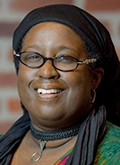
Dr. Mindiola’s research entails the design and assembly of reactive metal complexes, in particular, the application of earth-abundant transition metals in transformations such as the selective activation of carbon-hydrogen bonds. He is also interested in novel catalytic processes mediated by reactive complexes containing metal-ligand multiple bonds and their involvement in important reactions (reactions that are non-combustion based) with natural resources such as Natural Gas and Shale Gas.

Dr. Mindiola has given over 200 lectures worldwide and published over 160 papers in peer-reviewed journals.

Jacqueline Patterson: 2024 Carnot Prize from Kleinman Center

caption: Jacqueline PattersonThis year marks the Kleinman Center for Energy Policy’s ninth annual Carnot Prize for distinguished contributions to energy policy—and the 2024 recipient is Jacqueline Patterson, a trailblazer in environmental justice and a champion for frontline communities.

Dr. Patterson is the founder and executive director of the Chisholm Legacy Project, a resource hub for Black frontline climate justice leadership. Before this, she served for over a decade as the senior director of the NAACP’s Environmental and Climate Justice Program—a program she founded.

During her tenure, Dr. Patterson designed and implemented a robust portfolio that supported state and local leaders, with a reach that extended to hundreds of communities on the frontlines of environmental injustice.

A lecture in her honor will be given on Monday, November 4 by Shelley Welton, Presidential Distinguished Professor of Law and Energy Policy at the Kleinman Center and Penn Carey Law. Register for the event here.

Features

Two Lines Sculpture by George Rickey Installed at Morris Arboretum & Gardens

caption: Two Lines by George Rickey is a kinetic sculpture, moving according to the law of gravity and the vagaries of the wind that has been installed at Morris Arboretum & Gardens. Photo by Eric Sucar.Sitting at the top of Morris Arboretum & Gardens, Two Lines is situated in an open area, welcoming visitors to the space. It is tall, silver-colored, and narrow, a kinetic sculpture moving according to the law of gravity and the vagaries of the wind.

The piece sits where the Morris Mansion used to be, on a hillside overlooking the rose garden, said Bryan Thompson-Nowak, director of education. The Mansion was demolished in 1968, but the site is historic and significant to the place, he said.

The piece was acquired in 1993. The artist, George Rickey, was fascinated by engineering and mechanics, designing kinetic sculptures that were featured in collections at the Metropolitan Museum of Art, Museum of Modern Art, and Guggenheim.

“It’s a dynamic sculpture; people are drawn to it,” Mr. Thompson-Nowak said. “It’s been there for 30 years, but it feels timeless.”

Penn Today article by Kristina García, October 8, 2024.

caption: Looking into the sun, an overhead view of Two Lines. Photos by Eric Sucar.

Events

Update: October AT PENN

Fitness & Learning

Common Press

In-person events at Common Press, Fisher Fine Arts Library. Info and to register: https://tinyurl.com/common-press-events.

22            Letterpress Printing; 2 p.m.

28            Celebrating Immigrant Stories with Penn Libraries; 10 a.m.-1 p.m.

Penn Libraries

Various locations. Info and to register: https://www.library.upenn.edu/events.

23            Academic Autumn: Citation Management Tools Featuring EndNote and Zotero; noon; virtual.

24            Bookbinding: Drum Leaf Binding; 4-7 p.m.; B level seminar room, Fisher Fine Arts Library.

                Coffee with a Codex: Dictionary of the Arabic Language; noon; online webinar.

                Create Interactive Halloween Cards; 1 p.m.; Education Commons.

25            Modelling the Middle Ages: VisColl as a Digital Tool for Manuscript Research; Suzette van Haaren, Ruhr-Universität Bochum; noon; online webinar.

28            BioCyc Fall Workshop; 10:30 a.m.; Gershwind & Bennett Family Collaborative Classroom, Holman Biotech Commons.


Films

22            64 Days: The Insurrection Playbook; screening and conversation with filmmaker Nick Quested; 6-8 p.m.; Public Trust, 4017 Walnut Street (Cinema & Media Studies).

23            The Green Ray; screening and a discussion with exhibiting artist Joanna; 6 p.m.; Institute of Contemporary Art (ICA).

24           Exposing Muybridge; includes conversation with director Marc Shaffer; 4:30 p.m.; Rainey Auditorium, Penn Museum (Cinema & Media Studies).


Talks

22            Brain Ultrasound for the Evaluation of Infants HIV-Exposed Uninfected in Botswana; Hansel Otero, CHOP; noon; online and room 1402, Blockley Hall; register: https://tinyurl.com/brain-oct-22 (Medical Ethics & Health Policy).

                 Climate Change in the Courts; Corinne Snow, Wharton School; noon; room 213, Gittis Hall (Penn Carey Law).

                 Juneteenth: Faith & Freedom; Rasool Berry, The Bridge Church; 6:30 p.m.; Harold Haskins Multipurpose Room, W.E.B. Du Bois College House (Africana Studies).

23            Improving Child Survival and Well-Being in Vulnerable Populations: Evidence-Based and Community-Driven Solutions; Grace Chan, Harvard University; 9 a.m.; online webinar and room 701, Blockley Hall (Center for Clinical Epidemiology and Biostatistics).

                  Exploring the Bacterial Terpenome; Jeffrey Rudolf, University of Florida; noon; Carolyn Hoff Lynch lecture Hall, 1973 Chemistry Building (Chemistry).

                  Rickets in the History of Medicine: Bit Player or “A-Lister”?; Christian Warren, Brooklyn College; 4 p.m.; online webinar and Gershwind & Bennett Family Collaborative Classroom, Biotech Commons (Bates Center).

                  An Architecture That Cares; Lina Ghotmeh, architect; 6:30 p.m.; Plaza Gallery, Meyerson Hall (Architecture).

24            Kagome Metals and Their Unusual Electronics Properties; Stephen Wilson, University of California, Santa Barbara; 10:30 a.m.; info: https://tinyurl.com/kagome-oct-24 (Engineering).

                  America’s Growth Regions; panel discussion; 11 a.m.; zoom webinar; register: https://tinyurl.com/growth-oct-24 (PennIUR).

                  Complicated Implant Placement: Short and Long Term Considerations; Brian Ford, oral & maxillofacial surgery; noon; online and LL-20 A/B, Evans Building; register: https://tinyurl.com/implant-oct-24 (Penn Dental Medicine).

                  Experience Effects and Technology Adoption: Evidence from Aortic Valve Replacement; Kelly Yang, Indiana University; noon; online and room 1104, Blockley Hall; register: https://tinyurl.com/experience-oct-24 (Medical Ethics & Health Policy).

                  Unraveling the Consequences of South Korea’s Demographic Policies on Women’s Empowerment; Soosun You, political science; noon; room 310, 3600 Market St (Korean Studies).

                  Disorienting Politics: Chimerican Media and Transpacific Entanglements; Fan Yang, University of Maryland, Baltimore County; 12:15 p.m.; room 500, Annenberg School (Cinema & Media Studies).

                  In Conversation; Joanna Piotrowska & Hallie Ringle, artists; 6 p.m.; Institute of Contemporary Art; register: https://tinyurl.com/ica-oct-24 (ICA).

25              Recognition of Second-Language (L2) Speech by Human and Machine Listeners; Ann Bradlow, Northwestern University; 10:15 a.m.; online webinar (Linguistics).

                  Interlocking Institutions: Welfare, Punishment, and the Governance of Crossover Youth; Catherine Sirois, Brown University; noon; room 353, McNeil Building (Sociology).

                  Chemoautotrophic Production in Hydrothermal Systems; Stefan Sievert, Woods Hole Oceanographic Institution; 3 p.m., room 358, Hayden Hall (Earth & Environmental Studies).

28              Literal Brain Control: The Resurgence of Psycho-Surgery and the Search for a Science of Violence in the 1960s and 1970s; Rebecca Lemov, Harvard University; room 392, Cohen Hall (History and Sociology of Science).

                  The New Civic Commons: How Public Libraries Can Build Social Cohesion & Promote Civic Renewal; Shamichael Hallman, Urban Libraries Council; 3:30 p.m.; Zoom webinar; register:  https://bit.ly/sprk24 (Penn Libraries).


Economics

In-person events. Info: https://economics.sas.upenn.edu/events.  

23            Non-Traditional Credentials in LaborMarkets: Design and Impact; Susan Athey, Stanford University; 3:30 p.m.; room 100, PCPSE (Economics).


Graduate School of Education

Info and to register: https://www.gse.upenn.edu/news/events-calendar.

22            The Intersection of Title IX and Disability; Jasmine E. Harris, Penn Carey Law School; noon; Zoom webinar.


Mathematics

In-person events. Info: https://www.math.upenn.edu/events.

24            Monodromy of Families of Curves in Surfaces; Nick Salter, University of Notre Dame; 3:30 p.m.; room 3W2, DRL.

28            A Logic of Belief Revision in Simplicial Complexes; Philip Sink, Carnegie Mellon University; 3:30 p.m.; online webinar.

                The Stable Homology of Dihedral Group Hurwitz Spaces; Aaron Landesman, Harvard University; 3:30 p.m.; room 4N30, DRL.


Physics & Astronomy

Info: https://www.physics.upenn.edu/events/.

23            Experimental Particle Physics: Expanding Horizons: Novel Strategies in Low Mass BSM Physics Exploration with CMS; Abhijith Gandrakota, Fermilab; room 2C6, DRL.

                The Present and Future of High-Energy Neutrino Astronomy; Naoko Kurahashi Neilson, Drexel University; 3:30 p.m.; room 4E19, DRL.


This is an update to the October AT PENN calendar. To submit events for future AT PENN calendars and weekly updates, email the salient details to almanac@upenn.edu.

Crimes

Weekly Crime Reports

Division of Public Safety

University of Pennsylvania Police Department Crime Report

About the Crime Report: Below are the Crimes Against Persons and/or Crimes Against Property from the campus report for October 7-13, 2024. The Crime Reports are available at: https://almanac.upenn.edu/sections/crimes. Prior weeks’ reports are also online. –Eds.

This summary is prepared by the Division of Public Safety (DPS) and contains all criminal incidents reported and made known to the Penn Police, including those reported to the Philadelphia Police Department (PPD) that occurred within our patrol zone, for the dates of October 7-13, 2024. The Penn Police actively patrol from Market Street to Baltimore Avenue and from 30th Street to 43rd Street in conjunction with the Philadelphia Police.

In this effort to provide you with a thorough and accurate report on public safety concerns, we hope that your increased awareness will lessen the opportunity for crime. For any concerns or suggestions regarding this report, please call DPS at (215) 898-7297. You may view the daily crime log on the DPS website.


Penn Police Patrol Zone

Market Street to Baltimore Avenue and from 30th Street to 43rd Street

Crime Category

Date

Time

Location

Description

Arson

10/07/24

4:04 PM

3700 Chestnut St

Arson at a commercial building

Assault

10/11/24

12:41 AM

3400 Spruce St

Simple assault (domestic)


10/12/24

6:44 AM

3935 Walnut St

Offender struck complainant in the face with an open hand

Auto Theft

10/10/24

6:49 PM

3925 Walnut St

E-bike theft


10/13/24

1:58 PM

4028 Walnut St

Theft of a secured scooter


10/13/24

9:24 PM

3925 Walnut St

Secured scooter taken from bike rack

Bike Theft

10/07/24

8:27 PM

108 S 40th St

Unsecured bike taken from bike rack


10/11/24

2:51 PM

3141 Chestnut St

Bicycle theft

Burglary

10/07/24

10:12 AM

4233 Chestnut St

Burglary of packages and bicycle from garage area


10/08/24

2:18 PM

3945 Chestnut St

Unknown offender entered location without authorization; took packages from mailboxes and common area


10/10/24

10:13 AM

4247 Locust St

Burglary

Harassment

10/13/24

8:09 AM

3400 Spruce St

Harassment (domestic)

Retail Theft

10/07/24

11:32 AM

4233 Chestnut St

Retail theft of alcohol


10/13/24

11:29 AM

4233 Chestnut St

Retail theft

Robbery

10/13/24

9:18 PM

3400 Market St

Cellphone and ear pods taken

Sex Offense

10/09/24

2:36 PM

Confidential

Unknown offender exposed himself to complainant


10/11/24

7:52 PM

Confidential

Complainant inappropriately touched by offender


10/11/24

8:58 AM

Confidential

Unknown offender exposed himself to complainant

Theft from Building

10/08/24

10:43 AM

4233 Chestnut St

Theft of an unsecured bicycle from common area


10/10/24

2:03 PM

119 S 31st St

Theft from a building


10/10/24

3:41 PM

3945 Chestnut St

Package taken from location


10/10/24

2:40 PM

3620 Locust Walk

Unsecured laptop charger taken from cubicle


10/11/24

8:13 PM

3333 Walnut St

iPhone taken from location

Theft Other

10/07/24

11:12 AM

4234 Spruce St

Package taken from porch/Arrest


10/09/24

11:24 PM

200 S 39th St

Backpack left in bushes taken


10/09/24

11:47 AM

4241 Sansom St

Package taken from location


10/11/24

7:44 PM

3901 Locust Walk

Unattended backpack taken from park bench

Vandalism

10/07/24

6:12 PM

3401 Grays Ferry Ave

Graffiti sprayed on listed location


10/08/24

5:00 AM

3730 Walnut St

Sidewalk spray painted


Philadelphia Police 18th District

Schuylkill River to 49th Street & Market Street to Woodland Avenue

Below are the Crimes Against Persons from the 18th District: 2 incidents were reported for October 7-13, 2024 by the 18th District, covering the Schuylkill River to 49th Street & Market Street to Woodland Avenue.

Crime Category

Date

Time

Location

Aggravated Assault

10/07/24

5:05 PM

4504 Pine St

Robbery

10/08/24

12:54 PM

4824 Chester Ave


The Division of Public Safety offers resources and support to the Penn community. DPS developed a few helpful risk reduction strategies outlined below. Know that it is never the fault of the person impacted (victim/survivor) by crime.

  • See something concerning? Connect with Penn Public Safety 24/7 at (215) 573-3333.
  • Worried about a friend’s or colleague’s mental or physical health? Get 24/7 connection to appropriate resources at (215) 898-HELP (4357).
  • Seeking support after experiencing a crime? Call Special Services - Support and Advocacy resources at (215) 898-4481 or email an advocate at specialservices@publicsafety.upenn.edu
  • Use the Walking Escort and Riding services available to you free of charge.
  • Take a moment to update your cellphone information for the UPennAlert Emergency Notification System
  • Download the Penn Guardian App which can help Police better find your location when you call in an emergency.
  • Access free self-empowerment and defense courses through Penn DPS.
  • Stay alert and reduce distractions; using cellphones, ear buds, etc. may limit your awareness.
  • Orient yourself to your surroundings. (Identify your location, nearby exits, etc.)
  • Keep your valuables out of sight and only carry necessary documents.

Bulletins

Penn Global Accepting Applications for Dissertation Grants

Penn Global has announced that applications are now open for Penn Global Dissertation Grants. These grants provide up to $8,000 in funding to selected Penn PhD students to incorporate global components into their early-stage dissertation research or expand their work toward future global leadership opportunities. Applications for the dissertation grants are open until December 1. Apply at https://apply.interfolio.com/130633.

Penn Alumni and Provost’s Office Seek Nominations for Faculty Award of Merit

The Faculty Award of Merit Presented by Penn Alumni was established in 2014 by Penn Alumni and the Office of the Provost. It is presented annually to an individual or group of collaborators that has made an outstanding contribution to alumni education and engagement at Penn by sharing their unique scholarship work with the alumni community.

=Special emphasis is placed on faculty members who go above and beyond the call of duty by engaging Penn alumni with the University as their intellectual home and educate the faculty community about the alumni engagement opportunities available to them. The 2024 honoree was André Dombrowski, the Frances Shapiro-Weitzenhoffer Associate Professor of 19th Century European Art in the Department of the History of Art. The award consists of a formal citation and will be presented during the fall Alumni Award of Merit Gala.

All Penn faculty, staff, and alumni are eligible to nominate a faculty member for this award. For more information about award criteria and eligibility, or to nominate a faculty member, visit www.alumni.upenn.edu/FacultyAwardofMerit. Nominations are due by February 1, 2025.

eShip@Penn Provides Enhanced Website and Payment Security

Recent upgrades to the eShip@Penn express-shipping website offer users a streamlined platform and a security-enhanced payment portal. eShip is a simple and efficient way for faculty and staff to ship packages off-campus. Among its benefits are a create-your-own-address-book feature, international and regulatory shipping support, and the ability to compare shipping prices in real time. Click here to get started and here for helpful video tutorials.

Back to Top