News

From the President: The Responsibilities of Our Penn Community

November 10, 2023

College and universities across the country are experiencing disturbing acts of hate on their campuses—Penn is no different. I write to condemn all acts of hate that are perpetrated on our campus, to affirm our responsibilities as members of this community, and to make clear that we take seriously and will vigorously pursue any violation of our policies or the law.

Students, faculty, and staff choose to join the Penn community to pursue their educational interests and advance meaningful careers. As we pursue these aspirations, we are also responsible for how we conduct ourselves. Our students commit to the Code of Student Conduct, our faculty and staff commit to Principles of Responsible Conduct, and the rights and responsibilities of our faculty are further outlined in the Faculty Handbook and of our staff in the HR Policy Manual. I would encourage every member of our community to read and be familiar with these important expectations and standards.

Over the past few weeks, Penn has experienced appalling acts of antisemitism and other forms of hate on our campus—swastikas drawn on our walls, hateful antisemitic messages projected on our buildings, disturbing emails threatening violence to individuals purely based on their Jewish and other identities, viral videos of people spewing hateful rhetoric or ripping down posters. Each incident is abhorrent and has brought tremendous pain to Jewish students, faculty, and staff and to our Penn community.

Please be assured that we are investigating these and other potential acts of hate, and where relevant, are working with local and federal authorities. Individual personnel matters or student disciplinary cases are confidential, and we cannot comment on them. But I want to make clear that Penn is and will continue to take action on any violation of our policies or the law.

If anyone in our community experiences an act of bias or discrimination, please report it through Penn’s Bias Incident Reporting process. If there is any threat to your physical safety, or you are being harassed online, please contact our 24/7 PennComm Emergency Call Center at (215) 573-3333 immediately. Additional information on University resources for safety and support can also be found on Penn’s website.

To move forward and to advance our academic mission, we must come together as a community that condemns hate and finds ways to respectfully debate and talk across difference. Especially in this challenging time, each of us needs to recognize the responsibilities we share to one another and to our community.

—M. Elizabeth Magill, President, Trustees University Professor and Professor of Law

From the President: Responding to Antisemitic Threat to Campus

November 6, 2023

Dear Members of the Penn Community,

Today, I learned that a small number of Penn staff members received vile, disturbing antisemitic emails threatening violence against members of our Jewish community, specifically naming Penn Hillel and Lauder College House. These messages also included hateful language, targeting the personal identities of the recipients. Penn’s Division of Public Safety was immediately notified and responded. Penn Police also notified the FBI of this potential hate crime and a joint investigation is underway.

Based on these emails, Penn’s Division of Public Safety conducted thorough safety sweeps of Penn Hillel and Lauder College House and found no credible threat at this time. Penn Police will remain on site until further notice and has increased security presence throughout our campus.

At a time when campuses across the country are being targeted with these types of threats, my first and highest priority is the safety and security of our community. Threats of violence are not tolerated at Penn and will be met with swift and forceful action. Penn Public Safety is working urgently with the FBI to identify the individual or individuals who are responsible for these hateful, threatening emails and to ensure they are apprehended and punished to the fullest extent of the law. As I shared last week, Penn Police and Allied Security continue to provide increased security to Penn Hillel, the Katz Center, Lubavitch House, and other religious and cultural spaces, as well as at all rallies, protests, vigils, and other campus gatherings.

The perniciousness of antisemitic acts on our campus is causing deep hurt and fear for our Jewish students, faculty, and staff and shaking their sense of safety and belonging at Penn. This is intolerable. I condemn personally these vicious and hateful antisemitic acts and words.

Every member of the Penn community deserves to feel safe on our campus. If there is any threat to your physical safety or to the physical safety of a member of our community, please contact our 24/7 PennComm Emergency Call Center at (215) 573-3333.

—M. Elizabeth Magill, President, Trustees University Professor and Professor of Law

From the President: President Liz Magill’s Remarks at the Stated Meeting of the Trustees

November 3, 2023

For nearly 300 years—we are looking forward to our 268th Commencement in June—Penn has created knowledge, shared it for good, and educated the next generation. With everything I have, I believe in the power and importance of our mission. It must continue, and it will continue. But this is a dark and difficult time for the world. And it is a dark and difficult time for Penn.

Many in our community have an immediate connection to the war—to Israel, to Gaza, to the region. So many lives have been taken or shattered, with families and communities ripped apart. Voices are being raised on all sides. We see some sharing light and reaching for unity. We see some sowing fear and stoking division.

Antisemitism is resurgent in our society. There have been swastikas and hateful graffiti on our campus—here in our home. There have been chants at rallies, captured on video and widely circulated, that glorify the terrorist atrocities of Hamas, that celebrate and praise the slaughter and kidnapping of innocent people, and that question Israel’s very right to exist. There are other examples from other campuses, and there will be more. It is difficult to fully convey how sickened, and how horrified, and how angry I am. I condemn personally these hateful—hateful—antisemitic acts and words, which are nothing but inhumane. And I assure you that Penn has and will investigate any act of hate on our campus and take full action in accordance with our policies and our laws.

The vibrant engagement of Jewish faculty, students, staff, and alumni has long been such an important part of who Penn is. To see their sense of belonging shaken by this hurt and fear—that is intolerable.

I have sought to communicate these and other core beliefs clearly. I’ve heard from some that I have not been as effective as I could or should have been. This left room for doubt—doubt about my convictions, what our University believes, and how Penn moves forward from this. I regret that, and I am listening.

Here is where I stand, and where Penn stands, and how we will move forward, together.

We will continue to ensure the safety and security of our community, while safeguarding our ability to carry out our academic mission. We have and will investigate and pursue those who commit acts of hate, like the drawing of swastikas, that violate the law or our policies.  We will not tolerate—and take immediate action against—any violence or incitement to violence. We have increased security across campus. Penn Police and Allied Security are at every event, rally, protest, and vigil. We have strengthened security for Penn Hillel, the Katz Center, Lubavitch House, and spaces where our Muslim students worship at the Christian Association. We are ensuring students have access to safety escorts, mental health, wellness, and pastoral support.

We will fight antisemitism and strive to be what I hope is one of many higher education leaders on how to address this urgent challenge. This campus cannot and will not be a comfortable or uncontested space for evil and hatred. On Wednesday, I announced an Action Plan to Combat antisemitism, centering on three key areas: Safety and Security, Engagement, and Education. The plan includes the creation of a new Task Force composed of faculty, students, staff, and alumni leaders, and our Penn Dental Dean Mark Wolff will be the chair, for which I am deeply grateful.

The interconnectedness of antisemitism and other forms of hate also demands our attention and action. I will soon convene and charge a Presidential Commission on these broad challenges, which will be chaired by Penn Engineering Dean Vijay Kumar and Penn GSE Dean Katharine Strunk.

We will also defend the free exchange of ideas that is essential to our educational mission. Those in positions of leadership must not act as censors. Our duty is to ensure that our faculty and student scholars have freedom and security to pursue academic discourse unthreatened. At the same time, we will contest hateful views and repellant ideas on our campus. We can counter hate speech. And we will. That is what moral leadership demands.

We will also strengthen the ties that connect us to one another. This is essential. Our Jewish community is afraid. Our Muslim, Arab, and Palestinian communities feel unseen and unheard. I condemn the death threats and doxxing that many at Penn are experiencing based only on their identity, their affiliations, or their views of the suffering in this war.

I am a president for all people in this community. We must find common ground on which to support and protect each other and this University. We must, together, bring our research, our teaching, our service missions to bear on urgent challenges. We must do this while advancing understanding aided by all the amazing resources of this extraordinary institution. That is why the actions I have outlined will be well-integrated with our strategic planning for the University’s future.

I and Penn commit to these things. But I need help from every member of the Penn family.

To move forward and to uphold our academic mission, we must stand together as a community. A community that condemns hate and finds ways to respectfully debate and talk across difference. A community that leads with care and compassion. I want and I welcome your insights, expertise, and partnership.

For our alumni who have made clear their anger, pain, and disappointment, we need and want them, too. I hope, with time and progress on our goals, that they will once again engage with Penn. And I will work tirelessly to regain that trust.

It is the honor of my lifetime to lead this amazing University. I am grateful for the strong support I have received from so many, including the Board of Trustees, and I am listening carefully and respectfully to those who want Penn to do better.

I was lucky enough to have a great mentor, Justice [Ruth Bader] Ginsburg. She said, “Fight for the things you care about, but do it in a way that will lead others to join you.” Above all, I care about Penn, our people, and our noble missions. That’s what I’m fighting for, and it is my sincerest hope that, even when we disagree, everyone who loves Penn will join the effort. Thank you.

For the full list of messages, visit https://supporting-our-community.upenn.edu/university-messages.

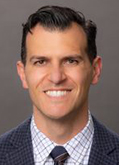
Michael Glick: Fields-Rayant Endowed Professor of Integrative Global Oral Health

caption: Michael Glick Penn Dental Medicine has named Michael Glick the Fields-Rayant Endowed Professor of Integrative Global Oral Health within the school’s department of preventive & restorative sciences and department of oral medicine, where Dr. Glick has joint appointments.  This endowed professorship was made possible through the support of Penn Dental Medicine alumnus Garry Rayant, GD’77, and his wife, Kathy Fields, who made a major gift in 2021 to both create the professorship and provide foundational support to establish the school’s Center for Integrative Global Oral Health (CIGOH).

Since joining Penn Dental Medicine in 2021 as executive director of CIGOH, Dr. Glick has been moving the work of the school’s first policy center forward. Under his leadership, the CIGOH team is building collaborations with educators, researchers, and policymakers to address the challenges of achieving equitable oral health around the globe.  Among some of the key CIGOH initiatives to date are the establishment of the Cochrane Oral Health Collaborating Center at Penn Dental Medicine, the launch of an annual Global Oral Health Forum, and the addition of a new academic offering with a master of science in oral and population health.

“With his leadership in helping to guide the development of CIGOH, Dr. Glick is well suited for the inaugural appointment to this professorship,” says Penn Dental Medicine’s Morton Amsterdam Dean, Mark S. Wolff. “We are tremendously grateful to Drs. Rayant and Fields for helping to ensure the future strength and growth of CIGOH by endowing this professorship.”

Summary Annual Report for University of Pennsylvania Health and Welfare Plan for Retirees and Disabled Employees

This is a summary of the annual report of the University of Pennsylvania Health and Welfare Plan for Retirees and Disabled Employees (Plan No. 530) sponsored by The Trustees of the University of Pennsylvania, EIN 23-1352685, for the plan year January 1, 2022 through December 31, 2022. The annual report has been filed with the Employee Benefits Security Administration, as required under the Employee Retirement Income Security Act of 1974 (ERISA). Please note that not all employees are eligible to participate in the plan. Please consult your plan materials for specific eligibility information.

Retiree benefits were provided through a combination of self-insured payments from the University’s general assets, payments from a trust fund established to fund retiree benefits, and insurance contracts with third party insurance companies.

Medical, Dental and Prescription Drug Benefits

Insurance Information

The plan has contracts with Aetna Health, Inc. and Metropolitan Life Insurance Company to pay medical and dental claims incurred under the terms of the contracts. The total premiums paid for the plan year ending December 31, 2022 were $3,218,562.

Basic Financial Information

The value of Plan assets, after subtracting liabilities of the Plan, was $709,498,612 as of December 31, 2022, compared to $744,136,442 as of January 1, 2022. During the plan year the plan experienced a decrease in its net assets of $34,637,830. This decrease includes net unrealized appreciation in the value of plan assets; that is, the difference between the value of the plan’s assets at the end of the year and the value of assets at the beginning of the year or the cost of assets acquired during the year. The plan had total income of $2,555,990, including employee contributions of $10,620,300, employer contributions of $22,911,867 and losses from investments of $30,976,177.

Plan expenses were $32,794,366. These expenses included $3,583,124 in administrative expenses and $29,211,242 in benefits paid to participants and beneficiaries.

Life Insurance Benefits

The plan has a contract with Metropolitan Life Insurance Company to pay life insurance claims incurred under the terms of the contract. The total premiums paid under this contract for the plan year ending December 31, 2022 were $1,180,892.

Your Rights to Additional Information

You have the right to receive a copy of the full annual report, or any part thereof, on request.  The items listed below are included in that report:

  1. An accountant’s opinion;
  2. Financial information;
  3. Information on payments to service providers;
  4. Assets held for investment; and
  5. Insurance information.

To obtain a copy of the full annual report, or any part thereof, write the office of the plan administrator, c/o Retiree Medical Administration, University of Pennsylvania, 3451 Walnut Street, 600 Franklin Building, Philadelphia, PA 19104-6205. The charge to cover copying costs will be $5.00 for the full annual report or 25 cents per page for any part thereof.

You also have the right to receive from the plan administrator, on request and at no charge, a statement of the assets and liabilities of the plan and accompanying notes, or a statement of income and expenses of the plan and accompanying notes, or both. If you request a copy of the full annual report from the plan administrator, these two statements and accompanying notes will be included as part of that report. The charge to cover copying costs given above does not include a charge for the copying of these portions of the report because these portions are furnished without charge.

You also have the legally protected right under ERISA to examine the annual reports in the offices of the Employer at the address for the plan administrator, above, and at the U.S. Department of Labor in Washington, D.C., or to obtain a copy from the U.S. Department of Labor upon payment of copying costs. Requests to the Department should be addressed to: Public Disclosure Room, Room N-1513, Employee Benefits Security Administration, U.S. Department of Labor, 200 Constitution Avenue, N.W., Washington, D.C. 20210.

Paperwork Reduction Act Statement

According to the Paperwork Reduction Act of 1995 (Pub. L. 104-13) (PRA), no persons are required to respond to a collection of information unless such collection displays a valid Office of Management and Budget (OMB) control number. The department notes that a Federal agency cannot conduct or sponsor a collection of information unless it is approved by OMB under the PRA, and displays a currently valid OMB control number, and the public is not required to respond to a collection of information unless it displays a currently valid OMB control number. See 44 U.S.C. 3507. Also, notwithstanding any other provisions of law, no person shall be subject to penalty for failing to comply with a collection of information if the collection of information does not display a currently valid OMB control number. See 44 U.S.C. 3512.

The public reporting burden for this collection of information is estimated to average less than one minute per notice (approximately 3 hours and 11 minutes per plan). Interested parties are encouraged to send comments regarding the burden estimate or any other aspect of this collection of information, including suggestions for reducing this burden, to the U.S. Department of Labor, Office of the Chief Information Officer, Attention: Departmental Clearance Officer, 200 Constitution Avenue, N.W., Room N-1301, Washington, DC 20210 or email DOL_PRA_PUBLIC@dol.gov and reference the OMB Control Number 1210-0040. OMB Control Number 1210-0040 (expires 03/31/2026).

School of Arts and Sciences: Living the Hard Promise Dialogue Series

Open expression is a hard promise: it is both a firm commitment and an extraordinarily difficult one. The mission of a great University requires that we question our assumptions and try to look through the eyes of others. Only through such dialogue can we begin to wrestle with the most challenging issues of our times.

In recent weeks, as students, faculty, and staff have confronted and grieved the horrific and tragic events in Israel and Gaza, we have experienced pain, fear, and anger. Yet, even amid the political and emotional turmoil, we believe in the ability of our community to engage across differences. We must not allow personal and moral outrage to overtake our capacity for listening and learning, which even in times of conflict and crisis are critical components of our mission as an educational institution.

At this pivotal moment, Penn Arts & Sciences commits to upholding the hard promise of open expression and respectful dialogue. We reject hate and violence unequivocally, and we embrace the spirit of free exchange without reservation.

To create spaces in which the University community can begin the process of working through these tremendous challenges, Penn Arts & Sciences is launching the Living the Hard Promise initiative.

Beginning with the premise that these are difficult questions without simple solutions, this series calls upon us to become a campus community that engages all our members in empathetic dialogues. It will inform our understanding of today’s most pressing issues—from the concerns of Israelis and Palestinians to the rise of organized hate in the United States to the challenges of upholding free speech while ensuring civility and mutual respect.

The Living the Hard Promise dialogue series will engage the campus community and beyond through the following programs:

  • Conversations: Small-group discussions that bring students together to explore concerns and to learn from and about each other.
  • Symposiums: These programs will feature faculty and others with expertise in areas that speak to the complexity of current events.
  • Reflections: Public programs that bring broader audiences into our campus conversations.

In the coming weeks, we will share more about these events. In the meantime, we want to hear from you about those issues that interest you most. Please visit this link to tell us about topics you would like our community to discuss.

We recognize these conversations won’t solve the world’s problems, but they are a start. We trust that this series will reinvigorate our engagement in the essential work of a university: establishing dialogue, opening us to ideas, learning from each other, and respecting one another’s dignity and humanity. This is what defines a school of arts and sciences. This is the core of the hard promise we make to our community.

—School of Arts and Sciences

Providing Students with Book ISBNs and Price Information

The Higher Education Opportunity Act requires universities to make available to students, for each course, the International Standard Book Numbers (ISBNs) and price information for required/recommended books and supplemental materials.

To comply with this requirement, the University of Pennsylvania works closely with Barnes & Noble Education, managers of the Penn Bookstore, to maintain a simple and cost-effective process to provide ISBNs to our students. Through the bookstore’s online system, students have access to a complete list of materials for their courses along with the ISBNs for each listed text. Textbook information can be provided to other vendors, and students are in no way required to purchase their books at the Penn Bookstore. Faculty can also indicate that no course materials are required, which helps to ensure the completeness of the University’s reporting.

We greatly appreciate the efforts of Penn faculty members to work with the Penn Bookstore to provide this important information for our students. For additional information, or to submit your course materials directly, you can visit: http://www.upenn.edu/coursematerials.

—John L. Jackson, Jr., Provost
—Karen Detlefsen, Vice Provost for Education

Deaths

J. Scott Armstrong, Marketing

caption: J. Scott ArmstrongJ. Scott Armstrong, an emeritus professor of marketing at the Wharton School, died on September 28 due to complications from vascular dementia and Alzheimer’s disease. He was 86.

Born in Philadelphia, Dr. Armstong lived most of his life in the region. He earned two bachelor’s degrees from Lehigh University—one in applied science and the other in industrial engineering, then received a master’s degree in industrial administration from Carnegie Mellon University. After earning his doctorate in management from the Massachusetts Institute of Technology in 1968, Dr. Armstrong joined Wharton’s faculty as an assistant professor in the department of marketing. Four years later, he advanced to the rank of associate professor, and he became a full professor in 1998. He retired from Wharton in 2020 and took emeritus status.

While at Wharton, Dr. Armstrong was internationally recognized for his expertise in forecasting, which is the use of historical data to predict future trends. He held 24 international visiting appointments at 17 universities, including the Stockholm School of Economics (1974-1975), IMD in Lausanne, Switzerland (1980-1981), and the Ehrenberg-Bass Institute at the University of South Australia (2011-2020). Among his achievements, he founded the Journal of Forecasting in 1982, published four books (including the renowned Long-Range Forecasting and Principles of Forecasting: A Handbook for Researchers and Practitioners), and authored hundreds of papers and articles. He was also a founder of the International Symposium on Forecasting and http://www.pollyvote.com/, which was launched in 2004 to help predict the results of U.S. presidential elections. He founded http://www.forecastingprinciples.com/ and http://advertisingprinciples.com/ as ways of learning about evidence-based principles and techniques via the internet. In 2016, he and Kesten Green founded the Iron Law of Regulation website, an evidence-based approach to summarize experimental evidence on the effect of regulations on the general welfare.

Dr. Armstrong’s work was heavily awarded. Social Science Research Network’s measure of “impact on researchers” put him in the top 0.1% of roughly 330,000 researchers listed on the site in 2017, and his book, Persuasive Advertising, was a finalist for the American Marketing Association’s “Best Book in Marketing” in 2011. In 2007, he famously challenged former Vice President Al Gore to a 10-year bet, in which $10,000 from the two would be set aside in escrow as Gore pitted his forecast of how much global temperature would increase during that time against a so-called “naive model,” in which temperature would be expected to stay the same. This famous bet caused Dr. Armstrong to be listed in 2010 as the third most famous college professor in the U.S. by collegestats.org. “Scott was one of the most well-known academics of his time, and he will continue to be remembered for his many scientific contributions,” Wharton Deputy Dean Nancy Rothbard said. “He left an indelible mark on the Wharton community, and he will be missed.”

Dr. Armstrong was also an avid runner who logged countless miles over the course of his life. In high school, he joined a relay team that set a record held for 17 years, and in 2007, he won the 70 and older Philadelphia Broad Street Run.

Dr. Armstrong is survived by his wife, Kay; his daughters, Kathy and Jennifer; their spouses, Chris Gillis and Greg Jackson; and his grandchildren, Peter, Astrid, and Sophie. A memorial service was held on October 29.

Contributions may be sent to the Institute for Justice, a nonprofit, public interest law firm, in Dr. Armstrong’s memory.

William N. Mebane III, Perelman School of Medicine

caption: William MebaneWilliam N. “Bill” Mebane III, M’54, a former clinical associate professor in the department of family practice & community medicine in the Perelman School of Medicine, died on October 1. He was 94.

A native of North Carolina, Dr. Mebane graduated from Davidson College and moved to Philadelphia in 1950 to attend the University of Pennsylvania School of Medicine. After receiving his MD in 1954, he interned at Philadelphia General Hospital. After graduating, Dr. Mebane served in the U.S. Army as a battalion surgeon at Fort Benning in Georgia, then returned to Philadelphia in 1957 for a residency in pediatrics at St. Christopher’s Hospital for Children. During this residency, he discovered that pediatrics was his true passion. In 1959, he joined the Chestnut Hill Pediatric Group and the staff of Chestnut Hill Hospital (now renamed Temple Health Chestnut Hill), where he practiced for several decades.

Dr. Mebane was a clinical associate professor of family practice & community medicine in the Perelman School of Medicine from 1997 to 1999. In addition to Penn, Dr. Mebane had a faculty position at Jefferson Medical College and was an active member of the Presbyterian Church of Chestnut Hill, where he performed community volunteer work at home and in Haiti.

“Chestnut Hill Hospital has lost a giant,” said John Scanlon, chief medical officer at Temple Health Chestnut Hill Hospital. “Dr. Mebane was a consummate leader, clinician and teacher, and his caring and compassionate nature is what set him apart from his peers. His contributions to CHH are limitless and will continue to be felt into perpetuity.”

Dr. Mebane and his wife, Marianne, who predeceased him, built houses for Habitat for Humanity and taught school groups at the Morris Arboretum. Dr. Mebane enjoyed biking, golf, and tennis, and especially enjoyed the golfing fellowship of the Wayfair Club and his friends at the Philadelphia Cricket Club. In his later years, he continued to express this passion via the Middle Atlantic Blind Golf Association.

Dr. Mebane is survived by his son, William; his daughters, Jane Luceno and Anne Gibbons; seven grandchildren; and nine great-grandchildren. A memorial service will be held at Foulkeways in Gwynedd at a later date. In lieu of flowers, donations may be made to 88bikes.org and the Foundation for Health Equity, 10 East Springfield Ave, Philadelphia, Pennsylvania, 19118 (f4he.org).

James A. Spady, Fels Institute of Government

caption: James SpadyJames Alan Spady, a vice dean of Penn’s former School of Public and Urban Policy who most recently served as the director of the Fels Institute of Government, died on October 21. He was 90.

Dr. Spady was born in Jersey City, New Jersey, and grew up in Union City. He graduated from the Stevens Institute of Technology in 1955, then began his career as an aerospace engineer at Kearfott for two years. He went on to earn a JD degree from Columbia Law School in 1960, and during the 1960s practiced intellectual property law in New York City with the Sullivan and Cromwell firm. In 1970, he was admitted into the Harvard Kennedy School as a Littauer Fellow; while there, he was invited to enroll in the PhD program by Harvard government department professors Sam Beer and Edward Banfield. He completed his PhD at Harvard in 1976.

During the early 1960s, Dr. Spady entered politics as a volunteer, running campaigns for U.S. Congress and N.J. Assembly and serving on a local planning board, then served as a part-time legislative aide to New York Mayor Ed Koch and to the N.J. Senate Majority Leader. While earning his PhD, Dr. Spady was asked by New Jersey Governor Richard Hughes to create and lead the New Jersey State Law Enforcement Planning Agency to implement new federal criminal justice legislation, and subsequently, the fifty state LEPA directors elected him president of their new association to present collective feedback to the U.S. Department of Justice. Dring the 1970s, Dr. Spady was also the chair of University of Iowa’s graduate program in urban and regional planning.

After earning his PhD, Dr. Spady came to the University of Pennsylvania, where he served in a variety of dual faculty/administrative roles until his retirement in 1997. He began as a popular professor of undergraduate courses on American government and politics. In 1979, Dr. Spady’s role became primarily administrative when President Martin Meyerson appointed him Director of the Office of the President. He continued in that position to facilitate the transition to President Sheldon Hackney’s administration.  In 1982, he became director of the Fels Institute of Government and chairman of its graduate program in government administration, roles he held until 1997. Under Dr. Spady’s direction, the program was an immediate success, producing graduates in government leadership roles, and became closely affiliated with the Graduate School of Fine Arts. Dr. Spady’s extensive volunteer engagement in local politics bolstered the program, which sought to create “dual competence” in graduates—leaders capable of understanding and using technical methods while appreciating and skilled in navigating organizational and political contexts.  Crucial to immersing students in “the other culture that is politics” were Dr. Spady’s legendary “workshops”—weekly three-hour meetings over dinner in the evening, each centered on an eminent visitor, who discussed candidly with students how they managed and led, using their own personal histories as material.

Dr. Spady often received emails and phone calls from graduates letting him know of his impact on their lives and careers.  In a recent email, Seattle City Councilman Alex Pedersen commented that “Nearly every day I am reminded how generous and valuable Dr. Spady’s training was.” Andrea Austin, a partner at Husch Blackwell law firm in Denver, noted that “Jim changed the trajectory of my life, as I know he did for so many others, and influenced so many aspects of the professional I’ve become.” Paul Borgese of the Triana Group noted that “he taught me more about life than anyone.”

Dr. Spady is survived by his wife, June Kinney; his three sons, Jefferson (Carmen), James (Wendy), and John (Lisa); and his grandchildren, Nicholas, Oliver, Spencer and Xiaobo.

A celebration of life will be held on Saturday,  April 13, 2024, 10 a.m. to noon at the Fels Institute of Government at Penn, 3814 Walnut Street, Philadelphia. Contributions in Dr. Spady’s memory may be made to the James A. Spady Scholarship Fund at the Fels Institute of Government.

Anita Summers, Wharton School

caption: Anita SummersAnita Arrow Summers, an emeritus professor of economics in the Wharton School and a leading expert in public policy, died on October 22 after a short illness. She was 98.

Born in Great Neck, Long Island, to immigrants from Romania, and raised in Manhattan, Dr. Summers was born in 1925. She earned her bachelor’s degree at Hunter College in 1945 and a master’s degree at the University of Chicago in 1947, then studied in a doctoral program at Columbia University. Early in her career, she held a position at John D. Rockefeller’s Standard Oil Co. After raising her three sons, Dr. Summers began teaching economics at Swarthmore College in 1967, and in 1971, she joined the Federal Reserve Bank of Philadelphia, heading its urban economics unit. There, she helped enforce the Community Reinvestment Act of 1977, which required banks to make loans available in poor communities. Despite facing and overcoming misogyny in the workplace (chronicled in former Facebook executive Sheryl Sandberg’s 2013 book, Lean In), Dr. Summers became a highly cited scholar who worked at universities around the world, served on numerous boards, and was a sought-after economic adviser to state and local governments.

In 1979, she came to the Wharton School as a research associate at the Samuel Zell and Robert Lurie Real Estate Center. In 1982, Dr. Summers became a professor of legal studies and, a year later, the founding chair of what is now known as the department of business economics and public policy. During the 1980s, Dr. Summers held a secondary position in the School of Nursing. She was active throughout the University: she served as the Wharton School’s ombudsman, then as Penn’s ombudsman from 2001 to 2003 (Almanac September 4, 2001). She also served on the provost’s planning and budget committee from 1984 to 1990. After retiring from Penn in 1991, she continued to teach in Wharton’s MBA program until 2005 and worked in Wharton’s Dean’s office until 2012.

“She was the best community builder I have ever known,” said Joseph Gyourko, a real estate professor in Wharton and the current director of the Zell/Lurie Center. “She was not just talk; she did things. Others saw and emulated her, expanding her influence.” “Dr. Summers was an intellectual giant,” said Wharton Dean Erika James. “She never backed down, she never gave up, and she pushed for excellence in the work. We can all see a bit more clearly because we are standing on her shoulders.”

Dr. Summers was an innovative and sought-after researcher. Her 1977 paper, “Do Schools Make a Difference?,” first published in the American Economic Review, was the first to suggest that school-specific inputs are the best metric of individual schools’ education quality, and colleagues lauded that paper as ahead of its time. She researched the economic changes taking place in southeastern Pennsylvania as it transitioned away from heavy industry, mainly shipbuilding, and wrote several books, including Economic Development Within the Philadelphia Metropolitan Area (1987), with Thomas F. Luce, and Urban Change in the United States and Western Europe: Comparative Analysis and Policy (1999), with two coauthors. “She pioneered the idea that Federal Reserve regional bank economists should work on local and regional issues,” her son, Lawrence Summers, who served as secretary of the U.S. Department of the Treasury under President Bill Clinton, told the Philadelphia Inquirer.

Dr. Summers is survived by her sons, Lawrence, John, and Richard; and seven grandchildren. Services were held on October 25 at Beth David Reform Congregation in Gladwyne.

---

To Report A Death

Almanac appreciates being informed of the deaths of current and former faculty and staff members, students and other members of the University community. Call (215) 898-5274 or email almanac@upenn.edu.

Honors

Penn Alumni: Nine Honored at 2023 Alumni Award of Merit Gala

caption: Top row: Camille Z. Charles, Ali Shapiro Cudby, and Judith Browne Dianis. Middle: Richard David Feintuch, Stanley H. Greene, and Brett Andrew Perlmutter. Bottom: Ann Nolan Reese, Katherine Sachs, and Victor Anthony Scotti Jr.

Penn honored eight distinguished alumni and a faculty member at the 2023 Alumni Award of Merit Gala on Friday, November 3.

Alumni sharing the spotlight were Ali Shapiro Cudby, Richard David Feintuch, Stanley H. Greene, and Ann Nolan Reese, who received the Alumni Award of Merit, and Brett Andrew Perlmutter and Victor Anthony Scotti, Jr., who accepted Young Alumni Awards. Katherine Sachs accepted the Creative Spirit Award and Judith Browne Dianis received the inaugural Penn Alumni Social Impact Award. In addition to the alumni awards, Camille Z. Charles accepted the Faculty Award of Merit.

Ali Shapiro Cudby earned her undergraduate degree from the College of Arts and Sciences in 1991 and an MBA from Wharton in 1997. Ms. Cudby is the author of the bestselling book Keep Your Customers. She began her career in marketing at The New York Times, Animal Planet TV network, and Gold Digest Magazine Group before starting her own firm. Since 2014, she has been the CEO of Alignmint Growth Strategies. Ms. Cudby is recognized for advancing the women of Penn, her leadership and support of the Libraries, and her support and advocacy of the University. For over two decades Ms. Cudby has been an active member of the Trustees’ Council of Penn Women, providing leadership as a tri-chair of the Momentum 2021: The Power of Penn Women conference, with 2,300 participants from more than 50 countries representing people from class years 1955 to 2025. She also has served on the Penn Libraries Board of Advisors since 2016, providing philanthropic leadership aimed at innovation and access.

Judith Browne Dianis, Wharton School Class of 1987, is the recipient of the inaugural Penn Alumni Social Impact Award. She is recognized for her pioneering efforts as a civil rights lawyer, racial justice activist, and voting rights expert. Following Penn, she earned her JD from Columbia Law School, after which she worked as a managing attorney for the NAACP Legal Defense and Educational Fund, and later as the executive director of the Advancement Project, a nonprofit she helped to found. Her career has focused on areas of criminal justice, education, voting, policing, and immigration—all with a mission to combat structural racism. She has used the legal system to restore voting rights for people with felony convictions in Florida, represent displaced Hurricane Katrina victims in Louisiana, to stop politicians from engaging in voter suppression tactics in Ohio, and to ensure equitable allocation of voting machines in Virginia. Ms. Browne Dianis has returned to Penn as a guest speaker on multiple occasions to share her message of hope and social justice. In a 2019 interview with The Pennsylvania Gazette, she said: “We’re in the business of hope. My hope is that we’re building the kind of country we want to see.”

With ties to the Annenberg Center for the Performing Arts that go back more than half a century, Richard David Feintuch, Wharton Class of 1974, is recognized for his enduring commitment to Penn and his class, his commitment to the performing arts on campus, and his role in raising the bar for leadership and philanthropy at Penn Live Arts. After graduating from Penn, he earned a JD from New York University Law School, where he was executive editor of the Law Review. Mr. Feintuch had a distinguished legal career, joining the New York City law firm of Wachtell, Lipton, Rosen & Katz as an associate, eventually rising to partner. He became a recognized leader in the national practice of bankruptcy, restructuring, and financing, working on some of the most significant legal transactions of the era until his retirement in 2004. His love of the theatre and Penn is shared by his wife, Merry Henig, also a member of the Wharton Class of 1974, with whom he made a gift supporting renovations of the Annenberg Center’s lobby. In 2021, Penn Live Arts dedicated the Feintuch Family Lobby in recognition of their philanthropy and service. Their philanthropy also includes support for Penn’s goals of inclusion and access through the Feintuch Family Endowed Scholarship.

Stanley H. Greene, College Class of 1978, is recognized for his steadfast commitment to Penn athletes past, present, and future, and for outstanding leadership of his class. He is president and CEO of PowerThinking Corp., providing resilience training to clients including major corporations like Aflac and Comcast Corp. His previous leadership positions include vice president at Verizon, director of Pennsylvania’s Bureau of Unclaimed Property, and as deputy state treasurer. His career on the men’s basketball team at Penn culminated in an epic run to the NCAA Tournament’s Sweet 16 in his fourth year. Mr. Greene continues to support Penn basketball, and served for nearly a decade on the Basketball Sport Board, and for almost five years as co-chair of the Basketball Alumni Relations Committee. Most recently, he has been on the Athletics Board of the James Brister Society, which helps the University engage alumni of diverse backgrounds as leaders, especially in supporting student athletes, and promoting anti-racism. During the past decade, he has been co-president of the Class of 1978, the reunion chair, and a member of the Alumni Class Leadership Council.

Brett Andrew Perlmutter, College Class of 2009, is recognized as a Young Alumni of Merit for his enduring dedication to Penn and his class, for his advocacy for Penn Traditions, and for his commitment to giving back to Penn. After graduating from Penn, he earned an MPhil from the University of Cambridge. Following stints as a consultant at McKinsey & Company’s New York office and a job with Google Cuba, he is now an advisor to Schmidt Futures, which focuses on venture capital, project financing, and pre-IPO deals. At Penn, Mr. Perlmutter was class president his sophomore year; was instrumental in building Penn Traditions, a student philanthropy and engagement program; and collaborated with Alumni Relations to establish the Final Toast, when seniors rise to alumni status and toast the rising juniors. As an alum, Mr. Perlmutter co-chaired his class’s 5th and 10th reunions and has served on The Penn Fund Executive Board, the Young Alumni Steering Committee, and the Liberal and Professional Studies Employer Advisory Board. He also joined forces with a friend from Penn to establish the William B. Heyer and Brett A. Perlmutter Scholarship to support undergraduate financial aid.

Ann Nolan Reese, Class of 1974 in what is now the College, is recognized for her service, leadership, and commitment to diversity, equity, inclusion, and belonging. After graduating from Penn, Ms. Reese went on to earn an MBA and have a successful 25-year career as a finance executive. After stepping away from finance, she stepped up for vulnerable children as co-founder of the Center for Adoption Policy, which aims to remove legal and policy barriers to domestic and intercountry adoption. In her commitment to Penn, Ms. Reese has been in many leadership roles over the years, including as Penn Alumni President, service on the Board of Trustees with a term as vice chair, and service on the Trustees’ Council of Penn Women, and the Board of Advisors at the School of Social Policy & Practice. She has also been a member of the James Brister Society and played a role in the founding of Penn Leadership Q: The LGBTQ+ Pipeline. Informed by her social justice work and experience as a first-generation student, Ms. Reese has been committed to engage with diverse alumni groups, foster anti-racist education, and promote broader representation in alumni leadership roles. Her philanthropy across Penn runs the gamut from student aid and program funds to faculty and research support.

Katherine Sachs is the recipient of the 2023 Creative Spirit Award. A member of the Class of 1969 in what is now the College, Ms. Sachs is recognized for her unwavering commitment to and support of the arts at Penn and the Philadelphia region, and for her vision and leadership. After graduating with a degree in art history from Penn, she had a successful career as an adjunct curator at the Philadelphia Museum of Art (PMA). Together with her late husband, Wharton alum Keith Sachs, the couple donated 97 works from their private collection of contemporary art to the PMA in 2014, named the Keith L. and Katherine Sachs Collection in their honor. Her leadership at Penn includes service on the Board of Trustees and as chair of the Institute of Contemporary Art (ICA) Board of Advisors. In 2016, Mr. and Ms. Sachs made a landmark gift establishing the Sachs Program for Arts Innovation, which, to date, has funded over 250 projects, distributed about $1.5 million in artistic and creative support, and supported renovations to the Annenberg Center’s public spaces, including creation of the Arts Lounge in the Feintuch Family Lobby. Previous support of the arts at Penn includes the establishment of the Sachs Professorship in Contemporary Art in the School of Arts & Sciences, the Sachs Guest Curator Program at the ICA as well as a fund for contemporary art programming, and establishment of a visiting professorship at the Weitzman School of Design.

Victor Anthony Scotti Jr., College Class of 2013, is recognized as a Young Alumni of Merit for his commitment to cultivating diverse, thriving communities, and his philanthropic support ensuring that even more opportunities are available for each successive generation of Penn students. His leadership at Penn began as a student engaging with the LGBT Center; Makuu, the Black Cultural Center; the Civic Scholars Program; and Alpha Phi Alpha. Since graduating from Penn, Mr. Scotti has worked at tech companies including Google and Netflix, specializing in the intersection of technology, human resources, and diversity, equity, and inclusion. He also established Moving Mountains, LLC, which provides support, mentorship, and professional experience for young Black men, helping equip them for both their professional and personal lives. Mr. Scotti continues to work with Penn’s Alumni Interview Program, the Black Alumni Society, Penn Leadership Q, and on the external advisory board of the College of Arts and Sciences. He is among the youngest alumni to endow a scholarship, establishing the Scotti Legacy Scholarship Fund in honor of his 10th reunion to promote student body diversity and support students who would otherwise be unable to meet the costs of a Penn education.

This year’s Faculty Award of Merit goes to Camille Zubrinsky Charles, the Walter H. and Leonore C. Annenberg Professor in the Social Sciences in the department of sociology, Graduate School of Education, and the department of Africana studies. Dr. Charles is being recognized for her passionate advocacy and academic rigor and efforts to improve the lives of Penn’s diverse alumni communities. Her research focuses on the areas of urban inequality, racial attitudes and intergroup relations, racial residential segregation, minorities in higher education, and racial identity, topics explored in the book Young, Gifted, and Diverse: Origins of the New Black Elite, which she co-authored. In 2011, she was awarded the James Brister Society’s Dr. Gloria Twine Chisum Award for Distinguished Faculty for her leadership in promoting scholarship and inclusion. She was named the inaugural faculty co-director of Penn First Plus in 2018, working to enhance the academic experiences of Penn students from first-generation, modest-income backgrounds. For over 13 years, Dr. Charles has partnered with Alumni Relations as a sought-after panelist at Red and Blue events like Penn Spectrum Weekend, the Penn Alumni Reading Club, Penn Spectrum on the Road, and the annual Martin Luther King, Jr., Symposium.

In addition to the individual awards, the Class of 1993 received the Class Award of Merit, and the Class of 1968 received the David N. Tyre Award for Excellence in Class Communications. The Regional Club Awards included the Club Award of Merit to the PennNYC, the Innovation Award to the Penn Club of Seattle, The Engagement Award to the Penn & Wharton Club of Panama, and the Community Service Award to the Penn Club of Hong Kong.

Penn Medicine Awards and Accolades: November 2023

Donita C. Brady, the Harrison McCrea Dickson and Clifford C. Baker Presidential Professor in Cancer Biology, has been named to the Pew Charitable Trusts’ 2023 class of Innovation Fund investigators. Dr. Brady, a 2016 Pew biomedical scholar, will team up with Kivanç Birsoy, of the Rockefeller University, to identify cell components that regulate—or respond to—transition metals, key dietary nutrients that maintain health in humans and other organisms.

caption: Yanxiang Dengcaption: Lola FayanjuYanxiang Deng, an assistant professor of pathology and laboratory medicine, has been awarded a 2023 Packard Fellowship for Science and Engineering. As a member of the 35th Anniversary class of fellows, Dr. Deng will receive $875,000 over five years to pursue his research, which focuses on developing new tools at the intersection of microchip, microscopy, and genomics to study tissue complexity.

Oluwadamilola “Lola” Fayanju, the Helen O. Dickens Presidential Associate Professor and chief of the breast surgery division, has been named a Breast Cancer Research Foundation (BCRF) Investigator. She was awarded $225,000 for her research to identify and address factors that contribute to racial disparities in breast cancer outcomes that add to treatment delays or decrease treatment adherence.

Carl June, the Richard W. Vague Professor in Immunotherapy, has been named a recipient of the 2023 “Lombardy is Research” Prize for the development of immunotherapy with natural and genetically modified cells. The award recognizes significant research, discoveries, and socially impactful inventions in the field of life science with a specific focus on “Innovative Models of Care, Therapy, and Prevention.” Winners share a €1,000,000 prize.

Roy Rosin, chief innovation officer at Penn Medicine, has been selected for Becker’s Healthcare’s list of Hospital and Health System Chief Innovation Officers to Know in 2023. In this role since 2012, Mr. Rosin is charged with identifying, shaping, and implementing improvements in patient health outcomes and patient experience while also testing for potential new revenue streams. 
Dennis Sourvanos: 2023 ADA Foundation Crest and Oral-B Promising Researcher Award

caption: Dennis SourvanosDennis Sourvanos, GD23, DScD’23, an NIDCR postdoctoral trainee at Penn Dental Medicine, is the recipient of the American Dental Association (ADA) Foundation 2023 Crest and Oral-B Promising Researcher Award. This supports Dr. Sourvanos’ multidisciplinary, translational preclinical research, which has developed new investigative avenues in Photobiomodulation light therapy.


Dr. Sourvanos’s translational research model is based on his prior work, which was published in the Journal of the American Dental Association. This contribution investigated the potential of photobiomodulation to reduce postsurgical pain and accelerate wound healing after dental extraction.

“Photobiomodulation is an approach that not only aligns with the Penn Dental Medicine commitment to non-invasive patient care but also resonates with the institution’s mission to reduce dependency on opioids,” says Dr. Souvanos. “This acknowledgment reflects the inclusive research community at Penn Dental Medicine and the department of radiation oncology at the Hospital of the University of Pennsylvania. I look forward to furthering our collaborative efforts in pushing the boundaries of translational research science.”

The ADA Foundation award will support Dr. Sourvanos in attending scientific conferences, enhancing his expertise, and sharing his research with the broader scientific community.  

Features

Penn Reports Success on Climate and Sustainability Action Plan Goals

caption: Green roofs on Gutmann College House

Between achieving a 46% reduction in carbon emissions since 2009, replacing 92 inefficient ultra-low temperature freezers in labs, adding four electric vans to Penn Transit’s fleet, and much more, the University of Pennsylvania has been meeting the goals of the Climate and Sustainability Action Plan 3.0 (CSAP 3.0), the plan for 2019-2024.

In 2021, President Joe Biden set a target for the United States to achieve a 50% reduction in greenhouse gas pollution from 2005 levels by 2030. And Penn is set to surpass the goal six years early, said Nina Morris, director of Penn Sustainability. When a solar project comes online in January, the drop in emissions will reach approximately 60%. The project is part of a power-purchase agreement Penn signed in 2020 for the largest solar project in the state.

“While the climate emergency is one of the largest challenges in front of us, here at Penn, we are uniquely positioned to bring together global and local knowledge to create a community that builds solutions together,” Ms. Morris said, updating Penn’s Board of Trustees recently about progress on CSAP 3.0.

Penn has been producing five-year climate action plans since 2009. Anne Papageorge, senior vice president for Facilities & Real Estate Services (FRES), said staff members have begun initial discussions about the next CSAP, slated to launch in the fall of 2024.

The current plan laid out more than 100 tactics in academics, utilities and operations, physical environment, waste, procurement, transportation, and outreach and engagement. Ms. Morris said a few procurement goals are being addressed in earnest this year, while tactics in the other six areas have been completed or involve ongoing efforts that are underway.

The key partner on the academic side has been the Environmental Innovations Initiative (EII), established in 2020. Faculty lead Kathy Morrison said EII recently completed a major report on the state of climate, environment, and energy research across Penn. The group also maintains an inventory of environment-related courses and a faculty database to foster education and collaboration on environmental topics and worked with the deans of Penn’s 12 schools to develop public-facing academic climate commitments, laying out goals and aspirations for climate-related research and education.

caption: An electric Penn Transportation bus.

Campus-Wide Efforts

“I think what’s most important to highlight is the collaboration across all facets of the institution,” Ms. Morris told Penn Today. “We’re working closely with faculty to really pull the best knowledge into our practices on our campus, and students are also key to us identifying new ideas and being part of the solutions for climate.”

She said a great example of this is how PennPraxis, the research and engagement arm of the Weitzman School of Design, collaborated with FRES, Business Services, Human Resources, and the Center for Safe Mobility to disseminate a commuter survey in March. Ms. Morris said it garnered more than 4,000 staff and faculty responses, which showed that 72% of trips Penn employees make to work on average are not in single-occupancy cars.

Michael Fichman, a senior research associate at PennPraxis and an associate professor of practice at Weitzman, met in 2020 with the former sustainability director, who wanted to understand how subsidy programs could help employees make more sustainable travel choices. He and colleague Megan Ryerson, UPS Chair of Transportation and associate chair of the department of city & regional planning at Weitzman, “proposed we use some transportation planning survey techniques to build a richer picture of how people get around,” Mr. Fichman said. “COVID-19 made it difficult to find a time to launch the survey, but it finally went out early this year.”

He said they used routing algorithms to examine travel alternatives and identify geographic areas where people said they wanted to make sustainable choices but lacked options. They got help from several master’s and PhD students, which Mr. Fichman said gave them a “taste of client relations, project management and some critical soft skills.”

Jasmine Siyu Wu, a PhD student in the department of city & regional planning at Weitzman, was responsible for analyzing survey data and producing final deliverables. Ms. Wu used spatial data analytic skills to profile commuter behaviors and composed a final report for administrators. 

The survey “was designed to allow FRES and its partners at the University to work towards decreasing the University’s carbon footprint using incentives to promote lower-carbon travel” and to fill information gaps on travel behavior, Ms. Wu said. She believes the information from the survey will help the University “make more informed decisions about programs to encourage sustainable community choices.”

Another example of collaboration was the enactment of a University-wide air-travel carbon-offset program and the creation of an Air Travel Working Group to gain the expertise of Penn’s faculty to help select carbon-offset projects.  

The group, comprised of expert faculty and staff from Penn Sustainability and Procurement Services, was formed to help determine the structure of the program and Penn’s carbon-offset purchasing guidelines. Last year, Penn offset 9,138 metric tons of carbon dioxide equivalents, selecting a project that captures and destroys nitrous oxide—a potent greenhouse gas—at an adipic acid industrial plant in Florida. The working group reviewed the project to ensure it met purchasing guidelines. 

“There are many, many people across Penn that work on sustainability,” Ms. Papageorge said, recognizing the Environmental Sustainability Advisory Committee, schools and centers, EII, Business Services, Penn Transportation & Parking, Penn Dining, Procurement Services, the Office of the Vice Provost for Research, PennPraxis, the Center for Environmental Building + Design, and student and staff Eco Reps.

By the Numbers

  • 4,886 students enrolled in environment-related courses in the 2022-23 academic year
  • 2,518 trees that Penn has given away and added to the local canopy since 2011
  • 2,187 faculty and staff who took advantage of a commuter transit discount program or bike commuter expense reimbursement program last year
  • 35 green roofs at Penn across nine buildings
  • 11 tons of compost collected from the 1920 Commons last year, the most in seven years
  • #2 ranking in the food & dining category in the Association for the Advancement of Sustainability in Higher Education’s Sustainable Campus Index in 2022 and 2023

Adapted from a Penn Today article by Erica Moser, November 7, 2023.

Events

La Rumba Que Trajo El Barco: The Rumba Brought by the Ship Exhibition

caption: A photo by photographer Juan Caballero.

The W.E.B. Du Bois College House is sponsoring La Rumba Que Trajo El Barco-The Rumba Brought by the Ship, an exhibition of work by artist Juan Caballero. 

La Rumba Que Trajo El Barco-The Rumba Brought by the Ship depicts the rumba tradition practiced in New York City. Afro-Cuban Rumba developed in the Black urban areas of Cuba in the mid-19th century, encompassing drumming, vocal performance, and improvisational dancing.

Amalia Daché, faculty director of the W.E.B. Du Bois College House and an associate professor within the Policy, Organizations, Leadership, and Systems division of the Graduate School of Education, directs and co-curates the college house’s Amistad Gallery and chooses the featured artist and exhibit each year.

Dr. Daché and co-curator Santiel Rodríguez Velázquez are excited to share this exhibition with the residents of the W.E.B. Du Bois College House and the University of Pennsylvania to celebrate the cultural history of rumba and their ancestral connections.

“We cannot talk only about rumba without alluding to the respect of those who were and always will be ‘The Great Ones,’” noted the curators. “Because the rumba is not only inherited, but the rumba is also a tribute to the ancestors, but not with religious characteristics. However, it has a spiritual link for some of us who practice these ‘magical’ religions of African origin.”

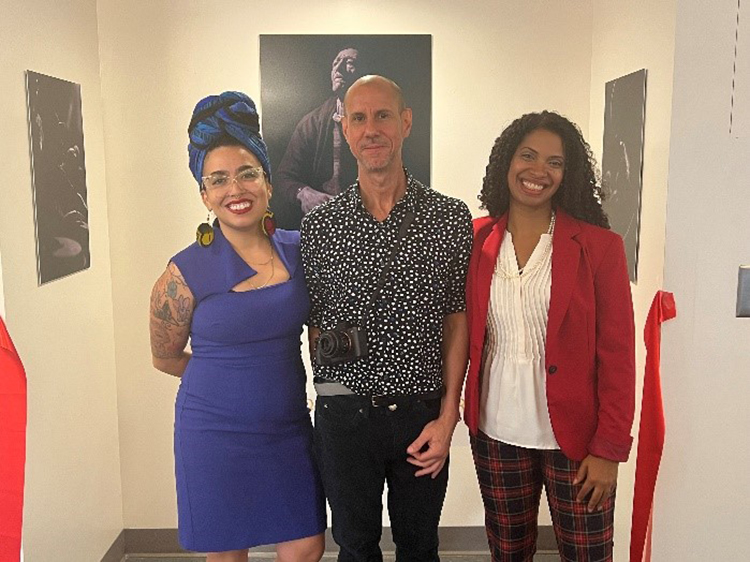
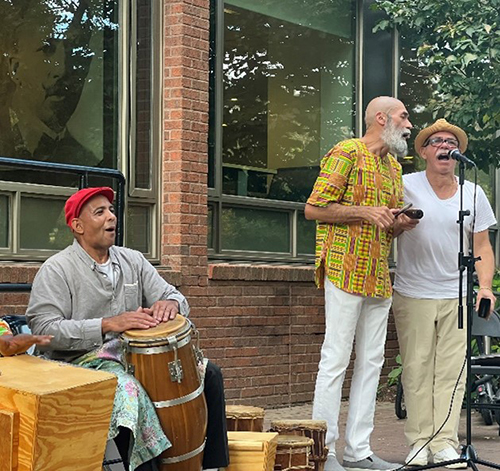
caption: Director Krista L. Cortes, photographer Juan Caballero, and Faculty Director Amalia Dachécaption: rumberos performance outside of the W.E.B. Du Bois College House on Monday, October 2, 2023.

On October 2, 2023, in collaboration with La Casa Latina: The Center for Hispanic Heritage Cultural Center, the Amistad Gallery opened the exhibition for viewing for the college house and the University of Pennsylvania community. The opening event included a live rumba performance from the rumberos, who are photographed in the collection.

Through March 2024, the curated exhibition will remain at the Amistad Gallery inside the W.E.B. Du Bois College House. For more information on the La Rumba Que Trajo El Barco exhibition, or to schedule a time to view the exhibit, please contact the W.E.B. Du Bois College House at dubois@collegehouses.upenn.edu or (215) 898-3677.

— W.E.B. Du Bois College House Press Release

Update: November AT PENN

Fitness & Learning

14        Master of Health Care Innovation Virtual Info Session; program managers will address how the MHCI program has spurred career advancement for students and alumni, as well as describe the basic components of the curriculum and the online learning experience; 4 p.m.; online webinar; info: MEHPOnline@pennmedicine.upenn.edu (Perelman School of Medicine).

15        Open Studios: Undergraduate Fine Arts & Design; visit fine arts senior studios to see what they have been working on this fall; 2-4 p.m.; 5th floor studios, Duhring Wing, Fisher Fine Arts Library (Fine Arts).

16        Law and Technology Information Session; learn about the Center for Technology, Innovation, and Competition; Master in Law and Certificate in Law Programs for non-lawyers; and Master in Law courses in Patent Law & Technology Law and for non-lawyers; noon; room 213, Gittis Hall, and Zoom webinar; register: https://tinyurl.com/law-info-session-nov-16 (Carey Law School).

            Teacher Talks: Engineering Through the Ages: Fibers and Rope; investigate the amazing properties of rope, including how it is made and how long humans have been making it; then, make your own rope; 4:30 p.m.; Penn Museum; register: https://tinyurl.com/museum-teacher-talk-nov-16 (Penn Museum).


Graduate School of Education

Online webinars. Info: https://www.gse.upenn.edu/news/events-calendar?date=2023-11.

14        Global Higher Education Management (Online) Virtual Information Session; 8 a.m.

15        Urban Teaching Residency & Urban Education Virtual Information Session; 7 p.m. Also November 16.

16        Literacy Studies Doctoral Virtual Information Session; 5:30 p.m.

18        Explore Graduate Programs at Penn GSE; 9 a.m.


Penn Libraries

Unless noted, in-person events. Info and to register: https://www.library.upenn.edu/events/.

14        Unearthing Rare Books: Ten Hidden Gems from the Kislak Center; 4 p.m.; Lea Library, Kislak Center.


Music

17        Teach Me What Love Is: Korean Love Songs; the facilitators invite speakers whose first language is not English to share a love song that encapsulates their unique perception of love in their native language, structured as a karaoke session; noon; ICA; register: https://tinyurl.com/ica-korean-love-songs (Institute of Contemporary Art).


On Stage

Penn Live Arts

In-person events. Info and tickets: https://pennlivearts.org/events/.

17        Penn Singers: Legally Blonde: The Musical; follows the transformation of Elle Woods as she tackles stereotypes and scandal in pursuit of her dreams; 7:30 p.m.; Harold Prince Theatre, Annenberg Center; tickets: $10.


Talks

14        Changing Tides? The Far-Right Appeal in Latin America and Beyond; Kathya Araujo, Universidad de Santiago de Chile; Ernesto Calvo, University of Maryland; 4 p.m.; World Forum, Perry World House; register: https://tinyurl.com/araujo-calvo-nov-14 (Perry World House).

15        What Constitutes a Good Explanation? Lyle Ungar, computer & information science; noon; room 307, Levine Hall (ASSET Center).

            Reinforcement Learning in Two-Player Zero-Sum Games; Samuel Sokota, Carnegie Mellon University; 3 p.m.; room 307, Levine Hall, and Zoom webinar; join: https://upenn.zoom.us/j/99611740636 (GRASP Lab).

16        Synthetic Genome Regulation for Cell and Tissue Engineering; Timothy Downing, University of California, Irvine; 3:30 p.m.; room 216, Moore Building (Bioengineering).

            Promoting Lung Recovery: Epigenetic and Metabolic Control of Treg Cell Function During Aging; Benjamin D. Singer, Northwestern University; 4 p.m.; room 11-146, Smilow Center (Penn-CHOP Lung Biology Institute).

            Fossil Fuels and Autocrats, in Russia and Beyond; Max Bergmann, Center for Strategic and International Studies; 4:30 p.m.; room 205, PCPSE, and Zoom webinar; register: https://tinyurl.com/bergmann-talk-nov-16 (Andrea Mitchell Center).

            Global Frontiers and the Making of Modern China; Shellen Xiao Wu, Lehigh University; 5:15 p.m.; room 200, PCPSE; register: https://tinyurl.com/wu-talk-nov-16 (Center for East Asian Studies).

17        What Can We Learn About AI and Data Science From the Vision Field? Michael F. Chiang, National Eye Institute; 10 a.m.; room 307, Levine Hall (PRECISE Center).

            Model-Based Methods in Today’s Data-Driven Robotics Landscape; Seth Hutchinson, Georgia Institute of Technology; 10:30 a.m.; Wu & Chen Auditorium, Levine Hall, and Zoom webinar; join: https://upenn.zoom.us/j/96151752305 (GRASP Lab).

            Gandhi, Ruskin, and the Limits of Civilizational Thinking; Zachary Samalin, New York University; 4 p.m.; room 330, Fisher-Bennett Hall (English).

20        Exploring Plasmodium Parasite Cell Division Processes through Expansion Microscopy Visualization; Sabrina Absalon, Indiana University; noon; room 132, Hill Pavilion, and Zoom webinar; join: https://upenn.zoom.us/j/91485597704 (Penn Vet).


Asian American Studies

In-person events at room 473, McNeil Building. Info and to register: https://asam.sas.upenn.edu/events.

16        Asian America Across the Disciplines; Mohan Seshadri, Asian Pacific Islander Political Alliance; noon; room 203, Cohen Hall.


Economics

In-person events. Info: https://economics.sas.upenn.edu/events.

15        Subsistence Entrepreneurship in Latin America; Daniel Jaar, economics; noon; room 101, PCPSE.

            Why Didn't India's Founders Entrench Constitutional Rights? Shruti Rajagopalan, George Mason University; 5:30 p.m.; room 250, PCPSE.

16        Labor Union and Social Insurance; Hanming Fang, economics; 3:30 p.m.; room 101, PCPSE.


Mathematics

In-person events. Info: https://www.math.upenn.edu/events.

15        Towards Fairness in Machine Learning via Optimal Transport; Thomas Strohmer, University of California Davis; 3:45 p.m.; room A2, DRL.

16        Horizontal Besicovitch Sets of Measure Zero and Some Related Problems; Terence Harris, University of Wisconsin-Madison; 3:30 p.m.; room 3C2, DRL.


Sociology

Info: https://sociology.sas.upenn.edu/events.

17        Gender-Math Stereotypes and Student-Teacher Interactions in China; Ran Liu, University of Wisconsin-Madison; noon; online webinar.


This is an update to the November AT PENN calendar, which is available now. To submit events for a future AT PENN calendar or update, send the salient details to almanac@upenn.edu.

Crimes

Weekly Crime Reports

Division of Public Safety University of Pennsylvania Police Department Crime Report

About the Crime Report: Below are the Crimes Against Persons and/or Crimes Against Property from the campus report for October 30-November 5, 2023. The Crime Reports are available at: https://almanac.upenn.edu/sections/crimes. Prior weeks’ reports are also online. –Eds.

This summary is prepared by the Division of Public Safety (DPS) and contains all criminal incidents reported and made known to the Penn Police, including those reported to the Philadelphia Police Department (PPD) that occurred within our patrol zone, for the dates of October 30-November 5, 2023. The Penn Police actively patrol from Market Street to Baltimore Avenue and from 30th Street to 43rd Street in conjunction with the Philadelphia Police.

In this effort to provide you with a thorough and accurate report on public safety concerns, we hope that your increased awareness will lessen the opportunity for crime. For any concerns or suggestions regarding this report, please call DPS at (215) 898-7297. You may view the daily crime log on the DPS website.


Penn Police Patrol Zone
Market Street to Baltimore Avenue and from 30th Street to 43rd Street

Aggravated Assault/Domestic

11/02/23

9:41 PM

4047 Pine St

Domestic incident

Assault/Dating

10/30/23

1:37 AM

4233 Chestnut St

Domestic assault

Assault

11/02/23

9:04 AM

228 S 40th St

Physical altercation inside Post Office


11/05/23

1:18 PM

2900 Market St

Complainant punched and kicked on highway-road rage

Auto Theft

10/30/23

5:49 AM

200 S 38th St

Attempted automobile theft—window broken, tampered with steering wheel column


10/31/23

8:27 PM

4200 Pine St

Automobile damaged during an attempted theft

Bike Theft

10/31/23

6:51 PM

3401 Walnut St

Bicycle secured to pole taken


10/31/23

11:49 PM

3701 Locust Walk

Secured bike taken/Arrest

Burglary

10/30/23

11:48 AM

405 S 42nd St

Residential burglary

Fraud

11/04/23

9:24 AM

4030 Market St

Fraudulent banking transaction by an unknown offender

Retail Theft

10/31/23

2:16 PM

3250 Chestnut St

Retail theft of merchandise


11/02/23

2:06 PM

4233 Chestnut St

Retail theft of alcohol

Sex Offense

11/02/23

12:03 PM

3000 Blk Walnut St

Indecent Assault

Theft from Building

10/30/23

2:07 PM

3420 Walnut St

Backpack left unattended taken


10/31/23

10:00 PM

101 S 39th St

Package taken from location


11/02/23

3:08 PM

3730 Walnut St

Items taken from refridgerator after business hours


11/05/23

12:25 PM

1 Convention Ave

Unsecured earphones stolen from office

Theft Other

10/30/23

12:10 AM

3420 Walnut St

Secured scooter stolen from rack


10/30/23

11:47 AM

3700 Spruce St

Scooter secured to iron fencing taken


10/30/23

8:23 PM

3335 Woodland Walk

Secured scooter taken from bike rack


11/01/23

9:44 AM

3335 Woodland Walk

Secured scooter taken from bike rack


11/01/23

3:10 PM

210 S 33rd St

Secured scooter taken from bike rack


11/01/23

5:48 PM

4109 Walnut St

Theft of a key fob from valet stand


11/02/23

6:52 PM

125 S 31st St

Theft of a secured scooter from bike rack outside of location


11/04/23

5:19 PM

3730 Walnut St

Secured scooter stolen from bike rack


11/05/23

5:35 PM

3701 Walnut St

Secured scooter stolen from bike rack

Theft from Vehicle

10/31/23

7:45 PM

400 S 42nd St

Automobile broken into and cellphone stolen

Vandalism

10/31/23

8:31 AM

400 S 41st St

Rear passenger side window broken


10/31/23

8:30 PM

4100 Locust St

Vehicle broken into


Philadelphia Police 18th District
Schuylkill River to 49th Street & Market Street to Woodland Avenue

Below are the Crimes Against Persons from the 18th District: 9 incidents were reported for October 30-November 5, 2023 by the 18th District, covering the Schuylkill River to 49th Street & Market Street to Woodland Avenue.

Aggravated Assault

10/30/23

10:29 PM

S 45th St & Baltimore Ave


11/02/23

5:10 PM

4047 Pine St


11/02/23

6:42 PM

4812 Spruce St

Assault

11/02/23

9:31 AM

228 S 40th St


11/05/23

1:19 PM

2900 Blk Market St

Domestic Assault

10/30/23

1:37 AM

4233 Chestnut St

Indecent Assault

11/02/23

10:30 AM

3100 Blk Walnut St

Robbery

11/02/23

1:26 PM

4600 Blk Market St


11/02/23

11:52 PM

4523 Spruce St

The Division of Public Safety offers resources and support to the Penn community. DPS developed a few helpful risk reduction strategies outlined below. Know that it is never the fault of the person impacted (victim/survivor) by crime.

  • See something concerning? Connect with Penn Public Safety 24/7 at (215) 573-3333.
  • Worried about a friend’s or colleague’s mental or physical health? Get 24/7 connection to appropriate resources at (215) 898-HELP (4357).
  • Seeking support after experiencing a crime? Call Special Services (support and advocacy resources) at (215) 898-4481 or email an advocate at specialservices@publicsafety.upenn.edu.
  • Use the Walking Escort and Riding services available to you free of charge.
  • Take a moment to update your cellphone information for the UPennAlert Emergency Notification System.
  • Download the Penn Guardian App which can help Police better find your location when you call in an emergency.
  • Access free self-empowerment and defense courses through Penn DPS.
  • Stay alert and reduce distractions. (Using cellphones, ear buds, etc. may limit your awareness.)
  • Orient yourself to your surroundings. (Identify your location, nearby exits, etc.)
  • Keep your valuables out of sight and only carry necessary documents.

Bulletins

Applications Open for Penn SP2’s Randi and Brian Schwartz Social Innovation Scholarship

Penn’s School of Social Policy & Practice (SP2) is preparing to award the first Randi and Brian Schwartz Social Innovation Scholarship. The awardee will be chosen from among students who apply by the priority deadline of December 1, 2023, to the Master of Science in Nonprofit Leadership (NPL) Program with a request for financial aid and/or scholarship consideration. No separate application is required.

The full-tuition scholarship, announced in the spring of 2023, will be awarded in the fall of 2024 to one incoming NPL student on the basis of demonstrated merit and experience with and commitment to impact in the areas of international affairs and conflict resolution.

The Schwartz Social Innovation Scholarship is a competitive program to provide dedicated financial aid to master’s students seeking to innovate and generate impact in areas like economic security, immigration, or global conflict. The scholarship will cover tuition for a select cohort of master’s degree students at SP2, known as the Schwartz Scholars.

As the program grows, the Schwartz Scholars will expand to include students in SP2’s other master’s degree programs.

All applicants interested in being considered for the Schwartz Social Innovation Scholarship qualify for an application fee waiver. Email apply@sp2.upenn.edu with your name and undergraduate institution to receive a fee waiver.

To learn more about the scholarship and the NPL Program, contact NPL Program administrative director Adam Roth-Saks at (215) 898-1857 or adamsaks@sp2.upenn.edu.

Penn’s Way Raffle Prize Drawings

Penn's Way logo

Visit https://pennsway.upenn.edu for more information. Online participation must be completed by midnight on Sunday for inclusion in a given week’s drawing that Monday morning. Note: list subject to change.

Week Six–Drawing November 13

  • Neta Scientific: Amazon Gift Card, $25 value: Jerome Taylor, Perelman School of Medicine
  • Neta Scientific: Amazon Gift Card, $25 value: Michael Davidson, CPUP Cancer Center
  • Maximum Graphics: Applebee’s Gift Card, $25 value: David Alexander, HUP - HCHS Administration
  • Benco Dental: Barnes & Noble Gift Card, $25 value: Kiem Nguyen, Division of Public Safety
  • PDC Graphics: Mission Taqueria Gift Card, $50 value: Angela Shelmire, HUP Pharmacy
  • Morris Arboretum: Family Membership, $100 value: Lucille Smith, School of Arts and Sciences
  • Penn Museum: Admission Passes (two), $36 value: Gayle Devine, HUP Pre-Op Unit

Week Seven–Drawing November 20

  • Philadelphia Eagles: Autographed Eagles player photo (Nakobe Dean), $50 value
  • Neta Scientific: Amazon gift card, $25 value
  • Benco Dental: Barnes & Noble gift card, $25 value
  • Penn Live Arts: Two tickets for 23/24 season, $100 value
  • Neta Scientific: Amazon gift card, $25 value
  • EMSCO: Barnes & Noble gift card, $25 value
Back to Top