2023 Perelman School of Medicine Awards of Excellence
The following faculty members will receive this year’s Perelman School of Medicine Awards of Excellence. I take great pride in announcing this year’s recipients, each of whom was chosen by a committee of distinguished faculty from the Perelman School of Medicine. The awardees exemplify our profession’s highest values and epitomize the preeminence we all strive to achieve. Please join me in extending our sincere congratulations to the following 2023 award recipients.
—J. Larry Jameson, Executive Vice President of the University of Pennsylvania for the Health System and Dean of Perelman School of Medicine
Clinical Awards
 The Louis Duhring Outstanding Clinical Specialist Award goes to Joshua M. Levine, professor of neurology at the Hospital of the University of Pennsylvania. The Duhring Award recognizes a clinical specialist physician who blends biomedical science, recent advances in clinical research, and insight to provide cutting-edge services to patients and colleagues. The awardee is able to apply clinical knowledge innovatively and creatively and maintains a commitment to patients that goes beyond the norm and exemplifies Penn Medicine’s goal for clinical care and professionalism.
Dr. Levine is a dedicated and collaborative member of critical care, neurology, and neurocritical care faculties. He founded and developed the Neurocritical Care Program at Penn, which focuses on severe acute injuries to the central and peripheral nervous system. His work has helped to pioneer and establish innovative, cutting-edge technologies to improve patient outcomes at Penn and throughout the world.
The Sylvan Eisman Outstanding Primary Care Physician Award goes to Mary Beth Fabio, a clinical associate professor of pediatrics in general pediatrics. The Eisman Award recognizes a physician in family or general internal medicine, general pediatrics, or obstetrics/gynecology who strives for continuous improvement and the highest quality of practice while maintaining a commitment to patients that goes beyond the norm and exemplifies the Penn Medicine goals for clinical care, professionalism, and standards for excellence.
Dr. Fabio is the co-founder of the CHOP Refugee Health Program and a medical advocate for the Reach Out and Read program at the Karabots Pediatric Care Center. She is an exemplary pediatrician and patient advocate, dedicated to the children and families she serves.

 The Luigi Mastroianni, Jr. Clinical Innovator Award goes to David W. Oslin, a professor of psychiatry, and Matthew J. Press, an associate professor of medicine in general internal medicine. The Mastroianni Award recognizes a physician who has made significant contributions toward the invention and development of new techniques, approaches, procedures, or devices that change medical practice and are of major benefit to patient care.
Dr. Oslin is one of the leading mental health services scientists in the country, and has centered his career on investigating the most pressing questions regarding access and quality of mental health care. Dr. Press is a leader in the field of mental health; his major contributions include integrating mental health care into primary care through his research, clinical innovation, and policy-making. Together with an interdisciplinary team of mental health professionals, Drs. Oslin and Press developed the Penn Integrated Care (PIC) integrated behavioral health program, which has helped more than 21,000 patients find and participate in mental health care.
The Alfred Stengel Health System Champion Award goes to William D. Schweickert, a professor of clinical medicine in pulmonary, allergy and critical care. The Stengel Award recognizes a physician who has made significant contributions toward the clinical integration and efficiency of the University of Pennsylvania Health System and demonstrated commitment to the improvement of quality care.
Dr. Schweickert is an exceptional clinical operations leader, critical care clinician, educator, and mentor who has led multiple health system initiatives focused on patient safety and quality, as well as patient progression. As a standout clinical leader during the COVID-19 pandemic, he transformed these lessons into durable contributions that have extended beyond HUP and helped to integrate the health system and professional groups.
Mentoring/Professionalism Awards
 The Arthur K. Asbury Outstanding Faculty Mentor Award goes to Babette S. Zemel, a research professor of pediatrics in gastroenterology, hepatology and nutrition. This award recognizes a faculty member who has fostered the professional development of other faculty by providing inspiring and effective counsel in a manner that enables professional growth and development.
Dr. Zemel is recognized worldwide as an expert in pediatric bone health. Her expertise in childhood nutrition and its role in pediatric health and disease has attracted trainees across a wide range of disciplines. Her world-class mentorship track record includes a long list of successful trainees, and much of their success is due to her selfless and empathic style of mentorship.
The Duncan Van Dusen Professionalism Award for Faculty goes to Julie Uspal, an associate professor of emergency medicine. This award recognizes a faculty member whose respectful approach, integrity, self-awareness, and personal accountability are sterling examples of the ongoing improvement of the work culture at Penn and for the promotion of exceptional patient care experiences.
An an emergency physician, Dr. Uspal demonstrates exemplary professionalism in her clinical and administrative roles. As director of quality and safety, she consistently models professionalism in enhancing the safety and service optimization of the patient experience.
Research Awards

 The Marjorie A. Bowman New Investigator Research Award goes to Jordana B. Cohen, an associate professor of medicine in renal-electrolyte & hypertension. This award recognizes achievements in the health evaluation sciences, with a particular emphasis on patient-oriented research that addresses fundamental clinical problems as well as the organization and delivery of health care.
Dr. Cohen’s outstanding contributions to patient-oriented research and health care organizations in the field of health evaluation sciences, particularly in hypertension, have significantly influenced global patient care. Her innovative research, leadership, and ability to tackle impactful questions with advanced analytical techniques position her as a leading figure in the field, poised for further impactful contributions.
The Michael S. Brown New Investigator Research Award goes to Christoph A. Thaiss, an assistant professor of microbiology. Established in honor of Nobel Laureate Michael S. Brown, a 1966 Penn School of Medicine alumnus, the award recognizes emerging faculty investigators engaged in innovative discoveries.
Dr. Thaiss has emerged as a leading figure in microbiome research, making significant contributions by uncovering novel connections between environmental and lifestyle factors and common human diseases, particularly focusing on the microbiome’s intricate role in these dynamics. His extensive research efforts have garnered international acclaim and received substantial attention from the global media.


 The Stanley N. Cohen Biomedical Research Award goes to Sarah A. Tishkoff, David and Lyn Silfen University Professor in the departments of genetics and biology. This award was established in honor of Stanley N. Cohen, a 1960 Penn School of Medicine alumnus whose contributions launched a new era in biological research technology. The award recognizes achievement in the broad field of biomedical research.
Dr. Tishkoff is a leader in the field of biomedical research, with significant contributions to the field of human population genetics. Her pioneering work has shed light on human population history, adaptation, and genetic factors influencing various traits, while her mentorship efforts and advocacy for the inclusion of ethnically diverse populations in genomics research have left an indelible mark on the scientific community.
The Dean’s Distinguished Award goes to Katalin Karikó, an adjunct professor of neurosurgery, and Drew Weissman, the Roberts Family Professor in Vaccine Research. This award recognizes an exceptional individual or collaborative team whose relentless pursuit of scientific excellence has resulted in a paradigm-shifting discovery that has indelibly transformed the global landscape of health care and scientific understanding.
Nobel Prize Laureates Drs. Weissman and Karikó have pioneered research that has rewritten the annals of medical science and history. Their unwavering dedication to mRNA-based therapies has not only saved countless lives during the COVID-19 pandemic but has also unveiled a new frontier in medicine, offering hope for treating a wide spectrum of diseases, from cancer to genetic disorders.

 The Samuel Martin Health Evaluation Sciences Research Award goes to Alexander G. Fiks, professor of pediatrics in general pediatrics. Established in 1996 to honor the late Samuel P. Martin, III, executive director of the Leonard Davis Institute of Health Economics and chair of the Health Care Systems Unit of the Wharton School, this award is granted to a member of the Perelman School of Medicine faculty for a body of work with an emphasis on health services research.
Dr. Fiks has devoted his research career to better understanding and improving the performance of primary care pediatric services and improving outcomes for children. His work has not only advanced pediatric knowledge and practice by promoting judicious antibiotic prescribing and improving immunization rates, for example, but his leadership in coordinating large-scale group and network projects has also had a significant impact in the field.
The William Osler Patient Oriented Research Award goes to Christina A. Roberto, the Mitchell J. Blutt and Margo Krody Blutt Presidential Associate Professor of Health Policy. Established in 1996 to honor Dr. Osler, a “Father of Clinical Medicine” who, in the 1880’s at the School of Medicine, revolutionized clinical teaching research, this award recognizes achievement for research in which an investigator directly interacts with human subjects.
Dr. Roberto is an international expert in food policies and food systems whose research has made significant contributions to human-subject research in behavioral science, particularly in the context of nutrition and public health. Her interdisciplinary work makes important scientific contributions while also informing real-world policy and public health initiatives.
Teaching Awards

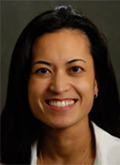 The Leonard Berwick Memorial Teaching Award goes to Rebecca Ganetzky, an assistant professor of pediatrics in human genetics. This award was established in 1981 as a memorial to Leonard Berwick by his family and the department of pathology. It recognizes “a member of the medical faculty who in his or her teaching effectively fuses basic science and clinical medicine.” It is intended that this award recognizes persons who are outstanding teachers, particularly among younger faculty.
Dr. Ganetzky’s studies improved biochemical approaches to make the diagnosis of inherited mitochondrial and metabolic diseases. As fellowship director of the medical and clinical biochemical genetics fellowships, she is passionate about teaching genetics and biochemistry at all levels, from undergraduate students through biochemical genetics fellows, in a way that is accessible for learners of all backgrounds.
The Robert Dunning Dripps Memorial Award for Excellence in Graduate Medical Education goes to Catherine R. Salva, an associate professor of clinical obstetrics and gynecology. This award was established by the department of anesthesia in 1984. As a pioneer in the specialty of anesthesia and chair of the department from 1943 to 1972, Dr. Dripps was instrumental in the training of more than 300 residents and fellows, many of whom went on to chair other departments. This award recognizes excellence as an educator of residents and fellows in clinical care, research, teaching, or administration.
Dr. Salva has made significant contributions to medical education at the University of Pennsylvania, notably as the residency program director, overseeing the expansion of the program and actively participating in clinical practice in obstetrics and gynecology. Her extensive experience and leadership in resident education have left a lasting and positive impact on students and faculty, alike.

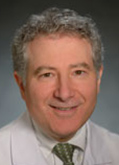
 The Jane M. Glick Graduate Student Teaching Award goes to Kiran Musunuru, a professor of medicine in cardiovascular medicine. This award was established in 2009 by the Glick family in remembrance of Jane Glick and her dedication to the Biomedical Graduate Studies (BGS) programs.
Dr. Musunuru’s expertise in the genetics of heart disease has significantly enriched the academic and research environment at the University of Pennsylvania. His commitment to advancing scientific understanding, coupled with his numerous accolades and leadership roles within the medical and genetics community, have made Dr. Musunuru an asset to the BGS programs and a source of inspiration for students.
The Christian R. and Mary F. Lindback Award for Distinguished Teaching goes to Victor A. Ferrari, a professor of medicine in cardiovascular medicine, and Tejvir S. Khurana, a professor of physiology. This award was established in 1961 with the help of the Christian R. and Mary F. Lindback Foundation to recognize excellence in teaching. Awards are granted each year for distinguished teaching in health and non-health areas.
The receipt of their respective Lindback Awards is a testament to Drs. Ferrari and Khurana’s exceptional dedication to education, and their profound influence on students’ intellectual and personal growth. Their recognition signifies their outstanding teaching abilities, as well as their enduring commitment to fostering a vibrant and inspiring learning environment within the Penn community.


 Building upon the expertise in dementia research and care across Penn Medicine, Penn’s health system has been awarded a $5 million grant from the Delaware Community Foundation to support work at the Institute on Aging’s (IOA) at Penn to develop the next generation of therapies for Alzheimer’s disease and related dementias (ADRD). Led by David Wolk and Edward Lee, the IOA will collaborate with teams who have identified and validated potential therapeutic targets to translate basic science research into treatments that address the root causes of ADRD.
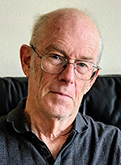 David Edward Boettiger, an emeritus professor of microbiology in the Perelman School of Medicine, died on October 6. He was 80.
 Natalie Kim, a first-year student at Penn’s School of Veterinary Medicine, died on October 24 from complications from a malignant brain tumor. She was 23.
 Cheryl Neisser-Frankson, MSN ’93, PhD ’03, an advanced senior lecturer in Penn Nursing’s department of biobehavioral and health science, died on October 9. She was 63.
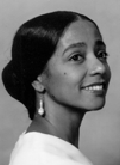 Rosalyn (Roz) Watts, an emerita associate professor in the nursing and biobehavioral health sciences departments of Penn’s School of Nursing, died on October 19. She was 85.
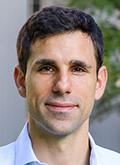 César de la Fuente, a Presidential Assistant Professor in the departments of bioengineering, psychiatry, microbiology, and chemical and biomolecular engineering of the School of Engineering and Applied Science and the Perelman School of Medicine, has been selected as a 2023 Emerging Leaders in Health and Medicine (ELHM) Scholar by the National Academy of Medicine (NAM). Dr. de la Fuente works to combine human and machine intelligence to accelerate scientific discovery and develop useful tools and life-saving medicines.
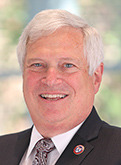 Penn Dental Medicine’s Morton Amsterdam Dean, Mark Wolff, is among the 2023 cohort of inductees to the International College of Dentists (ICD) USA Section, the honorary dental organization committed to improving global oral health. The induction ceremony took place as part of the ICD USA Section Annual Meeting, Convocation & Welcome Celebration, held from October 3-6 in Lake Buena Vista, Florida.
 One of the highlights of the landmark Weitzman School of Design exhibition Building in China: A Century of Dialogues on Modern Architecture, now on view at the Penn Wharton China Center through January 15, 2024, is a 15-foot-long panel featuring 23 students in Penn’s architecture program between 1918 and 1941. A series of black and white portraits accompanied by their degrees and years of study documents the first generation of Chinese students at Penn, who would go on to shape a new movement of architecture and urban design practice and education in their homeland. In the middle of the panel is Lin Huiyin, the only woman among the students. She was also the only one in the group who was not awarded an architecture degree upon completion of her coursework.