News

From the President: Consultative Committee for the Selection of a Provost

Consultative Committee for the Selection of a Provost

I am pleased to announce the formation of a Consultative Committee for the Selection of a Provost to advise me on this important appointment.  The members of the Consultative Committee are listed below.  The committee welcomes, and will keep in the strictest confidence, nominations and advice received from members of the University community. For fullest consideration, communications should be received, preferably in electronic form, no later than Friday, October 14, 2022, and may be sent to PennProvostSearch@upenn.edu, the chair, any committee member, the committee’s staff, or the search consultants.

—M. Elizabeth Magill, President

Chair

  • J. Larry Jameson, Executive Vice President for the Health System, Dean of the Perelman School of Medicine, and Robert G. Dunlop Professor of Medicine, Perelman School of Medicine

Faculty

  • José A. Bauermeister, Albert M. Greenfield Professor of Human Relations and Chair, department of family & community health, School of Nursing; professor of psychiatry, Perelman School of Medicine
  • Emily B. Falk, professor of communication and Associate Dean for Research, Annenberg School for Communication
  • Tulia G. Falleti, Class of 1965 Endowed Term Professor of Political Science and Director of the Latin American and Latinx Studies Program, School of Arts and Sciences
  • Claire O. Finkelstein, Algernon Biddle Professor of Law and Professor of Philosophy, Penn Carey Law School
  • Lance M. Freeman, James W. Effron University Professor and Penn Integrates Knowledge University Professor, department of city and regional planning, Weitzman School of Design; department of sociology, School of Arts and Sciences
  • Nancy J. Hirschmann, Geraldine R. Segal Professor in American Social Thought, department of political science, School of Arts and Sciences
  • Cherie R. Kagan, Stephen J. Angello Professor of Electrical and Systems Engineering and Associate Dean for Research, department of material sciences and engineering, School of Engineering and Applied Science; professor of chemistry, School of Arts and Sciences
  • Katherine L. Milkman, James G. Dinan Endowed Professor and professor of operations, information and decisions, Wharton School
  • Michael L. Platt, James S. Riepe University Professor, department of neuroscience, Perelman School of Medicine; department of psychology, School of Arts and Sciences; department of marketing, Wharton School
  • Melissa J. Wilde, professor and Chair of the department of sociology, School of Arts and Sciences
  • Heather A. Williams, Geraldine R. Segal Professor in American Social Thought and professor of Africana studies, department of Africana studies, School of Arts and Sciences

Students

  • Lena Hansen, C’23, Chair External, Student Committee on Undergraduate Education
  • Michael Krone, JD/MBA candidate, Professional Council Chair of the Graduate and Professional Student Assembly
  • Carson Sheumaker, W’23 C’23, Chair of the Undergraduate Assembly
  • Robert B. Watson, JD/MSEd candidate, President of the Graduate and Professional Student Assembly

Staff

  • Joann Mitchell, Senior Vice President for Institutional Affairs and Chief Diversity Officer
  • Pierce Buller, Associate Vice President and Advisor to the President

Consultants

  • John Muckle, Managing Partner, Isaacson Miller
  • Keight Tucker Kennedy, Partner, Isaacson Miller
  • Peter Lange, Partner and Academic Consultant, Isaacson Miller

Carmen Alvarez: Presidential Professor in Penn Nursing

caption: Carmen AlvarezThe University of Pennsylvania has appointed Carmen Alvarez a Presidential Professor in Penn Nursing, making her the school’s second such appointment. Dr. Alvarez is the first nurse to attain this rank at Penn. She is a faculty member in the department of family and community health.

“Dr. Alvarez brings with her to Penn Nursing an incredible range of expertise as a researcher, clinician, and teacher,” said Penn Nursing Dean Antonia M. Villarruel. “She is a nursing leader who has made a true impact in health care—and she has been a fierce champion for community engaged practice and scholarship. We are fortunate she has chosen to make Penn and Penn Nursing her new home. She makes an excellent addition to our school’s incredible faculty.”

Inspired by her years of practice in community health centers as a family nurse practitioner and certified nurse midwife, Dr. Alvarez’s research focuses on health promotion for marginalized populations—particularly survivors of adverse childhood experiences and intimate partner violence. Dr. Alvarez has led several efforts to uncover how interpersonal violence impacts psychosocial well-being, and to develop interventions to mitigate the long-term effects of interpersonal violence. Essential to all these initiatives are community partnerships to inform and disseminate the work.    

Building the evidence to eliminate health disparities is equally as important as building a diverse cadre of skilled researchers and practitioners. To this end, Dr. Alvarez is deeply committed to issues of diversity and inclusion in nursing. She served as a committee member for the National Academy of Medicine (NAM) to assess the Campaign for Action’s progress on the 2010 Future of Nursing (FON) recommendations in key areas—scope of practice, education, leadership, interprofessional collaboration, diversity, and workforce data. She also served as the national co-chair for the Equity, Diversity, and Inclusion Steering Committee of the Campaign for Action and led a committee of diverse nurse leaders to develop strategies to advance the recommendations of the NAM report.

“We are excited for Dr. Alvarez’s appointment to the faculty of the School of Nursing as an Associate Presidential Professor,” said José Bauermeister, chair of the department of family and community health, and Penn Nursing’s first Presidential Professor. “Dr. Alvarez’s scholarship relies on the development of trauma-informed interventions to address health disparities experienced by Latina women. Her work is grounded by her practice and advances the mission of the department of family and community health. I am thrilled to welcome her to Penn.”

Dr. Alvarez has made significant contributions to reducing health disparities among racial/ethnic minorities, and her policy and advocacy efforts focus on diversifying the nursing profession and increasing access to care. Her BSN and MSN are from Emory University and her PhD is from the University of Michigan. Presidential Professorships, originating in the Action Plan for Faculty Diversity and Excellence first issued in 2011, are awarded to exceptional scholars at any rank who contribute to faculty eminence through diversity across the University.

Wharton: Launch of Global MBA Program for Executives

The Wharton School has announced its intent to expand worldwide access to its MBA Program for Executives by launching its first-ever global cohort, with a program start date of May 2023. Those accepted into the new cohort will represent business professionals from Asia, North America, Latin America, Europe, and beyond for whom a blended online/in-person learning format opens up greater accessibility to Wharton’s world-class faculty and network. They will be taught by the same renowned Wharton professors who teach all Wharton MBA students. During the 22-month program, faculty will use the extensive online teaching skills they gained while guiding hundreds of students through the COVID-19 pandemic.

“The new global executive MBA cohort is 25% in-person, 75% live online with professors but 100% a Wharton MBA,” said Brian Bushee, the senior vice dean of teaching and learning at the Wharton School. “We aim to bring together our most diverse cohort of learners yet—business professionals whose location, work, or personal situations preclude them from extensive travel but who share a passion for learning from Wharton faculty and from each other.”

This new global cohort marks another important milestone in the evolution of Wharton’s executive MBA program. Wharton was a leader when it began its original Philadelphia program in 1975 and again when the Wharton San Francisco cohort convened in 2002. Wharton will offer a blended online/in-person schedule that facilitates access to a Wharton MBA for talented candidates previously limited in their ability to participate.

Virtual instruction will take place in early morning or late evening hours aligned to eastern standard time, so students can operate around work schedules and take part from multiple different time zones. In addition to this online community, students will also spend significant time together in person during “residential weeks,” at Wharton’s Philadelphia and San Francisco campuses, as well as during the program’s numerous international learning trips. Throughout the program, students will receive support from concierge-style classroom managers, direct regular contact with senior faculty who are distinguished experts in their fields, and access to Wharton’s global network of 104,000 alumni–currently the largest of any business school in the world.

“The evolution of the Wharton executive MBA is a reflection of our entrepreneurial spirit and dedication to innovation in educational pedagogy,” said Erika James, dean of the Wharton School. “The past two and a half years have proven that high-quality academic programs can successfully extend beyond the traditional in-person classroom experience. By coupling best-in-class virtual instruction with meaningful residential learning opportunities, we can extend the reach of a Wharton MBA education to even more leaders who are poised to grow economies and transform industries across the globe.”

The Wharton MBA Program for Executives educates more than 230 professionals each year, offering the same academic rigor and faculty as Wharton’s full-time MBA program. Wharton’s EMBA students earn the same degree as full-time MBA students. Faculty will customize their class materials to meet the unique needs of a new global cohort, according to Peggy Bishop Lane, vice dean of Wharton’s MBA Program for Executives.

“Our faculty will tailor their content and discussions for a more global audience, ensuring the curriculum is positioned to capitalize on the experiences of the students and prepare them for the challenges they will face in the next chapter of their careers,” said Dr. Lane. “We are making investments in new technologies to enhance the virtual experience and engage students in and out of the classroom, regardless of their location. A priority of this program is for students to form the strong relationships that are a hallmark of the Wharton executive MBA experience.”

Wharton is accepting applications now for the first MBA Program for Executives global cohort.

URF Grants for 2022—Application Deadline October 14; 2021 Grant Recipients Announced

The University Research Foundation (URF) is now accepting grant applications for the October 14, 2022 deadline. The URF is an intramural funding program that provides up to $75,000 support for research projects and up to $3,000 for conference support. The URF provides seed funding for research activities that are expected to lead to external sponsorship and/or peer-reviewed research publications. The Office of the Vice Provost for Research (OVPR) will operate one URF cycle for FY23, accepting proposals in two categories: research support grants and conference support grants.  Each program has its own guidelines and budget requirements. Details are below, and more information is available online at: https://research.upenn.edu/urf.

Research Support Grants: This program provides up to $75,000 for research support. The objectives of this program are to: (a) Help junior faculty undertake pilot projects that will enable them to successfully apply for extramural sources of funding and aid in establishing their careers as independent investigators; (b) Help established faculty perform novel, pioneering research to determine project feasibility and develop preliminary data to support extramural grant applications; (c) Provide support in disciplines where extramural support is difficult to obtain and where significant research can be facilitated with internal funding; and (d) Provide limited institutional matching funds that are required as part of a successful external peer-reviewed application. 

Conference Support Grants: This program is designed to provide funding (up to $3,000) for meetings to enhance existing research and scholarly programs, particularly in disciplines where external funding is difficult to obtain. Conferences that promote interdisciplinary and multi-school participation are given priority. 

Disciplinary Areas: Faculty members are invited to submit their research applications to one of four disciplinary areas: biomedical sciences, humanities, natural sciences and engineering, and social science and management.

Eligibility: Eligibility is limited to Penn assistant, associate, and full professors in any track. Note: the biomedical panel limits applications for research grants to assistant and early-stage associate professors. Instructors and research associates must provide a letter from their department chair establishing that the applicant will receive an appointment as an assistant professor by the time of the award. Adjunct and emeritus faculty are not eligible to apply. Only one application is allowed per PI per cycle. Awards must be expended on University of Pennsylvania facilities, equipment and/or associated University technical staff and undergraduate students.

—Office of the Vice Provost for Research 

University Research Foundation Awardees from Fall 2021

In the fall 2021 cycle of Penn’s internally funded University Research Foundation, the OVPR has announced awards to the following members of the faculty for the projects listed below. Note: URF conference support is noted with an asterisk.


James Aguirre, School of Arts and Sciences, Physics and Astronomy, Metamaterial Antennas for Radio Cosmology

*Ericka Beckman, School of Arts and Sciences, Spanish and Portugeuse, Marxist Literary Group Institute on Culture and Society:  “Transition”

*Anne Berg, School of Arts and Sciences, History, Racist Environmentalism: The Deceptive Glare of Green

Vijay Bhoj, Perelman School of Medicine, Pathology and Laboratory Medicine, Plant-Based Oral Tolerance to Support Red Blood Cell Transfusion Therapy

Andres Blanco, School of Veterinary Medicine, Biomedical Sciences, Investigating the Role of KAT6A as a Potential Therapeutic Target in Acute Myeloid Leukemia

*Edward Brodkin, Perelman School of Medicine, Psychiatry, Views of Autism Genetics Research from Different Stakeholders’ Perspectives

Venkata Chavali, Perelman School of Medicine, Ophthalmology, Human Induced Pluripotent Stem Cell Derived Retinal Ganglion Cell (iPSC-RGC) Therapy for the Treatment of Glaucoma

*Hsiao-Wen Cheng, School of Arts and Sciences, East Asian Languages and Civilizations, Global Lives of Medicines: Materials, Markets, and Healing Practices Across Asia

Joseph Cichon, Perelman School of Medicine, Anesthesiology, Rapid Reconfigurations of Active Neuronal Networks by NMDA-Receptor-Based Antidepressants Drive Chronic Therapeutic Effects in a Rodent Depression Model

Ivan Dmochowski, School of Arts and Sciences, Chemistry, Proposed CD Spectrometer Will Advance Multidisciplinary Research Projects with Undergraduates and Seed NSF Proposal for MCD Spectrometer To Enhance University Research Capabilities in Chemistry and Materials Science

Reyhan Durmaz, School of Arts and Sciences, Religious Studies, Publishing Piety: Syrian Orthodox Community and Religion in Kawkab Amrika in 19th-Century New York City

Erick Gagne, School of Veterinary Medicine, Pathobiology, Evaluating the Establishment of North America Wildlife Reservoirs of SARS-CoV-2

Wayne Gao, School of Arts and Sciences, Economics, Robust Semiparametric Methods Based on Single-Crossing Conditions

Sharath Guntuku, School of Engineering and Applied Science, Computer and Information Science, Computational Social Listening of Global Vaccine Attitudes to Increase Provider Efficacy

Kushol Gupta, Perelman School of Medicine, Biochemistry and Biophysics, Pathways to the Activation of Phenylalanine Hydroxylase

Emily Hannum, School of Arts and Sciences, Sociology, Flooding, Schooling and Learning in Rural India: A Mixed Method Study

Kevin He, School of Arts and Sciences, Economics, Learning Under Misspecifications in Economic Games

Stefanie Hinkle, Perelman School of Medicine, Biostatistics, Epidemiology and Informatics, Maternal Nutritional Status in Pregnancy and Offspring Metabolic Health

Hyejeong Hong, School of Nursing, Biobehavioral Health Sciences, Sputum-Based Single-Cell RNA Sequencing Approaches to Elucidate Molecular Determinants and Predictors of Post-TB Treatment Lung Disease

Daniel Hopkins, School of Arts and Sciences, Political Science, Nationalization in Developed Democracies Outside the United States

Mongying Hsieh, School of Engineering and Applied Science, MEAM, Connecting Underwater Weather to River-Bed Dynamics

Kyu Sang Joeng, Perelman School of Medicine, Orthopaedic Surgery, The Function of mTORC1 Signaling in Tenocyte Differentiation and Stromal Fibroblast Activation in Tendon

*Michael Kahana, School of Arts and Sciences, Psychology, Context and Episodic Memory Symposium 2022

David Kim, School of Arts and Sciences, History of Art, Groundwork: A Theory of the Renaissance Picture

Allison Lassiter, Stuart Weitzman School of Design, City and Regional Planning, Can Smart Water Technologies Contribute to Equitable Adaptation of Drinking Water Systems to Seawater Intrusion?

Nilam Mangalmurti, Perelman School of Medicine, Medicine, Role of Red Cell Nucleic Acid Sensing in Sepsis

Arnold Mathijssen, School of Arts and Sciences, Physics & Astronomy, Unravelling Respiratory Pathogen Clearance Using Artificial Cilia

Monica McCallum, School of Arts and Sciences, Chemistry, Environmental Remediation with Marine Sponge Microbes

Laia Mogas-Soldevila, Stuart Weitzman School of Design, Architecture, Large-Scale Biomaterial Architectures

*Jennifer Morton, School of Arts and Sciences, Philosophy, Institutional Inequality in Higher Education

Kenji Murakami, Perelman School of Medicine, Biochemistry and Biophysics, Analyze Synthetic Lethality of Nucleotide Excision Repair

*Anna Papafragou, School of Arts and Sciences, Linguistics, Experiments in Linguistic Meaning 2 (ELM-2) Conference

Andrea Roe, Perelman School of Medicine, Ob/Gyn, Contraceptive Decision-Making Among Females with Sickle Cell Disease

Halley Ruppel, School of Nursing, Family and Community Health, Evaluating Associations Between Nurse-Reported Medical Device Alarm Burden, Hospital Characteristics, and Nurse Job Outcomes

Andrea Schneider, Perelman School of Medicine, Neurology, Feasibility of Continuous Glucose Monitoring to Measure Glycemic Variability in Hospitalized Acute Traumatic Brain Injury (TBI) Patients and Associations of Glycemic Variability with TBI Outcomes

Kelly Sloane, Perelman School of Medicine, Neurology, TDCS and Rehabilitation to Ameliorate Impairments in Neurocognition After Strokes

Xi Song, School of Arts and Sciences, Sociology, The Long-Term Evolution of Occupational Structures: Linking U.S. Census Data with Occupational Outlook Handbooks

Margaret Souders, School of Nursing, Behavioral Health Sciences, Pilot Randomized Controlled Trial to Compare a Home-Based Tailored Cognitive Behavioral Therapy for Insomnia (CBT-I) versus Web-Based Way to Health CBT-I Intervention to Improve Sleep in Caregivers with Insomnia in the Context of Caring for a Child with Autism Spectrum Disorder and Insomnia

Meredith Tamminga, School of Arts and Sciences, Linguistics, An Experimental Approach to the Locus of Variation

Stephen Tinney, School of Arts and Sciences, NELC, Ur Archaeological Project: First Season

Liang Wu, School of Arts and Sciences, Physics and Astronomy, A New Scanning Confocal Microscope at High Magnetic Fields for Quantum Materials Research

Mantha Zarmakoupi, School of Arts and Sciences, History of Art, The Multivalent Meaning and Function of Public Buildings in Greek and Roman Cities: The Bouleuterion at Teos, Turkey

Bo Zhen, School of Arts and Sciences, Physics and Astronomy, Quantum and Classical Optoelectronic Devices in CMOS-compatible AlScN Systems

Deaths

Elizabeth Ellery Bailey, Business Economics and Public Policy

caption: Elizabeth BaileyElizabeth Ellery Bailey, Professor Emeritus of Business Economics and Public Policy at the Wharton School, died on August 19 from complications from Parkinson’s disease. She was 83.

Dr. Bailey was born in New York City. She received a bachelor’s degree in economics from Radcliffe College in 1960, then joined Bell Laboratories, working as a computer programmer and technical aide. She received a master’s degree in mathematics from Stevens Institute of Technology in 1966.

In 1972, she became the first woman to receive a PhD in economics from Princeton University. At Bell Laboratories, she was promoted to head of the economics research group. 

In 1977, she was appointed to the Civil Aeronautics Board by President Jimmy Carter—serving as its first female commissioner. President Ronald Reagan named her vice-chair of the board in 1981. She and her colleagues helped implement the Airline Deregulation Act of 1978, which delivered a free market for the airline industry by eliminating government control of fares, routes, and the establishment of new airlines.

From 1983 to 1991, Dr. Bailey was a professor and dean of the Graduate School of Industrial Administration at Carnegie Mellon University. She was a visiting scholar at the Yale School of Organization and Management. She joined the Wharton School in 1991, serving as professor and chair of the department of business and public policy before retiring in 2010.

Dr. Bailey, the John C. Hower Professor Emeritus of Business Economics and Public Policy, was an honorary degree recipient at Penn’s 2016 Commencement ceremony, where she received an honorary Doctor of Sciences. She became a member of Penn’s 25 Year Club in 2016 and served on various Faculty Senate committees.

Dr. Bailey received numerous honors, including the 2009 Carolyn Shaw Bell Award, which is given annually to a person “who has furthered the status of women in the economics profession.” She was a past chair of the National Bureau of Economic Research and was a 1997 inductee of the American Academy of Arts and Sciences. She served on the boards of companies, including TIAA-CREF, the CSX Corp., Honeywell, and Kraft. She was a trustee of the Brookings Institution, a former vice president of the American Economics Association, a member and president of the Eastern Economics Association, and chair of the National Bureau of Economic Research. She is a former trustee of Princeton University

She is survived by a son, William Ellery Bailey; four sisters; and two grandchildren. 

Karl Engelman, Medicine

Karl Engelman, an emeritus associate professor of medicine in the Perelman School of Medicine, passed away on August 19. He was 89.

Born in New York City, Dr. Engelman spent his early years in Toms River, New Jersey, growing up on a farm that he remembered fondly throughout his life. He graduated from Toms River High School, where he met his future wife Elaine. Then, he attended Rutgers University, where he achieved Phi Beta Kappa and Cap & Skull honors when he graduated in 1955. He attended medical school at Harvard, graduating in 1959, and completed his internship and residency at Massachusetts General Hospital. He worked at the National Institute of Health, but he joined Penn’s faculty in 1970 as an associate professor in the department of medicine. During the 1980s, he served on the University Council’s Personnel Benefits Committee, and he served as chief of the hypertension and clinical pharmacology section in the cardiovascular pulmonary unit and as the director of Penn’s Clinical Research Center. In 1995, he retired and took emeritus status. 

Dr. Engelman spent his retirement years in Hilton Head, South Carolina, where he was active with Volunteers in Medicine. 

He is survived by his wife Elaine, sons Harry (Amy), Ross (Elizabeth), and Jeff (Kirstin), as well as eight grandchildren. A graveside service was held on August 25. Donations in Dr. Engelman’s memory may be made to Volunteers in Medicine Clinic, PO Box 23858, Hilton Head Island, South Carolina 29925 (www.vimclinic.org/donations/make-a-donation/), or Congregation Beth Yam, 4501 Meeting Street, Hilton Head Island, South Carolina 29926. 

Michael Pimsner, Mathematics

Mihai (Michael) Pimsner, a professor of mathematics in the School of Arts and Sciences, passed away on July 17 from lung cancer. He was 69. 

Born in Wallachia (part of Romania) in 1953, Dr. Pimsner was educated in his home country. In 1984, he received his PhD from INCREST in Bucharest. After occupying a tenured position in Germany, he joined Penn’s faculty in 1991 as a professor of mathematics, a position he held for the rest of his life. He taught classes in calculus and contributed to Penn’s math department’s research presence, especially in the K-theory of operator algebras. Dr. Pimsner’s research was renowned; he spoke at one of the quadrennial International Congresses of Mathematicians and was an honorary member of the Institute of Mathematics of the Romanian Academy of Sciences. In 2016, Dr. Pimsner joined Penn’s 25-year club. “A modest but gifted man who spoke at least three languages fluently, he had a warm ingratiating smile and personality—quiet but effective and he was loved by his students to whom he was exceptionally kind,” said the department in an online tribute. “All his colleagues enjoyed their interactions with him and will miss him and the steady, reasoned part he played in the department.”

Dr. Pimsner is survived by his daughter, Ingrid; and his granddaughter, Sybill. 

--
To Report A Death

Almanac appreciates being informed of the deaths of current and former faculty and staff members, students and other members of the University community. Call (215) 898-5274 or email almanac@upenn.edu.

However, notices of alumni deaths should be directed to the Alumni Records Office at Suite 300, 2929 Walnut St., (215) 898-8136 or email record@ben.dev.upenn.edu.

Governance

From the Senate Office: Faculty Senate Executive Committee Actions

The following is published in accordance with the Faculty Senate Rules. Among other purposes, the publication of SEC actions is intended to stimulate discussion among the constituencies and their representatives. Please communicate your comments to Patrick Walsh, executive assistant to the Senate Office, either by telephone at (215) 898-6943 or by email at senate@pobox.upenn.edu.

Faculty Senate Executive Committee Actions
Wednesday, September 7, 2022

Welcome and Introductions. Faculty Senate Chair Vivian Gadsden welcomed the members of the Senate Executive Committee (SEC) and offered a brief review of the Senate and its structure. A full roster of SEC members is available on the Senate website. The “Tri-Chairs,” Vivian Gadsden (Chair), Tulia Falleti (Chair-Elect), and Bill Braham (Past Chair), work in concert and arrive at decisions by consensus. 

Structure and Function of Senate Committees. Each of the standing Senate committees was proposed a common charge: “Address systemic racism and other forms of inequity by assessing and evaluating ways to change University structures, practices, and biases at the University, school, departmental, and individual levels. Examples include eligibility for leadership roles, differential standards for faculty evaluation based on race, color, religion, sex, national origin, age, disability, or genetic information, department-level voting privileges, biases implicit in quantitative methods for evaluating faculty, evaluation of effectiveness of campus mental health and wellness programs.”

Discussion and Vote on Draft Charges for Senate Standing Committees, 2022-2023. The specific charges of the Faculty Senate standing committees were finalized.

Recommendations for SEC’s 2022-2023 Agenda. SEC members proposed topics for deliberation throughout the upcoming academic year.

Public Health Implications for the Fall 2022 Semester. Associate Provost and Chief Wellness Officer Benoit Dubé shared guidance on public health questions related to COVID-19 and the fall semester and responded to questions. He shared a “Frequently Asked Questions” document and responded to questions. 

Honors

Amanda Bettencourt: President of the AACN

caption: Amanda BettencourtAmanda Bettencourt, an assistant professor in Penn Nursing’s department of family and community health, is the new president of the American Association of Critical-Care Nurses (AACN) board of directors. She began her one-year term on July 1, 2022.

“The future of nursing and health care is unknown, and the COVID-19 pandemic has brought a newfound urgency for us to work together to find solutions to both long-standing issues and new challenges,” said Dr. Bettencourt. “Starting now, we step forward with a renewed sense of purpose, a commitment to action, and a focus on a better tomorrow.”

As an educator, researcher, and pediatric clinical nurse specialist, Dr. Bettencourt focuses on achieving the best possible outcomes for acutely and critically ill children. Her current research involves evaluating factors influencing the research-to-practice gap in critical care settings and testing implementation strategies targeting the interprofessional team to improve evidence-based care. She has performed extensive volunteer service with AACN, including serving as board liaison and on several committees. 

Her additional affiliations include the American Burn Association and Sigma. In addition to presenting at the National Teaching Institute & Critical Care Exposition, she has led sessions at several other conferences, including the American Burn Association’s annual meeting. Dr. Bettencourt has published her research in the areas of implementation science, nursing and patient safety, nurse staffing and work environments, burn critical care, and pediatric delirium.

Dr. Bettencourt earned a BS in exercise science from the University of Florida, an accelerated BS in nursing from the University of North Carolina at Chapel Hill, and a MS in nursing from Johns Hopkins University. She earned a PhD from the University of Pennsylvania and a MS in health care research at the University of Michigan.

Before she assumed the presidency, Dr. Bettencourt served a one-year term as president-elect. Before that, she served a three-year term as a director and a one-year term as treasurer.

For more than 50 years, the AACN has been dedicated to acute and critical care nursing excellence. The organization’s vision is to create a healthcare system driven by the needs of patients and their families in which acute and critical care nurses make their optimal contribution. AACN is the world’s largest specialty nursing organization, with more than 130,000 members and over 200 chapters in the United States.

Pam Grossman: Honorary Doctorate, University of Oslo

caption: Pam GrossmanGraduate School of Education (GSE) Dean Pam Grossman has traveled to Norway to celebrate her acceptance of a Doctor Honoris Causa from the University of Oslo. She was the sole recipient of the school’s educational doctorate, while other industry leaders received the award for their work in areas such as law, medicine, and mathematics.  
As part of the program, Dean Grossman gave a talk called “The Dream of a Common Language: Core Practices for Teaching.” As an international leader in teacher quality, her research has been critical to the University of Oslo’s QUINT Centre, which stands for Quality in Nordic Teaching.

The center has drawn foundational theory and methods from Dean Grossman’s work, ranging from her Protocol for Language Arts Teaching Observation (PLATO) manual to her seminal 2009 paper “Redefining teaching, re-imagining teacher education.” The PLATO manual identifies and expands the ways we define high-quality teaching, while the 2009 paper “argued for a major shift in teaching and teacher education, from a focus on the knowledge that teachers need in order to teach, to a focus on how teachers use that knowledge in practice.” 

The University of Oslo announced the doctorate in 2020, but Dr. Grossman’s receipt of it has been delayed for two years due to COVID-19. The institution has granted honorary degrees since 1824, typically given every three years.

Earlier this summer, Dean Grossman presented one of the three keynote speeches at the 2022 QUINT Conference, which took place in Iceland and brought together leading experts and researchers on teacher quality. Dr. Grossman’s keynote focused on project-based learning and can be watched here.

ACS: Marsha I. Lester Award for Exemplary Impact in Physical Chemistry

The Physical Chemistry division of the American Chemical Society (ACS) has established a new award, the Marsha I. Lester Award for Exemplary Impact in Physical Chemistry. The award was announced in August at the PHYS reception at the ACS meeting.

Dr. Lester began her career at Penn in 1982 and is the Christopher H. Browne Distinguished Professor of Chemistry. Her research focuses on open-shell complexes and reaction intermediates of environmental significance. Her research accomplishments have been recognized by numerous awards, including the Garvan-Olin Medal of the American Chemical Society (2014), the Bourke Lectureship of the Faraday Division of the Royal Society of Chemistry (2005), and a John Simon Guggenheim Memorial Foundation Fellowship (2002). She was elected a fellow of the American Academy of Arts and Sciences in 2008 and a member of the National Academy of Sciences in 2016.

Penn Medicine: HHS Grant Award for Heart Safe Motherhood Program

Heart Safe Motherhood, an algorithmically-driven system that maintains twice daily two-way text-message communications with post-delivery patients after they’ve gone home, has won one of the 25 grants awarded by the U.S. Department of Health and Human Services (HHS) Office on Women’s Health (OWH) Racial Equity in Postpartum Care Challenge.

In 2014, Penn Medicine physicians Sindhu Srinivas and Adi Hirshberg applied then-novel digital technologies to the control of postpartum preeclampsia complications among their OB/GYN patients at the Hospital of the University of Pennsylvania (HUP) and achieved a rare overnight 80% improvement. As part of Heart Safe Motherhood, new mothers are supplied with a blood pressure cuff and prompted by the messaging system to report their readings twice daily for ten days. Incoming readings are automatically analyzed based on a pre-programmed algorithm, and clinicians are immediately flagged when potentially dangerous increases in blood pressure are detected.

A 2019 study published in the American Journal of Obstetrics & Gynecology by Drs. Hirshberg and Srinivas found that the system eliminated the blood pressure check disparity between white women (who attended in-office pressure checks twice as often as Black women) and Black women using the text message-based monitoring system. Both groups achieved the same compliance level at over 90% with Heart Safe Motherhood. The Heart Safe Motherhood system is now used throughout the Penn Medicine system of OB/GYN departments and in a small number of other hospitals across the country. 

The national research competition sponsored by OWH and the Centers for Medicare & Medicaid Services (CMS) is designed to identify, develop, and disseminate innovative methods to improve postpartum care for Black or African American and American Indian/Alaska Native women enrolled in Medicaid or the Children’s Health Insurance Program (CHIP). The first round of awards went to 25 research teams working in different ways to address aspects of care related to the disproportionately high levels of maternal mortality and morbidity among women of color.

“Improving postpartum care for Black or African American and American Indian or Alaska Native women is critical to addressing the significant and persistent racial and ethnic disparities in pregnancy-related deaths,” said OWH director Dorothy Fink. She also noted the wide potential impact of the effort because Medicaid covers 42% of all U.S. births including two-thirds of all births to minority women.

Dr. Srinivas, an LDI senior fellow and director of obstetrical services at HUP, said: “This challenge award is a great step in helping to disseminate a solution to one large contributing cause of maternal mortality and morbidity. We’re very grateful for having received this award and hope programs like this will continue to stimulate the development of innovative solutions that reduce disparities in maternal morbidity and mortality.”

Dr. Hirshberg, an assistant professor at the Perelman School of Medicine and associate director of obstetrical services at HUP, said: “Another reason it was exciting to be selected is that the other 24 winners are invested in their own processes and programs and all of us can learn from that work and potentially build on what we haven’t previously thought of. I think HHS and CMS are really going in the right direction with this challenge that brings a sharp national focus on maternal mortality overall, along with other disparities.”

Research

Understanding the Significance of Inclusive Sexuality Discussions Between Parent and Son

Data show that Generation Z youth are coming out at earlier ages than previous generations of sexual- and gender-diverse individuals. However, little is known about LGBTQ youth’s perspectives on how or if parent-child discussions at home about health and sexuality sufficiently meet their sexual education needs.

A new study led by an investigator from the University of Pennsylvania School of Nursing has explored the perspectives of gay, bisexual, and queer (GBQ) cisgender males about inclusive parent-child sex communication. It underscores the importance of inclusive sexuality conversations between parent and child for closeted, questioning, or even heterosexual youth.

The article detailing the study, “Do Say Gay: Inclusive Sexuality Discussions for Out, Closeted, Questioning, and Straight Youth,” was published online first in the Journal of Pediatric Health Care. It shares study participants’ insight about how inclusive conversations about sex and sexuality can reduce internalized GBQ stigma and promote a sense of support among adolescents, as their parents are often a trusted resource for information and guidance.

“Additionally, findings from this study underscore the significance of inclusive sex communication between parents and their children, and that the benefits of these conversations can reach beyond GBQ youth such that even heterosexual children who receive inclusive information from parents can be understanding and potential allies of their GBQ peers,” said Penn Nursing’s Dalmacio Flores, an assistant professor of nursing in the department of family and community health and lead investigator of the study.

The study further describes the importance of such parent-child discussions, including influencing sexual behavior and sexual health to help delay adolescent sexual debut and reduce early HIV/STI infections. Co-authors of the article include Lloyd Allen of Wayne State University and Jacqueline A. Bannon of Northwestern University.

Adapted from a Penn Nursing news release

Disease Can Change the Physical Structure of Cells

Researchers from Penn’s Center for Engineering MechanoBiology (CEMB) have discovered that cells change the physical structure of their genome when they’re affected by disease. 

In a recent study published in Nature Biomedical Engineering, the team detailed what they found when they closely observed the nucleus of cells inside connective tissues deteriorating as a result of tendinosis, which is the chronic condition that results from a tendon repeatedly suffering small injuries that don’t heal correctly. Using the latest super-resolution imaging techniques, they found that the tendon cells involved in maintaining the tissue’s structure in a diseased microenvironment improperly reorder their chromatin—the DNA-containing material that chromosomes are composed of—when attempting to repair.

This and other findings highlighted in the report point to the possibility of new treatments, such as small-molecule therapies, that could restore order to the affected cells.

“Interestingly, we were able to explain the role of mechanical forces on the 3-D organization of chromatin by developing a theory that integrates fundamental thermodynamic principles (physics) with the kinetics of epigenetic regulation (biology),” said study co-author and CEMB director Vivek Shenoy.

The CEMB, one of 18 active interdisciplinary research centers funded by the National Science Foundation’s Science and Technology Center (STC) program, brings together dozens of researchers from Penn Engineering and the Perelman School of Medicine, as well as others spread across campus and at partner institutions around the world.

With its funding recently renewed for another five years, the CEMB has entered into a new phase of its mission, centered on the nascent concept of “mechanointelligence,” which is exemplified by studies like this one. While mechanobiology is the study of the physical forces that govern the behavior of cells and their communication with their neighbors, mechanointelligence adds another layer of complexity: attempting to understand the forces that allow cells to sense, remember and adapt to their environments.

Ultimately, harnessing these forces would allow researchers to help multicellular organisms—plants, animals and humans—better adapt to their environments as well.

Adapted from a Penn Engineering news release written by Ebonee Johnson.

What Makes Us Share Posts on Social Media?

The average internet user spends nearly three hours a day using social media. It’s clear that social media is becoming increasingly crucial to sharing important information with the public—like how to stay safe from COVID-19, for example—and researchers want to know what makes a piece of media compelling enough for people to share it online.

A new study published in the Journal of Experimental Psychology: General, led by University of Pennsylvania researchers Danielle Cosme and Emily Falk, analyzed the behavior of over 3,000 individuals to explore the psychology behind sharing information online. It turns out that the answer is quite straightforward: people share information that they feel is meaningful to themselves or to the people they know. Dr. Cosme and her team test what contributes to “value-based virality”—essentially that information on the internet can go viral because people find it inherently valuable, either to themselves or to society. 

This finding is key to crafting effective messaging for social causes, said Dr. Cosme, a research director at the Annenberg School for Communication’s Communication Neuroscience Lab. Knowing the psychological ingredients that make a person share a post on social media can help scientists share facts about climate change or public health officials dispel myths about vaccines.  

Dr. Cosme’s research shows that people pay more attention to information they perceive to be related to themselves.

Similarly, humans are social beings and love to connect with each other. Sharing information activates reward centers in our brain. And when we communicate with others, we consider what the other person is thinking or wants to hear—a quality known as social relevance.

For Dr. Cosme’s study, participants were exposed to articles and social media posts about health, climate change, voting, and COVID-19. Some participants read headlines and summaries of news articles, others looked at social media posts. All of the participants rated how likely they were to share each message and how relevant they found each one to themselves and to people they know. 

The researchers found that no matter the topic covered or the medium of the message, people were most likely to say they’d share messages that they perceived as self or socially relevant. Further, they found that when participants were asked to explicitly write out why a message was relevant to themselves or people they know, they were even more likely to share it than when they just reflected on the topic.

“We’re interested in understanding how we can translate psychological theory into real world interventions to try to promote behavior change,” Dr. Cosme said. “Sharing information is a critical component of individual and collective action. At the beginning of the pandemic, we needed to quickly spread accurate information about what was going on, how to protect ourselves, how to protect each other. Information spreading within social networks can be really impactful for changing our individual behavior, and also changing our collective behavior through shifting our perceptions of what’s normative.”

With data on tens of thousands of messages, Dr. Cosme and her colleagues at the Communication Neuroscience Lab believe this finding can help shape effective public messaging on social media. 

“We’re interested in understanding how we can translate psychological theory into real world interventions to try to promote behavior change,” Dr. Cosme said. 

One way to improve content sharing is to recruit people who find the content self or socially relevant to share messages online. Another is to frame messages to be seen as more self or socially relevant by audiences without tailoring the messages themselves. 

“We developed message frames that could be paired with existing news and social media posts,” said Dr. Falk, the study’s senior author. “This means that the same prompts that worked in this study could be tested easily in other contexts as well.”   

The Communication Neuroscience Lab is continuing this research by looking at brain activity in relation to social media sharing. For these studies, the researchers are using fMRI scanners to understand how specific regions of the brain shape perceptions of self and social relevance. 

Overall, the team hopes that the results of the study will give those who hope to create social change the tools to do so effectively. “Big issues require collective action,” Dr. Cosme said. And spreading accurate information empowers individuals to join together and act.

“This study highlights key psychological ingredients that motivate people to share information about topics that impact our well-being,” Dr. Falk said. “Sharing is one key lever for shifting cultural norms and motivating larger scale action, so it’s really important to understand what makes it happen.”

Adapted from an Annenberg School for Communication news release written by Hailey Reissman. 

Events

Flu Clinic: September 28-30

Flu Clinic 2022

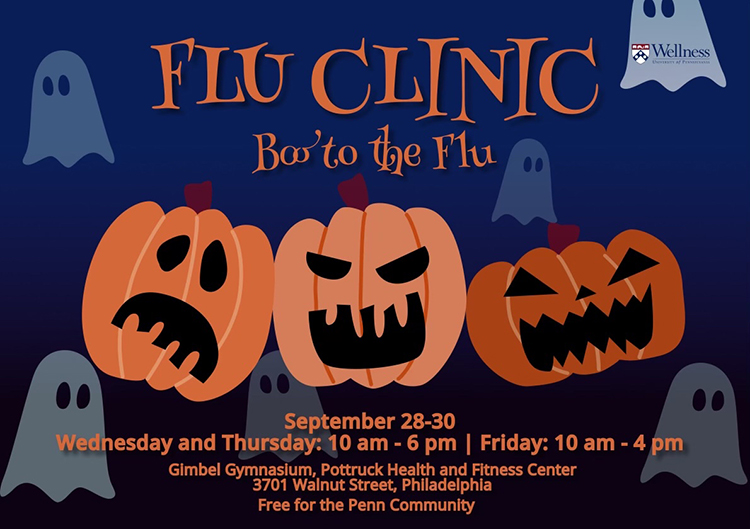
Join Wellness at Penn as they say “Boo to the Flu” at the annual Flu Clinic. This year’s Halloween-themed clinic will take place over three days: Wednesday and Thursday, September 28-29, from 10 a.m.–6 p.m., and on Friday, September 30, from 10 a.m.–4 p.m. It will be held in the Gimbel Gymnasium, at Pottruck Health and Fitness Center (3701 Walnut Street). The flu clinic is free and open to the University community, including students, faculty, postdocs, and staff.

GAPSA GradFest 2022

GAPSA has announced the fifteenth annual GradFest, which celebrates the establishment of GAPSA as the unified graduate student government at Penn. GradFest 2022 will span twelve days from September 13 to September 24 and feature more than 20 events. It is a unique Penn tradition that attracts graduate students from all 12 schools as well as vendors from within and beyond the Philadelphia community.

The event is open to all Penn graduate students. It opens with a kickoff mixer called “Chill with Magill” featuring President M. Elizabeth Magill and Interim Provost Beth Winkelstein, followed by a number of virtual and in-person events, open houses with the University Life cultural resource centers, the annual graduate resource fair (GradFair), a virtual chai making class with partners at Columbia University, an alumni mixer, and the celebration of 21 years of the Graduate Student Center at Penn.

The event series concludes with a firefly boat cruise on the Spirit of Philadelphia. Learn more about the series and get your tickets at gapsa.upenn.edu. For more information, contact gapsa.programming@gapsa.upenn.edu.

Kelly Writers House: 25 Year Celebration Events

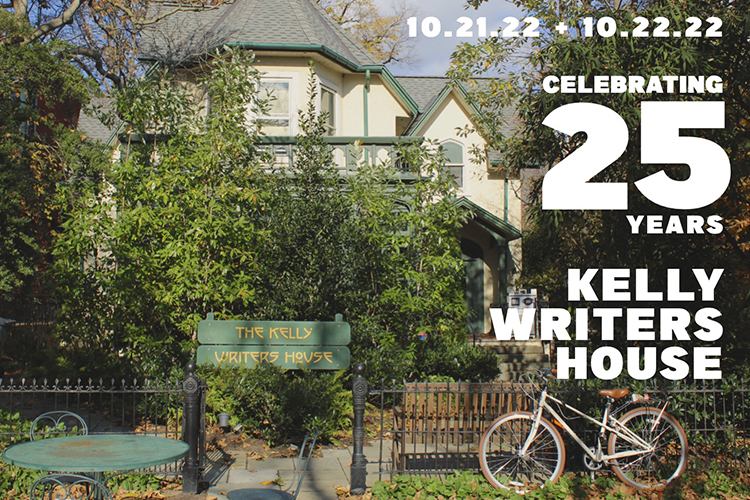
Kelly Writers House 25th Anniversary Celebration

The Kelly Writers House is 25 years old and we want to celebrate with you. We hope you’ll join us for big celebration of our history and community during Penn’s Homecoming Weekend (October 21 and 22). We’ll have a party, an open house, and some talks and toasts. We’d love to see you for all of it. 

Can you come? Email rsvp@writing.upenn.edu to let us know which event or events you’re likely to attend. See you in October.

Schedule

Friday, October 21, 6-9 p.m.: Party
It’s a party! Join us for food and drink and conversation. You can check out the Wexler studio, the newly-renovated Arts Café, and hang out with KWH people. 

Saturday, October 22, 2-4 p.m.: Open House
Join KWH community members in the garden for food and drink and more conversation.

Saturday, October 22, 4 p.m.: Reminiscences and Reception
Ten amazing KWH people from across the years—including some founding members of the original KWH “Hub” group—will reminisce about what the Writers House has meant to them. The conversation will continue, with a plentiful reception, open to all.

—Al Filreis 
Kelly Family Professor of English
Faculty Director, Kelly Writers House 

Penn Live Arts 50th Anniversary Season Celebration

Penn Live Arts kicks off its season-long 50th anniversary celebration with a Community Open House on Friday, September 16 and Saturday September 17. The weekend will be headlined by legendary gospel group, the Blind Boys of Alabama.

The festivities begin at 3:30 p.m. on Friday with a New Orleans-style second-line procession across the Penn campus, led by the New Breed Brass Band. Featured on Trombone Shorty’s 2022 album, Lifted, and winners of New Orleans’ “Best Emerging Artist” award, this young upstart band will bring serious NOLA cred to their first-ever Philadelphia appearances. The Penn Band Slam follows at 4 p.m. on the Annenberg Center Outdoor Plaza, showcasing some of Penn’s hottest student performers. The New Breed Brass Band pulls out all the stops in a full performance in the Annenberg Center’s Prince Theatre to close the evening.

On Saturday, families can take the ultimate behind-the-scenes tour through the Annenberg Center with Safari, a unique and interactive journey led by the much-loved performers of Pilobolus. Award-winning master storyteller Charlotte Blake Alston will captivate audiences of all ages with stories and songs from the African and African American oral traditions. National Dance Day will also be celebrated with all invited to participate in the official National Dance Day routine led by hip hop dancer, Virgil “Lil O” Gadson.

The afternoon also includes ticket specials, free snacks, a chance to check out the seats in the Zellerbach Theatre and hear Christopher Gruits, PLA’s executive and artistic director, talk about the upcoming season. Visit PennLiveArts.org/OpenHouse for complete open house information.

On Saturday evening, the new season officially begins as the five-time Grammy Award-winning Blind Boys of Alabama take the Zellerbach Theatre stage for their Penn Live Arts debut. With a career that spans 70 years, the Blind Boys of Alabama are recognized worldwide as living legends of gospel music. They have appeared on the Tonight Show, 60 Minutes, and NPR’s Tiny Desk, at the White House for three presidents and in their home state of Alabama at the closing ceremonies of the 2022 World Games.

2022 ITMAT Symposium

ITMAT logo 2022

The 17th annual international ITMAT Symposium will again enlist outstanding speakers from the U.S. and abroad to address topics of direct relevance to translational science. The theme this year will be “Translational Neuroscience Coming of Age.”

The symposium will be held Monday and Tuesday, October 10–11, 2022. The event will be held in person and virtually and is free to attend. To register, visit https://upenn.irisregistration.com/Site/itmat2022.

If you are a postdoc or student, please refer to the message on the right side once you log into your IRIS account regarding the College of Physicians dinner.

Update: September AT PENN

Exhibits

15        Excluded/Inclusion: The Work of Chen Lok Lee; 18 prints, watercolors, and lithographs show the journey of Chen Lok Lee, a political refugee who swam to Hong Kong to escape Chinese political persecution; shows the human spirit of determination, personal agency, and the power of choice to survive; Arts Lounge, Annenberg Center. Through May 2023. Opening reception: September 15, 5 p.m.; register: https://tinyurl.com/chen-exhibit-opening-sept-15.  


Films

Middle East Film Festival 2022
In-person screenings at Rainey Auditorium, Penn Museum. Sponsored by Cinema Studies and Middle East Center. Info: https://tinyurl.com/middle-east-film-festival-2022.

19        Between Heaven and Earth; 6:30 p.m.

20        Ovacik; 6:30 p.m.

21        How to Be Alone; How to Say Silence; 6:30 p.m.

22        The Silhouettes; 6:30 p.m.

23        Costa Brava; 6:30 p.m.


Fitness & Learning

14        SP2 Master’s Online Information Session; learn more about the School of Social Policy & Practice’s Master of Social Work, Master of Science in Social Policy, and Master of Science in Nonprofit Leadership degree programs; 2 p.m.; online webinar; info: https://tinyurl.com/sp2-info-session-sept-14 (SP2).

20        Philadelphia, PA Information Session; nursing schools at the University of Pennsylvania, Columbia University, and Johns Hopkins University will host an information session to learn more about accelerated, MSN, DNP and PhD programs; 6 p.m.; room 118, Fagin Hall; register: https://tinyurl.com/nursing-info-session-sept-20 (Nursing).


Graduate School of Education (GSE)
Unless noted, online webinars. Info: https://www.gse.upenn.edu/news/events-calendar.

13        GSE Staff & Faculty Break with TLL; 9:30 a.m.; room TBA, 3700 Walnut St.

14        GSE Staff & Faculty Picnic; for faculty and staff; 3:30 p.m.; Penn Park Picnic Grove.

15        GSE Staff & Faculty Break for Hispanic Heritage Month; 9:30 a.m.; room TBA, 3440 Market St.

            Education Entrepreneurship Program Information Session; noon.

            Executive Doctorate in Higher Education Management Program Information Session; noon.

            Teaching About 9/11, War, and Empire; 5:15 p.m.

20        GSE Staff & Faculty Break with ELX; 9:30 a.m.; room TBA, 3700 Walnut St.


Readings & Signings

13        Mother of Strangers; Suad Amiry, Palestinian novelist, essayist, and architect; 5:30 p.m.; room B6, Stiteler Hall (Middle East Center).


Talks

13        MEAM Faculty Research Overview; panel of mechanical engineering & applied mechanics faculty; 10 a.m.; Wu and Chen Auditorium, Levine Hall (MEAM).

14        Abortion Access: Implications for Institutions of Higher Education; Jackie Radford, GSE; Desegregating Empire: Household Registration and Women's Nationality in Imperial Japan; Genevieve Tan, history; noon; room 345, Fisher-Bennett Hall (Gender, Sexuality, & Women’s Studies).

            When Will You Become the Best Reviewer of Your Own Papers? A Truthful Owner-Assisted Scoring Mechanism; Weijie Su, Wharton; noon; room 307, Levine Hall (Computer & Information Science).

            Characterizing Distant Worlds: Atmospheric Observations of Exoplanets with Hubble & JWST; Munazza Alam, Carnegie Earth & Planets Laboratory; 3:30 p.m.; room 4C6, DRL (Physics & Astronomy).

            Semiconductor Moiré Materials: A New Platform for Strong Correlation and Topology; Jie Shan, Cornell University; 3:30 p.m.; room A8, DRL (Physics & Astronomy).

            The Unseen Body: A Doctor’s Journey Through the Hidden Wonders of Human Anatomy; Jonathan Reisman, physician; 3:30 p.m.; Holman Reading Room, Biotech Commons; register: https://libcal.library.upenn.edu/event/9559651 (Penn Libraries).

15        The Worms Crawl In But They Don’t Crawl Out: Blocking Parasites in Their Mosquito Vector; Michael Povelones, Penn Vet; 8 a.m.; Zoom webinar; join: https://tinyurl.com/povelones-talk-sept-15 (Deans’ Distinguished Visiting Professorship Seminar).

            Steampunk Data Science; Benjamin Recht, University of California Berkeley; 10:30 a.m.; room 225, Towne Building (Electrical & Systems Engineering).

            Special Briefing: Stagflation Ahead? Inflation and Recession; panel of speakers; 11 a.m.; Zoom webinar; register: https://tinyurl.com/iur-talk-sept-15 (Penn Institute for Urban Research).

            Roots of Wisdom; Sir Michael Marmot, University College London; noon; online webinar; register: https://tinyurl.com/marmot-talk-sept-15 (Penn Dental).

            Symptoms and Submergence: A Media History of Shipwrecks; Debashree Mukherjee, Columbia University; 12:15 p.m.; room 500, Annenberg School, and online webinar; register: https://tinyurl.com/mukherjee-talk-sept-15 (Center for Advanced Research in Global Communication).

            Religious Studies Colloquium: Comparing Gods and Things – Looking at and Beyond Korea; Laurel Kendall, American Museum of Natural History; 3:30 p.m.; room 204, Cohen Hall (Religious Studies).

            Painting and Pose in Aeschylus and Beyond; Ava Shirazi, Haverford College; 4:45 p.m.; room 392, Cohen Hall (Classical Studies).

            Inflation and the Independence of the Turkish Central Bank Since 1923; Bülent Gültekin, Wharton; 5:30 p.m.; room 111, Annenberg School (Middle East Center).

16        Power Takes Practice: How Elite College Students Learn to Manage One Another; Jack Thornton, sociology; noon; room 367, McNeil Building (Sociology).

            China's Two-Child Policy and the Gender Implication; Yuying Tong, Chinese University of Hong Kong; 12:30 p.m.; room 418, PCPSE (Center for the Study of Contemporary China).

            Why Afro Asia? Joan Kee, history of art; 3:30 p.m.; room 602, Van Pelt Library (History of Art).

19        Making Introductory Statistics Accessible; Xi Song, sociology; 11 a.m.; room 367, McNeil Building (Sociology).

            Return Migration Selection and its Impact on the Migrant Mortality Advantage: New Evidence Using French Pension Data; Michel Guillot, Population Studies Center; noon; room 309, McNeil Building (Population Studies Center).

20        Open Access Benchmark Datasets and Metamodels for Problems in Mechanics; Emma Lejeune, Boston University; 10 a.m.; Wu and Chen Auditorium, Levine Hall (Mechanical Engineering & Applied Mechanics).

            Distinguished Lectures in Cancer Research Series: PARPs and ADP-ribosylation in Gene Regulation and Cancer; W. Lee Kraus, University of Texas Southwestern Medical Center; noon; Caplan Auditorium, Wistar Institute (Wistar Institute).

            Unseeing Empire; Bakirathi Mani, English; 1:45 p.m.; room 419, Fisher-Bennett Hall (Asian American Studies).


Economics
In-person events. Info: https://economics.sas.upenn.edu/events.

15        Knowledge Teams, Careers, and Gender; Guido Friebel, Goethe University in Frankfurt; 3:30 p.m.; room 101, PCPSE.


Korean Studies
In-person events at room 623, Williams Hall. Info: https://korea.sas.upenn.edu/events.

15        The Korean Family: A 'Luxury Good' - Growing Educational Differentials in Family Behavior; Hyunjoon Park, sociology; noon.


Mathematics
In-person and online events. Info: https://www.math.upenn.edu/events.

13        Micro-Swimmers Moving in Complex Confinement; Enkeleida Lushi, New Jersey Institute of Technology; 4 p.m.; room 2C8, DRL, and Zoom webinar.


This is an update to the September AT PENN calendar, which is online now. The October AT PENN calendar will be published on Tuesday, September 27. To submit an event for an upcoming calendar or weekly update, email the salient details to almanac@upenn.edu.

Crimes

Weekly Crime Reports

University of Pennsylvania Police Department Crime Report

Below are the Crimes Against Persons, Crimes Against Society and Crimes Against Property from the campus report for August 29-September 4, 2022. View prior weeks’ reports. —Ed.

This summary is prepared by the Division of Public Safety and includes all criminal incidents reported and made known to the University Police Department for the dates of August 29-September 4, 2022. The University Police actively patrol from Market St to Baltimore and from the Schuylkill River to 43rd St in conjunction with the Philadelphia Police. In this effort to provide you with a thorough and accurate report on public safety concerns, we hope that your increased awareness will lessen the opportunity for crime. For any concerns or suggestions regarding this report, please call the Division of Public Safety at (215) 898-4482.

08/29/22

4:57 PM

3601 Walnut St

Merchandise taken without payment

08/29/22

9:29 PM

3700 Spruce St

Complainant assaulted by known male

08/30/22

5:00 PM

3601 Walnut St

Merchandise taken without payment

08/30/22

8:39 PM

51 N 39th St

Vehicle taken from parking garage

08/31/22

3:28 AM

100 S 40th St

Complainant struck by two offenders/wallet stolen

08/31/22

11:46 AM

255 S 36th St

Secured scooter taken from bike rack

08/31/22

12:35 PM

3700 Sansom St

Offender scratched rear door with screwdriver

08/31/22

12:50 PM

3700 Chestnut St

Offender struck complainant’s right elbow

08/31/22

3:04 PM

3680 Walnut St

Secured bike taken from bike rack

08/31/22

5:36 PM

3916 Spruce St

Secured computer taken

09/01/22

8:24 AM

3565 Sansom St

Items taken from dining area

09/01/22

11:05 AM

3909 Spruce St

iPad taken

09/01/22

9:01 PM

3900 Chestnut St

Secured bike taken

09/02/22

12:33 PM

3401 Walnut St

Unsecured wallet taken from backpack

09/02/22

3:27 PM

3501 Sansom St

Secured bike taken from bike rack

09/02/22

5:19 PM

211 S 40th St

Unauthorized transaction made on account

09/03/22

7:17 AM

1 Convention Ave

Unsecured backpack containing wallet taken

09/03/22

4:11 PM

220 S 33rd St

Secured electric scooter taken from bike rack

09/03/22

7:32 PM

3408 Sansom St

Unsecured wallet taken from handbag

09/04/22

12:55 PM

3900 Locust Walk

Fire started by offender/Arrest

09/04/22

6:49 PM

4000 Baltimore Ave

Stolen automobile left running and unattended


18th District

Below are the Crimes Against Persons from the 18th District: 5 incidents (2 aggravated assaults, 2 assaults, and 1 robbery) was reported for August 29-September 4, 2022 by the 18th District, covering the Schuylkill River to 49th St & Market St to Woodland Avenue.

08/29/22

10:27 PM

3716 Spruce St

Aggravated Assault

08/31/22

3:28 AM

100 S 40th St

Robbery

08/31/22

1:43 PM

S 37th& Chestnut Sts

Assault

09/03/22

7:25 PM

S 47th & Spruce Sts

Assault

09/04/22

7:27 PM

1331 S 49th St

Aggravated Assault

Bulletins

One Step Ahead: Sophos Home, Antivirus/ Antimalware/ Antispyware Software Available

One Step Ahead logo

Another tip in a series provided by the Offices of Information Security, Information Systems & Computing and Audit, Compliance & Privacy

Sophos Home, an application for virus and malware protection, is now available to the University community. Sophos Home replaces Symantec Endpoint Protection, which was the previously recommended antivirus software solution. The software is available at no charge to eligible and active faculty, staff, and students for use on personally-owned computers. It may be installed on up to ten computers. It is available for Mac-OS and Windows operating systems; it is not available for Linux.

Antivirus software is still needed for Mac-OS and Windows systems. While both Apple, Microsoft, and other developers have worked to make their operating systems and software more resistant to compromise, additional protection is advisable, especially for personally-owned systems. 

Sophos Home is not intended for use on University-managed computers.

Before installing Sophos Home, please uninstall any other antivirus software according to the vendor’s instructions. 

Some features offered by Sophos Home include:

  • Antivirus protection
  • Malware scanning
  • Protection for devices from ransomware
  • Blocking of compromised and phishing websites
  • Privacy protections that help secure your webcam and microphone

For more information on downloading and installing: https://www.isc.upenn.edu/how-to/sophos-home#General

---

For additional tips, see the One Step Ahead link on the Information Security website: https://www.isc.upenn.edu/security/news-alerts#One-Step-Ahead.

Back to Top