Gutmann College House Named for President Emerita Amy Gutmann
 The University of Pennsylvania has announced the naming of Gutmann College House, formerly known as New College House (West) at 40th and Walnut streets.
“It is a delight to honor President Emerita Gutmann’s tremendous achievements in this way,” said President Liz Magill. “As Penn’s longest serving president, Amy Gutmann held a deep appreciation for the transformative power of a college education and the value of living and learning together as part of an academic community. Penn’s intentionally built college houses are not just emblematic of that commitment, they are at the heart of the student experience.”
“The Board of Trustees felt it especially fitting to associate Amy Gutmann’s name with one of two new undergraduate residences built during her tenure,” said Scott Bok, chair of Penn’s Board of Trustees. “Recognizing the importance of our on-campus residential community, Amy Gutmann launched the second year experience in 2018. A hallmark of her presidency, it truly enhanced student life at Penn, and serves as a lasting part of her legacy.”
The college house system at Penn brings undergraduates, faculty, staff, and graduate and undergraduate students together in dynamic shared living-learning communities within a culture focused on academic vibrancy, collaboration, diversity, and wellness. The second year experience expanded the on-campus housing requirement to include all second-year students, with specialized programming to support students’ successes in and out of the classroom.
During Amy Gutmann’s presidency, the number of college houses in the undergraduate College House and Academic Services system at Penn grew from 11 to 13: Lauder College House opened in 2016 and Gutmann College House in 2021. These were the first two buildings to be designed and built specifically as college houses on Penn’s campus.
In August of 2021, as then-New College House West opened its doors to residents, Dr. Gutmann was on hand to welcome students at Move-in. The 250,000-square-foot facility houses second-, third-, and fourth-year students and includes 445 beds, club rooms, communal kitchens, a fitness and wellness center with a meditation room, music practice rooms, classrooms and seminar rooms, study rooms, a coffee shop, and the Quaker Kitchen, a demonstration cooking space.
The building, which will soon be updated with signage featuring the name Gutmann College House, was designed by Philadelphia-based, internatonally acclaimed architecture firm Bohlin Cywinski Jackson. The facility was recently designated as LEED Silver, aligning with Penn’s sustainability goals laid out in Penn’s Climate and Sustainability Action Plan 3.0.
“I am truly humbled and honored to have this deeply meaningful space bear my name,” said Dr. Gutmann, who now serves as U.S. Ambassador to Germany. “Its community-friendly design, its Quaker Kitchen, and its wide-ranging student-centered offerings are incredibly appealing. Above all, there will always be a special place in my heart for the diverse and brilliant community of students who now call—and for generations will call—this college house their home.”

Claire Bruno: Assistant Dean of Admissions and Student Life at Penn’s School of Veterinary Medicine
 The University of Pennsylvania’s School of Veterinary Medicine (Penn Vet) has named Claire Vanna Bruno, a senior higher education professional with more than 18 years of recruitment experience, as its new assistant dean of admissions and student life. Her appointment began on July 25, 2022.
Ms. Bruno comes to Penn Vet from Villanova University’s School of Business, where she served as assistant dean of graduate admissions and oversaw that institution’s wide-ranging recruitment plans for 12 graduate programs, including the MBA, executive MBA, and specialized masters programs. Before her appointment as assistant dean at Villanova in 2020, she served as that school’s director of graduate admissions, and director of diversity initiatives. Ms. Bruno previously held admissions positions at Penn’s Wharton School and at Temple University’s Fox School of Business.
As assistant dean of admissions and student life, Ms. Bruno will be responsible for delivering visionary leadership to achieve strategic recruitment, retention, and graduation goals. She will also oversee all aspects of admissions, financial aid, and student life. She will also lead best practices and benchmarking initiatives to measure progress toward strategic enrollment objectives, as well as supporting student academic success.
“Claire has an outstanding record of achievement. She brings extensive expertise in graduate admissions and firsthand knowledge of the value of inclusion and diversity efforts,” said Andrew M. Hoffman, the Gilbert S. Kahn Dean of Penn Vet. “Her belief in our relationship-oriented culture, and in the unique nature of our veterinary program, will be essential as we prepare students for whatever career pathways they invent, whether in private practice or research, academia or public policy, or some unique combination of all.”
Ms. Bruno’s most significant accomplishments at Villanova include a yield program that penetrated smaller recruiting markets in the southern and midwestern regions of the United States, programming that integrated diversity and inclusion into Villanova’s business school culture, and corporate outreach that accelerated employer desirability for Villanova business school students.
“I am thrilled and honored to join Penn’s School of Veterinary Medicine,” said Ms. Bruno. “The school has a dynamic and forward-looking educational mission and a vision for the future of veterinary medicine. I welcome this extraordinary opportunity to work with the entire Penn Vet community in preparing our students for a world characterized by rapid medical discovery and escalating societal needs.”
Three New Endowed Chairs in the School of Arts and Sciences
Melissa Lee: Klein Family Presidential Assistant Professor
 Melissa M. Lee has joined Penn Arts and Sciences as the Klein Family Presidential Assistant Professor of Political Science. A specialist in conflict studies as well as the international and domestic politics of statebuilding and state development, Dr. Lee comes to Penn from Princeton University, where she was an assistant professor of politics and international affairs. Her book, Crippling Leviathan: How Foreign Subversion Weakens the State, examines how foreign subversion by enemy countries creates geographic spaces beyond the state’s control and limits the government’s ability to provide public services. Dr. Lee has received several honors and recognitions of her work, including a Perry World House Lightning Scholar Fellowship. She earned her PhD in political science from Stanford University in 2015.
Scott M. Klein established the Klein Family Presidential Professorship in 2021. He is a member of Penn’s Southern California Regional Advisory Board. Mr. Klein is one of the founders of Beach Point Capital Management LP, where he serves as co-chairman and co-CEO. In addition to the professorship, he established the Klein Family Social Justice grant program at Penn Arts and Sciences, and supports undergraduate financial aid at Penn. Mr. Klein graduated from Penn in 1988 with degrees from Wharton and the College of Arts and Sciences.
Joshua Teplitsky: Joseph Meyerhoff Associate Professor of Modern Jewish History
 Joshua Teplitsky has joined Penn Arts and Sciences as the Joseph Meyerhoff Associate Professor of Modern Jewish History. Previously an associate professor of history at Stony Brook University, Dr. Teplitsky is a leading expert on the culture and life of Jews in early modern central Europe. He is the author of Prince of the Press: How One Collector Built History’s Most Enduring and Remarkable Jewish Library, which won several awards. Dr. Teplitsky has been a fellow at the University of Oxford, the Rare Book School at the University of Virginia, at Harvard University, Tel Aviv University, and the Yad Hanadiv/Beracha Foundation Programme in Jerusalem. In addition, he has twice been a fellow at Penn’s Herbert D. Katz Center for Advanced Judaic Studies. His research has been supported by numerous grants, and he serves as an associate editor of the Encyclopedia of Jewish Book Cultures Online, as co-director of the digital humanities project Footprints: Jewish Books Through Time and Place, and on the editorial board of the German Jewish Cultures monograph series. He is currently at work on a second book, titled Quarantine in the Prague Ghetto: Jews, Christians, and the Plague in Early Modern Europe.
The late Herbert D. Katz, W’51, and Eleanor M. Katz were longtime supporters of Penn Arts and Sciences and Jewish Studies. They endowed this chair in 1989 through the Joseph Meyerhoff Memorial Trust. The chair supports an outstanding scholar of modern Jewish history. Mr. Katz served as a chair of the Center for Advanced Judaic Studies’ Board of Advisors and on the Penn Arts and Sciences Board of Advisors. In 2008, the Katz family endowed the Herbert D. Katz Center for Advanced Judaic Studies in his memory.
Erik Wibbels: Presidential Penn Compact Professor
 Erik Wibbels has joined Penn Arts and Sciences as the Presidential Penn Compact Professor of Political Science. A scholar of political geography, political accountability, and political economy, Dr. Wibbels was previously the Robert O. Keohane Professor of Political Science and co-founder of DevLab@Duke at Duke University. He is the author of several books, and his articles have been published in top journals. His research has received support from numerous grants, including the United States Institute of Peace, USAID, the World Bank, and the National Science Foundation. He joins Penn as the founder of DevLab@Penn and a member of Penn’s Development Research Initiative. In those roles, Dr. Wibbels works with governments, international donors, and civil society organizations to improve the rigor of development programming and engage in policy-relevant research around the world.
The Presidential Penn Compact Professorships were conceived by Penn President Emerita Amy Gutmann as a partnership with Penn Arts and Sciences to promote faculty excellence and diversity. Funding for this initiative is provided through the Penn Compact.
Frank Matero: Gonick Family Professor in the Weitzman School
 Frank Matero has assumed the first endowed professorship in the graduate program in historic preservation in the Weitzman School of Design—the first named full professorship created at the school since 2006—thanks to a gift from Dawn Gonick, MSHP’94, and Brian Gonick, W’86.
Over 32 years as a professor at Weitzman, Mr. Matero has been driven by a guiding principle: that historic preservation is as much about people as it is places. “As a discipline and practice, historic preservation has evolved to understand its responsibility to the social dimensions of built heritage,” Mr. Matero said. “Today, heritage conservation defines a more integrated and sustainable notion of legacy as that which ties people and communities to places and things through negotiated and shared values rather than imposed ones.”
With initiatives such as the Center for the Preservation of Civil Rights Sites and the Urban Heritage Project, the Weitzman School’s historic preservation program has advanced meaningful conservation activities in concert with local communities, nonprofit organizations, and academic partners. The program celebrated its 40th anniversary in the 2021-2022 academic year; a celebration of the milestone is being planned for Homecoming 2022 in October.
“A gift of this magnitude is immense for its recognition of historic preservation as a field of study that has joined its rightful place among older, more established departments within the Weitzman School of Design,” said Mr. Matero.
As an educator and conservation practitioner, Mr. Matero has shaped global discourse and practice in architectural conservation for over 35 years. His current research and practice are focused on material and site vulnerabilities related to climate change.
Since 2014, Dawn Gonick, who studied under Mr. Matero, and Brian Gonick have championed his vision for the program, with gifts supporting travel grants for students and the relocation of the Center for Architectural Conservation, which Matero directs, to a dedicated space.
“Historic preservation is more relevant today than ever,” said Dawn Gonick. “Over the last decade, the faculty in the preservation department at the Weitzman School have been forward looking in their recognition that larger issues facing humanity, such as environmental sustainability and social justice, need to be considered in their approach to preservation.”
Named professorships at Penn honor esteemed faculty and attract top talent to these positions, while freeing significant resources needed to launch initiatives that enrich student learning, encourage promising and pivotal research, and prepare future leaders in every discipline. The Gonicks’ gift was supplemented by the Weitzman School’s matching program, which still has funds available to elevate the value of gifts that support professors, directors, and student aid.
“Frank is a special person, and part of what has been so successful for the program is his ability to connect not only with students, but also with notable organizations all over the world,” said Dawn Gonick. “Those relationships with places like the National Park Service and the World Monuments Fund create formative research and training opportunities for students and drive the evolution of the field as a whole.”
Just as Mr. Matero knows that historic preservation is about the people, he knows that this professorship is especially meaningful because of his connection with the Gonicks.
“For this gift to have come from Dawn and Brian is not only fulfilling for me as a teacher, but also as someone who has spent the better part of my professional life advocating for the relevance and importance of the existing built environment,” said Mr. Matero. “To know those values have been embraced and now supported through this incredible gift means so much to all of us in the program and at the Weitzman School.”
“We hope this professorship raises the profile and importance of historic preservation within and beyond Penn, and allows Frank and the department to continue the great work they are doing,” the Gonicks said.
Igor Brodsky: Robert B. Marshak Professor at Penn Vet
 Andrew M. Hoffman, the Gilbert S. Kahn Dean of the School of Veterinary Medicine at the University of Pennsylvania (Penn Vet) has named Igor Brodsky, an internationally recognized microbiologist, the inaugural Robert R. Marshak Professor.
Dr. Brodsky holds an extraordinary record of scholarly accomplishments. His research program focuses on the interplay of bacterial virulence mechanisms and host innate immune recognition strategies, including how bacterial pathogens are sensed by host cells, how this sensing contributes to antimicrobial immune defense, and how bacterial pathogens evade innate immune recognition.
Dr. Brodsky is a member of several graduate groups and interdisciplinary research groups at Penn, including the immunology graduate group, cell and molecular biology graduate group, Institute for Immunology, and the Penn Center for Genome Integrity.
He has received continuous National Institutes of Health (NIH) support and is currently principal investigator (PI) on two R01 grants and one R21 grant, and mentor or co-PI on several other grants from the NIH, the National Science Foundation, and the American Heart Association. He has mentored more than 20 students and fellows from across the United States and the world.
“Dr. Brodsky’s scientific work has appeared in over 70 peer reviewed publications, literature reviews, and invited commentaries in high-impact journals,” said Dean Hoffman. “His outstanding achievements have garnered him numerous awards, including the highly competitive Burroughs Wellcome Fund Investigator in the Pathogenesis of Infectious Disease Award. Dr. Brodsky has published in journals such as Nature; Immunity, Infection and Immunity; Journal of Immunology; PLoS Pathogen; Journal of Experimental Medicine; PNAS; and Cell. He is highly sought after by editorial boards and grant review panels, and as a presenter to invited and named scientific lectures.”
Dr. Brodsky received his AB from Princeton University in molecular biology and his PhD from Stanford University in microbiology and immunology. Following postdoctoral fellowships at Stanford University and Yale University, Dr. Brodsky joined Penn Vet’s faculty as an assistant professor of pathobiology in 2011. Six years later, in 2017, he was promoted to associate professor with a secondary appointment as an associate professor of microbiology in the Perelman School of Medicine.
Dr. Brodsky was appointed chair of the department of pathobiology in 2021 (Almanac September 7, 2021). He provides extensive service to the science community as a member of the editorial boards for PLoS Pathogens and Infection and Immunity, and as a member of NIH study section panels.
“The late Dean Emeritus Robert R. Marshak, DVM, DACVIM, established the National Cancer Institute-sponsored Bovine Leukemia Research Center, and conceived of the Animal Health and Diagnostic Commission and tripartite Pennsylvania Diagnostic Laboratory system in the wake of a major outbreak of avian influenza in the 1980s,” said Dean Hoffman (Almanac November 3, 2020). “It is most fitting that Dr. Brodsky, a leader and eminent scholar in the field of infectious diseases, should be honored as the inaugural Robert R. Marshak Professorship. He is a born educator and a devoted mentor who embraces the whole mission of Penn Vet.”
The awarding of a named, endowed professorship is the highest honor bestowed upon a faculty member at the University of Pennsylvania and reflects a commitment to scientific discovery, mentorship, and service.
Brian Vivier: Inaugural Director of the Center for Global Collections of Penn Libraries
 The Penn Libraries has announced the appointment of Brian Vivier as its inaugural director of the Center for Global Collections, effective July 21, 2022. Dr. Vivier, who has been the Penn Libraries’ coordinator of area studies collections and Chinese studies librarian since 2012, brings a deep expertise in collection development, scholarship, and support for Penn’s students and staff. In his new role, he will provide strategic vision, leadership, and oversight for the center in building world-class distinctive global collections and engaging programming.
Dr. Vivier takes the helm of the Center for Global Collections, which builds on the Penn Libraries’ area studies collections to highlight non-Western voices, languages, and cultures. He will supervise the work of eight librarians supporting Africana studies, Chinese studies, Japanese and Korean studies, Latin American studies, Middle East studies, Russian and East European studies, and South Asian studies. He will also aid scholars in using the center’s resources and assist Penn faculty in using global collections materials to enrich the classroom experience.
“I am delighted to appoint Brian as director of the Center for Global Collections,” said Brigitte Weinsteiger, the Gershwind & Bennett Family Associate Vice Provost for Collections and Scholarly Communications. “Brian has demonstrated his commitment to driving the center toward an ever-higher standard of excellence, innovation, and access through a creative strategic vision. Brian has built upon his studies in Chinese history to not only become an expert in the field of Chinese studies—most recently completing a year in Taiwan as a Fulbright U.S. Senior Scholar—but also to develop collections and manage support for the Penn community across all global studies. I look forward to seeing Brian shape a destination for students and scholars to explore the languages, cultures, and experiences of people all over the world.”
Dr. Vivier will add new staff, collections, and programming to the Penn Libraries, while engaging in new partnerships across and beyond Penn. “For me, the most exciting aspect of librarianship is working together with creative colleagues to connect researchers and students with information around the world,” Dr. Vivier said. “With the new Center for Global Collections, I am looking forward to expanding that work, both to incorporate a broader range of voices in our collection development and to bring our work in conversation with even more parts of Penn. The center will serve as a hub, both within Penn and within the community of research libraries, for engagement with a true world of information.”
Dr. Vivier’s research focuses on the economic and social history of Middle Period China and on China’s frontiers from the 10th to the 13th centuries. He is an adjunct associate professor of Chinese studies at Penn. Dr. Vivier serves on the Bibliography of Asian Studies advisory committee, is the book review editor for the Journal of Song-Yuan Studies, and is a board member of the Council on East Asian Libraries. Over the past two years, he has chaired the international collections and content group at the Center for Research Libraries, a group advising research libraries on support for the future of international librarianship and the development of more respectful and inclusive approaches to global collections.
Before joining the Penn Libraries, Dr. Vivier was the coordinator of public and information services at the Asia Library at the University of Michigan and special projects manager at Yale’s East Asia Library. He holds a BA from Indiana University of Pennsylvania, a PhD in Chinese history from Yale University, and a MLS from Southern Connecticut State University.
From the Interim Provost, Senior EVP, & EVP for the Health System: COVID-19 Protocols for the Fall Semester
August 1, 2022
We hope that everyone has been enjoying a great summer. As we welcome those new and returning to campus for the upcoming year, we are writing to update you on protocols related to COVID-19 for the fall semester. Over the summer, we have continued to meet and consult across our community and with our partners at the Philadelphia Department of Public Health. Mandatory testing and classroom masking mandates on campus were lifted, and testing was consolidated at one PennCares location at 3734 Spruce Street.
We strongly encourage everyone who is arriving on the Penn campus for the fall semester to self-test at home before arrival. PennOpen Pass will be discontinued and will no longer be required to access campus buildings or available for any other purposes. However, we will continue to provide PennCares testing at 3734 Spruce Street for members of the Penn community who are symptomatic or have recently been exposed, and the testing center also now offers at-home antigen tests.
Masks are recommended in indoor public settings for individuals with underlying medical conditions that make them more vulnerable to severe disease. As classes begin at the end of the month, instructors have the option to require masking in their classrooms and teaching spaces and should communicate that requirement in their course syllabus.
The University’s comprehensive FAQs are your best resource for any questions, and we will continue to update them throughout the semester. UPHS-affiliated faculty and staff should follow specific guidance from the Health System. As the semester progresses, we will continue to consult across our community, remain prepared for any future circumstances, and follow guidance from the Philadelphia Department of Public Health and the Centers for Disease Control and Prevention.
We look forward to seeing all of you back on campus in the weeks ahead!
—Beth A. Winkelstein, Interim Provost
—Craig Carnaroli, Senior EVP
—J. Larry Jameson, EVP for the Health System
Center for Social Norms and Behavioral Dynamics: $3 Million Grant from Templeton & Koch Foundations
The Center for Social Norms and Behavioral Dynamics in the School of Arts and Sciences has received a combined grant of $3 million from the John Templeton Foundation and the Charles Koch Foundation to support a three-year research project that will examine the social and behavioral dimensions associated with poverty in the United States.
The Center for Social Norms and Behavioral Dynamics aims to support positive behaviors on a global scale, across both informal and organizational settings. It partners with organizations around the world by using its expertise in measuring behavior, analyzing behavioral data, and identifying systematic behavioral drivers.
“The absence of financial resources is closely linked with deficits in other types of capital, including human capital, social capital, and health capital,” said Cristina Bicchieri, the Sascha Jane Patterson Harvie Professor of Social Thought and Comparative Ethics and director of the center. “Building these other forms of capital, which encompass factors such as education, skills, networks, relationships, and well-being, is essential for individuals to be able to permanently escape poverty.”
The grant will allow the center to conduct local pilots and a national measurement of local beliefs, expectations, norms, preferences, and trust levels among rural and urban poor populations across different areas of the United States. The resulting information will give a unique insight into what makes a community resilient and which attitudes and behaviors could play an important role in escaping poverty, which in turn will allow researchers to suggest promising and feasible interventions to moderate or change these social dimensions across different groups.
The project will be headed by Dr. Bicchieri, a world-renowned specialist in the field of behavioral and social norms measurement and change. She is also a professor in the School of Arts and Sciences’ departments of philosophy and psychology and a professor of legal studies at the Wharton School. Co-principal investigators are Enrique Fatas, a professor of practice in behavioral and decision sciences, and Kevin Vallier, an associate professor of philosophy at Bowling Green State University.
The John Templeton Foundation is funding $2.5 million of the grant. The Templeton Foundation supports research and catalyzes inspiring conversations. The foundation’s aspiration is to help people create lives of meaning and purpose and to become a global catalyst for discoveries that contribute to human flourishing.
The remainder of the funds come from the Charles Koch Foundation, which partners with social entrepreneurs to remove the barriers that prevent people from reaching their potential.
Josh and Marjorie Harris: $1 Million Support for the Penn Medicine-Wharton Fund for Health
Philanthropists Josh Harris, managing partner of the Philadelphia 76ers, and his wife, Marjorie Harris, plan to invest $1 million in companies funded by the Penn Medicine-Wharton Fund for Health, a collaboration between Penn Medicine and the Wharton Social Impact Initiative of the University of Pennsylvania’s Wharton School that invests in early-stage businesses working to improve the social determinants of health of economically disadvantaged Philadelphians. The initiative was first announced in August 2021, with initial plans for a $5 million investment over the following three years.
“We are thrilled to continue collaborating with Penn Medicine through the Fund for Health to improve the health of Philadelphia communities, particularly underserved communities that may not have access to the same resources,” said Mr. Harris. “There are so many factors that contribute to overall health and well-being—the goal of this initiative is to invest in innovative companies that are directly addressing the issues that lead to health inequities and support them as they scale.”
Social determinants of health include issues such as food insecurity and lack of access to quality healthcare or stable housing, which affect a wide range of health risks and outcomes. Philadelphia County is among the hardest hit cities in the nation by the toll of these disparities, with more than 25 percent of residents living in poverty, 20 percent coping with food insecurity, and nearly 15 percent of its residents uninsured, according to Penn Medicine’s 2019 Community Health Needs Assessment report.
“No one’s zip code should determine whether they’re able to live a healthy life, but tackling longstanding, systemic problems requires a creative approach and diverse expertise—two factors which were at the foundation of our creation of the Fund for Health,” said University of Pennsylvania Health System CEO Kevin B. Mahoney. “We can make an even greater impact when like-minded collaborators who share this mission also decide, following their own diligence, to make follow-on investments. I am thrilled Josh and Marjorie Harris will be joining forces with us in this way to propel our vision to improve the social determinants of health in our city.”
So far, four companies have received a total of $850,000 through the Penn Medicine-Wharton Fund for Health. They include:
- Kinvolved, a leader in developing communications software to reduce absenteeism in underserved school districts, which has subsequently been acquired by PowerSchool, a cloud-based K-12 educational software provider.
- Lula, which provides a platform and support for small, often family-owned convenience stories, pharmacies, and other brick-and-mortar stores to deliver to customers via apps like DoorDash, Grubhub, and Uber EATS.
- Uptrust, a customer relationship management tool that helps keep people out of the criminal justice system by helping them avoid unnecessary technical violations, like missing court dates or probation appointments.
- RecoveryLink, a telehealth and electronic recovery records platform that improves the availability and delivery of recovery support services to people experiencing substance use and mental health disorders.
This effort continues Harris Philanthropies’ work with Penn Medicine, with whom they collaborated to deploy COVID-19 antibody testing to Philadelphia doctors and nurses, along with 76ers co-managing partner David Blitzer and Sixers star Joel Embiid, during the early stage of the pandemic. Both Mr. Harris and Mr. Blitzer are graduates of the University of Pennsylvania.
The fund is fueled by a diverse investment team including students from Wharton and Penn Medicine, who work to identify and vet early stage, for-profit companies whose work is geared towards addressing these key socio-economic issues which pose barriers to good health. Support from the program also offers opportunities for consultation with Penn faculty and staff and opportunities to use insights from Penn Medicine’s and Wharton’s own work.
Philip Meilman: Director of Counseling Services
 Wellness at Penn announces the appointment of Philip (“Phil”) Meilman as the new director of counseling services within Student Health and Counseling, effective July 15, 2022. Dr. Meilman is a college mental health scholar and clinical expert who brings a wealth of experience to the University of Pennsylvania.
“I am thrilled to have joined the team at the University of Pennsylvania,” said Dr. Meilman. “I look forward to engaging with students and supporting the Student Health and Counseling staff as we work together to offer a welcoming and supportive environment for students and mental health care services.”
Dr. Meilman previously served as the director of the Counseling and Psychiatric Service at Georgetown University from 2005 to 2020 and as a professor in the department of psychiatry there. Before Georgetown, Dr. Meilman worked at Cornell University, the College of William and Mary, Dartmouth College, and the University of Nebraska Medical Center. He earned an AB from Harvard University and a PhD in clinical psychology from the University of North Carolina at Chapel Hill.
Dr. Meilman served as editor of the Journal of College Student Psychotherapy for five years and has authored numerous books, monographs, and journal articles.
“We are extremely fortunate to have Dr. Meilman join our Wellness team,” said Benoit Dubé, associate provost and chief wellness officer. “His extensive experience in behavioral health, and his understanding of the complexities of the college experience, will be a tremendous asset to our clinical team. Together, we will remain dedicated to caring for students through their academic journey.”
In his role, Dr. Meilman will assist the current leadership team to improve access to and support of behavioral health services. Dr. Meilman will oversee Penn’s mental and behavioral health services in an effort to nurture the resilience and success of more than 26,000 undergraduate, graduate, and professional students.
Kyle Vining: Appointment to Faculty of Penn Dental Medicine and Penn School of Engineering and Applied Science
 Penn Dental Medicine and the School of Engineering and Applied Science welcome recent recruit Kyle Vining, who joined the two schools and the Center for Innovation & Precision Dentistry (CiPD) on July 1, 2022. Dr. Vining is appointed an assistant professor of preventive and restorative sciences in the School of Dental Medicine and in the department of materials science and engineering in the School of Engineering and Applied Sciences, pending approval by Penn Dental Medicine’s personnel committees and the Provost’s office.
“We are thrilled that Dr. Vining has joined us,” said Penn Dental Medicine’s Morton Amsterdam Dean Mark S. Wolff. “With his combination of dental and engineering training and depth of research experience, he will play a vital role in the work and advancement of the CiPD and our goal of accelerating the development of new solutions and devices to address oral health needs.”
Dr. Vining, who holds a PhD in bioengineering from Harvard University (2020) and a DDS from the University of Minnesota School of Dentistry (2014), comes to Penn Dental Medicine from the Dana-Farber Cancer Institute, where he has been a postdoctoral researcher for the past two years. A primary focus of Dr. Vining’s research has been targeting mechanical regulation of tissue inflammation in bone marrow disease and head and neck cancer. He is also developing strategies to target inflammation and promote tissue repair and regeneration in oral and craniofacial diseases. Among his projects in the area of biomaterials development, he engineered a novel antimicrobial coating for titanium dental implants and developed a new polymeric dental material that supports differentiation and proliferation of dental pulp stem cells for regenerative dentistry applications. His most recent work was published in Nature Materials.
Dr. Vining has been an active research mentor to graduate and undergraduate students throughout his postdoctoral training. He is currently a councilor in the oral & maxillofacial research group of the International Association for Dental Research and is a scientific peer reviewer for 13 journals, including the American Chemical Society journals and the Journal of Dental Research.
“Dr. Vining is an ideal fit for the vision and mission of the CiPD,” said Penn Dental Medicine’s Hyun (Michel) Koo, co-director of the CiPD. “With a secondary appointment in the School of Engineering, he will be instrumental in continuing to strengthen our engineering collaborations and teaching our students to work across disciplines to advance research, training, and entrepreneurship in this realm.”
“Kyle’s work at the interface of immunology, oral health, and materials brings exciting new directions to both schools and to the CiPD,” said Kathleen Stebe, co-director of the CiPD at Penn Engineering.
Shu Yang, chair of the department of materials science and engineering in the School of Engineering and Applied Science, said, “Kyle’s research in developing novel biomaterials that interface with dental tissues and biomechanics will strengthen our leadership in biomaterials for precision health engineering.”

 Clelia Wood “Sally” Mallory, a former lecturer in the department of chemistry in the School of Arts and Sciences and the director emerita of Penn’s Organic Chemistry Laboratory, passed away on July 28. She was 84.
  Claes Oldenburg, a Swedish-American pop artist and co-creator of the Split Button statue on Penn’s campus, died July 18. He was 93.
 Erin Cross, director of the LGBT Center, was named on two prominent lists for influential LGBTQ+ leaders in Philadelphia.
 Joe Miller, a 2022 Penn graduate and former pitcher on Penn’s baseball team, was selected in the 11th round of the MLB Draft by the Detroit Tigers.
 Melissa Sanchez, the Donald T. Regan Professor of English in the School of Arts and Sciences, was recognized by the Excellence Through Diversity Fund, an annual University-wide initiative by the Office of the Provost that provides resources for innovative interdisciplinary projects on topics related to diversity and inclusion.
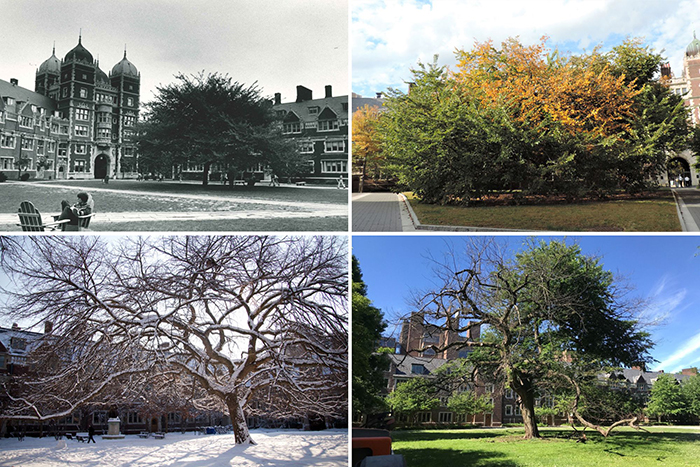 Marking the end of an era, Penn’s historic “Quad elm” was removed the week of July 25 due to safety concerns.