Penn mRNA Scientists Drew Weissman and Katalin Karikó: 2021 Lasker Award

 As mRNA-based SARS-CoV-2 vaccines are deployed to protect hundreds of millions of people across the world and point the way to end the deadly global COVID-19 pandemic, the University of Pennsylvania scientists whose prescient discovery science effort laid the foundation for swift vaccine development have been awarded the 2021 Lasker-DeBakey Clinical Medical Research Award.
Messenger RNA (mRNA) innovators Drew Weissman, the Roberts Family Professor of Vaccine Research in Penn’s Perelman School of Medicine, and Katalin Karikó, an adjunct professor of neurosurgery at Penn and a senior vice president at BioNTech, are honored with what is widely regarded as America’s top biomedical research prize for the discovery of a therapeutic technology based on the modification of mRNA that makes it remarkably safe and effective.
The global impact and recognition of Dr. Weissman’s and Dr. Karikó’s work has its roots in their years of research together at the University of Pennsylvania investigating mRNA as a potential therapeutic. Their groundbreaking study, published in 2005, found that their concept—which brought fresh hope to a field beset by skepticism and false starts—could be a reality: that mRNA could be altered and then delivered effectively into the body to initiate a protective immune response. Their method to turn cells into factories that can temporarily produce proteins that serve as therapeutic compounds or stimulate the body’s immune system to attack a specific pathogen also minimizes harmful inflammatory responses.
This platform set the stage for the rapid development and deployment of mRNA vaccines to combat COVID-19 when the virus exploded across the world in early 2020. Both Pfizer/BioNTech and Moderna have licensed University of Pennsylvania technology that is used in their COVID-19 vaccines, a combined 370 million doses of which have been administered in the U.S. alone. The Pfizer-BioNTech vaccine is being deployed in 126 countries, and 71 countries are using the Moderna vaccine.
“Dr. Weissman’s and Dr. Karikó’s visionary research and persistence in unlocking the power of mRNA as a therapeutic platform have established both Penn and Philadelphia as the birthplace of mRNA vaccines, and provided us with the blueprint for a future in which we can fight infectious diseases, and incurable genetic diseases, from herpes and malaria to sickle-cell anemia and cancer,” said J. Larry Jameson, executive vice president of the University of Pennsylvania for the Health System and dean of the Perelman School of Medicine. “From the challenges and losses sown by the COVID-19 pandemic, their breakthrough discoveries have emerged and allow us to see a brighter future for so many fields of medicine.”
For 75 years, the Lasker Awards have recognized the contributions of leaders who make major advances in the understanding, diagnosis, treatment, cure, or prevention of human disease. Dr. Weissman’s and Dr. Karikó’s awards, which carry an honorarium of $250,000 between them, were announced on September 24 in a virtual ceremony by the Lasker Foundation. Past Lasker Award honorees include Jonas E. Salk for the invention of the polio vaccine and Anthony Fauci for designing government programs to tackle the issues of HIV and biodefense. Dr. Weissman completed his fellowship in immunology in the National Institute of Allergy and Infectious Diseases, serving in Dr. Fauci’s lab.
Seven previous Penn Medicine faculty members have received Lasker Awards for achievements including development of cognitive behavioral therapy, vaccines for pneumonia and meningitis, and the first discovery of a genetic cause of cancer, the so-called Philadelphia chromosome.
“As a physician-scientist, you hope your work will someday have a positive impact on real people, and it was beyond exciting to see that happen,” Dr. Weissman said. “But now, I’m most excited to be teaming up with colleagues to explore all that mRNA vaccines can do. We’re working on malaria with people across the U.S. and in Africa and on leptospirosis with people in Southeast Asia. We’re working on vaccines for peanut allergies. All of this is through collaboration. We find the best people in the world and ask them, ‘Do you want to collaborate on making this vaccine?’”
Dr. Karikó, too, is collaborating with fellow scientists on new discoveries, likening the research to the thrill of watching an intricate detective story unfold. “So many enigmatic things about RNA I find very, very exciting,” Dr. Karikó said. “And I am so glad that it eventually helped humanity.” On her collaborations with Dr. Weissman, she added, “Sometimes, we asked a question and made an experiment. And of course, instead of the answer, we got 100 more questions. It was very enjoyable. I would like to emphasize that to be a scientist is a joy.”
Drs. Weissman and Karikó have been recognized this year with multiple national and international commendations, including the Princess of Asturias Award, the Albany Medical Center Prize in Medicine and Biomedical Research, and the Breakthrough Prize.
Michele Goodwin: Provost’s Distinguished Visiting Faculty Fellow
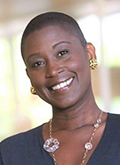 Interim Provost Beth Winkelstein and Vice Provost for Faculty Laura Perna announce the appointment of Michele Goodwin as the Provost’s Distinguished Visiting Faculty Fellow for the 2021-2022 academic year.
Dr. Goodwin, Chancellor’s Professor of Law and founding director of the Center for Biotechnology and Global Health Policy at the University of California at Irvine School of Law, is a pioneer of health law whose visit will be hosted by the department of medical ethics and health policy in the Perelman School of Medicine. Dr. Goodwin led the first ABA-accredited health law program in the United States, established the first law center focused on race and bioethics, and is the author of Policing the Womb: Invisible Women and the Criminalization of Motherhood (2020), Black Markets: The Supply and Demand of Body Parts (2006), and more than 100 articles, essays, and book chapters across both scholarly publications and popular media.
The Provost’s Distinguished Visiting Faculty Fellowship is awarded annually to a senior scholar of national or international prominence whose work promotes civic engagement, scholarly innovation, and inclusive communities, with the aim of enriching the intellectual and cultural life of the Penn community. Fellows can be from any academic discipline, with preference for those whose work is interdisciplinary in nature, promotes the growth of academic fields, and involves innovative research, methods, or scholarly themes. Fellows mentor Penn students, participate in panels and public discussions, collaborate on research projects, and provide at least one public presentation to the Penn community.
Catherine McDonald: Dr. Hildagarde Reynolds Endowed Term Professor
 Catherine C. McDonald has been named the Dr. Hildagarde Reynolds Endowed Term Professor of Primary Care Nursing in Penn’s School of Nursing, effective immediately.
Dr. McDonald is also an associate professor of nursing at Penn Nursing, vice-chair of the department of family and community health in Penn Nursing, and an associate professor of pediatric nursing at the Perelman School of Medicine. She is a member of the executive committee of the Penn Injury Science Center (PISC), a Centers for Disease Control (CDC)-funded Injury Control Research Center, and is co-director of the PISC Training Core, which helps oversee undergraduate, graduate, and post-graduate training. Dr. McDonald is a nurse scientist, clinical expert, and an exceptional teacher.
Dr. McDonald’s program of research aims to promote health and reduce injury in youth. She has a strong portfolio of research on adolescent injury prevention funded by the National Institutes of Health (NIH) and the CDC. She is currently the primary investigator on two NIH-funded R01s focused on teen driving and adolescent injury prevention and co-investigator on several injury-related research projects. Dr. McDonald’s research drives her teaching as well as her clinical work as a pediatric intensive care nurse and school nurse. She has been course director and seminar leader for several first-year courses, and a guest lecturer in numerous courses at Penn Nursing and across campus. She also has a training leadership role in the CHOP Leadership Education in Adolescent Health (LEAH) Program. She has published over 50 peer-reviewed articles on injury prevention related to children and adolescents on the topics of driving behaviors, motor vehicle crashes, child passenger safety, concussion, and community violence exposure.
Samantha Hill: Curator for Civic Engagement at Penn Libraries
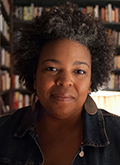 The Penn Libraries has welcomed Samantha Hill as curator for civic engagement. An award-winning trans-disciplinary artist whose practice draws upon archives and oral histories collected by individuals and communities, Ms. Hill was born in Philadelphia, was most recently based in Chicago, and has worked with communities in Anchorage, Alaska; Macon, Georgia; and Charlotte, North Carolina.
Ms. Hill is the founder and primary investigator of the Kinship Project, a special collection that contains 4,000 candid and professional family pictures (photographs, scrapbooks, tintypes & digital images), mostly of African Americans, from across the country. By simultaneously playing the role of artist, archivist, and anthropologist, she engages communities in the development of multi-media installations and performances grounded in individual and community memory.
“The Penn Libraries has made it a strategic priority to intentionally strengthen outreach and engagement that positively impact local communities,” said Constantia Constantinou, H. Carton Rogers III Vice Provost and director of the Penn Libraries. “Samantha’s expertise across disciplines and deep experience in partnership-building will be invaluable to our work on campus and throughout Philadelphia.”
As part of the curatorial team in the Penn Libraries’ Kislak Center for Special Collections, Rare Books and Manuscripts, Ms. Hill will bring to the Kislak Center expertise in preserving and providing access to cultural heritage to communities in and around the city of Philadelphia. While the Penn Libraries is an active collecting institution, Ms. Hill expects to work in a post-custodial model, where the artifacts of memory are not extracted from the communities that create and nurture them. Instead, Penn’s experience in processing, preserving, digitizing, and providing access to such material might help advance the goals of those communities while promoting research and teaching.
As curator for civic engagement, Ms. Hill will also serve as a fellow with Civic House, Penn’s hub for student civic engagement, centering community organizations and social justice education. Founded in 1998, Civic House runs a variety of initiatives, including the Penn Civic Scholars Program, which involves up to 15 students in each class seeking to integrate their civic engagement and scholarship experiences as undergraduates.
Ms. Hill comes to Penn from the University of Michigan, where she earned a master of information science. She also earned a master of fine arts from the School of the Art Institute of Chicago.
A Message from Scott L. Bok and Amy Gutmann on Campaign Conclusion

October 1, 2021
Dear Penn Community,
On June 30, 2021, we concluded The Power of Penn Campaign, the University’s most successful fundraising and engagement effort to date. We are pleased to report that we have far exceeded our initial campaign goal, raising more than $5.4 billion in support of our commitment to grow inclusion, spark innovation, and accelerate impact where it is needed most.
This campaign’s success is a testament to the strength and engagement of Penn’s faculty, staff, and student community; the outstanding support of Penn’s alumni, donors, and friends; and the leadership and generosity of our volunteers.
Thanks to our collective efforts, we have strengthened student financial aid and expanded access to a Penn education through programs such as Penn First Plus. We have increased endowment for faculty and staff positions at each of our schools and centers. We have supported groundbreaking research that crosses disciplines and expands knowledge in fields such as behavioral science, healthcare, and sustainable energy. And we have created new spaces on campus that drive learning, foster creativity and innovation, enrich the student experience, and serve the broader community.
We invite you to explore The Power of Penn Impact Summary and watch our Campaign Impact video to see how the Campaign has propelled our shared priorities and inspired transformation across our campus and around the world.
With deepest appreciation,
—Scott L. Bok, C’81, W’81, L’84
Chair, Board of Trustees
—Amy Gutmann, President
Campus Update: COVID-19 and Flu
September 30, 2021
Dear Quakers,
We are now well into our fall 2021 semester, and we could not have come this far without your patience, resilience, and diligence in following our public health guidance on campus. We’re all learning how to adapt to the presence of COVID-19 and its variants in our daily lives, and I want to thank you for your efforts to ensure a safe return as we re-populated our campus over the past several weeks. Together, we’ve kept our COVID-19 positivity rates well below those of our surrounding communities and region, and have been effective in avoiding classroom and workplace transmission.
Our Gateway Testing, or testing performed upon your arrival, provided a baseline rate of positivity among students, faculty, staff, and postdocs. Our student Gateway positivity rate was 0.61%, and our faculty, staff, and postdoc Gateway positivity rate was 0.25%. Additionally, our vaccination rates on campus remain high. As the October 15 deadline from the City of Philadelphia approaches, 95% of our faculty and staff campus-wide are vaccinated, as are 96% of our entire student population.
Even as a highly vaccinated community, we have a collective responsibility to work together to protect our campus and our surrounding neighborhoods. To do so, we must simply continue to follow the University’s public health guidance:
- Complete your daily symptom attestation through PennOpen Pass.
- Mask up! Whenever indoors, in public and shared spaces, wear a mask—even if fully vaccinated.
- Participate in the University’s required Screening Testing Program:
- All fully vaccinated students must test once every other week (some student groups must test more regularly)
- Fully vaccinated faculty, staff, and postdocs are randomly chosen each week and informed via email to participate in screening testing
- Those with an approved COVID-19 vaccine exemption, and those who have not yet been fully vaccinated, must continue to test twice a week.
- Continue to be mindful of good hand and cough hygiene: wash your hands frequently and cough into your elbow.
- Keep surfaces clean: this will also help minimize the transmission of the many other traditional fall illnesses that are still circulating—including the common cold, RSV, strep throat, and more.
- Practice physical distancing when eating or drinking in the presence of others, especially indoors, and consider eating outdoors if possible.
As a reminder, all students are required to receive the flu vaccine this year. Please visit the Wellness at Penn page for more information about Penn’s 2021 Flu Clinic, taking place at Pottruck Health and Fitness Center, from October 4-8. The clinic will be open Monday through Thursday, 10 a.m.-6:30 p.m. and Friday, 10 a.m.-3 p.m. There is no cost for this vaccination. All faculty, staff and postdoctoral fellows are also eligible to receive their flu shot at no cost. Simply bring your Penn ID and mask up!
Remember—we all benefit when we do our part. We are learning to co-exist with COVID-19 and our experience thus far shows that COVID-19 does not deter us from fulfilling our academic mission here at Penn.
It is our united actions that will define our success and strengthen us. Union, as Benjamin Franklin reminds us, “makes us strong and even formidable.”
With appreciation and in good health,
—Benoit Dubé
Associate Provost and Chief Wellness Officer
University of Pennsylvania
Nominations for University-Wide Teaching Awards: Due December 3
Nominations for Penn’s University-wide teaching awards are now being accepted by the Office of the Provost. Any member of the University community—past or present—may nominate a teacher for these awards. There are three awards:
- The Lindback Award for Distinguished Teaching honors eight members of the standing faculty: four in the non-health schools (Annenberg, Design, SEAS, GSE, Law, SAS, SP2, Wharton) and four in the health schools (Dental Medicine, PSOM, Nursing, Veterinary Medicine).
- The Provost’s Award for Distinguished PhD Teaching and Mentoring honors two faculty members for their teaching and mentoring of PhD students. Standing and associated faculty in any school offering the PhD are eligible for the award.
- The Provost’s Award for Teaching Excellence by Non-Standing Faculty honors two members of the associated faculty or academic support staff who teach at Penn, one in the non-health schools and one in the health schools.
The nomination forms are available at the Teaching Awards website. The deadline for nominations is Friday, December 3, 2021. Full nominations with complete dossiers prepared by the nominees’ department chairs are due Friday, February 4, 2022. For more information, please email provost-ed@upenn.edu or call (215) 898-7225.
Criteria and Guidelines
The Lindback and Provost’s Awards are given in recognition of distinguished teaching. “Distinguished teaching” is teaching that is intellectually demanding, unusually coherent and permanent in its effect. The distinguished teacher has the capability of changing the way in which students view the subject they are studying. The distinguished teacher provides the basis for students to look with critical and informed perception at the fundamentals of a discipline and relates that discipline to other disciplines and to the worldview of the student. The distinguished teacher is accessible to students and open to new ideas, but also expresses their own views with articulate and informed understanding of an academic field. The distinguished teacher is fair, free from prejudice and single-minded in the pursuit of truth.
Skillful direction of dissertation students, effective supervision of student researchers, ability to organize a large course of many sections, skill in leading seminars, special talent with large classes, ability to handle discussions or structure lectures—these are all attributes of distinguished teaching, although it is unlikely that anyone will excel in all of them. At the same time, distinguished teaching means different things in different fields. While the distinguished teacher should be versatile, as much at home in large groups as in small, in beginning classes as in advanced, they may have skills of special importance in their area of specialization. The primary criteria for the Provost’s Award for Distinguished PhD Teaching and Mentoring are a record of successful doctoral student mentoring and placement, success in collaborating on doctoral committees and graduate groups, and distinguished research.
Since distinguished teaching is recognized and recorded in different ways, evaluation must also take several forms. It is not enough to look solely at letters of recommendation from students or to consider “objective” evaluations of particular classes in tabulated form. A faculty member’s influence extends beyond the classroom and individual classes. Nor is it enough to look only at a candidate’s most recent semester or opinions expressed immediately after a course is over; the influence of the best teachers lasts, while that of others may be great at first but lessen over time. It is not enough merely to gauge student adulation, for its basis is superficial; but neither should such feelings be discounted as unworthy of investigation. Rather, all of these factors and more should enter into the identification and assessment of distinguished teaching.
The Lindback and Provost’s Awards have a symbolic importance that transcends the recognition of individual merit. They should be used to advance effective teaching by serving as reminders to the University community of the expectations for the quality of its mission.
Distinguished teaching occurs in all parts of the University. Therefore, faculty members from all schools are eligible for consideration. An excellent teacher who does not receive an award in a given year may be re-nominated in some future year and receive the award then.
The Lindback and Provost’s Awards may recognize faculty members with many years of distinguished service or many years of service remaining. The teaching activities for which the awards are granted must be components of the degree programs of the University of Pennsylvania.
Call for Programs for the 2022 Dr. Martin Luther King, Jr. Symposium on Social Change
We invite your organization/department to plan a program in conjunction with this year’s symposium. Your program(s) may include reflection, action, or response to contemporary issues. Programs should address issues of social change and social justice while incorporating Dr. King’s vision to end racism, violence and poverty. We encourage programs that strengthen and embrace diversity as well as support free expression. For date availability, visit https://www.upenn.edu/aarc/mlk/calendar_mlk.htm.
If interested, contact the African-American Resource Center no later than December 17, 2021 with your program. Email Colleen Winn at cowinn@upenn.edu, Darin Toliver at toliverd@upenn.edu, or Steve Kocher at skocher@upenn.edu, or call (215) 898-0104.
—African American Resource Center
 Pamela Hearne Jardine, a former collection keeper at the Penn Museum and a renowned advocate for Native American art and culture, passed away on April 28 after a long battle with pancreatic cancer. She was 82.
 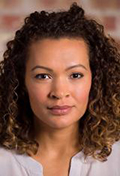 Sarah J. Jackson, Presidential Associate Professor and co-director of the Media, Inequality & Change Center in the Annenberg School for Communication at the University of Pennsylvania, recently received the 2021 Diamond Anniversary Book Award from the National Communication Association (NCA).