A Message from President Liz Magill
July 1, 2022
 Hello, I’m Liz Magill.
Today I begin my duties as Penn’s ninth president. Like every new student and employee, I started out with a trip to the bookstore to get my Penn ID. And on the way, I got to meet three Penn students. I asked them: “What do you like best about Penn?” and “What could we do better?”
As to what they liked best, the consensus was totally clear: They loved the life-changing opportunities that Penn offered them. And what could we do better: They pointed out that the range of opportunities at Penn is so vast, to take advantage of all of them, they would need more than 24 hours in a day, and more than seven days in a week. I did love their energy, but I came away with the feeling that to make Penn even better, one of the first things I would have to do is bend the space-time continuum. And even for Penn that’s a tall order.
The students are on to something though. The scope of opportunity at Penn is mind boggling and it’s matched by the zeal of Penn people to do it all, and in the process, to make the world a better place. This is one of Penn’s defining traits—call it a virtuous impatience. We are impatient to create new possibilities; to teach, discover, and share solutions; and to help lift communities while saving and improving lives.
This is the university that would, if it could, bend space and time to accomplish even more good in the world. This is a characteristic of Penn I deeply admire. I’ve been impatient for this day, planning and dreaming of all the great things we’re going to do. Together.
Living here in the world-class city of Philadelphia, working with you to make Penn even more extraordinary, this will be the honor of a lifetime. I hope to meet you soon. I can’t wait.
—M. Elizabeth Magill, Penn President
---
This is a transcript of the video message, which can be viewed at https://president.upenn.edu/meet-president/announcements/first-day-greetings.
$12.5 Million to Fund Scholarships for Students Interested in Social Innovation and Social Justice at the School of Social Policy & Practice
The University of Pennsylvania has announced a $7.5 million commitment to increase scholarships for graduate students who are committed to social innovation and social justice, including those from historically underrepresented backgrounds. This level of support from an anonymous donor is one of the largest gifts ever made to the School of Social Policy & Practice (SP2). In combination with an additional $5 million in matching funds from the University, a total of $12.5 million will fund 12 full-tuition scholarships annually. The commitment will support the SP2 Social Justice Scholars Program and endow a new scholarship program focused on social innovation.
“We are particularly grateful for this extraordinary gift to support students who are engaging in programs for social justice and social innovation,” said Interim President Wendell Pritchett. “These new scholarship resources will substantially expand access to some of Penn’s most impactful graduate programs and allow students to graduate without the burden of debt. The scholarship recipients will positively influence our communities long after their time at Penn, as they pursue meaningful careers in service of others.”
At SP2, research and practice focus on social justice and social change. Faculty and students seek to improve the lives of others by addressing challenges in economic security, homelessness, immigration, health equity, gender-based violence, child welfare, and more.
“For more than 110 years, SP2 has worked to improve the lives of underserved and marginalized communities,” explained Sara S. Bachman, dean of SP2. “These incredible resources will enable SP2 to grow its world-class education for students advancing their careers in social innovation, impact, and justice. I am thrilled that the school will have additional financial support to educate students and provide meaningful career preparation for many years to come.”
“Often, we meet students who want to attend Penn, who are committed to their field, and who want to advance their careers through graduate education,” said Adiza M. Ezell, director of admissions and recruitment at SP2. “For some students, however, the cost of tuition relative to their salaries working for NGOs, government agencies, and nonprofits can deter them from enrolling. The new gift to SP2 will transform the way we support and sustain students, particularly those from disadvantaged and historically underrepresented backgrounds.”
Introduced as the first program of its kind in January of 2021, the Social Justice Scholars Program cultivates a distinct and impactful learning environment for cohorts of students of color while removing the financial burden of graduate studies. It offers full-tuition scholarships and specialized, rigorous academic programming for incoming students—with a preference for those graduating from historically Black colleges and universities (HBCUs) and minority-serving institutions (MSIs).
This year’s inaugural class of Social Justice Scholars (Almanac June 15, 2021) proved to be an essential addition to SP2’s continuing efforts to affirm diversity and to address problematic structures of oppression. Social Justice Scholar Gianni Morsell exemplifies this work.
Before coming to Penn, Ms. Morsell launched a food pantry and developed educational programming for students, faculty, and staff who were demonstrating food insecurity at Morgan State University in Baltimore. She now serves as the East Pennsylvania Deputy Director at Rise, a nonprofit working to make higher education free and help all young people participate in democracy.
“The program provided a unique opportunity to attend seminars with leaders in their respective fields who address social justice issues,” said Ms. Morsell. “I enjoyed the opportunity to participate in conversations about racial and social issues and being surrounded by a cohort of brilliant individuals who have very different backgrounds. I am thrilled that this additional funding will be used to further enrich the future Social Justice Scholar experience.”
Additional fundraising for the program will aim to support student expenses that fall outside of tuition, including academic fees and housing.
$7.5 Million From Mr. Lauder and Ms. Kanter Tritsch for Design to Thrive
The University of Pennsylvania has announced a $7.5 million commitment from Lori Kanter Tritsch, MArch’85, and William P. Lauder, W’83, to support Design to Thrive, a youth development initiative centered on design education and career exploration. Lori Kanter Tritsch is a Penn alumna who holds a master of architecture and is a current member of the Board of Advisors at the Weitzman School of Design, and her partner and fellow Penn alumnus is William P. Lauder, who holds a bachelor of science in economics from the Wharton School and is a Penn Trustee.
Design to Thrive began as a two-year pilot in New York and Philadelphia in response to the limited educational and recreational opportunities during the pandemic. With this gift from Mr. Lauder and Ms. Kanter Tritsch, Design to Thrive will be a permanent enrichment program produced by PennPraxis, the center for applied research, outreach, and practice at the Stuart Weitzman School of Design at Penn. Their commitment includes $500,000 in challenge funds from the Weitzman School that was created to encourage support for the program.
“We are incredibly grateful to Lori Kanter Tritsch and William Lauder for their generous support of Design to Thrive,” said Interim President Wendell Pritchett. “Their commitment will extend Penn’s ability to respond to challenges in our built and natural environments—and the communities that inhabit them. Design to Thrive delivers career-oriented arts education to local youth. It brings skills and concepts from art and design to young people who may not have had much exposure to those fields.”
The Design to Thrive pilot programs were made possible in 2020 and 2021 through initial support from Mr. Lauder and Ms. Kanter Tritsch, and gifts to the PennPraxis Design Fellows program, and through partnerships with the Fresh Air Fund in New York City and Philly Thrive, a leading community voice for environmental justice in Philadelphia.
In the latest New York pilot, youth aged 13 to 18 met four days a week for an intensive design studio in an outdoor classroom on Governors Island. There, PennPraxis Design Fellows imparted a wide variety of design skills and approaches, including welding with blowtorches, creating ceramic molds for porcelain bells, and building a precise topographic model. Mr. Lauder, chairman of the board of the Fresh Air Fund, and Ms. Kanter Tritsch, a longtime Fresh Air supporter, introduced the fund to PennPraxis and facilitated the program pilot. Since 1877, the Fresh Air Fund, a not-for-profit youth development organization, has provided life-changing summer experiences in the outdoors to more than 1.8 million children from New York City’s underserved communities.
“During the pandemic, there was a growing concern about today’s youth missing vital educational and growth experiences,” said Ms. Kanter Tritsch. “Bringing together talented Weitzman students and Fresh Air Fund youth was an obvious solution in my mind. I am thrilled that Design to Thrive will have a significant learning impact on the young people who participate, as well as on the Weitzman students who design and teach the programs.”
Design to Thrive will follow the studio model of design education. Students will engage in drawing, painting, model making; digital design; shop classes in welding, casting, and woodworking; and environmental justice workshops and field trips. Participants will receive supply kits, computers on which to complete homework, lunch, and public transit fare. Students from families with limited means will receive stipends to cover income loss for enrolling in lieu of summer work.
“This gift will enable PennPraxis to have an even greater impact in communities that design does not typically serve,” said Ellen Neises, executive director of PennPraxis. “We are all so excited that we can deepen and diversify the learning opportunities we offer through Design to Thrive, adding major design/build projects to improve public schools and the Fresh Air Fund’s camp facilities for young people with modest resources and limited access to arts education. With the help of Weitzman graduate students and alumni, and our local partners, we help young people build skills and confidence in building, making, critical thinking, and communication.”
A portion of the gift will also endow the Lori Kanter Tritsch Executive Director of PennPraxis, and the first person to hold the position will be Ms. Neises.
Weitzman graduate students and recent alumni will serve as teachers and mentors leading intensive Design to Thrive studio classes over the summer. The program has been highly popular among Weitzman students enrolled in different degree programs as an opportunity to collaborate across traditional disciplinary boundaries.
“Design to Thrive epitomizes our school’s deeply holistic approach to the built environment and commitment to the public good,” said Fritz Steiner, Dean and Paley Professor in the Weitzman School. “Through this program, Weitzman students in architecture, landscape architecture, city planning, fine arts, and historic preservation come together to nurture creativity and problem solving in communities that have historically been left behind. What’s more, introducing people from diverse backgrounds to our fields earlier in life is also critical to increasing diversity in our schools and professions.”
Key components of Design to Thrive will include skills certification by Penn; portfolio and resume development; career advising; and introductions to high school, community college, and undergraduate design programs. In the fall of 2021, two graduates of the PennPraxis pilot program enrolled as freshmen in architecture and engineering programs at City College of New York and Drexel University.
The 2022 program began on June 27.
$2.4 Million ARPA-E Grant to Research the Design of Carbon-Negative Buildings
The University of Pennsylvania has been selected to receive $2.4 million in funding from the U.S. Department of Energy Advanced Research Projects Agency-Energy (ARPA-E). The funding is part of the ARPA-E HESTIA program, which works to overcome barriers associated with carbon-storing buildings, including scarce, expensive, and geographically limited building materials. The goal of the HESTIA program is to increase the total amount of carbon stored in buildings to create carbon sinks, which absorb more carbon from the atmosphere than released during the construction process.
The University of Pennsylvania, in collaboration with Texas A&M University, the City College of New York, KieranTimberlake, and Sika, will design carbon-negative, medium-sized building structures by developing a high-performance structural system for carbon absorption and storage over buildings’ lifespan.
“We’re taking a multi-scalar approach to minimize the impact of using concrete, which is the most ubiquitous construction material globally,” said Masoud Akbarzadeh, director of the Polyhedral Structures Laboratory and an assistant professor of architecture at the Weitzman School of Design. “While on the macro level, we are introducing an innovative, efficient structural system, on the micro level, we are reinventing the recipe for concrete to absorb carbon. The results of this research could be applied to a comprehensive building design strategy for all kinds of buildings.”
The team will use a novel carbon-absorbing concrete mixture as a building material, and design and assemble a high-performance structural system with minimized mass and construction waste, and maximized surface area. The parts will be prefabricated using robotic 3D printing technology.
“Geometry is what makes our team’s designs unique, in both the printed structures and the formulation of the carbon-absorbing concrete,” said Shu Yang, chair of the materials science and engineering department in the School of Engineering and Applied Science. “By also using bio-based materials, our structures will not only store carbon, but also offer enhanced load-bearing capabilities.”
“The right geometry produces the efficiency of the structures by reducing the amount of material—concrete, in this case—used, and consequently carbon emissions,” said Mohammad Bolhassani, director of the Advanced Masonry Center at the Bernard & Anne Spitzer School of Architecture of the City College of New York. “Coupling the right form of structure and material will also help to absorb more carbon from the atmosphere.”
The research bridges active and passive design approaches to thermal performance. The increased surface area of the novel concrete structure is beneficial for achieving comfort temperature ranges indoors through thermal mass heat storage. “We will combine natural ventilation strategies with the exposed concrete slab system to achieve a major reduction in the operational energy of the building over the building’s life cycle,” said Dorit Aviv, director of the Thermal Architecture Lab at the Weitzman School of Design.
“The novel construction system will combine strategies to exploit thermal mass with adaptive envelope, and electrified building systems including heat pumps, to reduce operational carbon emission over the building’s life cycle,” said Zheng O’Neill, associate professor of mechanical engineering at Texas A&M University.
A Building Information Modeling (BIM)-integrated life cycle analysis (LCA) feedback loop will be used to identify the combined strategies to ensure carbon negativity on a cradle-to-gate and cradle-to-grave basis. “Our transdisciplinary team will engage the development of materials and systems holistically, developing LCA workflows to understand how components of the building contribute collectively to carbon negative design,” said Billie Faircloth, partner and research director at KieranTimberlake.
William Atkins: Associate Vice Provost for University Life
 Interim Provost Beth A. Winkelstein and Interim Vice Provost for University Life Tamara Greenfield King announce the appointment of William Atkins as Associate Vice Provost for University Life (Diversity, Equity, Inclusion, and Belonging), beginning July 25.
“This redefined senior leadership position,” said Interim Provost Winkelstein, “will be a critical step forward in advancing our most important priorities for student life at Penn, especially in working closely with our outstanding cultural centers and other key student organizations. Will Atkins is a highly experienced and widely respected student affairs professional whose experience in creating affirming and inclusive campus environments spans multiple areas of student life at large universities.”
Dr. Atkins comes to Penn from the University of Florida at Gainesville, where he is currently the Assistant Vice President for Student Life and was previously the Associate Dean of Students and senior director of the Office of Multicultural and Diversity Affairs. Before joining the University of Florida in 2014, he served in leadership positions at Miami University of Ohio and at the University of Michigan at Ann Arbor, among other positions.
He is an active and collaborative leader across national organizations, campus life, and student advising who has presented at dozens of national conferences. He recently received the Advisor of the Year award from the Black Student Union at UF-Gainesville. Most recently, at UF-Gainesville, he has been instrumental in expanding the Institute of Black Culture and Institute of Hispanic-Latino Cultures and creating a program of implicit bias training. He earned a PhD at UF-Gainesville, with a dissertation on oral histories of Black college women at the University of Florida, in addition to an MA in higher education administration from the University of Michigan at Ann Arbor and a BS from UF-Gainesville.
2022 Penn GSE Annual Awards
Awarded to current students, faculty, and staff, the annual Penn GSE Awards recognize outstanding service and commitment to the Penn GSE community. The 2022 honorees are:
The William E. Arnold Award for Outstanding Contributions by a Student
Leland McGee, an EdD candidate in higher education, has had a profound impact at Penn GSE through extraordinary dedication to student success and excellence. He has demonstrated a proactive commitment to improving the student experience by providing support, guidance, and a compelling perspective to individual programs and to leaders across the school. He has played an integral role in leading the diversity, equity, inclusion, and justice efforts at Penn GSE and has mentored countless students individually, advocating for and encouraging their ability to achieve success. His invaluable contributions to the Penn GSE community and to the field of education is recognized by the many students, staff, and faculty he has collaborated with.
The Laurie Wagman Award for Visual and Performing Arts in Education
Jin Yang, an MSEd candidate in the TESOL: Teaching English to Speakers of Other Languages program, has demonstrated an innovative and creative vision in the field of education through visual arts projects showcasing the power of inclusion, individualism, culture, and choice. With a goal to advance classroom computerized learning, she has shared her scholarly involvement and exploration with peers and colleagues in the field and has promoted digital learning through visual arts in educational settings. Her efforts to share this vision with her peers and promote the advancement of education through visual arts are recognized and deeply valued by her peers.
The Penn GSE Excellence in Teaching Award
Ed Brockenbrough, an associate professor in the division of teaching, learning, and leadership, has demonstrated an innovative excellence in teaching that has created a lasting impact on his students at Penn GSE. His inquiry-based learning approaches encourage engaging classroom discussions that challenge his students intellectually and promote critical educational growth. His outstanding commitment to his students is illustrated through his intentional and meaningful leadership choices in the classroom, and his students greatly appreciate and recognize the impact his teaching has had on their thinking, scholarship, and world views.
Faculty Recognition of Service Awards
Amalia Daché, an associate professor in the division of higher education, is recognized for her substantial academic and scholarship contributions at Penn GSE. She has made an impactful commitment to enhance the learning and exploration of her students in the classroom. Her varied educational activities encourage students to think critically and to engage in challenging conversations. Her leadership and scholarship have inspired her students and helped them develop skills to be successful and innovative leaders in the field.
Suzanne Fegley, a senior lecturer in the division of human development and quantitative methods, is recognized for her unwavering commitment to being an excellent educator and inspiration to her students. Throughout the academic year, she has created a rich and engaging classroom environment in which she has intentionally and energetically connected with her students. She has demonstrated a genuine interest and desire to teach and a willingness to adapt throughout the year. Her dedication and commitment to education are cherished by her students.
Nelson Flores, an associate professor in the division of educational linguistics, has had an immeasurable impact on the Penn GSE community. His educational and scholarship contributions are recognized and deeply cherished by the students, staff, and faculty he has collaborated with. His extensive involvement and commitment to the Latinx Affinity group at Penn GSE has illustrated his instrumental support of students and his dedication to building community for Latinx students, staff, and faculty at Penn GSE.
Staff Recognition of Service Awards
Charles Washington, a classroom technology manager with the Office of Information Technology at Penn GSE, has had a profound impact on the many students, staff, and faculty he has supported. While the IT team has been in high demand, he has demonstrated a dedication to delivering resources and technology support to all. His approach to providing technology support is empowering, educational, and accessible, and he leaves others feeling comfortable and confident. His commitment to helping others overcome technophobia is embodied in his demeanor, approachability, and ongoing support—all greatly appreciated by the Penn GSE community.
Diana Johnson, the executive assistant to the Dean’s Office, has been a valued colleague and friend at Penn GSE. She has been deeply appreciated by fellow staff members for her genuine kindness and compassion, frequently checking in with others and ensuring that others are well supported. Her colleagues have made note of her persistent support and care during these last few years, made especially difficult by the COVID-19 pandemic. Her presence has been a source of comfort and care for all those she works with.
Lauren Scicluna, a program coordinator in the division of literacy, culture, and international education, is recognized for her continuous support to the international educational development program at Penn GSE. Throughout the academic year, she has connected students to resources and opportunities to enrich the student experience. Her commitment to responding to student needs is greatly valued in the program and her knowledge and skills have helped students navigate their educational experience with ease and excitement at Penn GSE.
Student Recognition of Service Awards
Alexis Ditaway, an MSEd candidate in higher education, has had a significant impact on her fellow students and has demonstrated consistent strong and effective leadership at Penn GSE. As a graduate assistant in the higher education program, she has gone above and beyond in building community through valuable educational and social support programming. In the classroom, she is recognized for her invaluable perspectives that invite her peers to think critically and reflect on their worldviews. She shows a fierce dedication to equity that inspires her peers and colleagues. Her commitment to including and uplifting the voices of her peers and encouraging others to be their full, authentic selves is cherished by the Penn GSE community.
Chenelle Boatswain, an EdD candidate in educational leadership, is recognized for her significant contributions in supporting and advocating for her fellow students. Her notable leadership and thoughtful design of programming to improve and enrich the EdD student experience has created a lasting impact on her peers. She has made exceptional contributions to the diversity and inclusion efforts at Penn GSE through community building and individual mentorship. She has built meaningful, authentic relationships with countless students and has demonstrated a deep commitment to encouraging others to effectively navigate obstacles and access the support and resources necessary to succeed and thrive. Her extensive impact and enthusiasm are cherished by the many students with whom she has worked.
Christopher Rogers, a PhD candidate in the literacy, culture, and international education division, has been a valued Penn GSE student and dedicated member of the community at large. He reflects the core values and culture of Penn GSE through his community involvement. His significant contributions to underserved communities have demonstrated his extraordinary dedication and commitment to innovation, impact, and justice.
Sarah Gudenkauf, an EdD candidate in educational leadership, has greatly advocated for and enriched the EdD student experience. Her support efforts for her peers have created systemically sustainable change towards reliable and equitable solutions to better support EdD students. She has led these efforts with humility and selflessness and has fostered a sense of community and connectedness throughout the doctoral student community at Penn GSE. The staff, faculty, and peers with whom she has collaborated all recognize her exceptional service to her fellow students and the lasting impact these outcomes will have on future cohorts of students.
Penn GSE Excellence in Promoting Diversity, Equity and Inclusion
Saryu Sanghani changed from a dual degree (Dental/GSE) status to a full-time GSE degree last fall. She became a grad assistant in the Office of Student Services (OSS) this spring, and her positive impact on the GSE community was immediate. Ms. Sanghani began working with the LGBT Center to fill a student support void at Penn GSE. She provided leadership collaborating with students, faculty, and staff to reconstitute a student organization supporting the LGBTQ+ community, the Penn GSE Pride Alliance. Her work represents a level of support for this community missing in years past. The synergy of this student/staff/faculty collaboration is unprecedented in the last 20 years at GSE and will instantiate community of support and scholarship.
Saida Harpi provided leadership for the relaunch of We Support Diversity of Mind (WSDM), celebrating its 10th anniversary this year. This student organization supports GSE students of color and allies in providing an inclusive community and support their scholarship. After working on her own strategy for navigating through the GSE ecosystem, Ms. Harpi began this endeavor late in the fall semester. In addition to managing the rigors of her academic program, she organized members of GSE affinity groups to recruit students for WSDM. She inspired a core group to serve on the board, and under her leadership as president, they established guiding documents, a vision, goals, and a process for sustaining the organization. Ms. Harpi worked closely with staff, faculty, and alumni to plan year-end events in less than a semester’s time. Her commitment to making the voices of students of color are shared and heard has been unwavering. It is her hope that with the revival of WSDM, students of color will have agency to co-create support resources and contribute to student success in their academic journey through Penn GSE.
Andre Zarate is a student in the mid-career doctoral program in educational leadership, one of Penn GSE’s executive-format programs. Mr. Zarate has been a champion of diversity and inclusion and the “conscience” of the program. He has the unique gift of both challenging his colleagues to do better while also strengthening their ability to do so. Many of the members of his cohort can attest to learning and growing from his passionate example.
Penn Dental Medicine: Partnership with Woods Services to Provide Care for Individuals with Disabilities
Expanding its outreach within the community, Penn Dental Medicine announces a new partnership with Woods Services to provide dental treatment for its clients and residents; Woods is a Pennsylvania- and New Jersey-based nonprofit that serves children and adults with intellectual and developmental disabilities and acquired brain injuries. Woods’ existing dental care center within its Langhorne, Penn.-based campus will undergo extensive renovations over the next six to eight weeks, reopening later this summer as Penn Dental Medicine at Woods Mikey Faulkner Dental Care Center.
Renovations to the clinic will add two operatories (expanding from three to five), provide state-of-the-art equipment, enhance the waiting area and reception check-in, and migrate current patient files into a new electronic health record system utilized by Penn Dental Medicine.
“We are thrilled to be expanding our service and care within the community through this Woods partnership,” said Penn Dental Medicine’s Morton Amsterdam Dean Mark Wolff. “It not only allows us to help provide comprehensive care to the Woods clients, but also offers an invaluable setting for our students to gain experience caring for individuals with a wide range of disabilities.” Postgraduate students within Penn Dental Medicine’s Advanced Education in General Dentistry program will provide clinical care at the center under close faculty supervision.
“Woods is pleased to work with Dean Wolff to enhance dental services for our clients and residents,” said Tine Hansen-Turton, president and CEO, Woods Services. “Penn’s personalized care and interdisciplinary team approach are perfectly aligned with Woods, as is its emphasis on preparing the next generation of dentists to care for patients with special needs. Penn’s dentists will be able to perform procedures at our on-campus dental clinic that in the past would have required a visit to a specialist for treatment. This expansion of services will be less disruptive for our clients, further enhancing their quality of life.”
With Dean Wolff’s appointment in 2018, he established dental care for persons with disabilities as a priority for the School, and in 2021, Penn Dental Medicine opened the state-of-the-art Care Center for Persons with Disabilities at the School. Under his leadership, Penn is developing a national reputation for excellence in treating the dental needs of people with disabilities and in training dental students to care for these individuals.
Woods is organized around the principles of population health management and addresses the social determinants of health through a comprehensive continuum and system of care that connects prevention, wellness, education, behavioral health, and social services with coordinated and integrated healthcare delivery.
“The Medical Center at Woods serves as a national model for providing comprehensive, coordinated personalized care for people with complex diagnoses and medical conditions, like Mikey Faulkner, current Woods client and the clinic’s namesake,” said Ms. Hansen-Turton. “The opening of Penn Dental Medicine at Woods Mikey Faulkner Dental Clinic continues Woods’ commitment to providing an integrated healthcare experience for our clients – an approach that optimizes outcomes for individuals.”
This new care center will add to Penn Dental Medicine’s ongoing community care programs, which also include dental centers at Mercy LIFE, serving seniors in West Philadelphia; Puentes de Salud, serving the Latino community in South Philadelphia; and the PennSmiles mobile dental bus, serving children within the Philadelphia School District and area community health centers.

 R. Michael Buckley, a physician and former executive director at Pennsylvania Hospital, a clinical professor in the Perelman School of Medicine’s department of infectious diseases, and a former associate dean in PSOM, passed away from complications of cancer on April 9. He was 75.
 David Lancaster Crawford, a former adjunct professor of statistics in the Wharton School and a former faculty member in the department of economics in the School of Arts and Sciences, passed away on May 27. He was 71.
  Robert F. “Gieg” Giegengack, an emeritus professor of earth and environmental studies in the School of Arts and Sciences, died on June 4 after a brief illness. He was 83.
 Frederick Anthony Simeone, a former neurosurgeon at the Pennsylvania Hospital, a former faculty member in Penn’s department of neuroscience, and the namesake of Philadelphia’s Simeone Foundation Automotive Museum, passed away peacefully on June 11. He was 86.
 James Byron Snow, Jr., an emeritus professor of otorhinolaryngology in the Perelman School of Medicine, passed away on May 28. He was 90.
 Robert C. Hornik, the Wilbur Schramm Professor Emeritus of Communication and Health Policy at the Annenberg School for Communication, was honored with the Steven H. Chaffee Career Achievement Award by the International Communication Association. It was awarded at the association’s 72nd annual conference, recently held in Paris.
 Marc Minichello has been named Mid-Atlantic Region Men’s Field Athlete of the Year by the U.S. Track & Field and Cross-Country Coaches Association.
 Marci Hamilton, professor of practice in political science, and Anne Papageorge, Senior Vice President for Facilities and Real Estate Services, have been named Metro Philadelphia Power Women.
 Hannah Zlotnick, a graduate student in the department of bioengineering and a member of the McKay Orthopaedic Research Laboratory in Penn’s Perelman School of Medicine, has been named a Schmidt Science Fellow.
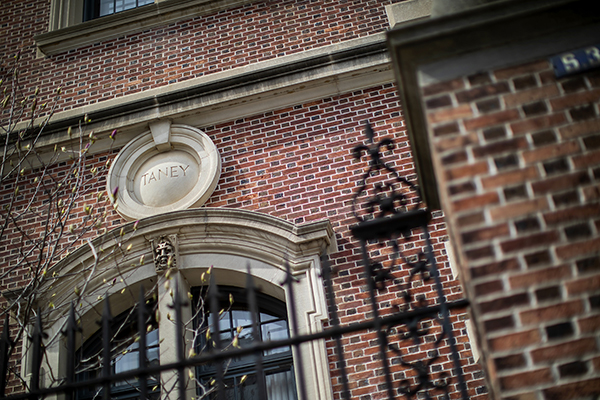 Following a yearlong evaluation and inclusive process, the name of Roger Brooke Taney, former chief justice of the United States Supreme Court, will be removed from a decorative medallion adorning the exterior of historic Silverman Hall at Penn’s Carey Law School.