News

Robert Vonderheide Appointed to Second Five-Year Term as Director of the Abramson Cancer Center

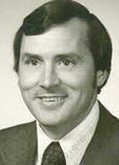
caption: Robert VonderheideRobert H. Vonderheide has been appointed to a second five-year term as director of the Abramson Cancer Center (ACC) at the University of Pennsylvania, following a highly successful tenure that saw 17 FDA approvals in oncology for therapies based on studies led or co-led by ACC investigators, high-impact basic and translational research discoveries, expansion of radiation oncology services to new sites across the Philadelphia region, and development of new methods for live tumor imaging during surgeries. Under his leadership, the ACC has also launched new cancer home care and telemedicine programs, as well as initiatives that drove improvements in germline genetic testing, cancer screenings, and clinical trial participation by minority patients. Dr. Vonderheide will also continue in his roles as Vice President for Cancer Programs in the University of Pennsylvania Health System and Vice Dean for Cancer Programs in Penn’s Perelman School of Medicine.

In the next phase of his leadership, Dr. Vonderheide will build on the development of pathways to ensure that, amid the increasingly complex landscape of cancer care and research, patients across the entire health system are able to access leading-edge Penn Medicine care no matter where they live. Among key examples already underway: proton therapy at Lancaster General Health and Virtua Health in New Jersey, both set to open this year; sub-specialty surgery consultation at outpatient sites and Penn Medicine’s regional hospitals; and telemedical options for genetic counseling and CAR T cell therapy and bone marrow transplant evaluation and education.

“Patients can expect an exceptional experience at every location across our health system—a place they are cared for by the most committed staff, specialized nurses, and top physician experts,” said University of Pennsylvania Health System CEO Kevin B. Mahoney. “Now, we are harmonizing that patient experience to ensure that every patient has the most seamless care and robust options across different sites of care, and the assistance to navigate easily between them. Under Dr. Vonderheide’s leadership, we are ensuring that every patient has every opportunity for the most personalized treatment and the very best chance at a cure through every door they enter across Penn Medicine.”

Dr. Vonderheide’s renewal as ACC director includes a five-year, $130 million investment from the health system to provide resources and infrastructure to unify all missions of cancer care and research across Penn Medicine.

Growing access to cancer clinical trials is a key area of focus that will happen through the development of a cancer clinical trials network, including more opportunities for patients at Penn Medicine’s regional hospitals to participate in clinical trials being led at the ACC’s main campus sites in Philadelphia, and the expansion of other trial sites closer to patients’ homes. Additional efforts will harness the power of Penn’s unified electronic health record, from new approaches to involve patients in the Penn Medicine BioBank to the expansion of programs providing patients with “e-nudges” to schedule mammograms and other tests and appointments through the MyPennMedicine portal.

“This is a time of exciting, unprecedented momentum for cancer care and research,” said J. Larry Jameson, dean of the Perelman School of Medicine and Executive Vice President of the University of Pennsylvania for the Health System. “The cancer death rate has dropped faster in the past two years than ever before, due in part to the development of prevention strategies and of targeted and immunotherapies for an array of diseases. Dr. Vonderheide embodies that momentum as an exceptional collaborator who brings experts together across different disciplines to focus efforts on the most innovative ways to meet our shared goals of driving cancer discovery and improving patient care.”

The ACC has continuously been designated as a Comprehensive Cancer Center by the National Cancer Institute (NCI) since 1974, one of 52 such centers in the United States. It is among the nation’s most highly ranked cancer centers, providing care to adults during more than 300,000 outpatient visits annually across the six-hospital Penn Medicine Cancer System, as well as delivering more than 190,000 outpatient infusion therapies, over 130,000 radiation treatments, and 330 stem cell transplants each year. The ACC was rated as “exceptional” during its competitive research funding review, the highest possible merit rating for an NCI Cancer Center.

Dr. Vonderheide is a leading authority in cancer immunology, leading a lab and clinical research focused on immunotherapies and vaccines for pancreatic, breast, and other cancers. He serves on the boards of directors of the American Association for Cancer Research, the Association of American Cancer Institutes, and the National Comprehensive Cancer Network. He is a member of the NCI Board of Scientific Advisors.

Penn and Lea School Celebrate Signing of $4 Million Commitment

caption: (Left to right) Wendell Pritchett, Pam Grossman, Council Member Jamie Gautier, William Hite, Glenn Bryan, Principal Gerwer, and Caroline Watts at the ceremony.In a spirited event that packed the auditorium of the Henry C. Lea Elementary School, officials from Lea, the President’s Center of the University of Pennsylvania, Penn GSE, the Philadelphia Federation of Teachers, and the School District of Philadelphia celebrated the formalization of Penn’s deepened commitment to supporting the West Philadelphia K-8 school.

The $4.1 million agreement (Almanac February 8, 2022) expands on the University of Pennsylvania’s partnership with Lea School, which dates back more than a half-century. It will provide broad support for the school’s key initiatives over the next five years.

“We’re here to celebrate our partnership with Penn and the work we will do together with the students and families of West Philadelphia,” said Lea School principal Aaron Gerwer to an auditorium filled with enthusiastic Lea School students and staff. “This is a special opportunity for our school, our community, and the University to collaborate around a vision for student-centered and community-connected learning that we hope can serve as a model for other schools, communities, and institutions of higher learning.”

In recent years, the University of Pennsylvania’s Office of the President and Penn GSE have provided approximately $300,000 of annual support to the Lea School—which has gone toward professional development for teachers, support for families, and resources for students. On January 27, School District of Philadelphia Superintendent William R. Hite, Jr., was authorized by the Philadelphia School Board to negotiate a memorandum of agreement building upon that commitment.

For Penn GSE Dean Pam Grossman, the event took on special meaning as a perfect example of what brought her to Penn.

“I came here seven years ago in large part because of the chance to lead a school of education that had a long history of working so closely and deeply with Philadelphia public schools,” said Dean Grossman. “I’m excited to work together with all of you—to see all of the things the students, families, and members of the Lea community are able to accomplish.”

University of Pennsylvania Interim President Wendell E. Pritchett feels a deep connection to the Lea School, as his parents, both schoolteachers in Philadelphia, met at West Philadelphia High School.

“I know firsthand the great things Philadelphia schoolteachers do for their students every day,” said Interim President Pritchett.

caption: Graduate School of Education Dean Pam Grossman spoke at the event.Quoting University of Pennsylvania’s founder, Ben Franklin, Interim President Pritchett noted that, “He said, ‘Investment in knowledge pays the best interest.’ The best way to spend our time, money, and effort is helping students learn. That’s why we’re all here today. The agreement we’re celebrating is going to help all of us realize our vision for accelerating progress underway at Lea.”

Superintendent Hite—who entered the room to a round of thunderous applause from the Lea School student body—spoke on the significance of the day.

“It is significant for a school like the University of Pennsylvania to partner with a public school in the City of Philadelphia,” he said. “This has been a vision for so many of us for such a long time. A University known across the world is investing in you, the students of Lea. I only ask of you to take advantage of these opportunities.”

The celebration’s final speaker, Jerry T. Jordan—president of the Philadelphia Federation of Teachers—acknowledged at the beginning of his remarks that he was the only thing standing between the students and a well-deserved spring break.

He promised to keep his remarks brief but spoke from the heart about the importance of investment in the future of students from underserved communities.

“I’m excited Penn has identified the continued need for their long-term investment in Philadelphia, and particularly for their commitment to neighborhood public schools,” Mr. Jordan said. “The resources Penn has invested in the Lea community will ensure students who attend this school have access to myriad resources that will help them to thrive.”

“Investment is not a panacea, but it will have an extraordinarily significant impact for the students at Lea today and the students at Lea tomorrow,” he added.

With a memorandum of agreement now signed, the Lea School will receive support from Penn to pursue its focus on project-based learning as well as other initiatives and programs chosen by the community and Lea School administrators.

From The University Leadership: An Update on the Campus Masking Policy

April 13, 2022

We are writing with an update on our campus masking policy, in accordance with the recent announcement of a change in policy from the City of Philadelphia. As of Monday, April 18, we will again require all members of and visitors to the Penn community to wear masks while indoors in public or shared spaces, and we strongly encourage masking now in all campus buildings, ahead of the city’s mandate. Exceptions to the masking requirement include single occupancy offices and shared spaces where 6-foot distancing can be maintained, with roommates in college houses, and by permission in instructional settings for pedagogical reasons. As we head into a weekend of religious traditions where food and drink are shared with peers and family, we urge everyone to consider moving celebrations outdoors when it is possible and maintaining social distancing indoors when it is not.

As first indicated in our message of March 15, we are replacing Campus Alert Levels with new Levels of Protective Measures. Closely mirroring the Response Levels of the Philadelphia Department of Public Health, this weekly guidance on masking, testing, and other facets of campus life will be communicated based on the city’s weekly assessments. As of today, we are at Alert Level 2: Heightened Awareness.

We thank you for your great partnership in our ongoing efforts to sustain our shared health and safety, and we look forward to seeing you at our many joyful campus celebrations in the weeks ahead. 

—Wendell Pritchett, Interim President
—Beth Winkelstein, Interim Provost
—Craig Carnaroli, Senior Executive Vice President
—J. Larry Jameson, Executive Vice President for the Health System

Of Record: Salary Guidelines for 2022–2023 and Retirement Plan Enhancements

The University of Pennsylvania’s merit increase program is designed to recognize and reward the valuable contributions of faculty and staff to the University’s commitment to the highest levels of excellence in teaching, research, and administration by paying market-competitive salaries in a fiscally responsible manner. Total compensation includes salary and benefits. The University is:

  • Increasing the salary pool to 4.5 percent.
  • Increasing the University’s basic retirement contribution by 1.0 percent, effective the next plan year, January 1, 2023.
  • Eliminating the one-year waiting period for retirement contributions, effective July 1, 2022.

The pilot phase of hybrid work is now complete. Based on the results of the pilot and reflecting today’s work landscape, the University will be incorporating hybrid/remote working options into its flexible work policies effective May 2, 2022.

Faculty Increase Guidelines

Below are the standards for faculty increases that the Deans are asked to follow. The Deans will give the department chairs their guidelines at the school level regarding available resources.

  • The minimum academic salary for new assistant professors will be $82,200.
  • Merit increases for faculty should be based solely on performance as evidenced by scholarship, research, teaching, and service to the University and the profession.
  • The aggregated merit increase pool for faculty will be 4.5 percent. Some schools and centers may have financial constraints that can only support budget growth of less than 4.5 percent. Salary increase recommendations that are below 1.0 percent for non-meritorious performance, as contrasted with general limits applied to an entire class of faculty, must be made in consultation with the Provost. Likewise, salary increases that exceed 6.0 percent must also be made in consultation with the Provost. Deans may wish to give careful consideration to salary adjustments for faculty who have a strong performance record but whose salaries may have lagged behind the market.

Staff Increase Guidelines

Presented below are the merit increase guidelines for July 1, 2022.

  • This year’s aggregate salary increase pool is 4.5 percent for staff. The merit increase range is zero to 6.0 percent.
  • Monthly, weekly, and hourly paid staff members are eligible for a merit increase if they are regular full-time, regular part-time, or limited-service status employees and were employed by the University on or before February 28, 2022. The following groups are not covered under these guidelines: student workers, interns, residents, occasional and temporary workers, staff on unpaid leave of absence, staff on long term disability, and staff who are covered by collective bargaining agreements.
  • The merit increase program is designed to recognize and reward performance. The foundation of this program is the Performance and Staff Development Plan. Salary increases should be based on performance contributions within the parameters of the merit increase budget. The Performance Appraisal System documents each employee’s performance and contributions and establishes performance goals for the new fiscal year. All employees must receive Performance and Staff Development Plans for the next review cycle, whether or not they receive merit increases. Schools and centers are requested to submit performance appraisals by June 1, 2022. The Division of Human Resources’ Staff and Labor Relations team is available to discuss performance management issues.
  • Merit increases should average no more than 4.5 percent for staff and may average less if a school or center establishes a lower percentage merit pool based on financial considerations. The aggregated salary increases within a school or center may not exceed 4.5 percent regardless of performance rating distributions. Performance expectations should be raised each year as employees grow in experience and job mastery. Performance ratings and raises should reflect a normal distribution for all employees. Employees with unacceptable performance are not eligible for a merit increase.
  • There will be no bonuses, in keeping with the elimination of discretionary bonuses announced in prior years.

The Division of Human Resources’ Compensation office is available to discuss specific merit increase parameters with schools and centers. Staff and Labor Relations team members are available to discuss performance management issues.

—Wendell Pritchett, Interim President
—Beth Winkelstein, Interim Provost
—Craig Carnaroli, Senior Executive Vice President

Penn Engineering: New Online Master’s Program in Data Science

Penn Engineering has introduced its second world-class online master’s degree. The online Master of Science in Engineering in Data Science (MSE-DS Online) combines Ivy League-quality coursework in topics such as big data, artificial intelligence, and machine learning to propel students into careers ranging from data scientists to data engineers. Applications open on June 1, 2022, and classes will start in January 2023.

Data science is the next big frontier for technology, uniting various industries and diverse perspectives to solve today’s toughest problems. “When you look at basically every aspect of our daily lives, underneath it all, there’s a computing angle to it,” said Zachary Ives, department chair and Adani President’s Distinguished Professor of Computer and Information Science at the University of Pennsylvania. “As technologists, we are building algorithms and devices that are people’s portals in their daily lives—and that puts us in a really powerful and unique position.”

Building on the success of MCIT Online, the new program is taught by the same world-class educators who teach on campus at the University of Pennsylvania, but the program’s all-online format offers maximum flexibility and convenience. In a collaborative environment, students will have opportunities to interact with faculty in real time and work on group projects with classmates from around the world.

“There’s a tremendous need for more talent in technology,” said Dr. Ives. “And it’s clear that the next frontier is in AI and data science. So it was very natural that this became our second flagship online program.” 

Designed for highly motivated students who are passionate about the future of data engineering, MSE-DS Online requires either an undergraduate degree in computer science or an undergraduate degree in a highly quantitative field with significant exposure to computer science.

The new online program will employ the University of Pennsylvania’s strength across disciplines, providing opportunities to collaborate with a diverse community of peers and faculty. Students will graduate with the skills to thrive in careers ranging from technology and engineering to healthcare and policy, and will prepare to help shape the future of data science. 

“Computation has become essential to all walks of life,” Dr. Ives said. “We have a lot of experience to build on, and we have an amazingly talented faculty—and we’re extremely excited to be launching this program.”

The application for the spring 2023 cohort of MSE-DS Online opens on June 1, 2022. For details, request information or contact Penn Engineering Online.

Deaths

Robert Wilson, Penn Dental

caption: Robert WilsonRobert T. Wilson, D’64, a former faculty member in Penn Dental Medicine’s department of oral medicine, passed away on February 19 following a courageous battle with cancer. He was 83.

Born in Cromwell Township, New Jersey, Dr. Wilson graduated from Orbisonia High School, then went on to receive a bachelor of science from Dickinson College in Carlisle, PA, in 1960, and a DDS from Penn’s School of Dental Medicine in 1964. Afterwards, he served in the U.S. Army Dental Corps, being stationed in El Paso, Texas, then in France and Germany. After returning to the U.S. in 1968, he completed an endodontic residency at Penn. In 1970, he joined Penn’s faculty as an instructor of oral medicine. Six years later, he was promoted to a clinical associate, but left Penn for greener pastures in 1978. 

From 1970 to 2007, Dr. Wilson practiced endodontics in Philadelphia; afterwards, he practiced at Modern Family Dentistry in Huntingdon, NJ, until retiring in 2019. Dr. Wilson was active in the dentistry community, serving as president of the Louis I. Grossman Endodontic Study Club of Philadelphia and the Academy of Stomatology of Philadelphia. He was also a member of the Pennsylvania Academy of General Dentistry. 

Outside of his career, Dr. Wilson loved the outdoors and enjoyed tending his orchard, skiing, golfing, and painting. 

A celebration of life was held on February 24. In lieu of flowers, memorial contributions in remembrance of Robert T. Wilson may be made to the Jordan Cemetery Perpetual Care Fund, c/o Susan Hearn, 19759 Maddensville Pike, Orbisonia, PA 17243.

---

To Report A Death

Almanac appreciates being informed of the deaths of current and former faculty and staff members, students and other members of the University community. Call (215) 898-5274 or email almanac@upenn.edu.

However, notices of alumni deaths should be directed to the Alumni Records Office at Suite 300, 2929 Walnut St., (215) 898-8136 or email record@ben.dev.upenn.edu.

Governance

From the Office of the Secretary: University Council Meeting Agenda

University Council Meeting Agenda

Wednesday, April 27, 2022
BlueJeans Events
4 p.m.


I. Approval of the minutes of March 30, 2022. 1 minute

II. Follow up comments or questions on Status Reports. 5 minutes

III. Summary reports by University Council committee chairs. 40 minutes

IV. Discussion of possible Focus Issues for next year. 10 minutes

V. New Business. 5 minutes

VI. Adjournment.

WPPSA Call for Nominations

WPPSA is excited to announce our FY23 Call for Nominations! Board (Co-Chair, Secretary, and Treasurer 2) and University Council Committees positions are available. 

Institutional service, including WPPSA Board and University Council positions, is a great way to learn more about the University, engage and network with key administrators and organizations, and make meaningful contributions to the University community. 

Please see WPPSA Bylaws and Call for Elections for more information on open positions. If you or a colleague you know are interested, please email Maureen Goldsmith at mgoldsmi@upenn.edu by April 29 with a brief biography and explanation of interest in open chair or committee seats. Elections will be held online/anonymously in mid-May. Nominations for colleagues are also encouraged. To learn more about WPPSA, please visit our website.

—Weekly Paid Professional Staff Assembly

Honors

Four Penn Faculty: Guggenheim Fellowships

Four University of Pennsylvania faculty have been awarded the prestigious Guggenheim Fellowship “on the basis of prior achievement and exceptional promise,” according to the John Simon Guggenheim Memorial Foundation.

Penn’s 2022 Guggenheim Fellows are, in the Weitzman School of Design: Daniel Barber, associate professor of architecture and chair of the Graduate Group in Architecture; and in the School of Arts & Sciences: Kimberly Bowes, professor and undergraduate chair of classical studies and the director of the Integrated Studies Program, the intensive freshman curriculum for Benjamin Franklin Scholars; Guthrie Ramsey, Edmund J. and Louise W. Kahn Term Professor of Music; and Paul Saint-Amour, the Walter H. and Leonore C. Annenberg Professor in the Humanities and English department chair.

They were among 180 chosen from nearly 2,500 applicants for awards in 51 scholarly disciplines in this 97th annual competition for funding to “further the development of scholars and artists by assisting them to engage in research in any field of knowledge and creation in any of the arts, under the freest possible conditions,” the foundation said.

caption: Daniel BarberDr. Barber is one of two fellows selected in the category of architecture, planning & design. He is a specialist in environmental histories of architecture. His most recent book, Modern Architecture and Climate: Design Before Air Conditioning, published in 2020, explores how leading architects of the 20th century took daily and seasonal climate patterns into account. He argues that climate emerged as an interdisciplinary framework for the production of a new kind of socio-ecological knowledge. Dr. Barber’s Guggenheim project, Thermal Practices, is focused on how to live in buildings after fossil-fuel energy sources are no longer socially viable. The project sees the “thermal interior” as a space concerned both with the engineered precision of comfort and with how novel techniques and habits can reduce energy demand. Dr. Barber’s teaching at Penn encourages architecture students to approach the climate emergency as a core issue in their design and scholarship. Currently on leave from Penn, he is a senior research fellow at the Centre for Apocalyptic and Post-Apocalyptic Studies at Universität Heidelberg in Germany.

caption: Kimberly BowesDr. Bowes, the single recipient in the category of classics, works on the archaeology and material culture of the Roman world. Her research focuses not on the elite class living in the Roman Empire but instead on what she calls “the other 90 percent,” the lived experience of the working poor and the economies that dominated their lives. She was the editor and primary writer of a two-volume book published in 2021, The Roman Peasant Project 2009-2015: Excavating the Roman Rural Poor, which documents the six-year archaeological excavation in Italy that Dr. Bowes co-directed with a team from Penn, with Italian partners. The research and the resulting book examine the spaces, architecture, diet, agriculture, market interactions, and movement of rural dwellers in a region of southern Tuscany during the Roman period. Continuing her research, Dr. Bowes is now working on a new book tentatively titled Getting by Under the Roman Empire: An Economic History of the 90%, which will look at the opportunities and stresses experienced by working people.

caption: Guthrie RamseyDr. Ramsey, one of two fellows selected in the category of music research, is a music historian, pianist, and composer. A member of the American Academy of Arts and Sciences, Dr. Ramsey is the author, co-author, or editor of four music history books and biographies, most recently The Heart of a Woman: The Life and Music of Florence B. Price in 2020. He is the founding editor of the blog Musiqology.com, and previously was the editor of the series Music of the African Diaspora at the University of California Press. Dr. Ramsey hosts The MusiQology Podcast, and MusiQology Rx is his community arts initiative that provides arts programming to under-served communities. As a producer, label head, and leader of the band Dr. Guy’s MusiQology, Dr. Ramsey has released multiple recording projects and has performed at venues across the United States. He also works in film, having produced and scored several documentaries and music videos. He also has written for and consulted with museums and galleries on exhibitions involving music history.

caption: Paul Saint AmourDr. Saint-Amour, one of five fellows selected in the category of literary criticism, works on 19th- and 20th-century British literature and has special interests in the novel, law, trauma, visual culture, and the environmental humanities. His most recent book, Tense Future: Modernism, Total War, Encyclopedic Form, published in 2015, won the Modernist Studies Association Book Prize and the Modern Language Association’s first Matei Calinescu Prize. Dr. Saint-Amour is a trustee of the International James Joyce Foundation and sits on the faculty editorial board of the University of Pennsylvania Press and the supervising committee of the English Institute. His editorial work includes the collection Modernism & Copyright and the Modernist Latitudes book series at Columbia University Press. He is currently at work on two projects: Attack Decay Sustain Release, a series of personal essays organized around acoustic, pneumatic, and electronic keyboard instruments; and a book-length study of human ethical and aesthetic obligation to the nonhuman called Does a Cliff Have a Face?

Penn Medicine Awards and Accolades: March 2022

caption: Oluwadamilola Fayanjucaption: Christopher GhiathiSusan Domchek, executive director of the Basser Center for BRCA and the Basser Professor in Oncology, has been elected to the American Association for Cancer Research (AACR) Nominating Committee for the 2022-2023 term. The committee is comprised of advisors who oversee the yearly nomination and election processes for classes of fellows.

Oluwadamilola Fayanju, surgical director of Penn’s Rena Rowan Breast Center, has received the Carole P. & F. Otto Haas Junior Faculty in Clinical Oncology Award, which provides start-up support and salary funds to a junior faculty member pursuing a career in clinical oncology. The $20,000 prize will support Dr. Fayanju’s  research, including broad interdisciplinary exposure to cancer studies through contributions with basic science laboratories and the clinical departments at the Abramson Cancer Center.

Christopher D. Ghiathi, a fellow of pulmonary and critical care medicine, has earned the Association of Pulmonary and Critical Care Medicine Program Directors (APCCMPD) Award for Medical Education Research for his research into fellows’ experience and perceptions of airway management training. This award recognizes outstanding contributions and commitment to medical education research in undergraduate or graduate medical education in pulmonary, critical care, and pulmonary/critical care medicine.

Shreya Kangovi, an associate professor of internal medicine and the founding executive director of the Penn Center for Community Health Workers, has been named to Modern Healthcare’s class of Top Innovators. Dr. Kangovi is among a list of 25 people who were selected for instituting innovation and leading transformative programs that improve care by achieving measurable results and contributing to the clinical and financial goals of their organization.

Robert H. Vonderheide, director of the Abramson Cancer Center, has been elected to the American Association for Cancer Research (AACR) Board of Directors for the 2022-2025 term. His duties and responsibilities will include setting general policy for the association and overseeing its activities, representatives, and employees, adopting an annual budget before the beginning of the fiscal year, authorizing agreements, contracts, and expenditures, and electing new active, sustaining, and honorary members.

Penn Medicine is a recipient of the 2022 CIO 100 Award for its initiative that sought to accelerate research by expanding the Penn Medicine BioBank (PMBB) through the integration of clinical and research IT systems. By using a data-driven approach to unlock new pathways, Penn Medicine is decoding information from patients’ own DNA to deliver personalized care. The PMBB expansion has the potential to make Penn Medicine one of the largest single-institution biorepositories, which is enabled by information systems.

Alexander Sprenger and Katherine Rohde: Administrative Law Essay Competition Winners

Last spring, University of Pennsylvania Carey Law School professor of law and history Sophia Lee hosted an essay competition for students enrolled in her “Administrative Law” course. For the competition, students were asked to research and write an essay about a federal rulemaking or proposal. The editorial team of The Regulatory Review, the flagship publication of the Penn Program on Regulation (PPR), reviewed the top essays and selected two for publication.

The 2021 winning essays were “Debate Continues Over Redefined Scope of the Clean Water Act” by Alexander Sprenger, L’22, and “Addressing Suicide Risks Among LGBTQ+ Youth” by Katherine Rohde, L’23. Read their full essays here

Xiuqi Yang and Kai Feng: Global Education Monitoring Report Fellowship

(Sukie) Xiuqi Yang and Kai Feng, PhD students in sociology and demography in the School of Arts and Sciences, were selected for the Global Education Monitoring (GEM) Report Fellowship by UNESCO. Their proposal seeks to explore the impact of climate change on children’s educational outcomes across 53 countries, the majority of which are low- and middle-income countries in the Global South.

The GEM Programme, funded by Open Society Foundations, supports researchers who aim to bring a novel perspective to comparative and international education development to aid the achievement of Sustainable Development Goal (SDG) 4, the global education goal.

Rishi Goel and Kingson Lin: 2022 Soros Fellows

caption: Rishi Goelcaption: Kingson LinRishi Goel, a second-year student in the Perelman School of Medicine at the University of Pennsylvania, and Kingson Lin, who graduated with his bachelor’s and master’s degrees from the School of Arts & Sciences in 2017, have each received a Paul & Daisy Soros Fellowship for New Americans, which provides graduate school funding for immigrants and children of immigrants to the United States. 

Mr. Goel and Mr. Lin are among the 30 chosen as 2022 Soros Fellows from more than 1,800 applicants. Each fellow receives as much as $90,000 over two years. 

Mr. Goel will graduate with his medical degree in 2024 and plans to pursue a career as a physician-scientist using innovations in immunology research to improve patient care. At Penn, he is a research fellow in the laboratory of E. John Wherry, focusing on understanding immune responses to viral pathogens. This work has led to new insights into the development of immune memory after SARS-CoV-2 infection and mRNA vaccination. Mr. Goel also helped launch the Immune Health Project at Penn, which aims to bring immune profiling into the clinic to better diagnose, treat, and prevent disease. He has published more than 20 academic papers and has been engaged in science communication work around COVID vaccines for general-interest publications. Mr. Goel graduated with a bachelor’s degree in biochemistry and a minor in applied statistics from the University of Michigan in 2017 and a master’s degree in immunology from the University of Oxford in 2018. He then completed an Intramural Research Training Award Fellowship at the National Institutes of Health before starting his medical education at Penn. Mr. Goel was born in Ann Arbor, Michigan, to parents who were immigrants from Lucknow, India.

Having graduated summa cum laude and Phi Beta Kappa from Penn in 2017 with a bachelor’s degree in biochemistry with a minor in Spanish and a master’s degree in organic chemistry, Mr. Lin is pursuing an MD/PhD in experimental pathology at Yale University. Now in his fifth year there, he is researching the design, synthesis, and evaluation of novel chemotherapeutics for drug-resistant brain cancers. His research has led to the discovery of a novel chemotherapeutic agent for drug resistant brain cancer. Mr. Lin has since co-founded a company with his research advisors at Yale to bring these new drugs to the clinic. At Penn, Mr. Lin worked in the laboratory of chemistry professor Gary Molander on a novel paradigm for organic synthesis utilizing photoredox/nickel dual catalysis to make previously difficult chemical bonds with widespread potential applications ranging from basic science to the pharmaceutical industry. He was a tutor, residential adviser, freshman mentor, and a peer counselor for PENNCAP (the University of Pennsylvania College Achievement Program), after attending the pre-freshman program. Mr. Lin was born in New York City to immigrant parents from Fujian, China, where he spent his first five years living with his grandparents before moving back to Queens to live with his parents. The family eventually settled in the suburbs of Philadelphia.

Mr. Goel applied for the Soros Fellowship with assistance from Penn’s Center for Undergraduate Research and Fellowships.

Features

W.E.B. Du Bois College House Celebrates 50th Anniversary

caption: First-year students Mataeya McFadden, Sarah Oburu, and Danielle Uter chat with Interim President Wendell Pritchett at the Du Bois  College House 50th anniversary kickoff.  Photo by Eric Sucar.

First-year students in the College of Arts & Sciences, Sarah Oburu and Danielle Uter met at the very start of the fall 2021 semester. Both residents in W.E.B. Du Bois College House, it is easy to spot the duo’s genuine friendship—they were smiling and joking, cheering on each other’s accomplishments, even finishing one another’s sentences. In a sense, their bond, surely to last a lifetime, is what Du Bois College House hopes to foster.

“For me, Du Bois is a family,” said Ms. Uter.

Ms. Oburu, from Atlanta, Georgia, and Ms. Uter, from West Palm Beach, Florida, were gathered on Friday, April 1, with other Du Bois residents—both current and former—to kick off a year’s worth of events celebrating the beloved college house’s 50th anniversary. The event featured performances from spoken word group The Excelano Project; a cappella group The Inspiration; and packaged sweet treats and Du Bois-branded swag filled the tables. At the heart of it all was a “family reunion” of sorts, a time to connect and share stories, just as the college house’s namesake would have wanted.

“It’s most fitting that you named this celebration a ‘family reunion,’” said Penn’s Interim President Wendell Pritchett, speaking to the crowd. “Like a family, you have worked hard to arrive here together. Over generations, students have put in the sweat, equity, resilience, persistence, the hard work, the joy, and the excellence that so distinguishes Du Bois College House.”

A Campus Hub

Du Bois College House (previously called Low Rise North) came to be in 1972 after years of advocacy initiated by Black undergraduates who felt a serious lack of support at Penn. Ever since, the college house has served as a hub on campus for promoting African and African American scholarship and culture, through programming, events, and community service initiatives, as well as through the Amistad Art Gallery and Paul Robeson Library, located inside the Du Bois building.

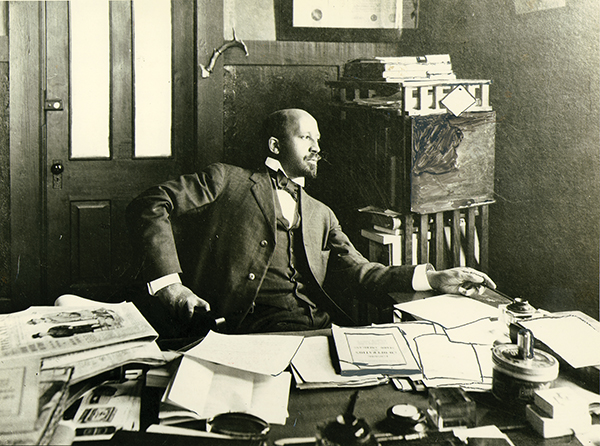
The college house was named in 1981 for W.E.B. Du Bois, a prolific sociologist and civil rights pioneer, whose influential and fearless work paved the way for studying race across the world. (Dr. Du Bois, too, has ties to Penn: in 1896 he was appointed an assistant instructor and began his investigation of the Seventh Ward of Philadelphia—research that would turn into his groundbreaking book, The Philadelphia Negro).

“My grandfather was close friends with Dr. Du Bois,” said Charles “Chaz” Howard, University chaplain and vice president for the Office of Social Equity and Community. “I remember when I first visited campus, seeing a building with the name of a Black man on it and how meaningful that was to me.”

Dr. Howard would go on to live in Du Bois for three years during his undergraduate degree at Penn. “This is home,” Dr. Howard said. “It’s not a dorm. It’s a home. It’s a home that I and hundreds if not thousands of students were raised in.”

Brian Peterson, director of Makuu, the Black Cultural Center at Penn, lived in Du Bois throughout his undergraduate years. He appreciated the experience so much that when he decided to pursue his graduate degree at Penn, he served as a graduate resident advisor in Du Bois.

“I ended up living there for a total of nine and a half years,” said Dr. Peterson, who added that it was really Du Bois College House that “sealed the deal for me” on choosing Penn in general. “I didn’t see myself being at Penn and not living at Du Bois.”

A Familial Atmosphere

The entire college house system at Penn fuses academic life and living spaces. One way of doing that is having faculty directors and faculty fellows reside in the college houses with students. At Du Bois, William Gipson, who was formerly University chaplain, serves as faculty director, and Audrey Mbeje, director of Penn’s African Language Program, and Krystal Strong, an assistant professor at the Penn Graduate School of Education, serve as faculty fellows.

“The experience tears down that wall between students and faculty,” said Dr. Mbeje, who has been a faculty fellow at Du Bois since 2006. “It has been a fantastic experience for me. I see that the way I engage with students in the classroom is really informed by the fact that I know them personally by living with them here in Du Bois.”

One of Dr. Mbeje’s main goals as a faculty fellow is to consistently advance the legacy of Dr. Du Bois through programs that share the knowledge and experience of people of African descent. In particular, Dr. Mbeje runs the college house’s Zulu in Residence program, exposing students to the language and culture of the Zulu people of South Africa, where Dr. Mbeje is from, in a more informal setting than a classroom.

Dr. Strong, who joined the college house in 2020, said she had her sights set on being a faculty fellow at Du Bois for years for two main reasons, not dissimilar to Dr. Mbeje: To serve in a space that honors each day the legacy of Dr. Du Bois himself, and to serve in a space that maintains its deep historic mission of advocating for Black students at Penn.

“I think all of us are in awe by that history and attracted by that history and significance,” Dr. Strong said.

caption: W.E.B. Du Bois was a prolific sociologist and civil rights pioneer, whose work paved the way for studying race. Du Bois College House was named in his honor in 1981.

Dr. Strong also emphasized the important connection the people of Du Bois College House have been able to forge throughout the years with the broader Philadelphia community, with many programs, events, and talks—including one Dr. Strong developed during the pandemic and in the midst of the global uprising for racial justice titled “Radical Self Care”—being open to the public.

“All of the different college houses at Penn have different themes,” said Dr. Strong, “but Du Bois is different because it has a cultural and particular political history.”

It is these cultural and historical foundations of the house, added Dr. Mbeje, that helps foster such a strong familial atmosphere—one that keeps Penn alumni who lived at Du Bois connected far after graduation. “It forms who they are, and shapes who they become, and they take that out to wherever they go,” said Dr. Mbeje.

Ms. Oburu and Ms. Uter said that Du Bois College House was their number one housing choice this year. About 160 students live in Du Bois, and nearly a quarter of them are first-years.

“It’s a safe space for Black students,” said Ms. Uter. “Going to a predominantly white institution, it can be very different. So, just having a space where you lay your head where you know the people, they look like you, they understand you, they care about you, they want the best for you, they are looking out for you, I really wanted that. Du Bois is the perfect place.”

For Ms. Oburu, she saw Du Bois College House as a home away from home where she would be able to “grow in my Blackness, my identity,” she said.

When thinking about the future of Du Bois College House, Dr. Peterson said he hopes students continue to always engage Dr. Du Bois—“a multifaceted scholar just like our students”—as a person, and also remain connected as a family. He hopes to see Du Bois College House endure as a meaningful, welcoming, and at times even carefree, gathering place.

“I hope students take in the full score of being in this living, learning community, where there is less pressure of all the things that are required by adulting,” Dr. Peterson said. “You can just be.”

Adapted from a Penn Today article by Lauren Hertzler, April 6, 2022.

Events

Earth Week 2022 Events

Earth Week 2022 presents an opportunity for students, faculty, and staff to engage in cross-disciplinary events designed to educate and inspire action around themes of environmental justice, climate, and nature-based solutions.

Event Highlights

Campus Ecology Tour with Penn’s Landscape Architect. Tuesday, April 19 at 10 a.m.; meet at the Ben Franklin Statue outside of College Hall. Register here to attend in-person.

Underclassmen Sustainability Workshop. Join us for a discussion with a panel of graduate students in the environmental field. Tuesday, April 19 at 5:30 p.m.; Irvine G7 Meeting Room; Register here to attend in-person.

Cobbs Creek Community Environmental Education Center Tour with SEAS Green Team. Wednesday, April 20 at 1 p.m.; 700 Cobbs Creek Pkwy. Register here to attend in-person.

Wellness Week Yoga at Penn Park Farm. Join us for a special outdoor yoga class at the Penn Farm. This class is free to all Penn community members. Please bring your own mat. Wednesday, April 20 at 4 p.m.; Limited in-person registration here.

Earth Week Alumni Panel with Penn’s Department of Earth & Environmental Science Undergraduate Advisory Board. Thursday, April 21 at noon; Golkin Room, Houston Hall.

Tree Planting with UC Green. Come help plant trees to support the greening of University City and its surrounding neighborhoods! Saturday, April 23 from 10 a.m. to 2 p.m.; meet at Malcolm X Park. Register here.

For many more events during Earth Week 2022, please visit https://www.sustainability.upenn.edu/penn-community/earth-week-april-18-22.

–Penn Sustainability

Penn Museum’s “BYO Mom” Offer

caption: Gifts for mom include Taza chocolate discs, native northwest coin purses, and Iznik tile soap tins.

“Mom” means the world to us. Celebrate the mother figure in your life by giving them the world this May. Schedule a Penn Museum visit for you and mom for any day between May 1–31, and we’ll treat mom to a complimentary global gift from our museum shop.

Moms can choose one of three gifts inspired by our collections:

  • Taza chocolate discs made with cacao from Mexico.
  • Native Northwest coin purses featuring works by Northwest Indigenous artists, each with their name and tribal affiliation.
  • Iznik tile soap tins inspired by design patterns from throughout the Middle East.

With over a million world wonders to see in new galleries that connect you to the cultures of Africa, Asia, the Americas, and the Mediterranean, it’s a global getaway in one day!

How It Works

  • Book any two Penn Museum admission tickets for you and mom online or at walk up.
  • Just mention our “BYO MOM” offer at the shop on the main level, and show your receipt for at least two admission tickets booked in May 2022.

This cannot be combined with other discounts or offers. Complimentary gift can only be redeemed onsite at the shop on the main level. A receipt showing a minimum of two admission tickets booked any day in May 2022 is required to redeem the gift.

To buy tickets, visit https://www.penn.museum/tickets/

—Penn Museum

Update: April AT PENN

Conferences

21        Haitian Migration Through the Americas; speakers will propose steps that civil society organizations and governments, acting both at the national and international levels, at home and abroad, could undertake to ameliorate the difficult situation of millions of Haitian citizens both inside and outside of Haiti; 2-5:30 p.m.; room 133, PCPSE, and Zoom webinar; info: https://tinyurl.com/clals-conference-apr-21 (Center for Latin American and Latinx Studies; Sociology).

22        Precarity: PhD Conference on Architectural Research; features papers that examine the transience of architecture from the perspectives of technology, project-making, and history/theory; 9 a.m.-3:30 p.m.; Zoom webinar; register: https://tinyurl.com/architecture-conf-apr-22 (Architecture). Also April 23, 9 a.m.-2 p.m.

            2022 Penn Vet Working Dog Conference: True Grit: Resilience and Mental Fortitude of the K9 Team; an interactive virtual event that will be exploring resiliency in K9 teams and throughout the entire working dog industry; 3-5 p.m.; register: https://tinyurl.com/working-dog-conf-apr-22 (Penn Working Dog Center). Also April 23 and 24, 10 a.m.-4 p.m.

23        Wolf Conference 2022: From Idea to Film; aims to acquaint current students with the different paths alums have taken in the film industry; 10 a.m.-6 p.m.; Kislak Center, Van Pelt Library; info: https://tinyurl.com/cinema-conf-apr-23 (Cinema & Media Studies).


Exhibits

Penn Museum
Online and in-person events. Info: https://www.penn.museum/calendar.

22        Virtual Global Guide Tour: Middle East Galleries; 2:30 p.m.

23        Egypt Galleries Tour; 11 a.m.

            Global Guide Tour: Middle East Galleries; 2:30 p.m.

24        Asia Galleries Tour; 11 a.m.

            Global Guide Tour: Africa Galleries; 2:30 p.m.


Films

21        In the Shadow of Tugtupite; a cinematic portrait of despair and anxiety towards an unknown future for the Inuit of the world's largest island; available all day; virtual screening; register: https://tinyurl.com/tugtupite (Center for Advanced Research in Global Communication; Center on Digital Culture and Society). Through April 25.


Fitness & Learning

22        Master in Law Information Webinar for General Audiences; will give an overview of the Master in Law (ML) degree, application instructions, highlight various courses of study available, and provide insight into the student experience as an ML degree candidate; noon; Zoom webinar; register: https://tinyurl.com/ml-info-apr-22 (Carey Law School).


Center for Undergraduate Research and Fellowships (CURF)
Online events. Info: https://www.curf.upenn.edu/curf-events.

20        Fulbright/IIE Introduction to English Teaching Assistant; 2 p.m.

21        Truman Scholarship: Who, What, Why, How, When; 3 p.m.

            Fulbright English Teaching Assistant (ETA) Brainstorming Workshop; 4 p.m.

22        Fulbright Recent Recipients Panel; 1 p.m.

            How to Build an Effective Fellowship Application; 2 p.m.

            Annual Spring Poster Symposium; 4 p.m.; room 208, ARCH.


Graduate School of Education (GSE)
Unless noted, online events. Info: https://www.gse.upenn.edu/news/events-calendar.

20        Designing with Canva; noon.

            Penn GSE Teacher Programs Information Session; 5 p.m.

26        Planter Painting; for staff and faculty; noon; GSE courtyard tent.


Music

Penn Live Arts
In-person events. Info: https://pennlivearts.org/events/.

22        Penny Loafers: City of Brotherly Loaf; grab some wooder ice and your favorite Philly cheesesteak and head on over to a cappella group Penny Loafers’ spring show, featuring songs by Adele, Lewis Capaldi, and the Zac Brown Band; 6 p.m.; Harold Prince Theater. Also April 23, 7 p.m.


On Stage

22        Soundworks Tap Factory: Dapper Tapper; Penn’s one and only strictly tap dancing group puts on a show fusing elements of rhythm tap, Broadway-style tap, hip hop, jazz and more, including a solo by Penn senior Natalie Doppelt; 8:30 p.m.; Harold Prince Theater, Annenberg Center; tickets: https://pennlivearts.org/event/soundworks-tap-factory-1082 (Soundworks Tap Factory, Penn Live Arts). Also April 23, 5 p.m.


Readings & Signings

21        A Molecule Away From Madness: Tales of the Hijacked Brain; Sara Manning Peskin, clinical neurology; 2 p.m.; Biotech Commons; register: https://libcal.library.upenn.edu/event/9061940 (Penn Libraries).

22        News for the Rich, White, and Blue: How Place and Power Distort American Journalism; Nikki Usher, University of Illinois Urbana-Champaign; noon; Zoom webinar; register: https://tinyurl.com/usher-reading-apr-22 (Annenberg School).


Talks

19        Locating the History of Sexuality in Jean Rhys’s Birth Narratives; Matty Hemming, English; Netherlandish Wasteways; Anna-Claire Stinebring, history of art; 4 p.m.; room 345, Fisher-Bennett Hall (English).

20        Plant Homologs of PIEZO Mechanosensitive Ion Channels Localize to the Tonoplast and Affect Vacuolar Morphology; Ivan Radin, Washington University in St. Louis; 11 a.m.; Zoom webinar; info: annjeong@seas.upenn.edu (Center for Engineering MechanoBiology).

            Counter-Memory, Critical Histories and Speculative Futures; Safiyah Cheatam, artist; Cassandra Jones, University of Cincinnati; Azsaneé Truss, Annenberg School; 12:30 p.m.; Zoom webinar; join: https://upenn.zoom.us/j/5172747925 (Center for Media at Risk).

            17th Annual Urban Leadership Forum; Saiz Carrancedo, Secretary General, United Cities and Local Government; Claudio Orrego, Governor, Santiago Metropolitan Region, Chile; 3 p.m.; online webinar; register: https://tinyurl.com/iur-talk-apr-20 (Penn Institute for Urban Research).

            The Rich Inner Life of the Cell Nucleus: Dynamic Organization, Active Flows and Emergent Rheology; Alexandra Zidovska, New York University; 3:30 p.m.; Zoom webinar; join: https://tinyurl.com/zidovska-talk-apr-20 (Physics & Astronomy).

            Human Toll: Accounting For Damage Wrought by Freeways in the Twin Cities; Greg Donofrio, University of Minnesota; 5:30 p.m.; online webinar; register: https://tinyurl.com/donofrio-talk-apr-20 (Historic Preservation).

21        Multiphoton Microscopy for Imaging Deeper, Wider, and Faster; Chris Xu, Cornell University; 10:30 a.m.; Wu & Chen Auditorium, Levine Hall; info: info-mse@seas.upenn.edu (Materials & Science Engineering).

            Special Briefing on Inflation and Recession Risks for States and Cities; panel of speakers; 11 a.m.; Zoom webinar; register: https://tinyurl.com/iur-talk-apr-21 (Penn Institute for Urban Research).

            Emergency Infrastructures: The Experience of the Pandemic; panel of speakers; 12:30 p.m.; Zoom webinar; register: https://tinyurl.com/cargc-talk-apr-21 (Center for Advanced Research in Global Communication, Center on Digital Culture and Society).

            Why Speaking Surpasses Understanding, Sometimes; Colin Phillips, University of Maryland; 3:30 p.m.; room 116, Fagin Hall (Linguistics).

            Uncovering Buried Contributions: Indigenous Maya Archaeologists of the Early 20th Century; Francisco Diaz, anthropology; 5:30 p.m.; Facebook livestream; info: https://www.penn.museum/calendar/1196/living-room-lecture (Penn Museum).

22        Alliances of Survival: Ala Plastica, thislandisyourland, and the Arts of Entanglement in the Capitalocene; Jens Andermann, New York University; 4 p.m.; room 543, Williams Hall (Hispanic & Portuguese Studies).

25        Neuronal Mechanisms of Value-Based Decision-Making: A Brain-Machine Interface Approach; Joni Wallis, University of California Berkeley; 3:30 p.m.; auditorium, Levin Building (Psychology).

            Do Digital Markets Need a New Legal Regime? Views from Europe and the U.S.; Heike Schweitzer, Humboldt University; Herbert Hovenkamp, Carey Law School; 4:30 p.m.; Penn Law and online webinar; register: https://tinyurl.com/schweitzer-hovenkamp-apr-25 (Center for Technology, Innovation and Competition).


Biology
In-person events at Tedori Family Auditorium, Levin Building. Info: https://www.bio.upenn.edu/events.

19        Bayesian Information-Theoretic Calibration of Radiotherapy Sensitivity Parameters for Informing Effective Scanning Protocols in Cancer; Katie Storey, Lafayette College; 4 p.m.; Zoom webinar.

26        Mechanisms of CRISPR-Mediated Immunity and Applications Beyond Editing; Andrew Santiago-Frangos, Montana State University; 4 p.m.


Center for the Study of Contemporary China (CSCC)
Unless noted, in-person events at room 418, PCPSE. Info: https://cscc.sas.upenn.edu/events.

22        When Autocrats Clean House: Xi Jinping’s Anti-Corruption Campaign and Its Consequences; Chris Carothers,  CSCC; 12:30 p.m.


Classical Studies
Unless noted, in-person events at Widener Lecture Hall, Penn Museum. Info: https://www.classics.upenn.edu/events.

20        How Do We Design our Research Questions? Joy Connolly, American Council of Learned Societies; 5:15 p.m.; room 242, Van Pelt Library.


Penn Dental
Online webinars. Info: https://www.dental.upenn.edu/news-events/events/.

22        TMJ Information Adds More Value in Orthodontic Treatment; Kazumi Ikeda, American Association of Orthodontists; 7 a.m.

25        On Care; Victor Montori, Mayo Clinic; 5:30 p.m.


Economics
Unless noted, in-person events at room 101, PCPSE. Info: https://economics.sas.upenn.edu/events.

19        State Dependence in Residential Location Choice; Jungsoo Yoo, economics; noon; room 202, PCPSE.

21        School Choice, Competition, and Aggregate School Quality; Michael Gilraine, New York University; 3:30 p.m.

22        Monetary Economics: How It Started, How It's Going; Ricardo Lagos, New York University; 4 p.m.

25        Semiparametric Bayesian Estimation of Dynamic Discrete Choice Models; Andriy Norets, Brown University; 4:30 p.m.

26        Background Risk and Small-Stakes Risk Aversion; Luciano Pomatto, California Institute of Technology; 4 p.m.


GRASP Lab
Hybrid events at Wu & Chen Auditorium, Levine Hall, and Zoom webinars. Info: https://www.grasp.upenn.edu/events/month/2022-04/.

20        Towards Complex Language in Partially Observed Environments; Stefanie Tellex, Brown University; 3 p.m.


Mathematics
Various locations. Info: https://www.math.upenn.edu/events.

20        What is Algebraic Geometry, Really? Max Lieblich, University of Washington; 3:45 p.m.; room A6, DRL.


Middle East Center
Unless noted, online webinars. Info: https://mec.sas.upenn.edu/events.

20        Revolutionary Religion: Youth and Islam in Post-2011 Egypt; Nareman Amin, Andrea Mitchell Center; 6:30 p.m.


Sociology
Hybrid events at room 367, McNeil Building, and Zoom webinars. Info: https://sociology.sas.upenn.edu/events.

20        The Stratification of Human Contact: The Present and Future of Connective Labor; Allison Pugh, University of Virginia; noon.

22        Phenotypic Stratification in the Black-White Wealth Gap; Alex Adames, sociology; noon.

--

More April events can be found in the April AT PENN calendar. The May AT PENN calendar will be published next Tuesday, April 26. To submit an event for a future AT PENN calendar or weekly update, email almanac@upenn.edu.


Crimes

Weekly Crime Reports

University of Pennsylvania Police Department Crime Report

Below are the Crimes Against Persons, Crimes Against Society and Crimes Against Property from the campus report for April 4-10, 2022. View prior weeks’ reports. —Ed.

This summary is prepared by the Division of Public Safety and includes all criminal incidents reported and made known to the University Police Department for the dates of April 4-10, 2022. The University Police actively patrol from Market St to Baltimore and from the Schuylkill River to 43rd St in conjunction with the Philadelphia Police. In this effort to provide you with a thorough and accurate report on public safety concerns, we hope that your increased awareness will lessen the opportunity for crime. For any concerns or suggestions regarding this report, please call the Division of Public Safety at (215) 898-4482.

04/04/22

7:27 AM

3420 Walnut St

Complainant was harassed by phone messages

04/04/22

3:24 PM

3401 Chestnut St

Merchandise taken without payment/Arrest

04/04/22

3:41 PM

3441A Chestnut St

Merchandise taken without payment

04/04/22

9:02 PM

3700 Chestnut St

Vehicle taken engine running, recovered 39th district

04/05/22

12:29 AM

3700 Market St

Motorcycle taken from highway

04/05/22

7:12 AM

1 Convention Ave

Disorderly conduct by offender/Arrest

04/05/22

8:12 AM

3900 Spruce St

Complainant assaulted by unknown offender

04/05/22

6:56 PM

4031 Spruce St

Complainant assaulted by known offender

04/06/22

9:48 AM

4100 Locust St

Complainant assaulted by known offender/Arrest

04/06/22

1:21 PM

4200 Ludlow St

Unsecured package taken from lobby

04/07/22

10:45 AM

4000 Spruce St

Complainant lent phone to unknown person who ran away

04/07/22

1:14 PM

3100 Market St

Complainant assaulted by domestic partner

04/07/22

2:34 PM

4200 Ludlow St

Unsecured package taken from building

04/08/22

10:55 PM

3411 Chestnut St

Complainant threatened by delivery driver

04/09/22

7:51 AM

3100 Walnut St

Unsecured phone taken

04/09/22

11:18 AM

3409 Walnut St

Merchandise taken without payment

04/09/22

2:31 PM

3900 Baltimore Ave

Parked automobile stolen

04/10/22

9:49 AM

4000 Pine St

Cell phone snatched from complainant’s hand

04/10/22

12:50 PM

3549 Chestnut St

Automobile stolen from parking garage/recovered OJ


18th District

Below are the Crimes Against Persons from the 18th District: 8 incidents (3 aggravated assaults, 3 assaults, 2 domestic assaults) with 1 arrest were reported for April 4-10, 2022, by the 18th District, covering the Schuylkill River to 49th St & Market St to Woodland Avenue.

04/05/22

8:13 AM

S 40th and Spruce Sts

Assault

04/05/22

10:07 AM

3948 Market St

Assault

04/05/22

7:14 PM

4031 Spruce St

Domestic Assault

04/06/22

9:47 AM

4100 Locust St

Domestic Assault/Arrest

04/06/22

5:07 PM

414 S 48th St

Assault

04/07/22

11:45 AM

4501 Chestnut St

Aggravated Assault

04/07/22

1:16 PM

3100 Market St

Aggravated Assault

04/08/22

5:33 PM

S 45th St & Chester Ave

Aggravated Assault

Bulletins

One Step Ahead: I Ordered What? Don’t Get Phished

Another tip in a series provided by the Offices of Information Security, Information Systems & Computing and Audit, Compliance & Privacy

Deceptive phishing, in which attackers impersonate legitimate companies to obtain your personal or financial information, often relies upon creating a false sense of urgency to pressure victims into responding quickly—and against their better judgment. A scam that has become increasingly widespread in recent months illustrates how this pressure is applied. 

Victims receive an official-looking email regarding the auto-renewal of a well-known anti-virus product, including convincing details such as a company logo, or the full name of the email recipient. The fraudulent email states that the recipient will soon be, or has already been, charged hundreds of dollars to their credit card for the next annual cycle of anti-virus protection. A telephone number is provided if the email recipient wishes to dispute or reverse the financial charges.

When the victim calls the bogus telephone number provided, a scammer will answer and pretend to assist the victim, all while obtaining sensitive details such as credit card information.

Keep your guard up to avoid being taken in by phishing emails, which can often be characterized by:

  • Email sent from personal accounts, or domains unrelated to the sending organization
  • Attempts to create a sense of urgency, using time limits, account status, or financial sums
  • Grammatical errors and misspellings

You can further protect yourself by:

  • Contacting organizations using publicly available channels (such as a company’s website) rather than relying on phone numbers or links provided in an unsolicited email
  • Never giving out your passwords or login credentials—legitimate support professionals will not ask you for these details

If you receive a suspicious email, please contact your local computing support group.

--

For additional tips, see the One Step Ahead link on the Information Security website: https://www.isc.upenn.edu/security/news-alerts#One-Step-Ahead.

Back to Top