The Newly Retired Faculty
The following faculty retired during the 2020-2021 academic year. The year each one joined the Penn faculty ranks is noted in parentheses.
J. Scott Armstrong, Professor Emeritus, Marketing, Wharton (’68)
Jill M. Baren, Professor Emeritus CE, Emergency Medicine, PSOM (’97)
Janice R. Bellace, Professor Emeritus, Legal Studies & Business Ethics, Wharton (’75)
Jeffrey Bergelson, Professor Emeritus, Pediatrics, PSOM (’97)
John J. Brooks, Professor Emeritus CE, Pathology & Laboratory Medicine, PSOM (’02)
David B. Brownlee, Professor Emeritus, History of Art, SAS (’80)
Mark J. Brown, Professor Emeritus, Neurology, PSOM (’74)
Youhai H. Chen, Professor Emeritus, Pathology & Laboratory Medicine, PSOM (’95)
Andrew Dancis, Associate Professor Emeritus, Hematology/Oncology, PSOM (’96)
Joseph DiRienzo, Professor Emeritus, Basic & Translational Sciences, Dental (’80)
Steven D. Douglas, Professor Emeritus, Pediatrics, PSOM (’80)
Sol Walter Englander, Professor Emeritus, Biochemistry & Biophysics, PSOM (’66)
Ronald M. Fairman, Professor Emeritus CE, Surgery Administration, PSOM (’78)
Aron B. Fisher, Professor Emeritus, Physiology, PSOM (’65)
Grant Frame, Professor Emeritus, Near Eastern Languages & Culture, SAS (’06)
Margaret E. Goertz, Professor Emeritus, Education, GSE (’95)
Michael Anthony Grippi, Associate Professor Emeritus CE, Pulmonary, Allergy & Critical Care, PSOM (’80)
Juan E. Grunwald, Professor Emeritus CE, Ophthalmology, PSOM (’79)
Mary C. Harris, Professor Emeritus CE, Neonatology, PSOM (’82)
James A. Hoxie, Professor Emeritus, Hematology/Oncology, PSOM (’79)
Mark Johnson, Professor Emeritus CE, Surgery Administration, PSOM (’98)
Stephen E. Kimmel, Professor Emeritus, Cardiovascular Medicine, PSOM (’91)
Steven C. Larson, Associate Professor Emeritus CE, Emergency Medicine, PSOM (’88)
Risa Lavizzo-Mourey, Professor Emeritus, Medical Ethics, PSOM (’17)
Jean H. Lemaire, Professor Emeritus, Statistics, Wharton (’87)
Susan E. Levy, Professor Emeritus CE, Pediatrics, PSOM (’84)
Stephen A. Liebhaber, Professor Emeritus, Genetics, PSOM (’82)
Paul A. Liebman, Professor Emeritus, Biochemistry & Biophysics, PSOM (’62)
Jon M. Lindstrom, Professor Emeritus, Neuroscience, PSOM (’90)
David R. Manning, Professor Emeritus, Pharmacology, PSOM (’84)
Irving Nachamkin, Professor Emeritus CE, Pathology & Laboratory Medicine, PSOM (’82)
Bert W. O’Malley, Professor Emeritus, Otorhinolaryngology, PSOM (’03)
Yvonne J. Paterson, Professor Emeritus, Microbiology, PSOM (’88)
Stanley Michael Phillips, Professor Emeritus, Pulmonary, Allergy & Critical Care, PSOM (’75)
Peter C. Phillips, Professor Emeritus CE, Neurology, PSOM (’91)
Reed E. Pyeritz, Professor Emeritus, Experimental Therapeutics, PSOM (’01)
Parvati Ramchandani, Professor Emeritus CE, Radiology, PSOM (’90)
Virginia B. Reef, Associate Professor Emeritus, Clinical Studies—New Bolton Center, Vet (’75)
Milton D. Rossman, Professor Emeritus CE, Pulmonary, Allergy & Critical Care, PSOM (’75)
Susan Roth, Professor Emeritus CE, Radiology, PSOM (’91)
Ronald Craig Rubenstein, Professor Emeritus, Pediatrics, PSOM (’98)
Stephen E. Rubesin, Professor Emeritus CE, Radiology, PSOM (’86)
Thomas M. Safley, Professor Emeritus, History, SAS (’88)
Barbara Dianne Savage, Professor, Africana Studies, SAS (’95)
Kaja Silverman, Professor Emeritus, History of Art, SAS (’10)
Michael B. Simson, Associate Professor Emeritus CE, Radiology, Cardiovascular Medicine, PSOM (’71)
Steven Sondheimer, Professor Emeritus CE, Obstetrics & Gynecology, PSOM (’75)
Virginia A. Stallings, Professor Emeritus CE, Pediatrics, PSOM (’85)
Anne M. Teitelman, Professor Emeritus, Family & Community Health, Nursing (’05)
Gihan I. Tennekoon, Professor Emeritus, Neurology, PSOM (’95)
Daniel A. Wagner, Professor, Policy, Organizations, Leadership, and Systems Division, Graduate School of Education (’76)*
Alan G. Wasserstein, Associate Professor Emeritus CE, Renal-Electrolyte & Hypertension, PSOM (’74)
Ralph F. Wetmore, Professor Emeritus CE, Otorhinolaryngology, PSOM (’78)
Sachs Program for Arts Innovation Grantees for 2021
On May 12, the Sachs Program for Arts Innovation announced its fourth annual round of grant awards, providing $177,000 to support 25 ambitious and creative projects in the arts and humanities at Penn. Since its launch in 2017, the Sachs Program has funded over 200 projects and distributed approximately $1.1 million in artistic and creative support. The Sachs Program’s grantmaking is part of its larger efforts to support and advance the arts across the University. The 2021 grants support a broad range of projects in the visual arts, opera, theater, film, writing, music, translation, and cultural planning.
“These ambitious projects are a testament to Keith and Kathy Sachs’ vision to support a groundswell of artistic creation at Penn,” said Provost Wendell Pritchett.
Funded projects include:
- The department of fine arts will host Jamal Batts as their first Curator-in-Residence, engaging the Penn community around his work exploring Blackness, queerness, visual culture and the intricacies of sexual risk and risk-taking.
- Faculty member Eugene Lew (music) will present Shuttle Service, a series of improvisatory performances by weavers, musicians, and sound artists.
- The history of art department’s Living Land Acknowledgment Group will host a series of Indigenous artists, curators, and cultural leaders, called Indigenous Arts in Focus.
- Kelly Writers House will host a group of millennial Black Muslim writers, with the women guided by Husnaa Haajarah Hashim, C’22, a former Youth Poet Laureate of Philadelphia.
- The School of Nursing will partner with Elevate Theater Company LLC to create a series of theater events telling stories from healthcare’s frontline workers.
- Sachs will support three independent writing projects, including The Serpent Will Eat Whatever is in the Belly of the Beast, a speculative novel by Marc Anthony Richardson; Zain Mian’s translation of the Urdu meta-fiction novel Bhed (The Secret); and Paul Hendrickson’s research on a literary-cum-journalistic nonfiction book about his father’s life in World War ll.
- A new class, Designing Motherhood, will bring previously taboo and under-researched material on design for human reproduction into the classroom, in conjunction with a new exhibition at the Mütter Museum.
- Peter Decherney will complete a book of photographs and text exploring the Jewish Community in Gondar, Ethiopia, Ethiopia’s Last Jews.
- Undergraduate Julian Hunter will selfproduce an album of songs exploring themes of race, class, inequality, reconciliation, and love.
A complete list of the 2021 Grant Awards can be found in the Grants section of the Sachs Program website. These 25 grants are in addition to 10 Student Grants and 4 First-Year Seminar Grants awarded in the fall, as well as the grants awarded through our Ben Art Bucks program.
Congratulations to all of the 2021 grantees!
—John McInerney, Executive Director
—Chloe Reison, Associate Director
—Tamara Suber, Administrative Assistant
Joseph Francisco: Election to the American Philosophical Society
 Joseph Francisco, the President’s Distinguished Professor of Earth and Environmental Science in the School of Arts and Sciences, has been elected to the American Philosophical Society.
The APS is the oldest learned society in the United States. Founded by Benjamin Franklin in 1743, it continues its mission of “promoting useful knowledge” through research, fellowships, and public outreach. Dr. Francisco has a secondary appointment in the department of chemistry.
Joan Gluch: PDA Public Service Award from Penn Dental Association
 Joan I. Gluch, chief of Penn Dental Medicine’s division of community oral health, has been honored by the Pennsylvania Dental Association (PDA) for her public service to the community as the 2021 recipient of the PDA Public Service Award. The award recognizes her commitment to underserved communities through her innovations to improve their oral health.
As a professor of clinical community oral health and division chief of community oral health at Penn Dental Medicine, Dr. Gluch has expanded community outreach programs and partnerships and established academically based service-learning courses at Penn Dental Medicine, through which the school serves approximately 20,000 individuals annually. In addition, Dr. Gluch has secured significant funding to support the programs, including a grant to allow all predoctoral students to have clinical experience with children under five years old. Penn Dental Medicine was one of 11 dental schools nationwide to receive this “first five” Health Resources and Services Administration (HRSA) grant.
Encouraging and building an interest in community service among students, Dr. Gluch also led the development of the school’s honors program in community oral health. The honors program allows motivated students to go beyond basic community service requirements to receive an intensive experience in developing and implementing community health programs from an interdisciplinary perspective.
Madeleine Joullié: Honorary Degree, Temple University
_Madeleine-resized.jpg) Madeleine Joullié, a professor of chemistry in the School of Arts and Sciences, has received an honorary degree from Temple University. The honorary degree was awarded at Temple’s in-person graduation ceremony for the class of 2020 on May 6.
Madeleine Joullié, a professor of chemistry in the School of Arts and Sciences, has received an honorary degree from Temple University. The honorary degree was awarded at Temple’s in-person graduation ceremony for the class of 2020 on May 6.
Dr. Joullié was born in Paris, grew up in Rio de Janeiro, and came to the United States to earn a bachelor’s in chemistry from Simmons College in Boston. She went on to earn a PhD in chemistry from the University of Pennsylvania in 1953. Dr. Joullié then joined the faculty at Penn, where she was one of the first female professors to earn tenure in chemistry at an Ivy League school. Her research interests are in the areas of heterocyclic, medicinal and natural products chemistry. Her laboratory has focused on the chemistry of the cyclopeptide alkaloids and didemnin families of natural products, as well as the development of compounds for the visualization of latent fingerprints as a forensic tool in law enforcement.
View Dr. Joullié’s speech to graduates: https://www.youtube.com/watch?v=EYA7vJGwxLg.
Provost Wendell Pritchett and Vice Provost for Faculty Laura Perna are pleased to announce the inaugural cohort of Mellon Fellows.
The Mellon Fellows Program seeks to support mid-career faculty from core humanities and arts disciplines whose work is strongly based on cultural/historical analysis. The program is intended to introduce arts and humanities faculty to the fundamentals of leadership roles, encourage collaboration and community across departments and disciplines, and build the next generation of higher education leaders with humanistic culture and values.
Ericka Beckman, associate professor of Romance languages in the School of Arts and Sciences, researches the narratives of capitalist modernity and modernization in nineteenth- and twentieth-century Latin America.
Kimberly Bowes, professor of classical studies and director of integrated studies in the School of Arts and Sciences, studies archaeology and material culture of the Roman and later Roman worlds and historical economies, focusing on poverty and the lived experience of the poor.
Jean-Christophe Cloutier, associate professor of English in the School of Arts and Sciences, teaches 20th century and contemporary American literature involving popular culture, notably comics and cinema.
James Ker, associate professor of classical studies in the School of Arts and Sciences, researches the cultural history of the Roman world, both in antiquity and in its reception.
Sonal Khullar, W. Norman Brown Associate Professor of South Asian studies in the School of Arts and Sciences, studies the art of South Asia from the eighteenth century onward, with a particular interest in histories of cosmopolitanism, postcolonial art worlds, and critical historiographies of art.
David Kim, associate professor of history of art in the School of Arts and Sciences, studies Southern Renaissance art, focusing on the issues of art literature, transcultural exchange, and material culture.
Zachary Lesser, Edward W. Kane Professor of English in the School of Arts and Sciences, teaches Shakespeare and early modern drama; the history of material texts, bibliography and editing; early modern political and religious debate; and digital humanities.
Heather Sharkey, professor and chair of Near Eastern languages and civilizations in the School of Arts and Sciences, is a historian of the Middle East and Africa and of the modern Christian and Islamic worlds.
Daniel Singer, associate professor of philosophy in the School of Arts and Sciences, researches the theories of epistemic normativity and group deliberation, using agent-based computer models to better understand how groups of people reason together.
Ramya Sreenivasan, associate professor of history in the School of Arts and Sciences, studies society, politics, and culture in second-millennium South Asia, the period between the thirteenth century and the present in northern India.
Emily Steinlight, associate professor of English in the School of Arts and Sciences, studies nineteenth-century British literature with a focus on the relationship between political thought and literary form.
Amy Stornaiuolo, associate professor of literacy, culture, and international education in the Graduate School of Education, studies adolescents’ multimodal composing practices, teachers’ uses of digital technologies, and shifting relationships between authors and audiences in online, networked spaces.
Julia Wilker, associate professor of classical studies in the School of Arts and Sciences, researches the Near East in Hellenistic and Roman times, focusing on the history of Judaea from the Maccabean revolt to the second century CE.
Provost Wendell Pritchett and Vice Provost for Faculty Laura Perna are pleased to announce the appointment of the thirteenth cohort of Penn Fellows.
The Penn Fellows Program provides leadership development to select Penn faculty in midcareer. Begun in 2009, the program includes opportunities to build alliances across the University, meet distinguished academic leaders, think strategically about University governance, and consult with Penn’s senior administrators.
Danielle Bassett, professor of bioengineering in Penn Engineering and physics & astronomy in the School of Arts and Sciences, studies the structure and function of networks, predominantly in physical and biological systems.
Nelson Flores, associate professor of educational linguistics in the Graduate School of Education, focuses on how language and race intersect in bilingual education policies and practices in ways that are harmful to bilingual students of color.
Maria Geffen, associate professor of otorhinolaryngology, neuroscience, and neurology in the Perelman School of Medicine, researches the way the brain encodes information about the world and how our perception is shaped by our emotional state and experience.
Nancy Hodgson, chair and professor of biobehavioral health science and Anthony Buividas Endowed Term Chair in Gerontology in the School of Nursing, focuses on the development, testing, and dissemination of person-centered and family-centered interventions for persons living with dementia.
Sara Jaffee, professor of psychology in the School of Arts and Sciences, researches at-risk families and children and studies how stressful environments exacerbate underlying genetic vulnerabilities to affect children’s development.
Mechthild Pohlschröder, professor of biology in the School of Arts and Sciences, focuses on microbiology, cell and developmental biology, genetics, and genomics.
Elizabeth Rhoades, professor of chemistry in the School of Arts and Sciences, aims to elucidate the principles that link protein conformational change with structure-function relationships, focusing on understanding structural plasticity in intrinsically disordered proteins.
Wendy Roth, associate professor of sociology in the School of Arts and Sciences, studies how social processes challenge racial and ethnic boundaries and transform classification systems, as well as how these processes change conceptions of the nature of race.
Patrick Seale, associate professor of cell and development biology in the Perelman School of Medicine, focuses on obesity through the biology of adipose (fat) cells and tissue, a highly dynamic and plastic organ that regulates many aspects of whole-body physiology.
Russell Shinohara, associate professor of biostatistics in the Perelman School of Medicine, focuses on the assessment of structural and functional changes in the brain throughout development and in neurological, psychiatric, and developmental disorders.
Orkan Telhan, associate professor of fine arts in the Weitzman School of Design, works in a unique area called biological design, an emerging field at the intersection of manufacturing, environmental sciences, and computational design.
Tariq Thachil, associate professor of political science and director of the Center for Advanced Study of India, researches political parties and political behavior, identity politics, and urbanization, with a regional focus on India.
Harsha Thirumurthy, associate professor of medical ethics and health policy in the Perelman School of Medicine, specializes in the intersection of economics and public health, with a focus on HIV prevention and treatment as well as maternal and child health.
Kathryn Wellen, associate professor of cancer biology in the Perelman School of Medicine, researches the intersection of nutrient availability,epigenetic modification and cancer cell metabolism.
Dagmawi Woubshet, Ahuja Family Presidential Associate Professor of English in the School of Arts and Sciences, is a scholar of African American literature and visual culture who works at the intersections of African American, LGBTQ, and African studies.
Nancy Zhang, Ge Li and Ning Zhao Professor of Statistics and Vice Dean of Doctoral Programs in the Wharton School, studies the development of statistical and computational approaches for the analysis of genetic, genomic, and transcriptomic data.
2021-2023 Provost’s Graduate Academic Engagement Fellows at the Netter Center
The Netter Center for Community Partnerships has announced the newest cohort of Provost’s Graduate Academic Engagement Fellows.
 The Provost’s Graduate Academic Engagement Fellowship at the Netter Center for Community Partnerships is an opportunity for PhD students across all schools and fields at the University of Pennsylvania. Fellows are outstanding students whose scholarship significantly involves academically based community service (ABCS)
and related activities, including locally based community problem-solving, engaged scholarship, service learning, and learning by teaching in public schools.
Joshua Davidson (Weitzman School of Design; Faculty Advisor: Megan Ryerson)
Joshua Davidson’s research investigates how commutes may change, and thereby improve, the socio-economic quality of life by isolating and expanding on three factors that generate “shocks” in the commuting environment: 1) the effect of adding new transit services to an existing network, 2) the effect of exogenous residential change, more commonly referred to as a forced move, or displacement, and 3) the effect of public health crises. In tandem with this research, Mr. Davidson will further develop the academically based community service course he offered last fall titled Transport Justice, to be offered again in fall 2021 in the department of city and regional planning.

Breanna Moore (School of Arts and Sciences; Faculty Advisor: Kathleen Brown)
Breanna Moore plans to create a Reparations Law Clinic/Research Seminar in which students partner with reparatory justice activists and community organizers to advocate for
the implementation of reparations for descendants of enslaved Africans in Philadelphia and Pennsylvania. Her passion is to disseminate diverse histories to the public,especially to marginalized groups, inside and outside of academic spaces through multimodal mediums such as film, digital media, fashion, and public history projects.

Claire Wan (Graduate School of Education; Faculty Advisor: Gerald Campano)
Claire Wan plans to lead a teaching- and research-based project on language, literacy, and power in schools, and particularly their relationship to Asian American identities and experiences. She intends to incorporate youth and family voices to explore community-based advocacy and activism and, in the process, co-construct scholarly understandings of these intersecting research interests. She previously taught kindergarten and first grade.
Celia Reina: NSF CAREER Award
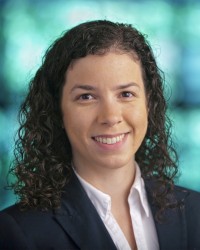 Celia Reina, William K. Gemmill Term Assistant Professor in mechanical engineering and applied mechanics in the School of Engineering and Applied Science, recently received the National Science Foundation’s CAREER Award for interdisciplinary research spanning mechanical engineering, statistical physics, and machine learning. The award will fund Dr. Reina’s research and multiple associated outreach initiatives designed to increase gender, racial, and socioeconomic diversity in STEM.
Dr. Reina’s research focuses on understanding the mechanical response of materials when subjected to external forces. These responses stem from the material’s underlying microstructure, or the specific arrangement of atoms or particles within it. With an understanding of this link, materials can be designed faster and made stronger, boosting their reliability for use in many engineering applications.
In our everyday lives, materials undergo different, complex deformation processes, whether it is toothpaste being squeezed out of its tube, a cookie crumbling as we chew, or sand being pulled through an hourglass. Understanding how certain materials react to a specific kind of deformation, such as the impact of a rock hitting a car windshield, is therefore critical in improving their design and expanding their range of applications. However, the complex particle rearrangements that occur during these large deformations make it inherently challenging to predict how the material will behave under stress.Dr. Reina’s work aims to advance our understanding and predictive capability of some of these behaviors.
“For example, when you bend a paper clip it stays in its new shape, which means there was particle rearrangement within the structure,” Dr. Reina said. “If we could use the microscopic particle structure and dynamics to better predict how the material will react to external forces on a large scale, we could design those materials faster, at lower costs, and with more reliability.”
Dr. Reina’s CAREER Award will involve the use of machine learning to better understand how the microstructure of a material affects its effective mechanical response.
Three Penn Juniors: 2021 Udall Scholars
University of Pennsylvania juniors Marina Dauer, Benjamin May, and Jonathan Szeto, all in the College of Arts and Sciences, have been named 2021 Udall Scholars by the Udall Foundation. They are among 55 sophomores and juniors selected from 416 candidates nominated by 187 colleges and universities nationwide.
 Each will be awarded as much as $7,000 and is recognized for leadership, public service, and commitment to issues related to Native American nations or to the environment.
Marina Dauer, from Dallas, is pursuing a double major in environmental studies and political science, with a minor in survey research and data analytics.
Ms. Dauer serves on the executive board of the Student Sustainability Association at Penn (SSAP), as chair of the Penn Environmental Group, and as a co-chair for Penn’s Climate Week.
A University Scholar, she conducts research on extreme weather insurance and disaster aid policy at the Wharton Risk Center.
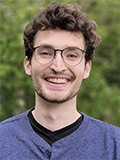 Benjamin May, from Philadelphia, is pursuing a major in international relations.
Mr. May formerly served as the committee director for Sustainability and Community Impact on the Undergraduate Assembly, a student liaison to the Board of Trustees, and a cochair of SSAP.
As a Perry World House fellow, he is conducting research on policy avenues to address the global climate crisis.
He is also the founder and president of the international activism-education nonprofit ThinkOcean.
 Jonathan Szeto, from Cherry Hill, New Jersey, is pursuing a double major in Earth science and political science with minors in chemistry, classical studies, and sustainability and environmental management.
Mr. Szeto has held internships at the U.S. Environmental Protection Agency and the U.S. Department of State.
He conducts research analyzing air pollution patterns in Philadelphia’s subway system and its effects on commuters.
Penn has had eight Udall scholars since Congress established the foundation in 1992. The Udall Foundation honors Morris and Stewart Udall and their impact on the nation’s environment, public lands, and natural resources and their support of the rights and self-governance of Native Americans and Alaska Natives.
Ms. Dauer, Mr. May, and Mr. Szeto applied to the Udall Scholarship with the support of Penn’s Center for Undergraduate Research and Fellowships.
Watch the 2021 Models of Excellence Video
Penn’s Models of Excellence Awards program has recognized the outstanding accomplishments of the University’s staff members since 1999. This year, the University of Pennsylvania is proud to honor the professionals who exemplify the dedication, care, and innovation that helped our community persevere during the pandemic. Together, the staff members embody the best in Penn community accomplishment (Almanac March 30, 2021).
Watch the 2021 Models of Excellence Video here. Although the traditional Models of Excellence ceremony could not take place this spring, the University of Pennsylvania invites the entire Penn community to celebrate the 2021 honorees by viewing a commemorative video. The video features staff member interviews, as well as images of the 23 Models of Excellence, Pillars of Excellence, Model Supervisor, and Sustaining Penn Through COVID-19 honorees.

 Maggie Blackhawk was awarded the Harvey Levin Memorial teaching award, voted on by the JD class of 2021.
 Elizabeth Pollman was awarded the LLM teaching award, voted on by the LLM class of 2021.
 R. Polk Wagner was awarded the A. Leo Levin Award for Excellence in an Introductory Course for his work teaching Contracts (in person) and Introduction to Intellectual
 Jill E. Fisch was awarded the Robert A. Gorman Award for Excellence in Teaching for her work teaching Corporations and Civil Procedure, both in person, this year.
 Xun Zeng, GL’03 L’07, was awarded the Adjunct Teaching Award for teaching a new Private Investment Funds course from Beijing.
 Cynthia Dahl received the Experiential Teaching Award for her teaching and leadership of the Detkin IP and Technology Legal Clinic.
.jpg) Richard Allen Davis, a neurosurgeon at the Hospital of the University of Pennsylvania (HUP) and an emeritus associate professor of neurosurgery in the Perelman School of Medicine, died on May 7 of congestive heart failure at his home in Villanova. He was 95.
Richard Allen Davis, a neurosurgeon at the Hospital of the University of Pennsylvania (HUP) and an emeritus associate professor of neurosurgery in the Perelman School of Medicine, died on May 7 of congestive heart failure at his home in Villanova. He was 95..png) Lee Claflin Ellis Horne, a former research associate at the Penn Museum and the former editor of the Museum’s magazine Expedition, died on April 10 at home in Philadelphia from complications of stage IV breast cancer. She was 85.
Lee Claflin Ellis Horne, a former research associate at the Penn Museum and the former editor of the Museum’s magazine Expedition, died on April 10 at home in Philadelphia from complications of stage IV breast cancer. She was 85..png) Heather Ann Peters, an anthropologist, global human-rights activist (particularly on behalf of Asian peoples), and an assistant curator at the Penn Museum, died on April 24 at Penn Presbyterian Medical Center from injuries sustained in a bicycle accident. She was 74.
Heather Ann Peters, an anthropologist, global human-rights activist (particularly on behalf of Asian peoples), and an assistant curator at the Penn Museum, died on April 24 at Penn Presbyterian Medical Center from injuries sustained in a bicycle accident. She was 74.
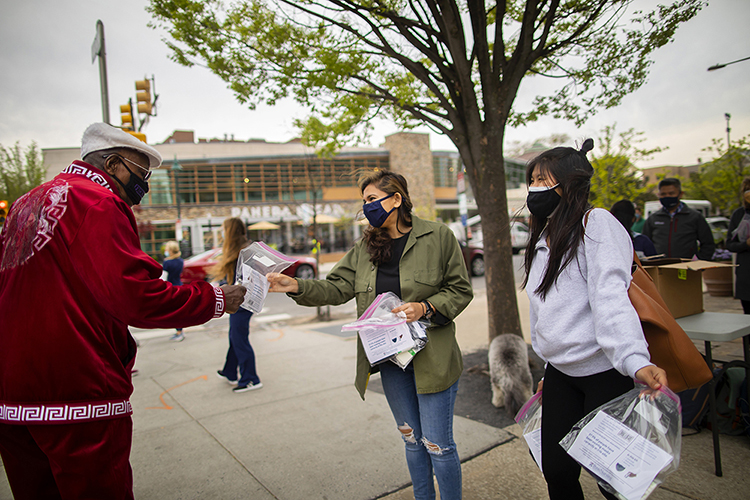 On a cold and windy April day, six Penn Nursing students stood in groups of two and three at the corner of 40th and Walnut Streets. Under a gray folding table, several backpacks perched against an open cardboard box. Tallulah, junior Lily McDowell’s dog and unofficial mascot of the day’s events, stood at the ready, her leash attached to Ms. McDowell’s backpack.
 The Annenberg Center for the Performing Arts presents its last livestream of the season, featuring the world premiere of re-entering by choreographer Matthew Neenan, Thursday, May 27 at 7 p.m. This live event will be streamed online for a remote audience.