Download Supplement

News

A Message to the Penn Community: Provost Pritchett to Take Leave of Absence

I am writing to share with you the news that our dear friend and colleague, Provost Wendell Pritchett, will be taking a medical leave of absence from his responsibilities here at Penn, beginning July 1, 2021 through the end of the fall 2021 semester. Wendell has been dealing with some health issues that, while not life-threatening, require greater attention over the coming months.  

As everyone who has had the pleasure of working with him knows, Wendell continues to do an absolutely superb job as Provost. He is an exceptional leader who is universally recognized for his scholarship, teaching, compassion, and commitment to academic excellence and civic engagement. He is also a cherished friend to so many of us here at Penn. We all want Wendell to take the time necessary to tend to his health, and this leave of absence will allow him to do just that.  

While Wendell is on leave, Deputy Provost Beth Winkelstein will assume the role of Interim Provost. Wendell appointed Beth as Deputy Provost in June of 2020 after she had served as Vice Provost for Education for five highly successful years. Beth earned her Ph.D. in bioengineering from Duke University and B.S.E. cum laude in bioengineering from Penn as a Benjamin Franklin Scholar. She has taught in the Bioengineering Department of Penn SEAS since 2002, becoming in that time one of the world’s leading innovators in research on new treatments for spine and other joint injuries. Appointed two years ago as the Eduard D. Glandt President’s Distinguished Professor, she leads a pioneering Spine Pain Research Lab, mentors students and postdocs, and serves as co-editor of the Journal of Biomechanical Engineering.  

Wendell and I and everyone who has worked with Beth have great confidence in her ability to step in and lead the Provost’s Office while Wendell is on leave. Beth is an exceptional University citizen, who is involved in all aspects of our academic, research and student-centered programming. We are very grateful that she is willing to take on this important responsibility.  

Please join me in wishing Wendell a speedy return to full health.  

—Amy Gutmann, President

Inaugural Presidential PhD Fellows Announced

President Amy Gutmann, Provost Wendell Pritchett, and Deputy Provost Beth Winkelstein announced on May 4 the recipients of Penn’s inaugural class of Presidential PhD Fellows. Drawing from the most accomplished and diverse PhD trainees, the 2021 Presidential PhD Fellows come from across the nine schools at Penn that offer PhD programs.

“Our PhD students embody our profound mission of creating new knowledge, understanding, and teaching that will shape the future,” said President Amy Gutmann upon the launch of the President’s PhD Initiative last fall. “They make a tangible impact by tackling the world’s most significant challenges and most perplexing questions. Sustaining their world-changing scholarship will be more important than ever in a post-pandemic world.” 

Each Presidential PhD Fellow will receive a three-year fellowship, including summer support and funds to support their research. The fellowship includes a 12-month stipend, tuition, fees, Penn Student Insurance coverage, and research funds. In 2021-22, the annual stipend will be $38,000 with research funds of $10,000/year. The fellowship will renew automatically for students in good academic standing. 

The inaugural class of 33 Presidential PhD Fellows are:

Jenea Adams, Perelman School of Medicine 

Helena Addison, School of Nursing 

Estevan Aleman, School of Arts & Sciences

Mary Andrews, Annenberg School for Communication

Abdul Manan Bhat, School of Arts & Sciences

Justin Bracks, School of Arts & Sciences

Jose Campos, Perelman School of Medicine

Aisha Chughtai, School of Arts & Sciences and Perelman School of Medicine

Ashley Cooper, School of Nursing

Kimberly Edwards, Perelman School of Medicine

Linnea Gandhi, The Wharton School

VanJessica Gladney, School of Arts & Sciences

Shaquilla Harrigan, School of Arts & Sciences

Antoine Haywood, Annenberg School for Communication 

Christopher Johnny, School of Arts & Sciences

Nazar Khalid, School of Arts & Sciences

Jessica Kim, School of Social Policy & Practice

Maya Lassiter, School of Engineering and Applied Science

Yeonhwa Lee, Stuart Weitzman School of Design

Zain Rashid Mian, School of Arts & Sciences

Seble Negatu, Perelman School of Medicine

Kimberly Noronha, Stuart Weitzman School of Design 

Marielle Ong, School of Arts & Sciences

Danielle Perry, School of Arts & Sciences

Sean Plaskett, Graduate School of Education

McKenzie Preston, The Wharton School

Giovani Rocha Batista Santos, School of Arts & Sciences

Kimberly St Julian Varnon, School of Arts & Sciences 

Rachael Stephens, Graduate School of Education and School of Arts & Sciences 

Tianwei Wu, School of Engineering and Applied Science

Stephanie Yang, School of Engineering and Applied Science

Liangcheng Yu, School of Engineering and Applied Science

Sharon Zanti, School of Social Policy & Practice

2021 Penn Veterinary Medicine Teaching Awards

The Zoetis Distinguished Veterinary Teacher Award and Class of 2022 Philadelphia Campus Teaching Award

caption: Vince ThawleyThis year’s Zoetis Distinguished Veterinary Teacher Award and Class of 2022 Philadelphia Campus Teaching Award were both presented to Vincent Thawley. The Zoetis Distinguished Veterinary Teacher Award is the most prestigious teaching award in veterinary medicine. Zoetis, the largest global animal health company, presents it annually to a faculty member at each college of veterinary medicine in the United States. Its purpose is “to improve veterinary medicine education by recognizing outstanding instructors who, through their ability, dedication, character and leadership, contribute significantly to the advancement of the profession.” The entire Penn Vet student body votes on the recipient. 

Vince Thawley graduated summa cum laude from Penn Vet in 2009. Following his graduation, he completed a rotating internship in small animal medicine and surgery and a three-year residency in small animal emergency and critical care medicine at Penn Vet’s Ryan Hospital. Dr. Thawley was certified as a Diplomate of the American College of Veterinary Emergency and Critical Care in 2013. After completing his residency, he remained in the Ryan Hospital’s Emergency Service and is currently a clinical assistant professor of emergency and critical care medicine. Dr. Thawley’s clinical interests include the diagnosis and management of high acuity and emergent patients, including the recognition and treatment of circulatory shock and sepsis; traumatic brain injury; toxicologic emergencies; and cardiopulmonary resuscitation. 

The William B. Boucher Award

caption: Ashley CameronThe Boucher Award honors a house officer at New Bolton Center for excellent teaching, as William Boucher  exemplified over his four decades at Penn Vet.

This year’s winner is Ashley Cameron. Dr. Cameron graduated from Colorado State University in 2016.

She completed an internship at Equine Medical Center of Ocala, followed by a large animal clinical fellowship at Oregon State University. Dr. Cameron is currently a surgery resident at Penn Vet’s New Bolton Center. 

Class of 2021 New Bolton Center Teaching Award

caption: Kate BurikoYekaterina (Kate) Buriko graduated from Michigan State University College of Veterinary Medicine and subsequently completed a rotating internship and residency in Emergency and Critical Care at Penn Vet.

She then practiced at the Animal Medical Center in New York City before returning to Penn Vet in 2017, where she is currently an assistant professor of clinical intensive care medicine.

Dr. Buriko’s research and clinical interests are in the areas of hemostasis, coagulation, and viscoelastic testing.

Class of 2021 Philadelphia Campus Teaching Award

caption: Nikki ScherrerNikki Scherrer currently serves as an assistant professor of ophthalmology at Penn Vet’s New Bolton Center. She received a bachelor’s degree in biochemistry and graduated summa cum laude from DePauw University in Greencastle, Indiana.

She earned her veterinary degree from the Purdue University College of Veterinary Medicine.

After graduating, Dr. Sherrer interned at Rood and Riddle Equine Hospital. Afterward, she started a second rotating internship at New Bolton Center and a subsequent ophthalmology residency.

Class of 2022 New Bolton Center Teaching Award

caption: Klaus HopsterKlaus Hopster graduated in 2006 from the University of Veterinary Medicine Hannover in Germany.

After an internship at the Equine Hospital at Hannover, he finished his residency in anesthesia and analgesia in 2011.

He then served for five years on the faculty of the University of Veterinary Medicine Hannover before coming to Penn Vet in 2016.

He is currently an assistant professor of anesthesiology at Penn Vet’s New Bolton Center.

Class of 2023 Lecture Teaching Award

caption: Rose Nolen-WalstonRose Nolen-Walston was a professional dressage rider and riding teacher before she graduated with a DVM from the University of Georgia in 2001. After graduating, she completed an internship and residency in large animal internal medicine at Tufts University.

Dr. Nolen-Walston spent a year there doing research in adult stem cell biology in mice, then joined the faculty at Penn Vet, where she teaches and practices internal medicine at New Bolton Center.

She received the Zoetis Distinguished Teacher Award in 2017 (Almanac May 23, 2017) and the Christian R. and Mary F. Lindback Award in 2014 (Almanac April 15, 2014).

Class of 2023 Laboratory Teaching Award

caption: Matthew LanzaMatthew Lanza received a BA in biological basis of behavior (since renamed neuroscience) from the University of Pennsylvania in 2011. After college, he spent two years in neuroradiology research working with children with autism and schizophrenia at the Children’s Hospital of Philadelphia before returning to Penn for veterinary school. After receiving his VMD in 2017, he began his residency in anatomic pathology at Penn Vet and has stayed on as a fellow in comparative pathology. His areas of academic interest include neoplasia, neuroscience, and comparative pathology. Outside of teaching, Dr. Lanza is an advisor to several undergraduate community service groups at Penn and Drexel and is an adjunct professor in biology at the University of the Sciences. 

Class of 2024 Lecture and Laboratory Teaching Awards

caption: Elizabeth WoodwardElizabeth Woodward joined the department of biomedical sciences in 2016 as a clinical assistant professor. Prior to her faculty appointment, she held postdoctoral research appointments in the Reference Andrology Laboratory at New Bolton Center and at the University of Kentucky’s Gluck Equine Research Center, where she also earned her doctorate studying equine reproductive physiology. As faculty, she is a course organizer for physiology, teaches anatomy, serves on several College committees, and is a faculty adviser for the Penn Vet Wine Club. Her research interests are in the field of reproductive physiology, specifically in the areas of sperm physiology and equine endometritis.

For Comment: Patent and Tangible Research Property Policies and Procedures

In 2010-2012, President Gutmann convened an Executive Planning group that outlined a plan to transform Penn’s technology transfer operations into a comprehensive innovation center that could support the evolving technology landscape on campus. At the time, as part of the process, the Vice Provost for Research convened a committee to develop the associated Patent Policy. The policy has since been revised several times, primarily to decrease the initial deduction.

With the growth of our technology portfolio, the breadth of research with translational opportunities and the evolution of the external commercialization landscape, a review of the general terms of the patent policy was warranted. A committee comprised of faculty and staff stakeholders was convened by Senior Vice Provost for Research Dawn Bonnell in November 2020 to review the policy.   The committee had faculty representation from the Schools of Arts and Sciences, Engineering and Applied Science, Nursing and the Perelman School of Medicine and staff representation from the Office of General Counsel, the Penn Center for Innovation and the Office of the Vice Provost for Research. Its recommendations were reviewed by the Provost Council on Research with representation from 12 schools, the Faculty Senate, the Council of Deans, the Academic Planning and Budget Committee, and the Penn Center for Innovation Steering Committee.

To review both the current and newly revised Patent and Tangible Research Property Policies and Procedures, please visit https://upenn.box.com/s/brebjz3bsgasb5cqi9qgi4hhu82xnlme (PennKey Required) or email vpr@upenn.edu to request copies. Please address any questions or comments to the Office of the Vice Provost for Research, vpr@upenn.edu. Comments are requested by Friday, June 1, 2021.

—Dawn Bonnell, Senior Vice Provost for Research

University of Pennsylvania Class of 2025

On April 6, 2021, the University of Pennsylvania has announced admission decisions for regular decision applicants to the Class of 2025, the institution’s 269th class. 

The admitted cohort of 3,202 was selected from a pool of 56,333 applicants in both the early decision and regular decision programs. Penn enrolls a first-year class of about 2,400 students across the College of Arts and Sciences, Penn Engineering, the Wharton School, and the School of Nursing. 

Fifty states, Washington, D.C., Guam, Puerto Rico and the U.S. Virgin Islands are represented in the class, with the highest concentration of admitted students being from Pennsylvania, New York, California, New Jersey, Texas, and Florida. Of those admitted, 155 students reside in the city of Philadelphia. Eleven percent of the class are international students based on their citizenship, hailing from 95 countries from Afghanistan to Zimbabwe. 

Fifty-four percent of the admitted students are women, 56% are U.S. citizens/permanent residents self-identifying as a person of color, and 15% are first-generation college students. Thirteen percent had a parent or grandparent attend Penn in prior generations. At least 18% are estimated to qualify for a Federal Pell Grant. 

Admitted students have pursued a most demanding secondary school curriculum within a broad range of educational settings. Nearly 2,000 unique high schools are represented. 

The University of Pennsylvania adopted a test-optional policy with regard to standardized tests for the 2020-2021 application cycle. Twenty-six percent of the regular decision admitted students did not include testing as part of their application. For the admitted students including testing in their application, the middle 50% testing ranges are 1500-1560 on the SAT and 34-36 on the ACT. 

John T. McLaughlin, Penn’s interim dean of admissions, said, “this class of 2025 applied to college under incredibly challenging and unusual circumstances. Yet, my colleagues and I found abundant evidence of their pursuit of the highest levels of intellectual achievement, as well as perseverance and empathy, throughout their applications. In a year in which we’ve all had to adapt to new and changing realities, this class found a way to achieve their own academic excellence and to show care for others and their communities. As we all look to the future, we are inspired by their optimism, ingenuity and creativity.” 

As an institution, the University of Pennsylvania continues to respond to the changing environment related to the coronavirus. Read the University’s official response and ongoing updates at https://coronavirus.upenn.edu/

Deaths

Anthony Kroch, Linguistics

caption: Anthony KrochAnthony (Tony) Kroch, professor emeritus of linguistics in the School of Arts and Sciences, died from complications of cancer on April 27 at his home in Philadelphia. He was 75. 

Born in New York City to German Jewish refugees who had fled from the Nazis in 1938, Dr. Kroch was raised in New York City; White Plains, New York; and Needham, Massachusetts. He graduated from Needham High School in 1963, then attended Harvard University, where he graduated summa cum laude in anthropology in 1967. After graduating, he traveled to Brazil and Senegal on a scholarship, studying indigenous stories and myths. In 1974, Dr. Kroch earned a PhD in linguistics from MIT, studying under professors Paul Kiparsky, Noam Chomsky, and Kenneth Hale. While a student at Harvard and MIT, Dr. Kroch participated in civil activism against the Vietnam War and academic racism. After graduating, he briefly held academic appointments at the University of Connecticut and Temple University. 

In 1978, Dr. Kroch obtained a fellowship to work with William Labov, a professor of linguistics at Penn, to conduct sociolinguistic interviews and analyze the language of upper-class Philadelphians. Three years later, Dr. Kroch joined the faculty of the linguistics department as an assistant professor of linguistics. He became a full professor in 1991. At Penn, Dr. Kroch served on several Faculty Senate and University Council committees and conducted research that won University Research Foundation (URF) grants in 2003 and 2007. In 2006, he was named the Edmund J. and Louise W. Kahn Endowed Term Professor in the Cognitive Sciences (Almanac December 19, 2006). He joined Penn’s 25-Year Club in 2003 and retired in 2020. 

Dr. Kroch’s research focused on the structure of human language, using computational and statistical methods. He is best known for his work on historical syntax, demonstrating that grammatical changes over time occur at a constant rate. In collaboration with Beatrice Santorini, a senior fellow in the department of linguistics, and others, Dr. Kroch pioneered the construction of large annotated databases of historical texts. He also developed tools to search these texts; his efforts continue to support a range of linguistic studies. Dr. Kroch was widely published, writing dozens of peer-reviewed articles and several books, including co-authoring the seminal Semantics of Scope in English (1979) and Alternative Conceptions of Phrase Structure (1989). 

Dr. Kroch is survived by his wife, Martha; brother, Eugene; daughters, Miriam (Daniel) Morrissey, Deborah (Brian) Leaf, Abigail Kroch (Jason Brenier); five grandchildren; and a beloved niece and grandnephew. 

James Primosch, Music

caption: James PrimoschJames (Jim) Primosch, the Dr. Robert Weiss Professor of Music in the School of Arts and Sciences and a prolific composer and performer, died on April 26 at Penn Hospice at Rittenhouse due to complications from pancreatic cancer. He was 64.

Born in Cleveland, Dr. Primosch earned degrees from Cleveland State University, Penn, and Columbia University, and studied with composers Mario Davidovsky, George Crumb, and Richard Wernick. A fellowship to the Tanglewood Music Center also permitted him to study with John Harbison, to whom Dr. Primosch became a lifelong friend. While a student, he wrote works for Emmanuel Music at Boston’s Emmanuel Church and plenty of other church music; while at Columbia, he wrote extensively, including a psalm per week.

Dr. Primosch joined Penn’s faculty in 1988 as an assistant professor of music. In 1993, he was named the Laura Jan Meyerson Term Chair in the Humanities, then, a year later, he became an associate professor of music. In 2002, he became a full professor, and in 2006, the Dr. Robert Weiss Professor of Music, a chair he held until 2013 and then again beginning in 2020. In addition, Dr. Primosch served as the department chair of music from 1996 to 1998 and 1999 to 2000 as well as the undergraduate chair of the department from 2002 to 2005. Dr. Primosch also served as a faculty advisor to freshmen and sat on several departmental and University committees. 

Dr. Primosch was a widely accomplished pianist, composer, and performer. His instrumental, vocal, and electronic works have been performed by the Los Angeles Philharmonic, the St. Paul Chamber Orchestra, the New York New Music Ensemble, and the 21st Century Consort. His piece Icons was played at the ISCM/League of Composers World Music Days in Hong Kong, and soprano Dawn Upshaw included a song by Dr. Primosch in her Carnegie Hall recital debut. He wrote commissions for the Chicago Symphony and the Albany Symphony, as well as projects for the Fromm and Koussevitzky Foundations and the Barlow Endowment. He worked extensively with Philadelphia groups like the Mendelssohn Chorus, PRISM Quartet, and Lyric Fest, and new music groups like Orchestra 2001 and Network for New Music. Dr. Primosch expertly combined experimentation with approachability. 

“It’s a massively complex work but not to the listener at all,” said Donald Nally, conductor of the Crossing, a group that has performed Dr. Primosch’s work. “It’s written in a way that you really understand the journey on first hearing—a pretty impressive accomplishment.” 

“Within the department of music, Jim could be found practicing piano early in the morning; or engaged in an impromptu discussion with a colleague about a jazz tune; or working with his students in studio lessons or seminars; or planning a concert with one of our ensemble directors; or catching up with a staff member,” said the department of music in an online tribute to Dr. Primosch. “Jim also served the department by taking on official administrative roles, serving as department chair and undergraduate chair on several occasions. In all of these roles—whether as an administrator, colleague, or mentor—Jim’s wry sense of humor, his commitment to excellence, and his humanity shone through brightly. Jim’s impact on his students, colleagues, collaborators, and friends is impossible to overstate and we will miss him dearly.” 

Dr. Primosch and his work have received many accolades. In 1994, he was the composer-in-residence at the Marlboro Music Festival. He received a Guggenheim Fellowship, a Pew Fellowship in the Arts, a Regional Artists Fellowship of the American Academy in Rome, and the Stoeger Prize of the Chamber Music Society of Lincoln Center. Most recently, Dr. Primosch received the 2020 Virgil Thomson Award in Vocal Music, administered by the American Academy of Arts and Letters (Almanac June 23, 2020), and was nominated for a Grammy award for Best Choral Performance for his album Carthage, performed by the Crossing (Almanac January 19, 2021). 

Dr. Primosch is survived by his wife, Mary Murphy; son, Thomas; daughter, Mary Rose; brother, Edward; and sisters, Rita Timko and Jean Tomcho. A service was held on May 1. Donations in his memory may be made to Face to Face, a social services group in Germantown, https://facetofacegermantown.org/

Nicholas Rongione, Wharton

caption: Nicholas RongioneNicholas M. Rongione, a lecturer in legal studies and business ethics at the Wharton School, died on April 27. He was 75. 

Born in Philadelphia while his father was stationed in Europe during WWII, Dr. Rongione graduated from Monsignor Bonner High School in Upper Darby in 1963. He received his undergraduate degree from Villanova in 1967, followed by a master’s degree from NYU in 1969 and a PhD in legal and moral philosophy, also from NYU, in 1976. He began his teaching career at Gwynedd Mercy College, then joined Villanova’s faculty in 1976, first as an assistant professor in the department of management, then as an associate professor. Dr. Rongione was a popular professor at Villanova, known for engaging his students in class discussions. In 1980, he received Villanova’s Lindback Award for Outstanding Teaching. 

In 1997, Dr. Rongione joined Penn’s faculty as an adjunct professor at the Wharton School; three years later, he became a lecturer there, teaching classes at Wharton and the Aresty Institute for Executive Education. In 2005, he also became a consultant on business ethics at the Wharton School. During his time at Wharton, Dr. Rongione was highly regarded, receiving the 1999 Teaching Award for Affiliated Faculty and the 2001 and 2002 William G. Whitney Award for Teaching Excellence. Dr. Rongione also had an appointment at Penn State University. He published widely and was recognized in the academic community for his research, including the Best Research Article of 1985 Award from the editors of the American Business Law Journal. Dr. Rongione was elected to the Haverford Township School Board in 1985 and went on to serve as both Vice President and President of the board before retiring in 1997.

Dr. Rongione is survived by his wife, Rita; his brother, Stephen (Kathy); his children, Nicholas (Constance), Gina (Joe), and Vincent (Skye); and six grandchildren. A service was held on May 6. Donations in his name can be made to Villanova University, Attn: University Advancement, 800 East Lancaster Ave., Villanova, PA 19085.

Matthew Wang, College of Arts and Sciences and Penn Dental

caption: Matthew WangMatthew Y. Wang, a member of the College of Arts and Sciences class of 2021 and the School of Dental Medicine class of 2024, died suddenly on May 3. He was 22.
Mr. Wang grew up in Princeton Junction, New Jersey, where he graduated from West Windsor-Plainsboro High School South in 2017. He was a student in the accelerated seven-year joint Biology-Dental program. 

“Matthew’s family is in our thoughts and prayers. Please help us respect their privacy as they mourn the loss of their loved one,” said Vice Provost for University Life Mamta Motwani Accapadi.

--
To Report A Death

Almanac appreciates being informed of the deaths of current and former faculty and staff members, students and other members of the University community. Email almanac@upenn.edu.

Governance

From the Senate Office: Senate Nominations 2021-2022

Pursuant to the Faculty Senate Rules, formal notification to members may be accomplished by publication in Almanac. The following is published under that rule.

TO: Members of the Faculty Senate
FROM: Graciela Gonzalez-Hernandez, Chair, Nominating Committee
SUBJECT: Senate Nominations 2021-2022

In accordance with the Faculty Senate Rules, official notice is given of the Senate Nominating Committee’s slate of nominees for the incoming Senate Officers. The nominees, all of whom have indicated their willingness to serve, are:

Chair-elect:

  • Vivian Gadsden (GSE)

Secretary-elect:

  • Daniel Gillion (SAS/Political Science)

At-Large Members of the Senate Executive Committee 
      to serve a 3-year term beginning upon election:

  • José Bauermeister (Nursing)
  • Mark Oyama (Veterinary Medicine)
  • Benjamin Pierce (SEAS/Computer and Information Science)
  • Ann Farnsworth-Alvear (SAS/History)

Assistant Professor Members of the Senate Executive Committee 
      to serve a 2-year term beginning upon election:

  • Pilar Gonalons-Pons (SAS/Sociology)
  • Katharine Rendle (PSOM/Family Medicine and Community Health)

Senate Committee on Academic Freedom and Responsibility 
      to serve a 3-year term beginning upon election:

  • Jean Galbraith (Law)
  • Rebecca Hubbard (PSOM/Biostatistics, Epidemiology, and Informatics)
  • Flavia Vitale (PSOM/Neurology)
  • Daniel Wodak (SAS/Philosophy)

Senate Committee on Economic Status of the Faculty 
       to serve a 3-year term beginning upon election:

  • Tulia Falleti (SAS/Political Science)
  • Mark Oyama (Veterinary Medicine)
  • Rand Quinn (GSE)

Also in accordance with the Faculty Senate Rules, members are invited to submit additional nominations, which shall be accomplished via petitions containing at least twenty-five valid names and the signed approval of the candidate. All such petitions must be received no later than fourteen days after circulation of the nominees from the Nominating Committee by email to the Faculty Senate, senate@pobox.upenn.edu. This year, that deadline is 5 p.m. EDT on Monday, May 24, 2021.

Under the same provision of the Rules, if no additional nominations are received, the slate nominated by the Nominating Committee will be declared elected.

Supplements

Honors

2021 Penn Prize for Excellence in Teaching by Graduate Students

The Penn Prize for Excellence in Teaching by Graduate Students recognizes the profound impact of graduate students on education at Penn and their dedication to teaching. Nominations come directly from undergraduate and graduate students. Ten prizes have been awarded annually since 2000, when then-President Judith Rodin established the award. 

The 2021 winners are: 

Tsai Hsuan (Angel) Chung, International Educational Development, Graduate School of Education

Marisa Egan, Cellular and Molecular Biology, Biomedical Graduate Studies, Perelman School of Medicine 

Janay Garrett, Interdisciplinary Studies in Human Development, Graduate School of Education 

Jesse Hamilton, Philosophy, SAS 

Taylor Heath, Sociology, SAS

Darin Johnson, Communication, Annenberg

Autumn Melby, Anthropology, SAS

Breanna Moore, History, SAS 

Paradorn (Joe) Rummaneethorn, Chemical and Biomolecular Engineering, SEAS

Elena van Stee, Sociology, SAS

Patrick Beyrer, Brook Jiang: Yenching Scholars

Patrick Beyrer, C’21, G’21, and Brook Jiang, C’20, W’20, have been selected as 2021 Yenching Scholars, with full funding to pursue an interdisciplinary master’s degree in China studies at the Yenching Academy of Peking University in Beijing.

Mr. Beyrer and Ms. Jiang are among the 117 scholars chosen from 37 countries to enroll in the one-year program beginning in September. Six scholars affiliated with Penn have been chosen since the program’s launch in 2015.

Mr. Beyrer, from Rockville Centre, New York, is pursuing a combined bachelor’s and master’s degree in East Asian languages and civilizations with a concentration in Chinese and a minor in science, technology, and society. He has been involved in radiology research at the Perelman School of Medicine and has studied abroad in China twice through the Department of State’s National Security Language Initiative for Youth and Critical Language Scholarship programs. He intends to study the legal dimensions of Chinese pharmaceutical exports to international markets.

Ms. Jiang, who is from Bridgewater, New Jersey, graduated in May 2020. As a student in the Huntsman Program in International Studies and Business, she earned a bachelor’s degree in international studies and a minor in French, and a bachelor’s degree in economics with a concentration in management and finance from the Wharton School. Ms. Jiang was president of the Penn Ivy Council and vice president of the Wharton Asia Exchange and helped organize Wharton’s 25th Organizational Behavior Research conference. Ms. Jiang plans to explore how entrepreneurs can collaborate with policymakers to build sustainable infrastructure solutions.

Eric Detsi: 2021 CAREER Award

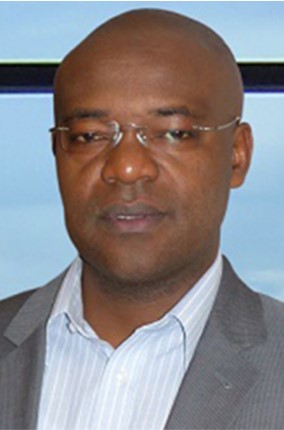
caption: Eric DetsiEric Detsi, Stephenson Term Assistant Professor in materials science and engineering in the School of Engineering and Applied Science, has received the National Science Foundation’s CAREER Award. The CAREER Award is given to early-career faculty researchers who demonstrate the potential to be role models for research and education and are committed to outreach and public engagement.
Dr. Detsi’s award will fund research on understanding and overcoming the fundamental barriers to sustainable production of aluminum, the most abundant metal in the Earth’s crust, and second-most-used metal worldwide after iron. As a lightweight and flexible metal, aluminum is ubiquitous, found in products ranging from soda cans to aircraft parts. The grant will also fund an outreach initiative bringing this research to underrepresented K-12 students at the Pennsylvania School for the Deaf through interactive science kits on the life cycle of aluminum.

Aluminum occurs in its natural form as aluminum hydroxide, abundant in Earth’s crust as bauxite ore. Converting that ore to aluminum, however, requires a 130-year-old, energy-intensive industrial process. High temperatures are used to convert the aluminum hydroxide into aluminum oxide, also known as alumina, and then melt it to a point where pure aluminum can be extracted through electrolysis, which requires a significant amount of electricity. On top of the intensive energy used in the form of heat and electricity, making 1 kg of aluminum produces 14 kg of carbon dioxide as by-product, equivalent to the CO2 released from burning about 1.5 gallons of gasoline.

Dr. Detsi aims to create a sustainable aluminum production process by directly converting aluminum hydroxide to aluminum at room temperature.

“Instead of using high-temperature electrolysis of molten alumina, aluminum hydroxide can be directly reduced to aluminum metal at room temperature through a process involving hydroxide ions and an aqueous electrolyte. However, metallic aluminum is highly reactive to water, making the use of an aqueous solution problematic,” Dr. Detsi said. “To overcome this challenge, we are working on developing a hybrid aqueous/non-aqueous electrochemical cell which can provide hydroxide ions while enabling aluminum to be made in a non-aqueous solution. The ultimate goal of this project is to achieve a direct aluminum hydroxide-to-aluminum conversion at room temperature, a process that not only avoids any direct carbon emissions, but also eliminates any energy waste in converting aluminum hydroxide to alumina and melting the alumina.”

Joelle Hageboutros: ICJ Judicial Fellow

Joelle Hageboutros, L’21, has accepted an offer to join the International Court of Justice (ICJ) Judicial Fellows Programme for 2021-2022. The competitive, highly selective program was established to provide recent law graduates the opportunity to gain experience working as a clerk at the International Court of Justice in The Hague.

“Each year, fifteen individuals are selected in a global competition to become ICJ Judicial Fellows,” said Beth Simmons, the Andrea Mitchell University Professor in Law, Political Science and Business Ethics. “Our own Joelle Hageboutros, who is exceptionally talented and experienced in public international law, rose to the top in this competition. This is a supreme honor and testament to Joelle’s preparation and dedication, as well as to the Law School’s support.”

Established in 1999, the ICJ program is open to students from all law schools internationally, and typically does not select more than one student from each nominating university. Students within three years of their law school graduation are eligible to apply. Penn Law began nominating students to the court in 2019 and established a dedicated Penn ICJ Fellowship in 2020, which includes a clerkship selection committee comprised of Penn Law faculty who decide on final nominations to the ICJ. Ms. Hageboutros is the first Penn Law student accepted into the program.

Latin American and Latinx Studies 2021 Award Winners

2021 José M. Oviedo Undergraduate Student Paper Award

Jean Chapiro, undergraduate student, communications, visual studies, cinema and media studies

Title of Project: Hambre: Hungry for Life (film)

Honorable Mention

Thomas Maggiola, undergraduate student, international relations, Hispanic studies, Latin American and Latinx studies

Title of Paper: A Death Foretold?: Extractivism, Development, and Human Rights in Latin America

2021 Nancy M. Farriss Graduate Student Paper Award 

Yasmin Mertehikian, PhD student, sociology

Title of Paper: The Place of Non-Heterosexual Women in Sexual and Reproductive Public Health Policies in the City of Buenos Aires

Marco Avilés, PhD student, Romance languages

Title of Paper: Tan lejos y tan cerca. Ideas sobre el mestizaje en dos textos de José Maria Arguedas y Nicolás Guillén

Four Penn Faculty: Election to the National Academy of Sciences

Four members of the University of Pennsylvania faculty have been elected to the United States National Academy of Sciences (NAS). They join 120 members, 59 of whom are women, the most elected in a single year, and 30 international members, elected by their peers this year to NAS. Recognized for “distinguished and continuing achievements in original research,” this new class brings the total number of active members to 2,461 and of international members to 511.

Marisa Bartolomei is the Perelman Professor of Cell and Developmental Biology in the department of cell and developmental biology in the Perelman School of Medicine. She is also the co-director of the Penn Epigenetics Institute. Crossing into the disciplines of cell and molecular biology, pharmacology, and neuroscience, Dr. Bartolomei and her lab investigate genomic imprinting in mice. Specifically, they focus on the H19 gene, which is only expressed in maternal alleles, in order to better uncover the mechanisms behind imprinting and the effects of the environment, assisted reproductive technologies, and endocrine disruptors. Her lab also looks into the molecular and genetic systems behind X inactivation in mice. Her research has been published widely in journals including Nature, Nature Biotechnology, Development, and PLoS Genetics.

Michael Kearns is the National Center Professor of Management & Technology in the department of computer and information science in the School of Engineering and Applied Science. He also holds secondary appointments in the School of Arts & Sciences’ department of economics and the departments of statistics and operations, information and decisions at the Wharton School. He is an expert in machine learning, algorithmic game theory, and microeconomics, and applies both theoretical research and experimental techniques to better understand the social dimensions of new information technology, such as its impact on privacy and fairness. Dr. Kearns is also the founding director of Penn’s Warren Center for Network and Data Sciences, which draws on researchers from around the University to study some of the most pressing problems of the digital age. Dr. Kearns is also the co-author of The Ethical Algorithm, which shows how seemingly objective data science techniques can produce biased outcomes.

Diana Mutz is the Samuel A. Stouffer Professor of Political Science and Communication in the Annenberg School for Communication. She also serves as director of the Institute for the Study of Citizens and Politics; she is also an affiliate of the Warren Center. She studies political communication, political psychology, and public opinion, and her research focuses on how the American mass public relates to the political world and how people form opinions on issues and candidates. She received a 2017 Carnegie Fellowship and a 2016 Guggenheim Fellowship to pursue research on globalization and public opinion, and in 2011 received the Lifetime Career Achievement Award in Political Communication from the American Political Science Association. In addition to many journal articles, Dr. Mutz is the author of Impersonal Influence: How Perceptions of Mass Collectives Affect Political Attitudes, Hearing the Other Side: Deliberative Versus Participatory Democracy, and In-Your-Face Politics: The Consequences of Uncivil Media.

M. Celeste Simon is the Arthur H. Rubenstein, MB BCh, Professor in the department of cell and developmental biology in the Perelman School of Medicine and the scientific director of The Abramson Family Cancer Research Institute. She and her lab research the metabolism of cancer cells, tumor immunology, metastasis, and how healthy cells and cancer cells respond to a lack of oxygen and nutrients. Her work uses both animal models and cancer patient samples, and her goal is to create techniques to treat various tumors like kidney cancer, soft tissue sarcoma, liver cancer, and pancreatic cancer. Dr. Simon was the recipient of a National Cancer Institute Outstanding Investigator Award in 2017, and she has authored more than 275 articles in journals including Cell, Science, Nature, Cancer Discovery, Nature Genetics, and Cancer Cell.

Therese Richmond: NASEM Board on Population Health and Public Health Practice

Therese S. Richmond, the Andrea B. Laporte Professor of Nursing and Associate Dean for Research and Innovation at Penn Nursing, has been appointed to the National Academies of Sciences, Engineering, and Medicine Board on Population Health and Public Health Practice. The three-year appointment runs until March 2024.

The Board on Population Health and Public Health Practice is concerned with promoting the health of the public through population-based interventions. It examines and develops strategies for disease prevention, taking into account the multiple factors affecting health-genetic endowment, social and environmental conditions, individual behavior (including tobacco use, alcohol consumption, diet, and exercise) and personal preventive services. It addresses the science base for such interventions and the public health infrastructure, the education and supply of health professionals necessary for carrying them out, and levers available in other sectors and through interdisciplinary inquiry and cross-sector collaboration.

“This past year has highlighted the importance of population health and the public health infrastructure to the health of the nation,” said Dr. Richmond. “NASEM is grounded in science in addressing high priority issues and I look forward to contributing to the work of this board.”

Dock Sang Rim: South Korea National Laureate

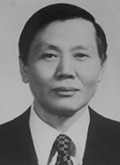
caption: Dock Sang RimDock Sang Rim (1928-1982), the chair of Penn’s mathematics department from 1975 to 1978, has been named a 2020 National Laureate in Science and Technology by South Korea. The award was conferred posthumously on April 21 and attended by the President of the Korean Mathematical Society. Dr. Rim is honored for his contributions to the development of an intellectual exchange between South Korea and the United States in the field of mathematics. In addition, Dr. Rim was the first Korean mathematics professor in the Ivy League. His research at Penn laid the cornerstone of algebraic K-theory, including pioneering studies on cohomology.

Dr. Rim was born in 1928 in what is now North Korea and fled to South Korea during the Korean War. In the 1950s, Dr. Rim emigrated to the U.S. to study at Indiana University and Columbia University. He came to Penn in 1965 and conducted leading research there in algebra and number theory. He was an editor of the Transactions of the American Mathematical Society and a member of the Korean Academy of Sciences, and was active in the Philadelphia Korean community.

Thomas Sollecito: President of the American Board of Oral Medicine

Thomas Sollecito, professor and chair of Penn Dental Medicine’s department of oral medicine, has been named President of the American Board of Oral Medicine. He assumed the one-year term in this leadership post at a recent meeting of the board.

Dr. Sollecito has long been an active member of the board, serving as Vice President for the past two years, and before that, he served as Treasurer for five years.

The American Board of Oral Medicine promotes and maintains the highest standards of teaching, research, and patient care in the discipline of oral medicine for the benefit of the public. The board administers a certification process for dentists who are accomplished in the field. Oral medicine doctors who have graduated from an accredited and recognized oral medicine program may apply to take the board exams. Individuals who pass all requirements become Diplomates of the American Board of Oral Medicine.

Jessica Wachter: SEC Chief Economist

caption: Jessica WachterThe Securities and Exchange Commission has announced that Jessica Wachter, the Dr. Bruce I. Jacobs Professor in Quantitative Finance at the Wharton School, has been appointed chief economist and director of the division of economic and risk analysis (DERA).

“For centuries, capital markets have evolved by adapting to technological innovation and the emergence of new data sources,” said SEC Chair Gary Gensler. “It is essential that we apply rigorous economic analysis to ensure that our policymaking, enforcement decisions, and examinations are informed by the data we have available to us. Jessica Wachter is an exceptional economist who has completed wide-ranging research on issues critical to the SEC’s mission. The Commission and the capital markets will benefit from her extensive experience and stellar track record in the field of financial economics.”

“I am honored to be joining the SEC and the dedicated experts within DERA,” said Dr. Wachter. “Sound economic and statistical analysis is critical to the SEC’s mission, and I greatly look forward to working with the team to inform decision-making at the agency.”

Jessica Wachter is one of the leading academic researchers in financial markets. She is a research associate with the National Bureau of Economic Research. Before coming to Wharton in 2003, she taught at New York University’s Stern School of Business. Her research focuses on behavioral finance, capital markets, and financial crises. She has served on the boards of the American Finance Association and the Western Finance Association and as associate editor of the academic publications Review of Financial Studies and Journal of Economic Theory.

Features

Ivy Day Stones: 148 Years of Penn Tradition

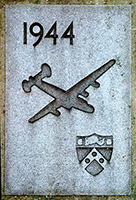
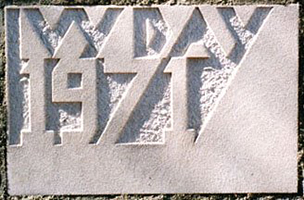
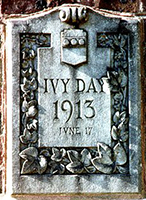
1873 Ivy Stone1913 Ivy Stone1944 Ivy Stone1971 Ivy Stone

A sampling of Ivy Stones that show the evolution of their design over the decades.

As Penn prepares for Ivy Day 2021 and the accompanying senior awards, Almanac looks back on the history of one of Penn’s most tangible Ivy Day traditions, the placing of an Ivy Stone somewhere on Penn’s campus.

Since 1873, every graduating class from Penn has placed at least one Ivy Day stone on the University campus (usually on a building). Each class’s stone is unveiled during a ceremony, held a few days before Commencement, in which a sprig of ivy is planted. The class of 1873 was inspired to launch this tradition by Penn’s move to its new West Philadelphia campus that year and the dedication of Penn’s College Hall; in the following years, the tradition gained the name Ivy Day. Penn’s nearly 200 Ivy Day stones make up a continuing and ever-growing exhibition of the history of the University. 

For its first 16 years, on Ivy Day, students placed plaques on College Hall. The class of 1889 was the first to place a stone elsewhere, on the Fisher Fine Arts Library. Since then, classes have placed Ivy Stones all around campus, often on celebrated new buildings on campus, such as the 1895 Ivy Stone, placed on Houston Hall, the first student union in the United States. (This latter trend escalated in the 1960s and 1970s, when the University expanded rapidly.) For each year between 1926 and 1961, there are two stones, one placed by women and one by men (reflecting Penn’s gender-separated approach to education at the time). In the 1980s, students began to place Ivy Stones at the sites of significant events around campus, like the 1983 stone marking the twenty-seven yard line at Franklin Field, where Dave Schulman’s field goal won Penn an Ivy League championship. 

Most Ivy Stones are pieces of stone that measure approximately one foot by two feet and are placed on the exterior wall of a building around eye level (though the occasional Ivy Stone is placed elsewhere, with some on the ground). The design of stones reflects the era in which they were placed: Some late nineteenth-century Ivy Stones feature elaborate Gothic carvings of sprigs of ivy and other figures, while stones from the 1940s through the 1980s feature minimalist modern designs with Bauhaus lettering. Today, in a nod to the utility of modern technology, artists design Ivy Stones in CAD programs, from which the stone is manufactured. 

The 2021 Ivy Stone will be ready later this month. The 2018– 2021 ivy stones are scheduled to be installed in Penn Commons this summer after construction projects had delayed installation for the last few years. Ivy Stones will continue to be a vibrant Penn tradition for decades to come.

Research

Battling Public Health Misinformation Online

Social media and web-based news channels became a communication superhighway for correct and incorrect public health information during the COVID-19 pandemic. The study of this vast amount of information, known as infodemiology, is critical to building public health interventions to combat misinformation and help individuals, groups, and communities navigate and distill crucial public health messages.

In an effort to combat COVID-19 misinformation, a group of women researchers, including nurse scientists from the University of Pennsylvania School of Nursing, launched the Dear Pandemic social media campaign in March 2020. It delivers curated, comprehensive, and timely information about the COVID-19 pandemic in a question-and-answer format. Complex topics such as COVID-19 aerosol transmission, risk reduction strategies to avoid infection, and excess mortality are explained in common language and shared widely.

Now with more than 100,000 followers and accounts on Facebook, Twitter, and Instagram, the campaign has an international and multilingual impact offering important public health insight via social media. An article in the journal Public Health Nursing describes how the campaign is combating misinformation about COVID-19.

Dear Pandemic has demonstrated that consistently publishing high-quality content outside a peer-reviewed venue can result in incredible impact—personal behavior change, informed nodes of trust to further disseminate factual information, and resources for community providers navigating constantly evolving knowledge,” said Penn Nursing’s Ashley Z. Ritter, the article’s lead author.

Dear Pandemic is an example of necessary low-barrier information exchange with the public and a tool for community providers like nurses to stay informed of breaking news. Increased engagement of nurses in endeavors like Dear Pandemic amplifies the impact of collective interdisciplinary efforts to educate the public, contain misinformation, and motivate individual and systemic action, the article explains.

“Now is the time for nurses to flex their communication and trust muscles in both traditional and innovative ways to advance the health of the public through trusted, actionable messaging in addition to exceptional patient care,” said co-author Shoshana Aronowitz, a fellow of the National Clinician Scholars Program.

The article “Dear Pandemic: Nurses as Key Partners in Fighting the COVID-19 Infodemic” is available online.

Additional coauthors of the article include Alison Buttenheim of Penn Nursing as well as scholars at Dartmouth College, the University of Wisconsin-Madison, the University of Oxford, Columbia University, Stony Brook University, and Thomas Jefferson University.

Adapted from a Penn Nursing article. Read the full story here.

Preventing Evictions Remains Critical to Controlling COVID-19, Study Finds

Renter protection policies that have curbed mass evictions during the COVID-19 pandemic have played a key role in preventing the spread of SARS-CoV-2 in U.S. cities, according to a new study published in Nature Communications.

Using an epidemiological model to predict how evictions and eviction moratoria would impact the epidemic, the researchers found, for instance, that in a city of 1 million in which 1% of households experience eviction monthly, the evictions could lead to up to 49,000 excess COVID-19 infections. In Philadelphia alone, a fivefold increase in evictions, predicted by some economic analyses, could lead to 53,000 extra infections. The study was led by researchers at the Perelman School of Medicine at the University of Pennsylvania, Johns Hopkins University, and the University of Illinois at Urbana-Champaign.

“Our model shows clearly that policies to stem evictions are not only a warranted but a necessary component of COVID control. As long as the virus is circulating, ending these protections could have devastating implications in the United States,” said co-senior author Michael Z. Levy, an associate professor of epidemiology in Penn’s Perelman School of Medicine.

Record levels of unemployment have put millions of Americans at risk of losing their homes throughout 2020 and 2021. At the start of the pandemic, many cities and states enacted temporary legislation banning evictions, some of which has since expired. On September 4, 2020, the Centers for Disease Control and Prevention (CDC) imposed a national moratorium on evictions, which was extended in March 2021. In addition to a number of well-documented adverse outcomes, evictions would also have outsized repercussions on the growth rate of the COVID-19 epidemic, Dr. Levy and his research team predicted in the summer of 2020. The effect emerges from increases in household sizes—data suggest that, once evicted, households tend to “double-up,” moving in with friends or family. Household transmission can also limit or delay the effects of measures like lockdowns, which aim to decrease the contact rate in the general population.

To quantify this effect, the researchers modeled evictions that resulted in the “doubling up” of households by merging each evicted household with one randomly selected household in the network. They then adjusted the number of contacts outside the household over the course of the simulations to capture the effects of lockdown measures and their subsequent relaxation. They found that with a low monthly eviction rate of 0.25%, an estimated 0.5% more of the population could become infected with COVID-19—or about 5,000 excess cases per 1 million residents—compared to if there were no evictions. A 1% monthly eviction rate could lead to 19,000 to 49,000 excess cases. With an eviction rate of 2% per month, that number jumps to 50,000 to 100,000 excess infections in a single city.

“Our results suggest that the CDC-mandated national order prohibiting evictions from September 4-December 31, 2020 likely prevented thousands of excess COVID-19 infections for every million metropolitan residents,” said the study authors.

The research team therefore adjusted their model to evaluate the effect of evictions in Philadelphia, which has one of the highest eviction rates among large U.S. cities. In July 2020, Philadelphia’s City Council passed the Emergency Housing Protection Act in an effort to prevent evictions during the pandemic. The city was sued by a lobbyist group, which questioned whether the legislation was of broad societal interest, rather than protecting a narrow class of residents. This prompted Dr. Levy’s team to assess the claim.

Their simulations showed that allowing evictions to resume in Philadelphia could substantially increase the number of COVID-19 infections in the city, and that these increases would be felt among various socioeconomic populations, including those experiencing a low number of evictions. With evictions occurring at only their pre-pandemic rates, the epidemic would infect an extra 0.3% of the Philadelphia population, or 4,700 individuals. However, the researchers point out, many economic analyses predict the eviction crisis could be much higher if allowed to resume, due to the economic fallout associated with COVID-19. With a five-fold increase in evictions, excess infections would increase by 53,000 in the city.

Adapted from a Penn Medicine news release. Read the full story here.

“Unrules” Are Ubiquitous in U.S. Regulatory System and Require Greater Oversight

In “Unrules,” recently published in the Stanford Law Review, Cary Coglianese, the Edward B. Shils Professor of Law and professor of political science; Gabriel Scheffler of the University of Miami School of Law; and Daniel Walters of Penn State Law present their findings from the “first systematic empirical investigation of the hidden world of unrules”: evidence that challenges the widespread perception of the U.S. regulatory system as inflexible and burdensome.

By contrast, the authors show that the system has tremendous opportunities for flexibility, or what the authors call “obligation alleviation.” But Dr. Coglianese also notes that the study “offers reasons to worry about a bias in our administrative law system that allows agencies bent on alleviating regulatory responsibilities to escape from the same kind of procedural protections and judicial scrutiny that apply when agencies impose new obligations.”

The authors define “unrules” as “the decisions that agencies make to lift or limit the scope of a regulatory restriction, for instance through waivers, exemptions, and exceptions.” Although such unrules can have positive effects such as reducing burdens on regulated entities or making law more efficient through the conservation of government resources, if left unchecked, they can “facilitate undue business influence over the law, weaken regulatory schemes, and even undermine the rule of law.”

By applying the study’s “computational linguistic approach” to the Federal Register, Code of Federal Regulations, and the U.S. Code, Dr. Coglianese and his coauthors reveal that “there exists one obligation-alleviating word for approximately every five to six obligation-imposing words in federal law.” The authors show both the ubiquity of unrules throughout federal regulatory law and how these obligation-alleviating tools operate with much less oversight on regulators’ discretion.

“As a result, a major form of agency power remains hidden from view and relatively unencumbered by law,” they write. “Recognizing the central role that unrules play in our regulatory system reveals the need to reorient administrative law and incorporate unrules more explicitly into its assumptions, doctrines, and procedures.”

Adapted from a Penn Law news release. Read the full story here.

Events

2021 Commencement Events

Ben Franklin with graduation cap and gown

As the undergraduate and graduate classes of 2021 graduate from Penn, there is a wide array of virtual events to celebrate their accomplishments. Listed below is the date and time of each school’s individual graduation ceremony, a link to an online stream of the event, and the names of guest speakers. With the fast-changing nature of events during the time of COVID-19, this information is subject to change.

For the latest information, visit https://commencement.upenn.edu/grad2021.

School/Program

Date/Time

Link

Speaker

University of Pennsylvania 265th Commencement

May 17, 10 a.m.

https://commencement.upenn.edu/grad2021

Laurene Powell Jobs, impact investor and social justice advocate

School of Arts and Sciences


College of Arts and Sciences

May 17, 1 p.m.

https://www.college.upenn.edu/graduation-ceremony  

Mary Frances Berry, history and Africana studies; Justin Greenman, student

Graduate Division, Arts and Sciences

May 17, 1 p.m.

https://www.sas.upenn.edu/graduate-division/current-students/celebrating-our-2021-graduates

Beth Wenger, history; Eve Troutt Powell, history and Africana studies; Brian Chao, Augusta Irele, and Aline Zanardini, students

College of Liberal and Professional Studies

May 16, 4 p.m.

www.sas.upenn.edu/lps/students/graduation

Sulaiman Rahman, DiverseForce

Fels Institute of Government

August 7, noon

https://www.fels.upenn.edu/


Lisa Cook, Michigan State University


Wharton School

May 16, 11 a.m.

https://graduation.wharton.upenn.edu/

Rosalind Brewer, Walgreens Boots Alliance; Tory Burch, Tory Burch LLC; Sundar Pichai, Google; Marc Rowan, Apollo Global Management

Annenberg School for Communication

May 16, 11 a.m.

https://asc.upenn.edu/news-events/events/2021-communication-major-graduation-ceremony

Fashina Aladé, Michigan State University

School of Dental Medicine

May 17, 1 p.m.

https://www.dental.upenn.edu/about-us/commencement/

Steve Beshear, former governor of Kentucky; Charles Howard, University chaplain; Neel Hiteshkumar Shah, student

Stuart Weitzman School of Design

May 15, 7 p.m.;

https://www.design.upenn.edu/events-exhibitions-0/events/2021-weitzman-commencement-webcast


Amber Farrow, student; Anne Whiston Spirn, landscape architect

Graduate School of Education

May 15, 9:30 a.m.

https://onepenn.gse.upenn.edu/student-services/commencement


School of Engineering and Applied Science


Undergraduate and Master's Virtual Recognition

May 14, 10 a.m.

https://events.seas.upenn.edu/commencement/ug-mse2021/

Archit Dhar, Jieying Chen, students; Patrick Harker, Federal Reserve Bank of Philadelphia; Lloyd Howell, Booz Allen Hamilton; Vanessa Chan, Biden Administration

Doctoral Ceremony Virtual Recognition

May 13, 10 a.m.

https://events.seas.upenn.edu/commencement/phd2021/

Graduates and members of the Penn Engineering faculty

Penn Carey Law School

May 16, 1 p.m.

https://www.law.upenn.edu/newsevents/2021-commencement/

Ketanji Brown Jackson, U.S. district judge; Abby Huntsman, journalist

Perelman School of Medicine

May 16, 9 a.m.

https://www.med.upenn.edu/student/commencement-2021.html

Rajiv J. Shah, Rockefeller Foundation

Biomedical Graduate Studies

May 17, 1:30 p.m.

https://www.med.upenn.edu/bgs/bgs-virtual-graduation-2021.html


School of Nursing

May 17, 3 p.m.

https://www.nursing.upenn.edu/news-events/annual-events/commencement/

Lauren Underwood, U.S. representative

School of Social Policy & Practice

May 15, 6:30 p.m.

https://www.sp2.upenn.edu/student-life/services-support/commencement


School of Veterinary Medicine

May 17, 2:30 p.m.

http://www.vet.upenn.edu/about/penn-vet-events-calendar/commencement-2021

Albert Bourla, Pfizer

Update: May AT PENN

Conferences

19        Iran and Global Decolonization; brings together scholars whose work investigates Iran’s experiences with colonialism and decolonization from a multiplicity of perspectives; 10 a.m.-3 p.m.; info: iranglobaldecolonization@gmail.com (History; UCLA). Through May 21.

Fitness & Learning

Graduate School of Education (GSE)
Online events. Info and to register: https://www.gse.upenn.edu/news/events-calendar

18        Leadership Awareness Training—Supporting the Well-Being of Your Team; noon.

19        IdeaMachine Demo from Wharton Interactive; 11 a.m.

21        Psychology of Eating; noon.

Penn Law
Online events. Info and to register: https://www.law.upenn.edu/newsevents/calendar.php#!view/all

13        Master in Law Information Session for the Penn Community; noon.

18        Master in Law Information Session for General Audiences; noon.

Penn Libraries
Online workshops. Info and to register: https://guides.library.upenn.edu/workshops

17        Coffee with a Codex; noon. Also May 24.

20        Digital Mappa (DM) Workshop; 2 p.m.

Special Events

12        Penn Engineering Celebrates URM Student Achievements; 4 p.m.; Zoom meeting; join: https://upenn.zoom.us/j/96319152909 (Penn Engineering).

13        MSSP End-of-Year Celebration; 8 p.m.; online event; register: https://bit.ly/MSSP-2021-Grads (SP2).

14        LALS Graduation Ceremony; 5 p.m.; Zoom meeting; register: https://tinyurl.com/lals-grad-2021 (Latin American and Latinx Studies).

Sports

Penn Athletics
Online streams of games. Info: www.pennathletics.com

13        (M/W) Track & Field at TCNJ Last Chance; time TBA.

Talks

13        Interpolation Polynomials and Bar Games; Yusra Naqvi, University College London; 3:30 p.m.; Zoom meeting; info: https://www.math.upenn.edu/events/ (Mathematics).

            Exploring the Immunology of the Sinonasal Tract During Allergic Inflammation; De’Broski Herbert, Penn Vet; 4 p.m.; BlueJeans meeting; join: https://bluejeans.com/497920610 (Penn-CHOP Lung Biology Institute).

            The Generation of Neuronal Diversity; Claude Desplan, NYU; 4 p.m.; Zoom meeting; join: https://tinyurl.com/sallam-talk-march-2 (Biology).

20        Special Briefing: The $2.3 Trillion American Jobs Plan and State and Local Infrastructure Needs; panel of speakers; 11 a.m.; Zoom meeting; register: https://tinyurl.com/iur-talk-may-20 (PennIUR; Volcker Alliance).

            Songs of Dissent: Poetry and Antiracist Solidarity; Herman Beavers and Josephine Park, English; noon; online event; register: https://tinyurl.com/beavers-park-may-20 (Lightbulb Café).

Economics
Online events. Info and to register: https://economics.sas.upenn.edu/events

11        Local Institutions as a Coordination Mechanism in Residential Choice; Jungsoo Yoo, economics; 12:30 p.m.

18        Uncertain Intellectual Property Rights and Innovation; Ryan Zalla, economics; noon.

Medical Ethics and Health Policy
Online events. Info and to register: https://medicalethicshealthpolicy.med.upenn.edu/events

13        Political Partisanship and Physician Prescribing of Proposed COVID-19 Treatments in 2020; Michael Barnett, Harvard; noon.

Penn Dental
Online events. Info and to register: https://www.dental.upenn.edu/news-events/events/

13        Contour and Emergence Profile: Concepts and Techniques in the Digital Era; Brian Kasten, CHOP; 6 p.m.

14        Transforming Dentistry Through Innovation and Technology; Michel Koo, Penn Dental; noon.

18        Management of Dental Fear in Pediatric Patients; Evlambia Hajishengallis, Penn Dental; 5:30 p.m.

19        Considerations for Dental Treatment of Patients with Infectious Diseases; Temitope Omolehinwa, Penn Dental; 5:30 p.m.

            Virtual Treatment Planning – Creating the 3D Patient – An Overview: What is Required and How Can We Use It? Michael Bergler, Penn Dental; 6 p.m.

Family Fun at Morris Arboretum This Summer

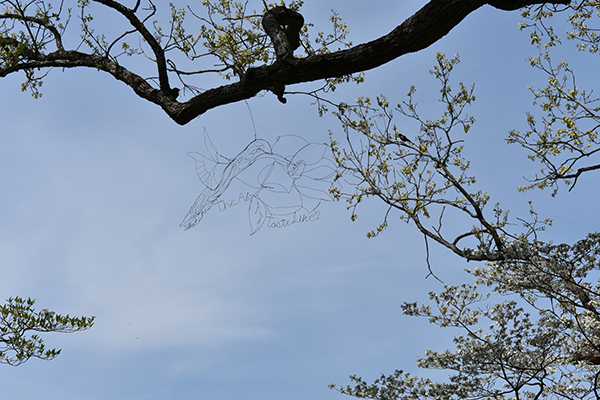
caption: Artist Reed Bmore has installed four of his wire sculptures in the trees around the Morris Arboretum. Photo Courtesy Morris Arboretum.

There is so much to discover at Morris Arboretum this summer!

Ready for the next level of scavenger hunt? Artist Reed Bmore from Baltimore, Maryland has installed his wire sculptures in trees around the Arboretum. He has carefully placed four wire sculptures high in the treetops to encourage explorers to look closely up into the trees above. While searching for these almost camouflaged pieces, the goal is not only to find the intricate pieces of wire art, but also to observe the complexity of shapes, colors and patterns hidden in the trees every time you peer into their canopies. Good luck on your journey through the treetops. A PDF map is available at morrisarb.org/reedbmore.

Be sure to stop in at the Fairy Woods next to the Loop de Loop Sculpture Garden. This summer, families of tiny fairies have moved in to the Arboretum and need your help to build a place for them to sleep! Visitors can pick up natural materials at the Gnome Depot to create their own enchanted fairy houses. Fairies like shelter from the elements and somewhere soft to sit—everything else is up to you. Check morrisarb.org/fairywoods for details.

The beloved Garden Railway opens on Saturday of Memorial Day weekend, May 29, and is open daily through October 11. Model trains zip around an outdoor quarter mile track over bridges and through tunnels. The tracks are surrounded by complementary plantings and miniature replicas of Wonders of the World. You can see the Eiffel Tower, Hagia Sophia, the Egyptian Pyramids, the Wall of China and more without leaving Chestnut Hill.

The permanent Out on a Limb exhibit continues to amaze visitors with its canopy walk that is 50 feet up in the treetops, but requires no climbing. Kids can roam the hammock-like netting like a squirrel would and look down from high above. Or venture into the enormous Bird’s Nest to “hatch” the oversized eggs.

Beauty surrounds you at Morris Arboretum, a safe and fun place to spend time in nature and discover something new with every visit. Advance tickets are required. Reserve early at morrisarboretum.org.

Virtual Summer Admissions Workshops

The Office of Undergraduate Admissions will be hosting virtual admission workshops this summer tailored for Penn faculty and staff and their dependents. Below are the details for the June program.

Wednesday, June 23
2:30–2:45 p.m.: Welcome and Overview
2:45–3:30 p.m.: Session 1—Navigating the College Application Process
3:30–3:45 p.m.: Break
3:45–4:30 p.m.: Session 2—Essay Writing and Supplement Fundamentals
4:30–5 p.m.: Closing Remarks and Q&A with Admissions

To register, visit https://key.admissions.upenn.edu/register/SummerFSJune2021.

A Successful Showing for Penn Athletics

caption: Penn’s winning Varsity Eights women’s rowing team after the Kelly Cup win. Photo Courtesy Penn Today

Saturday, May 1 was a busy day for Penn’s athletic teams and the Quakers put up impressive performances on water and land.

The women’s rowing team, in their final regular-season race of the spring, earned a trio of gold medals in the Kelly Cup. Competing on the Schuylkill River, the Red & Blue placed first in the Varsity Eights, the Varsity Fours, and the Second Varsity Fours.

The men’s heavyweight and lightweight rowing teams competed on the Schuylkill as well, in the Bergen Cup. The lightweight team was victorious in the Second Varsity Eights and the Third Varsity Eights, and the heavyweight team triumphed in the Fourth Varsity Eights.

At the Penn Twilight in the afternoon at Franklin Field, the men’s and women’s track and field teams faced off against Villanova, and the Quakers were the victors in a host of events.

Freshman sprinter Isabella Whittaker won the 200-meter with a time of 23.76 and the 400-meter with a time of 52.50. Both times are second-best in school history. Senior middle distance runner Melissa Tanaka won the 1500-meter with a time of 4:19.64, and junior distance runner Ariana Gardizy won the 10,000-meter with a time of 34:45.57. In the pole vault, senior Michelle Rubinetti won the day, clearing 3.82 meters (12 feet, 6.25 inches). In the triple jump, junior Tamara Grahovac leaped into first place with a mark of 12.90 meters (42 feet, 4 inches), second-best in school history. Senior Camille Dickson (100-meter, long jump), junior Skyla Wilson (400-meter hurdles), junior Claire Moreau (high jump), and junior Mayyi Mahama (hammer) also placed first in their respective events.

On the men’s side, senior captain and distance runner Ryan Renken was victorious in the mile with a time of 4:00.68, third-best in school history. Senior thrower Campbell Parker won the hammer throw with a mark of 57.64 meters (189 feet, 1 inch) and the discus with a mark of 49.16 meters (161 feet, 3 inches). Freshman Ben Kioko (javelin), sophomore Olatide Abinusawa (shot put), freshman Dimitri Nicholson (100-meter), sophomore Emerson Douds (200-meter), sophomore Robbie Ruppel (400-meter), freshman Jack Meigel (high jump), and senior Demetri Whitsett (long jump) were tops in their respective events as well.

The baseball team played a doubleheader against La Salle at the Explorers’ Hank DeVincent Field and won both games, 7-6 and 16-3. In the first game, the Quakers were trailing 1-0 before they exploded for five runs in the fourth inning. They added one run in the fifth and another in the sixth. Junior centerfielder Tommy Courtney and junior shortstop Craig Larsen both scored two runs. Mr. Larsen, senior second baseman Eduardo Malinowski, and sophomore leftfielder Seth Werchan had two hits each. The Red & Blue scored four runs in the top of the first in Game 2 and never looked back. They scored three more in the fifth, two in the sixth, one in the seventh, and six in the eighth, and racked up 24 hits. All nine starters had at least two hits. Mr. Courtney, freshman third baseman Wyatt Henseler, Mr. Larsen, and sophomore catcher Jackson Appel had three hits apiece. Mr. Henseler also had four RBIs.

Adapted from a Penn Today article by Greg Johnson, May 3, 2021.

Crimes

Weekly Crime Reports

University of Pennsylvania Police Department Crime Report

Below are the Crimes Against Persons, Crimes Against Society and Crimes Against Property from the campus report for April 26-May 2, 2021. View prior weeks' reports. —Ed.

This summary is prepared by the Division of Public Safety and includes all criminal incidents reported and made known to the University Police Department for the dates of April 26-May 2, 2021. The University Police actively patrol from Market St to Baltimore and from the Schuylkill River to 43rd St in conjunction with the Philadelphia Police. In this effort to provide you with a thorough and accurate report on public safety concerns, we hope that your increased awareness will lessen the opportunity for crime. For any concerns or suggestions regarding this report, please call the Division of Public Safety at (215) 898-4482.

04/26/21

11:15 AM

3700 Walnut St

Known female blocked complainant with her vehicle, causing damage to both vehicles

04/26/21

1:51 PM

3737 Market St

Complainant assaulted by ex-girlfriend’s sister and unknown male

04/27/21

2:25 AM

3600 Market St

Male wanted on warrant/Arrest

04/27/21

6:56 AM

4200 Ludlow St

Complainant threatened by males

04/27/21

8:36 AM

3401 Chestnut St

Merchandise taken without payment

04/27/21

10:49 PM

4000 Market St

Complainant’s property taken/2 Arrests

04/29/21

7:07 AM

4200 Osage Ave

Motorcycle stolen

04/29/21

3:59 PM

3604 Chestnut St

Unknown male took cigarettes without payment

04/29/21

5:10 PM

4036 Walnut St

Package taken from vestibule

04/29/21

8:22 PM

400 S 42nd St

Motorcycle stolen

04/30/21

2:52 AM

3900 Chestnut St

Complainant pepper sprayed by known person

04/30/21

12:30 PM

3409 Walnut St

Offender removed merchandise without payment

05/01/21

2:49 AM

3400 Spruce St

Offender struck complainant

05/01/21

5:07 PM

3100 Walnut St

Unsecured laptop taken from table


18th District

Below are the Crimes Against Persons from the 18th District: 6 incidents (2 assaults, 2 domestic assaults, and 2 robberies) with 1 arrest were reported for April 26-May 2, 2021 by the 18th District, covering the Schuylkill River to 49th St & Market St to Woodland Avenue.

04/26/21

12:05 AM

4600 Baltimore Ave

Assault

04/26/21

11:18 AM

38th & Walnut Sts

Domestic Assault

04/27/21

11:00 PM

40th & Market Sts

Robbery/Arrest

04/30/21

3:01 PM

3900 Chestnut St

Domestic Assault

05/01/21

3:15 AM

3400 Spruce St

Assault

05/02/21

7:19 AM

Melville St. & Kingsessing Ave

Robbery


Bulletins

Bike Removal Notice for Students, Staff, and Faculty

Students: Please take your bicycle when you leave campus. As a reminder, all bicycles that are left on campus bike racks after move out will be removed and donated to a local charity. Please take your bicycle with you when you leave or arrange for it to be stored while you are away from campus.

Academic Year 2019-2020 Removals: If you did not recover your bicycle left on-campus during AY 2019-2020 when you returned to campus this year, please email Public Safety at vp@publicsafety.upenn.edu with a description of your bicycle and where you left it. All bicycles will need to be picked up from Public Safety no later than Friday, May 21, 2021, or they will be donated to a local charity.

Staff/Faculty: At the end of the spring semester, Public Safety removes all abandoned bikes from the University’s bike racks. This process reduces bike thefts and allows space for other bicyclists to secure their bikes. Please note the signage at designated bike racks, asking for the racks to be cleared by May 31. If you have left a bike locked at a University bike rack during AY 2020-2021, and do not use it daily, please remove your bike from its location by Friday, May 21, 2021.

Academic Year 2019-2020 Removals: Last May, all bikes were collected and stored following the swift de-population of campus to safely secure everyone’s property during the quarantine. If you left a bike locked on-campus during AY 2019-2020 and have not retrieved it, contact DPS at vp@publicsafety.upenn.edu with a description of your bicycle and where you left it to arrange to collect your property. All stored bicycles will need to be picked up from Public Safety no later than Friday, May 21, 2021, at which point they will be donated to a local charity.

New Commuter Parking Card Now Available to Penn Parking Patrons

Penn Transportation and Parking has introduced a new option for faculty and staff who require occasional parking as part of their commutes.

The Commuter Parking Card is available to benefits-eligible, full-time faculty and staff who would like to allocate a pre-set dollar amount on the stored value debit card for as-needed parking. Similar to other programs administered by Health Equity/WageWorks, parkers can realize significant tax savings by deducting their occasional commuting parking fees via payroll, up to $270 a month on a pre-tax basis. Any amount over $270 each month is regarded as post-tax dollars.

This card can be used at Penn garages and lots that allow visitor parking. It is intended to cover parking costs associated with your commute to work, and not for parking costs incurred for work-related travel expenses and non-work-related events and activities. (Note: the card is not intended for permit parkers at Penn parking facilities.) Consult with Health Equity/WageWorks for information on other commuter parking facilities where your card may be used.

Details on obtaining the Commuter Parking Card can be found by clicking here.

SCUE Wellness Bright Paper

The Student Committee on Undergraduate Education (SCUE) has released the new Spring 2021 SCUE Wellness Bright Paper.

In the paper, SCUE outlines several ways in which Penn can shift from an additive to an integrative model of wellness. These include:

  • Integration of wellness into students’ academic requirements through the creation of a wellness minor and administration of grants for wellness-related courses fulfilling requirements
  • Integration of wellness into faculty teaching styles through revitalization of the Wellness Ambassadors faculty training program
  • Integration of wellness into students’ residential life through College House traditions and regular programming

To read the SCUE Wellness Bright Paper, visit https://tinyurl.com/scue-bright-paper-2021.

The Student Committee on Undergraduate Education was founded in 1965 to improve issues that affect undergraduate education or the intellectual atmosphere at Penn. SCUE advocates for the student voice and advises the faculty and administration on steps they can take to improve the student experience.

One Step Ahead: New and Improved “Information Privacy and Security at Penn” Training Online

One Step Ahead logo

Another tip in a series provided by the Offices of Information Security, Information Systems & Computing and Audit, Compliance & Privacy

The “Information Privacy and Security at Penn” online training in KnowledgeLink is interactive and recently updated. The course provides an understanding of the types of data you handle at Penn and how you can protect sensitive information. Your department may assign this course as required training, or you can take the course by assigning it to yourself in KnowledgeLink.

This training course consists of six short, interactive videos that take approximately 30 minutes in total to complete. You can go at your own pace: take in all six videos in a single session, complete one 4–6-minute video a day, or whatever best suits your schedule.

Information Privacy refers to the ability of people to know and, at times, control information collected about them and the use and sharing of that information.

In the three Information Privacy videos, you’ll learn:

  • What information privacy is, and the types of data to protect as a Penn employee
  • Which laws, policies, and critical principles may apply to you and Penn
  • Basic rules of privacy and important privacy considerations

Information Security focuses on preventing unauthorized access, use, and sharing of sensitive data. It also addresses the reliability and availability of data.
In the three Information Security videos, you’ll learn:

  • How to protect your devices and information from compromise
  • How Two-Step Verification protects your accounts, and how to avoid phishing attempts
  • How to prevent losing your portable devices, and how to protect sensitive data

For a quick peek, visit KnowledgeLink at http://knowledgelink.upenn.edu and search for “Information Privacy and Security at Penn.”

---

For additional tips, see the One Step Ahead link on the Information Security website: https://www.isc.upenn.edu/security/news-alerts#One-Step-Ahead

Almanac Schedule

There will not be an issue of Almanac on Tuesday, May 18. The last issue of the semester will be published on Tuesday, May 25.

Back to Top