Christopher Woods: Williams Director of Penn Museum
 President Amy Gutmann and Provost Wendell Pritchett announce the appointment of Christopher Woods as Williams Director of the University of Pennsylvania Museum of Archaeology and Anthropology, beginning April 1, 2021.
Dr. Woods is John A. Wilson Professor of Sumerology at the University of Chicago and Director of UChicago’s Oriental Institute, one of the world’s leading centers for interdisciplinary research on Near East civilizations. Founded in 1919, the Oriental Institute is the largest center of its kind in the world, including the largest collection of ancient Middle Eastern artifacts in the United States and sponsoring twelve field projects across the Middle East and Central Asia. The Oriental Institute Museum, comprehensively renovated and reinstalled for its 2019 centennial, houses more than 350,000 artifacts and offers extensive public programs and publications.
“An experienced and collaborative leader and award-winning scholar who believes deeply in the power of museums to connect past to present, Chris Woods is an ideal choice to lead the Penn Museum,” said President Gutmann. “Chris is passionately committed to the Museum’s essential missions of research, teaching, and public outreach and engagement. He is taking the helm at a time of great transformation and excitement for the nation’s finest university archeological museum. From its recently renovated and reimagined galleries of the Middle East, Africa, and Mexico and Central America to the launch of the groundbreaking Center for the Analysis of Archaeological Materials to the creation of interactive and hands-on learning opportunities for our region’s schoolchildren, the Penn Museum continues to show a tremendous capacity for growth and reinvention. Chris’s excellent track record at the University of Chicago Oriental Institute is proof positive of his ability to provide visionary leadership, and we are most fortunate to bring him to Penn.”
Dr. Woods served as editor-in-chief of the Journal of Near Eastern Studies from 2009 to 2020 and has published a wide range of scholarly books and articles, spanning such areas as Sumerian language and writing, the origin and development of writing and writing systems, and early Mesopotamian history, literature, religion, and state formation. His work has been supported by grants from the U.S. Department of State, the National Endowment for the Humanities, and the Andrew W. Mellon Foundation, among many others. After earning a PhD in Assyriology from Harvard University and a BS in Physics from Yale University, he was appointed to the Harvard Society of Fellows before joining the University of Chicago in 2002.
“Chris Woods comes to Penn at a pivotal moment,” said Provost Pritchett, “when our great Museum is more vital and contemporary than ever. An eminent museum director who is also a distinguished scholar, he is the ideal leader to help us shape, for a new decade, the Museum’s historic educational mission: illuminating the present and the future by helping us to better understand—and vividly experience—our collective past. I am deeply grateful to the members of the consultative committee, who worked closely with me to consider many outstanding candidates from around the world and arrive at this exciting appointment.”
The University of Pennsylvania Museum of Archaeology and Anthropology, founded in 1887, houses one of the world’s greatest collections of historic artifacts, illuminating the cultures of Africa, Asia, the Americas, and the Mediterranean, from the first cities of the Middle East to the pharaohs of ancient Egypt, from early Mexico to the lives of Native American communities today. Extensively renovated and reconfigured since 2017, the Museum’s comprehensive galleries transform understanding of the human experience through a wide range of public exhibits and programs, innovative research and teaching at the Center for the Analysis of Archaeological Materials, and educational initiatives for schools and many other audiences.
Hyemi Sevening: Associate Dean for Institutional Advancement at Penn Vet
 The School of Veterinary Medicine at the University of Pennsylvania (Penn Vet) has named Hyemi Sevening, a senior fundraising professional with more than 17 years of development experience, as its new Associate Dean for Institutional Advancement. Her appointment began on January 19, 2021.
Ms. Sevening comes to Penn Vet from the School of Veterinary Medicine at the University of California at Davis (UC Davis), where she served as Assistant Dean of Advancement and oversaw that institution’s wide-ranging fundraising efforts. Prior to her appointment as Assistant Dean in 2017, she served as that school’s Interim Assistant Dean of Advancement and Senior Director of Development, and she previously held fundraising positions at Illinois Institute of Technology’s Armour College of Engineering and Iowa State University’s College of Engineering.
As Associate Dean for Institutional Advancement at Penn Vet, Ms. Sevening will be responsible for the overall conceptualization, planning and execution of a coordinated program of private source fund raising, constituent relations, and communications to support the long and short range goals of the School. She will also lead the closing of The Power of Penn Vet Campaign.
“Hyemi has an outstanding record of achievement. I am confident that Hyemi will be an extraordinary fundraiser, thought-partner, colleague, and team builder,” said Andrew M. Hoffman, Gilbert S. Kahn Dean of Veterinary Medicine. “Her impressive background and expertise in both veterinary health care and higher education will be essential as we advance our ambitious plan to accelerate veterinary medicine’s impact on animal, human, and environmental health.”
Some of Ms. Sevening’s most significant accomplishments at UC Davis include leading efforts toward the $500 million “Expect Greater” School of Veterinary Medicine campaign goal, directing a $44 million annual fundraising and planned gift program, doubling annual giving contributions, establishing the Terry Holliday Equine and Comparative Neurology Presidential Chair, and garnering unrestricted programmatic support for the school’s centers and institutes.
“I am thrilled and honored to join Penn Vet, which has a distinguished legacy of translational research and clinical veterinary specialties,” said Ms. Sevening. “The School has a dynamic and forward-looking educational mission, and a vision for the future of veterinary medicine. As we move into an exciting new decade, I welcome this extraordinary opportunity to work with the entire Penn Vet community in achieving the School’s goals.”
Christopher Wailoo: Associate Dean for Business Services and Chief Financial Officer, Law School
 The University of Pennsylvania Carey Law School named A. Christopher Wailoo as Associate Dean for Business Services and Chief Financial Officer. Mr. Wailoo joined the Law School after a decade with the Smithsonian Institution as the Associate Director of Finance and Administration of the Hirshhorn Museum and Sculpture Garden.
Mr. Wailoo’s success in translating financial information into service to stakeholders, stewardship of revenue streams, and accomplishment of strategic goals make him an excellent addition to the Law School at an exceptional moment in its history, given its receipt over the past two years of two of the top ten gifts—$125 million from the W. P. Carey Foundation, and $50 million from the Robert and Jane Toll Foundation—ever made to US law schools.
“We are at a critical moment in the University of Pennsylvania Carey Law School’s distinguished history: the possibilities ahead of us in light of the generous commitments of the Carey Foundation, the Toll Foundation, legions of supportive alumni, and other donors are limitless,” said Dean Ted Ruger. “With outstanding nonprofit and private sector experience, Chris Wailoo brings a disciplined approach to the funding of creative strategic initiatives that will allow us to expand the reach and impact of our goals. We are excited to add his energy and expertise to our team.”
The Associate Dean for Business Services and Chief Financial Officer is the principal architect of the Law School’s responsibility-centered budgeting process and performance each year. Mr. Wailoo, who began in December, is an essential strategic advisor to Dean Ruger, partnering with faculty, staff, students, and University finance and business leadership to ensure the Law School’s continued fiscal strength and wise stewardship of tuition and donor dollars.
The role also requires the careful development and supervision of the Law School’s annual operating budget and all of its component parts, while providing expert advice and consultation to the Dean, faculty members, staff, and student group leaders.
“I am eagerly looking forward to becoming a part of the outstanding team at Penn Law School and providing my experience and energy to help implement the school’s priorities,” Mr. Wailoo said. “What an exciting and important time to join in the School’s important mission.”
Mr. Wailoo’s body of work includes experience across both private businesses and public non-profits, with leadership roles in government advocacy, commercial banking and strategic consulting for American Express and SunTrust Bank. At the Smithsonian Institution, he directed the financial oversight for the Hirshhorn Museum and Sculpture Garden, which included leading a staff of more than 70 people who manage and curate the work of modern and contemporary artists, while providing budgeting, planning and executive leadership as a liaison for the Hirshhorn across the other 19 museums in the Smithsonian organization.
Throughout his tenure at the Hirshhorn Museum, Mr. Wailoo also consistently led financial and strategic analysis for three major exhibitions per year, valued at over $1 million per exhibition.
Mr. Wailoo received a Master of Arts in International Affairs from George Washington University and a Bachelor of Arts in Economics from Dartmouth College. He has held Board seats with Signature Theatre, the Smithsonian Early Enrichment Center, E.L. Haynes Public Charter School, and Horton’s Kids.
Krista L. Cortes: Director of the Center for Hispanic Excellence: La Casa Latina
 After a national search involving students, faculty, and staff, Krista L. Cortes, GED ’11, ’13, has been named and begun her work as Director of the Center for Hispanic Excellence: La Casa Latina, in the Division of the Vice Provost for University Life.
“It is heartwarming to welcome Dr. Cortes back to Penn,” said Vice Provost for University Life Dr. Mamta Motwani Accapadi. “Her integration of academic scholarship, community engagement, and deep care for the holistic well-being of students is inspiring, and we are truly lucky to have her as a leader in our community.”
“I am delighted that Krista Cortes has joined Penn in her new role as director of La Casa Latina,” added Associate Vice Provost for Equity and Access Rev. William Gipson. “Krista brings deep knowledge of the communities for which La Casa is held especially dear, as well as the narratives that give life resilience, vibrancy, and meaning to these communities.”
La Casa Latina promotes greater awareness of Latinx issues, culture, and identity for undergraduate, graduate, and professional students at Penn. The University is home to six cultural resource centers, which are part of the University Life division: Greenfield Intercultural Center, La Casa Latina, LGBT Center, Makuu: The Black Cultural Center, Pan-Asian American Community House, and Penn Women’s Center.
Dr. Cortes succeeds Johnny Irizarry, who retired in April after 10 years as Director of La Casa Latina.
“Fusing community and academia is the cornerstone of my professional practice and I see La Casa Latina as an important site to do this work, building deep connections between the center and Philadelphia’s Latinx communities,” Dr. Cortes explained. “My collective experiences as a first-generation Afro-Puerto Rican mother, scholar, and activist, inform my investment in consequential programming that is transformative for Latinx students who continue to face long and storied barriers in the university setting.”
Dr. Cortes earned her PhD in Education from the University of California Berkeley, with a concentration in Critical Studies in Race, Class, and Gender. She holds two graduate degrees from Penn (in Language and Literacy and in Teacher Education). She earned a Bachelor of Science in Foreign Service from Georgetown University.
Dr. Cortes taught Introduction to Chican@ History to undergraduates and Language Study for Educators at Berkeley’s Graduate School of Education. Prior to pursuing her doctorate, she taught at Furness High School in Philadelphia.
At Berkeley, Dr. Cortes undertook research on Afro-Puerto Rican mothers and Puerto Rican identity formation. She also engaged in research and writing analyzing Latinx families’ use of digital media.
Dr. Cortes is a member of the American Association of Hispanics in Higher Education, the American Educational Research Association, Puerto Rican Studies Association, and other professional organizations.
Dr. Cortes joins Kareli Lizarraga (C’13, GED’20), La Casa’s Associate Director who served as Interim Director. The Office Manager position is vacant, after the recent retirement of inaugural Center staff member Maritza Santiago-Torres.
José Bauermeister: Greenfield Professor of Human Relations
 Provost Wendell Pritchett and Vice Provost for Faculty Laura Perna announce the appointment of José Bauermeister, most recently Presidential Professor of Nursing, as the fifth Albert M. Greenfield Professor of Human Relations, effective January 1, 2021.
Dr. Bauermeister—who also serves as Chair of the department of Family and Community Health in the School of Nursing, a Senior Fellow of the Penn Center for Public Health Initiatives, and a Senior Fellow of the Leonard Davis Institute of Health Economics—is a pioneer of new ways to improve public health for teenagers and young adults, especially in the treatment of HIV and other sexually transmitted diseases. In particular, his landmark research brings together approaches from medicine, public health, and social science to address the inequities and health disparities that affect the health of racially/ethnically and socioeconomically diverse LGBTQ communities.
“José Bauermeister’s wide-ranging work,” said Provost Pritchett, “exemplifies the core missions of research at Penn: innovating new ways to approach urgent social challenges, bringing together perspectives across disciplines, and making a tangible impact on peoples’ lives around the world. He embodies the empathetic and humanitarian vision of Albert M. Greenfield, whose legacy also lives on in our Greenfield Intercultural Center, Greenfield Memorial Lectures, and countless philanthropic initiatives in Philadelphia, including our local Greenfield Elementary School (where I began my career as a proud first grader).”
Dr. Bauermeister is an author of more than 200 peer-reviewed publications (as first or senior author on more than 125 of them) who has received more than $30 million in federal and foundation funding as a principal investigator and more than $120 million in funding as a co-investigator. At Penn, he founded the Program on Sexuality, Technology and Action Research (PSTAR), which implements his commitment to developing new public health initiatives, especially using technology, that lessen health disparities and improve health education and health outcomes for members of minority groups. This work includes trials of new drug therapies, programs to strengthen life skills and integrate substance abuse counseling into HIV prevention and care, and studies of best practices in outreach and communications, including for parents, in sex education, and by the Philadelphia Department of Public Health.
Dr. Bauermeister came to Penn in 2016 from the University of Michigan, where he started teaching in 2009. He earned a PhD and MPH in Health Behavior and Health Education from the School of Public Health at the University of Michigan and a BA magna cum laude in Psychology from the University of Puerto Rico-Mayaguez. From 2007-2008, he was the NIH Postdoctoral Fellow of the HIV Center for Clinical and Behavioral Studies at the Columbia University Medical Center.
The Albert M. Greenfield Professorship, designated for a distinguished scholar in the field of human relations, was created in 1972 by a gift from the Albert M. Greenfield Foundation. The foundation supports activities that carry on the humanitarian vision of the late Albert M. Greenfield (1887-1967), a longtime city leader who chaired the Philadelphia City Planning Commission and many other civic and philanthropic organizations.
Simone White: Stephen M. Gorn Family Assistant Professor
 Simone White has been named the Stephen M. Gorn Family Assistant Professor of English. Dr. White is a scholar of 20th- and 21st-century Black studies and radical Black poetics, as well as a critically-acclaimed poet.
Dr. White received the prestigious Whiting Award in 2017 and recently received a 2021 Creative Capital Award (Almanac January 19, 2021). She has published three books: Dear Angel of Death, a collection of poems and critical essays; Of Being Dispersed (poems), and House Envy of All the World (poems), as well as two poetry chapbooks.
Another poetry collection, Or, On Being the Other Woman, will be published by Duke University Press in 2021. In addition, Dr. White has published numerous critical essays and poems in popular periodicals such as Artforum, Boston Review and Harper’s Magazine. Prior to receiving her doctorate in English from The Graduate Center of the City University of New York, Dr. White earned a JD from Harvard Law School and an MFA from The New School.
The Stephen M. Gorn Family Assistant Professorship was established in 2008 by the Stephen M. Gorn Family Foundation for a preeminent scholar and teacher in the department of English at Penn Arts & Sciences.
Carpick Group, Pixilligent Technologies and Argonne National Lab: $1.8 Million U.S. Department of Energy Grant
 The Carpick Research Group is partnering with Pixelligent Technologies and the Argonne National Laboratory to create self-assembling nanocomposites for use in advanced lubricants, thanks to a $1.8 million grant from the U.S. Department of Energy’s Advanced Manufacturing Office.
Robert Carpick, John Henry Towne Professor in the departments of Mechanical Engineering and Applied Mechanics (MEAM) and Materials Science and Engineering (MSE), is an expert on nanotribology, the atomic-scale study of friction, wear, and other phenomena that arise at the interface between two surfaces. For example, lubricants containing specially designed nanoparticles can use the forces involved in two surfaces sliding against one another to bond those nanoparticles together into protective films.
Pixelligent, which leads the project, makes nanoparticles that can be added to lubricants, creating self-assembling films that adhere to metal surfaces, improving energy efficiency and reducing wear. They are especially useful in harsh environments, including wind-turbine gearboxes, wheel bearings in electric vehicles, marine components, steel and aluminum rolling plants, and space-related applications.
“We have partnered with Pixelligent for the past five years on multiple advanced lubricant programs sponsored by the U.S. Departments of Energy and Defense,” says Dr. Carpick. “Our development work to date has helped demonstrate the potential energy efficiency impacts of embedding their PixClear zirconia nanocrystals in various lubricants. The performance is unsurpassed in terms of rapidly forming protective anti-wear films on surfaces.”
Marie Gottschalk: Edmund J. Kahn Distinguished Professor
 Marie Gottschalk, Professor of Political Science, has been appointed Edmund J. Kahn Distinguished Professor. Dr. Gottschalk is a widely acclaimed scholar of American politics whose research is focused on public policy, especially health policy and criminal justice. She is the author of several books, including Caught: The Prison State and the Lockdown of American Politics, which received the 2016 Michael Harrington Book Award from the American Political Science Association’s New Political Science Section and the 2018 Michael J. Hindelang Book Award from the American Society of Criminology. Her book, The Prison and the Gallows: The Politics of Mass Incarceration in America, was awarded the 2007 Ellis W. Hawley Prize from the Organization of American Historians.
Dr. Gottschalk is the recipient of numerous other honors, including two at Penn for her teaching: the Penn Arts & Sciences Dean’s Award for Innovation in Teaching in 2009, and the School’s Ira H. Abrams Memorial Award for Distinguished Teaching in 2017. In addition to serving as President of the Politics and History Section of the American Political Science Association and as an editor of Studies in American Political Development, Dr. Gottschalk has served on the American Academy of Arts and Sciences National Task Force on Mass Incarceration and was a member of the National Academy of Sciences Committee on the Causes and Consequences of High Rates of Incarceration. She is widely quoted in the media, including in the Academy Award-nominated film 13th.
The Kahn chairs were established through a bequest by Edmund J. and Louise W. Kahn. Edmund Kahn was a 1925 Wharton graduate who had a highly successful career in the oil and natural gas industry. Louise Kahn, a graduate of Smith College, worked for Newsweek and owned an interior design firm.
Nicolas Plachta: William Richard Gordon President’s Distinguished Professor
 Nicolas Plachta has been named the William Richard Gordon President’s Distinguished Professor in Genetics in the department of cell and developmental biology, a new professorship supported by George A. Weiss, W’65, HON’14, Penn Medicine Trustee and Trustee Emeritus of the University.
Dr. Plachta, who came to Penn in 2019, is widely recognized as a leader in the cellular and transcriptional mechanisms that determine the development of the pre-implantation mammalian embryo. Employing pioneering single-cell imaging techniques, his lab studies how all cell constituents, including its genes, proteins and organelles, interact to control cell behavior in real time to guide the earliest stages of embryonic life.
Among his notable discoveries are how transcription factors bind to DNA within single cells of live mouse embryos to control cell fate, how the intermediate filament protein keratin provides a memory of cell state during asymmetric cell divisions, how embryonic cells generate mechanical forces to establish the first differentiated lineages during development, and how cells assemble new forms of cytoskeletal organization, such as ring structures made of actin and intercellular bridges made of microtubules, which enable the embryo to establish the first forms of tissue organization.
Dr. Plachta’s work spans the multiple research interests of faculty in the department of Cell and Developmental Biology, and his elegant, impactful, and rigorous science will further enhance the outstanding reputation of the department. His long-term goals are to discover the major processes controlling the formation of the early embryo, establish how these mechanisms work at the molecular level, and determine how diverse mechanisms operating at the level of DNA–protein interactions, epigenetics, cytoskeletal elements, and morphogenetic changes are integrated within each cell to assemble a complex organism.
Dr. Plachta has published his findings in high impact journals, including Nature, Science, Cell, Developmental Cell, Nature Communications, and Nature Cell Biology. He has received several major international awards for his accomplishments. These include the prestigious EMBO Young Investigator award, a Howard Hughes International Research Scholarship, and the Gibco Emerging Leader Prize of the American Society of Cell Biology.
Dr. Plachta brings to our community a unique international background. A citizen of Argentina, Australia, and Israel, he earned his BSc at the University of Tel-Aviv and his PhD at the University of Basel, and completed postdoctoral training at the California Institute of Technology with support from the Swiss National Science Foundation and the European Molecular Biology Organization. He has held appointments at EMBL Australia and the Australian Regenerative Medicine Institute; the Agency for Science, Technology, and Research in Singapore; and the Institute of Zoology, State Key Laboratory Chinese Academy of Science, Beijing.
Penn Museum: National Endowment for the Humanities Challenge Grant
The University of Pennsylvania Museum of Archaeology and Anthropology, also known as the Penn Museum, has been awarded a $750,000 Challenge Grant from the National Endowment for the Humanities that will help catalyze fundraising as the Museum shifts into the second phase of its Building Transformation project.
The grant will support renovation of the Penn Museum’s historic Egyptian Wing, the first stage in creating the forthcoming Ancient Egypt and Nubia Galleries. These dramatic galleries will be reinforced and reconfigured to highlight and display the soaring 23-foot columns of the 13th century BCE Palace of Merenptah—the only pharaoh’s palace outside Egypt—in the upper galleries, and an intact Old Kingdom tomb chapel in the lower galleries. The new galleries will also display, for the first time, the Museum’s important collections from ancient Nubia.
“Support from the National Endowment for the Humanities signals that the overall Building Transformation and the new Ancient Egypt and Nubia Galleries are remarkable on a national level,” says Amanda Mitchell-Boyask, Co-Interim Director and Executive Director of Development at the Penn Museum. “This grant will enable us to re-envision our Ancient Egypt and Nubia Galleries, giving visitors the opportunity to experience the majesty and ingenuity of ancient Egypt and spark new understanding about the people who lived there long ago.”
The grant will support much-needed air conditioning and electrical and mechanical upgrades throughout the Museum’s entire Egyptian Wing. It will also add individual study spaces and a seminar room to the storerooms, expanding access to the collections for students and researchers.
The Challenge Grant will provide $750,000 once the Penn Museum has raised $3,000,000 in additional gifts from other donors.
Other recent grants from the National Endowment for the Humanities include a $215,000 NEH CARES emergency relief grant to support Penn Museum operations and public engagement through digital programming during the COVID-19 pandemic; and a $250,000 grant in 2017 for the Middle East Galleries, which were the first galleries to open as a part of the Museum’s Building Transformation project.
Summary Annual Report for the University of Pennsylvania Health & Welfare Program
This is a summary of the annual report of The University of Pennsylvania Health & Welfare Program, Plan No. 503, sponsored by The Trustees of the University of Pennsylvania, EIN 23-1352685, for the period that began on July 1, 2019 and ended on June 30, 2020. This annual report has been filed with the Employee Benefits Security Administration, as required under the Employee Retirement Income Security Act of 1974 (“ERISA”). Please note that not all employees are eligible to participate in all of the benefits available under the Plan. Please consult your Plan materials for specific eligibility information.
Medical, Prescription Drug, Dental, and Long Term Disability Benefits
The University of Pennsylvania has committed itself to pay certain medical and prescription drug claims, dental benefits and long-term disability benefits incurred under the terms of the Plan on a self-insured basis. In addition, the Plan has a contract with CIGNA Health and Life Insurance Company to pay certain medical claims incurred under the terms of the contract. The total premiums paid for the plan year ending June 30, 2020 to CIGNA were $71,075. The Plan also has a contract with Standard Insurance Company to pay certain long-term disability benefits incurred under the terms of the contract. The total premiums paid to Standard Insurance Company for the plan year ending June 30, 2020 were $1,265,603.
Vision Benefits
The Plan has contracts with Davis Vision Plan and Vision Service Plan to pay vision claims incurred under the terms of the contract. The total premiums paid under these contracts for the plan year ending June 30, 2020 to Davis Vision Plan were $698,044 and to Vision Service Plan were $673,277.
Life Insurance Benefits
The Plan has a contract with Metropolitan Life Insurance Company to pay life insurance, dependent life insurance and accidental death and dismemberment insurance claims incurred under the terms of the contract. The total premiums paid under this contract for the plan year ending June 30, 2020 were $6,569,401.
Long Term Care Benefits
The Plan has contracts with John Hancock Life Insurance Company and Genworth Life Insurance Company to pay long term care claims incurred under the terms of the contracts. The total premiums paid under these contracts for the plan year ending June 30, 2020 to John Hancock Life Insurance Co. were $1,254,646 and to Genworth Life Insurance Co. were $878,116.
Your Rights to Additional Information
You have the right to receive a copy of the full annual report, or any part thereof, on request. Insurance information is included in this annual report. The items listed below are included in that report:
- financial information and information on payments to service providers; and
- insurance information including sales commissions paid by insurance carriers.
To obtain a copy of the full annual report, or any part thereof, write or call the office of the Plan Administrator, c/o Joanne M. Blythe, Retirement Manager, University of Pennsylvania, 3401 Walnut Street, Suite 527A, Philadelphia, PA 19104-6228, (215) 898-9947. The charge to cover copying costs will be $5.00 for the full annual report or 25 cents per page for any part thereof.
You also have the legally protected right under ERISA to examine the annual report in the offices of the Employer at the address for the Plan Administrator, above, and at the U.S. Department of Labor in Washington, D.C., or to obtain a copy from the U.S. Department of Labor upon payment of copying costs. Requests to the Department should be addressed to: Public Disclosure Room, Room N-1513, Employee Benefits Security Administration, U.S. Department of Labor, 200 Constitution Avenue, N.W., Washington, D.C. 20210.
—Division of Human Resources
Penn's President Amy Gutmann at 2021 Presidential Inauguration

Joseph Biden, Jr., former Benjamin Franklin Presidential Practice Professor at the University of Pennsylvania, was inaugurated as the 46th President of the United States on Wednesday, January 20, 2021. Penn’s President Amy Gutmann and her husband, Michael Doyle, (pictured above) were in attendance.
President Biden was the driving force behind the Penn Biden Center for Diplomacy and Global Engagement, which opened in 2018; he was Penn’s 2013 Commencement speaker, where he was awarded an honorary degree; he began the “Moonshot” to find a cancer cure at Penn Medicine in 2016; and he has headlined and supported many campus events.
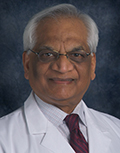 Prabodh Kumar Gupta, an emeritus professor in Penn Medicine’s department of Pathology and Laboratory Medicine, passed away on December 23, 2020. He was 83.
 Firooz Aflatouni, associate professor in the department of electrical and systems engineering, in collaboration with Farshid Ashtiani, a postdoctoral scholar in Dr. Aflatouni’s research group, won the Bell Labs Prize, awarded by Nokia Bell Labs, for their proposal for “Integrated Photonic-mmWave Deep Networks.”
 Gustavo D. Aguirre, professor of Medical Genetics and Ophthalmology at Penn Vet, is the recipient of the Sanford and Susan Greenberg End Blindness Outstanding Achievement Prize, which distinguishes scientists for their groundbreaking medical contributions to eradicate blindness. Dr. Aguirre was selected for his “uniquely valuable research having the greatest impact toward advancing restoration of vision in human patients.” He is among 13 scientists sharing the $3 million award and is the co-recipient of the Outstanding Achievement Prize with five other researchers, including the Perelman School of Medicine’s Jean Bennett and Albert Maguire and the University of Florida’s William Hauswirth. The recipients of the award were announced during the live-streamed End Blindness 2020 Ceremony on December 14, 2020.
 Kathleen Hall Jamieson, director of the Annenberg Public Policy Center and professor of communication at the University of Pennsylvania’s Annenberg School for Communication, was honored with the 2021 Franklin Founder Award during a virtual celebration of Benjamin Franklin’s 315th birthday.
 Melissa Sanchez, Donald T. Regan Professor of English, received recognition from the Modern Language Association (MLA) for her book Queer Faith: Reading Promiscuity and Race in the Secular Love Tradition. The book received an honorable mention for the Aldo and Jeanne Scaglione Prize for Comparative Literary Studies, given annually to an outstanding scholarly work that is written by a member of the association and that involves at least two literatures.
 Michele M. Volpe, chief executive officer of Penn Presbyterian Medical Center (PPMC), has been named the new chair of the Hospital and Healthsystem Association of Pennsylvania’s (HAP) Board of Directors. She began her term as chair on January 1, 2021.
 Daniel Wagner, UNESCO Chair in Learning and Literacy at Penn GSE, has been named an Honorary Fellow by the Comparative & International Education Society.



 While you do not need to attach a 1095-C to your tax return, the Affordable Care Act (ACA) requires that Penn send the 1095-C tax form to certain benefits-eligible faculty and staff members. This form includes information about the health insurance coverage offered to you by Penn and information for each of your family members enrolled under your Penn benefits plan.