Benjamin: First Baby Born as Part of Penn Medicine’s Uterus Transplantation Trial

The birth of Benjamin Thomas Gobrecht defied both expectation and imagination: His mother, 33-year-old Jennifer Gobrecht, was born without a uterus. Benjamin, who arrived in November 2019 at the Hospital of the University of Pennsylvania, grew inside a womb Ms. Gobrecht received as part of an organ transplant research trial over a year earlier. Benjamin is the first baby born as part of Penn Medicine’s ongoing Uterus Transplantation for Uterine Factor Infertility (UNTIL) trial, which launched in 2017. He is the second baby in the nation to be born following transplantation of a uterus from a deceased donor. The UNTIL trial is currently the only US uterus transplant trial that is actively enrolling patients.
“One of the hardest days of my life was when I was 17 years old and learned I would never be able to carry my own child. My husband and I have always wanted to grow our family, but we knew the limited options meant it might never happen,” said Jennifer Gobrecht, who lives just outside of Philadelphia with her husband, Drew. “And now here we are, in spite of everything, holding our beautiful baby boy. Benjamin is a perfect miracle. It’s all thanks to a truly incredible team of doctors and nurses and the selfless donor who made my dream of motherhood come true. When I signed up for this trial, I hoped it would help my husband and me start a family, but I also strongly believe in helping others. My hope is that through this research, others with similar struggles will have the same opportunity.”
Ms. Gobrecht was born with a congenital condition called Mayer-Rokitansky-Küster-Hauser (MRKH) syndrome, which means she has functional ovaries but does not have a fully formed uterus. MRKH affects approximately one out of every 4,500 females and makes it impossible for women to get pregnant or carry a child. It’s one example of uterine factor infertility (UFI), which is a previously irreversible form of female infertility that affects as many as five percent of reproductive-aged women worldwide. A person with UFI cannot carry a pregnancy either because she was born without a uterus, has had the organ surgically removed or has a uterus that does not function properly.
“For women with uterine factor infertility, uterus transplantation is potentially a new path to parenthood—outside of adoption and use of a gestational carrier—and it’s the only option which allows these women to carry and deliver their babies,” said Kathleen O’Neill, assistant professor of obstetrics and gynecology in Penn’s Perelman School of Medicine, and co-principal investigator of the UNTIL trial.
“While there are still many unknowns about uterus transplantation, we know now—as evidenced by Jen and baby Benjamin—that this is potentially a viable option for some women. Our collaboration with investigators at partnering institutions as well as with Jen and other brave patient pioneers in these clinical trials are helping us learn more about how to make uterus transplants safer, more effective and available to more women.”
Most of the other programs around the globe have focused on transplantation exclusively from living donors, and to date, there have been approximately 70 uterus transplants globally. However, Penn Medicine’s trial is one of a few to explore donation from both living or deceased donors—an approach which has the potential to expand the pool of organs available for donation and allows investigators the opportunity to directly compare outcomes from the different types of donors.
The Gobrechts welcomed their son via cesarean section, attended to by a team of more than 20 specialists in high-risk obstetrics, transplant surgery, fertility, gynecologic surgery, neonatology, pediatrics, urology, nursing and anesthesiology.
The couple’s journey began more than two years ago, with an extensive evaluation by the clinical trial team including specialists in clinical research, bioethics, social work, psychology, pathology, obstetrics and gynecology, transplant and infectious disease, among others, before Ms. Gobrecht was enrolled in the trial. The couple had already undergone in vitro fertilization (IVF) while exploring the option of a gestational carrier and had cryopreserved embryos available for transfer into Ms. Gobrecht’s new uterus following successful transplant surgery.
The uterus transplantation done as part of this clinical trial is a complex investigational procedure that involves both surgical and medical management. More than 35 health care providers and clinical investigators are involved in each trial participant’s care over the course of a five- to 10-year research period, which spans IVF, transplantation and birth, to long-term follow-up after delivery and after the surgical removal of the organ after delivery. In addition to women with UFI seeking the opportunity to participate in the clinical trial, more than 70 women have expressed interest in donating their uterus so women with UFI may experience childbearing as they did.
 “The Penn Transplant Institute has been innovating in the field of transplantation for decades, and the team’s diverse experience now enters into the field of uterus transplantation. While this milestone comes early on in our clinical trial, we remain optimistic about what’s to come. We hope to one day expand the benefits of transplantation to serve more patients, not only as a way to save lives, but to enhance, and even create them,” said Paige Porrett, assistant professor of transplant surgery, and co-principal investigator on the UNTIL trial. “In addition to providing families like the Gobrechts with a new way to expand their family, the research implications for this trial hold great promise. This clinical trial is an outstanding and unique research opportunity to learn more about how pregnancy and transplantation work, and we are investigating many important research questions in these arenas.”
The UNTIL trial thus hopes to address a wide array of important biologic questions that persist in organ transplantation, female reproductive biology and pregnancy. The trial’s design, for example, gives researchers the ability to study women throughout pregnancy, not only ensuring the safety of mother and baby throughout their participation in the trial, but also allowing researchers to uncover new information about how cells from different individuals interact and impact pregnancy and even alter the maternal and fetal immune system. Researchers note this effort may help fill many of the knowledge gaps that affect women’s health overall, as much of the knowledge gained by this trial may be applicable to all women, including those who do not undergo uterus transplantation.
The Penn Medicine team caring for Ms. Gobrecht worked closely with their partners at the Gift of Life Donor Program to perform the 10-hour uterus transplant procedure using a uterus from a deceased donor in 2018.
“Gift of Life Donor Program was pleased to coordinate the donation for the UNTIL Trial with our partners at Penn Medicine that resulted in the birth of baby Benjamin. We look forward to working with Penn Medicine on future uterine transplant trials to support the advancement of this innovative area of donation and medical transplantation,” said Richard D. Hasz, vice president of clinical services, Gift of Life Donor Program. “We extend our deep appreciation to the selfless donor and her family for their role in saving three lives through organ donation and helping to bring new life into this world through uterine donation. Congratulations to Penn’s talented medical team and to the Gobrecht family.”
“Our family is extremely proud to support transplantation that will enable more women to experience the joy of childbirth. My daughter was the best mother I ever knew; nothing was more important to her than her children. What a beautiful and fitting legacy for her to help give the gift of motherhood to another woman,” said the mother of the donor. “Our hearts and prayers go out to my daughter’s recipients and their families.”
Uterus Transplant Program: Now Enrolling Living Donors
The UNTIL trial is now enrolling living donors. A woman between the ages of 30 and 50 years who is in good health overall, has had children and has completed her child bearing is eligible to be a living uterus donor. For more information, please visit the Women’s Health Clinical Research Center at https://www.whcrc.upenn.edu/uterine-transplantation
Year of the Nurse and Midwife
The World Health Organization (WHO) has declared 2020 the Year of the Nurse and Midwife. Penn Nursing is joining in on the celebration. The school wants to help the public—in the Commonwealth of Pennsylvania and beyond—better understand the impact these professions have on health and health care.
“WHO has never dedicated a year to any profession before so that makes the next 12 months especially exciting,” said Penn Nursing Dean Antonia Villarruel. “As part of our celebration, Penn Nursing will be sharing stories about nurses and midwives, hosting events at Fagin Hall and around Philadelphia, touring local schools with a pop-up exhibit, collecting and posting artwork about nurses and midwives and more. We hope you will join us and our partners, including Penn Medicine, in this celebration that highlights the unique role nursing has in our world.”
For more information, a listing of upcoming events and to see how you can participate in elevating, celebrating and advocating throughout 2020, visit the School’s Year of the Nurse and Midwife website at www.2020nurseandmidwife.org
$2.6 Million Collaborative Grant: Philadelphia’s Media Ecosystem
With increasing public attention focused on threats to the integrity of the news and communication systems, it is vital that the public take stock of Philadelphia’s media ecosystem, assess its strengths and weaknesses and imagine how journalism can be reinvented for a stronger democracy.
To this end, the Media, Inequality and Change (MIC) Center—a joint project of the Annenberg School for Communication at the University of Pennsylvania and the School of Communication and Information at Rutgers University—along with Media Mobilizing Project and Free Press, have received a $2.6 million collaborative grant from Independence Public Media.
There are many practices and structures that shape a media ecosystem: decisions about what is newsworthy, how reporters build and prioritize relationships with community organizations, how stories are told and by whom, the ownership and control of newsrooms and the metrics outlets use to determine a story’s value, just to name a few.
With local newsroom numbers decimated and traditional advertising models continuing to fail, the MIC Center hopes to identify new models for media that enable communities to be engaged in shaping and lifting up narratives that better represent them and address important social problems.
The three-year collaborative project with Media Mobilizing Project and Free Press aims to address these issues by understanding how social change happens, the media’s role in creating obstacles and opportunities for structural reform and what innovative, community-centered media and media-making can and should look like in the Philadelphia region.
Led by co-directors Annenberg professor Victor Pickard, a Free Press board member, and Rutgers professor Todd Wolfson, a Media Mobilizing Project board member, the MIC Center will:
- provide a political economic analysis of Philadelphia’s media ecosystem;
- assess how the city’s media institutions develop influential narratives;
- seek to analyze and elevate community-driven narratives on inequality, violence, crime, safety and other important issues;
- help craft discursive strategies and practices that both Philadelphia newsrooms and communities can adopt and that can be replicated in other cities; and
- offer a forward-looking vision for how urban media can be reorganized and restructured in a moment of systemic failure.
The MIC Center and its partners aim to organize with both communities and newsrooms toward better serving local communication needs. Their hope is to create alternative models for how local news and information are produced. Moreover, they intend to collaborate and learn from researchers, practitioners and organizations engaged in similar work in other locations, both domestically and internationally.
Ultimately, this project’s goal—and one of the MIC Center’s guiding missions—is to outline a vision for remaking media in ways that reflect communities’ information needs, especially around vitally important social issues such as inequality and criminal justice.
Paul Cobb and Michael Kahana: Kahn Term Professors

 Paul M. Cobb, professor and chair of Near Eastern Languages and Civilizations, and Michael J. Kahana, professor of psychology, have been named Edmund J. and Louise W. Kahn Term Professors.
Dr. Cobb studies the historical connections between the Islamic world and the West, particularly during the Middle Ages. Specific areas of his expertise include Islamic interactions with Europe, travel and exploration in premodern Eurasia, historiography and biography and Muslim-Christian-Jewish relations. He is a recipent of Guggenheim, Fulbright and National Endowment for the Humanities fellowships. Dr. Cobb’s books include White Banners: Contention in ‘Abbasid Syria, 750-880; a translation of Usama ibn Munqidh’s The Book of Contemplation: Islam and the Crusades; and The Race for Paradise: An Islamic History of the Crusades. He is currently at work on a book that follows the adventures and travels of Johannes Schiltberger, a German teenager who was captured in 1396 in Hungary while on crusade against the Turks.
Research in Dr. Kahana’s Computational Memory Lab aims to understand the mechanisms of human memory search using a combination of computational, behavioral and electrophysiological methods. He received the 2018 Howard Crosby Warren Medal from the Society of Experimental Psychologists, psychology’s oldest and most prestigious award, “for his fundamental contributions to the formal modeling of retrieved context information in memory and his remarkable discoveries in the human neuroscience of memory.” He is also a recipient of the Troland Research Award from the National Academy of Sciences and the inaugural mid-career award from the Psychonomic Society. Dr. Kahana is author of Foundations of Human Memory and more than 175 peer reviewed publications.
The Edmund J. and Louise W. Kahn Endowed Term Chairs were established through a bequest by Edmund J. and Louise W. Kahn. Edmund Kahn was a 1925 Wharton graduate who had a highly successful career in the oil and natural gas industry. Louise Kahn, a graduate of Smith College, worked for Newsweek and owned an interior design firm. They supported many programs and projects at Penn, including Van Pelt Library, the Modern Languages Program in Gregory College House, and other initiatives in scholarship and the humanities.
Call for Innovation MOOC Proposals: March 16
The Online Learning Initiative (OLI) seeks proposals for Provost-funded Innovation MOOCs from Penn faculty interested in experimentation in online teaching and learning.
What is an Innovation MOOC?
OLI’s Innovation MOOCs are fully-funded, standalone courses that promote experimentation in online learning by incorporating new pedagogical strategies, new technologies or new approaches to course content. Proposals should address one or more of the following approaches:
- Promotes interdisciplinary collaboration
- Incorporates active learning, authentic assessment and/or novel course design
- Strives for high social impact, activating and engaging a community (or communities)
- Employs emerging technologies
OLI provides assistance throughout the proposal process, including proposal preparation, online course design support and course production. Innovation MOOCs are fully-funded by the Office of the Provost and do not require school cost-sharing for faculty and teaching assistant stipends.
OLI supports the production of two Innovation MOOCs each fiscal year. OLI’s Faculty Advisory Committee evaluates all the proposals and makes the final selection. If a proposal is selected, course design begins in early June 2020 with the expectation that the course will launch by May 2021.
In 2019, OLI’s Faculty Advisory Committee selected two inaugural Innovation MOOCs:
Do Good … Feel Good, lead instructor Femida Handy (SP2)
Reflections: Modern Mirrors of Medieval Life, lead instructors William Noel (Penn Libraries and SAS) and Dot Porter (Penn Libraries)
These MOOCs exemplify innovation by striving for high social impact, activating a community, promoting active learning and authentic assessment and promoting interdisciplinary collaboration.
Proposals are due no later than March 16, 2020. Please contact OLI at onlinelearning@upenn.edu to schedule a consultation to review the 2020 Innovation MOOC proposal form at least one month before the submission deadline. Only proposals that utilize this form can be considered.
Since 2012, the Online Learning Initiative (OLI) has supported the development of online learning across Penn. Provost-funded online projects, such as MOOCs, course series and microcredentials receive financial, design and production support for creating online learning experiences. The OLI team is always available to meet with faculty members and school online teams to discuss ideas, proposals and future projects. Email onlinelearning@upenn.edu if you would like more information or to schedule an individual consultation with the OLI team.
Vonage to Power Penn’s Campus Communications
Vonage, a global leader in business cloud communications, has partnered with the University of Pennsylvania’s Information Systems & Computing Department (ISC) to power communications for more than 14,000 faculty and staff. As a part of Penn’s “Next Generation” initiative, ISC selected Vonage’s fully integrated unified communications solution for an innovative approach to unifying communications across all departments on campus.
Following an RFP and proof of concept process, ISC chose Vonage as its cloud communications provider with an initial contract of five years and the anticipated rollout will commence in early 2020. Vonage’s unified communications solution will provide the University with the tools and services to improve communications at Penn and improve productivity among staff. With messaging and presence capabilities, a mobile and desktop app, as well as audio and video conferencing, Vonage’s solution will enhance the way users connect with each other, no matter where they are located.
The addition of Vonage’s unified communications capabilities will also help to reduce the time needed for maintenance and streamline everyday tasks with automation capabilities, such as making changes to the account and adding new users and workflows. As the University continues to grow, building on its nearly 300-year history, Vonage solutions offer the institution the ability to scale and integrate additional Vonage services, such as its cloud-based contact center solution and communications APIs to enhance interactions with external stakeholders via embedded and contextual communications.
“Vonage shares the University of Pennsylvania’s vision of a cloud first, next generation future,” said James Roth, vice president, Applications Group East for Vonage. “We are thrilled to partner with Penn on their digital transformation journey, providing them with the tools and innovative solutions they need to support and serve not only their faculty and staff but also their students and the greater academic community.”
Call for Presentations on Latin America and the Caribbean
Penn Global, in partnership with Penn in Latin America and the Caribbean (PLAC), will host the 5th Annual PLAC Symposium on Friday, March 27 at Perry World House. They aim to positively highlight Penn work in Latin America and the Caribbean (LAC) and to foster interdisciplinary dialogue among stakeholders across campus to inform Penn’s ongoing engagement in the region.
The main feature of the symposium will be blitz presentations and discussion of LAC-related research, education and practice at Penn. All members of the Penn community are invited to present LAC-related work at the symposium. Blitz presentations should last no more than five minutes and use no more than three PowerPoint slides. Presentations will be grouped into thematic panels to foster discussion and illuminate potential synergies across Penn. Those who would like to present should complete a brief form at https://tinyurl.com/yxysu6tf, which requires only a title and a 2-3 sentence description) by Monday, February 3. Applicants will be notified by late February if their presentation has been accepted for the symposium.
For more information contact Catherine Bartch, associate director of Latin American and Latino Studies, at lals@sas.upenn.edu or bartch@sas.upenn.edu

_4_15_97_(deceased)-resized_.jpg) Joel Flaks, emeritus professor of biochemistry and biophysics at the University of Pennsylvania, died November 27. He was 92.
Joel Flaks, emeritus professor of biochemistry and biophysics at the University of Pennsylvania, died November 27. He was 92.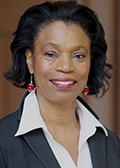 Henry R. Silverman Professor of Law and Professor of Philosophy Anita L. Allen has been awarded an honorary doctorate from the University of Tilburg in the Netherlands.
 Penn Law’s Cary Coglianese, Edward B. Shils Professor of Law and Professor of Political Science, and director of the Penn Program on Regulation, has been named one of the 50 lawyers, judges and law professors recently elected to the American Law Institute (ALI). He also serves as the faculty advisor to the Program on Regulation’s widely read daily publication, The Regulatory Review. The ALI is an independent organization that produces scholarly work to clarify, modernize and improve the law. The ALI publishes model and uniform codes, principles of law and Restatements of Law that are used extensively by courts, legislatures and legal educators.
 Penn Law adjunct professor of law Sarah Hammer (L’11, WG’99) was also elected to the ALI. Ms. Hammer is the managing director of the Stevens Center for Innovation in Finance and senior director of the Harris Alternative Investments Program at the Wharton School.
 Michael DiBerardinis, professor of practice at the Fels Institute of Government, has been awarded a 2019 Civic Champion Award by CORA Services, a Philadelphia non-profit that aids children, youth and families experiencing emotional, academic and social challenges.
 Charles Kane and Eugene Mele, both Christopher H. Browne Distinguished Professors of Physics from Penn’s School of Arts and Sciences, were among the three scientists to receive the annual John Scott Award for 2019. First bestowed in 1822, the prize was endowed by John Scott, a chemist and pharmacist from Scotland, in honor of Benjamin Franklin. Awardees receive a medal and a $10,000 cash prize.
 Neil Tomson, assistant professor of chemistry in Penn’s School of Arts and Sciences, has been awarded a National Science Foundation Faculty Early Career Development (CAREER) Program Award. The Faculty Early Career Development (CAREER) Program is a Foundation-wide activity that offers the National Science Foundation’s most prestigious awards in support of early-career faculty who have the potential to serve as academic role models in research and education and to lead advances in the mission of their department or organization. Activities pursued by early-career faculty should build a firm foundation for a lifetime of leadership in integrating education and research.
  Penn’s Fisher Fine Arts Library made
  Penn Dental Medicine’s Morton Amsterdam Dean Mark Wolff has been inducted as a fellow of The College of Physicians of Philadelphia, alongside 23 other prominent leaders in medicine, academia and public health advocacy. Dr. Wolff was the only dentist among the new inductees, who were inaugurated at a ceremony held November 15 at the College. Highly respected in the field of cariology and a lifelong advocate and dental provider for individuals with physical, intellectual and developmental disabilities, Dr. Wolff has led Penn Dental Medicine as its 12th Dean since July 2018. Dr. Wolff holds both a DDS (1981) and PhD (1997) from the State University of New York (SUNY) at Stony Brook.
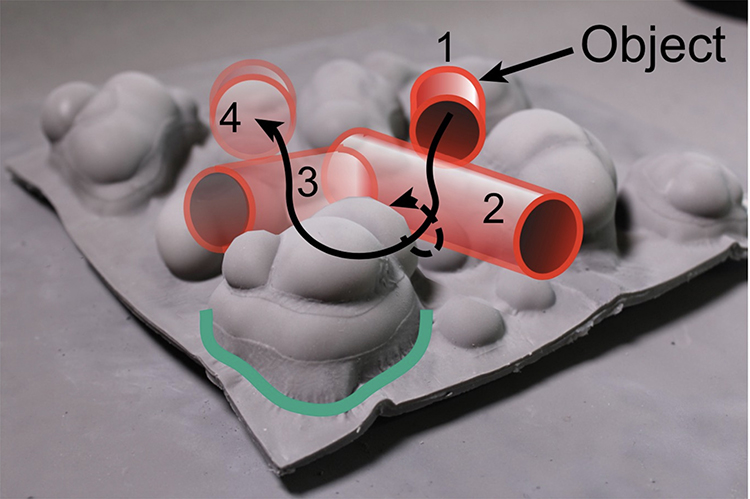 There have been huge advances in the world of “hard” robotics—robots that are made from hard plastics and metals—which are excellent for industrial jobs because they are precise, strong and well equipped for strenuous labor. James Pikul, assistant professor in mechanical engineering and applied mechanics at Penn’s School of Engineering, studies soft robotics, an emerging field that seeks to build robots that can safely handle more delicate and fragile objects. These robots must incorporate materials that deform under pressure, reducing the chances of crushing, pinching or otherwise hurting the equally soft things they interact with, such as human bodies.
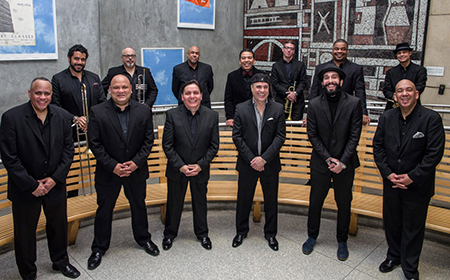 Showcasing Annenberg Center’s unique relationship with the University of Pennsylvania, INSIGHTS events feature Penn faculty, Penn student performing arts groups, area experts and of course, the artists themselves! Occurring pre- and post-show, INSIGHTS events explore and illuminate the work on stage and are always free for ticket holders.
 On January 25 at Annenberg Center’s Harold Prince Theatre, The Daedalus Quartet, Penn’s quartet-in-residence, explores migration through music, illustrating how centuries of cultural cross-pollination has enriched our artistic and spiritual life. Music truly has no borders, unifying through the universality of the human experience. In this performance, the quartet will perform works that exhibit the richness and complexity of this cultural convergence, including a world premiere of traditional African American spirituals by Nansi Carroll.