$1 Million Sanford Lorraine Cross Award to Jean Bennett and Katherine High
 Jean Bennett, the F.M. Kirby Professor of Ophthalmology, and Katherine A. High, emeritus professor of pediatrics, both in the Perelman School of Medicine at the University of Pennsylvania, are the recipients of the inaugural $1 million Sanford Lorraine Cross Award for their work with the RPE65 mutation that has reversed an inherited form of blindness. Drs. Bennett and High pioneered the gene therapy for this mutation, took it to clinical trials and then received the first FDA approval of a gene therapy for a genetic disease.
The award, sponsored by Sanford Health, is intended to reward contributions to medicine, science and innovation. Four finalists competed for the prize; Drs. Bennett and High accepted the award on December 4 at Sanford Health’s headquarters in Sioux Falls, South Dakota.
Dr. High and Dr. Bennett knew that gene therapy had the potential to change this form of blindness. “The idea is to harness what we know about the defects, and then intervene,” said Dr. Bennett, who is also a scientific co-founder of Spark Therapeutics, a fully integrated, commercial gene therapy company working to accelerate the time line for bringing new gene therapies to market. Dr. High is the president and head of research and development at Spark.
The project began with studying dogs who had the same gene mutation that causes blindness in humans—the RPE65 mutation. Dr. Bennett was searching for funding when Dr. High approached her, asking if she’d like to run a human clinical trial. Gene therapy was still in its infancy, though, with roadblocks from funding to regulation.
“But I was convinced we weren’t seeing any problems that couldn’t eventually be solved,” said Dr. High. She then co-founded Spark. They and their team received the first FDA approval of a gene therapy for a genetic disease. They credit the work of their team and their singular pursuit of a solution.
“Identify the best people, then entice them and motivate them to work on this problem so you can pull together and get to the goal,” Dr. High said. “Lighting someone’s future is still what drives their vision.
“Patients are the reason we do this work,” Dr. High said. “They are the North Star of what we do.”
At the awards ceremony, Dr. High noted, “There were many days we were discouraged, so it’s so wonderful for an award to be given for people who made it across the finish line.”
“Gene therapy quickly stood out as the field of candidates was narrowed,” said David Pearce, president of research at Sanford Health, who noted that the four finalists for the award helped lay the groundwork for much of the innovative work that is being explored now.
The other finalists included another Perelman faculty member, James M. Wilson, director of the Gene Therapy Program, the Rose H. Weiss Orphan Disease Center Director’s Professor, and professor of medicine and pediatrics. His work has paved the way for many groups to safely move promising gene therapies for inherited and acquired diseases through the translational pipeline internationally. In 2008, Dr. Wilson and the University of Pennsylvania cofounded REGENXBIO, Inc., a clinical-stage biotech company designing gene therapy products.
New and Expanded Penn Medicine Radnor’s Mixed-Use Campus
Penn Medicine broke ground on a state-of-the-art, four-story, 250,000-square-foot multispecialty outpatient facility in Radnor, Pennsylvania, that will expand options for patients to receive advanced care close to home.
Set to open in spring 2020, the site will be home to the new Penn Medicine Radnor, replacing its current facility in the Township which has operated since 1997 on King of Prussia Road. The new location will provide comprehensive cancer care, including newly available radiation oncology services and chemotherapy provided by the Abramson Cancer Center, as well as primary care, heart and vascular, orthopaedic and neuroscience care. Additional services will include same-day surgery, with six operating rooms and four endoscopy suites, along with full radiology and laboratory services. Patients will also have access to cutting-edge Penn Medicine clinical trials, expanding access to more patients without having to travel into Philadelphia.
Officials also announced that Brandywine Realty Trust has entered into an agreement with UPHS to purchase two premier sites in Radnor where the new outpatient facility will take shape (145 King of Prussia Road and 250 King of Prussia Road) and serve as the designated developer and manager. Brandywine will transform the new buildings into high-quality facilities—including office space and a hotel—and will serve as the development manager of the medical office building, allowing Penn to expand its network and offer even more locations to deliver the level of care for which the health system is renowned.
The new LEED Silver certified building will feature natural light throughout, and a building design that wraps around a courtyard will bring nature views to patients, families and staff inside.
“More than half of our activity comes from outpatient care today, and we’re committed to investing in the very best facilities that can offer our patients more options to get the best possible care close to their homes,” said Ralph W. Muller, CEO of the University of Pennsylvania Health System. “Our mission is to offer Penn Medicine care to patients where it’s most convenient to them and their families, so we’re making more cancer, women’s health and cardiac services available to patients at Radnor to ensure they can receive a more comprehensive suite of care without having to travel downtown.”
The western section of 145 King of Prussia Road will introduce 150,000 gross square feet (GSF) of office space and a hotel component comprising 75,000 GSF, with a projected 100 rooms—which Penn Medicine officials say will help make the new facility a destination for patients traveling for specialized outpatient services from outside the area. The eastern portion of 145 King of Prussia Road will serve as a medical office parcel.
“The University of Pennsylvania has been a longtime valued partner of ours, and together we have created transformative projects that have helped to shape the city of Philadelphia that we know today, most notably FMC Tower at Cira Centre South,” said Jerry Sweeney, president and CEO of Brandywine Realty Trust. “As Penn Medicine continues to expand its footprint, we are proud to work alongside them to bring new, high-quality offerings to their patients and help fuel the great work that they continue to deliver.”
“We are excited for our partnership with Brandywine, which will develop this area of Radnor into a state-of-the-art mixed-use campus that will build on Penn Medicine’s long-standing support of health and wellness for residents of the Township and beyond,” said Kevin B. Mahoney, executive vice president and chief administrative officer for the University of Pennsylvania Health System.
The new Radnor facility, which will be double the square footage of the current Penn Medicine Radnor building, is the latest among a growing list of Penn Medicine multispecialty ambulatory centers. Other sites include the Perelman Center for Advanced Medicine, Penn Medicine University City and Washington Square in Philadelphia, as well as facilities in Bucks County, Valley Forge, southern Chester County (West Grove) and, in southern New Jersey, Cherry Hill and Woodbury Heights.
Scott Douglass: Vice Dean of Finance and Administration at Wharton
 Scott Douglass has joined the Wharton School as vice dean of finance and administration. Mr. Douglass will lead Wharton operations and finance, including budgeting, facilities and operations, human resources, Wharton Computing and Wharton Research Data Services (WRDS).
Mr. Douglass will work collaboratively across the University of Pennsylvania representing Wharton with executive and financial leadership. He previously served in this role at Wharton from 1992 to 2004.
“I am delighted to welcome Scott back to Wharton and the Penn community. His extensive experience from decades in higher education will benefit the entire School,” said Dean Geoff Garrett.
Mr. Douglass most recently served as vice chancellor of finance and administration at North Carolina State University, where he was responsible for budget and resource management, campus enterprises, environmental health and public safety, facilities, finance, human resources and real estate and development. Prior to NC State, Mr. Douglass was the University of Delaware’s executive vice president and chief financial officer, managing a $1 billion operating budget and overseeing a $1.7 billion cash and endowment portfolio.
During his earlier tenure at Wharton, Mr. Douglass led the programming, design and construction of Jon M. Huntsman Hall, the commercialization of WRDS and the team that developed the business case for Wharton San Francisco. He then served as vice president of finance and treasurer for the University of Pennsylvania, where he spent four years as the University’s senior financial officer and was a member of the Penn Medicine Board (Almanac July 17, 2007). Earlier in his career, Mr. Douglass was the state of Delaware’s budget director and secretary of finance.
Mr. Douglass earned bachelor’s and master’s degrees in political science from the University of Delaware and completed graduate studies at Syracuse University.
Karen Glanz: Abramson Cancer Center Appointment
 Karen Glanz has been named associate director for community engaged research and leader for the cancer control program at Penn’s Abramson Cancer Center effective the beginning of December.
Dr. Glanz is a Penn Integrates Knowledge Professor, the George A. Weiss University Professor in the Perelman School of Medicine and the School of Nursing, and director of the University of Pennsylvania Prevention Research Center. She is a behavioral scientist with public health expertise. Her basic and translational research in community and health-care settings focuses on obesity, nutrition and the built environment; reduction of health disparities; and novel health communication technologies.
Dr. Glanz has made important and sustained contributions to cancer prevention and control. With more than 480 publications and designation as a Most Highly-Cited Author over the past 20 years (top 0.5% of authors in the field) by www.ISIHighlyCited.com, her scholarship has been consistently interdisciplinary and highly influential in advancing the science of understanding, predicting, and changing health-related behavior. Dr. Glanz is an elected member of the National Academy of Medicine, served on the Community Preventive Services Task Force for 10 years, and is a current member of the National Heart Lung and Blood Institute Advisory Council. She has been a member of the Cancer Control Program at the Abramson Cancer Center since 2009.
David Brainard: Associate Dean for the Natural Sciences at SAS
 David Brainard, RRL Professor of Psychology, has been appointed associate dean for the natural sciences in the School of Arts and Sciences, effective January 1, 2019. He will oversee the School’s natural sciences, including the departments of biology, chemistry, earth and environmental science, linguistics, mathematics, physics and astronomy, and psychology, as well as the School’s research centers.
Dr. Brainard is an eminent cognitive neuroscientist whose research focuses on human vision, visual neuroscience and computational modeling of visual processing. He is a Fellow of the Optical Society and the Association for Psychological Science. In 2013, he received the School’s highest teaching honor, the Ira H. Abrams Memorial Award. His Penn affiliations include the graduate groups in neuroscience and bioengineering and the undergraduate cognitive science and visual studies programs.
“David brings to this important role a distinguished background as both a scholar and an academic leader,” said Steven J. Fluharty, Dean and Thomas S. Gates, Jr. Professor of Psychology, Pharmacology and Neuroscience.
Dr. Brainard has served as chair of the department of psychology and director of the Institute for Research in Cognitive Science. He is a former chair of the School of Arts and Sciences Personnel Committee and was a member of the 2008 faculty task force that recommended changes to the committee’s structure. Dr. Brainard is currently director of Penn’s Vision Research Center, co-director of the Penn Computational Neuroscience Initiative and a member of the Executive Committee of MindCORE, an interdisciplinary effort to understand human intelligence and behavior.
Dr. Brainard will succeed Larry Gladney, Edmund J. and Louise W. Kahn Professor for Faculty Excellence in the Department of Physics and Astronomy, who will become the inaugural Dean of Diversity and Faculty Development for the Faculty of Arts and Sciences at Yale University in January.
GSE’s Hub for Equity, Anti-Oppression, Research and Development
Penn GSE launched a new school-wide center, called HEARD: The Hub for Equity, Anti-Oppression, Research and Development. Dean Pam Grossman said that HEARD’s goal is “to draw together members of our community committed to equity and anti-oppression scholarship, and to provide opportunities for continuing learning.”
Issues of race and diversity have long been important to Penn GSE, and research around these topics cuts across the school with multiple faculty members, staff and students tackling issues of racial literacy, systemic racism, gender equity and linguistic diversity from different disciplinary perspectives. Professors Jessie Harper and Manuel S. González Canché have agreed to serve as inaugural directors.
“HEARD is the result of over a year of discussion and committee work within the Penn GSE community in response to students’ voices,” said Dean Grossman. “I particularly want to thank the Committee on Race, Equity and Inclusion for supporting the creation of this exciting new opportunity at Penn GSE.”
The Center includes the study of anti-oppression more broadly and welcomes Penn GSE students, faculty and staff who are interested in various anti-oppression topics. To provide opportunities for interaction around these topics, HEARD is launching reading groups, grant writing seminars, quantitative and qualitative certificate programs and extra-discussion/interaction time with Visiting Faculty Scholars of Color.
A dedicated space for the Center has been opened in room B51 in the Solomon Building, where community members are invited to use the resource library (in development) or computer. interested staff, faculty and students can follow the center on Twitter @HEARDatPennGSE or email at HEARDUPenn@upenn.edu
Providing Students with ISBNs and Price Information for Books
The Higher Education Opportunity Act requires universities to make available to students, for each course, the International Standard Book Numbers (ISBNs) and price information for required/recommended books and supplemental materials.
To comply with this requirement, the University of Pennsylvania has worked closely with Barnes & Noble, managers of the Penn Bookstore, to maintain a simple and cost-effective process to provide ISBNs to our students. Through the Bookstore’s online system, students will have access to a complete list of materials for all their courses, along with the ISBNs for each listed text.
As in the past, textbook information can be provided to other vendors, and students are in no way required to purchase their books at the Penn Bookstore.
Faculty are key to the success of the University’s efforts to act in accordance with this regulation. To that end, the efforts by Penn faculty members to work with the Bookstore to provide this important information for our students is both critical and appreciated.
—Wendell Pritchett, Provost
—Beth Winkelstein, Vice Provost for Education
Call for College House Fellows: January 28
The Offices of the Provost and of College Houses and Academic Services invite applications for service as a College House Fellow. This is a residentially-based position that carries a two-year term.
Faculty applicants from all 12 schools within the University are welcome to apply. The most important qualification is an enthusiastic interest in mentoring and engaging undergraduate students within the residential setting. Members of the University’s faculty and full-time administrative staff in academic or student affairs who will be in their positions for at least two years are welcome to apply.
College House Fellows play a key role in connecting the Houses to the larger academic community at Penn. Fellows are responsible for working with the faculty directors to develop each College House as an educational resource that encourages intellectual inquiry, promotes academic programs in residence, fosters faculty and student interaction and builds strong, supportive House communities. Specific responsibilities will differ from House to House, but the general time commitment is approximately 10 hours per week.
Although there are 25 Fellow positions in the College House system, the number of openings rarely exceeds six. For these highly-sought-after positions, the selection process can be quite competitive. Applicants are reviewed by the undergraduate Deans, the Office of College Houses and the individual House community members, including the faculty director, House Dean and student residents.
Information about each College House, the Fellow positions and application process may be found at www.collegehouses.upenn.edu Please explore the “join us” section of the website for position information. If you have any questions please contact Marty Redman, executive director of College Houses and Academic Services, at mredman@upenn.edu The application deadline is January 28, 2019.

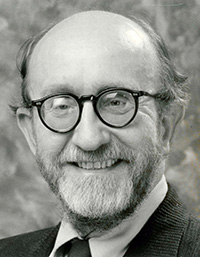 William R. (“Bill”) Brennen, emeritus associate professor of chemistry, died November 9. He was 83.
 M. Grace Calhoun, director of athletics and recreation at the University of Pennsylvania, has been named the chair of the NCAA Division I Council Strategic Vision and Planning Committee. Ms. Calhoun has served as the vice chair since her appointment to the Division I Council in July 2017 (
 John Crocker, professor of chemical and biomolecular engineering in the School of Engineering and Applied Science at the University of Pennsylvania, has been named a fellow of the American Physical Society. Dr. Crocker was recognized “for contributions to the microrheology of soft matter and cells and to DNA-directed colloidal self-assembly.”
 Zahra Fakhraai, associate professor of chemistry and graduate chair, has been awarded the 2019 John H. Dillon Medal. The medal, given annually, recognizes outstanding research accomplishments by young polymer physicists who have demonstrated exceptional research promise early in their careers.
 Penn President Amy Gutmann has received two notable awards recently. The Chamber of Commerce for Greater Philadelphia announced that she is the 2018 recipient of the William Penn Award, the highest honor bestowed upon a business or civic leader in Greater Philadelphia. The award, which has been given annually since 1949, recognizes an individual for their outstanding contributions toward the betterment of the region, professional accomplishments, and commitment to charity as well as to the community. President Gutmann will be honored Friday, April 26, 2019, at a gala hosted at The Bellevue Hotel. The Chamber noted that since she began in her role as president in 2004, she has increased access to higher education, advanced interdisciplinary collaborations and demonstrated the transformative impact of universities, locally, nationally and globally.
 Yasmin B. Kafai, the Lori and Michael Milken President’s Distinguished Professor and chair of the teaching, learning and leadership division in Penn’s School of Graduate Education, has received a $97,000 grant through Google’s Computer Science Education Research Awards. The grant will support the MADE (Music Art Design with Etextiles) program, which will introduce students in Career and Technical Education courses to more advanced computing concepts through electronic textile designs.
 Marsha Lester, the Edmund J. Kahn Distinguished Professor in Chemistry in the School of Arts and Sciences at the University of Pennsylvania, has received the American Physical Society Herbert P. Broida Prize in recognition of her outstanding contribution to the field of chemical physics.
 Two faculty members from the University of Pennsylvania have been named fellows of the American Association for the Advancement of Science (AAAS). Hyun (Michel) Koo, a professor in the department of orthodontics and divisions of pediatric dentistry and community oral health in Penn Dental Medicine, and Joshua Plotkin, a biology professor in the School of Arts and Sciences, are among a group of 416 honorees this year.
 Dipti Pitta, an assistant professor in ruminant nutrition at the School of Veterinary Medicine New Bolton Center, has received a USDA National Institute of Food and Agriculture grant of $500,000 for her research on the rumen, the large part of the cow’s first digestive chamber, or reticulorumen.
 The Mid-Atlantic chapter of the Engineering News-Record recently gave Hill College House its Award of Merit for Renovation/Restoration. The historic building, designed by eminent modern architect Eero Saarinen in 1958, underwent an $80 million renovation in 2016, which included a remodel of the building’s dining hall, installation of a new HVAC system and preservation of historic elements (
 SnackGarden, a serving plate designed by Integrated Product Design (IPD) students at Penn to encourage school children to try healthy foods, has won a 2018 Design Value Award from the Design Management Institute (DMI). The product is the result of a collaboration between the Agatston Urban Nutrition Initiative and the IPD program. DMI, a Boston-based collective of design and innovation leaders, cited SnackGarden as “an excellent example of design-led change in the community, involving collaboration on complex challenges with multiple stakeholders in a very crowded public policy and service delivery space.”
-Rachael_Balascak-web_compress.jpg)




 On December 5, hundreds of guests attended the annual State of University City event at World Cafe Live. This year, the event focused on how University City is setting the pace for the future of work for the region. UCD Board Chair Craig Carnaroli and UCD President Matt Bergheiser spoke about University City’s role in the future of employment in the region and how inclusion and opportunity are as critical as innovation and development. UCD issued its annual State of University City report. Below are excerpts. For the full report, visit