Danielle Bassett: Top Prize in Complexity Science

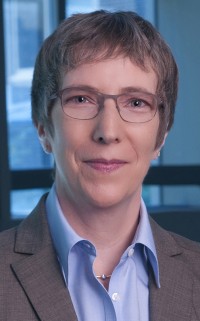
Danielle S. Bassett, Eduardo D. Glandt Faculty Fellow and associate professor in the University of Pennsylvania’s School of Engineering and Applied Science, is the recipient of the 2017 Lagrange-CRT Foundation Prize. The prize, given by the Institute for Scientific Interchange Foundation in Turin, Italy, was created to encourage and honor researchers working in the field of complex systems.
Complex systems feature many interconnected parts whose individual behavior influences the outcomes of the whole. Examples include social media networks, ecological webs, stock markets, and in Dr. Bassett’s case, the brain. Her research maps and analyzes the networks of neurons that enable all manners of cognitive abilities, as well as how those networks evolve during development or malfunction in disease.
The prize came with an award of €50,000, or roughly $60,000. It was presented to Dr. Bassett at a ceremony in Turin last month. Dr. Bassett is the first woman to be the sole recipient of the prize since its inception in 2008. Lada Adamic won it alongside Xavier Gabaix in 2012.
“Dani Bassett epitomizes what it means to be an engineer in the 21st century,” said Vijay Kumar, Nemirovsky Family Dean of Penn Engineering. “Her innovative work combines knowledge from disparate fields and transforms it, giving us a new window into longstanding problems in neuroscience as well as potential solutions to them. This prize puts Bassett in elite company among pioneers of new fields of research, and I’m proud that she calls Penn Engineering home.”
Dr. Bassett, who has appointments in SEAS’s departments of bioengineering and electrical and systems engineering, is a leading figure in the nascent field of network neuroscience. The highly interdisciplinary field draws from network science — itself a combination of physics, mathematics, computer science and engineering — and the biological and psychological principles involved in understanding the brain.
Using a technique known as quantitative a2isotropy, diffusion MRI scans of the brain can produce these “wiring diagrams,” which depict the strength of structural fibers connecting pairs of brain regions.
As a network neuroscientist, Dr. Bassett searches for activation patterns in the brain’s hundreds of thousands of neurons, correlating pairs and sequences of neural firings to various traits and abilities. Her research provides a deeper understanding of how the brain’s physical organization, the networks of connections between regions and individual neurons, can influence cognitive functions like learning, multitasking and even creativity.
Observing the reorganization of those networks as children become adults can help explain how we develop “executive function,” and potentially aid people with deficits in self-control. Changes in activation patterns that precede an epileptic seizure can likewise predict which parts of the brain will be affected; future implants may even be able to quell such seizures at the first sign of that abnormal activity. More broadly, a network-science lens into the brain may allow other engineering principles, such as control theory, to be applied, paving the way for neurological or psychiatric treatments with fewer side effects.
Dr. Bassett has also received a MacArthur “Genius” Fellowship, a Sloan Fellowship, an NSF CAREER Award, and was named one of the Popular Science “Brilliant 10” in 2016 for her work in this field.
Mark Goulian: Charles and William L. Day Distinguished Professor in the Natural Sciences

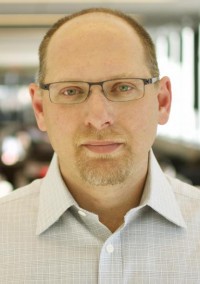
Mark Goulian, professor of biology and physics & astronomy, has been appointed Charles and William L. Day Distinguished Professor in the Natural Sciences. Dr. Goulian is a highly influential scholar of microbiology. His research, which focuses primarily on Escherichia coli (E. coli), explores the fundamental mechanisms of signal transduction and gene expression in bacteria. His work combines traditional approaches from bacterial physiology and genetics with single-cell studies and quantitative modeling. Dr. Goulian has served as chair of the Energy Cluster Search, the Penn Arts and Sciences Personnel Committee, and the department of biology’s Vision Committee, charged with strategic planning.
The Charles and William L. Day Distinguished Professorship was created in 1973 with funds from the estate of Charles Day; a gift from William L. Day in honor of his father, Charles; and memorial gifts in honor of William L. Day. William L. Day received Penn’s Alumni Award of Merit in 1967 and served as chairman of Penn’s Board of Trustees from 1968 until his death in 1973.
Paul Saint-Amour: Walter H. and Leonore C. Annenberg Professor in the Humanities
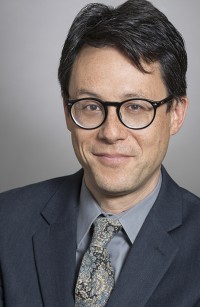
Paul Saint-Amour, professor of English, has been appointed Walter H. and Leonore C. Annenberg Professor in the Humanities. A leading scholar of Victorian and modernist literature, Dr. Saint-Amour has been a fellow at the Stanford Humanities Center, the Center for the Humanities at Cornell, and the National Humanities Center. His book The Copywrights: Intellectual Property and the Literary Imagination won the Modern Literature Association’s Prize for a First Book, and his most recent book, Tense Future: Modernism, Total War, Encyclopedic Form, won the Modernist Studies Association Book Prize and the MLA’s first annual Matei Calinescu Prize. His articles have appeared in journals such as Critical Inquiry, Diacritics, Modernism/modernity, PMLA and Representations.
Dr. Saint-Amour has served as president of the Modernist Studies Association. At Penn, he has served as Graduate Director of English and as a member of the Committee on Academic and Related Affairs, the Critical Writing Committee, and the University Scholars Council.
The late Ambassador Walter H. Annenberg received Penn’s Alumni Award of Merit in 1991. He and the late Honorable Leonore Annenberg were both emeritus trustees of the University. The Annenbergs endowed many chairs in Penn Arts and Sciences and made countless generous contributions to the University. They also founded the Annenberg School for Communication at the University of Pennsylvania in 1958.
Unpacking the Forces that Drive Health Disparities: November 29
Four Penn Integrates Knowledge (PIK) Professors will discuss health disparities through an interdisciplinary lens. While these differences are sometimes attributed to variations in biology between groups, the reality is more complicated.
On Wednesday, November 29, from 4 to 5:30 p.m. in the Jordan Medical Education Center Law Auditorium, three PIK Professors, Karen Glanz (PSOM, Nursing), Dorothy Roberts (Law, SAS) and Sarah Tishkoff (PSOM, SAS), will participate in a panel discussion—moderated by a fourth PIK Professor, Ezekiel Emanuel (PSOM, Wharton)—to sift through the biological, social and even legal and regulatory forces that may either be supporting or working to dismantle these disparities. Provost Wendell Pritchett will offer introductory remarks, and each of the three speakers will give a brief talk before the panel is opened up for audience interaction.
“I think this event will be of interest to anybody who uses health care, who is a health care provider or might be one someday, anyone in public policy or who is affected by public policy. Really, this is aimed at a very general audience as these issues affect everyone. There is a richness that emerges from looking at major public policy and social issues through the lens of multiple disciplines,” Dr. Glanz said.
The discussion, Health Disparities: Integrating Knowledge from Genomics, Social Sciences and the Law, will be the second annual PIK Seminar organized and sponsored by the PIK Professors, a group of 22 faculty members whose expertise crosses disciplines and who have appointments in multiple schools at the University. Last year’s PIK Seminar, PIK-ing on the Brain, dealt with the subject of neuroscience and featured PIK Professors whose areas of focus ranged from mathematics, to ethics, to epigenetics, to brain science.
Register for the seminar at http://tinyurl.com/y9sbl2ww
Josiah McElheny: Keith L. and Katherine S. Sachs Visiting Professor

Internationally acclaimed artist Josiah McElheny has been appointed Keith L. and Katherine S. Sachs Visiting Professor in the department of fine arts at Penn’s School of Design for the 2017-2018 academic year.
Through sculpture, writing, performance, and film, Mr. McElheny investigates the history of twentieth-century modernism in hopes of expanding on the dominant historical narratives of art, aesthetics, design, and architecture, and the criticality of our relationship to them. Recognized for his conceptually rigorous approach, and a physical mastery of materials such as glass, Mr. McElheny explores vastly-ranging topics from astronomical cosmology and the infinite to under-recognized artists or oeuvres, including the visionary abstraction of Hilma af Klint, Blinky Palermo’s wall paintings, and Robert Smithson’s crystalline sculptures.
At PennDesign, Mr. McElheny will be engaged with students pursuing their MFA through studio visits and reviews throughout the year, and teach a course, Imaginary Modernisms. The course will deal with the possibilities available to any artist today to participate in the constant rewriting and redefining of art history, culminating in a spring lecture at Rice University and related publication from the University of Chicago Press. Mr. McElheny will also give a public lecture at the ICA in the spring.
Mr. McElheny is a New York-based sculptor, performance artist, writer and filmmaker best known for his use of glass with other materials. He has exhibited widely including two major survey exhibitions, Towards a Light Club at the Wexner Center for the Arts, Columbus, Ohio (2013), and Some Pictures of the Infinite at the Institute for Contemporary Art in Boston, Massachusetts (2012), as well as exhibitions at The Museo Nacional Centro de Arte Reina Sofía, Madrid (2009), Henry Art Gallery, Seattle (2008), Moderna Museet, Stockholm (2007), Madison Square Park, New York (2017), and MoMA, New York (2007).
He has written for such publications as Artforum, Cabinet, and Bomb Magazine. His book projects include: The Light Club published by the University of Chicago Press in 2010; Interiors, a reader co-edited by Johanna Burton and Lynne Cooke, published by CCS Bard and Sternberg Press in 2012; and Glass! Love!! Perpetual Motion: A Paul Scheerbart Reader, co-edited with Christine Burgin and published by Christine Burgin and the University of Chicago, 2014. In 2006 he was the recipient of a MacArthur Foundation Fellowship. He was the 2013 Teiger Mentor in the Arts at Cornell, a senior critic in sculpture at Yale and continues as a mentor at Columbia.
Wharton Global Family Alliance: Partnering with Northern Trust
The Wharton Global Family Alliance (Wharton GFA), a world-leading forum for engagement between major global families with substantial resources and preeminent Wharton faculty, is pleased to announce a unique collaboration with Northern Trust’s Global Family and Private Investment Offices Group.
As the Wharton GFA Global Industry Partner for Financial Services, Northern Trust will support Wharton research and programs focused on multi-generational, multi-branch families and their businesses. Northern Trust will provide financial support to enable new research that will foster the longevity, harmony, and prosperity of families and their businesses. Wharton GFA will widen its dissemination of research to those who have a vital stake in these issues. Key topics relevant to family offices include wealth management and transfer, philanthropy, governance, technology, communications, operations, and education.
“This exciting new collaboration with Northern Trust supports Wharton’s distinctive commitment to family business on a truly global level,” said Geoffrey Garrett, Dean and Reliance Professor of Management and Private Enterprise. “Family firms make a crucial impact on the worldwide economy, and we are thrilled to work together with Northern Trust to the benefit of global families and society.
“By collaborating with the Wharton GFA, Northern Trust will be able to provide our clients with the insights of leading global academics,” said David W. Fox Jr., president of Northern Trust Global Family and Private Investment Offices group. “We look forward to combining our shared focus on meeting the unique and complex needs of ultra-high net worth families and the family offices that serve them.”
Steven L. Fradkin, president of Northern Trust’s Wealth Management business added, “Wharton is one of the preeminent academic institutions in the worldwide business community. This relationship enhances our total Northern Trust client experience by providing our clients, across our overall Wealth Management practice, with access to industry leading research across multiple disciplines.”
“Northern Trust brings expertise and a unique perspective to the Wharton Global Family Alliance,” said Raphael (Raffi) Amit, Wharton’s Marie and Joseph Melone Professor and Professor of Management, who leads the Wharton GFA. “Together, we will enhance the marketplace advantage and the social wealth creation contributions of global families through thought leadership, knowledge transfer, and the sharing of ideas.”


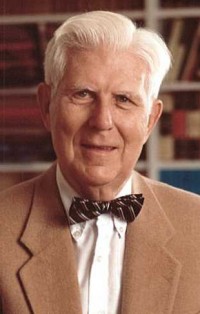 Aaron Beck, emeritus professor in the department of psychiatry at the Perelman School of Medicine at the University of Pennsylvania and the director of the Aaron T. Beck Psychopathology Research Center was named fourth in a list of the “25 Most Influential Physicians in the Past Century” by Medscape.
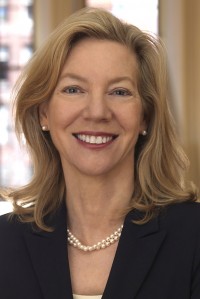 University of Pennsylvania President Amy Gutmann took first place in the 2017 Power 100 list of the region’s most influential people by Philadelphia Business Journal. The Journal noted that Dr. Gutmann is set to become the longest-serving president ever at Penn.
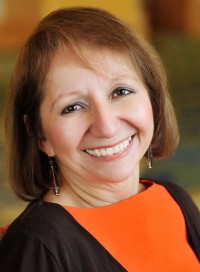
_Barbara.jpg)