New Penn Program: Supporting Interdisciplinary Research on Sex and Gender Differences
 Researchers at the University of Pennsylvania have received a $1.9 million award from the Office of Research on Women’s Health at the National Institutes of Health to establish the Building Interdisciplinary Research Careers in Women’s Health (BIRCWH) program at Penn.
BIRCWH will provide salary, research support and mentorship for two junior faculty researchers interested in pursuing research involving women’s health and sex differences.
The program’s two principal investigators are C. Neill Epperson, director of the Penn Center for Women’s Behavioral Wellness and a professor of psychiatry and obstetrics & gynecology in Penn’s Perelman School of Medicine, and Tracy Bale, a professor of neuroscience in the department of biomedical sciences at Penn’s School of Veterinary Medicine and in the department of psychiatry at Penn Medicine.
The award will also fund University initiatives that broadly promote the acknowledgement of sex and gender difference in all health-related research studies.
“If our researchers increase their focus on the sex of the individual, organism or cells being studied,” said Dr. Epperson, “Penn will be a major player in the advancement of women’s health.”
Women have been largely left out of clinical trials due to concerns about causing reproductive problems and exposing women who could become pregnant to experimental medications and procedures. Yet in recent years it has become clear that certain medications may affect men and women differently, just as certain diseases affect them at different rates and to varying degrees.
Certain autoimmune diseases and neuropsychiatric disorders, such as multiple sclerosis, depression and anxiety, for example, occur more often in females than in males. Other disorders, such as substance abuse and schizophrenia, are generally more common in men. Research in cardiovascular disease, too, has revealed that women tend to experience different symptoms of heart attacks.
 Though the NIH Revitalization Act of 1993 required the inclusion of women and minorities in clinical trials, the NIH has since faced challenges enforcing the guidelines. A number of major clinical studies still do not recruit in such a way that researchers can evaluate differences in outcome between men and women.
The BIRCWH program aims to help change this. Drs. Bale and Epperson will convene a group of faculty to review applications from investigators who are early in their careers. The awarded BIRCWH grants will provide researchers with two years of funding, including resources to help launch a pilot study into their area of interest.
BIRCWH is a University-wide program, with support from the Office of the Vice Provost for Research and from the Office of the Vice Dean for Diversity & Inclusion at the Perelman School of Medicine. For that reason, Drs. Epperson and Bale stress that at least one scholar will come from outside the medical school.
“The BIRCWH program will lay a foundation for a cross-school initiative,” Dr. Bale said, noting that schools across campus are engaged in health research, from the Annenberg School for Communication and the School of Dental Medicine to the School of Nursing and the School of Arts & Sciences. To further engage the campus community in its mission, the BIRCWH program will hold seminars and retreats to share information about ongoing research.
“Receiving the BIRCWH Award is clear recognition of Penn’s commitment to promote sex and gender differences research across all of its schools, institutes and centers,” Dr. Epperson said. “We are honored to take the helm of the BIRCWH Scholars Program as it will build the foundation for advancing sex and gender differences research at Penn.”
Interested applicants can contact BIRCWH Program Manager Claudia Iannelli at sclaud@mail.med.upenn.edu
Penn Undergrad Benjamin Oh: Nationally Ranked Speed Skater

Penn's Benjamin Oh competing in the 2015 Winter Universiade (Winter University Games)
For Benjamin Oh, there wasn’t a single moment when he realized that speed skating was something he wanted to pursue seriously. But, as he started improving, he loved the adrenaline rush that came with achieving faster and faster speeds.
The University of Pennsylvania sophomore grew up ice skating and playing ice hockey. He always thought that speed skating was a cool sport, and after watching the 2010 Winter Olympics, he decided to try it.
Now he is a nationally ranked competitive short-track speed skater. There are two forms of speed skating, short track and long track. Short track takes place on an Olympic-sized hockey rink with a 111-meter track. Long track is on a special 400-meter track. He chose short track for its accessibility and fast pace.
Improving in speed skating is a combination of working on technique on the ice and getting stronger off the ice, he said, and form comes with practice. He said it is a lot about figuring out what technique works best for the individual skater. He also said that it takes a while to get used to the speed and skating on blades the width of toothpicks.
After high school, according to Mr. Oh, who hails from Burtonsville, Maryland, most high- level short-track skaters move to Salt Lake City, the headquarters of US Speedskating, to train full time. For him, that was never an option since he wanted to pursue higher education, and Penn was his dream school.
At Penn, he plays for the men’s club ice hockey team. As a student-athlete, he said that it can be difficult to keep a balance between speed skating, academics and extracurricular activities. Although currently undeclared, he is planning on majoring in philosophy, politics and economics (PPE).
He is also involved in cultural groups, including the Penn Taiwanese Society and Korean Students Association and in community service groups focusing on college access and readiness, as well as in the Robert F. Kennedy Young Leaders program.
As an athlete outside of the Penn varsity system, he sets his own workout schedule and decides what he does, and he says that his professors have been very supportive.
The official short-track speed skating season begins in August and ends in March, but he trains year-round. For on-ice practice, he uses rinks near his hometown. For off-ice conditioning, he works out twice a day, for two-and-a-half to three hours per workout, making it a time commitment comparable to that of a varsity athlete.
Mr. Oh has had a successful speed skating career thus far. Earlier this year, he was selected by US Speedskating to represent the United States at the 27th Winter Universiade, a multi-sport event in Granada, Spain that took place in February. There were 12 skaters on the US team and he was the only one who was selected from outside the national training facility in Salt Lake City and the only full-time college student.
He also placed seventh out of 30 at the US Short Track Junior Championships in Salt Lake City in January. He is now focusing his efforts on preparing for the Junior Nationals competition in Midland, Michigan, which will take place December 18-20. It will be his last year in the Junior division, which is for skaters younger than 19. As the reigning National Champion in his age group, he hopes to go out with a strong ending and make the US team again.
He says he hopes more people become involved in the sport.
“I would love to see it get more national recognition. If we could get collegiate speed skating that would be amazing,” Mr. Oh said, although he acknowledges that it might be a while before the sport officially makes its way onto college campuses.
He says speed skating has taught him the value of hard work and perseverance.
“Seeing the progression of where I started to where I am now is really motivating.”
He says he wouldn’t be here without the support of his parents and his coach.
Mr. Oh said, “A lot of my success is thanks to other people.”
On days when he is tired and loses motivation, he remembers his dream.
“My goal ultimately is to make the Olympic team,” he says, and it’s something that he keeps in the back of his mind when training.
Ad Hoc Committee on Divestment
Self-nominations from the University community are being sought for individuals to serve on an Ad Hoc Advisory Committee on Divestment. University policy provides that an Ad Hoc Advisory Committee on Divestment be established when a proposal to divest from the Penn endowment has been received by the Steering Committee of University Council, and found to be sufficiently substantive for further review. This Committee will consider whether a proposal submitted by Fossil Free Penn in October 2015 asking the University to divest from fossil fuel holdings meets the high standards of the Trustee guidelines for divestment. Please see http://www.upenn.edu/secretary/Divestment
GuidelinesandProceedures.pdf
Penn’s Trustees have sole responsibility for making investment decisions for the University.
Committee members must be able and willing to conduct a careful analysis of all sides of the issue, remain impartial and reach a decision only after completion of deliberations on the proposal. Committee members must be prepared to attend and participate in meetings for up to 12 months, beginning in March 2016. The Committee will be expected to submit its report, in writing, to the Trustees.
Faculty, students, staff and alumni may submit self-nominations for membership consideration. Please see http://www.upenn.edu/secretary/divestment.html for more information on the Committee and to access the nomination form. Only self-nominations submitted via the online nomination form will be accepted. If you wish to be nominated as a representative of your constituency, please contact the Faculty Senate, Undergraduate Assembly or Graduate and Professional Student Assembly leadership directly.
The deadline for submission of nominations is January 22 at 5 p.m. The Chair of the Trustees will make the final determination on Committee membership, which will be comprised of 16 voting members. The Chair will also name the Committee’s chair. The Committee membership will be announced on February 26.
The Office of the University Secretary will provide administrative support to the Committee. If you have any questions, please email adhoccom@exchange.upenn.edu
Penn Faculty Master Title: Changing to Faculty Director
Dennis DeTurck, Stephen A. Levin Dean of the College of Arts & Sciences, announced last week that the faculty and staff of the College Houses and Academic Services (CHAS) have been “mindful of ongoing developments on campuses across the country. These include concerns about the historical connotations of the title of ‘Faculty Master.’ We have now requested, and the Provost has approved, changing the title at Penn to ‘Faculty Director’ of the College House. This small but important step will be taken immediately, and over the next few weeks all references in College House literature and on CHAS websites will be amended to reflect it.”
Penn Museum: Unpacking the Past Educators Take to the Road,
Visit Schools in New Mummy Mobiles
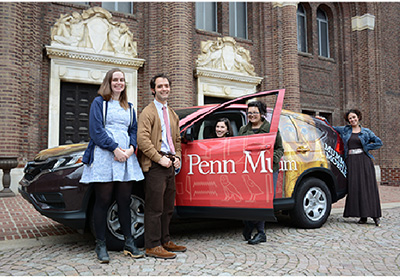 Is that an ancient golden mummy mask on that new Honda?
Yes, it is. And a giant Sphinx. And Egyptian hieroglyphs. When Penn Museum’s Unpacking the Past educators visit Philadelphia schools to prepare students for their upcoming museum trip, they travel in style—in one of two specially designed and wrapped “mummy mobiles,” sporting images of ancient Egyptian artifacts in the collection.
“Learning about cultures of the past should be engaging, draw correlations between ancient and modern-day practices, and, most importantly, be fun,” said Ellen Owens, Merle-Smith Director of the Learning Programs department that runs the Unpacking the Past program. “We hope the arrival of the mummy mobiles incites students’ natural curiosity—who is visiting us? What will they bring to our school? And we don’t mind the publicity for the Museum as our mummy mobiles make their way around Philadelphia’s neighborhoods!”
Unpacking the Past: Year One Report Card
Penn Museum’s Unpacking the Past program employs an inquiry-based approach that invites students to delve deeper into the rich material culture and traditions of ancient Egypt and the ancient Roman Empire. Developed in close collaboration with teachers and curriculum advisors to teach and reinforce the ‘Common Core’ curriculum standards, the free program, which kicked off in the fall of 2014 (Almanac October 28, 2014), is open to all Philadelphia public and Title 1 charter school 7th graders. Beyond developing students’ critical thinking skills, the program trains participants about how to learn within a traditional museum setting, such as how to look closely at objects and read the adjoining texts to learn about them.
The statistics are in from the first year: 4,318 students and 576 teachers and parents participated in the new program, often for multiple experiences (the program features in-museum and outreach components); an additional 467 students, teachers and parents participated in school-based events, such as career days and family nights. Overall, Unpacking the Past reached 5,361 individuals and made nearly 10,000 program “touch points” in the public school community. Students from 183 classrooms in 65 schools participated—more than half of the seventh grade students in the district, including 19 autistic support and life skills support classes.
Along with collecting statistics, the Museum collected teacher feedback, much of it overwhelmingly positive, like this comment from a Mastery Clymer School teacher:
A participating teacher said, “Being a part of the Unpacking the Past program allowed all of my students to participate... In my class, I have students that for years have been labeled special education, intellectually disabled, below grade level readers. However, at the museum, none of those labels mattered and students were allowed to be historians. I had students who cringe when the textbooks come out, but were raising their hands and participating in the Mummy Makers Workshop. I heard students make incredible connections when viewing artifacts and get the “look” when they realized they are smart and they are capable and they have something to offer the community. I would absolutely recommend this experience to other 7th grade classes. Thank you so much!”
Teacher professional development days in 2014-2015 served 71 educators with ancient cultures programs at the Museum, and over the summer of 2015, an additional 107 teachers participated in Museum professional development.
About the Innovative Program
An ambitious, three-year, $2.2 million project, Unpacking the Past is made possible through a generous $1 million lead grant from GRoW Annenberg, a program of the Annenberg Foundation. Over $860,000 in matching funds has been committed to date from donors including Diane v.S. and Robert M. Levy, the Institute for Museum and Library Services, the Penn Museum Women’s Committee, the National Endowment for the Arts and PECO. Additional matching funds for the educational program continue to be raised.
Teacher professional development training, in-school pre-visits in a “mummy mobile,” interactive museum field trips (gallery tour and workshop experiences), pre/post visit classroom projects, and—for each and every student who attends—one-year family memberships to the Penn Museum, are all part of the program. Everything from teacher training, to transportation to and from the Museum, to online resources for follow up, to the Museum membership that can extend the experience is grant-funded and free to the participants.
Seventh grade teachers in Philadelphia can set up training for themselves and programs for their students by emailing schools@pennmuseum.org or calling the Museum’s Learning Programs Department at (215) 898-4033.
ISC Networking $ Telecommunications Services
ISC is proud to announce that we are holding rates steady for both the Central Service Fee and for networking and telecommunications services. We made this decision to simplify activities as we restructure our department.
For help determining the services you need, please visit the ISC Client Care website at http://www.isc.upenn.edu/help or call (215) 898-1000. All ISC networking and telecommunications rates for FY’17 are available at: http://www.upenn.edu/computing/isc/networking/rates/
—Tom Murphy, Vice President for Information Technology and University Chief Information Officer
Highlights of FY’17 Rates
ISC has identified upgrades and additions to network services, as well as to the Central Infrastructure Bundle through which ISC provides numerous core networking, security and identity management services to the University community. A series of strategic efforts is allowing ISC to keep FY’17 rates steady, while greatly enhancing network capacity, security and services. We are also excited to launch PennO365, the University’s cloud-based email and calendaring service that is available to every School and Center on an opt-in basis. For more information please visit: https://www.isc.upenn.edu/penno365
Infrastructure & Ports
Our Next Generation PennNet project continues to augment network capacity and to address the big data and collaboration needs of University researchers. Additionally, with funding from the National Science Foundation, ISC will continue to implement a 100 Gbps-capable “Science DMZ,” a high-speed sub-network that is distinct from the general purpose campus network and engineered for research applications.
| Data Rates (Monthly) |
FY'17 |
| IP Address Fee (CSF) |
$1.56 |
| Port Fees |
|
| 10Base-T |
$4.75 |
| 100Base-T |
$4.75 |
| 1000Base-T |
$4.75 |
| 10000Base-T 10GbE* |
$80.00 |
Activation fees apply to all port activations. See:
http://www.upenn.edu/computing/isc/networking/rates/activation.html
*Limited availability. Ongoing monthly connectivity charges include a bandwidth surcharge to support increased costs associated with the campus backbone and external Internet. Additional installation fees may include fiber, additional optical components and contractor charges. Please contact ISC Client Care at help@isc.upenn.edu to discuss associated costs for specific network environments.
| Wireless Networks |
FY'17 |
| Access Point INstallation |
$800.00* |
| Acces Point Support & Port Fee |
$30.50 |
*This is an estimate for budgeting purposes. Monthly support costs include equipment capitalization, hardware and software maintenance, and staff support.
Telephony
Rates for PennNet Phone will remain the same for FY’17.
For a complete description of telephony services and rates, see: http://www.upenn.edu/computing/voice/
Call Center Services (ACD)
Rates for ACD will remain the same for FY’17.
For a complete description of Call Center Services (ACD) and rates, see:
http://www.upenn.edu/computing/isc/networking/rates/voice/acd.html
Email Services
Rates for legacy email services will remain the same for FY’17.
For a complete description of legacy email services and rates, see: www.upenn.edu/computing/isc/networking/rates/data/email.html
ISC recently launched PennO365, the University’s cloud-based email and calendaring service that is available to every School and Center on an opt-in basis. For more information please visit:
https://www.isc.upenn.edu/penno365
Penn Video Network (PVN)
PVN operates the campus cable television network and the Penn Video Productions group, which offers full Coursera production, as well as a range of other professional video services for the Penn community. PVN can also broadcast course-related content to academic buildings and student residences. For additional information about PVN, see: http://www.upenn.edu/video/
| Video Rates (Monthly) |
FY'17 |
| PVN OUtlet |
$21.50 |
For a complete description of Penn Video Productions rates and available services, see: www.upenn.edu/video/pvp/

 A. Leo Levin, L’42, Leon Meltzer Professor Emeritus at Penn, died on November 24. He was 96 years old.
 Robert “Bob” Glascott, a retired director of recreation at Penn, died on December 7. He was 81 years old.
 John Tellis, a doctoral candidate in chemistry at Penn, was one of three winners of the 2015 Reaxys PhD Prize, given at an annual symposium held at the Chinese University of Hong Kong. Sponsored by Elsevier, the Reaxys PhD Prize recognizes innovative and original research in chemistry, with an emphasis on synthesis. The prize is the world’s most prestigious award for young chemists; the 2015 winners were chosen from a field of almost 450 entrants.
 Mr. Dolan was named the Mid-Atlantic Coach of the Year by the United States Track and Field and Cross Country Coaches Association (USTFCCCA). He earned this prestigious recognition on the heels of leading the Quakers to a second-place finish at the Mid-Atlantic Regional and the program’s first NCAA Championship berth since 1975. In addition, Mr. Dolan piloted the Red and Blue to their best Ivy Heps showing since 1973 (2nd place) last month, and the program’s first national ranking since the establishment of the USTF-CCCA Poll in 1995.
 In his first year at the helm of Penn Football and his 29th year overall with the Quakers, Mr. Priore was named Ivy League Coach of the Year. To receive the honor, he beat out seven other coaches— most notably his former boss, Columbia’s Al Bagnoli. Mr. Priore led his team back from an inconsistent 1-3 start and is one of only two coaches in Penn history to bring home an Ivy title in his first year as head coach.
 Gary Dorshimer, section chief of General Internal Medicine at Pennsylvania Hospital; assistant program director, Primary Care Sports Medicine Fellowship Program at the Children’s Hospital of Pennsylvania; and clinical associate professor of medicine at Penn’s Perelman School of Medicine, received the Otho Davis Scholarship Foundation’s Dick Vermeil Award in November. The Dick Vermeil Award honors a lifetime of achievement in the field of sports medicine.
 The Department of Defense (DoD) has named Nader Engheta, the H. Nedwill Ramsey Professor in Penn Engineering, and Robert Ghrist, a Penn Integrates Knowledge professor and the Andrea Mitchell University Professor in Mathematics and Electrical & Systems Engineering, as National Security Science and Engineering Faculty Fellows (NSSEFF). The NSSEFF
 Dr. Ghrist will receive $2.2 million over five years to continue his research in algebraic topology, a branch of mathematics that provides tools to visualize abstract spaces, such as finding gaps in a security network or automating robotic movement across a factory floor. His project is titled “LOCAL-to-GLOBAL: Algebraic Topology for Data, Networks and Systems” and will target “dimensionality reduction.”
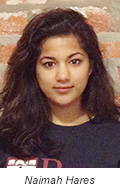 Naimah Hares, C’16, a senior in the South Asia studies program at Penn, and Fariha I. Khan, associate director of the Asian American studies program at Penn, have been named by Governor Tom Wolf as two of the 30 new members of the Governor’s Advisory Commission on Asian Pacific American Affairs. The commissioners were sworn in by Secretary of State Pedro Cortés prior to convening the first meeting of the Commission, which was held at the Governor’s Residence.
 The Governor’s Advisory Commission on Asian Pacific American Affairs, which was created by Executive Order and consists of volunteer members, advises the Governor on policies and legislation that impact the diverse Asian American and Pacific Islander (AAPI) communities; serves as a liaison to federal, state and local agencies to ensure that programs affecting AAPIs are effectively utilized and promoted; serves as a resource for community groups and provides forums for developing strategies and programs that will expand and enhance the civic, social, educational, cultural and economic status of the AAPI communities; and identifies programs, scholarships, mentoring programs and resources for the benefit and advancement of AAPIs. The Commission also acts as an advocate for policies and legislation it feels serve the best interest of APAs in Pennsylvania.
 The American Heart Association (AHA) named Barbara Riegel, professor of nursing, the Edith Clemmer Steinbright Chair of Gerontology and director of the Biobehavioral Research Center at Penn, a 2015 Distinguished Scientist. Dr. Riegel received this honor during the opening meeting of the AHA Scientific Sessions in November. The AHA’s Distinguished Scientists are a prominent group of scientists and clinicians whose work has importantly advanced the understanding of cardiovascular diseases and stroke.
 Peggy Reeves Sanday, professor emerita of anthropology at Penn, received the annual award for work on gender equity from the Committee on Gender Equity in Anthropology of the American Anthropological Association. The award was presented in November at the Association’s annual meeting in Denver, Colorado.
 Penn Nursing Dean Antonia Villarruel was named among the 2015 Delaware Valley Most Influential Latinos by Impacto Latin Newspaper, PHLDiversity

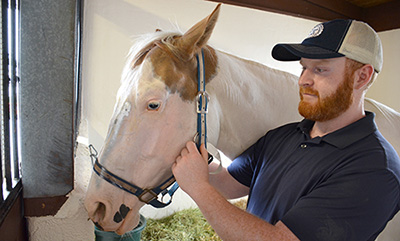 In the first collaboration of its kind between Penn Vet and Penn Med, clinicians used a laser treatment for humans to treat cancerous tumors in the delicate area around both eyes of a horse.
 Morris Arboretum Shop Sale
 Human fascination with animals has always inspired us to recreate their form in a variety of media; from cave paintings of prehistoric creatures to plush teddy bears, we surround ourselves with them. They are loyal companions and bloodthirsty predators, and they intrigue us with their strength and beauty. Here, feathered friends, ferocious beasts and even a cute cat or two leap, slither and fly off the pages of our favorite books, manuscripts and archival materials. You’ll discover a dancing hippo, beautiful bugs, colorful birds and even a swinging horse. All these and more are corralled in this calendar for you to explore throughout the year. See the magnificent, beautiful and sometimes bizarre beasts inhabiting Penn’s special collections every month in The Paper Menagerie: Animals on the Page in the Kislak Center’s Special Collections.
 Atma, Penn’s all-female South Asian fusion a cappella group, released its latest album, Aetka, on May 15. Aetka is available on iTunes for $9.90; see
  Counterparts, Penn’s co-ed jazz and pop a cappella group, released a new album, Americano, on November 20. The album is available on iTunes for $9.90
  Off the Beat, Penn’s modern rock a cappella group, released a new EP, AudioEden, on December 4;
 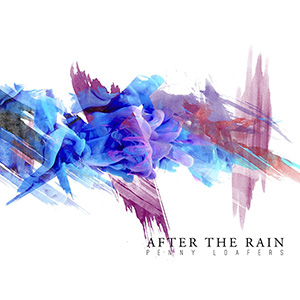 Penny Loafers, one of Penn’s premier co-ed pop and rock a cappella groups, released a new album, After the Rain, in November, featuring songs from indie artists, popular musicians and a few classics. It’s $9.99 and available on iTunes:
  Penn’s Hindi a cappella group, fresh from their appearance in Pitch Perfect 2, released a new album, Resonance, on December 11. The album is available on the Penn Masala website,
  Shabbatones, Penn’s Jewish a cappella group, released its 8th album, 13, on April 23; it signifies the 13th anniversary of the group’s founding, which was in 2001. This is meaningful to them because they see it as their Bar Mitzvah year as a group. It is available on their website or on iTunes,
  A listing of numerous summer camps and academic programs taking place on Penn’s campus will be published in a late January 2016 issue of Almanac. Those who are planning on holding camps at Penn next summer are encouraged to notify Almanac by Tuesday, January 5 to be included.