
Ten Penn Faculty: AAAS Fellows
Ten scholars representing five schools across the University of Pennsylvania have been named to the 2021 class of American Association for the Advancement of Science Fellows. They are among 564 scientists, engineers, and innovators recognized by the organization for their “scientifically and socially distinguished achievements.”
The American Association for the Advancement of Science (AAAS) is the world’s largest scientific society and publisher of the Science family of journals. AAAS Fellows are nominated and elected by current AAAS members in a tradition that stretches back to 1874.
Penn’s new AAAS Fellows are:
 Sara Cherry is a professor of pathology and laboratory medicine in the Perelman School of Medicine. She is being recognized for her contributions to the field of virology and the development of novel technologies used to identify new pathways in and treatment of virus-induced diseases.
Recently, Dr. Cherry has expanded her studies to include the screening of thousands of compounds to combat SARS-CoV-2. Her lab has discovered many new potential treatments to prevent or reduce symptoms of the virus.
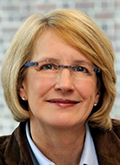 Susan Davidson is the Weiss Professor in the School of Engineering and Applied Science’s department of computer and information science. She is the co-director of the school’s data science program and the founder of Advancing Women in Engineering.
Dr. Davidson’s research interests include data management for data science, database and web-based systems, provenance, crowdsourcing, and data citation.
She recently received the 2021 Ruth and Joel Spira Award for Excellence in Teaching.
 Douglas Durian is the Mary Amanda Wood Professor of Physics in the department of physics and astronomy in the School of Arts & Sciences. Specializing in soft matter physics, his research interests center on elucidating the microscopic origin of behavior in dense packings of particles ranging from colloids and bubbles to grains and pebbles.
Besides physics, Dr. Durian’s work impacts disciplines such as mechanics engineering, materials science, and geology. Dr. Durian serves on several editorial boards and is co-founder and associated director for Penn’s new Center for Soft and Living Matter.
 Kathleen Hall Jamieson is the Elizabeth Ware Packard Professor at the Annenberg School for Communication and director of the Annenberg Public Policy Center, where she co-founded FactCheck.org. Her research examines the science of science communication as well as strategies to combat misinformation. Dr. Jamieson was honored in 2020 with the National Academy of Sciences’ Public Welfare Medal.
She is a member of the American Philosophical Society and the National Academy of Sciences and a distinguished scholar of the National Communication Association. She is a fellow of the American Academy of Arts and Sciences, the American Academy of Political and Social Science, and the International Communication Association and is a past chair of Penn’s Faculty Senate.
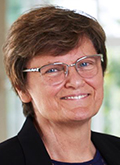 Katalin Karikó, an adjunct professor of neurosurgery at the Perelman School of Medicine and a senior vice president at BioNTech, is being honored for her prescient foundational and pioneering mRNA-vaccine research conducted with Drew Weissman, the Roberts Family Professor in Vaccine Research.
Their technology was used by Pfizer/BioNTech and Moderna for their creation of COVID-19 mRNA vaccines, and the vaccine platform Dr. Karikó helped establish creates gigantic potential for vaccines, infectious-diseases prevention, and immunotherapy. Dr. Karikó is the recipient of numerous awards, including the Lasker-Debakey Clinical Medical Research Award.
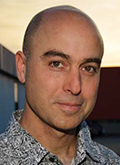 I. Joseph Kroll is a professor in the department of physics and astronomy in the School of Arts & Sciences. His research is in the field of particle physics at colliding-beam experiments. He is currently a member of the ATLAS experiment at the CERN Large Hadron Collider in Geneva.
There, his group has played a leading role in the search and discovery of the Higgs boson and in searches for as-yet-undiscovered particles that may explain unanswered questions in the current standard model of particle physics. Dr. Kroll is the co-recipient of the 2013 and 2019 European Physical Society (EPS) High Energy and Particle Physics prizes.
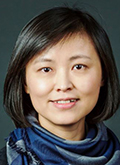 Mingyao Li is a professor of biostatistics in the Perelman School of Medicine. Dr. Li is being recognized for her distinguished contributions to statistical genetics and genomics methodology, particularly using single cell genomics to study genetics of cardiovascular disease and age-related macular degeneration.
She is chair of Penn’s Biostatistics Graduate Program and director of biostatistics for the Gene Therapy Program. Dr. Li also serves as an associate editor of Annals of Applied Statistics, Statistics in Biosciences, PLOS Genetics, and PLOS Computational Biology.
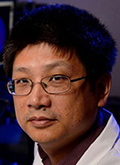 Hongjun Song is the Perelman Professor of Neuroscience, co-director of the IRM Neurodevelopment & Regeneration program, and director of the Epigenetics Institute neuroepigenetics interest group at the Perelman School of Medicine.
His research focuses on neurodevelopment, neural plasticity, and brain disorders. He also studies how epigenetic and epitranscriptomic mechanisms impact neurodevelopment and brain plasticity. His insights are paving the way to new and better treatments for mental illness and neurological disease.
 Duncan Watts is a computational social scientist interested in social and organizational networks, collective dynamics of human systems, web-based experiments, and analysis of large-scale digital data, including the production, consumption, and absorption of news.
He is the Stevens University Professor and the 23rd Penn Integrates Knowledge University Professor.
In addition to his appointment at the Annenberg School for Communication, he holds faculty appointments in the School of Engineering and Applied Science and the Wharton School.
 E. John Wherry III, director of the Penn Institute for Immunology and chair of the department of systems pharmacology and translational therapeutics in the Perelman School of Medicine, is an international leader in the study of T cell exhaustion, which prevents optimal control of infections and can hamper anti-tumor immune responses. Most recently, his efforts have also focused on dissecting the immunology of COVID-19 and SARS-CoV-2 vaccination. Dr. Wherry has received numerous distinctions for his contributions to infectious disease and cancer immunology research. His work has advanced scientific understanding of the immune system and has led to strategies to improve the effectiveness of T cell targeting immunotherapies.