
Saul Winegrad, Physiology
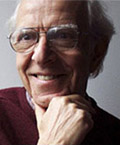 Saul Winegrad, emeritus professor of physiology in Penn’s Perelman School of Medicine, died peacefully in his sleep after a long illness on March 13, two days short of his 89th birthday.
A native Philadelphian, Dr. Winegrad received his BA in chemistry in 1952 and his MD in 1956, both from the University of Pennsylvania. After interning in Boston, Dr. Winegrad held a research fellowship at the NIH. Sir Andrew Huxley invited him to spend a year at University College London, after which Dr. Winegrad joined the Penn faculty as assistant professor of physiology and medicine, in 1962. Seven years later, he became a full professor. He founded and organized the Biomedical Graduate Studies program, which oversees all of Penn Perelman School of Medicine graduate groups. The Saul Winegrad Award for Outstanding Dissertation was established for the graduate groups upon Dr. Winegard’s retirement.
Dr. Winegrad’s research interests were in cardiac muscle physiology at the sub-cellular level, specifically the role of myosin binding protein (MyBP-C) and its phosphorylation in the contractile function of the heart with particular attention to structure-function correlation and interaction with other myofibrillar proteins. He was recognized internationally for his research and was a Fulbright Fellow, National Science Foundation Fellow, Guggenheim Fellow and Fogarty-CNRS International Fellow. He served as vice president for research for the American Heart Association and received the National Award of Merit from the American Heart Association. Dr. Winegrad was a founding member of the Philadelphia muscle-centric group known as the Myo-Bio Club, now the Pennsylvania Muscle Institute.
According to Kevin Foskett, the Isaac Ott Professor and chair of the department of physiology: “Saul was a great systems thinker and organizer but he also brought a deep empathy and interpersonal understanding to everything he did. During the Vietnam War, he led anti-war protests and organized the Faculty Senate at the Medical School according to Robert’s Rules of Order to address important issues. Saul was committed to finding and training the best and brightest students, regardless of background. One year, he helped expand access to minority students who were underrepresented in top medical schools by pushing the Faculty Senate to interview every minority candidate and accept a cohort of students who had promise but might require additional preparation and mentoring. Saul also created opportunities for Penn’s minority students to conduct research, locating hospitable labs in a number of countries where they could experience working abroad, and procuring private funding for the project. Penn came to be regarded as a welcoming and supportive institution by minority students.”
Dr. Winegrad is survived by his wife, Dilys (Gr’70), retired founding director of the Arthur Ross Gallery; children, Naomi and Gwyneth; and grandchildren, Ben, Amelia, Theo and Kira. A memorial will be planned for the future.
--
To Report A Death
Almanac appreciates being informed of the deaths of current and former faculty and staff members, students and other members of the University community. Call (215) 898-5274 or email almanac@upenn.edu
However, notices of alumni deaths should be directed to the Alumni Records Office at Suite 300, 2929 Walnut St., (215) 898-8136 or email record@ben.dev.upenn.edu