
Penn Athletes in the Olympics
 USRowing, the American governing body for the sport of rowing, recently announced the list of athletes who would be competing at this summer’s Tokyo Olympic Games. The list includes a Penn alumna, Regina Salmons. Ms. Salmons, C’18, was a team captain of women’s rowing during her time at Penn and will compete in the Women’s Eight. Ms. Salmons is the 15th Penn women’s rowing team member to participate in the Olympics and the third since 2000. Most recently, Susan Francia, C’04, won gold medals in both the 2008 and 2012 Women’s Eight. Ms. Salmons was a decorated athlete during her time at Penn, winning the All-Ivy and Collegiate Rowing Coaches Association (CRCA) All-Conference with her team in 2018 and leading Penn’s Varsity Eight to third place at the Ivy League Championship.
Penn has sent over 200 athletes to the Olympics since 1900. Penn’s most recent Olympian is Penn Law student and former Olympic figure skater Sarah Hughes, who attended the 2018 Winter Olympics in Pyeongchang, South Korea, as part of the Presidential Delegation for the Winter Olympics, where she consulted with American athletes in a diplomatic role. No Penn athletes competed in the 2016 Summer Olympics, but in 2012, James Corner, a professor emeritus of landscape architecture in the Weitzman School of Design, helped design the Olympic grounds in London. That same year, Ms. Francia competed in women’s rowing and Aniekan Okon (Koko) Archibong, C’03, competed on the Nigerian basketball team.
Since the 1900 Olympic games in Paris, Penn students, faculty, staff and alumni have competed in the storied competition. Most of Penn’s athletes over the years have been involved in track and field or rowing events (like Ms. Salmons), but Penn has also contributed members to the swim, wrestling, field hockey, equestrian and even the modern pentathlon teams. The 1900 Paris Olympics were both the first and the most successful Olympics for Penn athletes. That year, thirteen Red and Blue athletes participated in the games to win a total of twenty-two medals, including eleven gold. The gold medal winners that year (some of whom earned multiple gold medals) include Irving Knott Baxter, L’1901; Alvin Christian Kraenzlein, GD’1900; Josiah Calvin McCracken, C’1899, M’1901; George W. Orton, G’1894, Gr’1896; and John W.B. Tewksbury, GD’1899.

Penn sent athletes to the next four Olympic games, sometimes as many as seven at a time. In 1908, Penn sent a coach to the Olympics for the first time—Mike Murphy, Penn’s head track coach. The same year, Michail Dorizas, Gr’1924, won a gold medal for his home country of Greece; he later joined Penn’s athletic staff as a coach. Four years later, Penn students Donald Lippincott, C’1915, and Ted Meredith, C’1916, set world records on the track and earned four gold medals for Penn. While Penn sent several athletes to the Olympics over the next two decades, they won few medals. In 1932, William Arthur Carr, C’33, won two gold medals—the most recent ones a Penn-affiliated track team member has earned.
However, Penn’s athletic prowess did not decline—it merely shifted to other Olympic events. In the 1936 Berlin Olympics, future Penn swim coach Jack Medica won three medals in swimming. Mr. Medica set a precedent for future Penn swimmers to dominate at the Olympics. According to the Penn Archives, from 1948 to 1988, ten Penn students and faculty served on Olympic committees and over 150 athletes earned 28 Olympic medals, including 11 crew medals and eight swimming medals. Penn students also earned medals in yachting, equestrianism, and ice hockey during this era.
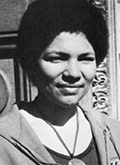 As Penn’s student body diversified during the second half of the twentieth century, so did its Olympic team members. The first woman athlete with Penn ties to compete in the Olympics was Mary G. Freeman Kelly, C’52, who competed on the 1952 U.S. swimming team. In 1968, Eleanor Drye, G’74, won a gold, a silver and a bronze medal in swimming, and in 1972, crew team member Anita DeFrantz, L’77, won two bronze medals. Ms. DeFrantz, the first Black woman with Penn ties to compete in the Olympics, returned in 1976, the first year women’s rowing was a sport, and has remained involved with Olympic committees since. In 1972, Larry Dean Bader, E’72, an ice hockey player, was the first Quaker to compete in Winter Olympics games.
While Penn has ceded some of its Olympic dominance in recent years, it continues to send student, faculty, staff, and alumni athletes to compete at the international level. Since the Olympics’ reemergence at the dawn of the twentieth century, Penn has sent over two hundred athletes, coaches, managers, doctors and committee members to the Olympic Games. That number includes sixty-one crew team members, fifty-four track and field athletes, twenty-one fencers, eleven field hockey players, eight swimmers and several others in nearly a dozen other sports. Seventy-four of those athletes have won medals.
The Tokyo Olympic Games are scheduled to take place from July 21-August 8; rowing is set to run from July 23-30.
To read more about Penn athletes in the Olympics, visit https://penntoday.upenn.edu/news/meet-penn-athletes-competing-tokyo-olympics.
Thanks to the University of Pennsylvania Archives for providing useful information about the history of Penn and the Olympics. For a list of all of Penn’s Olympics competitors, visit https://archives.upenn.edu/exhibits/penn-people/notables/athletics/olympics/athletes.
