
Paul Moorhead, Human Genetics and Pediatrics
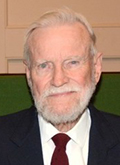 Paul Sydney Moorhead, a former associate professor of human genetics and pediatrics in Penn’s School of Medicine, died on April 17. He was 99.
Born in El Dorado, Arkansas, Dr. Moorhead grew up in Depression-era Little Rock. After one year of study at Southwestern at Memphis (now Rhodes College), he joined the Naval Officers’ training in 1943 while attending the University of the South in Sewanee, Tennessee, and the University of North Carolina, Chapel Hill. The war ended before he was deployed to the Pacific Theater. After his discharge from the Navy in 1946, he continued his studies. He earned his PhD in zoology, focusing on cell biology/chromosomes and genetics, from the University of Texas in 1954. While at Chapel Hill, Dr. Moorhead became politically active in progressive causes and served as a bodyguard for anti-segregationist presidential candidate Henry Wallace during his historic desegregated 1948 campaign tour of the south. This experience stirred a lifetime passion for civil rights.
Dr. Moorhead began his scientific career at the University of Texas Medical Branch in Galveston, Texas, then moved to University of Pittsburgh School of Medicine. In 1959, he joined the Wistar Institute of Anatomy and Biology in Philadelphia, Pennsylvania, where he and his colleague Len Hayflick conducted groundbreaking research introducing cellular senescence. This discovery led to the development of a foundational cell line used for the production of billions of doses of life-saving human vaccines. In 2014, they both received the City of Philadelphia’s prestigious John Scott Award, given for inventions that have contributed to the “comfort, welfare and happiness” of mankind. In 1969, Dr. Moorhead became an associate professor of human genetics and pediatrics at the University of Pennsylvania School of Medicine. During his time at Penn, Dr. Moorhead held numerous administrative and leadership appointments in professional societies, including as president of the Tissue Culture Association from 1980 to 1982, and was renowned in his field. He retired from Penn in 1985 after the death of his wife, Betty Belk Moorhead.
Dr. Moorhead is predeceased by his first wife, Betty Belk Moorhead, and his youngest daughter, Mary Knox Moorhead. He is survived by his second wife, Rebecca Otter; his daughters, Ann Belk Moorhead and Emily McBride Moorhead Watts; his stepchildren, Jonathan Williams and Nancy Otter; and grandchildren, nieces and nephews, colleagues, and beloved friends.
A gathering to celebrate the lives of both Dr. Moorhead and his daughter Mary was held on July 16. Donations in Dr. Moorhead’s name may be made to Southern Poverty Law Center or the Union of Concerned Scientists.
To read more about Dr. Moorhead, click here.