
Herbert Gans, Institute for Urban Studies
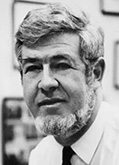 Herbert Julius Gans, PhD’57, a former assistant professor of sociology and land & city planning and a former research associate in Penn’s Institute for Urban Studies, died on April 21. He was 97.
Dr. Gans was born in Cologne, Germany in 1927. He fled Nazi Germany and arrived in the U.S. in 1940, becoming a citizen in 1945. Dr. Gans studied at the University of Chicago, receiving an MA in sociology and social science in 1950 and studying with eminent sociologists David Riesman and Everett Hughes, among others. Dr. Gans then went on to receive a PhD in sociology and planning from Penn in 1957, where his dissertation was supervised by future Penn president Martin Meyerson. While earning his PhD, Dr. Gans joined Penn’s faculty in 1953 as a research associate in the Institute for Urban Studies. For the next decade, Dr. Gans advanced through Penn’s professorial ranks, eventually becoming an associate professor in the institute. While at Penn, Dr. Gans also taught land and city planning in the School of Design and taught sociology in the Wharton School. In 1964, Dr. Gans took a position at the Teachers College of Columbia University, then served as a faculty member at the Massachusetts Institute of Technology from 1969 to 1971.
In 1971, Dr. Gans returned to Columbia University as a professor of sociology, his most enduring faculty position and one that he held until his retirement in 2007. While at Columbia, Dr. Gans conducted research and wrote books that upended popular perceptions of American communities and cultural bastions. That work began while Dr. Gans was at Penn, with his 1962 book The Urban Villagers, which studied the Italian American community in Boston’s West End, and continuing with The Levittowners (1967), which examined formal and informal social norms in a manufactured housing development in Willingboro, New Jersey. Dr. Gans went on to write several pivotal texts that reframed American cultural topics from a working-class perspective, including news media, the concept of “high culture,” and urban planning. With a bibliography spanning twelve books and hundreds of peer-reviewed articles, Dr. Gans became one of the U.S.’s most influential social critics.
Outside of teaching and writing, Dr. Gans consulted for many civil rights, anti-poverty, and planning agencies, and for the Ford Foundation and the federal government. Dr. Gans served on the committee that prepared the Kerner Report, the 1968 government study that warned that the U.S. was moving toward a “separate and unequal” society. He also testified on behalf of Lenny Bruce when the comedian was on trial for obscenity in 1964. In 1988, Dr. Gans served as president of the American Sociological Association, which later recognized his contributions to the discipline with its 1999 Public Understanding of Sociology Award and its 2006 W.E.B. Du Bois Career of Distinguished Scholarship Award. Dr. Gans was inducted into the American Academy of Arts and Sciences and the Sociological Research Association and received a Guggenheim Fellowship and a German Marshall Fund Fellowship, among numerous other honors.
Dr. Gans is survived by his wife, Louise Gruner; and his son, David Herman Gans.