
Haig Kazazian, Jr., Genetics
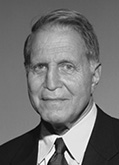
Haig H. Kazazian, Jr., an emeritus professor in the department of genetics in the Perelman School of Medicine, passed away recently. He was 84.
A son of Armenian immigrants, Dr. Kazazian was born in Toledo, Ohio. His father, from Kayseri, Turkey, escaped the terror of the 1915 persecutions, forced marches, concentration camps, and death (known as the Armenian genocide); after many years of wandering, he came to the U.S. in 1923. His mother came from Istanbul in 1920.
Dr. Kazazian graduated magna cum laude from Dartmouth College in 1959 with an AB in medical science, where he took pre-med classes alongside philosophy and French. He then continued his medical education at Dartmouth, where he completed a two-year preclinical program and worked in several laboratories. In 1960, he transferred to Johns Hopkins University School of Medicine, preferring the weather in Maryland (where he had rowed in the Naval Academy) to cold New England winters. He obtained an MD from Johns Hopkins in 1962, after which he completed pediatrics training in the University of Minnesota Hospital and at Hopkins. While at Hopkins, he joined the lab of pediatrics professor Barton Childs, researching dosage compensation with fruit flies.
Dr. Kazazian found a love of genetics while conducting this research and took it on full-time. In 1966, he assumed leadership of Harvey Itano’s laboratory at the National Institutes of Health, working with hemoglobin regulation, and entered the Public Health Service. In 1969, he was recruited to return to Hopkins, where he continued this research and rose to the rank of professor. Working with colleagues interested in other hemoglobin disorders, such as sickle cell anemia, Dr. Kazazian helped develop methods for prenatal diagnosis while at Hopkins. Over the course of the next two decades, Dr. Kazazian collaborated with researchers at Cornell University to discover many new mutations of β-thalassemia, a blood disorder that reduces the production of hemoglobin.
He joined Penn’s faculty in 1994 when he was named the Seymour Gray Professor of Molecular Medicine in the department of genetics. There, he helped build the genetics department and moved further away from clinical research and firmly into basic research. While at Penn, Dr. Kazazian continued groundbreaking research (which he had begun in 1984 while at Hopkins) on the nature of retrotransposable elements in humans and mice. Using mouse models, Dr. Kazazian’s lab was able to create a model for treating the blood disorder hemophilia A with factor VIII, the hemoglobin gene, which was defective in patients with hemophilia A. These experiments completely cured the mice of hemophilia within a year. In addition to genetics, he held secondary appointments in pediatrics and medicine. In 2007, he was elected a fellow of the American Academy of Arts and Sciences (Almanac May 8, 2007), and two years later, he was given the American Society of Human Genetics’ Allan Award (Almanac January 20, 2009).
In 2011, he retired from Penn and took emeritus status. That same year, he returned to Johns Hopkins as a professor of pediatrics, molecular biology, and genetics. At Johns Hopkins, he resumed his research on LINE-1 (L1) retrotransposons—insertions into the DNA that cause diseases. In 2018, he was elected to the National Academy of Sciences. He closed his laboratory in 2020, but continued to be curious about the biology of transposable elements, and worked on writing a book.
Dr. Kazazian is survived by his wife, Lilli; his children, Haig (Betsy) and Sonya (Dave); and five grandchildren.