
George Crumb, Music
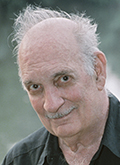 George Crumb, an influential American composer and the Annenberg Professor Emeritus of the Humanities in the department of music in the School of Arts and Sciences, passed away on February 6 at home in Media, PA. He was 90.
Born in West Virginia, Dr. Crumb was the son of a cellist and a clarinetist. He composed music at an early age, attending the National Music Camp in Interlochen, Michigan in 1947. He graduated in 1950 from the Mason College of Music and Fine Arts in Charleston, West Virginia (now part of the University of Charleston) and received a master’s degree two years later from the University of Illinois at Urbana-Champaign. On a Fulbright Scholarship, he then studied at the Hochschule für Musik in Berlin. He received his doctorate in composition at the University of Michigan in 1959. Dr. Crumb maintained a long relationship with academia. He first taught at a college in Virginia, then became a professor of piano and composition at the University of Colorado in 1958. In 1965, he joined Penn’s faculty as an assistant professor of music, then was promoted shortly thereafter to associate professor. Dr. Crumb received a Pulitzer Prize in 1968 for his piece Echoes of Time and the River, an orchestral suite first performed by the Chicago Symphony Orchestra. Three years later, Dr. Crumb was promoted to a professor of music at Penn. He was eventually named the Annenberg Professor of the Humanities in 1983 (Almanac September 20, 1983).
Dr. Crumb’s compositions were heavily influential to generations of musicians. “While audiences could find some of his music forbidding or opaque, it often mined a deeply felt and uniquely American vein of emotion,” said NPR writer Anastasia Tsioulcas in a tribute to Dr. Crumb. After Echoes, Dr. Crumb’s next landmark piece was Black Angels (Thirteen Images from the Darkland) (1970), a piece written in protest of the Vietnam War that featured unconventional instrumentation like bowed water glasses and electronics (a concept that would become a theme in Dr. Crumb’s work). Excerpts from Black Angels were included in the popular 1973 thriller film The Exorcist, gaining Dr. Crumb a mainstream audience. Eugene Namour, chair of Penn’s department of music during the early 1980s, noted that American audiences considered Dr. Crumb’s work “the pinnacle of the avant-garde.” Dr. Crumb’s music appealed to sophisticated concertgoers because of its artistry and its radical approach to instrumentation endeared it to a wide swath of the music-listening public. “It is a study in spiritual annihilation,” said pop musician David Bowie of Black Angels of 2003. “It scared the bejabbers out of me.”
Also in 1970, Dr. Crumb’s piece Ancient Voices of Children premiered at a Library of Congress chamber festival, and a recording released in 1971 became one of the best-selling albums of classical music released in the 20th century. Next, he composed Makrokosmos (1972-1979), a four-volume work for piano and percussion that required its musicians to shout, whistle, and play pianos in non-traditional ways. Dr. Crumb’s piece Star-Child (1977), a choral and orchestral work, was also performed widely. In the early 1980s, Dr. Crumb became one of very few living composers to have all of the “big six” philharmonic orchestras (New York, Philadelphia, Chicago, Cleveland, Boston and Los Angeles) perform his music, and his music remained popular enough with audiences that nearly all of it remained in print (both in sheet music and recorded form) during his lifetime. In 2004, he arranged several Civil War-era songs for a piece called The Winds of Destiny, which was adapted for a theater production in 2011. He returned to American hymns and spirituals throughout the 2000s for his American Songbook series, observing in the process that the divisiveness of the U.S. in the period when these songs were written is still alive and well. Dr. Crumb was well-known for producing elaborate, artistic musical scores, and many of the pieces of sheet music he designed are on display at museums today.
Dr. Crumb retired from Penn in 1997, and twelve years later received an honorary doctorate of music (Almanac February 24, 2009). Dr. Crumb also won the UNESCO International Rostrum of Composers Award, the Koussevitzky Recording Award, the 1998 Cannes Classical Award for Best CD of a Living Composer, and a 2001 Grammy for Best Contemporary Composition (for Star-Child). He also received grants from the Rockefeller, Guggenheim, Fromm and Ford Foundations for his exemplary work and was a member of the American Academy of Arts and Letters. Several of Dr. Crumb’s students, including Christopher Rouse, Osvaldo Golijov, and Jennifer Higdon, went on to become successful composers themselves. Penn Live Arts (formerly the Annenberg Center) honored Dr. Crumb in 2019 with a three-day festival showcasing his music, titled “Zeitgeist: George Crumb at 90” (Almanac October 1, 2019).
Dr. Crumb is survived by his wife, Elizabeth; and his sons, David and Peter.