
News

$10 Million Gift to Establish the King Center for Lynch Syndrome at Penn Medicine

With a transformative $10 million gift from Cynthia King and the late Jeffery King and from Jason and Julie Borrelli, Penn Medicine has launched the King Center for Lynch Syndrome—the first named center for Lynch syndrome in the world—at the Abramson Cancer Center of the University of Pennsylvania. The King Center will advance research, outreach, education, and patient care for Lynch syndrome, a hereditary condition that affects approximately 1 in 279 individuals, equating to about 1.2 million Americans, and increases the risk of developing certain cancers, including colorectal cancer and endometrial (uterine) cancer.

The gift builds on past philanthropic investments from the King family to increase education and outreach, as the number of individuals with Lynch syndrome receiving care at Penn Medicine has nearly tripled over the last six years. Nearly 1,000 individuals—including many who travel from outside the Philadelphia area and throughout the northeast—now receive their expert Lynch syndrome care at Penn Medicine.

“Although Lynch syndrome is one of the most common genetic causes of cancer, most people do not know what Lynch syndrome is, and many people living with Lynch syndrome do not know they have it,” said Bryson Katona, co-founder and the inaugural executive director of the King Center for Lynch Syndrome. “With this impactful support from the King and Borrelli families, we will extend Penn Medicine’s leadership in addressing the needs of the Lynch syndrome community including more cutting-edge research, life-long comprehensive care, and increased awareness.”

Motivated by personal experience with Lynch syndrome, the King and Borrelli families have long supported Lynch syndrome research and education at Penn Medicine, including sponsoring an annual education and research symposium and endowing the Jeffery and Cynthia King Professorship of Lynch Syndrome Research, currently held by Dr. Katona. Jeffery King died in August 2025, and his family continues to honor his memory and commitment to supporting patients and research. Julie Borrelli, Jeffery and Cynthia King’s daughter, has served as chair of the Abramson Cancer Center Director’s Leadership Council since November 2024.

“My father did not discover that he carried the mutation for Lynch syndrome until he was in his late 60s and battling his second Lynch-related cancer,” said Julie Borrelli, whose own journey with Lynch syndrome has been dramatically different from her father’s, as she was able to get tested and begin a personalized cancer risk management plan at a much earlier age. “As we dove deeper into this surprisingly common hereditary condition, we were shocked that we had never heard of it and we quickly realized how important awareness was to not only our family but to so many others.” 

“Early detection followed by routine surveillance has been shown to limit Lynch’s impact on life expectancy,” Ms. Borrelli explained. “The initial fear of the unknown that our family faced is now filled with tremendous hope through our partnership with Penn Medicine, and our wish is that the King Center will help provide the gift of knowledge to others and the support to continue impactful research and care.”

“The King and Borrelli families have been incredible advocates of our Lynch syndrome program, and we are deeply grateful for their shared commitment to improving the lives of patients and families,” said Robert H. Vonderheide, director of the Abramson Cancer Center of the University of Pennsylvania. “The King Center for Lynch Syndrome will strengthen our collaborative research ecosystem and accelerate more personalized approaches to early detection, surveillance, and care for individuals at inherited risk.”

People with Lynch syndrome have a mutation in one of the MLH1, MSH2, MSH6, PMS2, or EPCAM genes. Typically, these genes help the body prevent cancer from developing, as part of what is known as the DNA mismatch repair system. When a mutation is present, the gene is unable to perform its normal role in cancer prevention, creating a greater chance for cancer to develop. Lynch syndrome is the most common cause of both hereditary colorectal cancer and uterine cancer. In the general population, the lifetime risk for developing colorectal cancer is about four percent and about three percent for uterine cancer. Depending on their gene mutation, individuals with Lynch syndrome can have a much higher risk of developing both colorectal cancer (ranging from 9 to about 60 percent) and uterine cancer (ranging from 13 to nearly 60 percent). Lynch syndrome can also raise the risk—although to a lesser extent—of gastric (stomach), urinary tract, pancreatic, ovarian, and certain skin cancer.

Depending on their mutation type and other factors, personalized cancer risk management for individuals with Lynch syndrome may include a variety of cancer screenings, which may be necessary at an earlier age or increased frequency compared to what is recommended for the general population. Because Lynch syndrome can impact cancer risk across so many different organs, it is important to have a Lynch syndrome expert overseeing care—someone who can evaluate an individual’s risk and develop a comprehensive and personalized screening plan.

“Often patients with Lynch syndrome will get their colonoscopy, the most common screening test for this condition, but their gastroenterologist may not know or feel comfortable telling them what to do about their uterine cancer risk, or when their family members should be evaluated for Lynch syndrome, and so on,” explained Jessica Long, a genetic counselor and director of education and outreach in the King Center. “Our goal is to support patients in understanding their comprehensive, evidence-based screening and care recommendations and to empower them to mitigate the burden of cancer in their family.”

Furthermore, national guidelines for the care of Lynch syndrome continue to evolve in response to new research on screening strategies and treatment options for DNA mismatch repair deficient cancers.

The Kings and Borrellis’ gift will allow Penn Medicine to expand efforts to educate individuals, families, and healthcare providers about Lynch syndrome, provide individualized care for those affected, lead clinical trials, and fuel innovative basic science and translational research in Lynch syndrome by providing funding to investigators engaged in Lynch syndrome research, as well as by growing a comprehensive biobank to advance Lynch syndrome-focused research initiatives. More than 400 individuals with Lynch syndrome are currently enrolled in clinical research studies at Penn Medicine, many of whom are “previvors,” or people who have a known Lynch syndrome mutation but have never had cancer.

“One of the challenges of Lynch syndrome is that we see highly variable risks across individuals and families—it’s not consistent across the board,” said E. John Wherry, co-founder of the King Center and chair of the department of systems pharmacology and translational therapeutics. “We’re actively investigating how the immune system may be working in different ways in different people with Lynch syndrome to increase or decrease their cancer risk so that we can further personalize cancer risk management plans in the future.”

More than 1,200 blood samples are banked in Penn’s Lynch Syndrome Immune Profiling Project, and more than 100 individuals with Lynch syndrome have participated in biopsy and stool collection studies.  These volunteers are Lynch syndrome patients who have chosen to participate in research that could affect their or their families’ futures.

Consultative Review Committee on the Reappointment of Erika H. James as Dean of the Wharton School of the University of Pennsylvania

President J. Larry Jameson and Provost John L. Jackson, Jr., have announced the formation of an ad hoc Consultative Review Committee to advise them on the reappointment of Erika H. James as Dean of the Wharton School of the University of Pennsylvania. Dean James’ initial term as Dean will end on June 30, 2027. University policy requires that a Consultative Review Committee be established to advise the President and the Provost whenever the reappointment of a Dean is contemplated. In addition, each member of the standing faculty of the Dean’s school is given the opportunity to give confidential advice and views directly to the President and the Provost.

The members of the Consultative Review Committee are:

Chair

  • Sophia Z. Lee, Dean and Bernard G. Segal Professor of Law, Penn Carey Law 

Faculty

  • Norma Coe, Professor of Medical Ethics and Health Policy, Perelman School of Medicine
  • Itay Goldstein, Joel S. Ehrenkranz Family Professor, Professor of Finance, Professor of Economics, Wharton School
  • Christopher Ittner, Professor of Accounting, Wharton School
  • Sara Jaffee, Class of 1965 Endowed Term Professor of Psychology, School of Arts & Sciences
  • Daniel Levinthal, Reginald H. Jones Professor of Corporate Strategy, Professor of Management, Wharton School
  • Ioana Marinescu, Associate Professor, School of Social Policy & Practice
  • Damon Phillips, Robert Steinberg Professor, Professor of Management, Wharton School 

Students

  • Mark Kim, MBA candidate, Wharton School
  • Muhammad Vakil, Undergraduate candidate, Wharton School

Alumnus

  • James Dinan, W’81, Wharton School Board of Advisors

Ex Officio

  • Joann Mitchell, Senior Vice President for Institutional Affairs

Staff to the Committee

  • Pierce Buller, Deputy Chief of Staff and Senior Advisor to the President
  • Eugene Vaynberg, Director of Special Projects

The Consultative Review Committee welcomes and encourages input from all members of the Penn community. Communications may be directed by April 30, 2026 to WhartonDeanReview@upenn.edu.  

Timothy Susanin: Vice President for Audit, Compliance, and Privacy

Timothy Susanin has been named the vice president for audit, compliance and privacy of the University of Pennsylvania, effective April 1, 2026, pending approval by the Board of Trustees. The appointment was announced by Mark Dingfield, executive vice president, and Julia Puchtler, senior vice president and chief financial officer of the University of Pennsylvania Health System, following a national search.

“I’m delighted that Tim Susanin will be joining Penn in this important role,” said Dr. Dingfield. “Our work is grounded in trust, integrity, and responsibility, and Tim brings a deep understanding of how to partner with leaders across a complex institution to manage risk effectively and support sound decision-making. He is a collaborative leader with a proven track record of building strong, trusted relationships—qualities that will be important as he works closely with colleagues across the University and Penn Medicine.”

In this role, Mr. Susanin will lead the functions of the Office of Audit, Compliance and Privacy, collaborating with University and Penn Medicine leadership to strengthen internal controls, advance enterprise risk management, and uphold the highest regulatory and ethical standards. The office partners closely with Penn leadership to anticipate and manage risks and ensure stewardship and accountability.

“I’m pleased to welcome Tim to Penn,” said Ms. Puchtler. “His strategic insight and deep operational experience will strengthen our approach to risk management and reinforce our commitment to accountability across the institution.”

Mr. Susanin currently serves as senior vice president and chief audit, compliance, and risk officer of Horizon Blue Cross Blue Shield of New Jersey, where he leads internal audit, compliance and ethics, and enterprise risk management. Since joining Horizon in 2014 as vice president and chief compliance officer, he has served as a key member of its senior leadership team.

Before his tenure at Horizon, Mr. Susanin was a partner at Baker Hostetler LLP (2011–2014) and served as senior vice president, general counsel, and secretary at Wellcare Health Plans (2008–2011) overseeing the company’s legal, government affairs, and corporate communications functions. Mr. Susanin was a partner at Gibbons P.C. from 2001–2008, where he opened and co-managed the firm’s Philadelphia office and represented clients in federal and state litigation.

Earlier in his career, Mr. Susanin served as a Navy JAG Officer and a federal prosecutor with the U.S. Department of Justice. A Philadelphia native, he received his JD from Villanova University School of Law and his BA from Franklin & Marshall College.

Guillermo L. Ordoñez: Joseph M. Cohen Endowed Term Professor of Economics

caption: Guillermo OrdoñezGuillermo L. Ordoñez has been named the Joseph M. Cohen Endowed Term Professor of Economics in the School of Arts & Sciences. He also holds a secondary appointment as a professor of finance in the Wharton School and is a research associate at the National Bureau of Economic Research.

Originally from Córdoba, Argentina, Dr. Ordoñez received his PhD in economics from UCLA in 2008. He began his academic career as an assistant professor at Yale University following a year as a research economist at the Federal Reserve Bank of Minneapolis. He joined Penn’s faculty in 2012.

Dr. Ordoñez researches macroeconomics, financial crises, sovereign debt, banking, and information frictions in financial markets. He is the co-author, with Gary Gorton of Yale University, of Macroeconomics and Financial Crises: Bound Together by Information Dynamics, and his scholarship has appeared in leading journals in economics and finance, including the American Economic Review, Quarterly Journal of Economics, Journal of Political Economy, Review of Economic Studies, and Journal of Monetary Economics.

Dr. Ordoñez has received multiple multi-year research grants from the National Science Foundation and other institutions. In 2024, he was elected a fellow of the Econometric Society, one of the highest professional distinctions in economics. His work has also been recognized with the Elsevier Award for Best Paper on Financial Institutions, and he has been invited to deliver keynote and plenary lectures at international conferences and has advised the Federal Reserve Bank and other central banks worldwide.

Dr. Ordoñez has contributed extensively to the profession through editorial leadership, serving as editor of the Journal of Economic Theory from 2020 to 2024 and holding editorial positions at the Review of Economic Studies, the Journal of the European Economic Association, the Review of Economic Dynamics, and Theoretical Economics. At Penn, he teaches undergraduate and doctoral courses in macroeconomics and financial markets and has twice received the Kravis Award for Outstanding Undergraduate Teaching in Economics.

Joseph M. Cohen, W’59, established this chair in 1990 to recognize a distinguished scholar in economics. Two of his sons, Jarrod M. Cohen, C’89, and Jon Cohen, W’91, also attended Penn. Mr. Cohen is a former member of the School of Arts & Sciences Economics Visiting Committee and served on the Gift Committee for his 50th reunion.

Salamishah Tillet: 2026 Provost’s Distinguished Visiting Faculty Fellow

caption: Salamishah TilletProvost John L. Jackson, Jr. and Senior Vice Provost for Faculty Laura W. Perna have announced the appointment of Salamishah Tillet as the Provost’s Distinguished Visiting Faculty Fellow for 2026.

Dr. Tillet is the Henry Rutgers Distinguished Professor of Africana Studies and Creative Writing at Rutgers University and executive director of Express Newark, a center for socially engaged art and design at Rutgers University-Newark. A Penn alumna who taught at Penn from 2007 to 2018, she was awarded the 2022 Pulitzer Prize for Criticism for her work as a critic-at-large for The New York Times, for which she has been writing since 2015. She is the author of In Search of the Color Purple: The Story of an American Masterpiece (Abrams, 2021) and Sites of Slavery: Citizenship and Racial Democracy in the Post-Civil Rights Imagination (Duke University Press, 2012); and she was recently awarded the 2025 Genevieve Young Fellowship in Writing from the Gordon Parks Foundation and a 2025 Emerson Collective Fellowship for leaders taking on a hyperlocal project to help their community come together and solve complex problems. She is a founder of New Arts Justice, a public art studio in Newark, and A Long Walk Home, an arts organization that empowers young people to end violence against girls and women.

The Provost’s Distinguished Visiting Faculty Fellowship is awarded annually to a senior scholar of national or international prominence whose work exemplifies Penn’s strategic priorities. Fellows meet with Penn faculty and students and deliver a public lecture of intellectual and scholarly significance to the Penn community.

Dr. Tillet will give a lecture, All the Rage: The Myth, Meaning, and Many Afterlives of Nina Simone, on April 14, 2026 at 4:30 p.m. in the Harold Prince Theater of the Annenberg Center, 3680 Walnut Street.

Erika Enk: Inaugural Assistant Medical Director for Gender and Sexual Health at Wellness at Penn

caption: Erika EnkWellness at Penn has announced that Erika Enk (they/them) has joined the organization as of March 16, 2026, as the inaugural assistant medical director for gender and sexual health within Student Health and Counseling.

Mx. Enk has extensive clinical and leadership experience in gender-affirming care, sexual and reproductive health, mental health support, and trauma-informed practice. They come to Penn from University Health Services at the University of Wisconsin–Madison, where they directed the transgender and gender diverse medical program and provided comprehensive care to students. In this role, Mx. Enk led clinical program development, authored evidence-based practice guidelines, supported provider training and onboarding, and partnered closely with campus stakeholders to expand access to inclusive, student-centered services.

In addition to their leadership in gender-affirming care, Mx. Enk has broad expertise in gynecologic and sexual health. They previously practiced at Access Community Health Network in Chicago, one of the largest federally qualified health center systems in the United States. There, they provided comprehensive gynecologic and sexual health services, including contraceptive management, long-acting reversible contraception insertion and removal, menopause care, Polycystic Ovarian Syndrome management, fertility counseling, sexually transmitted infection screening and treatment, and a wide range of additional gynecologic services. Mx. Enk also serves as a sexual assault forensic examiner, delivering trauma-informed options and support to survivors of sexual violence.

Mx. Enk is a certified nurse-midwife and holds both a master of science in nursing and a master of public health from the University of Illinois Chicago. They have also earned a certificate in LGBT health policy and practice from the George Washington University. Their combined clinical and public health training informs a deeply inclusive, evidence-based approach to care.

A respected educator and collaborator, Mx. Enk has delivered trainings on gender-affirming care and language as well as ethical considerations in transgender research. They are known for building strong interdisciplinary partnerships and centering the needs of historically marginalized student populations.

“Erika brings an exceptional depth of expertise in gender-affirming and sexual healthcare, along with a clear commitment to student-centered practice,” said Raymond Cattaneo, medical director of Student Health and Counseling. “Their leadership will strengthen our ability to provide inclusive, evidence-based care and to ensure that every student feels seen, supported, and respected.” In this new role, Mx. Enk will oversee gynecology, sexual health, and gender-affirming care within Student Health and Counseling. They will collaborate closely with colleagues across Counseling, Public Health and Well-Being and with other campus partners to further advance high-quality, student-centered care.

Penn Trustees Approve 2026–2027 Undergraduate Charges and Financial Aid Budget

At their winter meeting, the Penn Trustees approved a financial aid budget of $347 million, representing a 3.8% increase over last year. Penn continues to meet 100% of demonstrated financial need with grant-based aid and without loans, a longstanding policy designed to ensure that students can pursue a Penn education regardless of their family’s financial circumstances.

This year’s financial aid investment builds on the expansion of the Quaker Commitment announced last year, which guarantees full tuition scholarships for students from families earning $200,000 or less with typical assets and which provides tuition-free education for students from families earning $75,000 or less. That initiative strengthened Penn’s efforts to support middle- and lower-income families and to make a Penn education more attainable.

The Trustees also approved tuition for the 2026–2027 academic year. Undergraduate tuition will be $65,670 and fees will be $8,308. Room charges will total $13,644 and the meal plan charge will be $6,960, bringing the total cost of tuition, fees, room, and board to $94,582. The overall cost reflects a 3.8% increase from the previous academic year.

Tuition for graduate and professional students will be determined by Penn’s individual schools to reflect their respective budget requirements.

The approved budget reflects ongoing efforts to manage costs responsibly while sustaining investments in faculty, research, student support, and the student residential experience. The University remains focused on balancing the resources required to deliver a world-class education with its commitment to substantial financial aid support for students and families.

Additional information about undergraduate charges and financial aid for 2026–2027 will be available through Student Registration and Financial Services and the Office of Financial Aid.

Penn Libraries Enter Two-Year Open Access Agreement With Oxford University Press

The Penn Libraries have entered a two-year open access agreement with Oxford University Press (OUP), the largest university press in the world.  

The agreement, which runs through 2027, will allow Penn-affiliated authors to publish open access in both OUP’s hybrid and gold (fully open access) journals without paying article processing charges themselves. The Penn community will also continue to be able to access all OUP journal content. 

Through strategic open access agreements with publishers such as OUP, the library system has made it possible for Penn authors to publish 60% of their work through open access models.  

“Open access agreements help Penn authors advance their goals of reaching essential audiences and achieving meaningful impact,” said Alexa Pearce, the Gershwind & Bennett Family Associate Vice Provost for Collections and Scholarly Communications. “Over the long term, the libraries’ commitment to open access will significantly expand the global reach and visibility of knowledge generated at Penn.” 

OUP publishes more than 500 hybrid and fully open access journals, in fields that span humanities, social sciences, law, life sciences, mathematics and physical sciences, and medicine.  

This new agreement is uncapped, meaning there is no limit on the number of eligible articles published by Penn authors each year or over the course of the entire agreement. Articles that are eligible for open access publishing are broadly categorized as those that contain substantive research or review, such as brief reports, case reports, research and review articles. 

By promoting open access policies that increase the availability of Penn’s academic outputs, the Penn Libraries fuel Penn’s status as a powerhouse for translating knowledge into action and solutions.  

Major studies show that open-access publications are cited more often than publications behind a paywall. In addition, citations of open access publications reach a wider audience, covering a more comprehensive range of geographic locations, institutions, and disciplines.  

As a result, open access scholarship stimulates new research, which can in turn address real-world challenges through governmental policies, medical breakthroughs, and investment in new technologies. By contributing easily accessible solutions to the world’s most pressing problems, open access can help rebuild public trust in science and higher education.   

As of 2026, most U.S. federal agencies that fund research require immediate public access to the resulting articles. The libraries’ commitment to open access therefore helps the University comply with these federal mandates, while providing sustainable, cost-effective support for Penn’s publishing activity.   

In addition to the new agreement with OUP, the Penn Libraries recently entered open access agreements with John Benjamins Publishing Company and Association for Computing Machinery and extended an existing agreement with Sage Publishing through 2028. The libraries also currently hold open access agreements with Cambridge University Press, the Company of Biologists, Elsevier, Emerald, the Institute of Physics, the Royal Society of Chemistry, Springer, and Wiley. 

For more information on what the OUP agreement means for Penn researchers, including details about eligible authors and articles, please see the online guide to Open Access Agreements for Penn Authors. Find descriptions of different open access models and additional background on open access publishing in the Open Access Publishing guide

The Penn Libraries also offer comprehensive ongoing support for authors who are preparing to publish their research. They help develop a better understanding of open access, copyright, citation best practices, Creative Commons licenses, choosing a journal or other publication venue, preprints, publisher contracts, and more. Find publishing resources, contacts, and workshops on the Penn Libraries website. 

2024-2025 Report of the Office of the Ombuds

Jennifer Pinto-Martin, University Ombuds
Waged Jafer, Deputy Ombuds

Introduction

The Office of the Ombuds is a confidential, informal, impartial, and independent resource available to assist faculty, students, and staff who are endeavoring to address issues involving conflicts, disputes, and obstacles to one’s successful engagement as a member of the Penn community. Ombuds services include individual consultation to faculty, staff, and students in need of a confidential conversation. We offer individual coaching in advance of difficult conversations and provide individual coaching on conflict management. We prepare visitors for and manage mediation and facilitated conversations when appropriate. 

The Year in Review

This year presented numerous ongoing and new challenges to the Penn community. The Office of the Ombuds continues to serve a critical role as a place of reflection and conversation about some of those challenges for faculty, staff, and students. We heard repeatedly about how much our support was valued. 

The number of visitors to the office rose by 6% to 229. Staff comprised 38% of all visits to the office, faculty represented 21%, graduate/professional students 17%, postdoctoral trainees 4%, and undergraduate students 14%. (See Table 1)

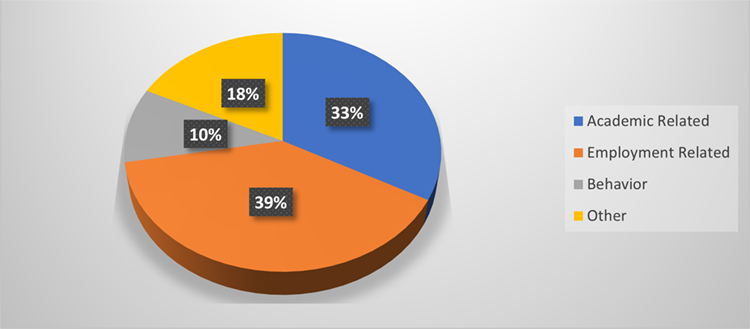
Employment related issues represent the majority (39%) of concerns brought to the office, with academic related issues following (33%). (See Table 2a)  The most frequent employment issue raised by visitors to the office related to job performance or interpersonal issues. Visitors continued to describe a lack of transparency about procedures and processes and inconsistent application of such policies. As a result, complaints of favoritism or inequality continue to be common. Changing policies related to remote work continue to be an area of concern, although policies have begun to emerge and there were fewer concerns raised about decisions about off-site versus on-site scheduling being left to the discretion of individual managers. Finally, we continued to hear of significant behavioral issues, including verbally abusive, demeaning interactions and microaggressions. (See Table 2b) 

Among faculty, some of the key issues brought forth included job security, tenure/promotion issues, and faculty recruitment and retention. Formal (explicit or implicit) policies, procedures, and practices that regulate academic pursuits were also frequently cited. Reports of lack of collegiality and bad behavior (abusive, demeaning, bullying, demoralizing behaviors and microaggressions) were also common. 

With respect to graduate and professional students, challenges in relationships with faculty advisors and mentors and principal investigators were at the forefront. Policies around authorship and intellectual property remain vague in many departments.

Some of the recurring issues and patterns we have observed include:

  • Newly appointed chairs of departments were more likely to request coaching, particularly on issues around team building and intra-personal dynamics.
  • Newly appointed managers have reached out to the office as they try to navigate difficult team dynamics.
  • Staff members who were new to their roles often reached out to the office as they lacked supervisory support, especially during onboarding.
  • Staff members reached out to discuss the lack of transparency about decisions made by supervisors, lack of transparency about processes and procedures, and inconsistency about certain procedures.
  • When goals are not set by managers in collaboration with their employees, conflicts tend to rise. When goals are not embraced, interpersonal conflicts result. 
  • Work-related stress and work-life balance continue to be major concerns for staff. 
  • Abrasive behavior and/or conflict-averse managers negatively impact individuals and teams.

A common concern for graduate students and postdoctoral trainees is their relationship with their principal investigator. Issues include poor communication, poor management (lack of effective leadership of the lab which leads to demoralization), and/or lack of constructive feedback.

Table 3 details the ways in which we help visitors to our office. Our primary goal is to resolve issues brought to the office without escalation and we are frequently successful. In the cases where we are unable to help a visitor achieve a meaningful resolution through mediation, we refer them to campus resources that are equipped to conduct an investigation. They are told that they have the choice to pursue these other avenues, but that these are not confidential resources. 

Outreach 

The office continues to enhance awareness of our services. We have participated in panel discussions on campus, set up information booths at campus events, and given on-site presentations to academic and workplace entities. We offer a wide range of conflict management workshops and each is designed based on the needs of the requesting unit/department. Some of our most requested workshops include Preparing for Difficult Conversations, Empathetic Leadership, Conflict Management for Managers, and Giving and Receiving Feedback.

In addition, we have met with graduate student groups in programs and departments across campus in an attempt to prevent and mitigate the impact of some of the workplace challenges described above. 

Restorative Practice

The Office of the Ombuds has successfully incorporated restorative practice as an additional tool in managing conflict. In cases of bullying and harassment, with the voluntary participation of all parties involved, restorative practice offers a positive outcome in restoring relationships and trust. Where appropriate, restorative practice can lead to the resolution of allegations of misconduct. The harmed party is in control of the process and the focus is on achieving reparation. When successful, restorative practice restores relationships through constructive interpersonal dialogue. 

The Way Forward

Based on our confidential interactions with our visitors, we have identified the following services that would address and alleviate some of the common issues:

  • Proactive training for leaders around conflict management 
  • Processes for providing ongoing feedback 
  • Increased availability of restorative processes 

We reiterate our statement from past years: Members of the Penn community who are in a position to influence the culture and climate of the organizational unit to which they belong or lead are encouraged to be mindful of the importance of collegiality and respectful treatment of others, to model those behaviors, and to take action when bad behaviors occur. Penn is a collection of over 50,000 human beings and conflicts and disputes will inevitably occur. We encourage members of the Penn community who find themselves in conflict or in a dispute with others to reach out to the Office of the Ombuds before the matter escalates, when an amicable resolution is most likely to be achieved. 

Closing

In closing, we want to reaffirm the value of an Office of the Ombuds, especially in light of the current challenges we face in our country and in the world. The office represents a safe and confidential place to engage in discussions among campus community members who may differ in their beliefs and we welcome the opportunity to help.

---

Table 1: Visitors by Role

Role

Number

Percentage of Visitors

Faculty

49

21%

Graduate/Professional

39

17%

Undergraduate

31

14%

Staff

87

38%

Postdoctoral Trainees

10

4%

Other

13

6%

Total

218

100%


Table 2A: Summary of Vategory of Issues Presented

Table 2A: Summary of Vategory of Issues Presented


Table 2B: Issues Presented by Visitors


Issue Category

Issue Definition

Visitors1

2024-2025

ACADEMIC RELATED

Academic, General

General academic matters involving students or faculty.

24

Academic Integrity

Honesty in academic pursuits, e.g., plagiarism, cheating, misrepresentation of academic records, fabrication, unfair advantage.

13

Academic Procedures

Formal (explicit or implicit) policies, procedures, and practices that regulate academic pursuits and interests.

27

Academic Standards

Matters relating to fairness and accuracy or rationales for academic standards of achievement.

7

Academic Research

Research results, interpretations, explanations, and associated authorship and intellectual property rights.

7

EMPLOYMENT RELATED

Employment, General

Matters relating to job performance or compatibility, discipline, or interpersonal issues relating to role as an employee.

70

Employment, Promotion

Career advancement to higher level; tenure.

6

Employment, Compensation

Rate of pay, salary amount,  equity, or competitiveness.

8

Employment, Benefits

Rewards or compensation (other than wages and salary) associated with employment status and their equity, competitiveness, or administration.

4

Employment, Procedures

Formal (explicit or implicit) policies and practices that regulate the employment relationship.

5

BEHAVIOR

Abrasive/Abusive/Inappropriate Behavior

Demonstration of inappropriate treatment of others, e.g., abusive, threatening, coercive behavior; rudeness, crudeness; acts or threats of violence.

15

Sexual Harassment

Unwelcome physical, verbal, written, electronically transmitted, etc. conduct of a sexual nature that creates a hostile or intimidating environment.

4

Discrimination

Disparate treatment tied to protected status (race, gender, age, national origin, religion, etc.)

5

OTHER

Procedures, General

General matters relating to University policies, procedures, or practices.

11

Miscellaneous, Personal

Personal and interpersonal matters unrelated to formal role as student, faculty, or staff.

23

Financial Matters, Collections

Tuition, financial aid, payroll, and accounting issues.

5

Student Services

Delivery and administration of services to students.

3

Total Visitors*


237

1Because some visitors raised more than one issue, the total number of visitor issues (237) is greater than the total number of visitors to the office during this period (229). Total Number of Visitors refers to the initial consultations with new visitors. Number of visitors in this case does not include follow-ups, regular coaching and requests for information and services that the Office of the Ombuds receives.


Table 3: Types of Engagement with Visitors

Type of Engagement

Description

Option exploration

Listen to visitor’s explanation of issue or concern, and assist with identifying possible avenues for resolution, alterative resources, possible action or inaction, etc. and weighing relative merits of options.

Coaching

Provide visitor with approaches, methods, choice of language, tone, etc. to respond to circumstance; role play and rehearse communications.

Inquiry of Penn Resource

Reach out directly to Penn resource to gather information pertinent to the resolution of the dispute, or that may contribute to a better understanding of the circumstances by one or more of the parties.

Referral to Internal Resource (within Penn)

Provide visitor with description of and contact information for resource(s) within the University that may be able to assist with the matter.

Referral External Resource (outside of Penn)

Provide visitor with description of and contact information for resource(s) outside the University that may be able to assist with the matter.

Mediation/Facilitated Conversation (offered and/or hosted)

Offer to serve as neutral intermediary between parties wishing to meet to discuss issues, concerns, conflicts, etc., and host meeting upon request and mutual agreement of parties.

Referral to Penn Policy

Direct visitor to statements of policies, procedures and practices as formally addressed by the University, a school, academic department, center, program, administrative unit, etc., primarily available on the University website.

Shuttle Diplomacy

Serve as conduit for information between parties who cannot or are not willing to communicate directly with each other.

Other

Activity or involvement not falling under any other category.

Governance

Trustees Meeting Coverage

A stated meeting of the Board of Trustees took place on March 6, 2026, at the Inn at Penn.

After a call to order by chair Ramanan Raghavendran, the invocation was given by Charles Howard, University Chaplain and Vice President for Social Equity and Community. He explained that, while times are hard and we may feel a heaviness of spirit, warmer days are coming and things often have a way of righting themselves.

Mr. Raghavendran presented a resolution to amend the statutes of the Trustees of the University of Pennsylvania to clarify, refine, and harmonize provisions of the statutes regarding the appointment, terms and removal of members of the Executive Committee, Investment Board, and Penn Medicine Board which was approved.

President J. Larry Jameson provided an update on support available to the University community during the conflict with Iran. All scholars and students in the region have been accounted for and are safe. Travel guidance has been issued for community members.

President Jameson also gave an update on Penn Forward, the University-wide initiative to shape Penn’s future. The proposals advanced by the working groups ranged from strengthening undergraduate and graduate and professional education for a rapidly changing world to increasing access and affordability. Penn’s leadership team will begin implementing several of the proposals submitted.

President Jameson also presented a resolution to appoint Colleen O’Neill as vice president for finance and treasurer effective April 13, 2026 (Almanac March 3, 2026). The resolution was approved. Provost John L. Jackson, Jr., presented the academic report, including the promotion of Laura Perna to senior vice provost for faculty (Almanac February 24, 2026). He presented a resolution on faculty appointments and promotions, which was approved.

Executive Vice President Mark Dingfield presented the financial report. The University’s total net assets were $35.7 billion as of December 31, 2025, an increase of $1.8 billion, or 5.4% over June 30, 2025. The change in net assets from operations reflected an increase of $400 million through December 31, 2025. Operating revenue of $9.3 billion was $707 million, or 8.2% above last year. Expenses of $8.9 billion were $930 million, or 11.6% above last year.

For the academic component, the change in net assets from operations for the University reflected a $146 million increase versus a $440 million increase last year. Total revenue was $2.5 billion and expenses were $2.4 billion.

For the health system, the change in net assets from operations reflected an increase of $253 million through December 31, 2025. Operating revenue increased $941 million, or 16.2%, from $5.8 billion as of December 31, 2024, to $6.8 billion as of December 31, 2025. Expenses increased $869 million, or 15.2%, from $5.7 billion as of December 31, 2024, to $6.6 billion as of December 31, 2025.

Jonathan A. Epstein, Dean of the Perelman School of Medicine and Executive Vice President of the University of Pennsylvania for the Health System, gave the Penn Medicine report. 

During committee reports, the following resolutions were presented and approved:

  • To establish a master of medical science in the Perelman School of Medicine
  • To establish a master of applied science in computer science in the School of Engineering and Applied Science
  • On the engagement of an independent accountant for fiscal year 2026 and to pre-approve recurring non-audit fees paid to the independent accountant for fiscal year 2027
  • To authorize tuition, fees, and other student charges and financial aid for academic year 2026-2027
  • To authorize the execution of a University of Pennsylvania Health System note and investment of up to $10 million in Vision Professional Services, LLC
  • To approve expanded purposes of the Rutledge Memorial Fund
  • To authorize McNeil Building lower-level renovation design and construction in the amount of $11.5 million

Mr. Raghavendran presented 13 resolutions for appointments to Penn Medicine, advisor, and other boards, all of which were approved. The next meeting of the Board of Trustees is scheduled for May 14, 2026.

From the Faculty Senate Office: Faculty Senate Executive Committee Agenda

he following agenda is published in accordance with the Faculty Senate Rules. Any member of the standing faculty may attend SEC meetings and observe. Questions may be directed to Patrick Walsh either by telephone at (215) 898-6943 or by email at senate@pobox.upenn.edu.

Faculty Senate Executive Committee Agenda
Wednesday, March 18, 2026, 3-5:15 p.m. 

  1. Finalize the Minutes of February 25, 2026, Meeting
  2. Report from the Tri-Chairs
  3. Reports from Constituencies
  4. Proposed Amendments to the Faculty Handbook
    • Proposal to Revise Section II.E.9.C. (Rights and Privileges of Retired Faculty Members) to Clarify the Use of the Emeritus/a Title
    • Proposal from the School of Veterinary Medicine to increase the cap on Clinician Educators in the School from 50% to 60% of the Standing Faculty
  5. Update from the Office of the President
    Discussion with President J. Larry Jameson
  6. Panel Discussion: Faculty Perspectives on Usage of Artificial Intelligence in Teaching, Research, and Clinical Practice
    Panelists:
    • Seema Bhatnagar, Professor of Anesthesiology and Critical Care, Chair of Senate Committee on Students and Educational Policy, SEC Member
    • Bruce Lenthall, Executive Director, Center for Excellence in Teaching, Learning, and Innovation (CETLI)
    • Dawn Mechanic-Hamilton, Associate Professor of Neurology at the Hospital of the University of Pennsylvania
    • Benjamin Pierce, Henry Salvatori Professor in the Department of Computer and Information Science, SEC Member
    • Julia Ticona, Assistant Professor of Communication
    • Elly Truitt, Associate Professor in the Department of History and Sociology of Science
  7. New Business

Honors

2026 Models of Excellence Award Program Honorees

Since 1999, Penn’s Models of Excellence program has recognized over 1,900 staff members for their accomplishments. Now in its 27th year, Models of Excellence continues to act on the University’s principles by honoring the people who are the foundation of all we do.

This spring, 74 staff members will receive Models of Excellence Program awards for 2026. The work of these individuals and teams exemplifies the University’s principles and practices

Following the Models of Excellence call for nominations last fall, the 2026 Selection Committee worked diligently and objectively to review and rate all the Models of Excellence nominations and select this year’s honorees. Penn Human Resources extends its gratitude to the 59 nominators, and the more than 100 colleagues who provided references, for their time, contribution, and commitment to this program.

Award Celebration on June 1, 2026

The Penn community will celebrate the honorees’ outstanding efforts and achievements at the Models of Excellence Ceremony on June 1 from 4 p.m. to 5 p.m. at the Penn Museum, followed by a reception in the Warden Garden. Please save the date.

President J. Larry Jameson, Provost John L. Jackson, Jr., Executive Vice President Mark F. Dingfield, and Vice President of Human Resources Felicia A. Washington will present the awards onstage. 

Individual honorees and teams of up to 20 members will receive an award of $500 per recipient. Teams with more than 20 members will receive a total award of $10,000 distributed evenly among team members. Each award-winning staff member will also receive an engraved keepsake at the award ceremony.

The 2026 Models of Excellence Honorees were selected for their outstanding work in three categories: Models of Innovation, Pillars of Excellence, and Model Supervisor.

Models of Innovation Award

From 20 compelling team and individual nominations, four Models of Innovation nominees are being recognized for their creativity, leadership, initiative, extraordinary service, and dedication to cost-effectiveness.

The Federal Research Transition Team

When federal research funding was disrupted in 2025, Penn’s Federal Research Transition Response Team rallied with speed, creativity, and determination to ensure that leading-edge research could continue. They developed systems to track hundreds of stop-work orders and grant terminations and reestablished critical payments despite government agency system outages. They successfully appealed dozens of funding cuts, resulting in multiple award reinstatements. Collaborating across finance, legal, and research administration functions, the team ensured uninterrupted payroll, maintained compliance, and provided steady and trusted guidance to Penn’s research community. Their innovative, unified response transformed unprecedented national disruption into a lasting model of operational resilience.

  • Beth Alioto, Division of Finance
  • Ravindra Avvari, Information Systems and Computing
  • Montana Beeson, President’s Center
  • Jacqueline Binstead, Division of Finance
  • Nicholas Bolger, Division of Finance
  • Jessica Buchanan, Division of Finance
  • James Clavin, Division of Finance
  • Ashley Del Bianco, Division of Finance
  • Keith Dixon, Division of Finance
  • Richard Flom, Division of Finance
  • Kim Garrison, Division of Finance
  • April Johnson, Division of Finance
  • Meghan LeCates, Division of Finance
  • Stacia Levy, Division of Finance
  • Vanessa Madden, Perelman School of Medicine
  • Marissa McGeehan, Division of Finance
  • Julie Meyer, Information Systems and Computing
  • Ernestine Nemetz, Division of Finance
  • Elizabeth Peloso, Division of Finance
  • Jennifer Rowan, Division of Finance
  • Leo Ruzzi, Division of Finance
  • Mark Siciliano, Information Systems and Computing
  • Robert Speakman, Division of Finance
  • Denene Wambach, President’s Center
  • Kyle Wolfe, Division of Finance

Peter Harnish, School of Arts & Sciences

Peter Harnish, a laboratory instruction coordinator in the School of Arts & Sciences, introduced major innovations in conceiving and implementing the physics department’s introductory lab courses and other teaching labs. He instituted a regimen in which students present each experiment in a different mode of communication to prepare them for the various professional situations where they will need to express their ideas effectively. Besides the students, every research group in the department has benefited significantly from these new practices. Mr. Harnish also organizes and delivers community outreach through Penn’s summer Physics Research Academy and annual Physics Demo Show for area high school students. He added several new, high-visual-impact experiments to these programs along with a more engaging narrative and historical context for younger learners.

Chambrel Jones, School of Engineering & Applied Science

Chambrel Jones, chief of staff in the School of Engineering & Applied Science, has transformed Penn Engineering’s culture through initiatives that elevate transparency, staff engagement, and community service. Ms. Jones launched the school’s staff onboarding program and monthly staff coffee hours. She has enhanced managers’ and directors’ meetings to foster collaboration and connection. Her signature event, Staff Appreciation Week, distinctively celebrates staff excellence, building morale and retention. Through these self-initiated efforts, Ms. Jones’s dedication to service reflects and promotes Penn’s values, inspiring others to lead with empathy, strengthen community, and advance Penn Engineering’s mission locally and globally.

Penn Medicine Standardized Patient Program

The Penn Medicine Standardized Patient Program developed and implemented new training sessions for Penn Medicine Hospice employees that allow them to build skills required to lead caring and effective end-of-life conversations. The program staff trained standardized patients (SPs) to act as bereaved family members. The SPs traveled to Penn Medicine practice locations to co-lead large group workshops and perform realistic one-on-one encounters with clinicians. This live, experiential learning enabled hospice employees to receive individualized feedback from the caregivers’ perspective and ultimately have more productive and empathic interactions with real-life patients and family members in the Penn community.

  • Catherine Hagele, Perelman School of Medicine
  • Denise LaMarra, Perelman School of Medicine
  • Cori Maskart, Perelman School of Medicine
  • Janice Radway, Perelman School of Medicine

Pillars of Excellence Award

The Pillars of Excellence honorees are being recognized for the strong foundation and important contributions provided by staff in support roles. They are pillars of the institution. Twenty-three nominations were received in this category. Four are being honored this year.

Timothy Grogan, Facilities and Real Estate Services

For more than three decades, Timothy Grogan has demonstrated uncommon leadership, innovation, and service as an electrician chargeperson in Facilities and Real Estate Services. His expertise ensures the flawless execution of major University events—from Commencement and Convocation to athletic competitions and Irvine Auditorium performances. His forward-thinking approach to technology and safety has enhanced system reliability, improved operational efficiency, and strengthened collaboration across departments, making him an indispensable contributor to Penn’s mission and community.

Molecular Pathology & Imaging Core (MPIC) Team

The MPIC Team consistently demonstrates exceptional initiative and technical expertise, achieving outstanding results with remarkable efficiency and precision in histology, the microscopic study of living tissue. Their dedication ensures the success of many of Penn’s most complex and demanding research projects. Many researchers, vendors, and collaborators seek out MPIC specifically because of their exemplary support. These colleagues highly respect the MPIC Team’s professionalism, reliability, and collaborative spirit. By embracing new technologies and expertly navigating challenging week-long protocols, the MPIC Team embodies service excellence and is invaluable in advancing Penn’s research mission.

  • Rebecca Ly, Perelman School of Medicine
  • Jem Palma, Perelman School of Medicine

Caitlyn Molony, School of Veterinary Medicine

As the head veterinary nurse for Penn Vet’s colonies of dogs and cats with ultra-rare human genetic diseases, Caitlyn Molony plays a vital role in developing treatments that may help fight these illnesses in children. Ms. Molony supervises a team of part-time veterinary and undergraduate assistants to provide daily medical management of these uncommon and fragile animals. She has an extraordinary ability to take independent initiative while always coordinating her actions with the faculty. Ms. Molony’s insightful clinical observations and commitment to quality ensure that the animals receive the best care.

PARCC: Doubling Penn’s Computing Power to Drive Innovation

In under two years, the team created the Penn Advanced Research Computing Center (PARCC), one of the most ambitious academic computing resources in the country. The system can perform over eight quadrillion calculations per second and is expected to be listed among the world’s TOP 500-class supercomputers. Optimizing an investment of $25 million, PARCC harnesses advanced processors, ultra-fast networks, and five petabytes of storage to support multi-disciplinary research, including AI. It replaced fragmented systems with a resource open to all Penn schools and launched a cohort-based training model that helps new users learn together. PARCC positions Penn to accelerate innovation across disciplines.

  • Dawn Augustino, Executive Vice President’s Center
  • Jeffrey Ballentine, Information Systems and Computing
  • Marta Bartholomew, Provost’s Center
  • Michael Borda, Provost’s Center
  • Christine Brisson, School of Arts and Sciences
  • Kenneth Chaney, Provost’s Center
  • David Cohen, Information Systems and Computing
  • Amy Collins, Provost’s Center
  • Jaime Combariza, Provost’s Center
  • Keith Duvall, Information Systems and Computing
  • Jeffrey Edwards, Information Systems and Computing
  • Steven Fredricks, Information Systems and Computing
  • Garick Hamlin, Information Systems and Computing
  • Tiffany Hanulec, Information Systems and Computing
  • Corinn Harrell, School of Arts and Sciences
  • Gregory Hartley, Information Systems and Computing
  • Monica Heater, Provost’s Center
  • Lokke Highstein, School of Arts and Sciences
  • Chris Hyzer, Information Systems and Computing
  • Donna Jacobs, Information Systems and Computing
  • Rick Kahley, Division of Finance
  • John Lee, Information Systems and Computing
  • Steven Mak, Information Systems and Computing
  • Chris Masotti, Perelman School of Medicine
  • Michael Matthews, School of Engineering and Applied Science
  • Andrea Mazzucchi, School of Arts and Sciences
  • David Mongeluzi, Information Systems and Computing
  • John O’Brien, Information Systems and Computing
  • Daniel Prante, Information Systems and Computing
  • Reni Roberts, Information Systems and Computing
  • Jamie Schnaitter, School of Engineering and Applied Science
  • Dave Tarampi, Information Systems and Computing
  • Kristofor Varhus, School of Engineering and Applied Science
  • Tony White, Information Systems and Computing
  • Daniel Widyono, School of Engineering and Applied Science
  • Monesa Williams, Provost’s Center

Model Supervisor Award

The Model Supervisor category received 16 nominations for 2026. Three are being honored for acting as leaders who serve while inspiring remarkable performances from their teams.

Marc Felice, Provost’s Center

Marc Felice, associate director of imaging physics and radiation Safety in the department of Environmental Health and Radiation Safety, is a skilled leader who creates pathways for his team’s professional growth and provides exemplary mentorship to the diagnostic medical physicists he supervises. Mr. Felice played an integral part in the creation of the imaging physics residency program at Penn, which provides clinical training to the next generation of diagnostic medical physicists. Mr. Felice works diligently to ensure that radiation is used safely in research and clinical spaces throughout the University, Penn Medicine, and the Children’s Hospital of Philadelphia.

Elaine Papas Varas, Division of Finance

Elaine Papas Varas, senior director of student financial aid, is a vi-sionary leader whose compassionate and student-centered approach has transformed financial aid and student support. She helped create Penn’s highly-aided student initiatives. This program has expanded resources for students, providing essentials like laptops, health insurance, and internship funding. Program participation has grown from 800 to 1,450 students. Ms. Varas also revamped the service model for graduate student aid, improving performance and satisfaction across schools. Amid unprecedented federal changes, her proactive communication and steady leadership have upheld excellence, access, and affordability, making Penn’s financial aid program a national model of innovation.

Lily Zhang, Penn Global

Lily Zhang, director of advising, compliance, IT, and operations in the International Student and Scholar Services Office of Penn Global, is a driving force behind Penn’s success in immigration compliance and technological innovation. She has led transformative initiatives that modernized systems, streamlined regulatory processes, and enhanced service delivery for international students and scholars. Her strategic use of technology has improved efficiency and transparency, while her deep expertise in compliance ensures that Penn remains a trusted institution for global engagement. Ms. Zhang’s leadership consistently fosters collaboration, precision, and forward-thinking solutions.

If you have any questions about the program or the awards ceremony, visit www.hr.upenn.edu/models or feel free to contact Karen Kille, director of quality of work-life programs in the Division of Human Resources, at karener@upenn.edu or (215) 898-7729.

Linda Aiken: 2026 ANA President’s Award

The American Nurses Association (ANA) has announced that Penn Nursing’s Linda H. Aiken, a professor and founding director of the Center for Health Outcomes and Policy Research (CHOPR), has received the 2026 ANA President’s Award. This prestigious honor is granted by the ANA president and board to recognize leaders whose public influence has advanced the nursing profession in enduring ways. Dr. Aiken is one of four 2026 award recipients.

ANA president Jennifer Mensik Kennedy noted that Dr. Aiken, a pioneering outcomes scientist, is being recognized for research that has fundamentally reshaped global workforce standards. Her decades of empirical work have demonstrated the critical link between nurse staffing levels, educational preparation, and patient safety, providing the scientific foundation for modern staffing policies worldwide.

“I am honored and gratified to receive this recognition from the American Nurses Association on behalf of practicing nurses,” said Dr. Aiken. “My life’s work has been dedicated to creating the evidence base to enable the nation’s 4.7 million professional nurses to provide safe and effective care and to lead innovations that improve access to and quality of healthcare in our country and globally.” 

“Dr. Aiken’s pioneering research has fundamentally reshaped nursing, informed policy, and has been used to create infrastructures that address patient safety and workforce standards,” said Antonia M. Villarruel, the Margaret Bond Simon Dean of Penn Nursing. “This ANA recognition is well deserved, and we at Penn Nursing celebrate her decades of scholarship, advocacy, and commitment to educating future nurse scholars. Her work has redefined global standards for safe nurse staffing and reflects our mission to elevate nurses as leaders of innovation and equitable care.”

Dr. Aiken will be formally honored on June 25, 2026 during the American Nurses Association Membership Assembly in Washington, DC. The award underscores Penn Nursing’s longstanding leadership in health outcomes research and workforce policy.

Squire Booker: Phi Beta Kappa Visiting Scholar

caption: Squire BookerSquire J. Booker, the Richard Perry Penn Integrates Knowledge Professor of Chemistry and of Biochemistry & Biophysics in the School of Arts & Sciences and the Perelman School of Medicine, has been named a 2026-2027 Phi Beta Kappa Visiting Scholar.

Since 1956, the Phi Beta Kappa Society’s Visiting Scholar Program has offered undergraduates the opportunity to spend time with some of America’s most distinguished scholars. The purpose of the program is to contribute to the intellectual life of the institution by making possible an exchange of ideas between the visiting scholars and the resident faculty and students.

Each year, members of the Committee on the Visiting Scholar Program select top scholars in the liberal arts and sciences to visit universities and colleges where Phi Beta Kappa chapters are located. Visiting scholars spend two days on each campus meeting informally with undergraduates, participating in classroom lectures and seminars, and giving one major lecture open to the academic community and general public.

The 2026-2027 Phi Beta Kappa Visiting Scholars will make over 100 visits during the academic year.

Dr. Booker received a BA in chemistry from Austin College in 1987 and a PhD in biochemistry from the Massachusetts Institute of Technology in 1994. After postdoctoral studies at the Université René Descartes (Paris, France) and the University of Wisconsin–Madison, he joined the faculty of Penn State University in 1999 as an independent investigator before assuming his current position at Penn in 2025. Dr. Booker’s research focuses on enzymes that catalyze reactions using radicals. He is an associate editor of Biochemistry ACS and deputy editor of ACS Bio & Med Chem Gold. He is also a member of the American Academy of Arts and Sciences and the National Academy of Sciences.

Founded in 1776, the Phi Beta Kappa Society is the nation’s most prestigious academic honor society. It has chapters at over 290 colleges and universities in the United States, nearly 50 alumni associations, and more than 700,000 members worldwide. The mission of the Phi Beta Kappa Society is to champion education in the liberal arts and sciences, foster freedom of thought, and recognize academic excellence.

Barefoot College International, Food for All Africa, and Kheyti Awarded 2026 Lipman Family Prize

Barefoot College International, Food for All Africa, and Kheyti have been named winners of the 2026 Barry & Marie Lipman Family Prize. Chosen from an applicant pool of over 300 organizations, all three winners are guaranteed an unrestricted financial award of $150,000 as well as executive training and support from the Wharton School and the University of Pennsylvania. One grand prize winner will receive $250,000 in unrestricted funds. The grand prize winner will be announced at an in-person award ceremony in April.

“For 15 years, the Lipman Family Prize has exemplified Wharton’s commitment to advancing organizations that combine bold leadership with measurable social impact,” said Erika James, Dean of the Wharton School. “Each year, we are inspired by the ingenuity and resilience of these leaders, and we are proud to partner with them as they scale solutions to some of the world’s most pressing challenges.” 

In addition to the financial award, all three winners will gain access to a growing community of change-makers and thought leaders who accelerate cutting-edge impact worldwide. The prize connects organizations that are on the cusp of great change with the resources and skills to expand the impact and influence of their work. Benefits include tuition-free executive education programs, scholarship opportunities like the Lipman Nonprofit Scholarship, peer learning events, as well as expert and student-driven research to inform and support their work.

“When Marie and I established the prize, our goal was to stand alongside nonprofit leaders at pivotal moments in their growth,” said Barry Lipman, W’70, co-founder of the Lipman Family Prize. “Fifteen years later, that commitment is stronger than ever. As we celebrate this milestone year, we are honored to welcome these exceptional organizations into the Lipman community and to support their continued pursuit of transformative, lasting impact.” 

Barefoot College International trains rural women worldwide as solar engineers, educators, and entrepreneurs, expanding renewable energy access while advancing economic and energy independence. Food for All Africa combats food waste and nutrition insecurity in Ghana by operating West Africa’s first and largest food bank, rescuing surplus food and converting organic waste into valuable resources through a circular model. Kheyti doubles smallholder (small-scale farmer) incomes, protecting them from extreme weather, and makes agriculture significantly more sustainable through its low-cost, modular Greenhouse-in-a-Box, an ultra-low-cost greenhouse bundled with end-to-end services.

First awarded in 2012, the Lipman Family Prize at the University of Pennsylvania is an annual global prize that honors nonprofit organizations based on their leadership, impact, innovation, and transferability of ideas. Administered by the Wharton School on behalf of the University of Pennsylvania, the prize is committed to resourcing and connecting change-makers to bring their leading solutions to new places and problems around the world. Previous grand prize winners include iDE, READ Global, Breakthrough, Riders for Health, Soccer Without Borders, Women Against Abuse, MyAgro, World Bicycle Relief, Sanku, EarthEnable, CDD Society, Build Up Nepal, Seacology, and Barbershops Books.

Features

Penn Museum and Three Aksha Present CultureFest! Holi on March 21, 2026

caption: A variety of cultural performances celebrating the Hindu tradition of Holi will take place at the Penn Museum on March 21.In partnership with Three Aksha, the Penn Museum will celebrate spring with CultureFest! Holi on Saturday, March 21, from 11 a.m.-4 p.m.

Known as the Festival of Colors, Holi is a Hindu tradition observed in India, Nepal, and many communities around the world. It usually spans two days in early March, symbolizing the triumph of good over evil, the arrival of spring, and the end of winter. Highlighting renewal, rebirth, love, and unity, Holi represents a time to embrace the positive and release negative energy. It also honors the divine love of the Hindu god Krishna and his devotee, Radha.

CultureFest! Holi is a family friendly festival featuring interactive storytelling, colorful art-making, live music, riveting dance performances, and a marketplace. The highlight of the day will be the joyful throwing of brightly colored powders outside in Harrison Garden, engulfing attendees in the spirit of Holi’s cultural traditions.

“Among the many traditional festivals celebrated in India, Holi stands out as the most exuberant and colorful,” said Viji Rao, artistic director of Three Aksha. “This ancient celebration is observed worldwide, marked by integral rituals and a spirit of togetherness. This vibrant celebration offers a perfect opportunity to express love, embrace new beginnings, and create lasting memories. It is an ideal time to share your true feelings with your loved ones and enjoy the beauty of the season.”

This year’s CultureFest! Holi lineup includes:

  • Katha Storytelling with Viji Rao at 11:30 a.m. and 1:30 p.m. in Widener Auditorium. Participants can learn more about Holi’s ancient origins by creating their own stories using hand gestures, facial expressions, and rhythmic movements. Families can immerse themselves in the cultural significance of Holi, promoting kindness, community, and fresh beginnings.
  • Samudra Musical Showcase from 12:30-1:15 p.m. in Harrison Auditorium. This Indian youth music ensemble blends traditional Indian music with modern energy in a performance featuring Rohan Jayakrishnan on guitar, Niya Pillai on the saxophone, Sidharth Sumesh on drums, Shrinithaa Elangovan on the keyboard, and singers Lakshya Jaikumar, Veda Vishnu, and Lavanya Venkate.
  • Three Aksha Ensemble Dance from 2:45-3:45 p.m. in Harrison Auditorium. Three Aksha performs Bharatanatyam, a classical Indian dance that brings to life the playful, romantic stories of Radha and Krishna, capturing the energy of spring and joy of togetherness.

The all-day festival culminates in Harrison Garden with color powder throwing at 4 p.m. (For the care of the museum’s collection, no re-entry to the museum will be permitted once the colors have been thrown). All CultureFest! Holi activities are included with Penn Museum admission.

Events

Albert M. Greenfield Memorial Lecture: March 19

This year’s 2026 Albert M. Greenfield Memorial Lecture on March 19 will discuss Connection As Intervention: Digital Peer Mentorship in Suicide Prevention. It will be moderated by José Bauermeister, the Albert M. Greenfield Professor of Human Relations and Director, The Eidos LGBTQ+ Health Initiative at the University of Pennsylvania.  It will also feature Lily Brown, assistant professor of psychology in psychiatry, Director, Center for the Treatment and Study of Anxiety, department of psychiatry, University of Pennsylvania Perelman School of Medicine. 

The lecture will take place at 3:30 p.m. in the Holman Biotech Commons and virtually. To RSVP, visit https://www.nursing.upenn.edu/calendar/event/6062-the-albert-m-greenfield-memorial-lecture

Update: March AT PENN

Conferences

20        Indigenous Philosophy Across the Americas: Epistemologies and Ontologies outside the Settler Colonial Hegemony; celebrates the ontological and epistemic frameworks produced by Indigenous peoples and demonstrates the standalone importance of Indigenous philosophies across the Americas; 9 a.m.-6 p.m.; room 403, McNeil Building, and Zoom webinar; register: https://tinyurl.com/wolf-conf-mar-20 (Wolf Humanities Center).

22        Building Refuge: Law, Advocacy, and Community in the Fight for Protection; will explore how legal frameworks, advocacy, and community collaboration can uphold the fundamental human rights of displaced and vulnerable populations; 8:30 a.m.-2 p.m.; room 240B, Silverman Hall; register: https://tinyurl.com/law-conf-mar-22 (International Human Rights Advocacy Project, International Refugee Assistance Project, Penn Law Immigrant Rights Project).


Exhibits

18        Tours with Penn Students; join student guides for an engaging and informative tour of Collecting the New Irascibles: Art in the 1980s; explore, ask questions, and connect with the lived experiences and social forces that shaped this pivotal period; 4-6 p.m.; Arthur Ross Gallery, Fisher Fine Arts Library. Also March 21-22, noon-3 p.m.

19        In Case of Fire, Speak; a companion exhibition tracing the histories of the  Martha Graham Dance Company and PHILADANCO!; offers a behind-the-scenes look at these illustrious companies while also exploring how this history inspired Tommie-Waheed Evans in the creation of his co-commissioned work, in case of fire, speak, which will receive its world premiere May 29-30; Feintuch Family Lobby, Annenberg Center. Through July 6.


Films

18        Searching for the Songs of Wanaragua; offers an intimate look at the urgent effort to preserve the endangered language and culture of the Garifuna people; features conversation with directors Eli Laban and César Vargas; 4 p.m.; room 241, Van Pelt Library; RSVP: https://www.library.upenn.edu/events/searching-songs-wanaragua-film (Center for Latin American & Latinx Studies).

19        Another News Story; provides a critical entry point into news production and how journalists covered the European refugee crisis; features discussion with Eszter Zimanyi, Center for Advanced Research in Global Communication; 5:30 p.m.; room 109, Annenberg School (Annenberg School).

20        Ghosts of Adelanto & The Rise of Abolish ICE; examines the rise of the #AbolishICE movement through the voices and organizing efforts of undocumented student activists from California’s Inland Empire; features discussion with director Setsu Shigematsu; noon; room 473, McNeil Building; info: https://tinyurl.com/asam-adelanto-mar-20 (Asian American Studies).


Fitness & Learning

18        RPA Data Science Workshop: Python; part of a series of data science workshops to learn essential coding skills for modeling, data analysis, and visualization; this session will focus on Python, a language commonly used in machine learning, AI, and data analysis; 5:30 p.m.; room F60, Huntsman Hall (Center for Undergraduate Research & Fellowships).

20        Dine & Discourse with History Undergraduate Advisory Board and the Aspiring Educators at Penn; undergraduates are invited to this special lunch event on history teaching; Amy Offner and Karen Tani, history, will discuss pedagogy and the challenges of teaching history in today’s political climate; noon; location TBA; register: https://tinyurl.com/huab-lunch-mar-20 (History Undergraduate Board).

23        Knight-Hennessy Scholars at Stanford University Information Session; learn about a program that fully funds up to three years of a graduate program at Stanford; noon; room G08/09, College Hall (Center for Undergraduate Research & Fellowships).


Penn Libraries

Various locations. Info: https://www.library.upenn.edu/events.

18        Business Research Strategies; an overview of essential business resources and self-help tools from Lippincott Library to support your academic, career, and entrepreneurial goals; noon; room 242, Van Pelt Library.

            Weingarten Center Drop-ins at the Butler Room; representatives from the Weingarten Center will also be on hand to answer questions about resources, how to submit an accessibility request, get assistance with test scheduling, and more; 3-5 p.m.; room G101.1, Ven Pelt Library.

            Bookbinding Workshop: Sewing Variations with Jess Ortegon; learn different types of sewing stitches used in bookbinding including pamphlet sewing, link stitch, long stitch, and more; 4-7 p.m.; level B seminar room, Fisher Fine Arts Library.

19        Printing Your Own Postcard: Learning How to Set Type and Letterpress-Print; use the Common Press collection of metal typefaces to create a simple postcard design using words that you provide and then print a small edition on the Vandercook printing press; 10 a.m.-1 p.m.; Common Press, Fisher Fine Arts Library.

24        Reimagining Illumination: Mirrors + Movable Books; Emily Brooks, associate director of digital research in the humanities in the Price Lab for Digital Humanities, will lead a workshop where we will make pop-up mirror books; 2-4 p.m.; room 623, Van Pelt Library.


Music

20        Music in the Stacks: Penn Glee Club; Penn Glee Club’s subgroups Penn Pipers and Penn Sirens give a performance among stacks of books as a study break; 3 p.m.; library level 1, Penn Museum (Music Department).


Platt Student Performing Arts House

In-person events. Info: https://platthouse.universitylife.upenn.edu/.

20        Penn Atma Presents Matma Mia; spring show by Penn’s premier female South Asian a cappella group; 6 p.m.; Prince Theater; Annenberg Center; tickets: $9-$11. Also March 21, 9:30 p.m.

            Pennyo A Cappella Presents The YOrax; Pennyo will perform various creative mashups of Chinese and American songs, a celebration of the two cultures, and debut a parody version of Dr. Seuss’s The Lorax; 9 p.m.; Iron Gate Theater; tickets: $7-$13. Also March 21, 6 p.m.

21        Kapacity Presents Kapacity S’26 Concert; Penn’s rock band presents a 14-song setlist; 6:30 p.m.; Bodek Lounge, Houston Hall.


On Stage

Platt Student Performing Arts House

In-person events. Info: https://platthouse.universitylife.upenn.edu/.

19        Strictly Funk Presents Icon; Strictly Funk, a popular Penn dance ensemble, brings larger-than-life figures to the stage, celebrating the music, movement, and moments that made them unforgettable; 7:45 p.m.; Iron Gate Theater; tickets: $10-$13. Also March 20, 6:15 p.m.; March 21, 8:15 p.m.

            Without a Net Presents “Saint Baddies Day”; Penn’s oldest and only improv comedy troupe presents an evening of buckle-busting comedy; 8 p.m.; Class of 1949 Auditorium, Houston Hall; tickets: $10-$12. Also March 20, 8 p.m.; March 21, 8 p.m.


Readings & Signings

18        Brothers Behind Bars: A History of the Muslim Brotherhood from the Palestine War to Egypt’s Prisons; Mathias Ghyoot, Princeton University; 5:30 p.m.; room 401, Fisher-Bennett Hall (Middle East Center).

19        Book Launch: Media Matters; Karen M’Closkey and Keith VanDerSys, Weitzman School; 6:30 p.m.; Kleinman Forum, Fisher Fine Arts Library (McHarg Center).

23        Lucky by Design: The Hidden Economics You Need to Get More of What You Want; Judd Kessler, Wharton School; 5:30 p.m.; 2nd floor conference room, Penn Bookstore (Penn Bookstore).

24        Chinese Global Environmentalism; Alex L. Wang, University of California, Los Angeles; 12:15 p.m.; room 418, PCPSE (Center for the Study of Contemporary China).

            Driven to Their Knees: Humiliation in Contemporary Politics; Roxanne L. Euben, political science; 5:30 p.m.; 2nd floor conference room, Penn Bookstore (Middle East Center, Penn Bookstore).


Kelly Writers House

In-person events at Arts Café, Kelly Writers House. Info: https://writing.upenn.edu/wh/calendar/0326.php.

19        Making My Way to the Bruce Springsteen Center for American Music; Bob Santelli, Bruce Springsteen Center for American Music; 5:30 p.m.


Special Events

24        Nawruz (Nowruz) Celebration; Nawruz (Nowruz) is celebrated from the Uyghur regions of Western China all across Central Asia through to Iran and beyond; celebrate the arrival of spring with presentations and performances focused on regional traditions around Nawruz by student groups including Kazakh traditional music and dance; 5:30-7:30 p.m.; Hall of Flags, Houston Hall (Center for East Asian Studies).


Talks

17        Law in the Age of State Security: Hong Kong and the World; Laikwan Pang, University of Hong Kong; noon; room 543, Williams Hall (East Asian Languages & Civilizations).

18        Exploratory Data Analysis, Confirmatory Data Analysis and Replication in the Same Observational Study; Dylan Small, statistics; 9 a.m.; room 11-102, 3600 Civic Center Blvd, and Zoom webinar; join: https://pennmedicine.zoom.us/j/98976330974 (Center for Clinical Epidemiology and Biostatistics).

            Gender in the Classroom: Thinking Outside of Women’s History Month; Julia Alekseyeva, cinema & media studies; Rebecca Harmon, Francophone studies; Julia Heim, Italian studies & queer studies; 10 a.m.; room 135, Fisher-Bennett Hall (Cinema & Media Studies, Gender, Sexuality & Women’s Studies).

            How Can We Enable LLM Auditing?; Anjalie Field, Johns Hopkins University; noon; room 414, Gutmann Hall, and Zoom webinar; join: https://upenn.zoom.us/j/91712393729 (ASSET Center).

            Exploiting Uncertainty for Fieldable Robot Autonomy; Jay Patrikar, Field AI; 3 p.m.; room 414, Gutmann Hall, and Zoom webinar; join: https://upenn.zoom.us/j/94772435044 (GRASP Lab).

            From Script to Screen; Hank Steinberg, C’91, American television and film writer, producer and director; 6 p.m.; auditorium, PCPSE; register: https://tinyurl.com/steinberg-talk-mar-18 (Penn Alumni).

19        Heterogeneity Without the Headache: Architecting Accelerator-Centric Computing Systems; Gerasimos Gerogiannis, University of Illinois at Urbana-Campaign; 11 a.m.; room 225, Towne Building (Electrical & Systems Engineering).

            Coherence Mechanisms for Provable Self-Improvement; Mehryar Mohri, Google Research and Courant Institute of Mathematical Sciences; noon; room 414, Gutmann Hall, and Zoom webinar; join: https://upenn.zoom.us/j/98220304722 (IDEAS Center, Penn AI, Statistics & Data Science).

            China’s Fraught Ethnic Future: Implications of the New Law on Ethnic Unity and Progress; Aaron Glasserman, Center for the Study of Contemporary China; Jacques deLisle, Carey Law School; 12:15 p.m.; room 418, PCPSE (Center for the Study of Contemporary China).

            The Attention-Information Tradeoff; Marta Serra-Garcia, University of California, San Diego; 1 p.m.; Zoom webinar; info: https://tinyurl.com/serra-garcia-talk-mar-19 (Center for Social Norms & Behavioral Dynamics).

            Connection As Intervention: Digital Peer Mentorship in Suicide Prevention; Lily Brown, psychiatry; Jose A. Bauermeister, Penn Nursing; 3:30 p.m.; Holman Biotech Commons and online webinar; register: https://tinyurl.com/brown-bauermeister-mar-19 (Albert M. Greenfield Memorial Lecture).

            A Subtler Alchemy: Rethinking Perfumery and Dyeing in Greco-Roman Egypt; Sean Coughlin, Czech Academy of Sciences; 4:45 p.m.; room 402, Cohen Hall (Classical Studies).

20        When Grammatical Complexity Helps Children; Jill de Villiers, Smith College; 10:15 a.m.; room 110, Annenberg School (Linguistics).

23        Why Some People Save Lives and Others Take Them: Understanding the Roots of Variation in Human Prosociality and Antisociality; Abigail Marsh, Georgetown University; 3:30 p.m.; 3:30 p.m.; auditorium, Neural and Behavioral Sciences Building (Psychology).

            American Defender: How the Pentagon Armed Ukraine to Fight Putin; Celeste A. Wallander, Penn Washington; 5:30 p.m.; room 623, Williams Hall (Wolf Humanities Forum, Russian & East European Studies).

24        Wastelands: The Economic Geography of Waste, Coercion, and Incarceration in Southeastern Louisiana; Jennifer Klein, Columbia University; noon; room 209, College Hall (History).

            Why Plato Matters; Angie Hobbs, University of Sheffield; 6 p.m.; Bodek Lounge, Houston Hall; register: https://tinyurl.com/hobbs-talk-mar-24 (Philomathean Society).

            Oscars Debrief 2026; Peter Decherney, cinema & media studies, and other media experts; 7 p.m.; online webinar; register: https://tinyurl.com/decherney-talk-mar-24 (Global Discovery Series).


Economics

In-person events in various locations. Info: https://economics.sas.upenn.edu/events.

18        Assisted Reproductive Technology and Fertility; Venera Albaeva, economics; noon; room 200, PCPSE.

            Signals, Interviews, and Hiring in Labor Market Equilibrium; Benjamin Lester, Federal Reserve Bank of Philadelphia; 4 p.m.; room 101, PCPSE.

23        Estimation with Prior Studies: A Bayesian Model Averaging Approach; Demian Pouzo, Berkeley University; 4:30 p.m.; room 101, PCPSE.

24        The Price of Privacy; Jacopo Perego, Columbia University; 4 p.m.; room 100, PCPSE.


Mathematics

Various locations. Info: https://www.math.upenn.edu/events.

19        Curves, Lattices and the Mizohata–Takeuchi Conjecture; Hannah Cairo, University of Maryland; 3:30 p.m.; room 4C4, DRL.

20        The Covering Radius of Rings of Integers; Frauke Bleher, University of Iowa; 3:30 p.m.; room N30, DRL.

23        Arithmetic Quantum Field Theory: Physics on Number Fields; David Ben-Zvi, University of Texas at Austin; 3:30 p.m.; room A2, DRL.

            Hyperarithmetical Complexity of Infinitary Substructural Logics; Tikhon Pshenitsyn, ‪Steklov Mathematical Institute; 3:30 p.m.; online webinar.

24        Arithmetic Quantum Field Theory: Characters and Geometric Quantization; David Ben-Zvi, University of Texas at Austin; 3:30 p.m.; room A6, DRL.


Penn Libraries

Various locations. Info: https://www.library.upenn.edu/events.

17        Excavated Shellac: A Global View of the Early Recording Industry; Jonathan Ward, 78rpm disc collector; 5:15 p.m.; online webinar and Class of 1978 Orrery Pavilion, Van Pelt Library.


This is an update to the March AT PENN calendar, which is online now. To submit events for future AT PENN calendars or weekly updates, email almanac@upenn.edu.

WXPN Board Meeting: March 25

An open session of the WXPN Policy Board will meet on Wednesday, March 25, 2026 at noon at WXPN. For more information, email abby@xpn.org or call (215) 898-0628 during business hours.

Crimes

Weekly Crime Reports

Division of Public Safety
University of Pennsylvania Police Department Crime Report

About the Crime Report: Below are the Crimes Against Persons and/or Crimes Against Property from the campus report for March 2-8, 2026. The Crime Reports are available at: https://almanac.upenn.edu/sections/crimes. Prior weeks’ reports are also online. –Eds.

This summary is prepared by the Division of Public Safety (DPS) and contains all criminal incidents reported and made known to the Penn Police, including those reported to the Philadelphia Police Department (PPD) that occurred within our patrol zone, for the dates of March 2-8, 2026. The Penn Police actively patrol from Market Street to Baltimore Avenue and from 30th Street to 43rd Street in conjunction with the Philadelphia Police.

In this effort to provide you with a thorough and accurate report on public safety concerns, we hope that your increased awareness will lessen the opportunity for crime. For any concerns or suggestions regarding this report, please call DPS at (215) 898-7297. You may view the daily crime log on the DPS website.

Penn Police Patrol Zone
Market Street to Baltimore Avenue and from 30th Street to 43rd Street

Crime Category

Date

Time

Location

Description

Aggravated Assault

03/05/26

11:07 PM

4200 Chestnut St

Report of an aggravated assault with a bottle on highway

Assault

03/08/26

8:00 PM

4000 Market St

Subject reported being assaulted by an unknown male during a fight

Disorderly Conduct

03/06/26

12:41 AM

3900 Walnut St

Offender cited for disorderly conduct during a domestic incident

Other Offense

03/02/26

11:16 AM

4200 Intersection

Suspects in burglary stopped for investigation; outstanding warrant/Arrest


03/04/26

8:57 PM

3900 Chestnut St

Verbal dispute between known subjects


03/08/26

3:12 AM

100 S 40th St

Verbal dispute between known subjects

Retail Theft

03/03/26

10:01 AM

4233 Chestnut St

Retail theft of alcohol; offender fled the area


03/03/26

8:32 PM

4233 Chestnut St

Retail theft of alcohol; offenders fled the area


03/05/26

5:40 PM

3604 Chestnut St

Retail theft of consumable goods


03/08/26

11:43 AM

4233 Chestnut St

Retail theft by subject/Arrest

Theft from Building

03/07/26

3:10 PM

3130 Walnut St

Theft of video equipment from inside secured location


Philadelphia Police 18th District
Schuylkill River to 49th Street & Market Street to Woodland Avenue

Below are the Crimes Against Persons from the 18th District: 9 incidents were reported for March 2-8, 2026 by the 18th District, covering the Schuylkill River to 49th Street & Market Street to Woodland Avenue.

Crime Category

Date

Time

Location

Aggravated Assault

03/05/26

11:35 PM

4211 Chestnut St

Assault

03/03/26

9:36 AM

3609 Chestnut St


03/05/26

2:48 PM

4125 Ludlow St


03/05/26

10:56 PM

4605 Chester Ave


03/07/26

4:24 PM

4514 Linmore Ave


03/08/26

8:27 PM

4000 Blk Market St

Rape

03/05/26

4:50 AM

1300 Blk S 46th St


03/05/26

11:21 AM

4400 Blk Market St


03/07/26

4:09 PM

3900 Blk Walnut St

The Division of Public Safety offers resources and support to the Penn community. DPS developed a few helpful risk reduction strategies outlined below. Know that it is never the fault of the person impacted (victim/survivor) by crime.

  • See something concerning? Connect with Penn Public Safety 24/7 at (215) -573-3333.
  • Worried about a friend’s or colleague’s mental or physical health? Get 24/7 connection to appropriate resources at (215) 898-HELP (4357).
  • Seeking support after experiencing a crime? Call Special Services - Support and Advocacy resources at (215) 898-4481 or email an advocate at specialservices@publicsafety.upenn.edu
  • Use the Walking Escort and Riding services available to you free of charge.
  • Take a moment to update your cellphone information for the UPennAlert Emergency Notification System
  • Download the Penn Guardian App which can help Police better find your location when you call in an emergency.
  • Access free self-empowerment and defense courses through Penn DPS.
  • Stay alert and reduce distractions; using cellphones, ear buds, etc. may limit your awareness.
  • Orient yourself to your surroundings. (Identify your location, nearby exits, etc.)
  • Keep your valuables out of sight and only carry necessary documents.

Bulletins

One Step Ahead: How to Write an Email That Doesn’t Look Like Phishing

One Step Ahead: Security and Privacy Made Simple logo

With phishing attacks increasing, even legitimate emails can raise suspicion if they seem rushed, vague, or unexpected. Writing clear, trustworthy messages helps protect your recipients and Penn.

1. Use clear subject lines. Your subject line should accurately describe the content of the email. Avoid vague phrases like “Action Required” or “Urgent Update” unless the urgency is truly justified. Specific subjects build trust and reduce anxiety.

2. Explain the “why” early. Legitimate emails clarify their purpose. In the opening lines, state who you are, why you’re reaching out, and how the request relates to the recipient’s role or a known activity, such as a meeting, policy, or project.

3. Match normal business processes. Messages that don’t follow normal business processes might indicate phishing. Review them for language tone, misspelled words, or grammatical errors before sending. 

4. Avoid pressure and artificial urgency. Phishing emails often rely on fear or time pressure. Avoid countdowns or language implying negative consequences for inaction. A calm, professional tone signals legitimacy.

5. Minimize links and attachments. Unexpected links and attachments are major red flags. Whenever possible, direct recipients to a trusted internal website rather than having them click links. If an attachment is necessary, explain exactly what it is and why it’s being sent.

6. Personalize, but appropriately. Address recipients by name and include relevant context. Overly generic greetings or excessive personalization can both seem suspicious. Strive for accurate, moderate personalization.

7. Include a complete, verifiable signature. Add your full name, role, department, and official contact info. A consistent email signature helps recipients verify your identity.

8. Promote verification. Trustworthy messages encourage verification. Inform recipients how to confirm the request, whether by checking an internal site, replying directly, or contacting your department through official channels. 

--

For additional tips, see the One Step Ahead link on the Information Security website: https://isc.upenn.edu/security/news-alerts%23One-Step-Ahead

Volunteer Opportunities Available Through the Netter Center for Community Partnerships

Dear Penn Community and Friends,

Thank you for your continued generosity. While it is especially noticeable during the holiday season, your spirit of giving is evident throughout the entire year. So many individuals and families continue to benefit from your kindness and willingness to support others.

Below are just a few examples of the many holiday efforts that made a meaningful difference:

Our sincere thanks to the President’s, the Provost’s, and the Executive Vice President’s Offices for sponsoring the toy donation drive held during their holiday party. These toys—along with many others—were generously donated to local agencies and families throughout the surrounding community, helping bring joy to many children during the holiday season.

We are also deeply grateful to members of the University community who “adopted” families for the holidays by providing gifts, holiday meals, and other thoughtful support.

Please note the additional volunteer and giving opportunities below.

The departments and individuals listed below represent just a sample of those whose kindness and compassion helped brighten the season and make a lasting difference in the lives of our neighbors.

  • Business Services (coordinated by Joe Russo)
  • Career Services (coordinated by Jamie Grant)
  • Center for Excellence in Teaching, Learning and Innovation (coordinated by Jessica E. Morris)
  • Center for Health Outcomes and Policy Research (coordinated by Irene Hung)
  • College of Arts & Sciences (coordinated by Laura Brasch)
  • Dr. Martin Luther King Commemorative Symposium for Social Change Committee (coordinated by Diane Leslie and Nicole Maloy)
  • English Language Programs (coordinated by Sarah Grosik)
  • Facilities and Real Estate Services (coordinated by Alexandra Lima, Jackie Schlindwein, and Halima Davis)
  • Financial Systems and Training (coordinated by Yuri Rayford)
  • General Counsel (coordinated by Krystyna Dereszowska)
  • Gift Management (coordinated by Lorleen Ann Maxwell)
  • Institutional Research and Analysis (coordinated by Ryan Chesla)
  • National Association of Black Physical Therapists—PA Chapter (coordinated by Kayla Wilson)
  • Netter Center for Community Partnerships (coordinated by Whitney Winters)
  • Office of the Comptroller (coordinated by Celestine Silverman)
  • Penn Center for Innovation (coordinated by Kathryn Harris)
  • Penn Champions Club—Penn Athletics Development (coordinated by Abby Bergman)
  • Penn Employee Solution Center (coordinated by Amma Napier)
  • Perelman School of Medicine (coordinated by Rachel McGarrigle)
  • Perelman School of Medicine Standardized Patient program (coordinated by Cori Maskart)
  • Platt Student Performing Arts House (coordinated by Laurie McCall)
  • Residential Services (coordinated by Linda M. Kromer)
  • SAS Office of Advancement (coordinated by Erica Fuller)
  • Shelby Person’s (Wharton) Church Group (coordinated by Shelby Person)
  • University Communications (coordinated by Lauren Summers)
  • Wharton Communications (coordinated by Sunida Witayakarn)
  • Wharton MBA Career Management (coordinated by Andrea Rycroft)
  • Wharton Executive Education (coordinated by Grace Tak)
  • Wharton Fund (coordinated by Beth Truta Morris)
  • Wharton Global Youth Program (coordinated by Kara Dunn)
  • Wharton School (donated by Alyssa Atzeff Pope)

Special thanks to Carisma Therapeutics, coordinated by Kara Collins, who generously participated in the program.

Special thanks to Interius BioTherapeutics, Inc., coordinated by Kari Smitherman and the operations team, for their generosity and support.

A special thank you to Michelle Last and the department of physics and astronomy for their generous donation of gift cards for local families.

Several departments adopted multiple families.

A special thank you to the Drop Site Committee volunteers, without whose dedication holiday donations would not be possible.

Department/Division

Volunteer

Email Address

President’s Office

Brenda Gonzalez

gonzalez@upenn.edu

Franklin Building 

Chris Hyson,
Eric Stewart

chyson@upenn.edu;
estew@upenn.edu  

Van Pelt Library

Rachelle Nelson,
Illene Rubin

nelsonrr@upenn.edu;
rubinir@upenn.edu

Netter Center

Isabel Sampson
-Mapp

sammapp@upenn.edu

University Communications

Lauren
Summers

lsummers@upenn.edu

Research Services

Evelyn Ford,
Tina Nemetz

fordej@upenn.edu;
tnemetz@upenn.edu

FMC Tower

Maryanne
Nuzzo

nuzzo@upenn.edu

Comptroller’s Office

Celestine
Silverman

celes@upenn.edu

Penn Nursing

Landy Georges

lgeorges@nursing.upenn.edu

Business Services

Kerri Strike
-Stahller

kerriss@upenn.edu

Residential Services

Linda Kromer

lkromer@upenn.edu

Wharton Undergrad
Division

Phoebe Decker

pdecker@wharton.upenn.edu

ISC

Marcia Marshall

mamarcia@upenn.edu

Physics & Astronomy

Michelle Last

michlast@sas.upenn.edu

Penn Engineering

Chambrel Jones

chambrel@seas.upenn.edu

Biology Department/
Leidy Laboratories

Leah Dennis

leahd@sas.upenn.edu

Public Safety

Stacy Ritchey

sritchey@publicsafety.upenn.edu

LPS

Laura Taylor

lauratay@sas.upenn.edu

The efforts of this special group resulted in the collection of toys and gifts. They made it possible for us to respond to collect donations for our neighbors listed below:

  • HopePHL
  • Ardella’s House
  • Baring House
  • Capacity Church
  • Families Forward Philadelphia
  • Lifting as we Climb 
  • Project 1911
  • Netter-affiliated local schools
  • Potter’s House Mission
  • Literacy and More
  • Penn Workplace Mentoring Program
  • Provisions for the Poor
  • Local families

These November Food Drive donations benefited the following: 

  • West Philadelphia High School
  • Andrew Hamilton School
  • Second Antioch Baptist Church Food Pantry
  • Benjamin Comegys School
  • Potter’s House Mission
  • Boost CDC
  • Overall Training Reno Street
  • Express Urself Urban Crisis Response Center
  • Deo Volente Company
  • Local families needing emergency food supplies

A special thank you to the Franklin Building group, Human Resources, Penn Engineering, and more for generous sneaker donations and gift cards to benefit the unhoused.

Special thanks to Mary Kinney for the beautiful hand-made sweaters, hats, and gloves for deserving community members.

Thank you to Penn Police for your extraordinary support.

Thank you to the entire University community for donating over 750 gifts and toys.

Additionally, the following benefited from Penn’s Annual Food Drive:

  • Parkside Association
  • Potter’s House Mission
  • West Philadelphia High School and other local public schools affiliated with Netter Center programming
  • HopePHL
  • Institute for the Development of African American Youth
  • Second Antioch Baptist Church Food Pantry
  • Calvary Center for Culture and Community
  • Local families needing emergency food supplies

Thanks to all for your remarkable generosity. Please forgive any oversights, and send corrections to Isabel Sampson-Mapp at sammapp@pobox.upenn.edu

March 16-30: Change Drive

The annual Change Drive benefits a graduating high school student accepted at an accredited college or university. This non-tuition scholarship donation is given to graduating high school students accepted at an accredited college or university. The program has been in existence for over 20 years and has made a difference in many students’ lives; the program was named the Marie K. Bogle Scholarship in 2017. Students have been able to use the funds to buy books and the many other items needed to make a home away from home. 

Contact Isabel Mapp at sammapp@pobox.upenn.edu for the closest donation site. 

Donate Unused Furniture/Office Supplies 

Reorganizing?  Do you have furniture no longer needed by your department?  Local nonprofits need your items!

Do you have any furniture to donate? Have any electronics? Had a conference? Do you have leftover bags, tee-shirts, or tchotchkes? Need to empty out your storage space? Please donate these items to Penn VIPS. We will put them to use by donating them to community members, to many of the students we work with, and to say thank you to our many volunteers. 

Contact Isabel Mapp at sammapp@pobox.upenn.edu to donate your items.

Join the Penn Workplace Mentoring Program

The goal of this program is to expose mentees to a college campus and to help the mentees set goals for their future. Mentors form positive relationships with their mentees and talk to them about the importance of an education and how to set goals.

This is an on-campus-only mentoring program. Mentees visit campus the third Thursday of the month from October to May from 9 a.m. to 1:30 p.m. The program includes group activities as well as meetings with mentors and mentees. Mentors must complete three mandatory background clearances (the Pennsylvania Child Abuse Check certificate, the Pennsylvania Criminal Record Check certificate, and the FBI fingerprinting certificate), which are facilitated by the Netter Center and Penn’s Division of Human Resources.

Contact Isabel Mapp at sammapp@pobox.upenn.edu for additional info.

Create Your Own Volunteer Activity for Your Department

Would you and your colleagues or friends like to participate in a volunteer activity?  Penn VIPS is happy to connect you to an activity or help you develop one of your own. 

Contact Isabel Mapp at sammapp@pobox.upenn.edu for additional info and/or to make a donation.

With gratitude,
Isabel Sampson-Mapp
Associate Director,
Netter Center for Community Partnerships

IPV Community of Practice Open Meeting: March 24

Community of Practice on Interpersonal Violence (IPV) at Penn invites you and your colleagues to our first open meeting to learn more about current work and engage with us in enhancing our community’s shared work to prevent and respond to interpersonal violence on campus. 

The IPV Community of Practice Open Meeting will take place on Tuesday, March 24 from 2 to 4 p.m. at 3935 Walnut Street, Floor 2. In addition to sharing more about our work and opportunities to be involved, we are very excited to be joined by Sophie Maddocks from the Annenberg School for a participatory lecture, AI, Relationships, and Digital Harm: What Students Are Navigating, and How We Can Help

From deepfake nudes and sextortion to AI companions and incel culture, students navigate complex threats to their relationships, boundaries, and well-being in online spaces. In this interactive session, Dr. Maddocks will present an accessible overview of this landscape, giving particular attention to the ways AI systems facilitate harmful relationship dynamics, the “incel pipeline,” the role of AI in sex education, and healthy digital boundary-setting. Attendees will be encouraged to co-develop practical strategies for supporting students in navigating the digitization and automation of their intimate lives. Space is limited, so register in advance: IPV Community of Practice Open Meeting Registration

We hope this will be an energizing opportunity for us to exchange ideas and continue to build collaborative strategies toward preventing interpersonal violence on our campus. 

—Elise Scioscia, Penn Violence Prevention, IPV Community of Practice Co-Chair
—Pablo Miguel Cerdera, Restorative Practices @ Penn,
 IPV Community of Practice Co-Chair
—Jenn Mirel, Restorative Practices @ Penn,
 IPV Community of Practice Co-Chair

Back to Top