David Pottruck Makes $20 Million Gift to Support Penn Wrestling
The University of Pennsylvania has launched the Penn Wrestling Lasting Legacy of Excellence Campaign, a fundraising initiative that aims to raise $34 million to lead Penn Wrestling into a new era. Penn Wrestling has also received a landmark $20 million gift from Dave Pottruck, an alumnus of the College of Arts & Sciences and the Wharton School, a former University Trustee, an emeritus member of the Penn Athletics Board of Advisers, and a former wrestling and football student-athlete.
“Dave Pottruck’s steadfast support for Penn Athletics has empowered our community of student-athletes and allowed them to thrive both academically and athletically,” said Penn President J. Larry Jameson. “A former varsity wrestler, Dave has launched the fundraising initiative to propel Penn Wrestling into the future with a generous gift that will provide resources to help the team compete at the highest level. We are deeply grateful for his continued leadership and philanthropy.”
“My time as a student-athlete shaped me in profound ways,” said Mr. Pottruck. “As a wrestler and on the football field, I learned stamina, discipline, and leadership. Today’s student-athletes are no different, and I hope that by supporting Penn Wrestling, I’m helping future generations of leaders develop their enormous potential. I’m also honored to share the naming rights with Roger Reina, the man who led and transformed Penn Wrestling for almost 40 years.”
“For decades, Dave has been committed to providing transformational experiences for Penn students, most notably in campus recreation, the Pottruck Center for Student-Athlete Success, and the Penn Athletics Wharton Leadership Academy,” said Alanna Wren, the T. Gibbs Kane, Jr. W’69 Director of Athletics and Recreation. “I’m grateful for Dave’s leadership in supporting both the capital needs of the wrestling program and its long-term financial foundation. This gift will be transformative for our wrestling student-athletes and will keep us positioned for Ivy League and national success.”
The centerpiece of the new initiative is a planned renovation to the Weightman Hall Gymnasium, which hosted the first-ever collegiate wrestling tournament. Once complete, the renovated space will become the Pottruck-Reina Wrestling Center, which will serve as the new home for Penn Wrestling, complete with state-of-the-art training facilities and modern locker rooms.
The Weightman Hall renovation will relocate the varsity wrestling team’s practice facility to the second floor of Weightman Gymnasium. The 13,000-square-foot renovation includes two main components: an 8,900-square-foot wrestling room that will replace the existing basketball gymnasium, and a 2,400-square-foot team complex that will replace the adjacent Donaldson Room. The Pottruck-Reina Wrestling Center is slated to open in spring 2028.
“This transformational contribution will move Penn Wrestling into an elite circle of the most supported Division 1 wrestling programs in the nation,” said head wrestling coach emeritus Roger Reina. “With Dave Pottruck’s latest gift, our foundation is becoming ever stronger, and the sky is the limit.”
“Thanks to the incredible generosity of Dave Pottruck and the support of Alanna Wren, this is a stake-in-the-ground moment for Penn Wrestling,” added alumnus and head wrestling coach Matt Valenti. “We are building something special here in Philadelphia, in every way possible.”
“It’s exciting to imagine how the renovated facility will transform the experience for Penn’s wrestling student-athletes,” said Mr. Pottruck. “The fact that it will be in the exact location of the very first collegiate wrestling tournament is profound.”
In addition to the new facility, which is projected to cost $25 million, Penn Wrestling aims to bolster its endowment by $9 million. Mr. Pottruck’s gift includes $1 million to expand the Penn Wrestling endowment, which supports the operating expenses associated with running a nationally competitive program.
Additionally, $4 million will be used for a matching challenge that will be posed to the entire Penn Wrestling community. Each gift made towards Penn Wrestling’s operational endowment will be matched dollar-for-dollar up to $4 million.
“This facility and overall fundraising mission will move Penn Wrestling into a very small circle of the nation’s most elite programs,” said alumnus Stephen Brody, co-chair of the Penn Athletics Wrestling Board. “The renovated facility will drastically improve the wrestling program’s physical footprint while providing the resources needed to develop wrestling student-athletes and compete for Ivy League and national recognition.”
“Dave’s generosity, leadership, and passion for Penn wrestling is second to none,” added alumnus Brett Matter, co-chair of the Penn Athletics Wrestling Board. “While his support of the facility will be critical in helping Penn continue to compete on the nation’s highest platforms, his challenge and focus on the endowment will be instrumental in motivating others to follow his lead and help secure the program’s legacy in perpetuity.”
The Lasting Legacy of Excellence Campaign aims to make Penn’s wrestling program largely self-sustaining and further its prominence in the Ivy League and in the national wrestling landscape.
Gwendolyn DuBois Shaw: James and Nan Wagner Farquhar Professor of History of Art
 Gwendolyn DuBois Shaw has been named the James and Nan Wagner Farquhar Professor of History of Art in the School of Arts & Sciences. Dr. Shaw, who joined the department of history of art in 2005, served as the Class of 1940 Bicentennial Term Professor in the department of history of art before being appointed to the Farquhar Professorship. She is also the inaugural and current faculty director of Penn’s Arthur Ross Gallery (Almanac July 16, 2024).
Dr. Shaw’s main areas of research include portraiture and issues of representation in the art of the United States, Latin America, and the Caribbean, from the 1500s to the present day. Her writing, curating, and teaching centers on the history of American art, art collecting, and museums. Author of the books The Art of Remembering: Essays on African American Art and History; Seeing the Unspeakable: The Art of Kara Walker; and First Ladies of the United States, Dr. Shaw has also published several recent articles and essays and contributed to numerous major exhibitions.
In addition to her teaching and academic research, Dr. Shaw has curated several important art exhibitions, including Portraits of a People: Picturing African Americans in the Nineteenth Century for the Addison Gallery of American Art, Represent: 200 Years of African American Art at the Philadelphia Museum of Art, I Dream a World: Selections from Brian Lanker’s Portraits of Remarkable Black Women at the National Portrait Gallery, and most recently, After Modernism: Selections from the Neumann Family Collection at the Arthur Ross Gallery at Penn.
The late Nan and James Farquhar, LAR’39, both prominent supporters of art history at Penn, established this professorship in 1988. The professorship supports outstanding educators who share insights and knowledge with students and forge links between art history and related disciplines.
Johanna Burton: Daniel W. Deitrich II Director of Penn’s ICA
 The Institute of Contemporary Art at the University of Pennsylvania (ICA Philadelphia) has announced the appointment of Johanna Burton as its Daniel W. Dietrich, II Director. A widely recognized voice in contemporary art and cultural education with over 15 years of leadership experience as a museum director, administrator, and curator, Ms. Burton currently serves as director of the Museum of Contemporary Art (MOCA) in Los Angeles. She was previously the director of the Wexner Center for the Arts at Ohio State University and has held leadership roles at the New Museum in New York, the Center for Curatorial Studies at Bard College, and the Whitney Museum. She will begin at ICA on November 1, 2025, working alongside ICA’s Board of Advisors and senior leadership team.
“Johanna Burton is among the most prominent and insightful leaders in contemporary art,” said Penn Provost John L. Jackson, Jr. “She has wide-ranging experience working with artists across media, mentoring curators, collaborating with students and faculty, and energetically drawing new audiences to art institutions on both coasts. We are very gratified to bring her to Penn at a time when the arts are more vital than ever, as articulated in our strategic framework, In Principle and Practice, and under the leadership of Tim Rommen, our new Vice Provost for the Arts. I am grateful to him and to the consultative committee of faculty and arts leaders who helped us arrive at this exciting moment for the arts at Penn.”
“Johanna brings a rare and powerful blend of curatorial vision, scholarly depth, and institutional vision,” said Mark W. Strong, chair of ICA Philadelphia’s Board. “Her commitment to both artists and public engagement resonates powerfully with the ICA’s mission. We’re excited for this new partnership as we chart the next chapter of the ICA’s groundbreaking and pioneering history.”
“ICA Philadelphia has always been a beacon for what’s next—prioritizing the emergent, the risk-taking, and the rigorously experimental—and I’ve long admired its role as both community anchor and hub for global discourse,” said Ms. Burton. “In many ways, this appointment returns me to the kind of institution that first shaped my curatorial and academic sensibilities, a focused but deeply influential center for artistic innovation within a pedagogical setting. To step into this position at ICA at a moment when the possibilities for institutional and cultural impact are so pressing is a profound honor. I am eager to build on ICA’s legacy of forging connections across campus, the city of Philadelphia, and the international arts community.”
In her current role as MOCA’s Maurice Marciano Director, Ms. Burton oversees all aspects of programmatic development, operations, and fundraising. She has also spearheaded major initiatives that have advanced institutional sustainability, curatorial innovation, and public engagement. During her tenure at MOCA, Ms. Burton has established a new organizational structure for MOCA’s senior leadership, which has included creating new senior positions that support internal culture and HR, as well as public outreach and engagement. She has overseen an expansion of MOCA’s fundraising and development initiatives, including the addition of more than a dozen new trustees during her tenure.
Ms. Burton has also been integral in expanding the museum’s live performance programs, deepening environmental initiatives, and relaunching the MOCA Focus series, which provides artists with a first solo museum show in LA. She was part of a groundbreaking initiative with LACMA and the Hammer Museum, in partnership with philanthropist Jarl Mohn, to establish MAC3, a new, civically minded model for collection building.
Before joining MOCA in 2021, Ms. Burton served as director of the Wexner Center for the Arts at Ohio State University. At the Wexner, she formulated the institution’s new strategic direction and creative vision, forging programmatic alignments and partnerships with the university and national and international organizations. She additionally brings experience in programming, outreach, and academia through her roles as the Keith Haring Director and curator of education and public engagement at the New Museum in New York from 2013 to 2019; director of the graduate program at the Center for Curatorial Studies at Bard College from 2010 to 2013; and associate director and a senior faculty member at the Whitney Museum independent study program from 2008 to 2010.
As a curator, Ms. Burton has organized influential exhibitions such as Trigger: Gender as a Tool and a Weapon (2017) at the New Museum in New York, and Take It or Leave It: Institution, Image, Ideology (2014) at the Hammer Museum in Los Angeles, along with major monographic exhibitions of artists including Simone Leigh, Jeffrey Gibson, Sherrie Levine, and Haim Steinbach. She has contributed writing to projects with artists including Carol Bove, Wade Guyton, Rachel Harrison, Ellsworth Kelly, and Sable Elyse Smith, and has edited five books, including Cindy Sherman (MIT Press, 2006). From 2015 to 2020, Ms. Burton was the series editor of Critical Anthologies in Art and Culture, co-published by the New Museum and MIT Press.
Ms. Burton’s appointment follows a six-month global search for ICA’s new director. Ms. Burton succeeds Zoë Ryan, who served as director from 2020 to 2024. Hallie Ringle, ICA’s Daniel and Brett Sundheim Chief Curator, will continue to serve as ICA’s interim director until Ms. Burton joins in November.
Penn Association of Senior and Emeritus Faculty 2025 Annual Report
PASEF, the Penn Association of Senior and Emeritus Faculty, is the organization of and for senior (age 55+) and emeritus and retired faculty from all schools and colleges of the University. PASEF encompasses both standing faculty and associated faculty with the rank of associate and full professor on the academic clinician, research, and practice tracks. Per its mission statement, PASEF “informs and advocates on matters of concern to senior and retired faculty through dialogue with the University administration and communication with its members and the larger community.”
PASEF shares important information relevant to senior and emeritus faculty with its members and engages with the administration when matters of concern to the membership arise. PASEF also does much more—see below. The core mission, however, is service to faculty retirees and faculty approaching retirement and advocacy on their behalf. The PASEF president usually meets monthly with the vice provost for faculty to discuss issues of concern. We thank Vice Provost Laura Perna for her assistance and willingness to respond to the concerns of retired faculty.
PASEF Size and Scope
PASEF’s membership is large and largely Philadelphia-based. As of July 16, 2025, PASEF has 2,245 members, including 1,354 senior faculty and 891 retired faculty. Of the retirees, 705 remain in the Philadelphia area.
The PASEF Council meets monthly throughout the academic year and attendance at council meetings is high, averaging 85–90%. Our meetings are hybrid, thus allowing those members who live far from Philadelphia or those travelling to participate. PASEF members sit ex-officio on the Faculty Senate Executive Committee and on four of the standing committees of the Faculty Senate: Faculty Development, Diversity, and Equity; Faculty and the Academic Mission; Faculty and the Administration; and Students and Educational Policy. PASEF designates a member of Penn’s Committee on Personnel Benefits. And PASEF’s president sits on the Executive Council of the Perelman School of Medicine-based organization, the Association of Senior and Emeritus Faculty of the Perelman School of Medicine (ASEF-PSOM).
PASEF Activities
PASEF’s principal activities consist of membership programs, membership engagement and communication, community service, and engagement with the Penn administration to discuss issues of relevance to our membership.
Membership programs. (https://pasef.provost.upenn.edu/events/) PASEF offers retirement-related, academic, and cultural programs for its members. This past year’s retirement-related programs included Negotiating the Retirement Transition: What’s Next? (September 5), Medicare and Social Security: Concerns of Retiring and Retired Faculty (December 4), and The Nuts & Bolts of Retirement (May 1). These programs are intended to help faculty decide when they should retire, and to provide guidance on the various stages of the retirement process. All were offered this year as late-afternoon Zoom panels, with videos archived and available on our website. These panels on retirement draw the largest audiences of any of our programs, with around 80 people on average participating by Zoom and another 60 people on average watching the videos later.
Our primary cultural event this past year was our spring outing to the Frances M. Maguire Museum and the Barnes Arboretum at what was the original site of the Barnes Museum on April 30.
Our academic program this year combined a series of four Zoom Lunch lectures and three in-person lecture/receptions with video available afterwards when the speaker was willing to be recorded. Our Zoom Lunches were The Promise and Pitfalls of AI in Healthcare: A Nurse Scientist’s Perspective, presented by Amanda P. Bettencourt (November 13); Coral Reefs Are Sentinels of the Biodiversity Crisis, Katie L. Barott (January 8); Troy and Gordion: An Excavator’s Perspective on Two Legendary Sites in Anatolia, C. Brian Rose (February 6); and The Joseph Story: Genesis, the Qur’an, and Chartres Cathedral, Roger Allen (April 9). We hosted three in-person only lectures and receptions this year, with videos made available later. Our winter lecture/reception was a conversation with Penn President Emerita Judith Rodin and PASEF immediate past president Janice Bellace as the interlocutor on Philadelphia Then and Now: Penn’s Role in the Transformation. Our fall lecture/reception was by Francis X. Diebold on Climate Forecasting: Artic Sea Ice Melting – How Soon, and our spring lecture/reception was by Kevin B. Johnson on The Observer Project: Transforming Healthcare from the Outside.
And finally, this year’s Newly Retired & Emeritus Faculty Celebration honoring 56 professors, sponsored jointly by ASEF-PSOM and PASEF, was held on May 6 in the Jordan Medical Education Center Atrium, with remarks by vice provost for faculty Laura Perna, ASEF-PSOM president elect Fran Barg, and PASEF president Mitch Marcus, with piano music by past president Roger Allen.
Many people contribute to the success of PASEF’s programs, too many to list, but special thanks go to outgoing PASEF Program Committee chair Andy Binns and outgoing members Ed George, Eduardo Glandt, and Ann O’Sullivan, who worked tirelessly to make our programs happen for the past several years. We thank them for their service.
Membership engagement and communication. Membership in PASEF is automatic, but ongoing engagement of our membership depends on effective communication. Currently, PASEF has four key channels of communication: PASEF e-newsletters, the PASEF website, and two informational guides, The Hitchhiker’s Guide to Faculty Retirement (https://pasef.provost.upenn.edu/retirement/hitchhikers-guide-to-faculty-retirement/) and our Guide to Continuing Care Retirement Communities (https://pasef.provost.upenn.edu/retirement/guide-to-retirement-communities/).
PASEF’s flagship publication is The Hitchhiker’s Guide to Faculty Retirement, now in its 18th edition. Though not an official publication of the University, the Hitchhiker’s Guide has become the de facto retirement manual for Penn faculty. A membership survey last year indicated that the Hitchhiker’s Guide is considered an invaluable source of information for those nearing retirement. Annual updates and release notes are published each year, usually at the beginning of the winter semester. Janet Deatrick, Martin Pring and Janice Bellace ably managed this latest annual revision, which includes a newly designed cover and “Road Map to Retirement Planning” page, along with more detail on retirement benefits for parking, recreation and cultural activities at Penn. In several cases, the Hitchhiker’s Guide editors’ reaching out to confirm the details of retirement benefits caused benefits that had been dropped to be reinstated and, in one case, extended to all retired staff. The Hitchhiker’s Guide received 801 views by 591 users on PASEF’s website this past year.
Our Guide to Continuing Care Retirement Communities (CCRCs), was updated this past year by editor Paul Shaman to include four additional CCRCs and now describes 15 CCRCs in the Philadelphia area in addition to an introduction to what they offer and their differing financial structures. CCRCs provide a continuum of living settings for folks of retirement age, ranging from those of us who are fully active to those needing assisted living or skilled nursing care. The guide, now in its third edition since first completed in 2014, received 789 views by 542 users this past year.
Eight PASEF e-newsletters were sent to members in the 2024-2025 academic year. We also sent several “PASEF Alerts,” typically on benefit changes. The newsletter highlights upcoming PASEF activities; the president’s column alerts members to upcoming deadlines and changes in benefits, benefits administration, and other issues affecting retirees.
Marshall Meyer (chair) and Peter Kuriloff of PASEF’s Membership Engagement Committee initiated a new face-to-face activity for our membership this year—neighborhood book groups with meetings in volunteers’ homes. Two book groups were launched—one for Center City/West Philadelphia and another for the Main Line. Each had several meetings, with quite a large group in each area signed up for its mailing list.
Advocacy. PASEF’s leadership responds to changes to Penn’s benefits and privileges for retired and emeritus faculty and seeks to ameliorate changes that negatively impact our members. For example, we discovered last summer that the long-established Emeritus Parking Program was suddenly discontinued, replaced by a much more limited program. Working with Joe Russo in Business Services, we negotiated extensions to this new program that much better meet the needs of our members. We were also happy this year to support ASEF-PSOM’s request to the board of the University Club to introduce a discounted membership for retired faculty, leading to a new much reduced annual membership rate ($35 rather than the standard $75). We regularly respond to members’ questions and provide information when we perceive that members may not be fully aware of how to access benefits, such as the hearing aid benefit, or how recent benefit changes will affect them, such as the recent changes to Independence Blue Cross Medicare supplement plan for retirees.
While retired standing faculty have access to a wide range of retirement privileges beyond the benefits that Penn offers to all retired staff with sufficient Penn service, privileges to retired members of the associated faculty (research faculty, professors of practice, and academic clinicians) are limited. These faculty often gain access to the tools needed for their academic research and pursuits by being appointed as adjunct faculty, a process usually facilitated by supportive department chairs. Responding to this, PASEF this year initiated an ad hoc committee to investigate what privileges would be useful to retired associated faculty, to determine the current privileges offered locally by each of Penn’s schools, if any, and ultimately to advocate for a formal University-wide commitment to a consistent set of such privileges. The associated faculty who make up most of this committee’s membership were in strong agreement that the privileges most important to them were those that allowed them to remain connected to their colleagues and to continue their academic involvement. The committee noted that the privileges they most care about (email, access to academic and research buildings, etc.) would entail minimal costs to Penn. The committee will continue its work this coming year.
Community Outreach. PASEF’s community outreach efforts include our newly revitalized Speakers Bureau and programs organized by our Community Involvement Committee.
PASEF’s Speakers Bureau provides lectures to Philadelphia-area organizations, including CCRCs, clubs and libraries. It had become nearly dormant, with only two talks given last year, but was revitalized this year by PASEF associate director Sarah Barr and Jennifer Shotto, part-time assistant to the Penn Forum for Women Faculty and Gender Equity, who began also working for PASEF on a part-time basis through funding provided by Vice Provost for Faculty Laura Perna. Their efforts have led to significant growth in speaker invitations (from six per year on average since Covid to 25 this year), an expanded mailing list (from 79 to 194), an increased newsletter frequency (from 2 to 5), and the addition of five new faculty members to the roster.
This year, the highlight of our Community Involvement Committee’s efforts was a CPR training on March 1 at the Walnut Street West Library at 40th and Walnut for the West Philadelphia community with the aid of The Mobile CPR Project Philadelphia. Twenty CPR “dummies” were present for participants to practice the current emergency CPR method by bystanders. Thanks to our Community Involvement Committee of Ana Lía Obaid, Iris Reyes and Brian Salzberg for their efforts.
PASEF Council and Committees. A list of 2024-2025 PASEF Council and committee members is appended. Thanks to all and especially to past president Janet Bellace and president-elect Peter Kuriloff for their counsel and support throughout.
In Memoriam. At every PASEF Council meeting, we note the passing of Penn faculty members and reminisce about their time at Penn. This year we sadly noted the passing of Paul Shaman, who edited and extended our Guide to Continuing Care Retirement Communities over the past several years and who served as PASEF president for two terms, from 2016-2017 and 2019-2020.
—Mitchell Marcus, 2024-2025 PASEF President
Appendix: 2024-2025 PASEF Council Members
Sherrill L. Adams—Dental Medicine (Biochemistry)—at-large member of Council; Faculty Development, Diversity & Equity (SCFDDE) representative
Gustavo Aguirre—Penn Vet (Clinical Sciences & Advanced Medicine)—at-large member of Council
Roger M. A. Allen—Arts & Sciences (Near Eastern Languages and Civilizations)—representative to Faculty and the Academic Mission (SCOF); former president
Regina Austin—Penn Carey Law—at-large member of Council
Janice Bellace—Wharton (Legal Studies & Business Ethics)—past president; representative to University Council Committee on Personnel Benefits (PBC); co-editor of The Hitchhiker’s Guide to Faculty Retirement
Andrew N. Binns—Arts & Sciences (Biology)—at-large member of Council; chair, Program Committee
Peter Conn—Arts & Sciences (English)—library liaison
Janet Deatrick—Nursing (Family & Community Health)—co-editor of The Hitchhiker’s Guide to Faculty Retirement; representative to Senate Executive Committee (SEC); former president
Edward I. George—Wharton (Statistics and Data Science)—at-large member of Council
Robert Hornik—Annenberg School for Communication—at-large member of Council; website and communications liaison
Peter Kuriloff—Graduate School of Education—president-elect; chair, Nominating Committee
Mitchell Marcus—Engineering & Applied Science (Computer and Information Science)—president; chair, Steering Committee
Marshall W. Meyer—Wharton (Management)—chair, Membership Engagement Committee; former president
Charles Mooney, Jr.—Penn Carey Law—at-large member of Council; representative to Faculty and the Administration (SCOA)
Gail Morrison—Penn Medicine (Medicine)—at-large member of Council; representative to Students & Educational Policy (SCSEP)
Ana Lía Obaid—Penn Medicine (Neuroscience)—co-chair, Community Involvement Committee
Ann L. O’Sullivan—Nursing (Family & Community Health)—at-large member of Council
David Pope—Engineering & Applied Science (Materials Science and Engineering)—secretary
Martin Pring—Penn Medicine (Physiology)—co-editor of The Hitchhiker’s Guide to Faculty Retirement
Iris M. Reyes—Penn Medicine (Emergency Medicine)—at-large member of Council
Brian M. Salzberg—Penn Medicine (Neuroscience)—co-chair, Community Involvement Committee
Irene Wong—Social Policy & Practice—at-large member of Council
Former Presidents: Gerald J. Porter, Neville E. Strumpf, Ross A. Webber, Jack H. Nagel, Paul Shaman, Lois K. Evans, and Janice F. Madden
Penn Carey Law: New Certificate of Study in History and Historical Research Methods
Beginning in the 2025-2026 academic year, the University of Pennsylvania Carey Law School will offer a new certificate of study in history and historical research methods, granted by the department of history in Penn’s School of Arts & Sciences.
The certificate, one of more than a dozen certificates of study offered at Penn Carey Law, is open to all Penn Carey Law students. Certificates of study provide opportunities for credentials in additional areas, allowing for more concentrated coursework en route to specialized or focused career paths.
“I was immediately excited by Professors Karen Tani and Serena Mayeri’s proposal to create this new certificate, because the topics are increasingly important to the practice of law,” said Amanda Aronoff, managing director of cross-disciplinary programs at Penn Carey Law and director of student engagement for the Francis J. & William Polk Carey JD/MBA Program at Penn Carey Law and the Wharton School. “In addition, even though Penn Carey Law offers numerous and diverse cross-disciplinary offerings, there isn’t anything else like this certificate.”
The certificate arrives at a time of exciting growth for legal history at the school, which has seen the national recognition of multiple Penn legal historians in recent years as well as the continued expansion of the Legal History Consortium, uniting the school and Penn’s history department to foster innovative research, scholarship, and education in law and history.
“Despite the strength of legal history at Penn, we didn’t previously offer students structured opportunities that join law and history, aside from our JD/PhD program,” said Karen Tani, the Seaman Family University Professor. “That struck me as a big gap.”
Additionally, Dr. Tani believes that offering law students more opportunities to engage with history as part of their education and careers will better equip them for today’s legal landscapes. “It’s clear that history has become increasingly important to Supreme Court rulings,” she said. “We see this in the court’s deepening commitment to originalism to decide constitutional questions, as well as in its turn to ‘history and tradition’ to determine whether the Constitution protects various ‘unenumerated’ rights.”
Dr. Tani points to some of the most important decisions of the past five years as examples—regarding abortion, affirmative action, firearm regulation, nationwide injunctions, and more. “We wanted to create a certificate that allows law students to be educated consumers of legal opinions that rely on history and to meaningfully engage with the methods and commitments of the discipline,” she said.
Students pursuing the certificate must complete four courses in the general area of history and historical research methods—one at Carey Law and three in the history department—as well as attend four history-sponsored events, such as workshops, lectures, or pedagogy seminars.
“Penn has long been a leader in legal history, and our JD-PhD joint program in American legal history has been a proud success,” said Jared Farmer, chair of the department of history at Penn. “We are excited to deepen the relationship between the School of Arts & Sciences and Penn Carey Law with this certificate program.”
Wharton Online Launches Leading an AI-Powered Future
Wharton Online has announced the launch of Leading an AI-Powered Future, a self-paced online executive program designed to equip professionals at every stage of their careers with the practical skills and confidence to lead in an era defined by artificial intelligence.
As AI continues to transform industries and workplaces around the globe, there is growing demand for leaders who can move beyond theory and apply AI to real-world challenges. Recognizing this shift, Wharton Online’s new program is tailored not just to senior executives, but also to emerging and mid-level leaders, functional managers, and business influencers who are expected to implement and drive AI strategy within their organizations.
“AI isn’t just a technology trend—it’s a leadership imperative that’s shaping the future of work across every sector,” said Stefano Puntoni, academic director of the program. “We designed Leading an AI-Powered Future to be accessible, actionable, and hands-on, so participants can immediately start making an impact, regardless of their technical background.”
The self-paced online program is guided by Wharton’s expert faculty: Stefano Puntoni, Lynn Wu, Nicolaj Siggelkow, and Christian Terwiesch. It also features guest lecturer Reid Hoffman, cofounder of LinkedIn and a leading voice in AI.
Across four modules, participants will explore the future of AI and human agency, learn to design effective AI-human collaboration, discover how generative AI can transform customer experiences, and prepare for the evolving workforce. Each module blends foundational concepts with hands-on activities, helping learners build AI literacy, craft effective prompts, evaluate ethical considerations, and create actionable strategies for AI adoption.
Key program features include:
- Self-paced, 100 percent online format for maximum flexibility
- Core curriculum of hands-on activities and exercises
- Actionable frameworks to bridge strategy and practical application
- Focus on preparing teams and organizations for the future of work
- A Wharton digital badge of completion
Enrollment for Leading an AI-Powered Future is now open.

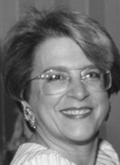 Beryl Richman Dean, L’64, a former lecturer in legal studies in the Wharton School and the former director of pre-law advisors in Penn Career Services, died on April 4. She was 87.
  Christine Eisler, executive director of faculty affairs in the School of Arts & Sciences and previously at Penn Nursing, died on May 24 after battling a rare and aggressive form of cancer known as Goblet Cell Adenocarcinoma. She was 48.
  Gloria Gay, the former associate director of the Penn Women’s Center and a lecturer in the School of Social Work (the precursor to the School of Social Policy & Practice), died on April 1 in Van Nuys, California. She was 90.
 Lemont C. Johnson, a former senior library clerk in the Penn Libraries, died on May 20. He was 87.
 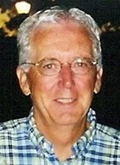 Thomas Peter Keon, an emeritus associate professor of anesthesiology & critical care in Penn’s School of Medicine, died on May 13 from complications of Alzheimer’s Disease. He was 88.
  Roberto (Bobby) S. Mariano, an emeritus professor of economics in the School of Arts & Sciences, died on April 17. He was 81.
 Burton (Bob) Rosan, D’57, GD’62, an emeritus professor of microbiology in Penn Dental Medicine, died on March 31. He was 96.
 Anita L. Zelinski, a former administrative assistant in the department of legal studies in the Wharton School, died on February 18. She was 83.
 Penn Integrates Knowledge University Professor Lynn Meskell has been elected to the British Academy, the United Kingdom’s national academy for the humanities and social sciences.
 When someone survives a heart attack, the battle isn’t always over. In fact, nearly one-third of survivors go on to develop heart failure—a progressive weakening of the heart muscle that affects millions and contributes to roughly 500,000 deaths in the U.S. each year.
 Flavia Teles, a professor of basic & translational sciences at Penn Dental Medicine and a core faculty member of the Center for Innovation & Precision Dentistry (CiPD), has received the 2025 IADR/IAP Ricardo Teles Clinical Research Award. Presented annually by the International Association for Dental Research (IADR) periodontal research group and the International Academy of Periodontology (IAP), the award recognizes investigators who have made innovative and significant contributions to the study of the onset, progression, and treatment of periodontal diseases.
 Penn Nursing’s Colleen Tewksbury, an assistant professor of nutrition science in the department of biobehavioral health sciences, has won the 2025 TREO Foundation LEAD Award for Excellence in Nutrition.
 As the Weitzman School of Design prepares to open its first new building in more than 50 years—an interdisciplinary hub for research and teaching in the historic heart of Penn’s campus—for the fall 2025 semester, Weitzman News gathered members of the design and construction teams to talk about the making of Stuart Weitzman Hall. This conversation included Weitzman Dean and Paley Professor Fritz Steiner, MRP’77, MA’86, PhD’86; Stephen Kieran, MArch’76, co-founding principal at KieranTimberlake; and Mark Kocent, MCP’91, Penn’s University Architect. The building’s history and adaptive reuse will be the subject of an exhibition in early 2026.