News

Katalin Karikó and Drew Weissman: 2023 Nobel Prize in Medicine

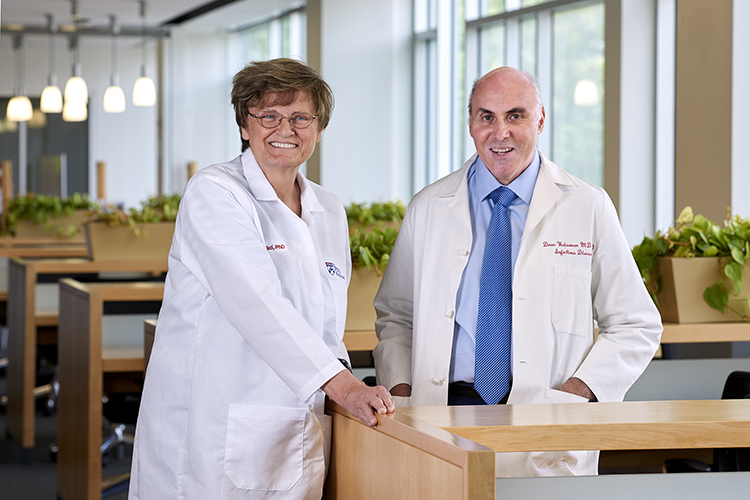
caption: Katalin Karikó and Drew Weissman

The University of Pennsylvania messenger RNA pioneers whose years of scientific partnership unlocked understanding of how to modify mRNA to make it an effective therapeutic—enabling a platform used to rapidly develop lifesaving vaccines amid the global COVID-19 pandemic—have been named winners of the 2023 Nobel Prize in Physiology or Medicine. They become the 28th and 29th Nobel laureates affiliated with Penn, and join nine previous Nobel laureates with ties to the University of Pennsylvania who have won the Nobel Prize in Medicine.

Nearly three years after the rollout of mRNA vaccines across the world, Katalin Karikó, an adjunct professor of neurosurgery in Penn’s Perelman School of Medicine, and Drew Weissman, the Roberts Family Professor of Vaccine Research in the Perelman School of Medicine, are recipients of the prize, which is administered by the Nobel Assembly in Solna, Sweden.

After a chance meeting in the late 1990s while photocopying research papers, Drs. Karikó and Weissman began investigating mRNA as a potential therapeutic. In 2005, they published a key discovery: that mRNA could be altered and delivered effectively into the body to activate the body’s protective immune system. The mRNA-based vaccines elicited a robust immune response, including high levels of antibodies that attack a specific infectious disease that has not previously been encountered. Unlike other vaccines, a live or attenuated virus is not injected or required at any point.

When the COVID-19 pandemic struck, the true value of the pair’s lab work was revealed in the most timely of ways, as companies worked to quickly develop and deploy vaccines to protect people from the virus. Both Pfizer/BioNTech and Moderna used Drs. Karikó and Weissman’s technology to build their highly effective vaccines to protect against severe illness and death from the virus. In the United States alone, mRNA vaccines make up more than 655 million total doses of SARS-CoV-2 vaccines that have been administered since they became available in December 2020.

“Katalin Karikó and Drew Weissman are brilliant researchers who represent the epitome of scientific inspiration and determination,” said Penn President Liz Magill. “Day after day, Dr. Weissman, Dr. Karikó and their teams worked tirelessly to unlock the power of mRNA as a therapeutic platform, not knowing the way in which their work could serve to meet a big challenge the world would one day face. With the truest devotion to their field, they’ve already promised they will not stop here, and that is the greatest inspiration of all. Our Penn community is enormously proud of their groundbreaking achievements and this well-deserved recognition.”

“The phrase Nobel Prize elicits images of individuals whose work has, without exaggeration, changed the world,” said J. Larry Jameson, executive vice president of the University of Pennsylvania for the Health System and Dean of the Perelman School of Medicine. “During the biggest public health crisis of our lifetimes, vaccine developers relied upon the discoveries by Drs. Weissman and Dr. Karikó, which saved innumerable lives and paved a path out of the pandemic. Now, the same approach is being tested for other diseases and conditions. More than 15 years after their visionary laboratory partnership, Kati and Drew have made an everlasting imprint on medicine.”  

Since 1901, the Nobel Foundation has awarded prizes to those whose breakthroughs “have conferred the greatest benefit to humankind.” Prizes are bestowed to laureates who work in physics, chemistry, physiology or medicine, literature, peace, and economics. Fewer than 1,000 people have received a Nobel Prize, and only 225 people have previously been awarded one in the category of physiology or medicine. Dr. Karikó, who is also a professor at the University of Szeged in Hungary, is only the 61st woman to ever be named a Nobel Laureate.

Together, Drs. Karikó and Weissman have been recognized with multiple national and international commendations, including the Lasker-DeBakey Clinical Medical Research Award, the Breakthrough Prize, the Princess of Asturias Award, the Albany Medical Center Prize in Medicine and Biomedical Research, the VinFuture Grand Prize, and the Tang Prize in Biopharmaceutical Science. Their lifesaving research has been featured in hundreds of news outlets across the globe, and they were named among TIME magazine’s “Heroes of the Year” in 2021. To learn more about their work, visit www.pennmedicine.org/mRNA.

For more information on the 2023 Nobel Prize announcements, visit: www.nobelprize.org.

Juan Llamas-Rodriguez: Associate Director of CARGC

caption: Juan Llamas-Rodriguez

The Center for Advanced Research in Global Communication (CARGC) at the Annenberg School for Communication at the University of Pennsylvania has named Annenberg School assistant professor Juan Llamas-Rodriguez as its new associate director.

CARGC’s research revolves around four key themes: “Mobile Borders: Media, Migration & Diasporas;” “Critical Currents: Media Environments and the Climate Crisis;” “Re-Coding the Popular: Media Industries and Cultural Politics;” and “Turning Points in Global Media History.” Dr. Llamas-Rodriguez’s research mobilizes media and communication theories to critically analyze borders, migration, and related social dynamics on a global scale. At CARGC, he will lead the development of “Mobile Borders: Media, Migration & Diasporas.”

School of Arts and Sciences Establishes Minor in Data Science and Analytics in the College

Beginning in the 2023-2024 academic year, the College of Arts and Sciences is offering a new Data Science and Analytics minor. “We wanted to give Penn students a foundation in data science that can be flexibly tailored to best support any major course of study in the natural and social sciences,” said Colin Twomey, interim executive director of Penn Arts & Sciences’ Data Driven Discovery Initiative (DDDI), which is administering the minor.

John Lapinski, the Robert A. Fox Leadership Professor of Political Science and director of the Penn Program on Opinion Research and Election Studies, is the faculty advisor for social sciences students. Masao Sako, the Arifa Hasan Ahmad and Nada Al Shoaibi Presidential Professor of Physics and Astronomy, is the faculty advisor for students in the natural sciences.

Any student who chooses this path will take a total of six courses that cover foundational data and programming tools, fundamental statistical inference methods, and modern machine learning approaches. The minor is not exclusive to a single department, but rather recognizes the wide range of data science courses available in the school and helps students organize their coursework into a focused data science minor.

Dr. Twomey said that a background in this area can open the door for students across subjects, departments, and industries. “Our ambition for this new minor is to make those opportunities accessible to a substantially broader segment of the Penn community,” he said.

Now is a great time for such an endeavor, added Bhuvnesh Jain, the Walter H. and Leonore C. Annenberg Professor in the Natural Sciences in the department of physics & astronomy and co-director of DDDI with Greg Ridgeway, a professor and chair of the department of criminology.

“Today, data science equips students to ask quantitative questions in nearly every field of study in the Arts and Sciences,” Dr. Jain said. “The launch of our minor this fall is especially timely given the rapidly growing importance of human AI. Students are eager to learn and apply data science in their chosen subjects of study and beyond. And we can prepare them to tackle the challenges raised by AI, ranging from ethical issues to best practices in human-centered AI.”

For information about the minor, visit https://web.sas.upenn.edu/data-science/data-science-minor/.

Models of Excellence 2024 Call for Nominations

Penn’s annual Models of Excellence Award Program celebrates the outstanding achievements of individual full- and part-time staff members and teams throughout the University’s schools and centers.

This fall, you can participate in this long-standing tradition by nominating staff for a 2024 Models of Excellence honor. The 2024 call for nominations is open now through October 27, 2023. The online nomination form is available at www.hr.upenn.edu/models.

Download the Call for Nominations brochure for the latest standards for each award category.

Anyone in the Penn community may nominate individual Penn staff members and teams for an award in three categories: Models of Excellence, Pillars of Excellence, and Model Supervisor.

In all Models of Excellence categories, award recipients each receive $500 and a symbolic award. Nominees selected for honorable mention receive $250 and a symbolic award. Awards will be announced in the spring term. The 2024 Models of Excellence Award Ceremony will take place on stage in Irvine Auditorium on April 2, 2024.

The Models of Excellence Selection Committee rates each submission based on the content of your nominations. That means your submissions are crucial to make sure all worthy staff have the opportunity for recognition.

Nomination Information Sessions

Learn how to submit a nomination that conveys the exceptional work of your colleagues by attending a virtual How to Write a Models of Excellence Nomination information session.

Two sessions will be held on:

  • Wednesday, October 4, 11-11:30 a.m.
  • Monday, October 16, 12-2:30 p.m.

Register at www.hr.upenn.edu/models-infosession.

—Division of Human Resources

From the Division of Public Safety: Advisory to Members of the Penn Community

September 27, 2023

As you may be aware, last evening some individuals broke into and stole items from several retail locations in several areas of Philadelphia, including Center City, North and West Philadelphia. While there is no specific information about such actions occurring tonight in our patrol zone, Public Safety is in constant communication with our law enforcement partners, who are preparing for potential disruptions throughout the city, should they occur. Public Safety has also prepared for any activity and will alert the community should there be an ongoing safety threat within our patrol zone.

The Division of Public Safety will continue to ensure the highest level of safety and security for our community.

  • See something concerning? Connect with Penn Public Safety 24/7 at (215) 573-3333 or 911 outside of our Patrol Zone.
  • Worried about a friend’s or colleague’s mental or physical health? Get 24/7 connection to appropriate resources at (215) 898-HELP (4357).
  • Seeking support after experiencing a crime? Call Special Services for support and advocacy resources at (215) 898-4481 or email an advocate at specialservices@publicsafety.upenn.edu
  • Use the Walking Escort and Riding services available to you free of charge.
  • Take a moment to update your cell phone information for the UPennAlert Emergency Notification System
  • Download the Penn Guardian App, which can help Penn Police better find your location when you call in an emergency.
  • Access free self-empowerment and defense courses through Penn DPS.

—Division of Public Safety

Deaths

Robert Kraft, Religious Studies

caption: Robert KraftRobert Alan Kraft, the Berg Professor Emeritus of Religious Studies in the School of Arts and Sciences, died on September 15 after a battle with cancer. He was 89. 

Born in Wolcott, Connecticut, Dr. Kraft obtained his BA in philosophy from Wheaton College in Illinois in 1955. Two years later, he earned an MA in biblical literature (New Testament), also from Wheaton, then went on to receive a PhD in the history and philosophy of religion, specializing in Christian origins, from Harvard University in 1961. He served as an assistant lecturer at the University of Manchester in the U.K. before joining Penn’s faculty in 1963, as an assistant professor of religious thought. From 1965 to 1966, he was a visiting lecturer at the Lutheran Theological Seminary in Philadelphia; meanwhile, at Penn, he was promoted to associate professor in 1968 and became a full professor in 1976. From 1992 to until his retirement and assumption of emeritus status in 2003, he was the American Berg Professor of Religious Studies. 

From the time he received a Guggenheim Fellowship in 1969, Dr. Kraft was a leader in his field. At Penn, Dr. Kraft was a pioneer in using computers for the humanities (Almanac March 20, 1980), specifically the computerization and digitization of ancient Jewish scriptures in Greek and papyri and related documents in the Penn collections. He also made important contributions to the study of history and literatures of Judaism in the Greco-Roman period (particularly the Septuagint and Old Greek translations), Coptic texts, as well as updating and expanding the “Lost Apocrypha of the Old Testament.” He received several grants from the University Research Foundation to support this work, continuing well into the 2000s. Dr. Kraft served as a member of Penn’s University Council, and, outside of Penn, held key roles with several learned societies. He was president of the Society of Biblical Literature in 2006 after holding several other administrative roles in the organization over the preceding decades. Additionally, he co-founded the Philadelphia Seminar on Christian Origins in 1963, chaired the Studiorum Novi Testamenti Societas in 1971, and was a member of the International Organization for Septuagint and Cognate Studies, the American Society of Papyrologists, and the Ancient Biblical Manuscript Center, among others. 

Dr. Kraft is survived by his wife, Carol; his daughter, Cindy (Ken); his sons, Scott (Nadine), Todd, and Randy Sr. (Tina); his grandchildren, Alison (Tim), Jonathan, Kristin, Pierce (Charley), Randy Jr, Stephanie, Natalie, Gabrielle, and Beatrice; his brothers, Charles (Marguerite) and David (Stephanie); and his sister, Sharon (Peer).

A celebration of Dr. Kraft’s life will be held at a later date. Donations in his memory can be made to the Wolcott Historical Society, PO Box 6410, Wolcott, CT 06716, or to the Society of Biblical Literature, at https://www.sbl-site.org/membership/giving.aspx

Governance

From the Senate Office: Faculty Senate Executive Committee Agenda

The following is published in accordance with the Faculty Senate Rules. Among other purposes, the publication of SEC actions is intended to stimulate discussion among the constituencies and their representatives. Please communicate your comments to Patrick Walsh, executive assistant to the Senate Office, either by telephone at (215) 898-6943 or by email at senate@pobox.upenn.edu.

Faculty Senate Executive Committee Agenda

Wednesday, October 11, 2023,  3–5 p.m. EDT

  1. Finalize SEC meeting minutes of September 6, 2023
  2. Tri-Chairs’ Report
  3. Update from the Office of the President
    Discussion with President Liz Magill
  4. Penn Global Resources and Opportunities to Support Faculty Global Engagement
    Discussion with Amy Gadsden (Associate Vice Provost for Global Initiatives), Chris Klaniecki (Global Initiatives Program Manager), and Scott Moore (Director of China Programs and Strategic Initiatives)
  5. New Business

Trustees September Meeting Coverage

A Stated Meeting of the Trustees was held on Thursday, September 28, 2023.

During the President’s report, President M. Elizabeth Magill presented a resolution to appoint Sarah Banet-Weiser dean of the Annenberg School for Communication, which was unanimously approved.

Provost John L. Jackson, Jr., presented the academic report which included a resolution on faculty appointments and promotions that was approved.

Senior Executive Vice President Craig Carnaroli presented the financial report. For the consolidated University, total net assets were $29.8 billion as of June 30, 2023, an increase of $879 million, or 3% over June 30, 2022. Total investments were $23.1 billion, $606 million above last year. The endowment comprised approximately $21 billion of this total.

For the academic component, the change in net assets from operations reflected a $851 million increase versus a $1.5 billion increase in the prior year. Total revenue of $5 billion was $239 million, or 4.6%, above last year. Expenses of $4.1 billion were $393 million, or 10.5%, above last year. Capital expenditures totaled $344 million as of June 30, 2023, which was $137 million or 66.5%, above last year.

For the health system, the change in net assets from operations reflected an increase of $238 million through June 30, 2023. Operating revenue increased $770 million, or 8.4%, from $9.2 billion as of June 30, 2022 to $10.0 billion as of June 30, 2023. Expenses increased $680 million, or 7.5%, from $9.1 billion as of June 30, 2022 to $9.7 billion as of June 30, 2023.

J. Larry Jameson, executive vice president of the University of Pennsylvania for the Health System and dean of the Perelman School of Medicine, gave the Penn Medicine report. He announced a new strategic plan and noted that Carl June had been awarded the 2024 Breakthrough Prize in Life Sciences—the fourth Penn faculty member to have received it in five years.

During the committee reports, Audit Committee Chair Alan Schnitzer presented a resolution, which was approved, to accept the audited financial statements for FY23. Budget and Fi- nance Committee Chair James Dinan presented the following resolutions, each of which was approved:

  • To authorize Pennovation Works infrastructure phase one for an additional $6,012,000 (total revised budget of $22,972, 000)
  • To authorize phase two of Penn Museum’s Coxe/Harrison wings renovation in the amount of $24,450,000
  • To authorize Stuart Weitzman Hall renovation and addition construction documentation and early package procurement in the amount of $9,150,000
  • To authorize Stellar-Chance Laboratories air handling units 1-6 refurbished in the amount of $7,380,000

Trustees Board Chair Scott Bok presented three resolutions, each of which were approved:

  • To reappoint Jeffrey Horing and Alexander F. Stern to the Board of Advisors of the School of Engineering and Applied Science
  • To appoint Andrew Schwartzberg to the Board of Advisors of Penn Libraries
  • To re-appoint Nisha Hurst and to appoint Megan Sheetz to the Board of Advisors of the School of Social Policy & Practice

The next Board of Trustees meetings will be held on November 2-3, 2023.

Faculty Senate Executive Committee (SEC) 2023-2024

Chair: Tulia Falleti, SAS/Political Science
Chair-Elect: Eric Feldman, Law
Past Chair: Vivian Gadsden, GSE
Secretary: Megan Ryerson, Weitzman School
Secretary-Elect: Matthew McHugh, Nursing
Past Secretary: Daniel Beiting, Veterinary Medicine

At-Large Representatives

Monica Calkins, PSOM/Psychiatry
David Eng, SAS/English
Ann Farnsworth-Alvear, SAS/History
Daniel Hammer, SEAS/Bioengineering
Nancy Hirschmann, SAS/Political Science
Kenneth Margulies, PSOM, Medicine
Anne Norton, SAS/Political Science
Desmond Upton Patton, Annenberg/SP2
Benjamin Pierce, SEAS/CIS
Akhilesh Reddy, PSOM/Pharmacology
Li Shen, PSOM/DBEI
Andrew Vaughan, Veterinary Medicine
Assistant Professor Representatives
Masoud Akbarzadeh, Weitzman School
Brian Kim, SAS/Russian and East European Studies
Marc Miskin, SEAS/ESE

Penn Association of Senior and Emeritus Faculty (PASEF) Representative

Janet Deatrick, Nursing

-----

Constituency Representatives

(vacancies excluded)

Warren Breckman, SAS/History
Theodore Schurr, SAS/Anthropology
Ted Chinburg, SAS/Mathematics
Michael Lampson, SAS/Biology
Joseph Subotnik, SAS/Chemistry
Javier Samper Vendrell, SAS/FIGS
Steven Matthews, SAS/Economics
Jean-Michel Rabaté, SAS/English
Rolf Noyer, SAS/Lingustics
Megan Eaton Robb, SAS/Religious Studies
Marie Gottschalk, SAS/Political Science
Aaron Chalfin, SAS/Criminology
Claire Mitchell, Dental Medicine (Alternate: Geelsu Hwang, Dental Medicine)
Domenic Vitiello, Weitzman School
Polk Wagner, Law
John Holmes, PSOM/DBEI
Kevin Teo, PSOM/Radiation Oncology
Karthik Rajasekaran, PSOM/Otorhinolaryngology
Allison Willis, PSOM/Neurology (Alternate: Arupa Ganguly, PSOM/Genetics)
Vera Krymskaya, PSOM/Medicine
Ryan Greysen, PSOM/Medicine
Krithika Lingappan, PSOM/Pediatrics
Dalmacio Dennis Flores, Nursing
Femida Handy, Social Policy and Practice
Christopher Lengner, Veterinary Medicine
Andrew van Eps, Veterinary Medicine
Christopher Ittner, Wharton
Eric Orts, Wharton
Jagmohan Raju, Wharton (Alternate: Iwan Barankay, Wharton)

The Senate Committee on the Economic Status of the Faculty (SCESF)

Femida Handy, Social Policy and Practice
Marsha Lester, SAS/Chemistry
Iourii Manovskii, SAS/Economics, Chair
Mark Oyama, Veterinary Medicine
Rand Quinn, GSE
Petra Todd, SAS/Economics

Ex Officio:
Tulia Falleti, SAS/Political Science, Faculty Senate Chair
Eric Feldman, Law, Faculty Senate Chair-Elect
Vivian Gadsden, GSE, Faculty Senate Past Chair

The Senate Committee on Faculty Development, Diversity, and Equity (SCFDDE)

Hydar Ali, Dental Medicine
Dani Smith Bassett, SEAS/Bioengineering
Antonella Cianferoni, PSOM/Pediatrics
Nelson Flores, GSE, Chair
Carmen Guerra, PSOM/Medicine
Meghan Lane-Fall, PSOM/Anesthesiology & Critical Care
Lisa Mitchell, SAS/South Asia Studies
Chinedum Osuji, SEAS/CBE

Ex-Officio:
A representative of the Senate Tri-Chairs
Sherrill Adams, Dental Medicine, PASEF non-voting member

The Senate Committee on Faculty and the Administration (SCOA)

Ryan Baker, GSE, Chair
Chenoa Flippen, SAS/Sociology
Cheilonda Johnson, PSOM/Medicine
Erica Reineke, Veterinary Medicine
Erik Wibbels, SAS/Political Science
Shu Yang, SEAS/MSE

Ex-Officio:
A representative of the Senate Tri-Chairs
Teresa Giménez, SAS/Spanish and Portuguese, Lecturer non-voting member
Charles Mooney, Law, PASEF non-voting member

The Senate Committee on Faculty and the Academic Mission (SCOF)

Ericka Beckman, SAS/Spanish and Portuguese
Warren Breckman, SAS/History
Margo Brooks Carthon, Nursing
C. Jessica Dine, PSOM/Medicine
Julia Hartmann, SAS/Mathematics
Emily Steinlight, SAS/English, Chair
Amy Stornaiuolo, GSE

Ex-Officio:
A representative of the Senate Tri-Chairs
Roger Allen, SAS/NELC, PASEF non-voting member
Fabian Arzuaga, SAS/English, Lecturer non-voting member

The Senate Committee on Students and Educational Policy (SCSEP)

Seema Bhatnagar, PSOM/Anesthesiology & Critical Care
Kathleen Brown, SAS/History, Chair
Ted Chinburg, SAS/Mathematics
Greg Ridgeway, SAS/Criminology
Akhilesh Reddy, PSOM/Pharmacology
Dylan Small, Wharton

Ex-Officio:
A representative of the Senate Tri-Chairs
Irene Wong, Social Policy and Practice, PASEF non-voting member

The Senate Committee on Academic Freedom and Responsibility (SCAFR)

Frederick Dickinson, SAS/History
Rebecca Hubbard, PSOM/DBEI
Raina Merchant, PSOM/Emergency Medicine, Chair
Abby Reisman, GSE
Jules van Binsbergen, Wharton
Flavia Vitale, PSOM/Neurology
Daniel Wodak, SAS/Philosophy
Jonathan Zimmerman, GSE

Ex-Officio:
Eric Feldman, Law, Faculty Senate Chair-Elect

Faculty Grievance Commission

Chair: John Paul MacDuffie, Wharton
Chair-Elect:  David Margolis, PSOM/Dermatology
Past Chair: Sarah Hope Kagan, Nursing

Membership of University Council 2023-2024

Steering Committee

The Steering Committee shall consist of the president of the University, the provost, the chair, the chair-elect and the past chair of the Faculty Senate, the chair of the Undergraduate Assembly, the chair of the Graduate and Professional Student Assembly, the chair of the Penn Professional Staff Assembly, and the chair of the Weekly-Paid Professional Staff Assembly. Drawn from the Council membership, there shall be in addition four faculty members, one graduate/professional student, and one undergraduate student elected by the respective governing bodies, as well as one additional member of the Penn Professional Staff Assembly and one additional member of the Weekly-Paid Penn Professional Staff Assembly, each elected by their representative assemblies. The chair of the Faculty Senate shall be the chair of the Steering Committee. In the absence of the chair, or at the request of the chair, the chair-elect shall serve as chair of the Steering Committee. The Council moderator will be an official observer at meetings of the Steering Committee. The secretary of the Council shall serve as secretary of the Steering Committee. Members of the Steering Committee may attend the meetings of Council committees.

—Council Bylaws

Members of Steering Committee

M. Elizabeth Magill, President
John L. Jackson, Jr., Provost
Tulia Falleti, Faculty Senate Chair
Eric Feldman, Faculty Senate Chair-Elect
Vivian Gadsden, Faculty Senate Past-Chair
John H. Holmes
Krithika Lingappan
Claire Mitchell
Eric Orts
Natalie D. Green, PPSA Chair
Tonya Bennett, PPSA Chair-Elect
Chris Klaniecki, WPPSA Representative
Michael Krone, GAPSA President
Xavier Shankle, UA President
Ranim Albarkawi, UA Vice President
Lizann Boyle Rode, Secretary

Members of Council

Faculty: Forty-five members of the Executive Committee of the Faculty Senate. The Faculty Senate shall ensure that each faculty is represented and that at least three assistant professors serve on the Council. The members of the Faculty Senate Executive Committee who are members of the Council shall otherwise be chosen in accordance with the rules of the Faculty Senate.

One full-time lecturer and one full-time member of the research faculty are to be selected to serve two-year terms by vote facilitated by the Office of the Secretary in consultation with the Steering Committee of the full-time lecturers and research faculty, respectively, from a slate consisting of the five lecturers and the five members of the research faculty receiving the largest number of nominations by lecturers and members of the research faculty. If the Steering Committee receives fewer than five nominations for either group, additional nominations shall be solicited from the constituency representatives of the Senate Executive Committee.

Administrative Officers and Staff: Eleven administrative officers, including the president, the provost, and nine members of the administration to be appointed annually by the president, at least five of whom shall be deans of faculties.

Two elected representatives of the Penn Professional Staff Assembly. One elected representative of the Librarians Assembly. Two elected representatives of the Weekly-Paid Professional Staff Assembly.

Students: Fifteen graduate and professional students elected as members of the Graduate and Professional Student Assembly. The Graduate and Professional Student Assembly shall ensure that, to the extent possible, each school is represented. The members of the Graduate and Professional Student Assembly who are members of the Council shall otherwise be chosen in accordance with the rules of the Graduate and Professional Student Assembly.

Fifteen undergraduate students elected as members of the Undergraduate Assembly. The Undergraduate Assembly shall ensure that, to the extent possible, each undergraduate school is represented. The members of the Undergraduate Assembly who are members of the Council shall otherwise be chosen in accordance with the rules of the Undergraduate Assembly.

One elected representative of the United Minorities Council.

—Council Bylaws

Elected by the Faculty At-Large

Tulia Falleti, Faculty Senate Chair
Eric Feldman, Faculty Senate Chair-Elect
Vivian Gadsden, Faculty Senate Past Chair
Matthew McHugh, Faculty Senate Secretary-Elect
Megan Ryerson, Faculty Senate Secretary

PASEF Representative
Janet Deatrick

Elected by Faculty Constituency

Warren Breckman
Aaron Chalfin
Jeremy Cannon
Ted Chinburg
Dalmacio Dennis Flores
Marie Gottschalk
Ryan Greysen
Femida Handy
John H. Holmes
Christopher Ittner
Vera Krymskaya
Michael Lampson
Christopher Lengner
Krithika Lingappan
Steven Matthews
Claire Mitchell
Rolf Noyer
Eric Orts
Jean-Michel Rabaté
Karthik Rajasekaran
Jagmohan Raju
Megan Eaton Robb
Theodore Schurr
Alan Stocker
Joseph Subotnik
Kevin Teo
Andrew Van Eps
Javier Samper Vendrell
Domenic Vitiello
Polk Wagner
Allison Willis
TBD: 5

Assistant Professor Representatives
Masoud Akbarzadeh
Brian Kim
Marc Miskin

Lecturers and Research Faculty Members
Research Faculty Representative
Nicholas Balderston
Lecturer Representative
Mércia Santana Flannery
Postdoctoral Trainee
Sarath Pillai

Members of the Administration

M. Elizabeth Magill, President
John L. Jackson, Jr., Provost
Karu Kozuma, Vice Provost for University Life
Kathleen Shields Anderson, Vice President for Public Safety
Charles Howard, University Chaplain and Vice President for Social Equity and Community
Will Atkins, Associate Vice Provost for University Life
Sara S. Bachman, Dean of the School of Social Policy & Practice
Andrew Hoffman, Dean of the School of Veterinary Medicine
Frederick Steiner, Dean of the Stuart Weitzman School of Design
Antonia Villarruel, Dean of the School of Nursing
Mark Wolff, Dean of Dental Medicine

Graduate/Professional Students

Michael Krone, President
Ludwig Zhao, Research Council Chair
Alex Chmielinski, Executive Vice President
Saloni Tandon, Vice President for Advocacy
Mayowa Fageyinbo, Director of Equity and Access
Chloe Ricks, IDEAL Council Chair
Nakisha Jones, Vice President for Finance
Sophie Silver, SAS Gov. Vice President
Gabrielle Newell, Vice President for Operations
Xinyi Wang, Director of External Relations
Gaurav Mangal, Director of International Student Affairs
TBD: 4

Undergraduate Students

Xavier Shankle, UA President
Ranim Albarkawi, UA Vice President
Ria Ellendula, UA Speaker
Aaleyah Jackson, Abuse and Sexual Assault Prevention
Heather Shieh, Assembly of International Students
Taryn Flaherty, Asian Pacific Student Coalition
Lex Gilbert, Disabled Coalition
Omar Elsakhawy, Fossil Free Penn
Logan Fleming, Lambda Alliance
Stefany Santos, Latinx Coalition
Mouctar Diarra, Muslim Students Association
Taeyeon Kim, Penn Association for Gender Equity
Joanna Shan, Transfer Student Association
Khalid Mohieldin, UMOJA
McKenzie Davis, Underrepresented Student Advisory Board in Engineering

United Minorities Council

Erika Acosta

Penn Professional Staff Assembly

Natalie D. Green, Chair
Tonya Bennett, Chair-Elect

Weekly-Paid Penn Professional Staff Assembly

Chris Klaniecki

Librarians’ Assembly

Elizabeth Blake

NROTC Representative

MIDN Michael Himes

Secretary of University Council

Lizann Boyle Rode*

Parliamentarian

Scott Schafer*

Moderator

Melissa Wilde*

*Indicates a non-voting participant.
Policies

Of Record: Suspension of Normal Operations

The Suspension of Normal Operations policy has been revised to clarify the policies and procedures for essential employees and remote work during a suspension of on-campus and/or online operations and to allow clinical and academic programs that are fully online, executive format, or operating in a different geographic location to make different closing decisions with prior approvals from the Provost and the Senior Executive Vice President. Staff members should speak to their supervisor with any questions about how the policies may impact them. 

—John L. Jackson, Jr., Provost
—Craig Carnaroli, Senior Executive Vice President

Suspension of Normal Operations (Formerly Emergency Closing Policy)

Under normal circumstances, the University of Pennsylvania never stops operating. The University recognizes that there are times, due to emergencies such as severe weather conditions, when classes may be canceled and/or schools/centers may be closed, except for areas that provide essential services. In an effort to ensure the safety of faculty, staff and students, timely decisions to modify work schedules due to emergencies will be made.

Modifications of work schedules may take the form of either a partial or a full closing of the University’s on-campus and/or online operations. In either situation, employees are generally not expected to work unless they are designated “essential.” Essential employees are defined as workers who support the University’s critical operations (e.g. Public Safety, Dining Services, and Facilities and Real Estate Services). Positions outside of these schools, centers, or offices may also be considered essential if the position is deemed necessary for the University to continue operating. Essential workers may also support certain academic operations.

Staff members who provide essential services are expected to continue working if the closing occurs during their regular work schedule. If the closing announcement is made before their regular work schedule begins, they are still expected to report to work.

Normally a supervisor would communicate with a staff member at the time of hire if their position is essential. However, based on business necessity and/or extenuating circumstances, the staff member may be informed of their status on short notice.

707.1 Communicating Modifications of Work Schedules

The University will announce a closing or other modification of work schedules through the following means:

The University’s emergency radio identification code numbers (KYW News Radio) are “102” for day classes and schools/centers and “2102” for evening classes. The message that accompanies the code number will provide the operating status of the University.

Please note that radio and television stations other than KYW are not to be considered “official” sources of information.

707.2 Types of Work Schedule Modifications

Please note that decisions affecting work schedules and cancellation of classes are made by the Senior Executive Vice President in consultation with the Provost. These decisions will be communicated through the channels listed above.

Schools/centers may not deviate from the University decision without the prior approval of the Senior Executive Vice President and Provost. With such prior approval, the following areas may follow different closing decisions:

  • Clinical programs
  • Academic programs that are designated as fully online (where 100% of instruction is delivered online)
  • Academic programs that are designated as executive format programs
  • Academic programs that operate from a different geographic location (for example, Wharton San Francisco)

Each school/center will communicate any approved deviations from the University decision.

Types of Schedule Modifications:

Full Closing: A full closing occurs when conditions warrant cancellation of classes (with the potential exception for programs listed above if approval has been given to continue such classes) and closing of schools/centers (except for the provision of essential services).

Partial Closing: A partial closing occurs when circumstances warrant the cancellation of classes while schools/centers remain open, or vice versa. A continuation of some operations may continue virtually.

Delayed Opening: Occasionally, circumstances will warrant a delay in the opening time of schools/centers.

Close Before the End of the Normal Work Day: When there is a closing of schools/centers before the end of the work day, the Division of Public Safety will contact the Division of Human Resources. The Division of Human Resources will contact the appropriate school/center representatives so that they may release staff members in their respective areas. Individual schools/centers should remain in operation until such an announcement is received.

707.3 Recording Absence Due to Suspension of Normal Operations

The following practices should be followed by supervisors to record time lost when a staff member is absent due to suspension of normal operations:

If the University is closed after the start of the workday, staff members who reported to work are compensated for the time lost during the period of closing. The time lost is not charged to paid time off balances and is not considered time worked for the purposes of overtime calculation. For staff members who did not report to work, the time prior to closing should be charged to their paid time off balance (refer to Policy 607: Paid Time Off). If a weekly paid staff member does not have any paid time off available, the time lost should be considered time off without pay.

If the University is closed before the start of the scheduled work day, staff members are compensated for the entire scheduled work day. The time off should not be charged to paid time off balances and should not be considered time worked for the purposes of overtime calculation.

If the University is not closed, staff members who do not report for work will be charged paid time off, and the absence must be approved by the supervisor. If the staff member does not have any paid time off available, the staff member may not be compensated for that day. Sick time may not be used in place of paid time off.

If the University is not closed and a nonexempt staff member requests permission to be released before the end of the work day, the time lost should be charged to the staff member’s paid time off balance. If a weekly paid staff member does not have any paid time off available, the hours not worked are without pay. If a closing announcement is made after the staff member’s request to leave early was approved, the lost time from the time of the announced closing should be paid and not charged to paid time off balances. These hours are not considered time worked for the purposes of overtime calculation.

If the University is not closed and a nonexempt staff member arrives late to work due to emergency conditions affecting transportation, the supervisor may excuse the lateness. Late arrival beyond reason should be charged to staff members’ paid time off balance.

Deductions from pay for exempt (monthly paid) staff must be in agreement with Policy 307.3.

Staff members who work in positions designated as “essential,” and who work when the University is closed, will be paid at their regular rate of pay and will receive compensatory time equal to the time worked after the closing. The compensatory time must be used within ninety (90) calendar days from the date earned. Overtime compensation should be computed as normal.

707.4 University Staff Who Are Covered By Collective Bargaining Agreements

University staff members covered by collective bargaining agreements should refer to the appropriate article in their contract.

707.5 University Staff Working at UPHS, CHOP, and the Wistar Institute

University staff assigned to work at the University of Pennsylvania Health System (UPHS), the Children’s Hospital of Philadelphia (CHOP) or the Wistar Institute may be required to work during a suspension of normal operations. University pay practices, benefits and policies apply to these staff members.

Honors

Ivy Plus Provost Leadership Fellows and Ivy Plus Mellon Leadership Fellow

Penn’s Ivy Plus Provost Leadership Fellows and Ivy Plus Mellon Leadership Fellow will participate in the 2023-2024 Institute on Inquiry, Equity and Leadership of the Faculty Advancement Network, a consortium of 12 research universities collaborating to advance diversity and inclusion. The goal of the institute is to prepare faculty leaders with the tools and skills of inquiry needed to lead their respective departments and/or disciplines toward increased diversity, equity, inclusion, and inclusive excellence.

Ivy Plus Provost Leadership Fellows

Margo Natalie Crawford, the Edmund J. and Louise W. Kahn Professor for Faculty Excellence and professor and chair of English in the School of Arts and Sciences, studies African American literature and visual art and black diasporic cultural movements.

Julie Nelson Davis, a professor and chair of the history of art in the School of Arts and Sciences, specializes in the arts and material cultures of eighteenth- and nineteenth-century Japan, with a focus on prints, paintings, and illustrated books. 

Chao Guo, a professor of nonprofit management in the School of Social Policy and Practice, researches the intersection between nonprofit and voluntary action and government, especially social entrepreneurship, the contributions of nonprofit organizations to democratic governance, and the effects of new media on nonprofit organizations.

Zachary Ives, the Adani President’s Distinguished Professor and chair of computer and information science in the School of Engineering and Applied Science, works on building data science platforms, using techniques at the intersection of databases, machine learning, and distributed systems.

Arjun Yodh, the James M. Skinner Professor and chair of physics and astronomy in the School of Arts and Sciences, studies fundamental and applied questions in condensed matter physics, medical physics, biophysics, and the optical sciences.

Ivy Plus Mellon Leadership Fellow

Vance Byrd, Presidential Associate Professor of German in the School of Arts and Sciences, studies late eighteenth- and nineteenth-century German literature, especially how literary and print culture intersect with the history of visual media.

Joann Mitchell, Senior Vice President for Institutional Affairs and Chief Diversity Officer, and Laura Perna, Vice Provost for Faculty, serve as Penn’s Steering Committee members for the Faculty Advancement Network.

Michael Mitchell: Young Innovator of Cellular and Molecular Bioengineering

caption: Michael MitchellMichael J. Mitchell, an associate professor in bioengineering at Penn’s School of Engineering and Applied Science, has been named a “Young Innovator of Cellular and Molecular Bioengineering” by Cellular and Molecular Bioengineering, the journal of the Biomedical Engineering Society (BMES).

The award recognizes faculty who are conducting some of the most innovative and impactful studies in the field of biomedical engineering. Recipients will present their research and be officially recognized at the BMES Annual Meeting in October.

Dr. Mitchell is honored for creating an RNA nanoparticle therapy that stops the spread of the deadly bone marrow cancer multiple myeloma and helps to eliminate it altogether. Known for being difficult to treat, the disease kills over 100,000 people every year.

“We urgently need innovative, effective therapies against this cancer,” Dr. Mitchell said. “The nanotechnology we developed can potentially serve as a platform to treat multiple myeloma and other bone marrow-based malignancies.”

Dr. Mitchell, along with Christian Figueroa-Espada, a doctoral student in bioengineering, previously published a study in PNAS describing how their RNA nanoparticle therapy stops multiple myeloma from moving through the blood vessels and mutating. In their current paper in Cellular and Molecular Bioengineering, which expands upon this RNA nanoparticle platform, they show that inhibition of both multiple myeloma migration and adhesion to bone marrow blood vessels, combined with an FDA-approved multiple myeloma therapeutic, extends survival in a mouse model of multiple myeloma.

The team’s next steps include expanding their preclinical studies, together with Penn Medicine’s division of hematology-oncology, to further evaluate the pharmacology and toxicology of the drug. They hope this could lead to conducting Phase 1 clinical trials.

“Ultimately, this new therapeutic could prove beneficial for use in combination with other FDA-approved therapies to enhance anti-tumor responses and potentially increase overall survival rates, particularly in patients facing advanced disease,” Dr. Mitchell said. “I’m thrilled to be receiving this honor. It really points to the importance and potential of our research and the technologies we’ve developed for cancer therapy.”

Stuart Orkin: Elaine Redding Brinster Prize

caption: Stuart OrkinFor his work discovering the basis for hemoglobin gene switching and applying those insights to develop a therapy for sickle cell disease and other blood diseases, the Institute for Regenerative Medicine at the University of Pennsylvania awarded Stuart Orkin, the David G. Nathan Distinguished Professor of Pediatrics at Harvard Medical School and an investigator with Howard Hughes Medical Institute, the third Elaine Redding Brinster Prize in Science or Medicine.

Dr. Orkin’s research advanced the understanding of how the fetal hemoglobin gene— the main oxygen carrier protein in the human fetus—is silenced in adults. He also developed a therapy that reactivates the fetal gene for adult hemoglobin gene defects, which cause red blood cell diseases.

“Dr. Orkin has beautifully illustrated how a career of basic science investigation into the mechanisms for gene regulation can be applied, in one’s own laboratory, to a method for combating devastating human diseases,” said Kenneth Zaret, director of Penn’s Institute for Regenerative Medicine and the Joseph Leidy Professor of Cell and Developmental Biology in the Perelman School of Medicine. “Notably, his discovery of unexpected details in how the fetal hemoglobin gene is regulated suggested insights for a therapy, for which he availed of the latest gene editing technologies to develop a specific clinical application for sickle cell disease. We are thrilled that Dr. Orkin is the third awardee of the Elaine Redding Brinster Prize.”

The prize, supported by an endowment from the children of Elaine Redding Brinster, is awarded annually to a researcher whose singular discovery has made a unique impact on biomedicine. Each winner receives $100,000, a commemorative medal, and an invitation to present a ceremonial lecture at the University of Pennsylvania.

Penn Medicine Awards & Accolades: August 2023

caption: Lorraine Boakyecaption: Ade OsinubiLorraine Boakye, an assistant professor of orthopaedic surgery, and Ade Osinubi, a resident in emergency medicine, have been named to Black Health Connect’s 2023 40 Under 40 list. The list highlights those “driving change within the health care industry” and seeks to recognize honorees for their leadership, innovation, advocacy, community service, and more. Each applicant was asked to list their greatest achievement: Dr. Boakye named receiving the Ruth Jackson Orthopaedic Society Courage Award, and Dr. Osinubi listed the production of her documentary, Black Motherhood Through the Lens.

Two Penn Medicine investigators are among 18 early-career postdoctoral researchers who have received funding awards from the Life Sciences Research Foundation to investigate questions surrounding human health and disease. Faith Karanja, a cell and developmental biology postdoctoral research fellow, has been awarded for a proposal titled “Exploring the Role of Hopx as a Conserved Regulator of Quiescence in Adult Stem Cells.” Additionally, Jeffrey Rosa, a postdoctoral researcher in psychiatry, was selected as a Simons Foundation Awardee and awarded for a proposal titled, “Identifying the Molecular Basis of Sleep Maturation in Drosophila Melanogaster.”

Katalin Karikó, an adjunct professor of neurosurgery and mRNA research trailblazer, has been named in the Bahl-Dole Coalition’s “Faces of American Innovation” report. The recognition honors people who make breakthroughs in science that lead to commercial products and tangible changes in the world. Dr. Karikó was commended in a ceremony in September.

Penn: #1 in 2024 Wall Street Journal Ranking

Penn was ranked #1 in the 2024 Wall Street Journal/College Pulse Salary Impact ranking. Schools were listed in order of their impact on graduates’ salaries and how this relates to the cost of attending the college.

According to the journal’s ranking, Penn adds $84,761 in value to graduates’ salaries, with a score of 99 in salary impact versus similar colleges. Princeton ranked #2, Columbia ranked #3, and MIT ranked #4.

The ranking scores colleges based on salary impact versus similar colleges and the years it takes to pay off the net price of attending the institution. Penn’s average net price was listed at $14,851 and listed eight months as the time to pay off the net price.

Recently, Penn ranked #7 in Wall Street Journal’s 2024 list of best colleges in the United States.

Mark Wolff: ADA Strategic Forecasting Committee

Penn Dental Medicine’s dean, Mark Wolff, has been asked to serve on the American Dental Association (ADA) Strategic Forecasting Committee (SFC) as part of the Public/Profession Action Group. The SFC is a standing committee of the ADA’s House of Delegates composed of dentists, educators, dental students, association leadership, and industry professionals who work together to shape the future of the ADA. It makes member-focused recommendations to the House of Delegates and works collaboratively with both the ADA’s Board of Trustees and House of Delegates to provide a strong base of input for the ADA’s strategic forecast.

The Action Group of the SFC on which Dean Wolff will serve is looking specifically at questions and issues that impact the oral health of the public and the advancement of the profession, covering such topics as dental education, dental workforce, healthcare financing and delivery systems, advocacy, science, and research.

Features

Penn's Way: Going the Distance for Our Community

Dear Colleagues,

Across the University of Pennsylvania and Penn Medicine, we’re committed to supporting the communities where we live and work. We also know our faculty and staff are driven by a passion for making a difference. That is why we are updating this year’s Penn’s Way campaign, our annual workplace charitable giving drive.

Select any of the hundreds of local charities listed on the Penn’s Way website to make a donation. Penn and Penn Medicine will match your contribution by 100 percent. This means you double your donation to the causes you value most. Our theme, “Going the Distance for Our Community,” reflects our ambitions to serve, no matter where that help is needed. 

The Penn’s Way Campaign runs from Monday, October 2, through Friday, November 24, and we are grateful to Campaign Co-Chairs Maureen Rush and Patricia Sullivan, as well as our many coordinators, department captains, and other staff volunteers. Please join us in supporting our communities by making your tax-deductible gift now. Remember that by using the Penn’s Way website to enter your pledge online, you will be supporting your chosen organizations in a secure, quick, and convenient way. 

Historically, Penn’s Way has been one of the region’s most generous workplace-giving campaigns, and we look forward to continuing that momentum. Watch this video to hear why your colleagues give. Then, share why you give by posting your personal story to social media using #OurWayPennsWay.

Penn’s Way is a powerful example of kindness in our community. Your collective support helps us invest in neighborhoods—near and far—to extend our organization’s impact and reach. 

—M. Elizabeth Magill
President
University of Pennsylvania 

—Kevin B. Mahoney
Chief Executive Officer
University of Pennsylvania Health System

Penn’s Way 2024–Raffle Prizes by Week *

Week One–Drawing October 9
Philadelphia Orchestra: Two tickets for December 15 Performance, $100 value
Philadelphia Eagles: Autographed Eagles player photo (Landon Dickerson), $50 value
Standard Group: Amazon gift card, $50 value
Keen Compressed Gas: University of Delaware football - 4 tickets and parking pass, $100 value
Philadelphia Catering Company: Large dessert tray, $82 value
EMSCO: Barnes & Noble gift card, $25 value

Week Two–Drawing October 16
Neta Scientific: Amazon gift card, $25 value
EMSCO: Barnes & Noble gift card, $25 value
Cintas Corporation: Penn-branded Carhartt lunch bag, $30 value
McKesson: Dunkin Donuts gift card, $25 value
Penn Museum: Admission passes (two), $36 value
Neuman’s Kitchen: “Horn O Plenty” grocery basket, $100 value

Week Three–Drawing October 23
Cintas Corporation: Penn-branded Under Armour backpack, $60 value
Penn Live Arts: Two tickets for 23/24 season, $100 value
EMSCO: Barnes & Noble gift card, $25 value
McKesson: Starbacks gift card, $25 value
Winterthur: Admission passes (two), $50 value
Neta Scientific: Amazon gift card, $25 value

Week Four–Drawing October 30
Benco Dental: Barnes & Noble gift card, $25 value
Specialty Underwriters: JBL Harmon Flip5 bluetooth speaker, $90 value
Neta Scientific: Amazon gift card, $25 value
Philadanco!: Dance classes (10), $100 value
Longwood Gardens: Admission passes (two), $50 value
Adventure Aquarium: Admission passes (two), $70 value

Week Five–Drawing November 6
PDC Graphics: Oyster House gift card, $50 value
Benco Dental: Barnes & Noble gift card, $25 value
12th Street Catering: Gift certificate for lunch, $100 value
Brandywine Conservancy & Museum of Art: Admission passes (four), $72 value
BalletX at the Mann: Admission passes (four) for April performances, $100 value
McKesson: Starbucks gift card, $25 value

Week Six–Drawing November 13
Neta Scientific: Amazon gift card, $25 value
Benco Dental: Barnes & Noble gift card, $25 value
PDC Graphics: Mission Taqueria gift card, $50 value
Morris Arboretum: Family membership, $100 value
Penn Museum: Admission passes (two), $36 value

Week Seven–Drawing November 20
Philadelphia Eagles: Autographed Eagles player photo (Nakobe Dean), $50 value
Neta Scientific: Amazon gift card, $25 value
Benco Dental: Barnes & Noble gift card, $25 value
Penn Live Arts: Two tickets for 23/24 season, $100 value
Neta Scientific: Amazon gift card, $25 value
EMSCO: Barnes & Noble gift card, $25 value

Final Drawing–December 4
Wawa goodie basket, $25 value
eCity Interactive: Two tickets for Philadelphia Theatre Company 23/24 season, $100 value
Benco Dental: Barnes & Noble gift card, $25 value
EMSCO: Barnes & Noble gift card, $25 value
Neta Scientific: Amazon gift card, $25 value
Neta Scientific: Amazon gift card, $25 value 
* Subject to change

Thank you to the many generous organizations who have donated raffle prizes—their support for our charitable giving program is much appreciated.

Events

Update: October AT PENN

Fitness & Learning

4          Japan Week: CEAS Open House; visit the Center for East Asian Studies and learn about our events, opportunities, and a special Ikebana demonstration by Ikebana International; 2 p.m.; room 642, Williams Hall (Center for East Asian Studies).

5          Grant-Writing Workshop; learn how you can better position yourself to be a competitive applicant for the College Alumni Society Research Grant or Vagelos Undergraduate Research Grant; 3:30 p.m.; room 202, 3539 Locust Walk (Center for Undergraduate Research & Fellowships).

            Penn in Florence Info Session; learn about studying abroad in Florence and have pizza with people who have completed the program; 5 p.m.; room 623, Williams Hall (Italian Studies).

6          Fall 2023 Accelerated Bachelor’s to Master’s Degree Program Information Session; undergraduates are invited to learn more about the Accelerated Bachelor’s to Master’s Degree Program, an opportunity to apply up to four Penn GSE course units dually to a Penn undergraduate degree and a Penn GSE master’s degree; noon; room 211, Gutmann College House; register: https://tinyurl.com/gse-workshop-oct-6. (Graduate School of Education).

            Goldwater Scholarship Information Session; join recent Penn Goldwater Scholars and CURF staff to learn about the Goldwater Scholarship, which awards scholarships to sophomores and juniors who intend to earn a PhD or Master's degree in a STEM field; 4 p.m.; room 242, Van Pelt Library; register: https://tinyurl.com/curf-workshop-oct-6 (Center for Undergraduate Research & Fellowships).

9          Religious Studies PhD Application Information Session; will cover basic eligibility requirements, English language proficiency scores, the basic components of the application, the basic criteria the Graduate Group uses to select applicants, and other general pointers for how to approach the application process; 6:30 p.m.; Zoom webinar; register: https://tinyurl.com/rels-workshop-oct-9 (Religious Studies).


Graduate School of Education

Online webinars. Info and to register: https://www.gse.upenn.edu/news/events-calendar?date=2023-10.

3          Education Entrepreneurship Virtual Information Session; 7 p.m.

9          Urban Teaching Residency & Urban Education (Online) Virtual Information Session; 7 p.m.


Meetings

5          Penn Aces and Aros Meeting; learn about the affinity group for Penn's asexual and aromantic community; meetings held bi-weekly; 7 p.m.; Gordon-Buono Student Lounge, LGBT Center (LGBT Center).


Readings & Signings

10        Inner Voice with Motivos; immerse yourself in the power of self-expression and storytelling during an evening filled with inspiring conversations, live performances, and engaging activities; an opportunity to connect with heart-driven individuals; 5-7 p.m.; room 144, ARCH (La Casa Latina).

            Revolution of Things: The Islamism and Post-Islamism of Objects in Tehran; Kusha Sefat, University of Tehran; 5:30 p.m.; room 401, Fisher-Bennett Hall (Middle East Center).


Talks

3          “The Pictures Can Say More Things”: Change Across Time in Young Children’s References to Images and Words During Text Discussion; Maren Auckerman, literacy search candidate; 10:30 a.m.; room B10, Stiteler Hall (Graduate School of Education).

            Agile Design of Domain-Specific Accelerators and Compilers; Priyanka Raina, Stanford University; 1 p.m.; Zoom webinar; join: https://tinyurl.com/raina-talk-oct-3 (Electrical & Systems Engineering). 

4          Developing an Empathetic Accuracy Test for Policing; Justin Nix, University of Nebraska Omaha; noon; room 201, Fisher-Bennett Hall (Criminology).

            Trick or Treat: How Does Diabetes Confer a More Severe SARS-CoV2 Infection? Sara Kass-Gergi, Penn Medicine; noon; room 213, Stemmler Hall (Penn-CHOP Lung Biology Institute).

            The Merry Go Round of Blackness in Italy; Justin Randolph Thompson, multimedia artist; 3:30 p.m.; room 231, Fisher-Bennett Hall (Italian Studies).

5          "We Are Not Immune”: How Feminists Transformed the Law and Science of AIDS; Aziza Ahmed, Boston University; noon; room 2, Gittis Hall (History).

            Interrogating Patterning and Cellular Heterogeneity in the Developing Human Lung; Jason Spence, University of Michigan; 4 p.m.; Smilow Center (Penn-CHOP Lung Biology Institute).

            Women Writers from Pompeii: Epistolary Fictions in Roman Wall Painting; Hérica Valladares, University of North Carolina at Chapel Hill; 4:45 p.m.; room 402, Cohen Hall (Classical Studies).

            Tibet and the U.S.-China “Minority Relationship: in the Cold War; Xiaoyuan Liu, University of Virginia; 5:15 p.m.; room 200, PCPSE; register: https://tinyurl.com/liu-talk-oct-5 (Center for East Asian Studies).

            Weitzman Fall 2023 Visiting Artist Lecture Series; Kevin Jerome Everson, artist and filmmaker; 6 p.m.; ICA and Zoom webinar; register: https://tinyurl.com/everson-talk-oct-5 (Institute of Contemporary Art, Weitzman School).

6          Health Equity and the Role of Racism-Conscious Policymaking; Shekinah Fashaw-Walters, University of Minnesota; Raynard Washington, Mecklenburg County Public Health Department; Ruqaiijah Yearby, Ohio State University; Atheendar Venkataramani, Opportunity for Health Lab; noon; Zoom webinar; register: https://tinyurl.com/ldi-talk-oct-6 (Leonard Davis Institute).

9          The “Proyecto de Investigación de La Quebrada”: A Community-Engaged Study of Afro-Descendant Ancestry and Archaeology in Peru; Maria Nieves Colón, University of Minnesota; noon; room 345, Penn Museum (Anthropology).

            Play, Language, and the Social Imagination: The Aesthetics of Early Literacy; Haeny Yoon, literacy search candidate; 3 p.m.; room 263, GSE (Graduate School of Education).

            Dark Matter, Dirty Xenon, and the Limits of Laboratory Experiments; Jaco de Swart, Massachusetts Institute of Technology; 3:30 p.m.; room 392, Cohen Hall (History & Sociology of Science).

10        Targeting Transcriptional Addiction in Cancer; Rani E. George, Harvard Medical School; noon; Caplan Auditorium, Wistar Institute (Wistar).


Asian American Studies

Info and to register: https://asam.sas.upenn.edu/events/.

3          From “Cultural Diving” to “Cultural Surfing”: How Chinese and Hollywood Studios Co-Develop Global Movies; Jun (Philip) Fang, Colby College; 5:15 p.m.; room 473, McNeil Building.


Economics

In-person events. Info: https://economics.sas.upenn.edu/events.

5          The Effects of the ACA on Pharmaceutical Consumption and the Direction of Innovation; Zhemin Yuan, economics; 3:30 p.m.; room 101, PCPSE.

9          A Strategic Model of Software Dependency Networks; Angelo Mele, Johns Hopkins University; 4:30 p.m.; room 100, PCPSE.


This is an update to the October AT PENN calendar, which is online now. The November AT PENN calendar will be published on October 31. Submit items for the November AT PENN calendar to almanac@upenn.edu by October 16.

Crimes

Weekly Crime Reports

Division of Public Safety University of Pennsylvania Police Department Crime Report

About the Crime Report: Below are the Crimes Against Persons and/or Crimes Against Property from the campus report for September 18-24, 2023. The Crime Reports are available at: https://almanac.upenn.edu/sections/crimes. Prior weeks’ reports are also online. –Eds.

This summary is prepared by the Division of Public Safety (DPS) and contains all criminal incidents reported and made known to the Penn Police, including those reported to the Philadelphia Police Department (PPD) that occurred within our patrol zone, for the dates of September 18-24, 2023. The Penn Police actively patrol from Market Street to Baltimore Avenue and from 30th Street to 43rd Street in conjunction with the Philadelphia Police.

In this effort to provide you with a thorough and accurate report on public safety concerns, we hope that your increased awareness will lessen the opportunity for crime. For any concerns or suggestions regarding this report, please call DPS at (215) 898-7297. You may view the daily crime log on the DPS website.

Penn Police Patrol Zone

Market Street to Baltimore Avenue and from 30th Street to 43rd Street

Auto Theft

09/19/2023

11:06 PM

100 S 40th St

Vehicle left running taken from highway

Assault

09/21/2023

7:25 PM

4214 Osage Ave

Complainant punched numerous times in the face by an unknown offender

Bike Theft

09/22/2023

9:39 PM

129 S 30th St

Cable secured bike stolen from rack

Burglary

09/19/2023

10:11 AM

3216 Chancellor St

Five copper pipes taken from construction site

Retail Theft

09/20/2023

9:19 AM

4233 Chestnut St

Retail theft of alcohol


09/22/2023

4:11 PM

110 S 36th St

Retail theft of clothing


09/22/2023

6:44 PM

4233 Chestnut St

Retail theft of alcohol


09/22/2023

7:50 PM

4233 Chestnut St

Retail theft of alcohol


09/23/2023

9:44 PM

3925 Walnut St

Retail theft of miscellaneous merchandise

Robbery

09/23/2023

4:30 PM

110 S 36th St

Robbery/retail theft of clothing by unknown offender brandishing pepper spray

Theft From Building

09/20/2023

9:53 AM

3627 Locust Walk

Theft of property from lobby of sorority house


09/20/2023

3:59 PM

4210 Chestnut St

Package taken from main access door


09/21/2023

1:41 PM

210 S 34th St

Electronics and black roller bag taken


09/21/2023

2:02 PM

220 S 33rd St

Backpack left in lounge area

Theft from Vehicle

09/20/2023

8:08 AM

3300 Ludlow St

Theft of a catalytic converter from vehicle parked on highway


09/20/2023

12:57 PM

3300 Walnut St

Tools taken from vehicle parked on the highway

Theft Other

09/19/2023

7:14 PM

3300 Walnut St

Scooter secured to street sign taken


09/20/2023

1:33 PM

255 S 36th St

Secured scooter taken from bike rack


09/20/2023

3:29 PM

3730 Walnut St

Secured scooter taken from bike rack


09/21/2023

9:18 AM

3701 Walnut St

Unsecured scooter taken from bike rack


09/24/2023

1:43 PM

3730 Walnut St

Unsecured scooter stolen from outside building


Philadelphia Police 18th District

Schuylkill River to 49th Street & Market Street to Woodland Avenue

Below are the Crimes Against Persons from the 18th District: 5 incidents were reported for September 18-24, 2023 by the 18th District, covering the Schuylkill River to 49th Street & Market Street to Woodland Avenue.

Aggravated Assault

09/23/2023

11:32 PM

4314 Locust St

Assault/Arrest

09/20/2023

4:47 PM

3900 Blk Woodland Ave

Assault

09/21/2023

7:36 PM

4214 Osage Ave

Robbery

09/23/2023

4:51 PM

110 S 36th St

Robbery/Arrest

09/24/2023

2:23 PM

4935 Hazel Ave

The Division of Public Safety offers resources and support to the Penn community. DPS developed a few helpful risk reduction strategies outlined below. Know that it is never the fault of the person impacted (victim/survivor) by crime.

  • See something concerning? Connect with Penn Public Safety 24/7 at (215) 573-3333.
  • Worried about a friend’s or colleague’s mental or physical health? Get 24/7 connection to appropriate resources at (215) 898-HELP (4357).
  • Seeking support after experiencing a crime? Call Special Services (support and advocacy resources) at (215) 898-4481 or email an advocate at specialservices@publicsafety.upenn.edu
  • Use the Walking Escort and Riding services available to you free of charge.
  • Take a moment to update your cellphone information for the UPennAlert Emergency Notification System
  • Download the Penn Guardian App which can help Police better find your location when you call in an emergency.
  • Access free self-empowerment and defense courses through Penn DPS.
  • Stay alert and reduce distractions. (Using cellphones, ear buds, etc. may limit your awareness.)
  • Orient yourself to your surroundings. (Identify your location, nearby exits, etc.)
  • Keep your valuables out of sight and only carry necessary documents.
Back to Top