News

Karen Winey: $2.2 Million Grant from the U.S. Department of Energy

caption: Karen WineyFuel cells are becoming an increasingly important technology for electrical energy, especially for long-haul trucks and as backup power sources for homes. They convert hydrogen, which is increasingly produced using renewable energy sources with low greenhouse gas emissions, into electrical energy without emitting carbon dioxide. However, that does not mean they do not have an impact on the environment.

Using fluorine in the plastic membranes that allow ions to move from one side of a fuel cell to the other comes with a cost, both as an expensive materials component and as a toxic pollutant. Nonetheless, fluorine-based polymer membranes, made from a material known as PFSA, are currently unmatched when it comes to compatibility with the cell’s electrodes and high conductivity for protons or hydroxide ions traveling between them, essential traits of a long-lasting, safe, and efficient fuel cell.

With bans on the chemical being proposed in the U.S. and around the world, the challenge now is creating fluorine-free polymer membranes that do the same job.

Karen Winey, the Harold Pender Professor in the departments of chemical & biomolecular engineering and materials science & engineering, has already started to address this challenge by using fluorine-free polymers with precisely placed sulfonate groups. When these proton exchange membranes (PEMs) come into contact with water, the sulfonate groups assemble to form intricate water channels for protons to flow through.

This change in the chemistry of the electrolyte removes the need for fluorine altogether, but there are areas that need further investigation to develop and ensure this solution is viable.

Dr. Winey has now been awarded a Department of Energy grant that will provide $2.2 million over three years to fund the design, synthesis and study of hydrocarbon-based PEMs to mimic the relevant features of PFSA membranes. Obtaining a better understanding of the fundamentals of the membrane structure and dynamics will help the team determine the next steps to developing even cleaner and more efficient fuel cell technologies.

For this research, Dr. Winey will collaborate with Amalie L. Frischknecht of Sandia National Laboratories, Michael A. Hickner of Pennsylvania State University, and Justin G. Kennemur of Florida State University.

“Our team has the combined skills to establish the role of the local structure and dynamics at the hydrophobic/hydrophilic interface on proton and hydroxide transport in these new and important materials,” said Dr. Winey. “Our research requires synthetic control and versatility to modify the molecular structure, which is available in Kennemur’s group using ring-opening metathesis polymerization, or ROMP, and subsequent functionalization. As recently determined by Frischknecht’s all-atom molecular dynamics simulations and corroborated by X-ray scattering studies conducted by my group, the linear saturated carbon backbones of these polymers have sufficient flexibility to form well-developed percolated water domains.”

Drs. Frischknecht and Winey have previously combined simulations, electrochemical impedance spectroscopy and quasielastic neutron scattering studies to extract new insights about ion and chain dynamics. With the addition of Dr. Hickner’s expertise in infrared and nuclear magnetic resonance spectroscopies, the team will be able to reveal an even finer-grained picture of these polymers’ internal structure, elucidating the fundamental role of water in determining their ion transport properties.

“Detailed understanding of how protons and hydroxide ions move in hydrated polymers is only possible through this kind of highly coordinated effort,” said Dr. Winey.

This collaborative DOE grant is the second that Dr. Winey has led in recent years. In August 2022, she launched a new $3.25 million grant with collaborators at Penn and the University of Massachusetts, Amherst focusing on developing polymer-to-polymer conversion to reduce polymer waste. Together these efforts reflect Penn Engineering’s commitment to building a more sustainable future.

Adriana Perez: Anthony Buividas Term Chair in Gerentology

caption: Adriana PerezPenn Nursing’s Adriana Perez, an associate professor of nursing in the department of family and community health, has been appointed the Anthony Buividas Term Chair in Gerontology.

Dr. Perez is a scientist at the Center for Improving Care Delivery for the Aging (CICADA), a funded by National Institute on Aging (NIA)-funded Resource Center for Minority Aging Research (RCMAR)  at Penn. She has constructed a community-engaged research portfolio focused on designing and testing of theory-based and culturally relevant interventions for elder Latinx adults. Her passion for community engagement and community research and the relationships she builds in Latinx communities throughout the city of Philadelphia, is a testament of her leadership.

Dr. Perez’s research is focused on the influence of multi-level factors on physical activity, cardiovascular health, cognitive health, and sleep among Spanish-speaking older Latinos with Alzheimer’s disease. Her research is grounded in practice, as a board-certified adult nurse practitioner at Mercy LIFE, she provides community-based long-term care for diverse, frail elders who reside in North Philadelphia. Tiempo Juntos por Nuestra Salud, a community-based physical activity intervention for Spanish-speaking Latinos funded by the NIA, is a Spanish-language, community-based intervention aimed at increasing physical activity and improving cardiovascular health, cognitive health, and sleep quality among Latinos 55 years and older with MCI (mild cognitive impairment). It builds on an interdisciplinary team’s research in partnership with multicultural health centers and community advisory board.

Dr. Perez has disseminated her scholarship across a range of interdisciplinary journals, invited presentations and named lectureships, and community events. Her scholarship has also been acknowledged by leading professional organizations, including her fellowships in the American Academy of Nursing and the Gerontological Society of America, and awards from a wide range of organizations including the American Heart and Stroke Associations, the National Association of Hispanic Nurses, the Atlantic Philanthropies, the American Public Health Association, and most recently, her Research Recognition Award from the National Hispanic Council on Aging.

Sara Jacoby: Calvin Bland Fellow at the School of Nursing

caption: Sara JacobyPenn Nursing’s Sara Jacoby, an assistant professor of nursing in the department of family and community health, has been appointed the Calvin Bland Fellow at the School of Nursing. This fellowship is awarded to select individuals in the Schools of Nursing, Social Policy & Practice, and Graduate School of Education, as part of the Penn Futures Project, which was established in 2015 to enhance the health and well-being of area children and families.

Dr. Jacoby has a secondary appointment as an assistant professor of nursing in the department of surgery in the Perelman School of Medicine. She is a senior scholar at Penn’s Injury Science Center and a senior fellow at both the Center for Public Health Initiatives and the Leonard Davis Institute of Health Economics. She is invested in community-engaged research that makes an impactful contribution to nursing and injury science.

Dr. Jacoby has created a strong scholarly portfolio focused on addressing the socio-structural determinants of inequities among Black men, particularly as it relates to injury risks and opportunities for recovery. Her work focuses specifically on the structural and social origins of disparities in trauma and violence victimization and how opportunities for injury recovery, restoration, and health are constructed in American cities and healthcare systems. She prioritizes mixed methods and community-partnered approaches in her research and has notable expertise supporting the in-depth qualitative elicitation of the lived experience of injured people impacted by gun violence, racism, segregation, and economic marginalization. Her research has been funded by the Centers for Disease Control and Prevention, the National Institutes of Health, and private foundations. She is currently serving on the board of directors of the Society for Advancement of Violence and Injury Research.

Dr. Jacoby has presented her work locally, regionally, and nationally, sponsored by the American Association of Colleges of Nursing, the American Sociological Association, and the National Quality Forum. She was given the Rising Star Research Award by the Eastern Nursing Research Society in 2019. More recently, Dr. Jacoby received the department of family and community health’s research award in 2022 and was named a 2022 fellow of the American Academy of Nursing.

Statement from the Faculty Senate Tri-Chairs on Current Events in Iran

October 10, 2022

As the Tri-Chairs of the Faculty Senate, we vigorously condemn the state violence perpetrated against civil society and protestors since the death of Mahsa Amini, who died on September 16, 2022, while in the custody of the morality police of Iran. In particular, we condemn the repression and violence committed against students and professors on university grounds, such as those of Sharif University of Technology in Tehran. We stand in solidarity with our Penn colleagues, postdocs, students, staff, and alumni who are deeply affected by these events and affirm the higher education values of freedom of thought, inquiry, speech, and lawful assembly.

—Vivian L. Gadsden, William T. Carter Professor of Child Development and Education, Chair of the Faculty Senate
—Tulia G. Falleti, Class of 1965 Endowed Term Professor of Political Science, Chair-Elect of the Faculty Senate
—William W. Braham, Professor of Architecture, Past Chair of the Faculty Senate

Governance

University of Pennsylvania Trustees Meetings: October 20, 2022

On Thursday, October 20, there will be meetings of the Trustees. Observers may attend the public meetings at the Inn at Penn.

The meetings are:

Thursday, October 20

  • Local, National, and Global Engagement Committee, 8:30–9:30 a.m.
  • Facilities and Campus Planning Committee, 9:45-10:45 a.m.
  • Student Life Committee, 11 a.m.-noon
  • Academic Policy Committee, 2:15-3:15 p.m.
  • Budget and Finance Committee, 2:15-3:15 p.m.
  • Stated Meeting of the Trustees, 3:30-4:30 p.m.

These meetings will be shorter than usual to allow for all business, including the Stated Meeting, to be completed on Thursday so that President Liz Magill’s inauguration can be celebrated on Friday, October 21.

Please contact the Office of the University Secretary at (215) 898-7005 or ofcsec@pobox.upenn.edu with questions regarding trustee meetings or your attendance plans.

Honors

Joseph S. Francisco: 2022 ACS Award

caption: Joseph FranciscoJoseph S. Francisco, the President’s Distinguished Professor of Earth and Environmental Science in the School of Arts and Sciences, has received the 2022 American Chemical Society Philadelphia Section Award. Presented annually, the award is the top prize for members of each regional section of the American Chemical Society (ACS). The award will be presented on October 17 at a department of chemistry event that will feature a talk by Dr. Francisco called “A Fresh Look at the Chemistry Behind Acid Rain.”

Dr. Francisco focuses on bringing new tools from experimental physical and theoretical chemistry to atmospheric chemical problems to enhance our understanding of chemistry in the atmosphere at the molecular level. This work has led to important discoveries of new chemistries occurring on the interfaces of cloud surfaces as well as fundamental new chemical bonding controlling these processes.

Founded in 1899, the Philadelphia Section of the ACS is one of the oldest local sections and one of the largest, with more than 5,000 members. The ACS is the world’s largest scientific society and a leading source of authoritative scientific information.

Michael Mitchell: NSF CAREER Award

caption: Michael MitchellMichael Mitchell, the J. Peter and Geri Skirkanich Assistant Professor of Innovation in the department of bioengineering in Penn Engineering, is one of this year’s recipients of the National Science Foundation’s CAREER Award. The award is given to early-career faculty researchers who demonstrate the potential to be role models in their field and invest in the outreach and education of their work.

Dr. Mitchell’s award will fund research on techniques for “immunoengineering” macrophages. By providing new instructions to these cells via nanoparticles laden with mRNA and DNA sequences, the immune system could be trained to target and eliminate solid tumors. The award will also support graduate students and postdoctoral fellows in his lab over the next five years.

The project aligns with Dr. Mitchell’s larger research goals and the current interest in therapies that use mRNA, thanks to the technological breakthroughs that enabled the development of COVID-19 vaccines.

“The development of the COVID vaccine using mRNA has opened doors for other cell therapies,” he said. “The high-priority area of research that we are focusing on is oncological therapies, and there are multiple applications for mRNA engineering in the fight against cancer.”

A new wave of remarkably effective cancer treatments incorporates chimeric antigen receptor T-cell (CAR-T) therapy. There, a patient’s T-cells, a type of white blood cell that fights infections, are genetically engineered to identify, target and kill individual cancer cells that accumulate in the circulatory system.

However, despite CART-T therapy’s success in treating certain blood cancers, the approach is not effective against cancers that form solid tumors. Because T-cells are not able to penetrate tumors’ fibrous barriers, Dr. Mitchell and his colleagues have turned to another part of the immune system for help.

“A macrophage is another type of immune cell of the innate immune system, the system that responds first to infections or wounds in our bodies,” Dr. Mitchell said. “These cells are characterized by their response to invaders: they engulf foreign substances and create a barrier between them and the rest of the body.”

Macrophages, literally “big eaters,” will naturally swarm to a splinter or bacterial infection; the inflammation that forms around them is the result of them trying to swallow or surround the invaders. However, macrophages will also attack benign or helpful foreign objects, like transplanted organs, medical implants, IVs, or cosmetic piercings.

While this immune response can hinder medical care, Dr. Mitchell and his colleagues are counting on it. Their research aims to give macrophages a new purpose: engulfing nanoparticles to engineer macrophages to target and kill tumor cells.

In an effort to share this research in a more engaging and tangible way, Dr. Mitchell and his graduate students are planning to bring live nanoparticle demonstrations to the Franklin Institute, offer research internships for high school students and present at the International Summer School in Greece.

“It is very important to invest in public outreach on our work in immunotherapy and vaccine development because it helps to build trust in our community and removes some of the fear of the unknown,” said Dr. Mitchell. “And we want to share our work in engaging ways while opening avenues into STEM studies for younger generations. We are excited to do that through workshops on how to make nanoparticles and interactive LEGO demonstrations that help people understand nanoparticle-cell interactions.”

Eight Perelman School of Medicine Researchers: NIH High-Risk, High-Reward Grants

Eight researchers from the Perelman School of Medicine at the University of Pennsylvania have received research grants designed to invest in high-risk, high-reward projects.

A group of five Penn scientists received the NIH Director’s Transformative Research Award for a project focusing on cancer research, while three investigators received the NIH Director’s New Innovator Award for independent projects developed by early-career investigators.

Established in 2009, the Transformative Research Award promotes cross-cutting, interdisciplinary science and is open to individuals and teams of investigators who propose research that could potentially create or challenge existing paradigms.

Transformative Research Award recipients include:

  • Donita Brady, the Harrison McCrea Dickson and Clifford C. Baker Presidential Associate Professor in Cancer Biology
  • George Burslem, an assistant professor of biochemistry & biophysics and cancer biology
  • Luca Busino, an assistant professor of cancer biology
  • Eric Witze, an associate professor of cancer biology
  • Terence Gade, an assistant professor of radiology and cancer biology

With the award, the Penn Therapeutics Mechanisms research team plans to establish a new development and discovery platform, known as the Probe Enabled Activity Reporting (PEAR) system, designed to explore the proteome—a set of proteins that are expressed by cells, tissues, and organisms—of tumor cells. The resulting discoveries could advance precision cancer medicine by enabling therapeutic development and validating novel concepts and methodologies. As a result, PEAR holds the potential to provide fundamental insights into tumor biology and transform precision oncology by providing a platform to improve existing paradigms for drug discovery.

Since 2007, the New Innovator Award has supported unusually innovative research from early-career investigators who are within 10 years of their final degree or clinical residency and have not yet received a research project grant or equivalent NIH grant.

New Innovator Award recipients include:

  • Chengcheng Jin, an assistant professor of cancer biology, to develop a better understanding of neutrophils, a type of white blood cell, in the tumor microenvironment. The project could reveal novel targets for precision cancer immunotherapies while preserving immune surveillance in healthy tissue.
  • Bushra Raj, an assistant professor of cell and developmental biology, to test a novel technology that uses CRISPR/Cas gene-editing tools to genomically record inputs from two signaling pathways in the developing zebrafish brain.
  • Amelia Escolano, Wistar Institute assistant professor of microbiology, to pursue novel strategies and technologies to advance the design of universal vaccines against highly mutating viruses, bacteria and cancer.

The awards were made through the NIH Common Fund, which supports bold projects that catalyze discovery in biomedical and behavioral research. Participants work across NIH institutes and centers to collaborate on innovative research that is expected to address high-priority challenges for the NIH and the broader scientific community.

This year 103 awards nationally total approximately $285 million in support from the institutes, centers, and offices across NIH over five years beginning in 2022.

Ivy Plus Provost Leadership Fellows

Interim Provost Beth A. Winkelstein and Vice Provost for Faculty Laura Perna have announced Penn’s inaugural cohort of Ivy Plus Provost Leadership Fellows.

The inaugural cohort of Ivy Plus Provost Leadership Fellows will participate in the 2022-2023 Institute on Inquiry, Equity and Leadership of the Faculty Advancement Network, a consortium of 12 research universities collaborating to advance diversity and inclusion. The goal of the institute is to prepare faculty leaders with the tools and skills of inquiry needed to lead their respective departments and/or disciplines toward increased diversity, equity, inclusion, and inclusive excellence. Joann Mitchell, Senior Vice President for Institutional Affairs and Chief Diversity Officer, and Vice Provost Perna serve as Penn’s Steering Committee members for the Faculty Advancement Network. 

David L. Goldsby, professor and chair of Earth & environmental science in the School of Arts and Sciences, focuses his research on the flow and fracture of rocks, ice and other planetary materials at the laboratory scale, and how these influence large-scale geodynamic processes, such as the nucleation of earthquakes and the response of ice sheets to a warming climate.

Junhyong Kim, Patricia M. Williams Term Professor and chair of biology in the School of Arts and Sciences, focuses his research at the interface of genomics, computational biology, and evolution. His current research involves developing new single cell technologies and applying single cell assays to understanding the cellular diversity of the female reproductive system, kidney diseases, and cell differentiation processes.

Marisa C. Kozlowski, professor of chemistry in the School of Arts and Sciences, focuses her research on the rational design of new methods and catalysts for use in organic synthesis, the use of high throughput screening and employment of novel computational tools for the discovery and optimization of new reagents and catalysts, and the mechanisms to improve reaction processes and increase understanding of fundamental reaction steps. 

Chinedum Osuji, Eduardo D. Glandt Presidential Professor and chair of chemical and biomolecular engineering in the School of Engineering and Applied Science, focuses his research on the structure and dynamics of soft materials and complex fluids with interests in structure-property relationships in ordered soft materials, directed self-assembly of block copolymers and other soft mesophases, nanostructured membranes, and rheology and slow dynamics of disordered systems.

Shu Yang, Joseph Bordogna Professor of Engineering and chair of materials science and engineering in the School of Engineering and Applied Science, focuses her research on innovative materials synthesis, assembly and eco-manufacturing of complex, multi-functional and sustainable materials from soft materials and composites.

Sophia Rosenfeld: W. Kluge Center Chair at the Library of Congress

caption: Sophia RosenfeldSophia Rosenfeld, the Walter H. Annenberg Professor of History in the School of Arts and Sciences, has been appointed Kluge Chair in Countries and Cultures of the North by the John W. Kluge Center at the Library of Congress.

Dr. Rosenfeld, who is also chair of the department of history, is an expert in European intellectual and cultural history, with a special emphasis on the Enlightenment, the trans-Atlantic Age of Revolutions, and the legacy of the 18th century for modern democracy. She has authored multiple books, including A Revolution in Language: The Problem of Signs in Late Eighteenth-Century FranceCommon Sense: A Political History; and Democracy and Truth: A Short History. Her articles and essays have appeared in leading scholarly journals, including the American Historical Review, the Journal of Modern HistoryFrench Historical Studies, and the William and Mary Quarterly, as well as The New York Times, The Washington PostDissent, and The Nation. From 2013 through 2017, she co-edited the journal Modern Intellectual History.

Dr. Rosenfeld has received fellowships from the Guggenheim Foundation, the School of Social Science at the Institute for Advanced Studies in Princeton, the Mellon Foundation, both the Remarque Institute and the Center for Ballet and the Arts at NYU, and the American Council of Learned Societies, as well as visiting professorships at the University of Virginia School of Law and the École des Hautes Études en Sciences Sociales.

Huda Zoghbi: Elaine Redding Brinster Prize in Science or Medicine from the Institute for Regenerative Medicine

For her work pinpointing the underlying, genetic causes of a pair of devastating neurological diseases, the Institute for Regenerative Medicine at the University of Pennsylvania has awarded Huda Zoghbi the second Elaine Redding Brinster Prize in Science or Medicine. Dr. Zoghbi is the current and founding director of the Jan and Dan Duncan Neurological Research Institute at Texas Children’s Hospital, a distinguished service professor at Baylor College of Medicine, and an investigator at the Howard Hughes Medical Institute. Her research advanced the field’s conceptual understanding of how gene expression can influence neurological health, even in non-inherited disorders.

Dr. Zoghbi began her career as a clinician before diving into research to understand the causes of some of the conditions she saw affecting her patients. Through a longstanding collaboration with Harry Orr at the University of Minnesota, Dr. Zoghbi discovered that a lengthening of the ATXN1 gene causes spinocerebellar ataxia 1, a progressive disorder characterized by issues with balance and movement.

In a different line of work, Dr. Zoghbi was pursuing the genetic basis of Rett syndrome, a rare and sporadic neurological and developmental disorder that affects the way the brain functions after birth, causing a progressive loss of motor skills and language, primarily in female patients. In 1999, her research team identified mutations in methyl-CpG-binding protein 2 gene, known as MECP2, as the root cause for Rett syndrome. Further work showed that the brain is sensitive to changes in the levels of MECP2 expression and that duplication of the gene can cause other neurological issues.

“Dr. Zoghbi’s interests in the basis for neurological disorders were sparked by her initial observations in the clinic. It was an exceptional path from there to revealing how mutations in a methyl-DNA binding protein cause Rett syndrome and how expansion of DNA repeat sequences cause spinocereballar ataxia 1,” said Ken Zaret, director of the Institute for Regenerative Medicine and the Joseph Leidy Professor of Cell and Developmental Biology at Penn. “We are thrilled that Dr. Zoghbi is the second awardee of the Elaine Redding Brinster Prize.”

The prize, supported by an endowment from the children of Elaine Redding Brinster, is awarded annually to a researcher whose singular discovery has made a unique impact on biomedicine. Each winner receives $100,000, a commemorative medal, and an invitation to present a lecture at Penn.

Dr. Zoghbi will accept the prize on March 15, 2023, as part of the day-long Ralph L. Brinster Symposium at Penn. The symposium will feature several eminent speakers from across the biomedical sciences.

“I am deeply honored and humbled to be recognized with the Elaine Redding Brinster Prize for research that was inspired by my patients,” said Dr. Zoghbi. “For me, it is also very special to be part of the Ralph Brinster Symposium, as my research benefited immensely from technologies developed by Professor Brinster.”

Features

10th Anniversary of the Penn Vet Working Dog Center

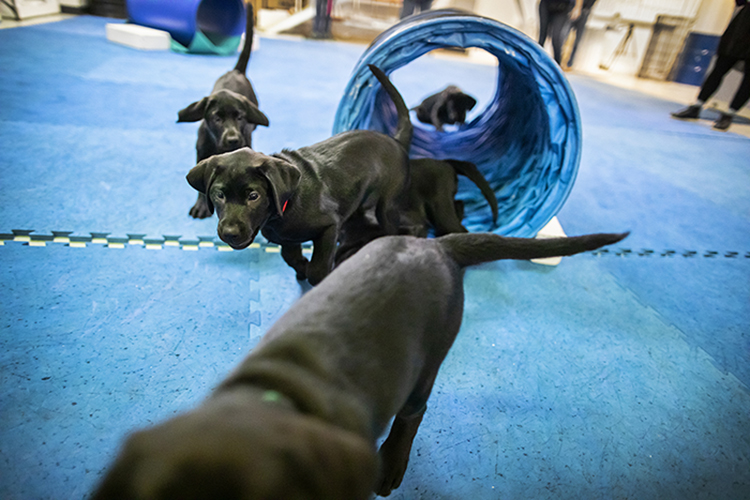
caption: Puppies, like these black Labs of the “U litter,” begin their training at Penn Vet’s Working Dog Center at eight weeks of age.

In her remarks at the 10th anniversary celebration of the Penn Vet Working Dog Center (WDC), founder and executive director Cynthia Otto shared the stories of two of the dogs trained through the center—Thunder and Rookie—as examples of how sometimes, a path to success can be circuitous, protracted, or simply not obvious from the start.

Thunder, a chocolate Labrador retriever, was a sleepy seven-week-old puppy when the WDC marked its launch on September 11, 2012. “Even after several months of training, he still hadn’t declared his major,” Dr. Otto said. But the training team didn’t give up on him, and at around a year of age, “he woke up.” Thunder became an urban search and rescue dog and, together with handler Spring Pittore, continues to deploy on lifesaving missions with FEMA’s New Jersey Task Force 1.

Along those same lines, Rookie, a German shepherd, was initially a “low-energy puppy” more interested in cuddles than training. Yet one day, “a switch flipped,” Dr. Otto recalled, and Rookie’s fierce side emerged, her potential as a law enforcement K9 becoming apparent. Today Rookie is a dual-purpose K9, able to both restrain perpetrators and sniff out explosives in her work with officer Jeff Seamans of the Lower Merion Police Department.

Like the career trajectories of these two dogs, the success of the WDC was not always a given. Developing such a center had been Dr. Otto’s dream since she cared for the working dogs deployed in a search for survivors at Ground Zero following the 9/11 attacks. It took another decade for it to become a reality, situated in its own space at Pennovation Works with seven wriggly puppies, a small staff, and a cadre of committed volunteers.

Fast forward 10 years and the WDC is thriving. To date, the center has graduated 131 dogs into careers in search and rescue, law enforcement, medical detection, and more, with a 94% success rate in placing its puppies in “jobs.” Beyond the furry graduates and trainees, the center has touched the lives of hundreds of people, too, from middle school students who have learned what it means to be a canine handler, to foster families who have opened their homes to puppies in training, to police departments who have received training or purchased dogs to augment their capacity, to scientists who have investigated a dog’s ability to perceive the smell of the most minute quantity of a target scent.

Representatives from each of these groups and more were among the nearly 300 people who gathered in the Pennovation Center to celebrate the past 10 years of the center, learn about its future initiatives, and marvel over the tremendous skill of the center’s fit and intelligent dogs.

In the wake of 9/11, Dr. Otto led a longitudinal study tracking the health and behavior of the dogs that deployed to that disaster. As an emergency and critical care veterinarian, she was driven to learn more about how best to prepare working dogs for their careers and care for them on the job and off. She couldn’t help but also remark at the charisma of the dogs themselves, bringing light into dark moments.

“My 10 days with the team at Ground Zero reinforced the importance of these heroic canines and their impact of their presence on the morale of first responders,” said Dr. Otto at the anniversary celebration, sharing a photo of three firefighters petting working dog Logan during a moment of down time.

After Penn acquired the Pennovation Works property in 2010, she recognized the chance to bring her vision to life. Key staff members have bolstered the WDC’s work from its earliest days, including training director Annemarie DeAngelo and training manager Pat Kaynaroglu, later joined by WDC associate director Vicki Berkowitz and law enforcement training coordinator Bob Dougherty. Begun in one room in an old gymnasium on the former DuPont lab property, the WDC has expanded to fill a building, growing its team of staff as well as students and volunteers to number in the hundreds. A slew of publications detail the findings Dr. Otto and colleagues have generated. The WDC has honed its focus on scent detection dogs, training most of the puppies that come through its doors for careers in search and rescue and law enforcement. Yet they’ve also embraced new opportunities in recent years, developing partnerships with the Pennsylvania Department of Agriculture and Pennsylvania Game Commission, for example, to use dogs’ ability to sniff out the invasive spotted lanternfly and the devastating chronic wasting disease of deer, respectively.

“Cindy and the team have a holistic approach to training dogs, that considers the well-being of the dogs, their behavior, their physiology, their nutrition, their fitness,” said Andrew Hoffman, the Gilbert S. Kahn Dean of Penn Vet. “They have produced rigorous science and shown they can work across different environments, with different partners. The sky is the limit for what they can achieve.”

Dr. Otto spent time at the celebration looking forward, to the many goals that she and her ambitious staff have for the WDC.

“Our vision is to expand our physical, intellectual, and collaborative research,” Dr. Otto said.

Top among their priorities is to lean into training dogs for law enforcement careers. The center aims to acquire a dedicated training space for this work, Dr. Otto said, “ideally in West Philadelphia, where we can partner with local leaders to be a positive impact for the community, including engaging youth at risk in positive programming.”

As their partnership with the Pennsylvania Game Commission and Penn Vet’s Wildlife Futures Program continues, Dr. Otto noted, the WDC would also like to establish a training certification program with a focus on detecting environmental hazards and wildlife disease. Now with 10 years of research and experience behind them, the WDC plans to continue sharing that expertise. Whether that is through supporting other organizations interested in implementing similar working dog training programs, building an educational platform to facilitate sharing research findings, and offering outreach to veterinarians, scientists, and the entire working dog community, Dr. Otto and her colleagues want to ensure all have access to the most up-to-date and rigorous science to enhance the ability of working dogs to save lives.

At the 10th anniversary event, a series of demos conducted in an increasingly steady rain put the dogs’ skills, and their trainers’ and handlers’ commitment, on full display. Rookie and her handler Mr. Seamans performed an “article search,” the K9 sniffing out the location of a fake gun planted in a field outside Pennovation Works. Eight-month-old black lab Jessie worked with trainer Danielle Berger to show off the carefully thought-out warmups and fitness routines that keep WDC dogs in top shape. And trainers working with Dutch shepherd Kali, who is just three months old, demonstrated how the WDC evaluates puppies’ aptitude and drive by seeing how well she fixated on a toy despite distractions.

Forging connections between people has been at the heart of the WDC since the beginning. Part of that mission includes welcoming students with interests that range from nutrition to video production to criminology. Kai Cummings, who attended the Sunday celebration, was a high school student when he walked in the WDC doors in January 2019. His first tasks involved assisting Ms. Berger, taking videos of the dogs, and doing administrative work. He returned the following January, becoming more immersed in training. Now a third-year student at Cabrini College, Mr. Cummings hopes to go into veterinary medicine and said the “foot in the door” at WDC was a major reason he’s excited about his path.

Foster families are another linchpin of the center’s operations, caring for dogs during the evenings and weekends when they’re not training, and providing the socialization that’s so essential to the WDC’s approach. The difficult part for many fosters is saying goodbye when it’s time for the dogs to enter their careers and join their handlers’ families.

Many foster “parents” were in attendance over the weekend, showing off photos and admiring their former charges. Eileen Houseknecht fostered a puppy from the center’s first class, a yellow Labrador retriever named Sirius. He is now a search and rescue dog in New Mexico, and Ms. Houseknecht stays in touch and occasionally sends gifts for Sirius to enjoy. “His handlers send me videos when he opens them,” Ms. Houseknecht said. “He has some gray in his fur now, but he still looks great.”

After a few hours catching up with old friends, volunteers, staff members, and others at the anniversary, Dr. Otto reflected on the significance of the WDC for the many people who are part of it. “There are a lot of people who have walked through our door feeling lost and found themselves here, carved out a purpose for themselves,” she said.

And with the WDC’s uncertain beginnings in the distant past, Dr. Otto now sees a legacy that will last far beyond the next decade.

“I’m so incredibly proud of what we’ve built,” she said. “I put in the infrastructure to put up this pole barn, and all these other people put in the floors, the walls, the décor, all the things that make it a home.”

Adapted from a Penn Today article by Katherine Unger Baillie, September 14, 2022.

Events

Update: October AT PENN

Conferences

13        India at 75, CASI at 30; celebrates 75 years of India’s independence and 30 years of Penn’s Center for the Advanced Study of India with several panels discussing India’s economy, politics, and world standing, followed by a reception; 1:30-7 p.m.; room 100, Golkin Hall; register: https://tinyurl.com/casi-at-30-oct-13 (CASI).


Exhibits

12        12@12 with Lynn Marsden-Atlass; a 12-minute talk on the John E. Dowell: Paths to Freedom exhibit; noon; Arthur Ross Gallery.


Fitness & Learning

12        Toll Public Interest Center Webinar for JD Applicants; for prospective JD applicants who wish to learn more about TPIC and the public interest community; noon; Zoom webinar; register: https://tinyurl.com/toll-center-webinar-oct-12 (Toll Public Interest Center).

            GSWS Job Market Workshop; workshop geared towards those currently and soon-to-be on the job market who are looking to apply to jobs in gender studies departments but whose PhDs are in other disciplines; 4 p.m. Zoom webinar; info: mhemming@sas.upenn.edu (Gender, Sexuality & Women’s Studies).

13        In-House Careers in Sports Panel; learn how to excel as an in-house lawyer (and how to get internships) from attorneys at some of the biggest organizations in sports; noon; room 240A, Silverman Hall (Carey Law School).

17        Virtual Nonprofit Leadership Meet & Greet; meet with representatives of Penn’s LGBT Center, Family Resource Center, and Women’s Center; noon; online webinar; info: https://www.sp2.upenn.edu/sp2-event/virtual-meet-greet/ (SP2).

18        Dance and the Poetics of Proximal Distance; artist-researchers Dahlia Li and Elisa Zuppini discuss how the practices of the moving body can address, disclose, and render legible the forces that move bodies today; 6 p.m.; Arts Café, Kelly Writers House, and YouTube livestream; register: https://forms.gle/VYDaPsFXRYeG1ouTA (Kelly Writers House).


Graduate School of Education

Unless noted, online events. Info: https://www.gse.upenn.edu/news/events-calendar.

18        Submatriculation Information Session; noon; New College House West.


Readings & Signings

12        Racial Melancholia, Racial Dissociation; David Eng, English; 6 p.m.; Penn Bookstore; register: http://www.alumni.upenn.edu/jbspresents2022 (James Brister Society, Asian American Studies).

13        The Sanctuary City: Immigrant, Refugee, and Receiving Communities in Postindustrial Philadelphia; Domenic Vitiello, city & regional planning; noon; room 419, Fisher-Bennett Hall (City & Regional Planning).


Special Events

11        Asian American Studies 25th Anniversary Celebration; features City Councilmember Helen Gym, who will commemorate the 25th anniversary of Penn’s Asian American studies program with a city resolution; 4:30 p.m.; 2nd floor atrium, McNeil Building; register: https://tinyurl.com/asam-25th-anniversary (Asian American Studies).


Talks

11        Pursuing a Scientific Career at a National Laboratory; Emilio Mendez, Brookhaven National Laboratory and Stony Brook University; 11 a.m.; Glandt Forum, Singh Center for Nanotechnology (Laboratory for Research on the Structure of Matter).

            The World Today: Decolonize the Future: Defending Indigenous Rights and Lands; Cristina Coc, Julian Cho Society; Pablo Mis, Maya Leaders Alliance; Filiberto Penados, Galen University; 4 p.m.; Perry World House; register: https://tinyurl.com/pwh-talk-oct-11 (Perry World House).

            Archive of Now: Photography in Kashmir; Sanjay Kak, photographer; Sought Foundation, 5:30 p.m.; 4017 Walnut Street (Slought Foundation, Cinema Studies).

12        Microbiota Regulation of Intestinal Immunity; Gretchen Diehl, Sloan Kettering Institute; noon; Austrian Auditorium, CRB, and BlueJeans webinar; join: https://primetime.bluejeans.com/a2m/live-event/xqbzwhrb (Microbiology).

            South Korea's Response to COVID-19: Lessons for the International Community; Chung Sye-Kyun, 46th Prime Minister of South Korea; 4 p.m.; Perry World House; register: https://tinyurl.com/chung-talk-oct-12 (Perry World House, Center for Korean Studies).

13        Population Genetics and Non-Alcoholic Fatty Liver Disease in the Million Veteran Program; Marijana Vujković, PSOM; 9 a.m.; BlueJeans webinar; join: https://bluejeans.com/873734674/4747?src=join_info (Center for Clinical Epidemiology and Biostatistics).

            Additive Manufacturing of Compositionally Complex Alloys with Engineered Microstructures; Wen Chen, University of Massachusetts Amherst; 10:30 a.m.; Wu and Chen Auditorium, Levine Hall (Mechanical Engineering & Applied Mechanics).

            Beyond the Hockey Stick: Climate Lessons from The Common Era; Michael Mann, Earth & environmental science; 2 p.m.; location TBA (Earth & Environmental Science).

            More than Just Mosaics: The Ancient Synagogue at Huqoq in Israel's Galilee; Jodi Magness, University of North Carolina; 4:45 p.m.; room 402, Cohen Hall (Classical Studies).

            Documenting the Architectural History of the African Methodist Episcopal Church: A Case Study; Charlette Caldwell, Columbia University; 5:30 p.m.; Zoom webinar; register: https://tinyurl.com/caldwell-talk-oct-13 (Historic Preservation).

            Egyptianizing Egyptian Cinema, 1896-1934; Mohannad Ghawanmeh, Al-Bustan Seeds of Culture; 5:30 p.m.; location TBA (Middle East Center).

14        It’s Alive! Bioinspired and Biohybrid Approaches Towards Life-Like and Living Robots; Victoria Webster-Wood, Carnegie Mellon University; 10:30 a.m.; Wu & Chen Auditorium, Levine Hall (GRASP Lab).

            Children of Memory and Legacies of U.S. Empire in Korean American Memoir; Jean Paik, ASAM; noon; room 473, McNeil Building, and Zoom webinar; register: https://tinyurl.com/paik-talk-oct-14 (Asian American Studies).

            How Much Should We Worry About Fake, Low-Quality and Biased News? Andrew Guess, Columbia University; Yphtach (Yph) Lelkes, Annenberg School; 12:15 p.m.; room 500, Annenberg School, and Zoom webinar; register: https://tinyurl.com/guess-lelkes-oct-14 (Annenberg School for Communication).

            Sound Attenuation and the Vibrational Properties of Glasses; Elijah Flenner, Colorado State University; room 534, 3401 Walnut Street (Penn Institute for Computational Science).

            Impacts on Sea-Level Rise from the Flow and Deformation of Glacier Ice; Brent Minchew, Massachusetts Institute of Technology; 3 p.m.; room 358, Hayden Hall (Earth & Environmental Science).

17        A Conversation; Will Hurd, Allen & Company; 5:30 p.m.; room 109, Annenberg School, and Zoom webinar; register: https://tinyurl.com/hurd-talk-oct-17 (Paideia Program).

18        Exergy-Based Methods as a Promising Modern Thermodynamic Evaluation and Optimization Tool; Tetyana Morozyuk, Technical University of Berlin; 10 a.m.; Zoom webinar; info: peterlit@seas.upenn.edu (Mechanical Engineering & Applied Mechanics).

            A Prediction Tool for Individual Outcome Trajectories Across the Next Year in First Episode Psychosis in Coordinated Specialty Care; Melanie Wall, Columbia University; 3:30 p.m.; room 701, Blockley Hall (Center for Clinical Epidemiology & Biostatistics).

            Equilibrium Complexity and Deep Learning; Constantinos Daskalakis, Massachusetts Institute of Technology; 3:30 p.m.; room 101, Levine Hall (Computer & Information Science).


Economics

In-person events at various locations. Info: https://economics.sas.upenn.edu/events.

11        The Returns to Advanced Placement; Cung Truong Hoang, economics; noon; room 200, PCPSE.

12        What Explains the Decline of Local News Coverage? Evidence from U.S. Newspapers; Lucie L'Heude, economics; 3:30 p.m.; room F50, Huntsman Hall.

            Population Aging, Fiscal Space and the Interest-Growth Differential; Felipe Ruiz Mazin, economics; 4:45 p.m.; room 101, PCPSE.

13        Dynamics of Urban Development: Evidence from New York; Elsie Peng, economics; 3:30 p.m.; room 101, PCPSE.

17        A Stage-Based Identification of Policy Effects; Raül Santaeulàlia-Llopis. Universitat Autonoma de Barcelona; noon; room 225, PCPSE.

18        The Effects of the ACA on Pharmaceutical Consumption and the Direction of Innovation; Zhemin Yuan, economics; noon; room 200, PCPSE.


Mathematics

In-person events at various locations. Info: https://www.math.upenn.edu/events.

11        Reciprocity for Quivers with Relations; Thomas Goller, College of New Jersey; 3:30 p.m.; room 3C6, DRL.

            His and Her Mathematical Models of Physiological Systems; Anita Layton, University of Waterloo; 4 p.m.; room 2C8, DRL.

13        Incidence Estimates for Slabs; Sarah Tammen, Massachusetts Institute of Technology; 3:30 p.m.; room 4C8, DRL.

            O(m)xO(n)-Invariant Ancient Ricci Flows on the (m+n-1)-Sphere; Timothy Buttsworth, University of Queensland; 5:15 p.m.; room 4C8, DRL.

18        Groupoid $C^\infty$-Rings and D-Manifolds; Quincy Frias, George Mason University; 3:30 p.m.; room 4C6, DRL.


This is an update to the October AT PENN calendar, which is online now. To submit events for an upcoming AT PENN calendar or weekly update, send the salient details to almanac@upenn.edu.

Crimes

Weekly Crime Reports

University of Pennsylvania Police Department Crime Report

Below are the Crimes Against Persons, Crimes Against Society and Crimes Against Property from the campus report for September 26-October 2, 2022. View prior weeks’ reports. —Ed.

This summary is prepared by the Division of Public Safety and includes all criminal incidents reported and made known to the University Police Department for the dates of September 26-October 2, 2022. The University Police actively patrol from Market St to Baltimore and from the Schuylkill River to 43rd St in conjunction with the Philadelphia Police. In this effort to provide you with a thorough and accurate report on public safety concerns, we hope that your increased awareness will lessen the opportunity for crime. For any concerns or suggestions regarding this report, please call the Division of Public Safety at (215) 898-4482.

09/26/22

6:41 AM

3131 Walnut St

Report of money taken from register

09/26/22

2:53 PM

100 S 42nd St

Attempted robbery on street

09/26/22

6:43 PM

3437 Walnut St

Unknown offender pushed complainant

09/27/22

4:52 PM

3946 Pine St

Amazon package taken

09/27/22

6:17 PM

110 S 36th St

Merchandise taken without payment

09/27/22

11:01 PM

423 Guardian Dr

Complainant harassed via phone call

09/28/22

7:02 AM

3131 Walnut St

Unsecured bike stolen from storage area

09/28/22

3:53 PM

255 S 38th St

Secured scooter taken from bike rack

09/28/22

4:20 PM

3930 Irving St

Unknown offender made harassing phone calls

09/28/22

5:14 PM

4111 Walnut St

Unsecured packages stolen from foyer

09/29/22

1:21 AM

3600 Spruce St

Currency taken/Arrest

09/29/22

3:42 AM

3335 Woodland Walk

Tire taken from secured bike

09/29/22

8:07 AM

3604 Chestnut St

Merchandise taken without payment

09/29/22

11:42 AM

3130 Walnut St

Cable lock-secured bike taken from bike rack

09/29/22

4:10 PM

4000 Locust Walk

Report of stolen vehicle

09/29/22

7:47 PM

223 S 33rd St

Secured scooter taken

09/29/22

8:31 PM

4000 Baltimore Ave

Cell phone taken

09/30/22

7:30 AM

3730 Walnut St

Cable-secured scooter taken

09/30/22

8:57 AM

3401 Grays Ferry Ave

Attempted theft of catalytic converter

09/30/22

4:12 PM

110 S 36th St

Merchandise taken without payment

09/30/22

7:05 PM

3820 Locust Walk

Complainant received harassing phone calls and text messages

09/30/22

10:31 PM

210 S 40th St

Unsecured purse stolen

09/30/22

11:04 PM

101 S 39th St

Apartment burglary/Arrest

10/01/22

1:51 PM

3910 Irving St

Secured bike stolen from rack

10/01/22

2:34 PM

601 University Ave

Unsecured scooter stolen

10/01/22

7:43 PM

3701 Walnut St

Cable-secured bike stolen

10/02/22

1:00 PM

20 S 33th St

Unsecured bag containing computer equipment stolen


18th District

Below are the Crimes Against Persons from the 18th District: 7 incidents (5 robberies and 2 assaults) and 2 arrests was reported for September 26-October 2, 2022 by the 18th District, covering the Schuylkill River to 49th St & Market St to Woodland Avenue.

09/26/22

2:56 PM

4200 Blk Chestnut St

Robbery

09/26/22

3:33 PM

4500 Blk Walnut St

Robbery/Arrest

09/26/22

6:47 PM

3437 Walnut St

Assault

09/27/22

6:17 PM

110 S 36th St

Robbery

09/29/22

2:01 AM

3600 Blk Spruce St

Robbery/Arrest

09/29/22

4:40 PM

4200 Blk Chester Ave

Assault

09/29/22

9:20 PM

4000 Blk Baltimore Ave

Robbery

Bulletins

Penn’s Way Raffle Prize Drawings

Visit https://pennsway.upenn.edu for more information. Online participation must be completed by midnight on Sunday for inclusion in a given week’s drawing that Monday morning. Note: list subject to change.

Week One–Drawing October 10

  • Penn Athletics: Four tickets to Yale vs. Penn Men’s Football (10/22) ($80 Value): Laura Tepper, Development & Alumni Relations
  • Penn Athletics: Four tickets to Harvard vs. Penn Men’s Football (11/12) ($80 Value): Frank Balis, Perelman School of Medicine
  • Keen Compressed Gas Co.: Four tickets to U Del Men’s Football vs. Monmouth (11/5) + Parking ($100 Value): Elizabeth Grochowski, HUP
  • Neta Scientific: Amazon gift card ($25 Value): Max Reyes-Rosario, Business Services
  • Neta Scientific: Amazon gift card ($25 Value): Lance Bistransky, Pennsylvania Hospital
  • Neta Scientific: Amazon gift card ($25 Value): Catherine Sales, Clinical Practices (CPUP)
  • SalesForce: Swag bag ($25 Value): Cecelia Fedele, HUP


Week Two–Drawing October 17

  • Chanticleer Gardens: Two tickets ($24 Value)
  • ThermoFisher Scientific: Apple gift card ($25 Value)
  • ThermoFisher Scientific: Cheesecake Factory gift card ($25 Value)
  • Neta Scientific: Amazon gift card ($25 Value)
  • Neta Scientific: Amazon gift card ($25 Value)
  • Philadelphia Flyers: Autographed puck (James van Riemsdyk) ($25 Value)
  • SalesForce: Swag bag ($25 Value)

One Step Ahead: You Still Need Antivirus Software

One Step Ahead logo

Another tip in a series provided by the Offices of Information Security, Information Systems & Computing and Audit, Compliance & Privacy.

Operating systems such as Windows 11 and macOS have technologies built in to help prevent virus infections and malware. If that is the case, do computers still need antivirus software? The answer is yes.

While operating systems have become more secure, they are still vulnerable to compromises, especially those that exploit the “human element.” People are fooled into downloading and installing malicious software, cookie-stealing browser extensions, or infected email attachments. They are lured to websites that compromise their privacy or steal credentials such as banking logins. Ransomware, which holds files hostage by encrypting them so they can only be unlocked if money is paid, is a growing threat.

To help the members of the Penn community better protect themselves, the University has made Sophos Home available. This software helps protect your online information and your data. It is available for both Macintosh and Windows computers free of charge to eligible active affiliates.

To find out more and install Sophos Home: https://www.isc.upenn.edu/how-to/sophos-home.

--

For additional tips, see the One Step Ahead link on the  Information Security website: https://www.isc.upenn.edu/security/news-alerts#One-Step-Ahead.

Special Briefing Podcast

The Penn Institute for Urban Research (Penn IUR) and the Volcker Alliance launched a new podcast–Special Briefing–that examines fiscal actions states and municipalities are taking in response to COVID-19, unprecedented federal stimulus aid, inflation, and rising interest rates. Hosted by William Glasgall, senior director, public finance at the Volcker Alliance and veteran financial journalist, and Susan Wachter, Penn IUR co-director, the podcast brings together governors, mayors, members of Congress, academics, Wall Street’s most successful investors, and nationally recognized public finance experts to share their experiences and strategies for today and the future.

For more information, visit https://penniur.upenn.edu/press-room/announcements/special-briefing-podcast-launched.

Back to Top