News

George Demiris: Associate Dean for Research and Innovation, Penn Nursing

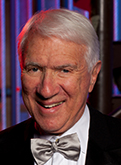
caption: George DemirisGeorge Demiris, the Mary Alice Bennett University Professor and a Penn Integrates Knowledge University Professor, has been appointed Penn Nursing’s next associate dean for research and innovation. This appointment will begin on June 1, 2023.

“Penn Nursing is renowned for exemplary science that transforms policy and practice,” said Penn Nursing dean Antonia M. Villarruel. “We are leaders in innovation, infusing it in our research, practice, and teaching. Dr. Demiris’ research and innovation expertise, curiosity, and commitment to social justice is impactful and it will be transformational in his new role at our school. I am excited to have his leadership as he continues to build our research and innovation mission.”

Dr. Demiris’ research is at the forefront of the intersection of informatics and nursing science, and his work has introduced new and innovative approaches to long-standing problems in gerontology. He has sought a patient- and family-centered approach to designing and evaluating health information systems for older adults. He is a co-founder of the Hospice Caregiver Research Network, an initiative led by researchers from various academic disciplines committed to designing and testing interventions to support family caregivers of patients at the end of life. Dr. Demiris is currently conducting a clinical trial to examine the impact of a behavioral intervention for hospice caregivers informed by problem solving therapy and positive reappraisal, using various informatics tools. Another area of his research includes the use of behavioral sensing, “smart home” and “Internet of Things” technologies to promote independence for community-dwelling older adults and their families. His research has been funded consistently by the National Institutes of Health and the National Science Foundation. 

“Penn Nursing has a long tradition in leading the advancement of nursing science,” said Dr. Demiris. “I am looking forward to the continued growth of our research and innovation ecosystem in the school, fostering new collaborations and inclusive research initiatives.” 

Dr. Demiris holds a secondary appointment in the informatics division of the department of biostatistics, epidemiology, and informatics at the Perelman School of Medicine. He is a member of the National Academy of Medicine, and a fellow of the American College of Medical Informatics, the Gerontological Society of America, and the International Academy of Health Sciences Informatics. He is the editor-in-chief of Informatics for Health and Social Care and a senior fellow of the Leonard Davis Institute for Health Economics. He directs the Penn Artificial Intelligence and Technology Collaboratory for Healthy Aging and co-directs the Penn Community Collaboratory for Co-Creation.

In addition to his scholarship, Dr. Demiris mentors doctoral students at Penn Nursing to use informatics tools and principles in their research agendas. He is committed to interdisciplinary educational and research collaborations and has extensive experience in curricular design and mentoring from his past roles as director of a biomedical and health informatics training program funded by the National Library of Medicine, and an aging and informatics training program funded by the National Institute of Nursing Research. He actively collaborates with various units on campus, including the department of computer and information science, as well as industry partners.

Robert Ghrist: Associate Dean for Undergraduate Education, SEAS

caption: Robert GhristRobert Ghrist, Andrea Mitchell University Professor in electrical and systems engineering and in mathematics, has been appointed the associate dean for undergraduate education in Penn Engineering, effective July 1, 2023.

Dr. Ghrist is a pioneer in teaching calculus through electronic media, and his accolades as an educator include the Lindback Award, Penn’s highest honor for teaching, and Penn Engineering’s S. Reid Warren, Jr. Award, which is given in recognition of outstanding service in stimulating and guiding the intellectual and professional development of undergraduate students in the school.

“Rob is an award-winning, gifted educator who strives to make mathematics accessible to a broad range of students,” said Vijay Kumar, the Nemirovsky Family Dean of Penn Engineering. “I know that his dedication to reaching students of all disciplines will further enhance Penn Engineering’s undergraduate experience.”

Dr. Ghrist’s research is in applied mathematics, specifically in applications of algebraic topology to problems in data, networks, robotics, neuroscience and more. Since coming to Penn, Dr. Ghrist has been the lead investigator on more than $10 million in grants from the Department of Defense to develop new applications of topology. He was named one of the top 50 American scientific innovators by Scientific American in 2007, and in 2013, his peers recognized him with the Chauvenet Prize for mathematical writing, awarded by the Mathematical Association of America.

As associate dean, Dr. Ghrist will oversee all undergraduate academic affairs for Penn Engineering, including all educational programs, and serve as the chair of the school-wide Undergraduate Affairs Committee.

In 2008, Dr. Ghrist was appointed as Penn’s seventh Penn Integrates Knowledge (PIK) Professor. He received a bachelor’s degree in mechanical engineering and master’s and PhD degrees in applied mathematics from Cornell University. He joined the Penn faculty from the University of Illinois at Urbana-Champaign, where he was a university scholar and the Richard and Margaret Romano Professional Scholar.

Deaths

Sally Haws Johnson, Penn Alumni

caption: Sally JohnsonSally Haws Johnson, a former administrator in the School of Medicine and in Penn Alumni, died on March 12. She was 93.

Ms. Johnson grew up in the Philadelphia suburbs. She graduated from Haverford High School in 1947, then earned a degree in chemistry from Wilson College in 1951. After further studies in chemistry at Mount Holyoke College, she worked as a chemist at Smith, Kline & French, taught physics at the Springside School in Chestnut Hill, Philadelphia, and then devoted the next decade to raising her four children and doing community volunteer work in University City, Philadelphia. In the late 1960s, she returned to work at the University of Pennsylvania, where her husband, Stanley Johnson, served as chaplain. Ms. Johnson was an administrator in the Office of Equal Opportunity of the School of Medicine, overseeing services for students with disabilities in the biochemistry department for nearly 20 years. In the late 1970s, she rose to associate director of the office. In 1982, she became editor of publications in the Office of Alumni Relations, a position she also held for nearly 20 years.

A funeral service will be held at St. Thomas Episcopal Church, Whitemarsh, Pennsylvania on March 23 at 11 a.m., preceded by a private burial. Instead of flowers, the family requests donations to the Schuylkill Center for Environmental Education or the Northeast Pennsylvania Audubon Society.

Ms. Johnson is survived by her four children, Laura Johnson (Laura Jereski), Lexanne Anderson-Bell (Andrew), Peter Hunt-Johnson (Nora), and Amy Johnson (Edward Brady); and her six grandchildren, Lowell and Gordon Abbott, Evan and Alison Hunt-Johnson, and Kyle and Arden Brady. She was predeceased by her husband of 61 years, former University Chaplain Reverend Stanley Ethan Johnson.

A. Eugene Kohn, Trustee

caption: A. Eugene KohnA. Eugene “Gene” Kohn, AR’53, GAR’57, a member of the University of Pennsylvania Board of Trustees, as well as the architect who designed the Wharton School’s Jon F. Huntsman Hall, died March 9, 2023 of pancreatic cancer. He was 92.

Mr. Kohn was born and raised in Philadelphia. Between earning his bachelor’s and master’s degrees in architecture at Penn in 1953 and 1957 respectively, Mr. Kohn served on active duty in the United States Navy, then later for five years on reserve duty, retiring as a Lieutenant Commander. After completing his education, he worked at several architectural firms in Philadelphia and New York, including Vincent G. Kling, Architects; Welton Becket & Associates; and John Carl Warnecke & Associates, where he served as president.

In 1976, he co-founded Kohn Pedersen Fox with colleagues William Pedersen and Sheldon Fox, AR’53. As president and chairman, Mr. Kohn shaped KPF into one of the top 10 architectural and planning firms in the United States and one of the most prolific designers of skyscrapers in the world, receiving more than 300 design awards. He and his firm designed extraordinary buildings across the country and around the world, like Philadelphia’s Mellon Bank Center and the award-winning One Logan Square, originally home to the Four Seasons Hotel, and the Shanghai World Financial Center, one of the world’s tallest buildings. At Penn, he designed the Wharton School’s distinctive Huntsman Hall, which opened in 2002.

Mr. Kohn served as a Trustee at Penn from 1991 to 1996. He served on the Trustees’ committees on Facilities and Campus Planning and Internationalization. He chaired the Weitzman School of Design Board of Advisors from 1991 to 1996. At the Weitzman School of Design, Mr. Kohn worked to nurture connections between the school and the New York architectural community, to recruit members to its Board of Advisors, and to support Penn students’ educational experiences and careers. He hosted student shows in his gallery, hired Weitzman School graduates, and once mounted an exhibition on the design of high-rise buildings for Penn students.

Mr. Kohn supported the Louis I. Kahn Architecture Professorship; endowed the William B. and Hannah S. Kohn and A. Eugene Kohn Endowed Fellowship in Architecture honoring his parents; and also established an annual lecture series with his colleagues. He served on the Furness Library Restoration Committee, which helped restore and renew one of Penn’s greatest architectural landmarks, now known as the Fisher Fine Arts Library.

Mr. Kohn was named an advisor emeritus of the Weitzman School of Design and received the school’s prestigious Dean’s Medal of Achievement in Architecture. He also received the Kanter Tritsch Medal for Excellence in Architecture and Environmental Design from the Weitzman School in 2019; Penn’s Alumni Award of Merit, the highest award given by Penn Alumni in recognition of outstanding service, in 2010; and the Lifetime Achievement Award of the Wharton Real Estate Center in 1997. A reading alcove at the Fisher Fine Arts Library bears his name.

Mr. Kohn lectured on contemporary architecture before audiences in professional, civic, and educational settings around the world. He served as a visiting critic and guest lecturer at several universities, including Penn, and taught at Harvard University, where he also helped establish the Harvard International Real Estate Center. He wrote numerous articles and book chapters on architectural topics. In 2019, he published his memoir, The World by Design: The Story of a Global Architecture Firm, written with Clifford Pearson.

He is survived by his wife, Barbara Shattuck Kohn; his children, Brian, Laurie, and Steven; nine grandchildren; and extended family.

---

To Report A Death

Almanac appreciates being informed of the deaths of current and former faculty and staff members, students and other members of the University community. Call (215) 898-5274 or email almanac@upenn.edu.

However, notices of alumni deaths should be directed to the Alumni Records Office at Suite 300, 2929 Walnut St., (215) 898-8136 or email record@ben.dev.upenn.edu.

Governance

Volunteer to Serve On a University Council Committee by April 4, 2023

Calling all faculty and staff: Please consider nominating yourself to join a University Council committee for the 2023-2024 academic year. The time commitment is minimal, and the work of the committees directly contributes to the improvement of life at Penn. Nominations are due by April 4, 2023.

To:     Members of the University Faculty, Penn Professional Staff Assembly, and Weekly-Paid Professional Staff Assembly
From:    2023-2024 University Council Committee on Committees
RE:     Volunteers Sought for Committee Service

The University Council’s 2022–2023 Committee on Committees invites you to nominate yourself or others for service on one of the University Council’s standing committees. Council committees serve as advisory bodies in shaping academic/administrative policy. Please consider this unique opportunity to have input into the University’s decision-making processes.
Membership on these committees is open to all faculty and staff, including those who have not previously served. We invite individuals who have previously served to volunteer again in order to achieve a mix of new ideas and committee experience. Most committees also are open to students; their participation is already being solicited through other channels.

Please submit your nominations by April 4, 2023, using the form below.

Council committees typically meet for 1-2 hours per month during the academic year. To support staff participation, offices are strongly encouraged to provide flexibility and release time to the greatest extent possible so that staff members may fully participate. We encourage staff and supervisors to work together to arrange release time in recognition of the operational needs of their school/center, and we encourage staff members to provide as much notice as possible in scheduling time for attendance at these meetings.

Please review committees’ recent annual reports for more information on the specific nature of its work. These reports, which provide summaries of the committees’ recent work as well as topics under current deliberation, are published in Almanac and can be accessed via the University Council website.

The University Council seeks nominations of faculty and staff to serve on the following committees:

Committees and Their Work

Academic and Related Affairs has cognizance over matters of undergraduate recruiting, admissions, and financial aid that concern the University as a whole or those that are not the specific responsibility of individual faculties; of all programs in recreation, intramural and club sports, and intercollegiate athletics; and of all matters of policy relating to research and the general environment for research at the University, including the assignment and distribution of indirect costs and the assignment of those research funds distributed by the University. The committee considers the purposes of a university bookstore. It advises the administration on policies, developments, and operations of the bookstores and libraries; in such areas as international student services, foreign fellowships and studies abroad, exchange programs, and cooperative undertakings with foreign universities and on athletic operations; and recommends changes in policy when appropriate; and on those proposals for sponsored research referred to it because of potential conflict with University policy.

Campus and Community Life has cognizance over the University’s electronic and physical communications and public relations activities; advises on the relationship of the University to the surrounding community; has cognizance of the conditions and rules of undergraduate and graduate student life on campus; and considers and recommends the means to improve safety and security on the campus.

Facilities keeps under review the planning and operation of the University’s physical plant and all services associated therewith, including transportation and parking.

Honorary Degrees is charged with soliciting recommendations for honorary degrees from faculty, staff and students and submits nominations to the Trustee Committee on Honorary Degrees.

Personnel Benefits has cognizance over the benefits programs for all University personnel. Special expertise in personnel, insurance, taxes or law is often helpful.

Diversity and Equity aids Penn in fostering and taking full advantage of its diversity as well as in strengthening ties across all boundaries to enrich and enliven the campus community. The committee advises the offices of the president, provost, and the executive vice presidents on ways to develop and maintain a supportive atmosphere on campus for the inclusion and appreciation of diversity among all members of the University community. The committee reviews and provides advice regarding the University’s equal opportunity and affirmative action programs and policies. The areas in which the committee reports to the Council include diversity within the educational and work settings, integration of staff and faculty into the larger campus community, and ways to foster a campus environment that is inclusive and supportive of difference.

Open Expression has cognizance to act in issues and controversies involving the Guidelines on Open Expression. It monitors communication processes prevent conflicts that might emerge from failure of communication by recommending policies and procedures for improvement of all levels of communication, investigating alleged infringements of the right of open expression of any member or members of the University community, advising administrative officers where appropriate, and participating in evaluation and resolution of conflicts that may arise from incidents or disturbances on campus.

Please respond by April 4, 2023.

For faculty volunteers, email the information requested below to: Patrick Walsh, Faculty Senate Office, at senate@pobox.upenn.edu.

For Penn Professional Staff Assembly volunteers, mail to Anne Corcoran-Petela, PPSA chair, at ppsa@lists.upenn.edu.

For Weekly-Paid Professional Staff Assembly volunteers, mail to Chris Klaniecki, WPPSA chair, at cklaniec@upenn.edu.

Committee(s) of Interest:___________________________________________________

Candidate: _________________________________________________________________

Title or Position: ____________________________________________________________

Department or Area: _______________________________________________________

Campus Address (including mail code): ____________________________________

Campus Phone and Email: _________________________________________________

Any specific interests or qualifications you have regarding the work of a particular
committee: ________________________________________________________________

Honors

Camille Zubrinsky Charles: 2023 Honoree of the Faculty Award of Merit

caption: Camille CharlesCamille Zubrinsky Charles, the Walter H. and Leonore C. Annenberg Professor in the Social Sciences in the School of Arts and Sciences, was selected as the 2023 honoree of the Faculty Award of Merit, presented by Penn Alumni. This award is presented to an individual who has made an outstanding contribution to alumni education and engagement at Penn by sharing their unique scholarship work with the alumni community.

Dr. Charles will receive the award at the Alumni Award of Merit Gala on November 3, 2023, hosted by the Penn Alumni president. For more information about the award, visit https://www.alumni.upenn.edu/s/1587/gid2/16/interior.aspx?sid=1587&gid=2&pgid=1406.

Jordan Dingle: Ivy League Player of the Year

caption: Jordan DingleJordan Dingle of the men’s basketball team has been named Ivy League Player of the Year.

A native of Valley Stream, New York, Mr. Dingle led the conference in scoring, averaging 23.4 points per game. His scoring average ranks second in the country and is the second-highest in the conference in the last 25 years. He finished second in the league in free throw percentage (.856), second in three-point field goals per game (2.8), third in minutes per game (33.5), and 11th in steals (1.1 per game) and three-point field goal percentage (.356).

Mr. Dingle is only the fifth Penn junior to be named conference Player of the Year, joining Paul Little (1981-82), Jerome Allen (1993-1994), Ugonna Onyekwe (2001-2002), and Ibrahim Jaaber (2005-2006). He is the 15th Quaker overall to earn Player of the Year honors, and one of only six Quakers to be awarded both Ivy League Rookie of the Year and Player of the Year.

The 656 points scored by Mr. Dingle this season are second-most in school history, trailing only Ernie Beck’s 673 in 1952-1953. He scored 20 or more points 22 times, second-most in school history behind Mr. Beck’s 25 in 1952-1953.

Mr. Dingle’s biggest performance came against Big 5 foe La Salle. He scored 37 points in Penn’s 84-81 overtime loss at the Palestra on December 3, 2022, the most points scored by a Quaker in almost 30 years. He shot 12-22 from the field, 6-10 from the three-point line, and 7-8 from the foul line. He also had five rebounds, one assist, and one steal.

Mr. Dingle also scored 30 points in the Red & Blue’s 77-57 win over Big 5 rival Temple at the Palestra on December 10, 2022. He shot 10-22 from the field, 1-7 from behind the arc, and 9-10 from the free throw line. He added four rebounds, six assists, and three steals.

His highest-scoring Ivy League game was a 33-point feat in the Quakers’ 84-55 victory over Columbia in New York on January 7. He shot 11-17 from the field, 7-9 from the three-point line, and 4-5 from the charity stripe.

Mr. Dingle is also a unanimous First-Team All-Ivy selection for the second year in a row. The Red & Blue finished the 2022-2023 season with a 17-13 record overall and a 9-5 mark in conference play. They reached the semifinals of the Ivy League Tournament, where they fell to Princeton on March 11, 77-70.

Entering his final season next fall, Mr. Dingle is eighth on Penn’s all-time scoring list with 1,536 points. If he has a similar output, he could shatter A.J. Brodeur’s all-time scored record of 1,832.

Reed Pyeritz: Lifetime Achievement Award from the Marfan Foundation

caption: Reed PyeritzReed E. Pyeritz, the William Smilow Professor of Medicine Emeritus in the Perelman School of Medicine, has received the Lifetime Achievement Award from the Marfan Foundation. This organization supports health care, education and research for patients and families with Marfan syndrome and related genetic disorders of connective tissue, especially those that affect the aorta and its arterial branches. In 1991, Dr. Pyeritz co-led the team that discovered that variants in the gene fibrillin cause Marfan syndrome, a discovery that enabled more rapid and accurate diagnosis, especially within families because half of the offspring, on average, inherit the condition. He was the first to perform a clinical trial that demonstrated that the risk of aortic dissection and the rate of dilatation of the artery could be reduced with a beta-adrenergic blocking drug. His research, and that of many others, has resulted in a doubling of the life-expectancy of people with the syndrome. In 1979, at Johns Hopkins, Dr. Pyeritz organized a small support group of patients, families, and colleagues. This group grew into the Marfan Foundation, which now has several thousand members, an international following, and major funding for its activities. In 2015-2016, Dr. Pyeritz served as chair of Penn’s Faculty Senate.

Eight 2023 Thouron Scholars

caption: From left, (top) seniors Alisa Ghura, Shivani Nellore, Winston Peloso, Gabriella Rabito (bottom) May 2022 graduate Srinidhi Ramakrishna, seniors Thomas Russell, Oliver Stern, and Elena Tisnovsky. Photo Courtesy of the Center for Undergraduate Research and Fellowships

Seven University of Pennsylvania seniors and one May 2022 graduate have each received a 2023 Thouron Award to pursue graduate studies in the United Kingdom. Each Thouron Scholar receives tuition for as long as two years, as well as travel and living stipends.

Penn’s 2023 Thouron Scholars are seniors Alisa Ghura, Shivani Nellore, Winston Peloso, Gabriella Rabito, Thomas Russell, Oliver Stern, and Elena Tisnovsky, and May 2022 graduate Srinidhi Ramakrishna.

Established in 1960 and supported with gifts by the late John Thouron and his wife, Esther du Pont Thouron, the Thouron Award is a graduate exchange program between Penn and U.K. universities that aims to improve understanding and relations between the two countries.

Alisa Ghura, from Washington, D.C., is double majoring in political science and urban studies with a minor in survey research & data analytics in the College of Arts and Sciences. Interested in education and environmental justice, she is an advocate for safe school buildings and has conducted research on the presence of environmental hazards in schools through her honors thesis and at the Brookings Institution. Her commitment to this research stems from her role as a writing program instructor at Paul Robeson High School in Philadelphia through Robeson Writes, a supplemental writing program she co-founded. At Penn, Ms. Ghura is a civic scholar, a Program on Opinion Research and Election Studies student fellow, and member of the Penn Mock Trial team. She is the chair of the Netter Center for Community Partnerships Student Advisory Board. She also was Penn’s 2021-2022 Newman civic fellow. As a Thouron Scholar, Ms. Ghura plans to pursue a master’s degree at the University of Oxford in England to study environmental justice, with a goal of advocating for policies that create more equitable learning environments for all students.

Shivani Nellore, from Great Falls, Virginia, is in the Roy and Diana Vagelos Life Sciences & Management dual degree program, pursuing a bachelor’s degree in biology concentrated in molecular and cell biology in the College of Arts and Sciences and a bachelor’s degree in economics concentrated in health care management and policy at the Wharton School. Ms. Nellore is currently a student researcher in the Sydney Shaffer Lab at the Perelman School of Medicine and a student volunteer for Project Stella, an effort to improve radiation oncology treatments in Africa. She has conducted cancer research as a summer intern at the National Cancer Institute in Bethesda, Maryland, and at the MD Anderson Cancer Center in Houston. In the summer of 2021, she worked as a business team member at the Lifespan Cancer Institute in Providence, Rhode Island. Additionally, Ms. Nellore worked as a certified pharmacy technician at CVS during the COVID-19 pandemic. At Penn, Ms. Nellore is vice president of the Science Olympiad at Penn and a coordinator for the Educational Pipeline Program, working with Philadelphia high school students through the Netter Center for Community Partnerships. As a Thouron Scholar, she plans to pursue a master’s degree in evidence-based social intervention and policy evaluations at the University of Oxford.

Winston Peloso, from Princeton, New Jersey, is majoring in physics and mathematics, and is submatriculating to earn a master’s degree in physics in the School of Arts and Sciences. He has contributed to research projects in several areas of physics, including the NASA Advanced Colloids Experiment, the SABRE dark matter search, and, for his senior thesis, the effect of defects on electron transport in new materials. He has mentored other undergraduates through Research Peer Advisors, Beyond Locust Research Club, Women in Physics, Peers Helping Integrate New Students, and as a teaching assistant in mathematics. He recently instituted and manages the Journal Club of the Society of Physics Students at Penn and organizes fundraising events as philanthropy chair of the fraternity Delta Phi. As a Thouron Scholar, Mr. Peloso plans to pursue a master’s degree in mathematics to support his future research into understanding the capabilities of quantum metrology.

Gabriella Rabito, from Huntington, New York, is majoring in political science with a concentration in international relations, with a minor in modern Middle Eastern studies in the College of Arts and Sciences, while also pursuing a graduate certificate in global human rights. She is interested in international human rights law, specifically mass atrocities, state-sponsored violence, systematic persecution, and wrongful detention. Ms. Rabito has been a research assistant for five Penn political science professors and a research analyst at two think tanks, including Penn’s Think Tanks and Civil Societies Program. She has worked as a legal intern at the Pennsylvania Innocence Project in Philadelphia, and two law firms in Washington, D.C. As a Penn Perry World House student fellow, she received a 2022 grant to pursue research on mass atrocity prevention. She also won the Perry World House’s undergraduate essay prize for her essay on refugee detention centers. A QuestBridge scholar, Ms. Rabito has been a student liaison on Penn’s Trustee Committee on Local, National, and Global Engagement and a volunteer with Penn Leads the Vote. She was elected as committee person of Philadelphia’s 27th Democratic Ward in the May Pennsylvania primary. She is president of Penn’s Pi Sigma Alpha political science honor society chapter, a member of the Phi Alpha Delta law fraternity, and an associate editor of Sigma Iota Ro Journal. She also is a member of Dischord A Cappella, Onda Latina dance troupe, and Penn Records. As a Thouron Scholar, Ms. Rabito plans to pursue a master’s degree in international relations.

Srinidhi Ramakrishna, from Montgomery, New Jersey, graduated summa cum laude from the College of Arts and Sciences with a bachelor’s degree in political science with a concentration in American politics, and a minor in survey research & data analytics. She currently works as a product manager building machine-learning-driven personalization features at the streaming service Peacock in New York City. At Penn, Ms. Ramakrishna advocated for criminal legal reform as co-president of the student group Beyond Arrests: Re-Thinking Systematic Oppression. For her honors thesis, she conducted research on the politics of mass supervision and probation in Pennsylvania. A member of several student groups, Ms. Ramakrishna was vice president of the a cappella group Counterparts, a coordinator for PennArts, a facilitator for the Asian Pacific American Leadership Initiative, and a member of various South Asian and violence prevention student advocacy organizations. Ms. Ramakrishna is a 2019 Summer Humanities internship recipient, a 2021 T. Howard Foundation fellow, and a 2022 Civic Innovation Corps fellow, the last of which supported her work on civic technology projects in state government. As a Thouron Scholar, Ms. Ramakrishna plans to pursue a master’s degree in the social science of the internet at the University of Oxford.

Thomas Russell, from Gladwyne, Pennsylvania, is majoring in international relations with a minor in Russian studies in the College of Arts and Sciences. He is interested in international security and global intelligence, with a focus on U.S. international diplomacy and the legacy of the Cold War on contemporary Eurasian politics. Mr. Russell was the 2021 recipient of the U.S. State Department’s Critical Language Scholarship, where he completed an immersive program in Russian language and culture through the American University of Central Asia in Bishkek, Kyrgyzstan. Mr. Russell has conducted research at the Foreign Policy Research Institute on Russian political disinformation, as well as on the resurgence of Turkish militarism under President Recep Erdoğan. Most recently, Mr. Russell has worked with Lt. Col. John Nagl (Ret.) at the U.S. Army War College to design and implement a novel curricular counterinsurgency wargame based upon successes and failures from the U.S.-Afghan and Soviet-Afghan conflicts. He is also a four-year member of Penn’s varsity lightweight rowing team. As a Thouron Scholar, Mr. Russell plans to pursue a master’s degree in international security studies at the University of St. Andrews in Scotland.

Oliver Stern, from Miami Beach, Florida, is majoring in political science and history with concentrations in international relations and diplomatic history in the College of Arts and Sciences. He is interested in international efforts to establish effective accountability mechanisms for human rights violations. His honors thesis examines the recent expansion of universal jurisdiction prosecutions for crimes against humanity. As a Stavros Niarchos Foundation Paideia fellow and Perry World House student fellow, he helped organize President Biden’s Summit for Democracy while working as an intern at the U.S. State Department. He addressed the United Nations Human Rights Council while working as an intern for UN Watch. At Penn, he was the vice president of the Penn University Honor Council, a member of the Student Committee on Undergraduate Education, and an undergraduate appointee to the University Council’s Committee on Open Expression. As a Thouron Scholar, Mr. Stern plans to pursue a master’s degree in human rights at the London School of Economics.

Elena Tisnovsky, from Westchester, New York, is majoring in political science with a minor in East Asian area studies in the College of Arts and Sciences. She has worked for think tanks focusing on military science, human rights, international security, and post-war governance. Ms. Tisnovsky is currently an investigative analyst intern at the Center for Advanced Defense Studies. In 2022 she was a Hertog War Studies fellow at the Institute for the Study of War and an intern at the Carter Center Rule of Law Program. As part of the Penn in Washington Program, Ms. Tisnovsky in 2021 was an intern at the Wilson Center’s Kennan Institute, where she conducted research in the Library of Congress on the development of authoritarianism through visual statistics in the early Soviet Union. Through a Penn Undergraduate Research Mentorship award, Ms. Tisnovsky worked with Rudra Sil, a professor of political science, on the development of environmental, social, and governance principles and hydrogen energy policy in Russia. Also while at Penn, she worked to raise awareness and funds for the rescue and resettlement of North Korean refugees through Penn for Liberty in North Korea, and was a member of the Quaker Girls Dance Team. As a Thouron Scholar, she plans to pursue a master’s degree in intelligence and international security at King’s College London.

The Center for Undergraduate Research and Fellowships serves as Penn’s primary information hub and support office for students and alumni applying for major grants and fellowships, including the Thouron Award.

Features

Updated Edition of Philadelphia Trees Published by Morris Arboretum and Penn Press

caption: An icon at Morris Aboretum, a many-trunked katsura tree is among those specimens featured in “Philadelphia Trees.” The tree was planted in the early 1900s. Photo courtesy of Paul W. Meyer.

Asked to name his favorite tree, Paul W. Meyer, the former director of Penn’s Morris Arboretum, likens the task to “asking a parent to name their favorite child.”

Hedging, Mr. Meyer cites Morris’ iconic and sprawling katsura tree but also shares his admiration for a giant American sycamore growing on the east side of Philadelphia’s Washington Square. “It’s actually growing on a sidewalk,” Mr. Meyer said. “It’s an enormous tree that should no longer be alive by all objective measure. But it’s just thriving.”

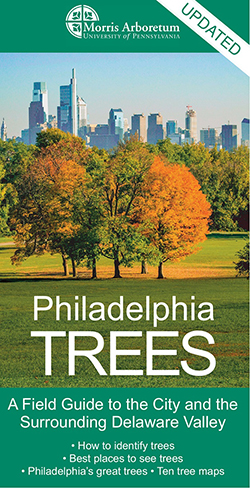
Such impassioned feeling for trees is woven through the pages of Philadelphia Trees, a field guide originally published in 2017 and updated and republished this year by the University of Pennsylvania Press. Mr. Meyer coauthored the pocket-sized, 280-page work with Catriona Bull Briger and Edward Sibley Barnard.

The book is broken into three major sections: one on some of the top tree-watching locations in greater Philadelphia, another profiling 50 notable trees in the region, and a field guide including 168 species to help readers identify the trees they’re most likely to encounter locally. The book also includes a brief history of Philadelphia’s “arboreal heritage,” authored by Penn alum David Hewitt; a quick reference guide to trace trees to their taxonomic groups in the book’s inside cover; more than 1,000 color photographs, maps, and line drawings; and a bibliography.

caption: Philadelphia Trees.“The book is meant for a general audience, someone like me who is interested in trees but may not know the difference between a black oak and a red oak,” Mr. Barnard said. “It’s intended to be very readable and accessible.”

Mr. Barnard has had a lengthy career in publishing. After retiring from Reader’s Digest, he developed a greater interest in natural history. On a walk home through New York’s Riverside Park, he tripped on some fallen sour gum balls and inspiration struck. He got to work on what would become New York City Trees, first published in 1999 by Columbia University Press in collaboration with the city’s Department of Parks and Recreation and the New York Tree Trust.

In 2010, Mr. Barnard moved to Philadelphia’s Chestnut Hill neighborhood to be closer to his grandchildren and met Mr. Meyer, who proposed creating a similar tree resource for Philadelphia. The two enlisted the help of Ms. Briger, who has a background in landscape architecture as well as writing and design, and together went about identifying, photographing, mapping, and writing about some of the most impressive trees and tree-viewing sites in the city.

The group went on such missions over the course of several years to craft Philadelphia Trees, originally published by Columbia University Press in partnership with Morris Arboretum. The selection of included sites and trees was guided by the expertise of Mr. Meyer as well as Mr. Hewitt, who has a background in botany and has written extensively about Philadelphia’s trees; Joel Fry, a curator at Bartram’s Garden; and Ken LeRoy, a knowledgeable local arborist.

“During those years when we would go out on these tree walks and afternoon expeditions, you’d feel a little bit like an explorer or a detective,” Ms. Briger said.

In the five years since the book was initially printed, much has changed in the arboreal world of Philadelphia, and the trio of authors decided during the pandemic that it was time to refresh their publication. They worked with Penn Press to do so, again in collaboration with the Morris Arboretum.

“When you’re focusing on big, old, mature trees, they’re much more at risk than a young tree,” said Mr. Meyer, meaning some of the trees highlighted in the first edition were no longer living.

One example is the famous Philly tree depicted on the cover of the first edition: a stately sugar maple at Belmont Plateau. To much ado, the city removed that tree, which was ailing, in 2021, planting in its place a stand of black gums, whose vibrant fall color rivals that of the maple.

Ms. Briger notes that additional losses were sustained at the arboretum of Temple University, Ambler. “In 2021 there was a tornado, and they lost something like 75% of their trees,” she said.
As a result, Mr. Barnard, Mr. Meyer, and Ms. Briger returned to each of the sites they had listed in the first edition, some visits leading to wholesale rewrites of those sections.

Penn’s campus receives its own dedicated section in “The Best Places to See Trees” section of the book, the authors drawing attention to the Treaty Elm that foregrounds College Hall, the Japanese zelkovas that line Locust Walk, the southern magnolias near the Wistar Institute, and the diverse collection of species in James G. Kaskey Memorial Park, not to mention the fact that the campus itself is a designated arboretum (Almanac April 11, 2017).

Morris Arboretum, likewise, is called out as a site of interest, with a tree map, designed by Ms. Briger, orienting readers to 23 trees of note. Another dedicated map calls out 26 notable trees mere steps from Penn’s campus at the Woodlands Cemetery, the former estate of plant collector William Hamilton.

Overall, the authors express a desire for their book—designed to be slim enough to slip easily into a pocket or bag—to empower people with the knowledge to better understand the plants around them and develop a deeper appreciation for their value to the landscape, to the environment, to our health and wellbeing, and to future generations.

“Most people walk around in this world looking at a green haze,” said Mr. Meyer. “They’re not actually seeing plants. They’re not actually seeing trees, they’re just seeing this green background. It’s really my hope that this book is an antidote to plant blindness—that you’ll learn how to see trees, then you’ll pay more attention and not just appreciate the beauty of trees, but also be more aware of the trees’ needs and be a better steward of the urban forest.”

Adapted from a Penn Today article by Katherine Unger Baillie, March 16, 2023.

Events

Update: March AT PENN

Children’s Events

24        At-Home Anthro Live: The History of Agriculture: Make Your Own Garden; students will learn about the early history of agriculture and study the tools and techniques ancient Mesopotamian peoples used to develop stable, renewable food sources; 1 p.m.; online event; register: https://tinyurl.com/anthro-live-mar-24 (Penn Museum).


Exhibits

Penn Museum

In-person tours. Info: https://www.penn.museum/calendar.

24        Global Guide Tour: Asia Galleries; 2:30 p.m. Also March 25, 2:30 p.m.

25        Egypt Galleries Tour; 11 a.m.

26        Mexico & Central America Gallery Tour; 11 a.m.

            Global Guide Tour: Middle East Galleries; 2:30 p.m.


Fitness & Learning

28        Mindful Pause: Women’s History Month Edition at PWC; sharing community with a reading from the book Rest is Resistance by Tricia Hersey and mindful movement and meditation led by S. Craig, Makuu; 1 p.m.; Penn Women’s Center (Makuu: The Black Cultural Center, Penn Women’s Center).


Graduate School of Education

Info: https://www.gse.upenn.edu/news/events-calendar.

23        Accelerated Bachelor’s to Master’s Degree Program Information Session Information Session; noon; Gutmann College House.


Talks

21        VdW Heterostructures: A New Route to Designing Quantum Material; Xiaomeng Liu, Princeton University; 10:30 a.m.; Glandt Forum, Singh Center for Nanotechnology (Materials Science & Engineering).

            Is There a European Way When Dealing With China? Philippe Le Corre, Asia Society Policy Institute; noon; room 418, PCPSE (Center for the Study of Contemporary China).

22        Automated Decision Making for Safety Critical Applications; Mykel Kochenderfer, Stanford University; noon; room 307, Levine Hall (Computer & Information Science ASSET Seminar).

            Solidarity and Complicity in Liberation; Mijke van der Drift, Royal College of Art, London; Nat Raha, Glasgow School of Art; 2:30 p.m.; room 311, Caster Building (Gender, Sexuality & Women’s Studies).

            Neural Software Abstractions: Learning Abstractions for Automatically Modeling and Manipulating Systems; Michael Chang, University of California, Berkeley; 3 p.m.; room 307, Levine Hall, and Zoom webinar; join: https://upenn.zoom.us/j/98723817934 (GRASP Lab).

            The Role of Entrepreneurship in Advancing Health Equity; José Bauermeister, nursing; 3:30 p.m.; Holman Reading Room, Holman Biotech Commons; register: https://tinyurl.com/bauermeister-talk-mar-22 (Albert M. Greenfield Memorial Lecture).

            Staging Early Modern Women’s Doll Houses; Natasha Korda, Wesleyan University; 4:30 p.m.; Zoom webinar; info: https://tinyurl.com/korda-talk-mar-22 (English).

            David Evans Family Artist-in-Residence Talk; Jayson Musson, artist; 5:30 p.m.; room B1, Meyerson Hall (Arthur Ross Gallery). 

            When Innocence Is Not Enough: Hidden Evidence and the Failed Promise of the Brady Rule; Tom Dybdahl and Christina Swarns, Innocence Project; 6 p.m.; room 214, Gittis Hall; register: https://pennlaw.cvent.com/d/9lqbpk (Carey Law School).

23        How We Change: Social-Psychological and Communication Dynamics; Wendy Wood, University of Southern California; 10:15 a.m.; room 109, Annenberg School; register: https://tinyurl.com/wood-talk-mar-23 (Paideia Program).

            Providing Sustainable Electricity to Urban Informal Settlements of the Global South; James Kwame Mensa, University of Ghana; Vincent Kitio, UN-Habitat; 11 a.m.; online webinar; register: https://tinyurl.com/iur-talk-mar-23 (Penn Institute for Urban Research).

            Defining Corruption in the Early Modern Ottoman Empire; Boğaç Ergene, University of Vermont; noon; room B4, Meyerson Hall (Middle East Center).

            K-Pop Dance: Fandoming Yourself on Social Media; Chuyun Oh, San Diego State University; noon; room 623, Williams Hall (Korean Studies).  

            480 (BCE): The Modern Making of a World-Historical Date; Suzanne Marchand, Louisiana State University; 4:45 p.m.; room 402, Cohen Hall (Classical Studies).

24        “Il Faudrait Cesser d'Écrire des Romans, Récupération Feuilletonesque du Mouvement Social”: The Politics of Jean-Patrick Manchette; Sophie Dolto, French & Francophone studies; 10 a.m.; Zoom webinar; join: https://upenn.zoom.us/j/98639050390 (French & Francophone Studies).

            Cognition & Neurolinguistics; Janet van Hell, Pennsylvania State University; 10:30 a.m.; location TBA (Linguistics).

            Ultimate Mobility Vehicles or What Happens When You Combine Robotics and Car Design; ohn Suh, Hyundai New Horizons Studio; 10:30 a.m.; Wu & Chen Auditorium, Levine Hall, and Zoom webinar; join: https://upenn.zoom.us/j/97544572302 (GRASP Lab).

            Mercury Cycling in Warming Oceans; Amina Schartup, Scripps Institution of Oceanography; 3 p.m.; room 358, Hayden Hall (Earth & Environmental Science).

27        Ends of the Earth: Human Biology at the Extremes; Mallika Sarma, Johns Hopkins University; noon; room 345, Penn Museum (Anthropology).

            The New Geopolitics of Energy: How the Drive to Combat Climate Change is Transforming Global Politics; Meghan O'Sullivan, Harvard University; 5 p.m.; Hall of Flags, Houston Hall; register: https://bit.ly/3J9uwV8 (Christopher H. Browne Center for International Politics).

            Jerusalem is Burning: Community. Resilience. Pride; Alon Shachar and Shalev Yakir, Jerusalem Open House; 6:30 p.m.; room 240A, Silverman Hall (Carey Law School).

28        Multiscale Mechano-Medicine: From Mechanobiology to Tissue-Interfacing Stimulating Medical Devices; Sungmin Nam, Harvard University; 10 a.m.; Wu & Chen Auditorium, Levine Hall (Mechanical Engineering & Applied Mechanics).

            Engineering 2D Quantum Materials with Atomic Precision; Tiancong Zhu, University of California, Berkeley; 10:30 a.m.; Glandt Forum, Singh Center for Nanotechnology (Materials Science & Engineering).

            For a More Just Future: A Conversation on Indigenous Rights & Care for Pachamama; Hilaria Supa Huamán, Peruvian politician; Spanish-language talk; 2 p.m.; room 473, McNeil Building; register: https://tinyurl.com/huaman-inperson-mar-28; Zoom webinar; register: https://tinyurl.com/huaman-zoom-mar-28 (Center for Latin American & Latinx Studies).

            Defetishing Material Culture in Museums: Public Education; Vanicléia Silva-Santos, African Collection, Penn Museum; 5:30 p.m.; room 329A, 3401 Walnut Street (Center for Africana Studies).


Economics

In-person events. Info: https://economics.sas.upenn.edu/events.

22        Equilibrium Effects of Household Financial Literacy and Portfolio Choice; Min Kim, economics; noon; room 100, PCPSE.

            Job Levels and Wages; Moritz Kuhn, University of Bonn; 4 p.m.; room 101, PCPSE.

23        What Explains Growing Gender Education Gap? Mike Keane, Johns Hopkins University; 3:30 p.m.; auditorium, PCPSE.

27        Allocation Mechanisms with Mixture-Averse Preferences; David Dillenberger, economics; noon; room 203, PCPSE.

            Targeted Testing of Dynamic Stochastic General Equilibrium Models; Zhongjun Qu, Boston University; 4:30 p.m.; room 100, PCPSE.


Katz Center for Advanced Judaic Studies

Info: https://katz.sas.upenn.edu/events.

29        Israel’s Rights Revolution: Public Opinion and Constitutional Law; Barak Medina, Hebrew University of Jerusalem; 5:15 p.m.; Fitts Auditorium, Carey Law School.


Mathematics

In-person events. Info: https://www.math.upenn.edu/.

23        Towards Provably Efficient Quantum Algorithms for Nonlinear Dynamics and Large-Scale Machine Learning Models; Jin-Peng Liu, University of California, Berkeley; 4 p.m.; room A5, DRL.

24        On the BIKE Cryptosystem and Error Floor Behavior in QC-MDPC Codes; Daniel Hast, Boston University; location TBA.

27        Quadratic Forms, Local-Global Principles, and Field Invariants; Connor Cassady, mathematics; 3:30 p.m.; room 4C8, DRL.


Sociology

Unless noted, in-person events. Info: https://sociology.sas.upenn.edu/events.

24        The OurRuralPA Project; Jennifer Whittaker, Children's Hospital of Philadelphia; 10:30 a.m.; room 367, McNeil Building.


This is an update to the March AT PENN calendar, which is online now. To submit an event for a future AT PENN calendar or update, submit the salient details to almanac@upenn.edu.


Crimes

Weekly Crime Reports

University of Pennsylvania Police Department Crime Report

Below are the Crimes Against Persons, Crimes Against Society and Crimes Against Property from the campus report for March 6-12, 2023. View prior weeks’ reports. —Ed.

This summary is prepared by the Division of Public Safety and includes all criminal incidents reported and made known to the University Police Department for the dates of March 6-12, 2023. The University Police actively patrol from Market St to Baltimore and from the Schuylkill River to 43rd St in conjunction with the Philadelphia Police. In this effort to provide you with a thorough and accurate report on public safety concerns, we hope that your increased awareness will lessen the opportunity for crime. For any concerns or suggestions regarding this report, please call the Division of Public Safety at (215) 898-4482.

03/06/23

12:10 AM

3600 Chestnut St

Stolen vehicle from highway

03/06/23

8:40 PM

3245 Chestnut St

Bike theft reported to DPD

03/07/23

8:44 AM

4001 Walnut St

Two exit gates damaged

03/07/23

10:54 AM

51 N 39th St

Offender threatened staff

03/07/23

2:11 PM

3800 Powelton Ave

Parked vehicle stolen from highway

03/07/23

9:19 PM

3800 Spruce St

Items taken from vehicle

03/07/23

9:36 PM

3400 Spruce St

Offender threatens staff

03/08/23

6:55 AM

4001 Walnut St

Parking kiosk machines damaged

03/08/23

10:36 AM

3901 Walnut St

Merchandise taken without payment

03/08/23

4:01 PM

3220 Market St

Secured scooter stolen from bike rack

03/08/23

5:07 PM

3400 Spruce St

Wallet stolen from patient by home health aide

03/08/23

8:00 PM

4233 Chestnut St

Retail theft reported to PPD

03/08/23

8:07 PM

4233 Chestnut St

Retail theft reported to PPD

03/08/23

9:38 PM

200 S 40th St

Secured electric bike taken

03/08/23

11:18 PM

51 N 39th St

Offender threw ambulation device at complainant

03/09/23

11:19 AM

3400 Civic Center Blvd

Bike bag taken from bike

03/09/23

11:43 AM

4233 Chestnut St

Retail theft reported to PPD

03/09/23

6:36 PM

51 N 39th St

Currency and credit cards taken from safe

03/09/23

9:25 PM

4000 Market St

Complainant struck in face/iPhone taken

03/09/23

10:25 PM

Schuylkill Market

Road rage/aggravated assault reported to PPD

03/10/23

6:12 AM

3330 Market St

Merchandise removed without payment

03/10/23

3:39 PM

3730 Walnut St

Cable secured scooter taken from rack

03/10/23

8:10 PM

4233 Chestnut St

Merchandise removed without payment

03/11/23

5:28 AM

200 St Marks Sq

Attempted robbery at gunpoint

03/11/23

11:53 AM

3330 Market St

Merchandise removed without payment

03/11/23

5:06 PM

4233 Chestnut St

Merchandise removed without payment

03/11/23

7:59 PM

100 S 39th St

Automobile theft running and stolen

03/11/23

8:44 PM

4001 Chestnut St

Known offender kicked front door, cracking the glass

03/11/23

9:24 PM

3400 Market St

Automobile left running and stolen

03/12/23

9:42 AM

4045 Baltimore Ave

Criminal trespass/Arrest

03/12/23

5:00 PM

4001 Walnut St

Store shopping scooter stolen


18th District

Below are the Crimes Against Persons from the 18th District: 4 incidents (2 robberies, 1 assault, and 1 aggravated assault) were reported for March 6-12, 2023 by the 18th District, covering the Schuylkill River to 49th St & Market St to Woodland Avenue.

03/07/23

1:15 AM

4914 Hazel Ave

Robbery

03/09/23

9:19 PM

4934 Sansom St

Assault

03/09/23

10:25 PM

N Schuylkill Ave & Market St

Aggravated Assault

03/11/23

5:57 AM

200 Blk Saint Marks Sq

Robbery

Bulletins

Salvatori Awards 2023: Call for Applications

The Center for Italian Studies offers annual research grants endowed by the late Henry Salvatori, C’1923, to support Penn students and faculty whose research investigates Italian culture and society.

Graduate students and full-time faculty members (standing and non-standing) may apply.

Each award is up to $5,000 and is intended to support expenses related to research, accommodation, and travel, occurring between May 1, 2023 and April 30, 2024.

A report is required by October 1, 2024.

As funds are limited, requests below the upper limit are encouraged. It is not possible to apply for two consecutive years. If awarded a grant, advance travel funds are not available.

Applications are evaluated by a committee of at least two faculty members plus the director of the center.

Applications (Word or PDF) should include: a two­-page proposal (ca. 6,000 characters), an estimate of expenses, a timetable, and a list of past Salvatori Awards obtained (if applicable).

Graduate students need to provide one letter of support from a standing faculty member in the most relevant department or program.

Applicants and recommenders should send an e­mail with the subject “Salvatori Awards 2023” to Ann Moyer, professor of history, at moyer@sas.upenn.edu by April 14, 2023. The awards will be announced by April 28, 2023.

The next call for applications will be in spring 2024. For more information, visit https://web.sas.upenn.edu/cis/resources/salvatori-research-fund/.

Shop Penn Retail Survey

Help shape the future of the Shop Penn retail district by sharing your ideas on the types of services, eateries, and shopping available in the retail district around Penn. Take our retail survey and be entered to win a gift card: https://www.shopsatpenn.com/help-shape-future-shop-penn-retail-district.

Penn Facilities and Real Estate Services is working with consultants to create a new retail master plan, which will outline a vision for retail across campus. This survey is being issued to gather input from students, faculty, staff, health system employees, and neighbors of the University about their shopping and dining habits and preferences. The results of this survey will inform the recommendations in the upcoming retail master plan, the goal of which is to improve the retail experience of the broader community.

We appreciate your participation in this survey, which should take 10 to 15 minutes to complete. All eligible respondents who complete the survey will be entered into a drawing to win a $100 Visa gift card. We look forward to hearing your feedback.

–Facilities & Real Estate Services

Back to Top