News

$3 Million Gift to Establish the James D. McDonough Fellowships in Queer Art History

caption: From left: Eduardo Carrera, Emma Jacobs, and Nina Hofkosh-Hulbert.

In 1988, Jonathan Katz, today an associate professor of practice in the department of the history of art, started the first queer art history program at the City College of San Francisco. He went on to launch programs at the State University of New York and at Yale. This year, he kickstarted the world’s first graduate queer art history fellowship at Penn: the James D. McDonough Fellowship in Queer Art History. 

“I’m the Johnny Appleseed of queer studies,” Dr. Katz quipped. 

The McDonough Fellowship is funded by a $3 million donation from an anonymous donor and underwritten by the Alphawood Foundation; the fellowship program is named in honor of the foundation’s former director. The program fully supports three inaugural students: one Master of Arts scholar and two PhD candidates, with more to follow in the academic years ahead. The fellowship allows students to add a concentration in queer art history that accompanies their history of art degree. 

The program essentially codifies what already is a diverse faculty with expertise in the field.

“We already have, both in art history and across the University, a fairly well-developed curriculum [for queer art history],” said Dr. Katz. “The problem hasn’t been curricular development, it’s been dedicated funding for grad students in queer studies. And the reason that’s significant is that often, across the U.S. and the world, students who express interest in queer studies are no longer encountering the kind of obstacles I encountered when I first went into it.”

Dr. Katz, in addition to being an academic, is also a known entity in the art world as a curator: He presented “Hide/Seek: Difference and Desire in American Portraiture” at the National Portrait Gallery. It was billed as the first major museum exhibition to focus on sexual difference in modern American portraiture. 

The McDonough Fellowships, he explained, are partly a response to ongoing conservatism among American art museums—an intent to add new curatorial voices who can increase representation in museums and, too, add queer historical contexts to existing works. Artworks, he explained, are often borrowed by museums but never referenced in queer ways.

“The homophobes are now outliers, but where we run into major difficulty now is the academy is becoming increasingly disconnected from the museum world,” he said, “because the museum world is still really old school.”

Dr. Katz said he was “totally blown away” during the application period for the fellowships, when they received 46 applicants who were “extremely, highly qualified.” 

“[The fellowships] provide a wonderful opportunity for students to pursue research into dimensions of art history which have historically been underrepresented, invisible, if not outright suppressed by conventional academic scholarship,” said interim history of art graduate chair David Young Kim. 

The three scholars are Eduardo Carrera, a doctoral candidate; Nina Hofkosh-Hulbert, working toward a Master of Arts; and Emma Jacobs, also a doctoral candidate. 

Mr. Carrera joins Penn from Ecuador, where he was director of the Contemporary Art Center in Quito, Ecuador. He became familiar with Penn’s history of art program through work on the “Dispossessions in the Americas” project, led by director of the Latin American and Latinx Studies program Tulia Falleti, with whom Dr. Katz leads the exhibition programming. His research ties together queer art history, the Latinx experience, and the experience of Latin American artists—particularly in translating the word “queer.”

“Queer is an English word, so what I’m doing with my research is [examining] how you can translate the word ‘queer’ into contexts of postcolonial artists,” Mr. Carrera said. “I’ve been working with translation of ‘queer’ to the word that is ‘cuir/cuyr,’ which in Spanish it’s linked to an ecological experience. ‘Cui/cuy’ is an animal that inhabits the Andean region in South America and has an important cultural and spiritual connotation in that territory, so it’s a way of linking these identities to spirituality, to nature and to the non-human, also.”

So far, he said, he is enjoying the variety of perspectives—the “chorus of voices,” he said—that he’s receiving from his cohort, particularly in Black Art Histories, taught by Presidential Associate Professor of History of Art Huey Copeland and Class of 1940 Bicentennial Term Associate Professor of history of art Gwendolyn DuBois Shaw. He is also enjoying the Methods course and its opportunity to get closer to the work of several art historians.

“Queer art history or Black art histories are making a change to the narratives about how we are written in society,” he said. “I think queer or Black artists are working on ideas that can give us answers to the urgencies which the planet is living now.”

Ms. Jacobs double majored in art history and women’s studies at Vassar College and later obtained her Master of Arts in history of art from Williams College. As a PhD candidate, she is interested in the intersection of feminism and queer theory with art history. Knowing Dr. Katz was involved with the program, she said, was a big draw. 

“[Dr. Katz] is one of the leading scholars of queer art history in the world and he’s a hugely influential curator as well, and I’m interested in doing curatorial work after I get my doctorate,” she explained. “It was a perfect fit for me and I feel very lucky to be here—I think the McDonough Fellowship is a first-of-its-kind thing and a great opportunity for more training to be done at the intersection of queer theory and art history.”

She plans to research American lesbian artists from the 1970s through the present, the intermix of art and film, and the interactions between abstraction and visibility, representation, and identity politics. She is currently also taking the Black Art Histories course, along with Method and Methodology in Art History (which is a required course in the program), and is auditing an undergraduate course about queer art taught by Dr. Katz.

“It’s incredible that Penn has the faculty they have, the resources they have, and that they’re interested in training a new generation of scholars who want to attend to questions of identity and sexuality from a variety of perspectives,” Ms. Jacobs added.

Mx. Hofkosh-Hulbert studies queer art history during the Medieval period. They joined the program wanting to revisit a project from their undergraduate experience that approached a Medieval object through queer and trans studies to think about “temporal rupture and epistemology,” they said. They’re interested in examining how objects in the past have been leveraged for different agendas.

“Queer studies and queer theory have been helpful to me both personally and in general,” Mx. Hofkosh-Hulbert said. “These kinds of academic lenses for thinking about things can sometimes be very disconnected from real life, which is really challenging, but I think at its best theory can be like an X-ray to help make sense of how and why things work the way they do.”

Dr. Katz noted that the McDonough Fellows will also complete a museum internship over the course of the summer. They also have the opportunity to help him with exhibitions in the future—“Though I’ve counseled them not to do that in the first semester,” he laughs.

Next semester, Dr. Katz will teach two graduate courses: Art, Sex, and the Sixties, looking at social liberation and theories in embodiment, as well as Sexuality of Postmodernism, offering theoretical tools to undo homophobia in critical theory. 

Penn, Dr. Katz said, is well-suited for the program because of the right matrix of political will, a thriving museum community in Philadelphia, and institutional will. The result is a program built to last and ensure Penn becomes the “home of queer artist scholarship for a century or more.”

“The ambition is, quite nakedly,” he said, “to become the epicenter for queer studies scholarship in art history.”

Adapted from a Penn Today article by Brandon Baker, October 10, 2022.

Penn Nursing: Margo Brooks Carthon and Sara Jacoby Receive Hillman Foundation Grants to Research Marginalized Populations

The Rita and Alex Hillman Foundation (RAHF) has announced $1.5 million in grants to support bold new programs addressing the health of marginalized populations. Two of the grant recipients are from Penn Nursing’s department of family and community health: J. Margo Brooks Carthon, the Tyson Family Endowed Term Chair for Gerontological Research and an associate professor of nursing; and Sara Jacoby, the Calvin Bland Fellow and an assistant professor of nursing.

“Nursing must play a critical role in creating a more equitable and just healthcare system,” said Ahrin Mishan, RAHF executive director. “We believe nursing—especially in collaboration with other disciplines and through deep community engagement—is a powerful force for change.”

The Penn Nursing research projects that were awarded are:

  • Spurring the Development of a Promising Intervention to Help Chronically Ill Medicaid Patients After Hospitalization (Dr. Brooks Carthon, principal investigator): THRIVE is a novel, equity-centered approach that provides whole-person care to Medicaid patients transitioning from hospital to home. Developed by a nurse-led interdisciplinary team at Penn, results from an early pilot demonstrated a range of positive outcomes including reduced rehospitalizations. A $300,000 Hillman Catalyst Award will allow THRIVE, in partnership with Penn Medicine at Home and Pennsylvania Hospital, to expand to a second site and generate new evidence that could help to establish the intervention as a standard for delivering comprehensive transitional care to Medicaid patients and their families.
  • A Multifaceted Approach to Advancing Health Equity Through Housing Policy (Dr. Jacoby, principal investigator): The link between housing and health is well established. Building on earlier work funded by a 2021 Hillman Catalyst Award, a multi-disciplinary research team—combining nurses and urban planners with officials from housing, public health, and environmental agencies—will harness big data and community knowledge to rethink, and potentially reshape, a key federal housing program. This visionary project from the University of Pennsylvania will use Hillman Innovations in Care (HIC) funding to show how integrating health-affecting neighborhood characteristics into the distribution criteria of housing subsidy programs can contribute to better health for low-income families.

Representing the leading edge of nursing innovation, this year’s grant recipients use policy, technology, and community engagement to reduce structural inequities and improve care. Established in 2014, the HIC program and Hillman Catalyst Awards were created to spur the development of innovations that could tackle the complex needs of communities that experience discrimination, oppression and indifference. These populations include Black, Indigenous, and people of color (BIPOC), the economically disadvantaged, LGBTQ+ people, homeless people, rural populations, refugees, and others.

Melissa Gasparotto: Associate Vice Provost for Operations, Access Services and Strategic Partnerships at Penn Libraries
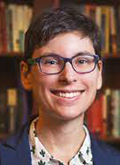
caption: Melissa GasparottoThe University of Pennsylvania Libraries have announced that Melissa Gasparotto has been named associate vice provost for operations, access services, and strategic partnerships, effective October 31, 2022.

In this role she will lead the development and implementation of effective strategies in access services, resource sharing, technical services, facilities, operations, and the Penn Libraries Research Annex (LIBRA). Ms. Gasparotto will contribute to capital planning and take the lead in developing and managing high-level partnerships with local, national, and international organizations. 

“Melissa is a creative and collaborative leader with a strong vision for user-based library services,” said Constantia Constantinou, the H. Carton Rogers III, Vice Provost and director of Penn Libraries. “She will make significant contributions to our future success as we transform library spaces and programs to meet evolving needs at Penn and strengthen our engagement with partners regionally, nationally and internationally.” 

Ms. Gasparotto was previously the associate director of research services and institutional partnerships at the New York Public Library’s research libraries. In this role, she was a leader in establishing a consistent user experience across all the research libraries’ strategic services and collection initiatives. She also worked to develop and sustain institutional partnerships around collections services, including the ReCAP Shared Collection and MaRLI. In addition, she served as the research libraries’ liaison to the City University of New York.  

Before that, Ms. Gasparotto was head of the learning & engagement department at Rutgers University Libraries in New Brunswick, New Jersey, where she also worked as area studies librarian and Latin American studies liaison. There, Ms. Gasparotto received a Chancellor’s Grant to develop the Rutgers Inclusion and Diversity Research Portal, which has grown to contain nearly 800 open access research works produced by Rutgers faculty and doctoral students.

She has also served as a reference librarian at Hunter College Libraries; assistant librarian for Latin American studies at New York University Libraries; and a visiting assistant professor in the School of Information at Pratt Institute. She has published and presented on a wide range of topics, from sustainable open access models and equitable discovery to human rights education, critical information literacy, and digital linguistic justice. 

As the Penn Libraries’ associate vice provost for operations, access services and strategic partnerships, Ms. Gasparotto will coordinate system-wide planning, policy development, resource allocation, and personnel management in all user operations, access services, and strategic partnerships. 

She will lead the evolution of library spaces into learner-centered hubs for the exploration, creation, and transformation of knowledge. She will also work closely with the division of impact assessment and organizational analysis to guide and develop the libraries’ overall assessment program and shape operations and services to meet evolving user needs.

“I have long admired the values-centered approach fostered by the Penn Libraries, whether through diversity in collecting, a commitment to broad access, or innovative community partnerships,” said Ms. Gasparotto. “I am thrilled to be joining a vibrant, expert team putting these values into practice by cultivating collaborations for the equitable advancement of knowledge and ensuring that all of the libraries’ spaces and services support and inspire the transformative teaching, research, and learning happening at Penn.”

Ms. Gasparotto holds a BA in Spanish and Latin American literatures and cultures, as well as an MA in Latin American and Caribbean studies, from New York University. She received an MS in library and information science from Long Island University. She is currently pursuing a PhD in communication, information, and media at Rutgers University.

Penn Medicine Opens Gift of Life Donor Care Center at the Hospital of the University of Pennsylvania

Gift of Life Donor Program and Penn Medicine have opened the Gift of Life Donor Care Center at the Hospital of the University of Pennsylvania (HUP). As the first intensive care unit in the northeast U.S. exclusively dedicated for deceased organ donors, the center is staffed by top clinical experts with access to advanced medicine, tools, and technology that will maximize the impact of each donor’s life-saving gifts.

Located within HUP, the Donor Care Center will be open 24/7, 365 days a year for deceased donors who meet specific clinical criteria, and with their family’s support, to be transferred from hospitals across Gift of Life’s region, which spans the eastern half of Pennsylvania, southern New Jersey, and Delaware. The center is focused on the timely evaluation, allocation, and recovery of precious organs to increase opportunities for successful transplants. The specialized, first-of-its-kind space in this area also benefits the region’s health care systems, creating capacity specifically to help hospitals to best allocate ICU and OR spaces for patients.

“The Gift of Life region has been the most generous in the nation for organ donation every year since 2008,” said Rick Hasz, president and CEO of Gift of Life Donor Program. “The opening of the Gift of Life Donor Care Center at the Hospital of the University of Pennsylvania honors that generosity by providing a space designed specifically to care for donor heroes and fulfill the powerful decision to save lives through organ donation. The Donor Care Center marks a milestone in serving our community by creating a state-of-the-art donor-focused surgical facility, as recommended by the National Academies of Sciences, Engineering and Medicine.”

The new 15,000-square-foot Donor Care Center features six private rooms, three operating rooms and an organ preservation laboratory, all equipped with advanced technology. It also includes dedicated private space for donor families. Gift of Life transplant coordinators, the nation’s leading donation professionals, work with the center’s dedicated, highly skilled multidisciplinary critical care staff of physicians, nurses, nursing assistants, respiratory therapists, and pharmacists.

Major advantages of the Donor Care Center include:

  • Providing round-the-clock expert clinical donor management for timely interventions to increase the number of organs able to be transplanted
  • Facilitating an expedient donation process that will support a family’s ability to proceed with arrangements to honor their loved one
  • Providing dedicated donor space and resources to allow area hospitals to best use ICU beds, operating rooms, ventilators, and critical care staff to care for other seriously ill patients

“Penn has a long-standing commitment to the highest standards in donation and transplantation,” said Kim Olthoff, chief of Penn Medicine’s division of transplant surgery. “We have always valued our partnership with Gift of Life to promote organ donation and to advance the field through innovative clinical programs and novel research. We are so proud to continue to expand our work with Gift of Life to create this new state-of-the-art facility. Together, we will facilitate even more donations to help those in need throughout our region and the country and honor every donor and their remarkable gifts.”

The center’s concentration of specialized services represents an innovation in supporting organ donation in a region where the population is aging and is medically complex.

“The Donor Care Center is the result of more than two years of planning and collaboration as Gift of Life Donor Program, Penn Medicine and hospitals throughout our region continue to lead the way in innovation, best practices and clinical excellence,” said Christine Radolovic, chief clinical officer of Gift of Life Donor Program. “With this unique and multidisciplinary team, we anticipate increasing the use of organs that might otherwise not be transplanted, saving lives and extending legacies for families of patients who become donors. With 20 waitlist patients dying each day nationally, each and every organ that can be made available for transplant represents a second chance at life.”

More than 5,000 children and adults in the Gift of Life region and more than 100,000 nationwide are waiting for a life-saving transplant.

“Organ and tissue donation not only benefits transplant patients. It can bring peace to a donor’s family. My son, Sipho Themba, was an organ donor who saved six people,” said Cynthia London, a volunteer ambassador and former board member of Gift of Life Donor Program. “At the Gift of Life Donor Care Center, donation gives comfort to grieving families as donors give life to others.”

2023 Women of Color Day Awards: Nominations Due November 18

To members of the University and surrounding communities:

The National Institute for Women of Color (NIWC) has proclaimed March 1 National Women of Color Day. Penn, UPHS, Presbyterian and Pennsylvania Hospital seek to increase our awareness of the talents and achievements of women of color by recognizing those who support women of color, regardless of their sex, gender, race, or other status with the Women of Color Award. 

The Women of Color Awards are given in recognition of individuals who have conscientiously endeavored to increase respect for women of color at Penn, University of Pennsylvania Health Systems, Penn Presbyterian Medical Center or Pennsylvania Hospital, and/or the Delaware Valley community. Annually, awards are given in up to six categories:

  • Helen O. Dickens Lifetime Achievement Award: must have demonstrated over 25 years of previously recognized service
  • Joann Mitchell Outstanding Legacy Award
  • Faculty/Staff Award
  • Graduate or Professional Student Award
  • Undergraduate Student Award
  • Community Member Award

Nominees must be affiliated with Penn, UPHS, Penn Presbyterian or Pennsylvania Hospital, and/or the local Philadelphia area. They must have demonstrated outstanding leadership, distinguished service, positive impact on the community, and commitment to enhancing quality of life for and/or serving as a role model for women of color.

Joann Mitchell Outstanding Legacy Award nominees must have worked with the Women of Color Executive Planning Committee or have proven support through donations, event involvement and action advocacy of the WOCAP mission.

Nominations must be submitted on or before November 18, 2022. The 2023 WOCAP Awards Ceremony is scheduled for Friday, March 17, 2023. Ticket and other information will be announced at a later date.

Nominate a person here. Learn more about the 2022 WOCAP Day Awards Program at https://aarc.upenn.edu/women-color/women-color-awards

—Women of Color at Penn Executive Planning Committee

Providing Students with Book ISBNs and Price Information

The Higher Education Opportunity Act requires universities to make available to students, for each course, the International Standard Book Numbers (ISBNs) and price information for required/recommended books and supplemental materials.

To comply with this requirement, the University of Pennsylvania works closely with Barnes & Noble, managers of the Penn Bookstore, to maintain a simple and cost-effective process to provide ISBNs to our students. Through the bookstore’s online system, students have access to a complete list of materials for their courses, along with the ISBNs for each listed text. Textbook information can be provided to other vendors, and students are in no way required to purchase their books at the Penn Bookstore. Faculty can also indicate that no course materials are required, which helps to ensure the completeness of the University’s reporting. 

We greatly appreciate the efforts of Penn faculty members to work with the bookstore to provide this important information for our students. For additional information, or to submit your course materials directly, you can visit: http://www.upenn.edu/coursematerials.

—Beth A. Winkelstein, Interim Provost
—Karen Detlefsen, Vice Provost for Education

Governance

From the Faculty Senate Office: Senate Executive Committee Actions

The following is published in accordance with the Faculty Senate Rules. Among other purposes, the publication of SEC actions is intended to stimulate discussion among the constituencies and their representatives. Please communicate your comments to Patrick Walsh, executive assistant to the Senate Office, either by telephone at (215) 898-6943 or by email at senate@pobox.upenn.edu.

Faculty Senate Executive Committee Actions

Wednesday, November 2, 2022

Planning Tomorrow, Together. “Tomorrow, Together: Penn’s Next Century” is a University-wide effort to inform strategic next steps for Penn, commissioned by President Magill and led by the Red and Blue Advisory Committee. After engaging broadly, the Red and Blue Advisory Committee will make recommendations for potential areas of strategic priority for the University. These recommendations, which will underpin the framework for Penn’s future, will be shared with the Penn community in summer 2023. 

Representing the Red and Blue Advisory Committee, David Asch, senior vice dean for strategic initiatives in the Perelman School of Medicine, joined the meeting, along with Senate Chair Vivian Gadsden, who serves on the committee. The committee was charged to inform President Magill: “What does the world need from Penn, and how do we cultivate a community that will rise to that challenge?” All Penn community members are invited to email their responses to tomorrow-together@upenn.edu; comments will be shared with the Red and Blue Advisory Committee and without attribution to the individual commenter. 

Additional discussion questions were posed:

  • In pursuing our missions, how can we maximally contribute to our city, nation, and world? 
  • What are society’s and the globe’s greatest challenges today and in the coming years, and how can Penn best contribute to making progress on them? 
  • How do we educate and prepare our students so that they are engaged citizens and ready to be future leaders? 
  • How do we accelerate the creation and application of knowledge? 
  • How can we best advance our shared priorities of diversity, equity, inclusion, and belonging? 
  • How can we cultivate an ethic of service to others in all members of the Penn community? 

Update from the Vice Provosts for Education and Faculty. Vice Provost for Education Karen Detlefsen reviewed a new policy for Ph.D. students needing to take leave for family or medical reasons.  Ph.D. students are funded for a specific number of years to complete their studies and receive medical benefits during that time.  Previously, stipends were halted along with insurance premiums during leaves of absence.  Graduate deans in the nine Ph.D.-granting schools partnered with the Vice Provost of Education to pay for one semester of premiums (i.e., six months) with the opportunity for a student to petition for a second six-month payment option.  The schools will pay for medical leave-related premiums and the Provost’s Office will pay for family leave-related premiums (e.g., to care for a newborn child). 

Vice provost for faculty Laura Perna shared details about the forthcoming faculty survey, which will be sent to all standing faculty and associated faculty. The data from it will be used to inform key questions about the extent to which there is diversity and equity among faculty. This is the third comprehensive survey of faculty, following on surveys taken in 2011-2012 and 2015-2016.

Update from the Provost. Interim provost Beth Winkelstein discussed several matters. A search is underway for the next vice provost for university life, following the departure of Mamta Accapadi. The vice president of finance and treasurer is now Mark Dingfield, following the departure of MaryFrances McCourt. In June 2022, the Penn Press officially became an entity of the University of Pennsylvania; the transition enables a closer partnership with Penn to engage more faculty in advancing the dissemination of scholarship through the press.

Penn is a member of the Faculty Advancement Network’s Institute on Inquiry, Equity, and Leadership. A kickoff retreat, held in October at Yale, “convened teams across the Ivy+ network, established group norms, and introduced fundamentals of equity-minded leadership for the faculty leader.” Penn’s inaugural fellows class includes five faculty members drawn from STEM disciplines in SAS and SEAS. Areas of focus for institute participants include service and workload, mentoring, culture and climate, searches and hiring, and graduate education; they will conclude their year with a capstone event at the University of Chicago. Its findings will inform Penn’s efforts to enhance faculty diversity and equity.

The discussion turned to two other topics: the planned reinvigoration of the Central Pool Classroom Committee and the Policy on Class Meeting Times.

Policies

Principles of Responsible Conduct—Online Training Modules and Reminder to the Penn Community

The Principles of Responsible Conduct promote the highest standards of integrity and ethics at Penn. To remind the Penn community of the basic expectations that should guide our work at Penn, the Principles of Responsible Conduct are published annually and are found below. Everyone at Penn is expected to be familiar with and adhere to the Principles of Responsible Conduct, which can be found on the Office of Audit, Compliance and Privacy website at: https://oacp.upenn.edu/oacp-principles/.

***

The mission of the University of Pennsylvania and its health system is to offer a world class education to our students, train future leaders, expand and advance research and knowledge, serve our community and society both at home and abroad, and provide the most expert and outstanding health care for our patients. In pursuing this mission, and to ensure the continued excellence of the University and its reputation, all members of the University community need to understand and uphold both legal requirements and the highest ethical standards.

In the following Principles of Responsible Conduct, we articulate the basic expectations that should guide each of us in our work at Penn. These principles are embedded within many policies and practices identified throughout University and health system handbooks, manuals, websites and other materials. We have endeavored to distill these policies, rules, and guidelines for easy review and access. The principles are not intended to be a comprehensive catalogue of all applicable rules and policies of the University and the health system. Rather, these principles set forth the underlying expectations that we have for the conduct of University and health system activities with the highest standards of integrity and ethics. Useful references to relevant policies and resources are included.

We urge you to read these principles closely and familiarize yourself with both the expectations and the resources provided.

—M. Elizabeth Magill, President
—Beth A. Winkelstein, Interim Provost
—Craig Carnaroli, Senior Executive Vice President
—J. Larry Jameson, Executive Vice President of the University for the Health System and Dean of the Perelman School of Medicine

Penn has many policies that govern the behavior of all Penn faculty, administration and staff. The ethical expectations contained in these policies are highlighted in the text of the ten principles that follow, and supporting policies, statements, and guidelines are available for each at the corresponding web link.

Principles of Responsible Conduct

Ethical and Responsible Conduct. Penn’s faculty, administration, and staff should conduct themselves ethically, with the highest integrity, in compliance with all applicable laws, regulations, and University policies, in all aspects of their work. They should be fair and principled in University and health system business transactions and other related professional activities, acting in good faith when dealing with both internal constituents and external entities. Their conduct should always reflect their positions of trust and loyalty with respect to the University, the health system, and members of these communities. https://oacp.upenn.edu/oacp-principles/ethical-and-responsible-conduct/

Respect for Others in the Workplace. Penn recognizes that people are the most important resource for achieving eminence in accomplishing our mission in the areas of teaching, research, community service, and patient care. Penn is an institution that values academic freedom, diversity, and respect for one another. Penn is committed to the principle of nondiscrimination and does not tolerate conduct that constitutes harassment on any basis, including sexual, racial, ethnic, religious, or gender. https://oacp.upenn.edu/oacp-principles/respect-for-others-in-the-workplace/

Avoidance of Conflict of Interest. As more fully stated in Penn’s conflict of interest policies, Penn’s faculty, administration, and staff should avoid conflicts of interest in work at Penn. As a non-profit institution, it is imperative, for both legal and ethical reasons, that University and health system employees do not improperly benefit from their positions of trust at Penn. Financial conflicts must be appropriately disclosed in accordance with conflict of interest and conflict of commitment policies, so that they can be reviewed, and as appropriate, managed or eliminated. Faculty, administrators, and staff are responsible for identifying potential conflicts and seeking appropriate guidance. https://oacp.upenn.edu/oacp-principles/avoidance-of-conflict-of-interest/

Responsible Conduct in Research. As members of a complex research University, Penn faculty, administrators and staff have significant responsibility to ensure that research is conducted with the highest integrity, and in compliance with federal, state, and local laws and regulations, as well as University and health system policy. https://oacp.upenn.edu/oacp-principles/responsible-conduct-in-research/

Responsible Stewardship and Use of Penn Property, Funds, and Technology. Penn faculty, administration, and staff are expected to ensure that Penn property, funds, and technology are used appropriately to benefit the institution, consistent with all legal requirements as well as University and health system policies. https://oacp.upenn.edu/oacp-principles/responsible-stewardship-and-use-of-penn-property-funds-and-technology/

Environmental Health and Safety. Penn is committed to the protection of the health and safety of the University community and the creation of a safe working environment. To accomplish this end, Penn provides training in health and safety regulation and policy and Penn faculty, administration, and staff are expected to comply with sound practices and legal requirements. https://oacp.upenn.edu/oacp-principles/environmental-health-and-safety/

Respect for Privacy and Confidentiality. In their various roles and positions at Penn, faculty, administration and staff become aware of confidential information of many different types. Such information may relate to students, employees, faculty, staff, alumni, donors, research sponsors, licensing partners, patients, and others. Penn faculty, administration, and staff are expected to inform themselves about applicable legal, contractual, and policy obligations to maintain the confidentiality of such information, so as to protect it from improper disclosure, and to protect the privacy interests of members of our community. https://oacp.upenn.edu/oacp-principles/respect-for-privacy-and-confidentiality/

Appropriate Conduct with Respect to Gifts, Travel, and Entertainment. Penn faculty, administration and staff are expected to conduct themselves so as to ensure that their positions are not misused for private gain, with respect to acceptance of gifts and the undertaking of University-related travel and entertainment. https://oacp.upenn.edu/oacp-principles/appropriate-conduct-with-respect-to-gifts-travel-and-entertainment/

Appropriate Use of the University Name and Logos. Penn regulates the use of its name, its shield, and related trademarks and logos in order to protect the University’s reputation, and to ensure that their use is related to the University’s educational, research, community service, and patient care missions. Faculty, administration, and staff are expected to protect the University name and logos from improper use. https://oacp.upenn.edu/oacp-principles/appropriate-use-of-the-university-name-and-logos/

Responsible Reporting of Suspected Violations and Institutional Response. Penn faculty, administration, and staff are expected to report suspected material violations of University and health system policies, as well as violations of applicable laws and regulations, including laws requiring the reporting of sexual abuse involving minors, to appropriate offices, as set forth in the various policies. Penn faculty, administration, and staff may be subject to discipline in accordance with the policies. https://oacp.upenn.edu/oacp-principles/responsible-reporting-of-suspected-violations-and-institutional-response/

If you have questions or concerns about possible violations of policies or legal requirements, employees may contact the (215) P-COMPLY Confidential Reporting and Help Line. The (215) P-COMPLY Confidential Reporting and Help Line is available to all employees by calling (215) P-COMPLY or logging onto www.upenn.edu/215pcomply.

Principles of Responsible Conduct, Conflict of Interest, and Stewardsship training videos for Penn employees are also available and may be accessed through the Knowledge Link catalog or at https://oacp.upenn.edu/compliance-training-videos/.

In addition, printed versions of the Principles of Responsible Conduct are available for Penn employees.  If you are interested in obtaining the brochure or have questions about accessing the online training, please contact Linda E. Yoder, deputy institutional compliance Officer, at (215) 573-3347 or elyoder@upenn.edu.

Honors

A. Brooks Bowden: SREE Career Award

caption: A. Brooks BowdenThe Society for Research on Educational Effectiveness (SREE) recently recognized A. Brooks Bowden, an assistant professor in the policy, organizations, leadership and systems division of GSE, for her impressive contributions to education research.

The SREE Early Career Awards highlight researchers whose work is both rigorous and relevant to educational practice. Dr. Bowden, an assistant professor of education policy at Penn GSE, was one of three winners who received the award at the 2022 SREE Conference on September 23.

In her research, Dr. Bowden focuses on strategies to overcome obstacles like hunger, housing insecurity, and mental health problems, which prevent children from getting the most out of school. She studies the economic benefits of those strategies and how to integrate evaluations of their costs and payoffs into randomized control trials. Her work has led to policy changes with significant impacts on the lives of children.

A nomination for Dr. Bowden summarized her achievements by describing her as “an accomplished academic whose contributions to developing and applying methods of cost analysis in education research and causal program evaluation are hard to overstate.” The nomination also noted her reputation as a thoughtful scholar and mentor whose “focus on student development has already ensured her impact on the next generation of scholars.”

In 2021, Dr. Bowden became the director of the Center for Benefit-Cost Studies of Education (CBCSE), the nation’s leading policy and research center focused on the costs and benefits of education interventions. She recently co-authored the first national guidelines for Integrated Student Support and is an editor of the policy journal of the American Educational Research Association (AERA), Educational Evaluation and Policy Analysis.

Brian Ford: AAOMS Award for Faculty Development

caption: Brian FordBrian Ford, an assistant professor of oral & maxillofacial surgery at Penn Dental Medicine, was recognized by the American Association of Oral and Maxillofacial Surgeons (AAOMS) as a recipient of its 2022 Faculty Educator Development Award (FEDA). The award was presented at the 2022 AAOMS Annual Meeting, held in New Orleans in September.

The FEDA is meant to encourage promising oral and maxillofacial surgeons to choose a long-term faculty career in the specialty; to encourage those who have been on a faculty for up to seven years to continue a faculty career in the specialty; and to provide a financial incentive to Commission on Dental Accreditation-accredited residency training programs to retain current faculty and to recruit new faculty. This award is given each year by the AAOMS and the OMS Foundation.

“It is a true honor to receive such a prestigious award,” Dr. Ford said. “Credit needs to go to our department chair, Anh Le, and Helen Giannakopoulos, director of our residency program, as the award considers institutional support and mentorship.”

Dr. Ford, who has been a member of the school’s oral & maxillofacial surgery faculty since 2016, earned his DMD at Penn Dental Medicine in 2009 and completed his graduate training in oral and maxillofacial surgery at Penn as well. A board-certified oral and maxillofacial surgeon, Dr. Ford’s areas of expertise include alveolar bone reconstruction, dental bone grafting, dental implant surgery, dentoalveolar surgery, impacted teeth, and jaw reconstruction.

Antoine Haywood: Sachs Program for Arts Innovation Grant

caption: Antoine HaywoodThe Sachs Program for Arts Innovation at the University of Pennsylvania has announced that Annenberg School doctoral candidate Antoine Haywood is one of the awardees of its 2022 Student Grants.



The Sachs Program grants support University of Pennsylvania students in their creative endeavors and provide increased access to the arts. These grants are intended to support ambitious student-developed and student-driven projects such as performances, exhibitions, and convenings.

Mr. Haywood’s project, “Telling Our Stories: A Philadelphia Community Media Oral History Project,” is a public archive of first-person narratives told by Philadelphia-area Black, Indigenous, and People of Color (BIPOC) media makers who use public access television and community radio platforms to engage in local and transnational storytelling networks. 

The project has two phases. The first will be a website that features short videos and audio clips of BIPOC storytellers reflecting on their experience making community media in Philadelphia. The second will be a book — paired with a public exhibition — that will feature the media makers’ portraits, stories, and production work samples. 

“It is such an honor to be one of the Sachs grant recipients this year,” Mr. Haywood said. “I’m really grateful for this project support, which helps us elevate and preserve precious stories about what inspires Philadelphia-based community media makers to do what they do. Often, emphasis is placed on what media makers produce, and very little is known about their processes and motivations. Our project aims to shift and expand that perspective.”

At the Annenberg School, Mr. Haywood studies the impact of local storytelling networks on civic participation, democratic communication, collective learning, and community care in communities of color. His immediate research focuses on understanding the contemporary relevance of public, educational, and governmental cable television (PEG) infrastructure. 

2022 Milken-Penn GSE Education Business Plan Competition Winners

Words Liive, an early-stage venture that develops reading literacy through music and lyrics, captured the $40,000 grand prize at the 13th anniversary Milken-Penn GSE Education Business Plan Competition (EBPC).

HeyKiddo, a platform that helps parents and educators detect and address kids’ mental, social, and emotional challenges, won the $25,000 Globant second-place prize.

Other winners include Arbol, a start-up that provides financial and community support to low-income college students, which received the Cascade Communications Prize, and Clarifi, an evidence-based, digital homework tool for teens with ADHD and attention challenges that earned the most live votes to win the Osage Venture Partners Audience Choice Prize.

Seven finalists pitched their ventures to a virtual judging panel as well as an audience of investors, researchers, and practitioners. For the second year, a venture’s ability to support underserved communities and potential to increase equitable outcomes in teaching, learning, and/or education was part of the judging criteria.

Considered the most prestigious and well-funded competition of its kind, the EBPC attracts innovative education ventures from around the world. To date, the EBPC has awarded over $1.8 million in cash and prizes. Winners and finalists have gone on to earn more than $150 million in funding.

The seven finalists also received a portion of $50,000 in Amazon Web Services credits; a Padcaster video production system; grant consulting from TurboSBIR; and an iPad bundle and $1,000 cash from Catalyst @ Penn GSE.

“We congratulate the 2022 winners—along with their fellow competitors—and are inspired by their bright vision for the future of education,” says Catalyst @ Penn GSE executive director Michael Golden. “These entrepreneurs have created innovative and transformative solutions to address some of the biggest problems in education, including college readiness and completion, social-emotional learning and mental health, digital inclusivity, and STEM-based learning. They share a deep commitment to advancing equitable outcomes worldwide.”

The EBPC is made possible through the generous support of the Michael and Lori Milken Family Foundation, Globant, Cascade Communications, Osage Venture Partners, Amazon Web Services, Padcaster, and TurboSBIR.

Penn GSE is one of the nation’s premier research education schools. No other education school enjoys a University environment as supportive of practical knowledge-building as the University of Pennsylvania. The school is notably entrepreneurial, launching innovative degree programs for practicing professionals and unique partnerships with local educators, and the first-ever business plan competition devoted exclusively to educational products and programs. The EBPC is part of Catalyst @ Penn GSE, a collection and facilitator of unique, innovative initiatives at Penn GSE aimed at addressing persistent and emerging problems in education.

Five Penn Faculty: Election to the National Academy of Medicine

caption: Regina Cunninghamcaption: Elizabeth Howellcaption: Steven Joffecaption: Katalin Karikócaption: Drew WeissmanFive Penn Medicine experts have been elected to the National Academy of Medicine (NAM), one of the nation’s highest honors in the fields of health and medicine. Regina Cunningham, Elizabeth Howell, Steven Joffe, Katalin Karikó, and Drew Weissman are among the 100 new members, elected by current NAM members. They join 78 other University of Pennsylvania members who are part of the prestigious group of health care thought leaders, clinicians, and researchers.

The academy, formerly the Institute of Medicine, was established in 1970 to advise the nation on medical and health issues, and are working across disciplines to advance knowledge and accelerate progress in science, medicine, policy, and health equity. New members are elected by current members. Membership in the academy recognizes individuals who have made major contributions to the advancement of the medical sciences, health care, and public health.

This year’s new members from Penn Medicine are:

Regina Cunningham is chief executive officer of the Hospital of the University of Pennsylvania (HUP), and an adjunct professor and assistant dean for clinical practice at the University of Pennsylvania’s School of Nursing. She is recognized for leadership in advancing outcome-driven improvements in quality, health equity, and clinician well-being through the development of advanced care delivery models and innovative interprofessional roles. Her research interests include the effect of nursing on outcomes, clinical trials, and innovative models of care delivery. Dr. Cunningham was a Robert Wood Johnson Executive Nurse Fellow in 2006 and was inducted into the American Academy of Nursing in 2014. Most recently, Dr. Cunningham oversaw the opening of Penn Medicine’s 1.5 million-square-foot hospital facility, the Pavilion, and the opening of HUP – Cedar Avenue, part of the Public Health Management Corporation Public Health Campus on Cedar.

Elizabeth Howell is the Harrison McCrea Dickson President’s Distinguished Professor and chair of obstetrics and gynecology in Penn’s Perelman School of Medicine. She is recognized for her work to illuminate the extent and origin of racial and ethnic disparities in women and children’s health, and for shaping interventions to remedy these disparities through her pioneering health services research, leadership, and advocacy. Her major research interests are the intersection of quality of care, disparities in maternal and infant mortality, and morbidity and postpartum depression and its impact on underserved communities.

Steven Joffe is the Art and Ilene Penn Professor and chair of medical ethics & health policy, and a professor of pediatrics at the Perelman School of Medicine. He is a leading expert in research ethics and developed the most widely used instrument for measuring the quality of research informed consent, for re-conceptualizing grounding the ethics of human subject research in scientific experimentation rather than medical care, and for building a world-leading medical ethics division. His research addresses the many ethical challenges that arise in the conduct of clinical and translational investigation, such as the roles and responsibilities of principal investigators in multicenter randomized trials, accountability in the clinical research enterprise, children’s capacity to engage in research decisions, return of individual genetic results to participants in epidemiologic cohort studies, and the nature and challenges of learning health systems.

Katalin Karikó is an adjunct professor of neurosurgery at the Perelman School of Medicine. She is recognized for her foundational mRNA vaccine research with Drew Weissman that led to the first two FDA-approved COVID-19 vaccines — pivotal discoveries which opened the door to ending the global pandemic. The vaccine platform may also revolutionize the delivery of efficacious and safe vaccines, therapeutics, and gene therapies. 

Drew Weissman is the Roberts Family Professor in Vaccine Research and director of the Penn Institute for RNA Innovation in Medicine at the Perelman School of Medicine. He is recognized for his work alongside Katalin Karikó in discovering the modified mRNA technology, which has launched a new era of vaccine development. Their mRNA research breakthrough has been used in both the BioNTech/Pfizer and Moderna COVID-19 vaccines and has revolutionized the field of vaccine development. Dr. Weissman’s current research focuses on developing a pan-coronavirus vaccine to stop the next coronavirus epidemic, a universal flu vaccine, cancer therapeutics, and a vaccine to prevent herpes.

“This extraordinary class of new members is comprised of exceptional scholars and leaders who have been at the forefront of responding to serious public health challenges, combatting social inequities, and achieving innovative discoveries,” said National Academy of Medicine President Victor J. Dzau. “Their expertise will be vital to informing the future of health and medicine for the benefit of us all. I am truly honored to welcome these esteemed individuals to the National Academy of Medicine.”

Eric Schelter and Team: Anders Gustaf Ekeberg Tantalum Prize

caption: Eric SchelterEric Schelter, a professor of chemistry in the School of Arts and Sciences, accepted the 2022 Anders Gustaf Ekeberg Tantalum Prize in Geneva, Switzerland in October on behalf of his research team. The prize is named after the discoverer of tantalum and is given to the lead author of the published paper, book, or patent that is judged by an independent panel of experts to have made the greatest contribution to understanding the processing, properties, or applications of tantalum. It is awarded annually by the Tantalum-Niobium International Study Center, the global trade body representing the tantalum and niobium industry.
Tantalum is a rare metal that is highly corrosion-resistant. Its main use today is in tantalum capacitors in electronic equipment such as mobile phones and computers, and it is considered a technology-critical element by the European Commission. Tantalum coexists with niobium in mineral sources, requiring a separation step to purify the elements from one another. Dr. Schelter’s group is researching more sustainable methods to effect this separation.

Researchers in the Schelter Group study and synthesize inorganic and organometallic complexes, including the rare earth elements, and explore reactions that may help to mitigate the release of methane into the atmosphere.

Neville Strumpf: 2022 Distinguished Daughter of Pennsylvania

caption: Neville StrumpfPennsylvania Governor Tom Wolf and First Lady Frances Wolf recently recognized 11 women as Distinguished Daughters of Pennsylvania, highlighting their extraordinary achievements and contributions to the commonwealth at an event at the governor’s residence. One of them was Neville Strumpf, a professor emerita of the University of Pennsylvania School of Nursing (Penn Nursing).


A passionate advocate for frail older adults, Dr. Strumpf’s leadership as researcher and educator at Penn Nursing brought about significant changes in standards of clinical practice in geriatric care, most notably, reduction in the use of physical restraints in hospitals and nursing homes. The author of more than 100 articles, books, and book chapters, and the recipient of numerous federal and foundation grants, she has spoken and consulted widely both nationally and internationally. In retirement, she chairs and serves on several boards of non-profit organizations devoted to enhancing the quality of life of vulnerable and underserved older adults in Philadelphia.

“Pennsylvania Distinguished Daughters have a long history of going above and beyond to lead in tough times and find ways to meet the needs they see in their communities,” said Governor Wolf. “The commonwealth is proud to claim each of these women as our own, as each of their stories reflect Pennsylvania’s rich past and herald the promise of a bright future.” 

“The last few years have been challenging ones for Pennsylvania, and for the world,” said First Lady Wolf. “It takes a special brand of courage and determination to step up and take on the mantle of leadership in times like this. These women have shown that leadership, determination, and steadfastness, and have made our commonwealth a better place.”

“This is a well-deserved honor for Dr. Strumpf,” said Penn Nursing Dean Antonia Villarruel. “Her incredible contributions to gerontology research make us proud at Penn Nursing every day, and to see her recognized by Pennsylvania’s governor for her accomplishments in this area and beyond is fantastic. Dr. Strumpf’s work as a nursing leader has made Pennsylvanians safer and healthier—and the echoes of that work have rippled out far beyond our commonwealth, impacting families and communities around the world.”

Distinguished Daughters of Pennsylvania were first instituted under Governor James H. Duff in October of 1949 to honor women who have shown distinguished service through a professional career and/or voluntary service. The women are nominated to receive the honor by non-profit organizations within Pennsylvania. They do not need to be natives of Pennsylvania but must have lived in the commonwealth at some point. Since the first group was named in 1949, over 500 women have been recognized as Distinguished Daughters of Pennsylvania. There are approximately 200 Distinguished Daughters living today. The most recent class of Distinguished Daughters was inducted in 2019.

Evelyn Thomson and Paulo Arratia: APS Fellows

caption: Evelyn Thomsoncaption: Paulo ArratiaEvelyn Thomson, a professor of physics and astronomy in the School of Arts and Sciences, and Paulo Arratia, a professor of chemical & biomolecular engineering and mechanical engineering & applied mechanics in the School of Engineering & Applied Science, have been named American Physical Society (APS) fellows. APS fellows are selected by their peers for outstanding advances in physics through original research and publication or significant innovative contributions in the application of physics to science and technology. Each year, no more than one half of one percent of the society’s membership, excluding student members, is elected to the status of APS fellow, for outstanding advances in physics through original research and publication or significant innovative contributions in the application of physics to science and technology.

Paulo Arratia is a professor in Penn Engineering’s departments of mechanical engineering & applied mechanics and chemical & biomolecular engineering. His recognition as a new APS fellow was bestowed by the society’s division on fluid dynamics “for creative and insightful experimental discoveries in the fields of complex and biological fluid mechanics.” Dr. Arratia’s work employs a variety of techniques, including specialized approaches to microscopic imaging and even genetic engineering to gather new information about fluid flow. Dr. Arratia has previously been recognized with a National Science Foundation CAREER Award and other honors.

Evelyn Thomson is a professor in the School of Arts & Sciences’ department of physics and astronomy and was recognized “for initiating and leading original searches at the Large Hadron Collider for the simplest extension of the Minimal Supersymmetric Standard Model that has spontaneous violation of the R-parity symmetry.” Dr. Thomson’s research interests include precision measurements of the W boson mass at ALEPH, a particle detector on the Large Electron-Positron collider at CERN; precision measurements of top quark properties and searches for the Higgs boson at the Collider Detector at Fermilab; and searches for physics beyond the standard model at ATLAS and at CERN. Dr. Thomson’s other honors include an Outstanding Junior Investigator Award from the U.S. Department of Energy, an Alfred P. Sloan Foundation Research Fellowship, and Penn’s Ira H. Abrams Memorial Award for Distinguished Teaching.

The APS is a nonprofit membership organization working to advance and diffuse the knowledge of physics through its outstanding research journals, scientific meetings, and education, outreach, advocacy, and international activities. APS represents more than 50,000 members, including physicists in academia, national laboratories, and industry in the United States and throughout the world.

Features

Stuart Weitzman School of Design Breaks Ground for the Renovation and Expansion of Stuart Weitzman Hall

caption: Weitzman School of Design Dean Fritz Steiner, Stuart Weitzman, Penn President Liz Magill, and Board of Advisors member Matt Nord break ground for Weitzman Hall. Photo by Eddy Marenco.The 130-year-old building was silent during its celebration, the deep-red brick providing a dramatic backdrop for the groundbreaking ceremony on a warm and misty fall afternoon.

But those on the stage next to the newly named Stuart Weitzman Hall had much to say about what its planned renovation and expansion will mean to the University of Pennsylvania and the Stuart Weitzman School of Design, including its lead supporter, Stuart Weitzman, the designer and footwear icon, who graduated from Penn in 1963.

“I’ve done a lot of things around campus, so you obviously know I love this school,” Mr. Weitzman said during the October 25 event. “I’m part of its heritage; it’s part of mine. I will continue to be part of it.”

The structure, formerly known as the Morgan Building, was renamed in May when the school revealed plans for the renovation and expansion, which will double the existing space to as much as 38,500 square feet. The groundbreaking marked the official beginning of the project, now in the schematic design phase. Construction is scheduled to start in 2024 and be completed in 2025.

“One, two, three,” said Penn President Liz Magill before plunging a shiny shovel into a trough of dirt. Alongside President Magill, wearing white hard hats and wielding shovels, were Weitzman School Dean Fritz Steiner, Mr. Weitzman, and Penn alum Matt Nord of the school’s Board of Advisors.

“The artful renovation of Stuart Weitzman Hall will provide a much-needed central space for design students to learn from world-renowned faculty, to engage in conversations and creative explorations, and to showcase the work that they have done together,” said President Magill, noting that this is the first major capital project for the school in more than 50 years.

“It will be an optimal environment for art and design, education and research, and will promote connection and community,” she said. “It will spark creativity and serve as a launch pad for many new endeavors.”

In acknowledging the acclaimed designer, President Magill playfully lifted her left foot, showing off her Stuart Weitzman brand shoes. “Stuart, we are grateful for your partnership and for your vision, for helping to breathe new life into this historic building in a way that’s going to inspire everyone who has contact with it,” she said, noting his “enduring commitment to the success of our students” and his “extraordinary support for the school.”

Dean Steiner said the building will be a place for aspiring artists and architects, landscape architects and energy policy experts, urban planners and historic preservationists. “Students and faculty from across our curriculum will come together in light-filled studios and research hubs, state-of-the-art classrooms, and review spaces with dedicated galleries,” Dean Steiner said, calling the architectural design one “that sets creativity free.”

Sharon Hayes, a professor of fine arts, emphasized the “precious and precarious importance” of collaborative spaces for artists and designers and students, especially apparent after the “rupture” of the pandemic.

Often, she said, when she encounters student work, she finds they are “bringing something new into the world, something that does not yet exist, something that we can barely recognize. This transformative work is difficult. It requires hard work, persistence, and imagination but also faith and support and trust and permission. And indeed space. For artists and designers space is not abstractly or generally necessary but precisely and singularly urgent,” Ms. Hayes said.

The school takes a “holistic view of the built environment,” said Dean Steiner, who is also the Paley Professor. “Truly great places are a result of understanding not just climate but a place’s history, culture, and ecosystem. Great buildings, great landscapes embrace present conditions and anticipate future ones.”

KieranTimberlake of Philadelphia is the project architect. The firm’s founding partners are Weitzman alumni Stephen Kieran and James Timberlake, who have also taught at the school.

Now in the schematic design and fundraising phase, project construction is expected to begin in May 2024 and be complete in August 2025. Accommodating the schedule, admissions to the Master of Fine Arts program will be paused in 2023 for one year. Students will continue to use the studio spaces throughout the 2023-2024 academic year.

The original building’s interior will be completely redesigned. The new addition on the east side will feature a grand entrance foyer, a glass-walled exhibition gallery that opens to a covered outdoor patio, individual and multi-seat studios, large smart classrooms and critique spaces, and faculty offices. It will also have research hubs for the Kleinman Center for Energy Policy and the Center for the Preservation of Civil Rights Sites and will house works on paper in the Penn Art Collection.

The design will retain historic architectural elements of the original structure, including the façade, the porch, and balcony above the 34th Street entrance. A 3,000-square-foot studio on the third floor will showcase the original beamed ceiling and will open to the balcony.

Completed in 1892, the existing building was designed by the Philadelphia firm Cope & Stewardson. Its red brick echoes the Fisher Fine Arts Library across 34th Street, and the Lerner Center next door, also designed by Cope & Stewardson. Originally an orphanage, the building was acquired by Penn in 1899 and named the Randall Morgan Laboratory of Physics, after a member of the Class of 1873 and Penn trustee. The physics department of the School of Arts and Sciences was there for more than 50 years. Since then, the building has had several inhabitants come and go, including the School of Nursing. In recent years, it has been home to studio spaces and offices for the department of fine arts.

Weitzman Hall is one of many projects on Penn’s campus bearing his name. In February 2019, the School of Design was renamed in recognition of Mr. Weitzman’s philanthropic support of the University and his engagement in academic activities, including teaching scores of students in seminars about design and business. The area between Meyerson Hall and the Fisher Fine Arts buildings has been renovated and is named Stuart Weitzman Plaza. And last month, Penn announced that it will build a new theater named for Mr. Weitzman adjoining the Annenberg Center for the Performing Arts.

“Penn has been my third child, after my two fabulous daughters,” said Mr. Weitzman, who graduated from the Wharton School. “I love giving classes here. I love meeting the students here. They are so smart. They will go on and do more great things for the country, for the world, for Penn. And I’m so proud to be a part of that.”   

Adapted for a Penn Today article by Louisa Shepard, October 27, 2022.

Events

Update: November AT PENN

Exhibits

9          What’s in a Smell? The Art and Science of Human Perception; Penn professors Anjan Chaterjee, Jay Gottfried, and Ani Liu will each present on their multidisciplinary investigations of the senses and the future implications of smell research; 6 p.m.; Institute of Contemporary Art; info: bclottey@ica.upenn.edu (ICA).


Penn Museum

Info: https://www.penn.museum/calendar.

12        Rome Galleries Tour; 11 a.m.

13        Middle East Galleries Tour; 11 a.m.


Films

10        Filmmaking and Scholarship in Virtual Places; a happy hour screening and research discussion about social life and research on virtual reality platforms; 4:30-7:30 p.m.; room 108, Annenberg School; register: https://tinyurl.com/filmmaking-nov-10 (Annenberg School).


Cinema & Media Studies

In-person events at various locations. Info: https://cinemastudies.sas.upenn.edu/events.

8          Wanted; 6 p.m.; room 401, Fisher-Bennett Hall.

9          I, A Black Woman, Resist; 3:30 p.m.; room 135, Fisher-Bennett Hall.

10        Mascarpone; 7:30 p.m.; room 402, Cohen Hall.


Fitness & Learning

11        Virtual Reality 101; internal ASC workshop for an introduction to virtuality, a hands-on demonstration of some of the technologies available to us, and an opportunity to think about how this all ties to research and theory; 2:30 p.m.; room 500, Annenberg School; register: https://tinyurl.com/vr-workshop-nov-11 (Annenberg School).


Graduate School of Education

Online events. Info: https://www.gse.upenn.edu/news/events-calendar.

15        Information Session: Global Higher Education Management Online MsED; 8 a.m.


On Stage

Penn Live Arts

In-person events. Info and tickets: https://pennlivearts.org/events/.

10        Stimulus Children's Theatre: Matilda The Musical; Matilda is a little girl with astonishing wit, intelligence and psychokinetic powers, unloved by her cruel parents but a beloved companion her schoolteacher, the highly loveable Miss Honey; Matilda has courage and cleverness in equal amounts and could be the school pupils’ saving grace; 8 p.m.; Harold Prince Theater, Annenberg Center. Also November 11, 6 p.m.; November 12, 2 p.m.


Readings & Signings

10        Protesting Jordan: Geographies of Power and Dissent; Jillian Schwedler, City University of New York Hunter College; 5:30 p.m.; room 111, Annenberg School (Middle East Center).


Talks

8          Black Lives: The High Cost of Segregation; Jamein Cunningham, Cornell University; 3:30 p.m.; room 395, McNeil Building, RSVP: breyanam@sas.upenn.edu (Criminology).

9          Decision-Aware Learning for Global Health Supply Chains; Osbert Bastani, computer & information science; noon; room 307, Levine Hall (Computer & Information Science).

            Non-Standard Viral Genomes are Intrinsic Elements of a Virus Community; Carolina López, Washington University; noon; Austrian Auditorium, CRB, and BlueJeans webinar; join: https://primetime.bluejeans.com/a2m/live-event/xqbzwhrb (Microbiology).

            The Wide Reach of Dobbs: Impacts Beyond Abortion; panel of speakers; noon; room 213, Gittis Hall, and Zoom webinar; register: https://tinyurl.com/dobbs-talk-nov-9 (Carey Law School).

            The Magic of Moiré Quantum Matter; Pablo Jarillo-Herrera, Massachusetts Institute of Technology; 3:30 p.m.; room A8, DRL (Physics & Astronomy).

            Tales that Bodies Tell: The Entangled Paths to Black Lives Matter and the Repeal of Roe v. Wade; Kathleen Brown, history; 5:15 p.m.; room 209, College Hall (History).

            Queer Afghanistan: Where Bombs Drop, Where Men Dance; Ahmad Qais Munhazim, Thomas Jefferson University; 5:30 p.m.; room 402, Cohen Hall (Middle East Center, English). 

            Architecture with a Detour; Abel Perles, Productora; 6:30 p.m.; Plaza Gallery, Meyerson Hall, and YouTube livestream; join: https://www.youtube.com/watch?v=dWcPPoMiS1s (Architecture).

10        HIV Prevention Trials and the Challenges of Success; Deborah Donnell, University of Washington; 9 a.m.; BlueJeans meeting; join: https://bluejeans.com/873734674/4747?src=join_info (Center for Clinical Epidemiology & Biostatistics).

            Understanding Degradation in Metal Halide Perovskite Solar Cells and Modules; Laura Schelhas, National Renewable Energy Laboratory; 10:30 a.m.; Wu & Chen Auditorium, Levine Hall (Materials Science and Engineering).

            Phase Transitions, Symmetry, and Reed-Muller Codes on BMS Channels; Henry Pfister, Duke University; 12:30 p.m.; room 225, Towne Building (Electrical & Systems Engineering).

            How Cells Respond to Physical Cues – The Role of Cytoskeletal Dynamics; Arpita Upadhyaya, University of Maryland; 2 p.m.; Austrian Auditorium, CRB, and BlueJeans livestream; join: https://pennmedicine.zoom.us/j/99219477102 (Pennsylvania Muscle Institute).

11        Nella Larsen and Greta Garbo: On (In)Consequence; Pardis Dabashi, Bryn Mawr College; 5 p.m.; room 330, Fisher-Bennett Hall; RSVP: jondick@sas.upenn.edu or elombard@sas.upenn.edu (English).

14        The Criminalization of Reproductive Decision-Making; panel of speakers; noon; room 213, Gittis Hall; register: https://tinyurl.com/law-talk-nov-14 (Carey Law School).

15        Cell Packings and Tissue Flows in Developing Embryos; Karen Kasza, Columbia University; 10 a.m.; Wu & Chen Auditorium, Levine Hall (Mechanical Engineering & Applied Mechanics).

            Teaching and Researching in the Radical Archive; Brad Duncan, Radical Archive; 2 p.m.; room 345, Fisher-Bennett Hall; RSVP: mhemming@sas.upenn.edu (Gender, Sexuality & Women’s Studies).

            Generative Multitask Learning Mitigates Target-Causing Confounding; Kyunghyun Cho, New York University; 3:30 p.m.; Wu & Chen Auditorium, Levine Hall (Computer & Information Science).


Asian American Studies

In-person events at room 473, McNeil Building. Info: https://asam.sas.upenn.edu/events.

9          Migration and Asylum; Jengishbek Karagulov, Kyrgyz activist; 4:30 p.m.


Economics

In-person events at various locations. Info: https://economics.sas.upenn.edu/events.

9          Doing Without Price Rigidities: Steering Employment and Inflation in a Monetary World; Joao Ritto, economics; noon; room 100, PCPSE.

            What Can we Learn from Second Choice Data? Christopher Conlon, New York University; 3:30 p.m.; room F50, Huntsman Hall.

            Accounting for Wealth Concentration in the United States; Markus Poschke, McGill University; 4 p.m.; room 101, PCPSE.

10        To Grandmother’s House We Go: Childcare Time Transfers and Female Labor Mobility; Joanna Venator, Boston College; 3:30 p.m.; room 101, PCPSE.

14        On Binscatter; Matias Cattaneo, Princeton University; 4:30 p.m.; room 100, PCPSE.


Mathematics

In-person and virtual events. Info: https://www.math.upenn.edu/events.

8          Epidemic Spreading on Graphs; Grégory Faye, Institut de Mathématiques de Toulouse; 10 a.m.; Zoom webinar.

9          Evolutionary Dynamics of Human Behavior; Feng Fu, Dartmouth College; 3 p.m.; room 514, Chemistry Complex.

11        Energetic Variational Approaches (EnVarA) for Active Materials and Reactive Fluids; Chun Liu, Illinois Institute of Technology; 1:45 p.m.; room 200, PCPSE.

15        Substructural Logic Complexities and What We Might Do About It; Revantha Ramanayake, University of Groningen; 2 p.m.; online webinar.


Sociology

Online and in-person events. Info: https://sociology.sas.upenn.edu/events.

11        U.S. Educational Mobility in the Early Twentieth Century; Shariq Mohammed, Northeastern University; noon; room 367, McNeil Hall.


Workshop in the History of Material Texts

In-person events at Class of 1978 Orrery Pavilion, Van Pelt Library. Info: https://pennmaterialtexts.org/about/events/.

14        Indigenous Epistemology and Early Modern Science: The Creation of “De historia animalium Novae Hispaniae” (1571–1577); Marcy Norton, history; 5:15 p.m.


This is an update to the November AT PENN calendar. To submit events for an upcoming AT PENN calendar or weekly update, send the salient details to almanac@upenn.edu.

Crimes

Weekly Crime Reports

University of Pennsylvania Police Department Crime Report

Below are the Crimes Against Persons, Crimes Against Society and Crimes Against Property from the campus report for October 24-30, 2022. View prior weeks’ reports. —Ed.

This summary is prepared by the Division of Public Safety and includes all criminal incidents reported and made known to the University Police Department for the dates of October 24-30, 2022. The University Police actively patrol from Market St to Baltimore and from the Schuylkill River to 43rd St in conjunction with the Philadelphia Police. In this effort to provide you with a thorough and accurate report on public safety concerns, we hope that your increased awareness will lessen the opportunity for crime. For any concerns or suggestions regarding this report, please call the Division of Public Safety at (215) 898-4482.

10/24/2022

9:28 AM

231 S 33rd St

Wallet taken

10/24/2022

10:23 AM

3730 Walnut St

Secured scooter taken from bike rack

10/24/2022

12:15 PM

3100 Market St

Strong-arm robbery by unknown offender, money stolen

10/24/2022

12:57 PM

3741 Walnut St

Merchandise taken without payment

10/24/2022

1:36 PM

3637 Locust Walk

Scooter taken from residence

10/24/2022

5:37 PM

110 S 36th St

Merchandise taken without payment

10/24/2022

7:07 PM

4200 Chestnut St

Auto left running during food delivery and stolen

10/24/2022

7:40 PM

100 S 40th St

Auto left running during food delivery and stolen

10/25/2022

9:19 AM

3744 Spruce St

Merchandise taken without payment

10/25/2022

10:18 AM

3231 Walnut St

Secured scooter taken from bike rack

10/25/2022

10:25 AM

3501 Sansom St

Cable lock-secured bike stolen

10/25/2022

10:29 AM

1 Convention Ave

Money taken from complainant

10/25/2022

1:57 PM

4200 Locust St

Unknown offender exposed himself to complainant

10/25/2022

3:41 PM

3603 Walnut St

Merchandise taken without payment

10/25/2022

7:58 PM

3717 Chestnut St

Backpack containing various items stolen

10/25/2022

10:17 PM

3600 Chestnut St

Merchandise taken from cargo truck

10/26/2022

7:31 AM

3604 Chestnut St

Probation violation/Arrest

10/26/2022

10:16 AM

255 S 38th St

Secured scooter taken from bike rack

10/26/2022

1:49 PM

3600 Sansom St

Cable-secured bike taken from bike rack

10/26/2022

3:42 PM

4039 Chestnut St

Known offender punched, choked and robbed complainant

10/26/2022

4:31 PM

3931 Pine St

Unsecured package taken

10/26/2022

5:32 PM

3400 Spruce St

Secured scooter taken from bike rack

10/26/2022

6:18 PM

3420 Walnut St

Secured scooter taken

10/28/2022

10:43 AM

3744 Spruce St

Merchandise taken without payment

10/28/2022

2:25 PM

3730 Walnut St

Unauthorized checks fraudulently used

10/29/2022

6:04 AM

3744 Spruce St

Merchandise taken without payment/2 Arrests

10/29/2022

3:32 PM

223 S 33rd St

Secured scooter taken from bike rack

10/30/2022

3:42 AM

3901 Chestnut St

Vehicle taken by force

10/30/2022

10:14 PM

3900 Chestnut St

Refrigerator and air conditioning units taken


18th District

Below are the Crimes Against Persons from the 18th District: 3 robberies were reported for October 24-30, 2022 by the 18th District, covering the Schuylkill River to 49th St & Market St to Woodland Avenue.

10/24/2022

1:35 PM

3100 blk Market St

Robbery

10/26/2022

4:25 PM

4039 Chestnut St

Robbery

10/30/2022

3:22 AM

3901 Chestnut St

Robbery

Bulletins

Giving and Volunteer Opportunities from the Netter Center for Community Partnership

Dear Penn Community,

We have begun our planning for the holiday season. We trust that you are all well, and that you will once again be able to join us in this undertaking during the upcoming holiday season. 

The Penn community continues to have a major impact during the holiday season. Your generosity and concern are most valued.

Below is a list of current opportunities. These opportunities are special in that they are designed to bring joy during the holidays. I look forward to working with you as we make a difference in the lives of our beloved community.

Thank you so very much for your continued generosity. Your contributions allows us to respond to various request from local agencies, and families for donations during the holiday season. 

Thank you for all you do.


Holiday Food Drive: November 8-18

In the season of thanks and giving, please contribute to the annual food drive at the University, coordinated by Penn Volunteers in Public Service (VIPS). We are collecting non-perishable foods (cans and boxed foods) as well as turkeys.

Donations will restock the pantries at the Salvation Army, Southwest Family Services, the People’s Emergency Center, and local schools, as well as helping many deserving families in the area.

Please take donated items to one of our conveniently located drop sites listed below:

President’s Office

Brenda Gonzalez

gonzalez@upenn.edu

Franklin Building Lobby

Chris Hyson

chyson@upenn.edu

Van Pelt Library

Rachelle Nelson

nelsonrr@upenn.edu

Netter Center

Isabel Sampson-Mapp

sammapp@upenn.edu

Research Services

Evelyn Ford/Tina Nemetz

fordej@upenn.edutnemetz@upenn.edu

FMC

Gretchen Ekeland

gekeland@upenn.edu

Comptroller’s Office

Celestine Silverman

celes@upenn.edu

VanPelt Library

Illene Rubin

rubinir@upenn.edu

Nursing

Landy Georges

lgeorges@nursing.upenn.edu

FMC

Maryanne Nuzzo

nuzzo@upenn.edu

BSD-Procurement

Kerri Stahller

kerris@upenn.edu

Residential Services   

Linda Kromer

lkromer@upenn.edu

Penn Medicine

Dinahlee Saturnino Guarino

dinahlee.saturninoguarino@pennmedicine.upenn.edu

ISC

Kathy Ritchie

mkr@isc.upenn.edu

Physics & Astronomy

Michelle Last

michlast@sas.upenn.edu

Wharton Dean's Office Jennifer O'Keefe jenncole@wharton.upenn.edu 


Holiday Giving With Penn Volunteers In Public Service—Gift/Toy Drive and Sneaker Drive to benefit the Homeless: December 1-16

Please join us in the Annual Penn Volunteers In Public Service Holiday Drive. As you buy toys and presents for the holiday season, please consider spreading some cheer to deserving members of our community. All toys and gifts donated will support the efforts of organizations including the People’s Emergency Shelter, local schools, Potter’s House Mission, Southwest Family Services, and many more. New sneakers will benefit Outley House Shelter, and other local shelters. All items for the holiday drive must be new, not used and unwrapped. 

Please contact one of the drop site committee members listed above for more information.


Penn Volunteers In Public Service Adopt-a-Family for the Holidays Program

Several departments have adopted a deserving family for the holidays and will be providing the family with toys, food, and gifts so that they too can have a joyous holiday.

During the holiday in December, departments from across the University “adopt” a deserving family. The adoption is usually done in lieu of departmental gift exchanges. The assigned family is treated to presents and sometimes a holiday dinner. Families participate in the program on a one-time basis.

Families are assigned to departments based on request. Departments choose the size of the family they would like to adopt. Departments can also request the ages of the children they are interested in adopting.

Departments may request a “wish list” from the family or they may choose their own gifts for the family members. Departments choose the number and types of gifts they will provide. Departments are provided with size of the family, names, ages and sizes of each family member, and a wish list if requested.

Departments are encouraged to deliver gifts to families, but they may also request to have gifts delivered. Also, if departments would like to use services like Amazon, gifts can be shipped directly to the family.

Families are selected from the Baring House Family Service Agency, local agencies and shelters. A small number of referrals are also accepted.

Selection of families begins in November and assignments are made before and during mid-December. Contact Isabel Sampson-Mapp at (215) 898-2020 or send an email to sammapp@pobox.upenn.edu for additional information and/or to volunteer for this program.


Girls on the Go with Flo

Help us fight period poverty by packaging and driving menstrual products to nearby homeless shelters a few times a year. In the United States, 1 in 5 teens misses school because they can’t afford menstrual products. A group of pediatricians at the Children’s Hospital of Philadelphia started an initiative to provide products to homeless teens and young adults. Consider volunteering with this initiative! For more information, please contact Bianca Nfonoyim at CHOP (nfonoyimb@chop.edu) or Jess Fishman at Penn (jessica.fishman@pennmedicine.upenn.edu). You can also donate or learn more here: https://www.girlsonthegowithflo.org/.


Tax Volunteer Opportunity

Ever left a volunteer shift and wondered if you made a difference? Serve as a tax preparer with CHOP MFP and know that you are improving people’s financial well-being!

Not comfortable preparing someone’s taxes? Serve as a “greeter” to share information about the tax prep process, help families fill out paperwork, and support the tax preparers. Training for both roles is provided.

Self-guided training and certification are required (approximately four hours). Volunteer shifts range from January 17-April 15, 2023 (Tuesday/Thursday 5-7 p.m., Sat 9 a.m.-1 p.m.). A 30-hour commitment over four months (approximately 10 three hour shifts) is preferred. Sign up to reserve your spot by November 18, 2022.

Email Kate Morrow at morrowk2@chop.edu for more information on how to get started with the training and secure your spot for tax season.


Career Buddies Needed 

Volunteer to support graduates of the University Assisted Community Schools (UACS) Nights Professional Development Program.

Local members of the community will undertake classes in resume writing, interviewing techniques, time management, customer service, and more in preparation for job hunting.

Career Coach Buddies will be assigned a participant and will work virtually with them over a three month period by being encouraging, suggesting resources, following up, and being a friend. Buddies will make one weekly contact with their assigned participant.


Become a Dropsite Volunteer

Participate in the four annual drives held by Penn VIPS to benefit members of the surrounding community. We are in need of locations around the University that can serve as a drop-off point during our school, toy, gift drives as well as others. Your role would be to help advertise the event and to collect as well as deliver the donated items to our central location.

Drives take place according to the following schedule:

  • March–Change Drive 
  • August—School Supplies Drive
  • November—Food Drive
  • December—Toy/Gift Drive
  • December—New Sneaker Drive for the Homeless


Create Your Own Volunteer Activity

Would you and your colleagues or friends like to participate in a volunteer activity? Penn VIPS is happy to connect you to an activity or help you develop one of your own.

Remodeling the office? No longer need that file cabinet or desk? Want to do something useful with items no longer needed items used by your department, but still in good condition? Penn VIPS maintains an extensive list of local agencies, and nonprofits in desperate need of items no longer needed by departments at Penn. We connect departments with  items they no longer need with members of the community that are happy to put these donated items to good use. Arrangements can be made for pick up.

For more information about any volunteer opportunities, contact Isabel Mapp at (215) 898-2020 or sammapp@pobox.upenn.edu.

—Isabel Sampson-Mapp, Associate Director, Netter Center for Community Partnerships

Penn’s Way Raffle Drawings

Penn's Way logo

Visit https://pennsway.upenn.edu for more information. Online participation must be completed by midnight on Sunday for inclusion in a given week’s drawing that Monday morning. Note: list subject to change.

Week Five–Drawing November 7

  • Benco Dental: Wireless Headphones ($50 Value): Rodrigo Castro, CPUP Ambulance Care
  • GenVault: Amazon Gift Card ($50 Value): Verity Saba, HUP
  • Longwood Gardens: Two tickets ($50 Value): LaShonda Culbreath, Pennsylvania Hospital Welcome Desk
  • EMSCO Scientific: Restaurant Gift Card ($50 Value): Delema Yeager, HUP
  • EMSCO Scientific: Restaurant Gift Card ($50 Value): Shane Pyle, Comptroller’s Office
  • Neta Scientific: Wireless Headphones ($50 Value): Charles Ritterson, Public Safety, Penn Police
  • Penn Live Arts: Two Tickets to Sw!ng Out (June 9, 8 p.m., $50 Value): David Dunn, Facilities & Real Estate Services
  • Penn Live Arts: Two Tickets to Sw!ng Out (June 10, 8 p.m., $50 Value): Joy Ross, Human Resources

Week Six–Drawing November 14

  • EMSCO Scientific: Restaurant Gift Card ($50 Value)
  • EMSCO Scientific: Restaurant Gift Card($50 Value)
  • Philadelphia Eagles: Autographed photo of Dallas Goedert($50 Value)
  • National Constitution Center: Four (4) Admissions ($60 Value)
  • Adventure Aquarium: Two admissions. Value ($60 Value)
  • Philadelphia Union: Ticket Voucher for 2023 Season ($65 Value)
  • Theatre Exile: Two Tickets for 22-23 Season ($70 Value)
  • Woodmere Museum: One-year family membership ($70 Value)
  • Penn Museum: Four (4) Admissions ($72 Value)

One Step Ahead: Use Your Learning Management System Securely

One Step Ahead logo

Another tip in a series provided by the Offices of Information Security, Information Systems & Computing and Audit, Compliance & Privacy

The COVID-19 pandemic moved classroom education to online learning in 2020, which led to a surge in virtual and hybrid learning. The increased use of virtual learning platforms has led to hackers’ attempts to access Learning Management Systems (LMS), which may contain students’ grades, classroom rosters, intellectual property, and other personal information. The following steps aid in securing the LMS you use for teaching and learning.

  1. Back up your data in multiple secure locations - Use a cloud-based secure location for data backup and a password-protected portable hard drive as a second location. 
  2. Use a password management application like LastPass for strong passwords. LastPass creates a strong password for your online account and automatically fills in the password when using a web browser to access your LMS.
  3. Enable two-step verification to access your Penn Learning Management System like Canvas or to access other LMS like Google Classroom, Moodle, Adobe, or Blackboard.
  4. Patch and update your LMS when prompted to do so. Run monthly updates for your browser plugins and extensions, e.g., Zoom or Adobe.  
  5. Beware of phishing. Learn how to recognize phishing email messages to avoid allowing unauthorized access to your sensitive data.  
  6. Avoid granting direct access to files posted to your LMS with co-workers or students to prevent undesired access to your sensitive information. 
  7. Refrain from treating your LMS as data storage. Post only course-related material to your LMS. 

Canvas at Penn is a cloud based LMS supported by the University to create and manage online courses. For more information, visit: https://infocanvas.upenn.edu

The Penn Online Learning Initiative provides faculty, staff and students with online courses and programs. Some courses are offered for free; to learn more, visit: https://www.onlinelearning.upenn.edu

Back to Top