News

Penn Engineering 2022 Teaching and Advising Awards

Each year, the Penn Engineering undergraduate student body selects the recipients of the Penn Engineering Teaching and Advising Awards. This year’s recipients are Deep Jariwala, Chris Callison-Burch, and James Won.

S. Reid Warren, Jr. Award

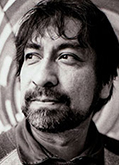
caption: Deep JariwalaDeep Jariwala, an assistant professor in the department of electrical and systems engineering, has been awarded the S. Reid Warren, Jr. Award. Presented in conjunction with the Penn Engineering Alumni Society, this award recognizes outstanding service in stimulating and guiding the intellectual and professional development of undergraduate students at the school.

Dr. Jariwala’s students described his extraordinary impact on the trajectory of their professional development, supporting them in times of uncertainty. His excitement, optimism, and dedication provided great motivation for his students to achieve their goals.

Dr. Jariwala received his undergraduate degree from the Indian Institute of Technology in 2010 and went on to receive his PhD from Northwestern University.

Ford Motor Company Award for Faculty Advising

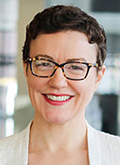
caption: Chris Callison-BurchChris Callison-Burch, an associate professor in the department of computer and information science, has been awarded the Ford Motor Company Award for Faculty Advising, which recognizes dedication to helping students realize their educational, career and personal goals.

Dr. Callison-Burch was cited for introducing his students to valuable research opportunities while helping them navigate Penn, especially during the pandemic. His students praised his support in helping them realize their educational and personal goals.

Dr. Callison-Burch received his BS in symbolic systems from Stanford University in 2000. He received both his MS in computer science and his PhD in informatics from the University of Edinburgh in 2002 and 2008, respectively.

Hatfield Award for Excellence in Teaching in the Lecturer and Practice Professor Track

caption: James WonJames Won, a lecturer in the department of electrical and systems engineering, has been awarded the Hatfield Award for Excellence in Teaching in the Lecturer and Practice Professor Track. Presented to a full-time lecturer, senior lecturer or practice professor in Penn Engineering, the award recognizes outstanding teaching ability, dedication to innovative undergraduate instruction, and exemplary service to the school by consistently inspiring students in the engineering and scientific profession.

Students described Dr. Won as both an empathetic and compassionate professor who inspired them to become better engineers who consider the human element when designing new solutions.

Dr. Won received his BS and MS in mechanical engineering from the Massachusetts Institute of Technology in 1997 and 2001, respectively. He received his PhD in human factors from Tufts University.

Weitzman School of Design’s G. Holmes Perkins Teaching Awards
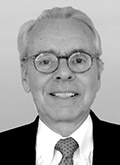
caption: Richard FarleyRichard Farley, an adjunct professor of architecture; Elizabeth Lovett, a lecturer in undergraduate architecture; and Akira Drake Rodriguez, an assistant professor of city and regional planning, have received G. Holmes Perkins Teaching Awards for 2021-2022. Named in honor of the architect and longtime faculty member who served as dean of the school from 1951 to 1971, the awards are given annually based on student nominations to recognize distinguished teaching and innovation in the classroom, seminar, or studio.

Richard Farley is both a registered architect and engineer who teaches the two-course structures sequence in the Master of Architecture program. His professional experience centers on high-tech buildings, complex master plans, and mixed-use high-rise structures, and his research is focused

on the application of structural innovations in mainstream architectural design. Before launching his private consulting practice, he was a senior principal at KlingStubbins (now Jacobs Engineering Group). In 2007, he was elected to the College of Fellows of the American Institute of Architects. His work in Philadelphia includes Center City’s award-winning Three Logan Square. A former student of Louis Kahn’s, Mr. Farley earned a MArch and a MEng from Penn. One student wrote of him, “He wants us to learn and flourish and [his] are not empty words. It saddens me that this will be my last semester having him as a professor.”

caption: Elizabeth LovettElizabeth Lovett is a practicing architect and principal of Lovett Keshet Studio who teaches two courses in the undergraduate architecture program. Her interest in the language of geometry and the pragmatic constraints of materials and construction is coupled with expertise in historic and modern building practices. Ms. Lovett gained architectural experience in master planning, design, and construction documentation at Stanev Potts Architects and Kieran Timberlake in Philadelphia, as well as the Galante Architecture Studio in Boston. She also worked as a project engineer for the A. Zahner Company, co-designing and overseeing the manufacture and on-site installation of complex facade systems. She is a contributor to Material Design: Informing Architecture by Materiality (Birkhauser, 2012) and her drawings appear in The Function of Form by Farshid Moussavi (ACTAR, 2009). She earned her BA in architecture at Penn and her MArch at Harvard. One of Ms. Lovett’s students said, “She is very patient when it comes to guiding students through the process of design and conceptualization, without being imposing, allowing students to better explore their own ideas.”

caption: Akira RodriguezAkira Drake Rodriguez teaches Introduction to Planning History, Theory, and Practice; Readings in Race, Poverty, and Place; and Urban Research Methods in the department of city and regional planning. Her research engages scholarship in urban studies, political science, urban history, Black feminist studies, community development, urban policy, and critical geography to examine the ways that disenfranchised groups re-appropriate their marginalized spaces in the city to gain access to and sustain urban political power. Dr. Rodriguez is the author of Diverging Space for Deviants: The Politics of Atlanta’s Public Housing (University of Georgia Press, 2021), which examines the dialectic between Black feminist politics and public housing policy in Atlanta from 1936 to 2010. A two-time Penn graduate, she has an MPA from the Fels Institute and a BS in economics from the Wharton School; she earned her PhD from the Edward J. Bloustein School of Urban Planning and Public Policy at Rutgers University. One student said of her: “Akira has been an inspiring force within the city planning department. Her research and teaching have had a huge impact on my time in the program.”

The three will be honored at the Weitzman School’s Commencement Exercises on Saturday, May 14, 2022.

School of Social Policy and Practice Excellence in Teaching Awards

The following individuals will be recognized for their outstanding achievements at SP2 Commencement on Saturday, May 14, 2022.

Excellence in Teaching Award

caption: John Jacksoncaption: Melanie Masin-Moyercaption: Obed Arangocaption: Meredith MyersThe Excellence in Teaching Award is presented to both standing and non-standing faculty members in recognition of excellence in teaching and mentoring during the previous year.

Winners of this award are chosen by the Student Policies and Procedures Committee from the pool of five full-time and five part-time faculty with the highest quantitative scores for “overall quality of the instructor” on the course evaluations.

The full-time faculty awardees are John Jackson, the Walter H. Annenberg Dean of the Annenberg School for Communication and Richard Perry University Professor; and Melanie Masin-Moyer, a full-time lecturer in the master of social work (MSW) program and the assistant director of the doctorate in clinical social work (DSW) program.

The part-time lecturer awardees are Obed Arango, a lecturer in the MSW program; and Meredith Myers, a lecturer in the non-profit leadership (NPL) program.

SP2 Community Award of Excellence for Staff
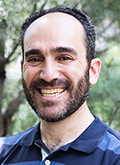
caption: Adam Roth-SaksThis recognition is presented annually to an SP2 staff member that demonstrates a commitment to the SP2 community through service, collegiality, and overall community engagement.

The awardee is Adam Roth-Saks, administrative director of the MS in nonprofit leadership program and finance manager of the Center for Social Impact Strategy.

Dr. Ram Cnaan Award

This award is presented to a meritorious DSW student who has completed their third year of coursework. The selection is through nomination and voting of the DSW program faculty.

The awardee is Christine Holmes, a DSW student.

Hal Levin Award

caption: John GyourkoThis award is presented to a meritorious student in the doctor of philosophy in social welfare program who is continuing the process of completing course work.

The awardee is John Gyourko, a PhD student in social welfare.

Excellence in Social Impact Award

This award is presented to a meritorious graduating student in the NPL program who has a record of academic excellence and has shown promise in using their talents and knowledge to create positive social impact.

The awardee is Dominic Kelly, an NPL student.

Richard J. Estes Global Citizenship Award

This award is presented to a graduating international student in the NPL program who embodies a commitment to social impact, who has a record of academic excellence and who is committed to using their talents and knowledge to make a difference in the world.

The awardee is Devika Shekhawat, an NPL master’s student.

Dr. Ruth Smalley Award in International Social Welfare

This award is presented to the member of the MSW graduating class who, through their writing, participation in class discussions, and experience has demonstrated an interest in and a working knowledge of the international and cultural dimensions of social work practice, and the application of practice to research.

The awardee is Achike Chukwuemeka, an MSW student.

Rosa Wessel Award

This award is presented to a meritorious graduating student in the MSW program who is selected on the basis of academic performance and one or more of the following: exemplary student leadership, innovative activities in the field practicum, and exceptional community service.

The awardee is Bella Dougherty, an MSW student.

Wilson-Spigner Award for Social Policy Excellence

This award is presented to a graduating student in the master of science in social policy (MSSP) program who has a demonstrated record of intellectual inquiry and academic excellence and who is committed to using research to analyze and shape social policy locally, nationally, and/or globally. The award is named in honor of the Reverend Dr. Welford Robinson Wilson II, and his daughter, Dr. Carol Wilson Spigner, the first faculty director of the MSSP program, both of whom have notably increased equity and equality among people who are often forgotten, through research-based change in policy and organizations.

The awardee is Victoria Téllez Leal, an MSSP student.

Matthew Antonio Bosch: Vice Dean and Director for Community Engagement and Inclusion at Penn Admissions

caption: Matthew BoschMatthew Antonio Bosch will join the senior leadership team of Penn Admissions as Vice Dean and Director for Community Engagement and Inclusion, with an appointment beginning May 9.  In this role, he will help to create and enhance an inclusive and growth-oriented office culture that supports and catalyzes the office’s business goals and amplifies Penn Undergraduate Office of Admissions’ reputation as a thought leader and extraordinary place to work.

With degrees from the University of Pennsylvania, Harvard University, and Cornell University, Dr. Bosch brings 20 years of professional experience spanning diversity, inclusive excellence, admissions, student life, and academic affairs.  

He has served in three prior inaugural positions, including Dean of Student Inclusive Excellence at Elon University (NC), overseeing diversity and identity centers across race, ethnicity, gender, and sexuality. While serving as the inaugural Chief Diversity Officer at North Hennepin Community College (MN), he was elected the first Latino president of the Minnesota College Personnel Association, earning statewide recognition from the Latino Chamber of Commerce Minnesota as one of the “Top 25 Latino Leaders On The Rise.”

Most recently, Dr. Bosch served as Interim Academic Dean of the School of Graduate and Professional Studies and as graduate academic director of the MEd in higher education and student affairs administration at Rosemont College. His teaching background stretches across multiple universities, including courses on systemic bias in higher education, cultural pluralism in higher education, sex and gender, professional development practicum, and student and identity development theories. Lauded as “a man with a plan,” he has collaborated with staff, faculty, and students to launch leadership councils, develop multi-year strategic planning efforts for diversity and inclusion, and create inclusive hiring manuals for search committees.

Dedicated to helping colleagues seek professional development and advancement, Dr. Bosch’s academic research focuses on the career advancement and intersectional identities of LGBTQ+ professionals in higher education. His scholarly publications and presentations span the Professional and Organizational Development Network, Journal of College and University Student Housing, the National Conference on Race and Ethnicity (NCORE), and the American College Personnel Association (ACPA).

Deaths

Benjamin Shen, Physics and Astronomy

caption: Benjamin ShenBenjamin Shih-Ping Shen, the Reese W. Flower Professor Emeritus in the department of physics and astronomy in the School of Arts and Sciences and Penn’s Interim Provost from 1980 to 1981, passed away at home on April 10. He was 90.

Dr. Shen was born in 1931 in Hangzhou, China. He graduated from a French lycée in Shanghai and studied engineering briefly at the National Taiwan University. In 1954, he graduated with a degree in mathematics from Assumption College (now University) in Worcester, Massachusetts, where most of his courses were taught in French. After receiving a master’s degree in physics from Clark University, he earned a National DSc in physics from the University of Paris in 1964 under Pierre Auger, discoverer of the Auger electron. Dr. Shen joined the Penn faculty in 1966 as an associate professor of astronomy, becoming a full professor in 1968 and the Reese W. Flower Professor of Astronomy and Astrophysics in 1972. He served as chair of the department of astronomy and astrophysics from 1973 to 1979. During his time as department chair, the name of the department was changed from astronomy to astronomy and astrophysics, reflecting a broadening of research interests in the department. Beginning in 1968, Dr. Shen served as director of Penn’s Flower and Cook Observatory. During the 1970s and 1980s, he served on several Faculty Senate and University Council committees. 

In 1979, Dr. Shen was named Associate Provost by then-Provost Vartan Gregorian. The next year, he was named Acting (Interim) Provost after Dr. Gregorian’s resignation (Almanac October 14, 1980). During his tenure as Acting Provost, Dr. Shen oversaw a restructuring of Penn’s graduate education and convened the Task Force on the Quality of Teaching, which led to the creation of new teaching awards across Penn’s schools. In 1981, Dr. Shen resigned as Acting Provost, but continued to head the task force that he had launched. During the 1980s, he continued his membership in Penn’s governance bodies, and in 1993 he served on then-President Sheldon Hackney’s Commission on Strengthening the University Community. Dr. Shen retired from Penn in 1996. In retirement, he served as the second president of the Penn Association of Senior and Emeritus Faculty (PASEF).

A pioneer in the use of particle accelerators for astrophysical research, Dr. Shen’s scientific work centered around the cascade of nuclear interactions triggered by cosmic rays, high energy particles that move through space at nearly the speed of light. He was the first to show, in 1961, that the breakup, or “spallation,” of interstellar nuclei by cosmic rays could be the long-sought origin of certain rare chemical elements in the universe. His accelerator experiments greatly influenced the science of shielding against cosmic radiation in the early days of the space age; in 1963, the journal Astronautica Acta devoted an entire issue to his work. He also contributed to the early research on the exploding cores of galaxies and quasars. He edited and contributed writing to two books on nuclear astrophysics: High-Energy Nuclear Reactions in Astrophysics (1967) and Spallation Nuclear Reactions and Their Applications (1976), and was the author of many peer-reviewed articles.

In addition to his work at Penn, Dr. Shen engaged actively with the broader scientific community. In 1972, he was appointed the head of a New York Academy of Sciences committee to improve scientific communication to the general public, and in the same year, he was named a fellow of the American Physical Society. As part of this effort, in a 1975 essay, he introduced the concept of “civic science literacy,” the basic scientific knowledge needed by the general public and policymakers in an increasingly technological society. 

In 1990, he was appointed to the National Science Board, where he was a strong advocate for basic science funding and where he chaired a task force on scientific literacy. He was an advisor to the Children’s Television Workshop (now Sesame Workshop) on its science programs, including the award-winning series 3-2-1 Contact. He became an advisor on science and technology to the Senate Budget Committee (1976-1977) and to the Congressional Office of Technological Assessment (1977-1978). In 1978, he was awarded the Vermeil Medal of the Société d’Encouragement au Progrès. In the late 1970s, he chaired a nationwide panel of the American Association for the Advancement of Science, and in 1996, he was named a fellow of the AAAS. In 1993, he was named a Chevalier of the Ordre des Palmes Académiques in France.

In his leisure time, Dr. Shen practiced Chinese calligraphy and built bicycles for himself and his children with vintage parts he found online. 

Dr. Shen is survived by his wife, Lucia Shen; his son, William Shen; his daughter, Juliet Shen (Shane Watters); and a granddaughter. A funeral mass was held on April 21 at St. Agatha-St. James Catholic Church in Philadelphia, followed by burial at Woodlands Cemetery. Donations in his memory may be made to Philly PAWS.

Jeffrey Wortman, Penn Veterinary Medicine and Perelman School of Medicine

caption: Jeffrey WortmanJeffrey Arnold Wortman, VMD’69, an emeritus professor of radiology and the former Associate Dean for Academic and Curricular Affairs at Penn Vet and a former faculty member at the Perelman School of Medicine, passed away on March 11. He was 75. 

Born and raised in Baltimore, Maryland, Dr. Wortman completed his undergraduate studies at the University of Maryland, College Park. He then went on to study veterinary medicine and graduated magna cum laude in 1969 from Penn’s School of Veterinary Medicine. While a student at Penn Vet, Dr. Wortman served as an animal keeper in Penn Vet’s department of clinical studies. After receiving his VMD, he was commissioned as a captain in the U.S. Army Veterinary Corps. From 1970 to 1971, Dr. Wortman served in the 20th Preventative Medicine Unit in Vietnam and was awarded a Bronze Star, the fourth-highest honor a service member can receive. After receiving an honorable discharge from the Army, Dr. Wortman completed a small animal internship, then completed his residency in radiology and earned a PhD from the University of California, Davis School of Veterinary Medicine. Dr. Wortman received his specialty certification as a diplomate of the American College of Veterinary Radiology in 1977 and served on multiple ACVR council committees, as well as serving as its president in 1991.

In 1977, Dr. Wortman accepted a faculty position in radiology at Michigan State University College of Veterinary Medicine in Lansing. Four years later, he returned to his alma mater, becoming an assistant professor of radiology at Penn Vet (he also accepted a secondary appointment as an assistant professor of radiology in Penn’s School of Medicine in 1984). Over the next 30 years, Dr. Wortman taught radiology to thousands of veterinary students in lecture halls and clinical rotations. In 1987, he was promoted to associate professor of radiology. In 1999, Dr. Wortman became the Associate Dean for Academic and Curricular Affairs at Penn Vet, serving under three consecutive deans of the school. While at Penn Vet, Dr. Wortman received the Veterinary Student Government Award for Excellence in Teaching, the Veterinary Medical Student Government Commendation Award, and the Penn Alumni Award of Merit. He also served as a Penn Alumni interviewer, interviewing students in the Caribbean who were interested in applying to Penn Vet. Dr. Wortman retired from Penn and took emeritus status in 2012. 

Dr. Wortman is survived by his wife, Carol (née Cancelmo); his children, Alicia, Laura, and Stephen; his brothers, Dennis and Ken; and three grandchildren. A celebration of his life was held on April 23. 

In lieu of flowers, donations are encouraged to support the Jeffrey A. Wortman, VMD’69, PhD Endowed Opportunity Scholarship. Checks can be made out to the Trustees of the University of Pennsylvania, memo line: Wortman Endowed Scholarship, and mail: Penn Vet Office of Institutional Advancement, 3800 Spruce Street, Suite 151E, Philadelphia, PA 19104. To make a gift by credit card, call (215) 898-4235.

--

To Report A Death

Almanac appreciates being informed of the deaths of current and former faculty and staff members, students and other members of the University community. Call (215) 898-5274 or email almanac@upenn.edu.

However, notices of alumni deaths should be directed to the Alumni Records Office at Suite 300, 2929 Walnut St., (215) 898-8136 or email record@ben.dev.upenn.edu.

Governance

From the Office of the Senate: Senate Nominations 2021-2022

Pursuant to the Faculty Senate Rules, formal notification to members may be accomplished by publication in Almanac. The following is published under that rule.

TO: Members of the Faculty Senate
FROM: Megan Ryerson, Chair, Nominating Committee
SUBJECT: Senate Nominations 2021-2022

In accordance with the Faculty Senate Rules, official notice is given of the Senate Nominating Committee’s partial slate of nominees for the incoming Senate Officers. The nominees, all of whom have indicated their willingness to serve, are:

Chair-elect:

  • Tulia Falleti (SAS/Political Science)

Senate Committee on Academic Freedom and Responsibility 
to serve a 3-year term beginning upon election:

  • Jules van Binsbergen (Wharton)

Also in accordance with the Faculty Senate Rules, you are invited to submit additional nominations, which shall be accomplished via petitions containing at least twenty-five valid names and the signed approval of the candidate. All such petitions must be received no later than fourteen days after circulation of the nominees of the Nominating Committee by email to the Faculty Senate, senate@pobox.upenn.edu. This year, that deadline is 5 p.m. EDT on Monday, May 23, 2022.

Under the same provision of the rules, if no additional nominations are received, the slate nominated by the Nominating Committee will be declared elected.

The remaining slate of nominees will be published in a future edition of Almanac.

2022 Call for PPSA Board and Committee Nominations: Deadline Extended to May 11

Nominations have been extended through tomorrow, May 11, for open for positions on the Penn Professional Staff Assembly (PPSA) Executive Board and University Council Committees. All monthly-paid, full-time University staff members are eligible to participate. More information is available at the PPSA website.

Committee and Executive Board service are rewarding experiences that require only a few hours per month. It is a wonderful opportunity to meet colleagues from across the University.

For Executive Committee and University Committees Nominations

To nominate, please fill out the form linked here. Self nominations must include a personal statement of less than 250 words.

The following positions are open for nomination:

  • PPSA Chair-Elect (1 position, three year term of service)  
  • Executive Committee Member At-Large (4 positions, two-year term of service)
  • PPSA Representative to University Council Committees (7 positions, two-year term of service)

Responsibilities for each position are described on the nomination form, linked above. For more information on the seven University Council Committees, visit https://secretary.upenn.edu/univ-council/committees

All monthly-paid, full-time University staff members are encouraged to self-nominate or nominate colleagues for consideration using the form below by the extended deadline of Wednesday, May 11, 2022

The 2022-2023 election for officers will occur after PPSA’s annual meeting. The annual meeting will be held on Thursday, May 19 at noon ET, at which we are honored to be joined by Katy Milkman, the James G. Dinan Professor at the Wharton School and co-founder and co-director of the Behavior Change for Good Initiative (registration details forthcoming).

All full-time, monthly-paid University staff members are welcome to participate in this annual meeting.

An online election will take place for the Chair-Elect and the Members At-Large in the days following the annual meeting. University Council Committee members will be appointed by the PPSA Tri-Chairs from amongst all applicants following the election. 

Questions on the nominating and election process can be directed to ppsa@lists.upenn.edu. The elections process is governed by the PPSA Bylaws, available on the PPSA website at http://ppsa.upenn.edu.

—Penn Professional Staff Assembly (PPSA)

Honors

Six Faculty: Election to American Academy of Arts and Sciences

Six faculty and researchers affiliated with the University of Pennsylvania  have been elected to the American Academy of Arts and Sciences. They are Yale Goldman, Katalin Karikó, and Drew Weissman of the Perelman School of Medicine; Nicholas Sambanis of the School of Arts and Sciences; Diana Slaughter Kotzin of the Graduate School of Education; and Dorothy E. Roberts, joint appointments in the Penn Carey Law School and School of Arts and Sciences.

They are among more than 260 new members honored in 2022, recognized for their “accomplishments and leadership in academia, the arts, industry, public policy, and research.”

caption: Yale GoldmanYale Goldman is a professor of physiology at the Perelman School of Medicine, with a secondary appointment in the School of Engineering and Applied Science. A Philadelphia native, he has been a fixture at Penn for decades, arriving on campus in the early 1970s as a doctoral student and joining the faculty in 1980. From 1988 until 2010, he served as director of the Pennsylvania Muscle Institute at Penn.

Dr. Goldman’s research focuses on better understanding the structural changes that the body’s biological machines undergo. He and his lab have developed novel biophysical techniques to observe this, ranging from nanometer tracking of fluorescent molecules to infrared optical traps, known as laser tweezers. The goal is to make discoveries that, in the long term, lead to better outcomes for those with Duchenne muscular dystrophy, cystic fibrosis, and cardiac myopathies.

A member of the National Academy of Sciences, Dr. Goldman has also served as president of the Biophysical Society and as an editorial board member of the Journal of Physiology and the Biophysical Journal.

caption: Katalin KarikóKatalin Karikó is a senior vice president at BioNTech and an adjunct professor of neurosurgery in the Perelman School of Medicine. She joined the University of Pennsylvania in 1989 and began collaborating with fellow inductee Drew Weissman in 1997. Together, they invented the modified mRNA technology used in Pfizer-BioNTech and Moderna’s vaccines to prevent COVID-19 infection.
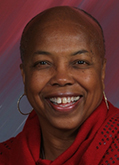
For decades, Dr. Karikó’s research as a biochemist has focused on RNA-mediated mechanisms, with the goal of developing in vitro–transcribed mRNA for protein therapy. She investigated RNA-mediated immune activation and co-discovered with Dr. Weissman that nucleoside modifications suppress the immunogenicity of RNA. This led to the development of the two most effective vaccines for COVID-19.

Dr. Karikó has been honored with the Breakthrough Prize in Life Sciences, the Lasker-DeBakey Clinical Medical Research Award, the Princess of Asturias Award, and the Vilcek Prize for Excellence in Biotechnology. She continues to work on new therapeutic applications of mRNA therapy.

caption: Diana Slaughter KotzinDiana Slaughter Kotzin, professor emerita in the Graduate School of Education, was the inaugural Constance E. Clayton Professor in Urban Education from 1998 to 2011. She earned her bachelor’s and master’s degrees in human development and a PhD in human development and clinical psychology from the University of Chicago.
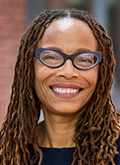
Her research interests include culture, primary education, and home-school relations facilitating in-school academic achievement. 

Before joining Penn, she taught at Northwestern University’s School of Education and Social Policy for 20 years. Previously she was on the faculties of Howard University, Yale University, and the University of Chicago. Among her many awards and accolades, in 2019, the American Psychological Association designated her a “pioneer woman of color among the first to break into psychology’s ranks.”

caption: Dorothy RobertsDorothy E. Roberts is the George A. Weiss Professor of Law & Sociology, the Raymond Pace & Sadie Tanner Mossell Alexander Professor of Civil Rights, and a professor of Africana studies. She is also the founding director of the Program on Race, Science, and Society (PRSS). With appointments in the Carey Law School and the School of Arts and Sciences, Dr. Roberts works at the intersection of law, social justice, science, and health, focusing on urgent social justice issues in policing, family regulation, science, medicine, and bioethics.

Her major books include Fatal Invention: How Science, Politics, and Big Business Re-Create Race in the Twenty-First Century (New Press, 2011); Shattered Bonds: The Color of Child Welfare (Basic Books, 2002), and Killing the Black Body: Race, Reproduction, and the Meaning of Liberty (Pantheon, 1997). Her newest book, Torn Apart: How the Child Welfare System Destroys Black Families—and How Abolition Can Build a Safer World (Basic Books), was published in April. Dr. Roberts is the author of more than 100 scholarly articles and book chapters, as well as a co-editor of six books on such topics as constitutional law and women and the law.

caption: Nicholas SambanisNicholas Sambanis is a Presidential Distinguished Professor of Political Science and director of the Penn Identity & Conflict Lab (PIC Lab). He writes on conflict processes with a focus on civil wars and other forms of intergroup conflict.

The lab works on a broad range of topics related to intergroup conflicts in the world, including the effects of external intervention on peace-building after ethnic war, the analysis of violent escalation of separatist movements, conflict between native and immigrant populations, and strategies to mitigate bias and discrimination against minority groups. His focus is the connection between identity politics and conflict processes, drawing on social psychology, behavioral economics, and the comparative politics and international relations literature in political science.

caption: Drew WeissmanDrew Weissman is the Roberts Family Professor in Vaccine Research in the Perelman School of Medicine and an internationally recognized scientist whose foundational research with scientific collaborator Katalin Karikó led to mRNA vaccines and a highly effective method of curbing the spread of COVID-19.

For decades, Dr. Weissman has studied immunology and the ways mRNA might trigger protective immune responses, first focusing on HIV at the National Institutes of Health and then at Penn, where he turned his attention to developing mRNA vaccines for other diseases and conditions. One goal is to create a pan-coronavirus vaccine, which could prevent all types of coronaviruses, including COVID-19. He has also worked with researchers globally to help them develop mRNA COVID vaccines and to increase access to such vaccines in remote and under-resourced areas.

Dr. Weissman has received many awards, including the Lasker-DeBakey Clinical Medical Research Award, the Princess of Asturias Award, the Albany Medical Center Prize in Medicine and Biomedical Research, and the Breakthrough Prize in Life Sciences.

Startup Challenge Winner: ToxiSense

The University of Pennsylvania’s Venture Lab has announced the winner of the sixth annual Startup Challenge, sponsored by Eric Aroesty, C’92—ToxiSense, co-founded by a team of four University of Pennsylvania freshmen: Aravind Krishnan, C’25, W’25; Udit Garg, ENG’25; Andrew Diep-Tran, W’25; and Aarush Sahni, C’25. The Startup Challenge was held on April 29, 2022 at Tangen Hall, the University of Pennsylvania’s hub for student entrepreneurship and innovation.

ToxiSense aims to improve the endotoxin testing required for drinking water and biopharma products through genetically engineering plants with bioluminescent properties. Biopharmaceutical products and drinking water must be tested for endotoxins, the sickness-causing molecule from bacteria. The current method relies on expensive horseshoe crab blood and is environmentally damaging. ToxiSense genetically engineered the Arabidopsis plant to luminesce based on the endotoxin concentration applied to it, serving as a sustainable, cost-effective solution. 

ToxiSense was selected from a field of eight finalist teams—including DeToXyFi, Groov, Impact Local, Miren, Nemu, Ossum Technologies, and Shinkei Systems Corp.—who advanced from 30 ventures during the semi-finals portion of the competition, which consisted of a day of virtual pitching and Q&A in front of alumni entrepreneur and investor panels. For the finals, teams pitched to a panel of alumni judges and in front of a live audience of nearly 200 attendees as they competed for over $150,000 in cash and prizes to launch their startups.

“The Startup Challenge is Venture Lab’s premier yearly event, showcasing Penn’s most promising teams of student entrepreneurs,” said Lori Rosenkopf, Vice Dean of Entrepreneurship and Simon and Midge Palley Professor at the Wharton School. “This year’s finalists included undergraduate and graduate students from across the University, and their products offered solutions for environmental, financial, health, and social challenges. These motivated teams capture the spirit of Penn entrepreneurship—innovative, interdisciplinary, inclusive—and we offer our congratulations and our optimistic wishes for their futures!”

For the first time in three years, the Startup Challenge was held in-person in Tangen Hall, the University’s newest hub for student entrepreneurship and innovation. The 68,000 square foot facility is the largest hub of any kind on any college campus dedicated to student entrepreneurship and innovation. 

“This was an opportunity to invite the larger entrepreneurial community into our new home at Tangen Hall,” said Erin McGowan, senior associate director of Venture Lab. “We had positive feedback from the teams, alumni judges and attendees in being able to gather together again and showcase our outstanding student ventures.”

The Startup Challenge marks the end to another exciting year of entrepreneurship across the Penn community. Students engaged in entrepreneurial programming are founding, developing, and scaling companies utilizing the multitude of resources available within the Penn and Philadelphia ecosystems. Venture Lab is proud to continue to be a leader in entrepreneurship education.

Research

Moving from Average to the Individual

To prep for an upcoming course, Penn researcher David Lydon-Staley decided to conduct an experiment: Might melatonin gummies—supplements touted to improve sleep—help him, as an individual, fall asleep faster? For two weeks, he took two gummies on intervention nights and none on control nights. The point, however, wasn’t really to find out whether the gummies worked for him (which they didn’t), but rather to see how an experiment with a single participant played out, what’s known as an “n of 1.”

Randomized control experiments typically include hundreds or thousands of participants. Their aim is to show, on average, how the intervention being studied affects people in the treatment group. But often “there’s a failure to include women and members of minoritized racial and ethnic groups in those clinical trials,” said Dr. Lydon-Staley, an assistant professor at the Annenberg School for Communication. “The single-case approach said, instead of randomizing a lot of people, we’re going to take one person at a time and measure them intensively.”

In Dr. Lydon-Staley’s spring semester class, Diversity and the End of Average, seven graduate students conducted their own n-of-1 experiments—on themselves—testing whether dynamic stretching might improve basketball performance or whether yoga might decrease stress. One wanted to understand the effect of journaling on emotional clarity. They also learned about representation in science, plus which analytical approaches might best capture the nuance of a diverse population and individuals with many intersecting identities.

“It’s not just an ‘n of 1’ trying to do what the big studies are doing. It’s a different perspective,” said Dr. Lydon-Staley. “Though it’s just one person, you’re getting a much more thorough characterization of how they’re changing from moment to moment.”

Second-year doctoral student Adetobi Moses described the different options, including her choice of stream-of-consciousness journaling, then talked through her two-week experiment. In the end, her data showed that the writing helped only minimally with her emotional clarity. But the process itself? She found it empowering, a sentiment that others in the room echoed. Despite experimental results that may have lacked statistical significance, the grad students appreciated gaining deeper insight into an aspect of themselves.

Sometimes the results surprised them, too, like those of Darin Johnson, a third-year PhD student studying code-switching. For his experiment, he wanted to understand whether reducing social media use on his phone would drop his stress level. “I follow a lot of social justice–oriented pages, which include a lot about racism and police brutality. I would just sit there scrolling and be stressed out,” he said. He thought removing the input that caused these reactions might prevent the anxiety associated with them.

On intervention days, he would receive a notification when he reached the time limit that he’d set. On control days, his access remained unlimited. At the end of each day, he took a survey that he’d created. Before even analyzing his data, he realized that avoiding social media didn’t actually help him but instead made him feel isolated, cut off from his circle. The notion of n-of-1 experiments often raises eyebrows, said Dr. Lydon-Staley. “I’m on the fringe here, but I think it’s the way to go,” he said. “Randomized control trials give you a statistic for the ‘average person,’ but that’s a statistical artifact that doesn’t exist. I want to know what works for me.”

Dr. Lydon-Staley applies this framework to much of the research conducted in his Addiction, Health, & Adolescence Lab. For example, in a project about smoking cessation, he and his team are collecting reports from participants about their specific withdrawal symptoms—cravings, irritability—ten times a day for ten days, before and during a quit attempt.

Personalized medicine has already moved in this direction, using genetics and other biomarkers to guide treatment. “So many people deal with medical issues that may not have a one-size-fits-all solution,” said second-year PhD student Baird Howland, who is also in the class. “Anybody could, in theory, do this type of experiment to figure out what works and what doesn’t for them.”

Dr. Lydon-Staley sees great potential in the ability to scale up the single-case approach: Collect enough samples and patterns will emerge revealing natural rather than artificial clusters. “Often, you can’t take an intersectional approach with statistics,” Mr. Johnson said. “People might aggregate by race or by gender. Those are disparate categories, but I’m gay and Black. If I were to do a statistical analysis, I’d have to separate them out, and ‘n of 1’ allows us not to.”

Adapted from a Penn Today article by Michele W. Berger, May 3, 2022.

How One Inflammatory Disorder Exacerbates Another

In a new paper in Cell, researchers from the School of Dental Medicine, together with an international team including colleagues at the Technical University of Dresden, lay out the mechanism by which innate immune memory can cause one type of inflammatory condition—in this example, gum disease—to increase susceptibility to another—here, arthritis—through alterations to immune cell precursors in the bone marrow. In a mouse model, the team demonstrated that recipients of a bone marrow transplant were predisposed to more severe arthritis if their donor had inflammatory gum disease.

“Although we use periodontitis and arthritis as our model, our findings go above and beyond these examples,” said George Hajishengallis, a professor in Penn Dental Medicine and a corresponding author on the work. “This is in fact a central mechanism, a unifying principle underlying the association between a variety of comorbidities.”

The researchers note that this mechanism may also prompt a reconsideration of how bone marrow donors are selected, as donors with certain types of immune memory caused by underlying inflammatory conditions might put bone marrow transplant recipients at a higher risk of inflammatory disorders.

In previous work, Dr. Hajishengallis had partnered with co-corresponding author Triantafyllos Chavakis of Technical University of Dresden and collaborators to explore the role of innate immune memory. Their findings showed that, just like the adaptive immune system’s T cells and B cells, the innate immune system’s myeloid cells, such as neutrophils and macrophages, could “remember” past encounters, becoming more responsive when exposed to a new threat. The work also pin-pointed how this memory was encoded, tracing it to the bone marrow, and showed that this “trained immunity” could be transferred from one organism to another through a bone marrow transplant, protecting recipients from cancer through an innate immune response.

While that is good news, Drs. Hajishengallis and Chavakis also believed that trained immunity could be detrimental in certain contexts. Building on their earlier discovery related to “trained” precursors in the bone marrow, the scientists set out to see whether they could trace the source of the association between comorbidities and the innate immune training they already knew was happening in the bone marrow.

Setting out to test this hypothesis, the team first showed that, within a week of inducing a mouse to have periodontal disease, the animal’s myeloid cells and their progenitor cells expanded in the bone marrow. Examining these cells weeks later, after periodontitis was intentionally resolved, the researchers did not notice significant changes in how the cells looked or behaved.

However, these progenitor cells appeared to have memorized the inflammation they were exposed to, as they harbored important epigenetic changes: alterations in molecular markers that affect the ways genes are turned on and off but do not alter the actual DNA sequence. The researchers found that these alterations, triggered by inflammation, could alter the manner in which the genes would be expressed after a future challenge. The overall pattern of epigenetic changes, the researchers noted, was associated with known signatures of the inflammatory response. Mice with induced periodontal disease also had more severe responses to a later immune system challenge, evidence of trained immunity.

To put the whole picture together regarding the link between inflammatory conditions, the “critical experiment,” as Dr. Hajishengallis explained, was a bone marrow transplant. Mice that had periodontitis, a severe form of gum disease, served as donors, as did a group of healthy mice serving as controls. Two hundred stem cells from their bone marrow were transplanted into mice that had never had gum disease and which had their own bone marrow irradiated. A few months later, these mice were exposed to collagen antibodies, which trigger arthritis.

“Mice that received the transplant from mice with periodontitis developed more severe arthritis than mice that received a donation of stem cells from periodontally healthy mice,” said Dr. Hajishengallis.

Further experiments suggested that the signaling pathway governed by a receptor for the molecule IL-1 played a vital role in contributing to this inflammatory memory. Mice that lacked IL-1 receptor signaling could not generate the immune memory that made the recipient mice more susceptible to comorbidities, the researchers found.

The work has implications for bone marrow transplants in humans, a common course of therapy in addressing blood cancers. Follow-up projects are examining how other inflammatory conditions, may be linked with periodontal disease, a sign, the researchers say, of how crucial oral health is to overall health.

Adapted from a Penn Today article by Katherine Unger Baillie, April 27, 2022.

Events

Class of 2020 and Class of 2021 Master’s and Doctoral Degree Commencement: May 22

The long-awaited in-person Commencement Ceremony for the Class of 2020 and the Class of 2021 master’s and doctoral graduates will occur on Sunday, May 22 from 10 a.m. to noon at Franklin Field. Angela Duckworth, the Rosa Lee and Egbert Chang Professor in the School of Arts and Sciences, will be the morning’s keynote speaker.

For more information, visit: https://tinyurl.com/penn-alumni-commencement-2020.

Morris Arboretum’s Garden Railway: America’s Roadside Attractions

The Morris Arboretum’s popular Garden Railway returns just in time for Memorial Day Weekend. View a wide range of both new and vintage model trains zipping in and out of tunnels and over bridges along a quarter-mile of a spectacular outdoor track

If you were planning a stay-cation this year, you are definitely in luck. This season’s theme, “America’s Roadside Attractions,” features miniature replicas of some of this country’s most iconic roadside attractions including Randy’s Donuts, the Jolly Green Giant, and the World’s Oldest Largest Pecan—it will feel like you’ve traveled all over the U.S. without ever leaving Chestnut Hill.

This year, Bruce Morrell, train master at Morris Arboretum, received the President’s Award from the Southeastern Pennsylvania Garden Railway Society for his work with the Garden Railway. His dedication to miniature trains has brought endless joy to thousands of visitors over the years.

Visiting times and hours:

Friday, May 27 – Monday, October 10 Weekdays: 10 a.m.–5 p.m.

Weekends: 9 a.m.–5 p.m. Last entry is 4 p.m.

To buy tickets, visit https://experience.morrisarboretum.org/Info.aspx?EventID=3.

WXPN Policy Board Meeting

An open session of the WXPN Policy Board will be held Wednesday, May 18, 2022 at noon at WXPN. For more information, email tess@xpn.org or call (215) 898-0628 during business hours.

Update: May AT PENN

Children’s Activities

Penn Museum
Online events. Info: https://www.penn.museum/calendar.

10        At-Home Anthro Live: Mughal Miniature Paintings; 1 p.m.

17        At-Home Anthro Live: Making Chai; 1 p.m.


Exhibits

Penn Museum
Online and in-person events. Info: https://www.penn.museum/calendar.

13        Virtual Global Guide Tour: Middle East Galleries; 2:30 p.m.

14        Rome Gallery Tour; 11 a.m.

            Global Guide Tour: Africa Galleries; 2:30 p.m.

15        Native American Voices Tour; 11 a.m.

            Global Guide Tour: Asia Galleries; 2:30 p.m.


Films

11        Niagara; screening of director Henry Hathaway’s 1953 film-noir thriller starring Marilyn Monroe, Joseph Cotten, Jean Peters, and Max Showalter; 5:30 p.m.; Zoom screening; register: https://libcal.library.upenn.edu/event/9167283 (Penn Libraries).


Fitness & Learning

11        Navigating the New Diagnosis of Food Allergy: A Workshop for Parents and Caregivers; will provide evidence-based information about food avoidance, myths around food allergies, label reading, and preparedness for allergic reactions for caregivers of patients newly diagnosed with food allergies; 5:30 p.m.; online event; register: https://tinyurl.com/chop-workshop-may-11 (CHOP).

17        Federal Programs to Advance Homeownership Opportunity to Narrow Racial Disparities; will feature two virtual panels discussing current federal efforts to advance racial equity in homeownership and ways to use these new and emerging programs; noon; online webinar; register: https://tinyurl.com/iur-panel-may-17 (Penn Institute for Urban Research).


Talks

11        Climate Change Planning and Adaptation; Amanda Babson, National Park Service; Elizabeth Koniers Brown, Delaware River Basin Commission; Julia Rockwell, Philadelphia Water Department; noon; online webinar; register: https://tinyurl.com/water-center-talk-may-11 (Water Center).

            Investigating Order Parameter Dynamics and Control in Quantum Materials Using Terahertz Spectroscopy; Richard Averitt, University of California San Diego; 3:30 p.m.; Zoom webinar; join: https://tinyurl.com/averitt-talk-may-11 (Physics & Astronomy).

12        The GRADE Approach to Assess the Certainty of the Evidence and Grade the Strength of Recommendations; Alonso Carrasco-Labra, Penn Dental; 9 a.m.; BlueJeans webinar; join: https://bluejeans.com/873734674/4747?src=join_info (Center for Clinical Epidemiology & Biostatistics).

            Targeted Delivery to the Lung: Strategies to Fix your Favorite Diseases; Jake Brenner, PSOM; 4 p.m.; room 11-146, Smilow Center (Penn-CHOP Lung Biology Institute).

16        A Conversation with Dr. Carla Hayden, Librarian of Congress; Carla Hayden, Librarian of Congress; 2 p.m.; Class of 1978 Orrery Pavilion, Van Pelt Library, and online webinar; info: https://tinyurl.com/hayden-talk-may-16 (Penn Libraries).

--

This is an update to the May AT PENN calendar, which is online now. To submit an event for a future AT PENN calendar or weekly update, email almanac@upenn.edu.

Bulletins

Call for Applications: 2022-2023 Undergraduate Fellowship, Center for Advanced Research in Global Communication

Interested undergraduate students at the University of Pennsylvania are invited to submit a short (one-page) description of your project along with a resume or bio by June 15.

Fellowship Information

Undergraduate fellows at the Center for Advanced Research in Global Communication (CARGC) pursue a single research project on a subject of their choosing within the realm of global communication over the course of one academic year. Under the mentorship of CARGC’s senior research manager and CARGC’s postdoctoral fellows, the undergraduate fellows will build a theoretical framework and deepen archival, ethnographic, or other critical and qualitative work on an original research project. Over the course of the year, they will also present a colloquium to the Annenberg community at CARGC based on their research and publish their results as a CARGC paper.

Please refer to an example of a previous undergraduate CARGC paper. You might also check out the CARGC 5-year report for more information about the Center and the fellowship program at all levels (undergraduate, graduate, postdoctoral). You can see bios of all the fellows via CARGC's page on the Annenberg website.

How To Apply

Please submit, applications directly to Jing Wang, senior research manager at CARGC, by June 15.  Please include a one-page description of a research project you would pursue at CARGC plus your resume/bio. In your description, think about both how your project fits into CARGC’s purview, and how you would use the resources CARGC has to offer towards your project. If you have any questions about the fellowship or would like to find out more about the opportunity, contact Jing Wang via email (jing.wang@asc.upenn.edu).  

Center for Advanced Research in Global Communication

Back to Top