News

Raveen Kariyawasam and Nicholas Thomas-Lewis: 2022 Rhodes Scholars


caption: Raveen Kariyawasamcaption: Nicholas Thomas-LewisTwo University of Pennsylvania seniors have been awarded Rhodes Scholarships for graduate study at the University of Oxford.

Penn’s 2022 Rhodes Scholars are Raveen Kariyawasam, from Colombo, Sri Lanka, and Nicholas Thomas-Lewis, from Kimball, Nebraska.

Mr. Kariyawasam is a double major in bioengineering with concentrations in computational medicine and medical devices in the School of Engineering and Applied Science and in the Wharton School with concentrations in finance and entrepreneurship & innovation.

Mr. Thomas-Lewis is a double major in cognitive science with a concentration in cognitive neuroscience, as well as health and societies with a concentration in public health, and a minor in neuroscience, in the College of Arts and Sciences.

“We are so proud of our newest Penn Rhodes Scholars who have been chosen for this tremendous honor and opportunity,” said President Amy Gutmann. “The work Raveen has done in health care innovation and accessibility and Nicholas has done to support student well-being while at Penn is impressive, and pursuing a graduate degree at Oxford will build upon that foundation. We look forward to seeing how they make an impact in the future.”

The Rhodes Scholarship is highly competitive and is one of the most prestigious scholarships in the world. The scholarships provide all expenses for as many as four years of study at Oxford University in England.

According to the Rhodes Trust, about 100 Rhodes Scholars will be selected worldwide this year, chosen from more than 60 countries. Several have attended American colleges and universities but are not U.S. citizens and have applied through their home country, including Mr. Kariyawasam in Sri Lanka.

Mr. Thomas-Lewis is among the 32 Rhodes Scholars chosen to represent the United States. According to the Rhodes Trust, this year more than 2,300 American students began the application process, 826 were endorsed by 247 different colleges and universities, and 235 applicants from 76 colleges and universities reached the final stage of the competition.

With an interest in healthcare innovation and accessibility, Mr. Kariyawasam is involved in several research projects, including his Wharton honors thesis, which focuses on optimizing a low-cost electronic medical record system in Sri Lanka and the Philippines. He has received several research grants, including the Vagelos Undergraduate Research Grant, the Berkman Opportunity Fund grant, and the National Science Foundation’s Innovation Corps grant. At Penn, he is editor-in-chief of Synapse, a student-run healthcare magazine, and is vice president of the Phi Sigma Biological Honor Society. He runs a radio show on Penn’s student-run radio station, WQHS, and is an executive board member of the Wharton Undergraduate Healthcare Club. He has also served as a student ambassador at the Penn Health-Tech Center for Health Devices and Technology. At Oxford, Mr. Kariyawasam plans to pursue a DPhil degree.

Mr. Thomas-Lewis’s honors thesis is on the dual neurocentric medicalization of adolescence and addiction and its impact on stigma and agency among adolescents with addiction. He is a mentor who supports literacy development and emotional well-being in West Philadelphia elementary schools through his work with the Netter Center for Community Partnerships. Mr. Thomas-Lewis is captain of Penn’s varsity cheer team. He is a former speech captain of the Penn Speech and Debate club. Mr. Thomas-Lewis also serves as a campus guide for the Kite and Key Society, is a member of the Penny Loafers a cappella group, and is co-chair of the Admissions Dean’s Advisory Board. At Oxford, Mr. Thomas-Lewis plans to pursue master’s degrees in evidence-based social intervention & policy evaluation and in medical anthropology.

Mr. Kariyawasam and Mr. Thomas-Lewis applied for the Rhodes Scholarship with assistance from Penn’s Center for Undergraduate Research and Fellowships.

Perelman School of Medicine $10 Million Gift to Launch Colton Center for Autoimmunity at Penn

Thanks to a generous $10 million gift from Stewart and Judy Colton, the Perelman School of Medicine at the University of Pennsylvania will continue to be on the leading edge of autoimmune research and care with the launch of the Colton Center for Autoimmunity at Penn. The new center unites research and patient care programs across Penn—including Penn’s Institute for Immunology, the world’s largest single-institution immunology community—to drive advances in autoimmune diagnosis, prognosis, and treatment.

“Penn has a historic tradition of innovation and discovery, which carries on to this day—from harnessing the power of the immune system to fight deadly diseases to mRNA research that led to the COVID-19 vaccines that have saved so many lives,” said Penn President Amy Gutmann. “Now, we add the Colton Center for Autoimmunity to that list.”

Autoimmune diseases—conditions in which the body’s immune system attacks healthy cells—impact more than 23.5 million Americans. These diseases—such as celiac disease, type 1 diabetes, multiple sclerosis, and rheumatoid arthritis—are more common in women than in men and are a leading cause of death and disability.

“The Colton Center for Autoimmunity at Penn is built on the strength of Penn’s collaborative environment, where our scientific enterprise is woven into the fabric of our health system and medical school’s identity and mission,” said J. Larry Jameson, executive vice president of the University of Pennsylvania for the health system and dean of the Perelman School of Medicine. “We are proud to be home to this new center and are confident it will drive a rapid and significant impact on patients and families facing autoimmune disease.”

As the third autoimmune center to be funded by the Colton family, the Colton Center at Penn aims to accelerate autoimmune research and advances. The new center adds to an existing network of Colton Centers at New York University (NYU) and Yale University, bolstering collaborative efforts among these leading institutions.

“The new Colton Center at Penn brings together multidisciplinary experts across autoimmunity, immunology, bioinformatics, and beyond. What’s more, the center provides an opportunity to collaborate with other leading experts through the Colton Centers at NYU and Yale, allowing us to capitalize on driving advances in autoimmune disease research beyond what one university can accomplish alone,” said E. John Wherry, director of the Penn Institute for Immunology, chair of systems pharmacology and translational therapeutics at the Perelman School of Medicine at Penn, and director of the new Colton Center.

Under Dr. Wherry’s leadership, and in collaboration with a leadership council of Penn autoimmunity experts and advisory boards, the center will focus on driving four pillars:

  • Catalyzing development of therapies: The center will award annual pilot grants to catalyze new research and the development of therapeutic options. The goal of the grant program is to encourage physician-scientists and researchers to join the center’s mission to impact treatment for autoimmune diseases.
  • Cultivating rising stars: The center will award exceptional trainees with newly established honors—the Colton Scholar Award and the Colton Fellow Award—to recognize, support, and mentor the next generation of clinicians and scientists interested in autoimmunity.
  • Investing in people and big data tools: Penn’s best-in-class Immune Health platform will be leveraged to accelerate autoimmune research. In addition, the center will prioritize investing in talent, deep immune profiling, and big data capacity. This will enable the Penn team to deliver enhanced research data faster.
  • Collaborating across existing centers: Penn often works with institutions around the globe to drive research and improve patient care, and the Colton Center at Penn is no exception. Penn will collaborate with the existing Colton Centers at NYU and Yale to achieve shared goals and fuel breakthroughs.

“We hope this joint effort across all three world-renowned institutions—NYU, Yale, and Penn—will not only accelerate awareness for autoimmunity, but drive further innovative research for autoimmune diseases, which may help advance prevention and treatments for these types of diseases,” said philanthropists Judy and Stewart Colton, W’62, while announcing their $10 million gift.

School of Arts & Sciences: New Data Driven Discovery Initiative

caption: Bhuvnesh Jaincaption: Greg RidgewayThe School of Arts & Sciences has announced the establishment of a new Data Driven Discovery (DDD) Initiative. A key priority of the school’s strategic plan, the DDD Initiative will act as a hub for data science education and research across the school. Bhuvnesh Jain, the Walter H. and Leonore C. Annenberg Professor in the Natural Sciences in the department of physics and astronomy, and Greg Ridgeway, professor and chair of criminology and professor of statistics and data science, are serving as the initiative’s inaugural co-directors.

Dr. Jain, who has worked extensively with big data gathered through major cosmological observation studies, focusing on gravitational lensing, noted, “We believe that data science is a powerful avenue for researchers in diverse disciplines to exchange ideas and work together on cutting-edge research.”

Dr. Ridgeway’s research is also data-intensive, involving the development and application of new statistical and analytical methods to improve understanding of crime and the functioning of the justice system. He notes that the initiative will be especially valuable to Penn students who, he said, “will have new opportunities to learn core data science skills and engage in projects at the frontiers of data science, generating a new kind of expertise and worldview.”

DDD will initiate new programs and provide a forum for interactions aimed at sparking interdisciplinary discoveries by Penn faculty and students. Its initial activities will include providing funding for postdocs developing and applying data science methods in their research and initiating a Data Science for Social Good seed grant program, designed to engage the Penn community in projects that address societal challenges affecting the well-being of a large number of people, including health, public safety, justice, clean air and water, education, employment, transit, and political representation. Applications for postdoc and Data Science for Social Good grants are now open on the DDD website.

Steven J. Fluharty, SAS Dean and Thomas S. Gates Jr. Professor of Psychology, Pharmacology and Neuroscience said, “The school has long recognized the power of data science to transform research and learning throughout the humanities, social sciences, and natural sciences. We are excited by the vision of the DDD Initiative and look forward to seeing the impact this program will have on expanding our collective skills and expertise, and in integrating the power of data science across the arts and sciences. Combined with the new opportunities that will undoubtedly result from the Innovation in Data Engineering and Science (IDEAS) Initiative being launched in Engineering, this is an exciting time for data-driven research and learning at Penn.

Every Ocean Hughes: 2021–2022 Sachs Visiting Professor at the Weitzman School of Design
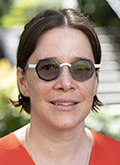
caption: Every Ocean HughesThe Weitzman School has appointed artist Every Ocean Hughes the Keith L. and Katherine S. Sachs Visiting Professor in the department of fine arts for the 2021–2022 academic year.
“Our students have gotten to know a dazzling array of artists since we hosted the inaugural Sachs Visiting Professor back in 2016,” said Fritz Steiner, Dean and Paley Professor at the Weitzman School. “We’re delighted for Every to join the Penn community.”

Every Ocean Hughes (EOH), formerly known as Emily Roysdon, is based in Stockholm, where she was a professor of art at Konstfack University College of Arts, Crafts, and Design from 2013-2021. Her work has included performance, photography, video, printmaking, and site-specific installations. Beyond these media, her expansive output has also included curating exhibitions, as well as such projects as designing costumes for the band Le Tigre and a collaborative performance with the singer/songwriter Colin Self. Written text has also been a core part of EOH’s practice; she was a founding member of the queer feminist journal and artist collective LTTR.

In many of her works, EOH mines the history of 20th-century avant-garde activities that took place in both institutional and public spaces. In particular, she is drawn to the ephemeral history of queer activists and artists. Another ongoing concern is the recognition of the complexities of identity, which often manifests in works that explore the intersection of physical movement and political action.

“For the recent four years, I have been researching in a field I call queer death, addressing questions of self-determination, mutual aid, survival, diverse kinship, and accountability. In these times of pandemic, uprisings, and deep conflict, I find this work even more engaging and relevant,” said EOH.

“Every Ocean Hughes is centrally concerned with affectivity in all its valences,” said Ken Lum, Marilyn Jordan Taylor Presidential Professor and chair of fine arts at Penn. “Through her art and writing, she seeks to disrupt discursive regimes wherever and whenever they appear. Her work challenges the idea that lived experience can be reduced to codified systems or articulable forms. Her work appears in the gaps within and between rules.”

At Penn, EOH will engage with graduate students in the department of fine arts. In the spring of 2022, she will give a public lecture and lead a seminar that culminates in a student-immersive trip.

EOH is represented in Witch Hunt, an inter- national group exhibition on view at the Hammer Museum and Institute of Contemporary Art, Los Angeles, through January 9, 2022. Over the coming two years EOH will be included in exhibitions at Studio Voltaire in London, and Moderna Museet in Stockholm. Her work has been included in numerous exhibitions internationally, including recent exhibitions at the Institute of Contemporary Arts, London; Tate Modern, London; and KW Institute for Contemporary Art, Berlin.

From the President, Provost, Senior EVP, and EVP for UPHS: Update on the Omicron Coronavirus Variant

December 1, 2021

We are extremely grateful for the extraordinary efforts of every member of our community as we navigated a very unusual, yet exciting and inspiring, fall semester. With our return from Thanksgiving Break and as we head into the final weeks of the semester, we know there are concerns about the new Omicron variant. We want you to know that we are working closely with Penn Medicine and our public health experts to monitor and respond to this situation as it evolves.

As the first line of defense, we strongly encourage everyone to get a booster shot and to be tested. We are currently in the final stages of planning a free clinic for booster vaccines in the weeks ahead and will share information as soon as the details are finalized.

We also continue to offer screening tests. As a reminder, tests are available to everyone on campus, at no cost, with no appointment. All students are required to undergo testing at least once every two weeks and will receive a Red Pass if they are not tested within two weeks after Thanksgiving. You can learn more on the Penn Cares Testing Program website.

We have made great progress working together, by following guidance on testing, masking, using OpenPass, and engaging in limited social gatherings. These measures remain more important than ever, especially as we near semester’s end and the return of many to their homes and families. We will keep you updated on any new developments. In the meantime, please know that we are continuing to monitor the developing situation to best support the Penn community.

—Amy Gutmann, President
—Beth Winkelstein, Interim Provost
—Craig Carnaroli, Senior Executive Vice President
—J. Larry Jameson, Executive Vice President for the Health System

Information Systems and Computing Fiscal Year 2023 Rate Update

Labor Rates: ISC is proposing a 3% increase to labor rates for FY23, after holding rates steady for the past two years. The proposed increase is consistent with annual increases in the past and in line with our expected increase in compensation.

—Tom Murphy, Vice President for Information Technology and University Chief Information Officer (CIO)

Applications for College House Fellows Due by January 31, 2022

The Offices of the Provost and the College Houses and Academic Services (CHAS) invite applications for service as a College House fellow in the 2022-2023 academic year. This is a residentially-based service opportunity that carries a renewable two-year term.

Faculty applicants from all 12 of Penn’s schools are welcome to apply. The most important qualification is an enthusiastic interest in mentoring and engaging undergraduate students within the residential setting.  Members of the University’s faculty and full-time administrative staff in academic or student affairs who will be in their positions for at least two years are also welcome to apply.

College house fellows play a key role in connecting the houses to the larger academic community at Penn. Fellows are responsible for working with the faculty director of their college house to develop each house as an educational resource that encourages intellectual inquiry, promotes academic programs in residence, fosters faculty and student interaction and builds strong, supportive house and CHAS communities. Specific responsibilities will differ from house to house, but the general time commitment is approximately 10 hours per week.

For these highly-sought-after positions, the selection process can be quite competitive. Applicants are reviewed by the Undergraduate Deans, Vice Provost for Education, the executive director of College Houses and Academic Services, the College House’s faculty director, and selected College House community members, including house director and student residents.

Information about each college house, the fellow position, and the application process may be found at www.collegehouses.upenn.edu.  Please explore the “join us” section of the website for position information. If you have any questions please contact Lisa Lewis, faculty director of College Houses and Academic Services (lisaml@nursing.upenn.edu) or Karu Kozuma, executive director of College Houses and Academic Services (kozuma@upenn.edu). The application deadline is January 31, 2022.

Deaths

Marley Goldschmidt, Annenberg School

caption: Marley GoldschmidtMarley Elizabeth Goldschmidt, a former financial administrator in Perelman School of Medicine and, most recently, the Annenberg School for Communication, passed away on November 14. She was 30. 

Born in Bryn Mawr, Ms. Goldschmidt attended St. Denis Elementary School and Merion Mercy Academy, where she was an honors student and won a French award. She then attended the Schreyer Honors College of Penn State University, where she earned bachelor’s degrees in economics and political science and minored in French. After graduating in 2012, she earned a master in law degree from Penn’s Carey Law School, graduating in 2018. 

In 2015, Ms. Goldschmidt joined Penn’s staff as a financial administrative coordinator in the department of psychiatry in the Perelman School of Medicine. In 2019, she moved to the Annenberg School, where she served as a business communicator in the school’s office of finance. 

Ms. Goldschmidt “was known by faculty, students, and staff alike for her depth, charisma, trustworthiness, fun personality, and ability to handle complex problems with skill and poise,” said an online tribute from the Annenberg School. “She was an invaluable member of the school’s business team.” 

“We are truly devastated as a community,” said Annenberg School Dean John L. Jackson, Jr. “Not only was Marley a confident person, but she inspired confidence in everyone she worked with. No matter how big the problem, everyone knew that Marley would get to the bottom of it with a smile on her face.” “Marley was not only an incredibly intelligent and skilled employee, she was a dear friend to so many of us,” said Patty Lindner, executive director of finance & facilities operations at the Annenberg School, “and that is what we will miss most.”

Outside of Penn, Ms. Goldschmidt loved cooking, hiking, and her beloved dog Mikey, whom she rescued from the streets of Puerto Rico. 

A viewing was held on November 20. In lieu of flowers, gifts may be made to the Kyle Ambrogi Foundation, P.O. Box 1554, Havertown, PA 19083 or at www.kyleambrogifoundation.org. Supporting this organization helps expand its mission to promote education and awareness of depression in teens and young adults and promote suicide prevention.

--
To Report A Death

Almanac appreciates being informed of the deaths of current and former faculty and staff members, students and other members of the University community. Call (215) 898-5274 or email almanac@upenn.edu.

However, notices of alumni deaths should be directed to the Alumni Records Office at Suite 300, 2929 Walnut St., (215) 898-8136 or email record@ben.dev.upenn.edu.

Governance

University Council Meeting Coverage

A University Council meeting was held on Wednesday, December 1 in Bodek Lounge, Houston Hall. President Amy Gutmann welcomed attendees and introduced Interim Provost Beth Winkelstein. Dr. Winkelstein provided an update on the University’s work to related to the Omicron COVID variant and noted that a University notification on the topic had been sent earlier that day.

Lizann Boyle Rode, associate vice president in the Office of the University Secretary, read responses to topics raised by council members at the November University Council meeting.

Senior Vice President for Development and Alumni Relations John Zeller reported on The Power of Penn campaign. He described campaign highlights, discussed donor engagement, and highlighted new buildings  and  renovation  projects it made possible. Mr. Zeller stated that 41,000 alumni made first-time gifts during the campaign and announced Penn’s post-campaign strategy.

During the open forum portion of the meeting, eight speakers addressed the following topics: transfer student housing; support for Greek life at Penn; making Election Day a University holiday; mandatory consent education and centralization of resources to prevent sexual assault; strengthening Penn’s climate action response, including a complete divestment from fossil fuels; creation of a cultural center for Native and Indigenous students; climate action as a means to support international students; and the enhancement of climate courses. Responses from the administration will be provided at the next University Council meeting in February.

Policies

Of Record: Rules Governing Final Examinations

The Rules Governing Final Examinations govern final examinations at the University of Pennsylvania. These rules are published each semester as a reminder to the academic community.

The Fall 2021 Final Examination schedule is available at https://srfs.upenn.edu/registration-catalog-calendar/final-exams. Students should confirm the exam format and time with their instructors for all courses.

1. No instructor may hold a final examination nor require the submission of a take-home final exam except during the period in which final examinations are scheduled; when necessary, exceptions to this policy may be granted for postponed examinations (see 3 and 4 below). No final examinations may be scheduled during the last week of classes or on reading days.

2. No student may be required to take more than two final examinations on any calendar day during the period in which final examinations are scheduled. If more than two are scheduled, the student may postpone the middle exam. If a take-home final exam is due on a day when two final examinations are scheduled, the take-home exam shall be postponed by one day.

3. Examinations that are postponed because of conflicts with other examinations, or because more than two examinations are scheduled on the same day, may be taken at another time during the final examinations period if the faculty member and student can agree on that time. Otherwise, they must be taken during the official period for postponed examinations.

4. Examinations that are postponed because of illness, a death in the family, for religious observance or some other unusual event may be taken only during the official periods: the first week of the spring and fall semesters. Students must obtain permission from their Dean’s office to take a postponed exam. Instructors in all courses must be willing to offer a make-up examination to all students who are excused from the final examination.

5. No instructor may change the time or date of a final exam without permission from the appropriate Dean.

6. No instructor may increase the time allowed for a final exam beyond the scheduled two hours without permission from the appropriate Dean.

7. No classes or required class activities may be held during the reading period.

8. The first examination of the day begins at 9 a.m. and the last examination concludes by 8 p.m. There will be one hour between exam time blocks.

9. All students must be allowed to see their final examination. Exams should be available as soon as possible after being graded with access ensured for a period of at least one regular semester after the exam has been given. To help protect student privacy, a student should have access only to their own exam and not the exams of other students. Therefore, for example, it is not permissible to leave student exams (or grades or papers) in publicly accessible areas.

10. Students may not be asked for their Social Security numbers. Instructors may not publicly display a student’s Penn ID or any portion of the Social Security number, nor use names, initials or any personally identifiable information to post grades. Even when an identifier is masked or absent, grades may not be posted in alphabetical order, to protect student privacy.

11. Final exams for College of Liberal and Professional Studies (LPS) courses must be given on the regular class meeting night during the week of final examinations. No change in scheduling is permitted without unanimous consent of all students in the class and the director of LPS. LPS final exams may not be administered during the last week of class or on a reading day.

In all matters relating to final exams, students with questions should first consult with their Dean’s office. Faculty wishing to seek exceptions to the rules also should consult with their Dean’s office.

—Beth A. Winkelstein, Interim Provost

Honors

Glenda Goodman: American Musicological Society Awards

caption: Glenda GoodmanGlenda Goodman, an associate professor of music in the School of Arts and Sciences, has won two awards from the American Musicological Society. Her book, Cultivated By Hand: Amateur Musicians in the Early American Republic, won the Lewis Lockwood Award, and her article “Bound Together: The Intimacies of Music-Book Collecting in the Early American Republic” was awarded the Alfred Einstein Award.

In Cultivated By Hand, “Dr. Goodman makes a most compelling case for the importance of the study of amateur music making and the methods used to cultivate amateur performance,” said the nomination. “Drawing on methodologies from the study of handwriting, material culture, and music prints; as well as gender studies, archival and performance studies, and more, she shows how these musical commonplace books reflect their makers’ understanding of music as a means of self-fashioning and self-presentation. She pays special attention to the role of women in amateur music collecting and performance—an area that is still underrepresented in American music scholarship, especially in relation to American music before the Civil War—and coaxes a history out of these manuscripts, getting them to reveal their secrets. Cultivated by Hand is one of the most important books published on American musical life, and it significantly enlarges our understanding of musical life in the Early American Republic.

“Dr. Goodman’s essay ‘Bound Together: The Intimacies of Music-Book Collecting in the Early American Republic’ is a rich, detailed, and beautifully researched interrogation of women’s music collecting in the post-Revolutionary period. She deftly weaves together a careful micro history of the music manuscript books created by an elite northeastern white women amateur musician (Sally Brown), with macro historical, structural, and geopolitical contexts. The life stories she documents and the musical objects she analyzes offer a compelling focus for a feminist musicology of the everyday attentive to the intimate affective and material entanglements of gender, music, and domesticity with the history of the Atlantic slave trade and global mercantile systems of exchange and extraction.”

Andrew Hoffman: Fellow, College of Physicians of Philadelphia

caption: Andrew HoffmanAndrew Hoffman, the Gilbert S. Kahn Dean of Veterinary Medicine at the University of Pennsylvania’s School of Veterinary Medicine (Penn Vet), was recognized as a newly elected fellow of the College of Physicians of Philadelphia at a reception on November 19. 

Dean Hoffman is a diplomate of the American College of Veterinary Internal Medicine, past president of the Veterinary Comparative Respiratory Society, and a member of the International Society for Stem Cell Research.

Before his arrival at the University of Pennsylvania in 2018, Dean Hoffman was the director of the Regenerative Medicine Laboratory and a professor of large animal internal medicine at Cummings School of Veterinary Medicine at Tufts University. He also held a variety of other roles over the course of his tenure at Tufts, including director of the Stem Cell Laboratory and director of the Tufts Equine Sports Medicine program. While at Tufts, Dean Hoffman established and led the first outpatient pulmonary function testing laboratory for equine and canine patients in the world, which provided world-class care for animal patients while also making important contributions in developing animal models of human pulmonary disease.

The College of Physicians of Philadelphia is one of the oldest professional medical organizations in the United States. Throughout its 234-year history, the college has provided a place for medical professionals and the public to learn about medicine as both a science and as an art. Fellows of the college are part of a distinguished legacy of leaders who have served the mission of advancing the cause of health while upholding the ideas and heritage of medicine.

Errol Lord: Marc Sanders Foundation Media Fellow

Errol Lord, associate professor and graduate chair of philosophy in the School of Arts & Sciences, has been selected as a Marc Sanders Foundation Media Fellow. Fellows were selected from a pool of 264 people applicants this year by a selection committee consisting of academic philosophers and media industry professionals.

Funded in large part by a Public Engagement Grant from the Templeton Foundation, the MSF Philosophy in the Media initiative aims to increase the presence of philosophy in print, audio, and video media by training philosophers to write and produce for the public, and by connecting philosophers to editors and commissioners in the media industry.

Penn’s Environmental Sustainability Performance: Gold Rating in STARS

Penn has completed its STARS survey for the Association for the Advancement of Sustainability in Higher Education (AASHE) and has received a Gold Rating for its 2021 submission. The STARS (Sustainability Tracking, Assessment, and Rating System) survey is a comprehensive benchmarking system developed and overseen by AASHE, and is used to framework for understanding sustainability in all sectors of higher education.

Visit Penn’s public report on the AASHE website to see where Penn excelled to earn a Gold Rating for 2021.

Perelman School: Recent Awards and Accolades

caption: Rinad BeidasRinad Beidas, director of the Penn Medicine Nudge Unit, has been named an associate editor of the journal Implementation Science. Focusing on the implementation of evidence gleaned from research into healthcare practice, Implementation Science is the flagship journal for the field, with more than 2 million direct downloads each year. Dr. Beidas, who is also founding director of the Penn Implementation Science Center at the Leonard Davis Institute of Health Economics, associate director of the Penn Center for Health Incentives and Behavioral Economics, and an associate professor of psychiatry, medical ethics & health policy, and medicine, has published more than 200 papers in the implementation science field. Her work focuses on using insights from behavioral economics and implementation science to make it easier for clinicians, leaders, and organizations to use best practices to improve the quality and equity of care and enhance health outcomes. 

caption: Yogesh GoyalYogesh Goyal, a postdoctoral researcher in genetics and bioengineering, has been selected as a 2021 STAT Wunderkind, which honors the “next generation of scientific superstars.” Dr. Goyal’s research is centered around developing novel mathematical and experimental frameworks to study how a rare subpopulation of cancer cells are able to survive drug therapy and develop resistance, resulting in a relapse in patients. In particular, his work provides a view of different paths that single cancer cells take when becoming resistant, at unprecedented resolution and scale. This research aims to help devise novel therapeutic strategies to combat the challenge of drug resistance in cancer.

caption: Sarah TishkoffSarah Tishkoff, the David and Lyn Silfen University Professor in genetics and biology, and an international group of collaborators has been awarded $2.7 million from the Chan Zuckerberg Initiative’s Donor Advised Fund. Hers is one of 16 new projects funded by the initiative that will provide insights into how genetic ancestry influences health and disease at the level of our cells. Dr. Tishkoff and collaborators will study gene expression and epigenetic variation in African immigrant populations in Philadelphia, Detroit, and Belgium, as well as populations from Morocco and Tanzania. This project provides a unique opportunity to distinguish how genetics and environment impact gene expression and immune response in each of these populations, increasing the understanding of variable risk for multiple diseases.

Max Wragan: Mitchell Scholarship

caption: Max WraganPenn senior Max Wragan has been selected as one of 12 in the nation to receive a George J. Mitchell Scholarship for graduate studies in Ireland.

Sponsored by the U.S.-Ireland Alliance, the scholarship covers tuition and accommodations, as well as stipends for living expenses and travel, for one academic year of postgraduate study in any discipline offered by institutions of higher learning in Ireland and Northern Ireland.

Ms. Wragan, from Washington, D.C., is majoring in neuroscience and minoring in chemistry in the School of Arts & Sciences. With the scholarship, she plans to pursue a master’s degree in neuroscience at Trinity College Dublin to study the impact of inflammation on chronic pain. She eventually plans to pursue an MD/PhD in neuroscience.

For her research, Ms. Wragan has been awarded the 2021 Goldwater Scholarship, a grant from the Pincus-Magaziner Family Undergraduate Research and Travel Fund, and the Ruth Marcus Kanter College Alumni Society Research Grant. She has been a research assistant since May 2020 at the Children’s Hospital of Philadelphia. She also has conducted research through summer internships at George Washington University Hospital, Pomona College, and the Royal Botanic Garden Edinburgh in Scotland. Ms. Wragan is the president and founder of the student-led Satellite Learning Program, a virtual service that provides free one-on-one tutoring to K-12 students, for which she received the Student Creativity Grant from the Sontag Center for Collaborative Creativity. She founded a branch of this program at Penn that tutors homeless youth in Philadelphia. Ms. Wragan also tutors biology and chemistry at Penn and volunteers at the Philadelphia Veterans Administration Hospital’s spinal rehabilitation clinic.

The Mitchell Scholarship, named in honor of former U.S. Senator George Mitchell, is designed to introduce and connect future American leaders to Ireland while recognizing and fostering intellectual achievement, leadership, and a commitment to community and public service. Ms. Wragan applied for the scholarship with the support of Penn’s Center for Undergraduate Research and Fellowships. She is the fifth Penn student to receive the scholarship since the inaugural class in 2001.

Bo Zhen: 2021 ICO Award

caption: Bo ZhenBo Zhen, assistant professor and Elliman Faculty Fellow in the department of physics and astronomy in the School of Arts & Sciences, was announced as the 2021 winner of the International Commission for Optics (ICO) Award. Dr. Zhen was selected for his pioneering research on optical bound states in the continuum, exceptional points, and other topological states in photonics.
Dr. Zhen’s research focuses on using tools in experimental nano-photonics to attack problems in condensed matter physics and quantum electrodynamics, with an eye on their practical applications.

The prize was established in 1982 and is awarded to individuals who have made a noteworthy contribution to optics, published or submitted for publication before he or she has reached the age of 40.

Features

Student Registration and Financial Services Opens Student Service Center

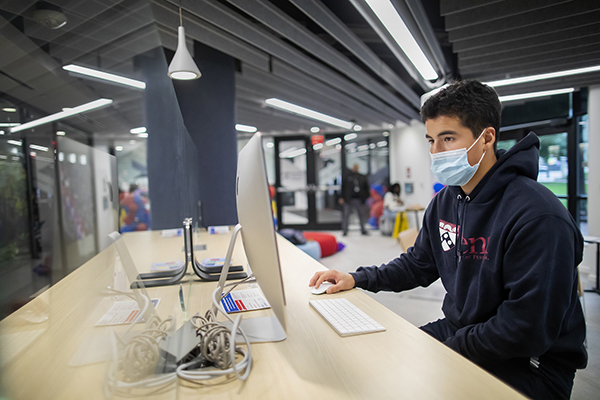
The door to the new Student Service Center opens up to a bright space. There are large windows, workstations with available computers, lots of outlets for device charging, and low-slung ottomans in blue and red. A blonde wood waterfall-style bar runs through the center, offering information on work-study programs along with student publications. Students are scattered throughout the space, either being helped by counselors or quietly working on their own. While the center serves students in three main areas, representing the Bursar’s Office, the Registrar’s Office, and Student Registration & Financial Services, students are also encouraged to hang out, to make this space their own. They are welcomed not only by the staff but also with snacks, a seltzer dispenser, and seasonal decorations.

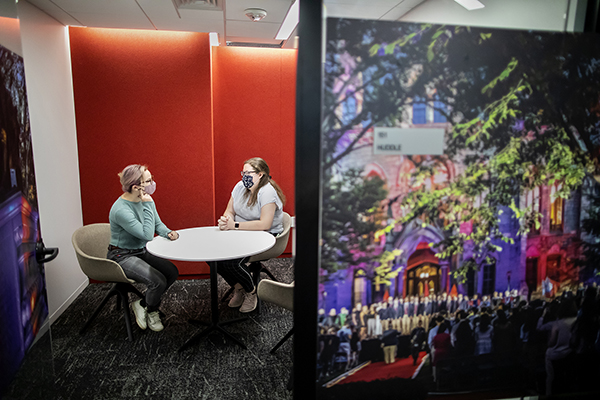
caption: Financial Wellness Program Manager Lyndsi Burcham (right) speaks with peer counselor Dana Kimmelman in one of the Student Service Center’s “huddle rooms.” Photographs by Eric Sucar.

It’s quite a dramatic change from the old Franklin Building. “The office felt like a doctor’s office, right?” said Paul Richards. “You sit and you wait, you know a little bit anxiously.” The physical transformation of this space is meant to evoke a different set of emotions, a sense of calm and confidence. Talking about finances, he said, “shouldn’t start from a place of anxiety.”

For MaryFrances McCourt, opening the Student Service Center has been a long-time dream. “The newly renovated space is a welcoming, modern front door to Student Registration & Financial Services,” said Ms. McCourt, Penn’s senior vice president of finance and treasurer. “Our goal is to provide world-class service to our world-class students, faculty, and staff, and this space and our team of service center counselors are really transforming the customer experience for our community.”

“The space itself is designed to be contemporary but comfortable,” said Jeffrey Greenberg, senior director of the Student Service Center. Some of the feedback his team received was that students were bouncing around from building to building, unsure of where to go or what forms to fill out, and wanted one-stop shopping. “One of the things that a student might visit for is a scholarship check,” he said. “And they might wander in holding it and looking around. It’s nice for them to be able to hand it to a person, as opposed to dropping it in the mailbox, and then you’re not entirely sure what happens to it. Those sorts of touches can be a personalized experience that may have been missing before.”

Originally slated to open in the fall of 2020, the center began welcoming students in September 2021, Monday through Friday, 9 a.m. to 5 p.m. Walk-ins are encouraged. Once the concierge in the building entrance checks that all visitors are adhering to Penn’s COVID guidelines, students can check in at one of two kiosks with their PennCards. They’re placed in a queue, and when counselors become available they greet the students by name. The counselor quickly assesses whether or not they can answer the student’s question or if they need to call in a subject matter expert from another office. In addition to the desks, there are also three “huddle rooms” with partial privacy banners. The huddle rooms are used temporarily and repeatedly, for multiple purposes. “You don’t have to book it,” Mr. Richards said. “Is the door open? Great, go.”

caption: A student uses one of the workstations in the Student Service Center’s student lobby.

There is also a veterans’ lounge, a dedicated office to serve the veteran and military-affiliated population at Penn for the almost 300 students taking advantage of VA benefits, said Stephanie Brocklehurst, the center’s associate director. This includes students who are veterans themselves as well as undergraduates whose parents have transferred their benefits.

“The theory behind this space is a one-stop shop with a series of generalists who are able to solve the majority of student issues, concerns, questions in that first encounter,” Mr. Richards said. “And if not, to quickly get them to the expert who can.” The idea is to limit the number of touches and enhance the service experience so that students are leaving with their issue actually resolved, he said.

“After the past year and a half of doing everything virtually,” Mr. Greenberg said, “it’s a good feeling to be able to look somebody in the eye and get a personal experience with someone, a real person with a name, with whom you can follow up and know that you’ve met them before.”

One of these real people is Wynter Adams, one of five peer counselors employed as student workers by the Financial Wellness @ Penn program, which uses the space for educational programming. On the topic of personal finance, “a lot of people come in to talk about one thing and need help with another,” Ms. Adams said. Investing is a trending topic, so students will come in for that, but in the short term they might need help with budgeting, she said, referencing a recent interaction. “We ended up just having a conversation about how do you do price comparisons on groceries.”

Originally from Statesville, North Carolina, Ms. Adams is earning her master’s degree in environmental studies, concentrating in resource studies. It’s a “great experience being able to connect with people and help them,” said Ms. Adams. “My mom is an accountant, so she always made finances less intimidating for me.” Her college friends didn’t have the same relationship to money, Ms. Adams said. “They were really, really intimidated and just put it off until they had to do something about it. That really connected me to the mission of financial wellness.”

Psychology major Mennal Zafar is a financial wellness program associate who has used the service center herself. A junior from Brooklyn, New York, she wanted to drop a class but was unsure if she would still be considered a full-time student with fewer credits. The counselor “sat down, gave me a lot of assurance,” Ms. Zafar said. “For anyone who is struggling with navigating the financial aid process, it’s definitely worth it.”

In addition to financial wellness peer counselors, the center employs 10 full-time staff members, in addition to the 11th counselor dedicated to veteran’s affairs. The counselors spend part of their time in the back office answering email and phone queries and the other part meeting students. “It’s been a very rewarding experience,” service center counselor Susan Mclaughlin said. “When someone comes in, right away you have a whole different rapport with somebody. You’re not just having that verbal contact, you’re having non-verbal contact. You can get a better feel for what their concern is.”

“My favorite thing is sitting at the front counter and seeing students when they come in,” Ms. Mclaughlin said. She loves “that satisfaction of helping them on the spot.” The center makes her feel like she’s part of something bigger. “We’re here to service the students and to do that in person is really nice,” she said.

Adapted from an article by Kristina García in Penn Today, November 5, 2021.

Events

SHOP PENN: Gift Guide and Days of Deals

’Tis the Season to eat, shop and be merry! SHOP PENN Days of Deals being held through December 14, features 12 days of sales and giveaways from our collection of eclectic stores and restaurants around campus in celebration of the season. Watch for special events, discounts, and contest giveaways, or check out the SHOP PENN Gift Guide to find the perfect present to purchase locally for the holidays.

Follow SHOP PENN on Instagram, Facebook, and Twitter (@shopsatpenn) for more details and a chance to win gift cards to our retail locations throughout this week.

Visit https://www.shopsatpenn.com/shop-penn-days-deals.

Update: December AT PENN

Exhibits

Penn Museum
Info: https://www.penn.museum/calendar/.

10        Graduate Guide Highlights Tour; 2 p.m.

            Virtual Global Guide Tour: Asia Galleries; 2:30 p.m.

11        Asia Galleries Tour; 11 a.m.

            Global Guide Tour: Africa Galleries; 2:30 p.m.

12        Mexico & Central America Gallery Tour; 11 a.m.

            Global Guide Tour: Middle East Galleries; 2:30 p.m.


Fitness & Learning

8          Financial Security: Concerns of a Retiring and Retired Faculty; Fran Berg, PSOM; Mitch Marcus, CIS; and Matthew Taylor, Permit Capital Advisors, LLC; discuss planning for retirement; 3:30 p.m.; online webinar; info: https://provost.upenn.edu/pasef/events-2021-2022 (Penn Association of Senior and Emeritus Faculty).

11        Addressing Discrimination in the Aisan Diaspora; a collaborative discussion for educators about Asian and Asian American discrimination issues; 10 a.m.-2 p.m.; virtual; register: https://bit.ly/umicheastasia21 (AARC, PAACH).


On Stage

10        A Toast to Dear Old Penn; Platt Student Performing Arts House’s annual Carnegie Hall showcase, offering a diverse sampling of the best of Penn student performing arts; 7:30 p.m.; online livestream; watch: https://pennlivearts.org/events/toastdearoldpenn-watch.php (Platt House).


Talks

7          Synthetic Data: Anonymisation Groundhog Day; Carmela Troncoso, EPFL Switzerland; noon; Zoom webinar; info: cherylh@cis.upenn.edu (Computer & Information Science).

            Actions of Homeo and Diffeo Groups on Manifolds; Lei Chen, University of Maryland; 5:15 p.m.; Zoom webinar; info: https://tinyurl.com/chen-talk-dec-7 (Mathematics).

8          Galaxy Evolution and Cosmology via the 21 cm Line of Atomic Hydrogen; Martha Haynes, Cornell; 3:30 p.m.; Zoom webinar; join: https://tinyurl.com/hayes-talk-dec-8 (Physics & Astronomy).

            An Arithmetic Count of Rational Plane Curves; Kirsten Wickelgren, Duke University; 3:45 p.m.; room A1, DRL (Mathematics).

9          Data Compression: From Classical to Modern; Aaron Wagner, Cornell; 11 a.m.; Zoom webinar; join: https://tinyurl.com/wagner-talk-dec-9 (Electrical & Systems Engineering).

            Improving Care Coordination for Patients with Complex Specialty Care Needs: Inflammatory Bowel Disease as a Case Example; Shirley Cohen-Mekelburg, University of Michigan; noon; Zoom webinar; register: https://tinyurl.com/cohen-mekelburg-dec-9 (Perelman School of Medicine).

            Topological Quantum Phases, Novel Superconductors, and Ultra-Thin Films Beyond Graphene; Arun Bansil, Northeastern University; 12:30 p.m.; auditorium, LRSM Building (Materials Science & Engineering).

            Mitochondrial Dysfunction in Sepsis-Induced Lung and Multi-System Organ Failure; Scott Weiss, CHOP; 4 p.m.; BlueJeans webinar; join: https://bluejeans.com/574742202120/831444129093?src=join_info (Penn-CHOP Lung Biology Series).

            A Hidden Cultural Lens: Investigating Museum Science Displays; Lizzie Oakley, anthropology; 5:30 p.m.; Facebook livestream; info: https://www.penn.museum/calendar/1025/living-room-lecture (Penn Museum).

            Impact of Covid-19 on Women in the Workforce; Pilar Gonalons-Pons, sociology; 6 p.m.; online webinar; register: https://www.alumni.upenn.edu/PWA1209 (Penn Professional Women’s Alliance).

10        A Spectral Approach for Time-Dependent PDEs Using Machine-Learned Basis Functions; Panos Stinis, Pacific Northwest National Laboratory; 2 p.m.; Zoom webinar; join: https://upenn.zoom.us/j/91784948875 (Mathematics).

13        Diagonal for Operahedra; Guillaume Laplante-Anfossi, Paris 13; 2 p.m.; Zoom webinar; join: https://upenn.zoom.us/j/91549738223 (Mathematics).

            The African-Descended Contribution to Cuban Independence; panel of speakers; 4 p.m.; Microsoft Teams webinar; join: https://tinyurl.com/clals-talk-dec-13 (Center for Latin American & Latinx Studies).

14        Architected Nanoscale Plates for Thermionic Energy Conversion and Relativistic Interstellar Travel; Matthew F. Campbell, mechanical engineering & applied mechanics; 10 a.m.; Zoom webinar; info: peterlit@seas.upenn.edu (MEAM).


Economics
In-person events. Info: https://economics.sas.upenn.edu/events.

8          Not a Typical Firm: The Joint Dynamics of Firms, Labor Shares, and Capital-Labor Substitution; Joachim Hubmer, economics; 4 p.m.; room 100, PCPSE.

9          New Frontiers: The Origins and Content of New Work, 1940–2018; David Autor, MIT; 3:30 p.m.; room 100, PCPSE.


Penn Dental
Online webinars. Info: https://www.dental.upenn.edu/news-events/events/.

13        Improving Medical-Dental Integration – Educationally, Professionally, Clinically: A Physician-Educator’s Perspective; Hugh Silk, University of Massachusetts; 5:30 p.m.

14        Don’t Google Your Way to Malpractice; Laurel Graham, Penn Libraries; noon.

---
Are you or your department hosting an event? Advertise it in Almanac. A listing in Almanac improves event visibility and is completely free! To submit an event for an AT PENN Calendar, email us the details at almanac@upenn.edu

Crimes

Weekly Crime Reports

University of Pennsylvania Police Department Crime Report

Below are the Crimes Against Persons, Crimes Against Society and Crimes Against Property from the campus report for November 22-28, 2021. View prior weeks’ reports. —Ed.

This summary is prepared by the Division of Public Safety and includes all criminal incidents reported and made known to the University Police Department for the dates of November 22-28, 2021. The University Police actively patrol from Market St to Baltimore and from the Schuylkill River to 43rd St in conjunction with the Philadelphia Police. In this effort to provide you with a thorough and accurate report on public safety concerns, we hope that your increased awareness will lessen the opportunity for crime. For any concerns or suggestions regarding this report, please call the Division of Public Safety at (215) 898-4482.

11/22/21

10:51 AM

3730 Walnut St

Unsecured Apple earbuds and charger taken

11/22/21

5:08 PM

231 S 34th St

Secured bike taken/Arrest

11/23/21

9:57 AM

210 S 34th St

Headlight, rear light and portable air pump taken from bike

11/23/21

1:48 PM

3400 Spruce St

Backpack taken from unsecured ambulance

11/23/21

2:25 PM

3700 Spruce St

Confidential sex offense

11/23/21

3:30 PM

4039 Chestnut St

Secured bike taken from lobby area

11/23/21

3:46 PM

51 N 39th St

Secured bike taken from bike rack

11/23/21

4:05 PM

3805-07 Walnut St

Unsecured coat and wallet taken

11/23/21

11:53 PM

4000 Walnut St

Complainant struck by two female offenders

11/25/21

8:00 AM

3101 Ludlow St

Laboratory broken into and lab items stolen

11/25/21

9:19 PM

100 S 42nd St

Theft of parked automobile

11/25/21

11:46 PM

2929 Walnut St

Apartment burglarized and jewelry, laptop, and other items stolen

11/26/21

6:40 AM

3604 Chestnut St

Merchandise removed without payment

11/27/21

9:43 AM

3401 Chestnut St

Merchandise removed without payment

11/28/21

8:43 PM

4200 Chestnut St

Automobile left running and stolen


18th District

Below are the Crimes Against Persons from the 18th District: 7 incidents (3 robberies, 2 aggravated assaults, 1 assault, and 1 rape) with 2 arrests were reported for November 22-28, 2021 by the 18th District, covering the Schuylkill River to 49th St & Market St to Woodland Avenue.

11/22/21

12:38 PM

529 S 42nd St

Assault

11/23/21

2:05 PM

3700 blk Spruce St

Rape

11/23/21

4:08 PM

3400 blk Market St

Robbery

11/23/21

10:56 PM

3131 Market St

Robbery

11/23/21

11:55 PM

S 40th & Walnut Sts

Aggravated Assault

11/24/21

11:05 PM

4764 Chestnut St

Aggravated Assault/Arrest

11/28/21

6:21 PM

4738 Osage Ave

Robbery/Arrest

Bulletins

Penn IUR Undergraduate Urban Research Colloquium: December 15 Grant Application Deadline

The Penn IUR Undergraduate Urban Research Colloquium (UURC) facilitates faculty-mentored and doctoral student-mentored, undergraduate urban-focused research. The program includes funding support for a joint research project and a semester-long, credit-bearing seminar (CPLN 528/URBS 428). The course is cross-listed between the Weitzman School of Design’s department of city and regional planning and the School of Arts and Sciences’ urban studies program. Students from each of the University’s undergraduate schools (Arts and Sciences, Engineering and Applied Science, Nursing, and Wharton) are eligible to participate, and faculty and doctoral students from across the University’s 12 schools are welcome to participate in research on a wide range of urban issues. The program will sponsor up to 10 projects each spring. Grant funds will be provided to support new and/or existing research efforts.

In the past, research projects have ranged from ethnographic studies of Philadelphia nightlife to identifying barriers to walking in disadvantaged neighborhoods to analyzing urban mass transit. UURC student-faculty collaborations have yielded publications in refereed journals, leveraged other research funding, and prepared undergraduates to pursue original research as an extension of the UURC project or in other areas.

Eligibility and Requirements

  • All standing faculty, adjunct, practice or clinical professors, and doctoral students in all Penn schools are eligible.
  • Faculty and doctoral students must identify enrolling student as part of their grant application, facilitate and supervise student research and participate in joint presentations throughout the semester.
  • Research projects must be focused on urban areas and can be drawn from a range of disciplines, including anthropology, art history, city planning, community and urban health, community development, cultural studies, demographics, design, education, economics, engineering, environmental science, finance, fine arts, geography, governance, history, historic preservation, housing, humanities, immigration, infrastructure, landscape studies, law, management, medicine, metropolitan and regional studies, natural and applied sciences, poverty, public policy, real estate, social work, sociology, transportation, and urban studies.
  • The seminar meets twice per week.

Grant Support

Grants (up to $2,000) will be available to support joint research projects. Grants may not be used for direct student compensation during the period of the course, but may be used for a student stipend during ongoing summer research.

Application instructions are available online at https://penniur.upenn.edu/instruction/uurc. The deadline to apply is Wednesday, December 15.

DPS Walk Back Program

The Division of Public Safety will be offering the Public Safety Walk-Back Program during reading days and final exams, from December 11 to December 22, 2021. An Allied Universal public safety officer will be posted at the “Button” on Locust Walk from 10 p.m. until 3 a.m.

Approximately every half hour the officer will enter Van Pelt-Dietrich Library to offer walking escorts to anyone in the building. The officer will then perform the escort and return to repeat the process.

The Division of Public Safety is providing this service in addition to its normal walking escort programs. Uniformed Allied Universal public safety officers provide escorts to campus locations. Officers are dispatched by radio and will accompany you from one campus location to another, to a Penn Transit Stop or to an on-campus SEPTA regional transit stop. Walking Escorts are available, 24 hours a day, 7 days a week. To request a Walking Escort, call (215) 898-9255 (898-WALK).

For more information, visit https://www.publicsafety.upenn.edu/about/security-services/walk-back-program/.

Penn's Way Final Raffle Prize Drawing

Penn's Way logo

Visit https://pennsway.upenn.edu for more information.

Final Drawing—November 29

  • Thermo Fisher Scientific: Gift card to Old Navy ($50 value): Karleigh Pettit, Development & Alumni Relations/Penn Medicine
  • Thermo Fisher Scientific: Gift card to REI ($50 value): Emily Steffenino, CPUP Ortho
  • Specialty Underwriters: Bluetooth Speaker ($80 value): Elaine Spiro, Human Resources
  • Thermo Fisher Scientific: Gift card to restaurant ($50 value): Zaima John, HUP Nursing
  • Thermo Fisher Scientific: Gift card to restaurant ($50 value): Paula Young-Foster, Penn Care at Home Team
  • PDC Graphics: Gift card to Oyster House ($50 value): Emma Harnitchek, HUP Nursing
  • Advanced Office Environments: Gift card to Target ($50 value): Chia-Huai Cheng, Facilities & Real Estate Services
  • Soul Cycle: Two one-day passes ($68 value): Erin Marturano, HUP Oncology
  • Hip City Veg: Gift card ($20 value): Christopher Kron, Pennsylvania Hospital
  • MilliporeSigma: Amazon gift card ($50 value): William Ramirez, Information Systems & Computing
  • ThermoFisher: Gift card to Philadelphia Runner ($100 value): Ramon Diaz-Arastia, Perelman School of Medicine
  • Thermo Fisher Scientific: Gift card to Fearless Restaurants ($100 value): Jo-Ann Verrier, Penn Carey Law School
  • Docuvault: Target gift card ($50 value): Christian Vandervort, Division of Public Safety

Penn's Way 2022 logo

Summer Camps and Programs at Penn

Almanac publishes a supplement early each year featuring the camps and programs taking place at Penn over the summer. Offerings listed are camps for children, teens and young adults for an array of activities, from academics, enrichment and recreation—including anthropology, business, law, veterinary medicine and music—to numerous sports camps. To submit information about a camp, email almanac@upenn.edu with the following information: name of camp; dates held (if multiple sessions, indicate dates for each); age range for participants; summary of the program that is 35 words or less; cost (note any discounts); URL for enrollment/application forms; deadline to apply/enroll (if applicable); email, link, and/or phone number for more information.

Winter Break Hours of Operation of Penn Services and Facilities 2021-2022

Arthur Ross Gallery: Closed December 20-January 27. Next exhibition opens January 28 with an opening reception.

Hospitality Services: Closed December 24; re-opens January 4 at 9 a.m. Info: www.upenn.edu/hospitalityservices.

Hilton Inn at Penn: Open and operating on a regular schedule. Info: www.theinnatpenn.com.

Houston Hall: December 22: 7 a.m.-8 p.m.; December 23: 7 a.m.-6 p.m.; Closed December 24-January 4; January 5-7: 7 a.m.-8 p.m.; January 8: 10 a.m.-6 p.m.; January 9: 10 a.m.-midnight; regular hours resume January 10.

Morris Arboretum: Open daily 10 a.m.–4 p.m. Closed December 24, December 25, December 31 and January 1. Info: www.upenn.edu/arboretum.

Newman Catholic Center: Closed December 24-January 3.

Penn Bookstore: Open 10 a.m.-6 p.m. December 26-January 4, except closes at 5 p.m. December 24 and 31. Closed December 25 and January 1. Info: www.upenn.edu/bookstore.

PennCard Center: Closed starting December 23 at 5 p.m. and reopens at 8:30 a.m. on January 5. To report a lost or stolen PennCard when the PennCard Center is closed, please call Penn  Public Safety at (215) 573-3333. Info: www.upenn.edu/penncard.

Penn Dining/Bon Appetit: Info: https://dining.business-services.upenn.edu/locations-hours-menus/locations

Penn Ice Rink at the Class of 1923 Arena: Closed December 24-25 and January 1. Check public skating and freestyle sessions at www.upenn.edu/icerink.

Penn Live Arts Box Office: Closed December 23-January 4.

Penn Mail Services: Outgoing mail received in Penn Mail Services after 11 a.m. December 23 will be delivered to USPS on December 28. Closed December 24 and 27. Special delivery schedule is in effect December 28, 29, 30 and January 4. On December 30 mail will be delivered to USPS on January 4. Closed December 31 and January 1 with regular scheduling resuming January 5. Permit mailings during the Special Winter Break from external vendors needing Penn Mail Services signatures must have paperwork completed and signed by 4 p.m. on December 22.

Penn Museum: Info: www.penn.museum/visit/plan-your-visit.

Penn Parking Services: The Parking Office closes December 24 at 5 p.m. and reopens January 4 at 8:30 a.m. Permit holders will have access to their garage at all times during the Winter Break. Contact the Operations Office at (215) 898-6933 for operational assistance to access your parking garage during this period. December 26 through January 3 (excluding January 1), the Penn Museum and Walnut 40 Garages will be open for visitor parking from 8 a.m. to 10 p.m.  Regular hours resume on January 4.

Penn Transit Services: Closes December 24 at 6 p.m. Regular hours resume on January 5 at 3 a.m. Limited transportation service is available December 25 to January 4, 6 p.m.-7 a.m., excluding Dec. 31. Request service on PennRides On Request or call (215) 898-RIDE (7433). Info: www.upenn.edu/PennTransit.

Procurement and Travel Services: Closed December 24 and 25. Service is available weekdays December 26 through December 31, from 9:30 a.m.–1:30 p.m. Closed January 1-January 4.

Residential Services Offices: Closed December 24 and re-opens January 4. Info: www.upenn.edu/housing.

Sheraton Philadelphia University City Hotel: Open and operating on a regular schedule. Info: http://www.philadelphiasheraton.com/.

Student Registration and Financial Services (Student Financial Services and Office of the University Registrar): Closed December 24-January 4; otherwise, Mondays, Wednesdays-Fridays: 9 a.m.-5 p.m.; Tuesdays: 10 a.m.-5 p.m.

Student Health Services: Info: https://shs.wellness.upenn.edu/. After hours, call (215) 746-3535 (Press Option 3).

World Travel: Agents available 24 hours, every day; book travel online through Concur or call World Travel directly at (888) 641-9112.

Van Pelt-Dietrich Library: Info: https://www.library.upenn.edu/about/hours/vp.

Back to Top