News

A Message to the Penn Community Regarding Commencement

November 11, 2021

COVID-19 moved many of our Penn traditions online. It curtailed in-person Commencement for both the Class of 2020 and the master’s and doctoral students in the Class of 2021.  

We are now absolutely delighted to announce that we will hold an in-person University-wide Commencement ceremony for the Undergraduate Class of 2020 as well as for graduate students from the Classes of 2020 and 2021. The ceremony will take place on Sunday, May 22, 2022 at 10 a.m. on Franklin Field.  

Throughout the pandemic, our students worked hard and persevered with grace—and now we will honor their tenacity and wisdom by holding the graduation they so richly deserve. We are pleased to celebrate their distinguished academic achievements as we join their friends and family on Franklin Field to honor their resilience and patience with a very special one-of-a-kind celebration. 

Registration will be required, and we will be sending those details and more very soon. The Penn community looks forward to this long-awaited celebration, so please mark your calendar—Sunday, May 22. Details will also be made available at http://www.alumni.upenn.edu/2020grad2021.

—Amy Gutmann, President 
—Beth Winkelstein, Interim Provost 
—Medha Narvekar, Vice President and Secretary

Emily Hannum: Stanley I. Sheerr Term Professor in the Social Sciences

caption: Emily HannumEmily Hannum, professor of sociology, has been appointed Stanley I. Sheerr Term Professor in the Social Sciences. Dr. Hannum is a sociologist and demographer whose research focuses on poverty and child welfare, social stratification, and sociology of education, particularly in China. Her work in China includes long-term primary data collection on the educational experiences of children in poor rural communities and analyses of gender, ethnic, and urban-rural stratification. She has served on the board of directors of the Population Association of America and the Comparative and International Education Society, and as chair of the Asia and Asian America section of the American Sociological Association. At Penn, Dr. Hannum also holds a secondary appointment in the Graduate School of Education. She is currently serving as Associate Dean for the Social Sciences in the School of Arts & Sciences. 

The Stanley I. Sheerr Term Professorship in the Social Sciences is named for the late Stanley I. Sheerr, W’37, the former chair of Crown Textile Company. The Sheerr Pool at Penn is also named after him. When Dr. Sheerr passed away in 1984, his family established this chair in his memory. Frances Sheerr passed away in 1989, but her two children—Richard C. Sheerr, C’69, a former member of the Penn Arts & Sciences Board of Advisors, and her daughter, Constance Sheerr Kittner, CW’61, remain active Penn supporters.

Pilar Gonalons-Pons: Alber-Klingelhofer Presidential Assistant Professor

caption: Pilar Gonalons-PonsPilar Gonalons-Pons, assistant professor of sociology, has been named Alber-Klingelhofer Presidential Assistant Professor of Sociology. Dr. Gonalons-Pons studies how gender, work, families, and public policies structure economic inequalities, with a particular focus on how inequalities change over time and over the life course. She received her PhD in sociology from the University of Wisconsin-Madison. Before coming to Penn in 2017, Dr. Gonalons-Pons was a postdoctoral fellow at Goethe University in Frankfurt am Main, Germany and a research affiliate at the Cornell Population Center. She has published articles in leading journals such as the American Sociological Review, Demography, and Socio-Economic Review, and her research has been funded by the National Science Foundation, the Russell Sage Foundation, and the Hewlett Foundation. 

Laura J. Alber, C’90, and Ned Klingelhofer, Penn parents, established the Alber-Klingelhofer Presidential Professorship in 2020. Laura Alber graduated from the College of Arts & Sciences in 1990 with a degree in psychology. She is a University Trustee, a member of the Penn Parents Council, and a member of the Executive Committee of the Penn Arts & Sciences Board of Advisors. Ms. Alber is Chief Executive Officer, President, and director of Williams-Sonoma, Inc. Ned Klingelhofer is a portfolio manager at Bitterroot Enterprises and a member of the Penn Parents Council. Ms. Alber and Mr. Klingelhofer’s previous Penn support includes the Alber-Klingelhofer Scholarship, the Ronald O. Perelman Center for Political Science and Economics, the Arts & Sciences Annual Fund, and Penn Athletics.

Deborah Rhebergen: Vice Dean for Advancement in the School of Arts & Sciences

caption: Deborah RhebergenSteven Fluharty, Dean and Thomas S. Gates, Jr. Professor of Psychology, Pharmacology, and Neuroscience, announced the appointment of Deborah Rhebergen to the role of Vice Dean for Advancement in the School of Arts & Sciences, effective August 2, 2021. In this capacity she is directly responsible for the planning and implementation of a comprehensive program of alumni relations, fundraising, and public relations on behalf of the school.

Ms. Rhebergen joined the School of Arts & Sciences as Associate Vice Dean for Advancement in November 2019. In that role she led the school’s major gifts team to the successful conclusion of the Power of Penn Arts & Sciences campaign. Before coming to Penn, she was Assistant Dean for External Relations at the University of Maryland College of Behavioral and Social Sciences, where she oversaw fundraising and outreach efforts for over 80,000 alumni and other constituents, as well as marketing and communication.

Ms. Rhebergen holds a master’s degree in education leadership and policy studies from the University of Maryland. She began her career managing political campaigns before returning to work in development at her undergraduate alma mater, Lafayette College.

“We know Deb looks forward to partnering with us on the opportunities ahead,” said Dean Fluharty. “Her personal passion, combined with her strong knowledge of the Penn community, has her well positioned to lead our Office of Advancement as we move into what promises to be an exciting new chapter of Penn’s history.”

From the University Leadership: Updates on the Spring Semester and Holiday Breaks

November 10, 2021 

As we head into the last weeks of the fall semester, we are writing to express our gratitude and pride for our Penn community. We have successfully transitioned back to campus life, with in-person classes and student activities. Many members of our community continued to serve on campus throughout the pandemic, others returned to full-time on-campus activity in September, and a number of staff are participating in our pilot hybrid work program. Our COVID positivity rate in asymptomatic individuals, most recently 0.34%, has been below 0.5% for the past eight weeks. Our vaccination rates for students, staff, postdocs, and faculty are all above 97%. And we have accomplished all of this while successfully adapting as a community to regular testing (twice a week for those with exemptions) and vigilant mask-wearing.

In this light, we are very pleased to inform you that the hybrid work program being piloted during the fall term will be continued for the spring semester, and we thank every member of our community for helping to sustain our historic missions of education and research during this pandemic. 

As an additional gesture of gratitude, the University winter break will be extended by two business days to include Monday, January 3 and Tuesday, January 4. Please consult your supervisor if you are defined as essential personnel or are otherwise required to work on those days, so that alternatives can be put in place for you to use these days at other times. CPUP physicians and Health System employees should follow Health System guidelines.

As we approach the holiday season, we encourage you to celebrate how far we have come in the past 18 months, while remaining cautious and vigilant about our shared public health. We strongly encourage all members of our community to have a COVID test before any holiday travel and social events. You can get a free walk-in test at any time on campus, and testing hours will be expanded to include the Sunday before Thanksgiving (November 21), as well as all three weekdays before Thanksgiving. You can find the full holiday testing schedule, including both Thanksgiving break and winter break, on the Penn Coronavirus website.  We expect to resume our gateway testing program for the community at the start of next semester; we will have more details as January gets closer. 

We thank you again for your resilience and flexibility as we move forward, and we wish everyone a joyful and safe Thanksgiving holiday.

—Amy Gutmann, President
—Beth Winkelstein, Interim Provost
—Craig Carnaroli, Senior Executive Vice President
—J. Larry Jameson, Executive Vice President for the Health System

Dedication Ceremony for “Brick House”  Sculpture by Artist Simone Leigh

caption: Charles “Chaz” Howard, Guerline Laurore, Amy Gutmann, Michael Barrett, Patricia Martín, and Taya Lowery-Williams in front of the “Brick House” Sculpture by Artist Simone Leigh.

On Saturday, November 6, 2021, the University of Pennsylvania held a dedication ceremony for the sculpture “Brick House,” located at the corner of 34th and Walnut Streets, the eastern gateway to campus.

Created by acclaimed artist Simone Leigh, “Brick House” was installed in November 2020 thanks to the generous efforts of Glenn, W’87, WG’88 and Amanda Fuhrman, C’95 (Almanac November 17, 2020). During the dedication ceremony, which was held during Penn’s Homecoming weekend, President Amy Gutmann delivered remarks highlighting the significance of adding the sculpture to the University’s campus. 

“Like the best art, it signifies different things to different people. ‘Brick House’ is a true gift to Penn and to the city of Philadelphia,” said President Gutmann. “I know this symbol of strong Black femininity is more than a symbol. It is inspiring countless conversations about her meaning and her significance. That is what a great educational institution and a great city want to do. We want to be thought-provoking, uplifting, and awe-inspiring at the same time.” 

Other speakers included Charles “Chaz” Howard, C’00, Vice President for Social Equity and Community and University Chaplain; Patricia Martín, M’85, and Michael Barrett, ENG’89, University Trustees and co-chairs of Penn Alumni’s James Brister Society; Taya Lowery-Williams, C’22, an undergraduate student and internal chair of UMOJA, an umbrella organization that represents Black students and Black student organizations at the University of Pennsylvania; and Guerline Laurore, LPS’22, a student in the executive master of public administration program at the Fels Institute of Government who is on the Board of the Graduate and Professional Student Assembly.

Dr. Howard followed President Gutmann, recounting a story from the autobiography of Nathan Mossell, the first Black graduate of the Perelman School of Medicine. “He had to sit outside the classroom. He wasn’t allowed to be seen. He wasn’t allowed to ask questions. They didn’t want to see his Black face,” Howard said. “Oh, how far we have evolved, from a season when we didn’t want to see the beauty of Blackness, to a season where we celebrate it.”

“It is such a joy today to celebrate the dedication of this beautiful work of art that affirms our belief that everyone is welcome at Penn,” said Dr. Martín.

Depicting a Black woman’s head atop a form that suggests a skirt or a building, “Brick House” is the first large-scale piece in the artist’s Anatomy of Architecture series, which merges human form with diverse architectural elements. The impressive work—which stands 16 feet high, 9 feet in diameter at its base and weighs 5,900 pounds—is the first sculpture of and by a Black woman on Penn’s campus. 

“My favorite feature is the nose,” said Ms. Laurore during her remarks. “It is notorious that the wide and flat nose is representative of people of African descent, so much so that it was broken off of the sculptures of pharaohs so we wouldn’t know what their ancestry was. Not here…The presence of the nose, wide and flat, whispers to me, and all of us who do not fit the mold of European standards of beauty, that we too belong at Penn.”

The dedication ceremony was preceded by an online panel discussion, “Deconstructing the Meaning of Simone Leigh’s ‘Brick House,’” moderated by Gwendolyn DuBois Shaw, Class of 1940 Bicentennial Term Associate Professor in the School of Arts & Sciences. 

DRC Pilot and Feasibility Grant Program: December 6

The Diabetes Research Center (DRC) of the University of Pennsylvania is now accepting applications for support to perform pilot and feasibility (P&F) studies in diabetes and related endocrine and metabolic disorders.

The application deadline is Monday, December 6, 2021, by 5 p.m.

The P&F program is intended to support new investigators and established investigators new to diabetes research. Established diabetes investigators pursing high impact/high risk projects or projects that are a significant departure from their usual work are also eligible for support under the DRC P&F program. Applications are welcome from basic, clinical, and translational investigators.

Grants will be reviewed by the DRC Pilot and Feasibility Review Committee, as well as internal and external reviewers. The funding level maximum is $50,000.

For detailed information and instructions: https://www.med.upenn.edu/idom/drc/pilots.html.

Investigators who are currently in the first year of support through this P&F Program may apply for an additional year of funding. Continuation requests need to be carefully justified and will be considered as competing renewals.

For more information, please contact Lisa Henry at henryli@pennmedicine.upenn.edu; Doris Stoffers, Director of the DRC P&F Grants Program, at stoffers@pennmedicine.upenn.edu; or Patrick Seale, Associate Director of the DRC P&F Grants Program, at sealep@pennmedicine.upenn.edu.

Women of Color Day 2022 Awards Nominations Due November 19

Women of Color at Penn logo

To Members of the University and Surrounding Community:

The National Institute for Women of Color (NIWC) has proclaimed March 1 National Women of Color Day. The University and its Health System, including Penn Presbyterian Medical Center, and Pennsylvania Hospital seek to increase awareness of the talents and achievements of women of color by recognizing them with the Women of Color Day Awards.

The Women of Color Awards are given in recognition of the individuals who have conscientiously endeavored to increase respect for women of color at Penn and the University of Pennsylvania Health System, and the Delaware Valley community. Annually, awards are  given in up to six categories:

  • Helen O. Dickens Award: must have demonstrated over 25 years of previously recognized service
  • Joann Mitchell Outstanding Legacy Award
  • Faculty/Staff Award
  • Graduate/Professional Student Award
  • Undergraduate Student Award
  • Community Member Award

Nominees must be affiliated with Penn, the University of Pennsylvania Health System, and/or the Philadelphia area and have demonstrated:

  • Outstanding leadership
  • Distinguished service
  • Positive impact on the community
  • Commitment to enhancing quality of life for and/or serving as a role model for women of color

Joann Mitchell Outstanding Legacy Award nominees must have worked with the Women of Color at Penn (WOCAP) Executive Planning Committee or have proven their support through donations, event involvement or active advocacy of WOCAP’s mission.

Nominations must be submitted on or before November 19, 2021. Applications are available online at https://mailchi.mp/44082941f253/yqk1hod46i-14985647.

Learn more about the 2022 Women of Color Day Awards Program at https://aarc.upenn.edu/women-color/women-color-awards.

—Women of Color at Penn Executive Planning Committee

Deaths

Aaron T. Beck, Perelman School of Medicine

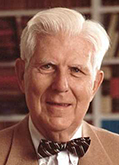
caption: Aaron BeckAaron T. Beck, emeritus professor in the department of psychiatry at the Perelman School of Medicine and the director of the Aaron T. Beck Psychopathology Research Center, died on November 1. He was 100.

Dr. Beck was born in Providence, Rhode Island. After high school, he entered Brown University, graduating summa cum laude in 1942. He embarked on a career in medicine at Yale Medical School, graduating in 1946. Although initially interested in psychiatry, he found the approaches at medical school to be unrewarding and decided on a career in neurology, attracted by the high degree of precision that characterized the discipline. During his residency in neurology at the Cushing Veterans’ Administration Hospital in Framingham, Massachusetts, a required rotation in psychiatry intrigued him with some of the more recent developments in the field. He decided to explore further developments in psychotherapy. He spent two years as a fellow at Austen Riggs Center in Stockbridge, where he acquired substantial experience in conducting long-term psychotherapy. During the Korean War, Dr. Beck moved to the Valley Forge Army Hospital, where he served as an assistant chief of neuropsychiatry.

Dr. Beck joined the department of psychiatry at Penn’s School of Medicine in 1954, becoming an assistant professor in 1958 and an associate professor in 1967. He became a full professor of psychiatry in 1971 and took emeritus status in 1992. 

Dr. Beck is known as “the father of cognitive therapy.” He initially conducted research into the psychoanalytic theories of depression, but when these hypotheses were disconfirmed, he developed a different theoretical-clinical approach that he labeled cognitive therapy. Beginning in 1959, he directed funded research investigations of the psychopathology of depression, suicide, anxiety disorders, panic disorders, alcoholism, drug abuse, and personality disorders and of cognitive therapy of these disorders. 

Dr. Beck was a member of or consultant for several review panels of the NIMH, served on the editorial boards of many journals, and lectured throughout the world. He was a visiting scientist of the Medical Research Council at Oxford and was a visiting fellow of Wolfson College. He was also a visiting professor at Harvard, Yale, and Columbia, and was a member of the Institute of Medicine. Dr. Beck had published more than 500 articles and authored or co-authored 17 books.

Dr. Beck received awards from numerous professional organizations and was the only psychiatrist to have received research awards from both the American Psychiatric Association and the American Psychological Association. He has also received the Heinz Human Condition Award, the Lasker-DeBakey Clinical Medical Research Award, an honor often called “America’s Nobels,” and the Adolf Meyer Award, the American Psychiatric Association’s most prestigious award. Dr. Beck was awarded two honorary degrees, a doctor of medical science from Brown University and a doctor of humane letters from Assumption College. Dr. Beck has appeared on numerous lists of the world’s most influential psychiatrists. He received an honorary degree from Penn in 2007.

In 1994, Dr. Beck established the Beck Institute for Cognitive Behavior Therapy in Philadelphia with his daughter, Judith Beck, to train and mentor therapists and advance the technique. She serves as its president. 

Dr. Beck is survived by his wife, Phyllis; daughters, Judith Beck and Alice Beck Dubow; sons, Roy and Daniel; 10 grandchildren; and 10 great-grandchildren.

Linda Frank, Human Resources

caption: Linda FrankLinda Frank worked in human resources from 1985 until 1988, with her last role being manager of employment/recruitment.  She then worked in the Executive Vice President’s Office for Myrna Whittington in 1988. Ms. Frank passed away on October 24. She was 66.

Raised in West Philadelphia, Ms. Frank attended the Westtown School, a Quaker boarding school in the Philadelphia suburbs, and graduated from Parkway High School. Ms. Frank began her studies at Penn Engineering in 1973 and was involved in early campus trials with personal computing.  She later completed her bachelor’s degree in sociology after a hiatus during which she married the love of her life, Leon Wallace Robbins, Jr.  Ms. Frank worked at the University in a variety of roles, including as a compensation specialist and organizational development assistant in human resources.

 In 1991, Ms. Frank earned an MBA, with an emphasis on public policy management, from the Wharton School, and the same year she accepted a position at the Pew Charitable Trusts, where she served first as an education program officer and then human resources manager. She also worked at the Redevelopment Authority of Philadelphia, and Towers Perrin. In 1999, Ms. Frank began working at AstraZeneca Pharmaceuticals in a series of progressively responsible human resources-related positions. Thereafter, she worked at Endo Pharmaceuticals as the director of human resources/strategic staffing. In 2005, she began working at the Rockefeller Foundation, where she served as the director of human resources for two years before accepting a position as a director at Glaxo-SmithKline, the company from which she retired.

Ms. Frank’s husband Leon predeceased her in June 2021.  She is survived by her children Leon Wallace Robbins III, Grace (Adam) Farrow; Rachel (Bradley) Miles, six grandchildren, two great-grandchildren, her siblings Lyria (Geoffrey) Howland, Lionel (Aseia) Frank, Laurene “Cindy” (Charles) Hill, Larry Frank, and Leslie-Anne Frank, her best friend Wanda Whitted-Smith C’77, and numerous siblings-in-law, nieces and nephews. A memorial service was held on November 6.

Governance

From the Senate Office: Faculty Senate Executive Committee Actions

The following is published in accordance with the Faculty Senate Rules. Among other purposes, the publication of SEC actions is intended to stimulate discussion among the constituencies and their representatives. Please communicate your comments to Patrick Walsh, executive assistant to the Senate Office, either by telephone at (215) 898-6943 or by email at senate@pobox.upenn.edu.

Faculty Senate Executive Committee Actions

Wednesday, November 10, 2021

Report from the Senate Tri-Chairs. Faculty Senate Chair William Braham informed SEC members that the Vice Provost for Faculty is currently conducting an all-faculty survey and asked that all faculty complete it. Individualized survey links were sent to each faculty member. Questions or assistance should be directed to provost-fac@upenn.edu. He also reported on other matters:

  • Standing faculty volunteers are still sought for the Fraternity/Sorority Advisory Board, the Almanac Advisory Board, and for the Closed Circuit Television Monitoring Committee. Interested standing faculty members should write to senate@pobox.upenn.edu.
  • Nominations are being sought for standing faculty members to serve on the spring 2022 Senate Nominating Committee.
  • Details of a forthcoming Faculty Senate seminar on issues of Academic Freedom and Open Expression will soon be announced.

Discussion and Vote on Resolution from CIRCE: The Faculty Senate Select Committee on the Institutional Response to the Climate Emergency. The resolution was further revised by CIRCE and was again shared with SEC. Upon motion and second made, the resolution was approved as amended and without dissent. The finalized resolution is published in the November 16, 2021, issue of Almanac.

Proposal to amend the Faculty Handbook to remove gender binary language. A proposal was received from the LGBTQ+ Faculty Diversity Working Group and was presented to SEC for its consideration. Following a motion and second, a discussion ensued. No vote was taken. The concerns raised during the discussion will be forwarded to the proposers for comment, and SEC will continue its consideration of the proposal at a future meeting.

All-faculty Seminar in collaboration with the Center for Teaching and Learning:  “Changing Practices of Teaching and Learning”. At 4 p.m., a Faculty Senate Seminar was held virtually and open to all Penn faculty. Archived resources from that session will soon be available on the Faculty Senate Seminar Series website.

From the Senate Office: University of Pennsylvania Faculty Senate Select Committee on the Institutional Response to the Climate Emergency (CIRCE)

Recalling that the Faculty Senate Committee on the Institutional Response to the Climate Emergency (CIRCE) was formed to facilitate discussion of all aspects of global warming and climate change as they pertain to the faculty role in shared governance at the University of Pennsylvania;

Recognizing that the University has made great progress since it commissioned a Sustainability Plan in 2005, first by committing in 2009 to achieve net-zero greenhouse gas emissions for the campus by 2042, then in 2020 committing to stop investments in thermal coal or tar sands, and most recently by committing to achieve net zero greenhouse gas emissions for Penn’s endowment investments by 2050;

Saluting our students’ leadership in calling attention to the existential threat posed by the climate emergency and in demanding effective and immediate collective action;

Noting with concern that the pace and cost of climate related disasters has increased dramatically in the last few years and that international bodies from the Intergovernmental Panel on Climate Change (IPCC) to the International Energy Authority (IEA) have called for accelerated action to reduce greenhouse gas emissions;

Observing that the investments made by the endowment constitute one of the largest sources of emissions associated with the University (see figure attached below);

Observing that the production and incineration of plastics contribute significantly to climate change and that micro-plastics are now found in every ecosystem on the planet;

The Faculty Senate Select Committee on the Institutional Response to the Climate Emergency

1) Recommends that the University Administration and Board of Trustees pursue the following actions with respect to Investing for the Climate Emergency:

a. Publicly elaborate the plan for achieving net-zero carbon in the endowment. The report promised by the administration for the end of 2021 should include a preliminary accounting of associated emissions, a process for establishing intermediate goals (1 year, 5 year, and 10 year), and a format for working with the faculty investment study group recently formed by CIRCE;

b. Consider moving the net-zero carbon deadline to 2042 or 2040 and explore how to front-load commitments to hedge against unanticipated difficulties; 

c. Explain the value of direct investments still held in fossil fuel extraction and processing companies, including the time frame of the assessment;

d. Screen against companies whose primary business is in prospecting, production, distribution and sales of fossil fuels;

e. Revise the investment menu of retirement funds for faculty and staff to include additional low-carbon investment fund options, including options excluding large firms engaged primarily in fossil fuel production, distribution, and sales, as well as to provide financial advisors to give professional, balanced individual advice about retirement options for any faculty and staff who may wish to reduce the climate impact and enhance investments in climate solutions in their retirement portfolios;

2) Recommends that the University Administration and Board of Trustees pursue the following actions with respect to University Practices and Operations:

a. Require each of the University’s schools and centers to develop individual carbon action plans, aligned with the goals of the Climate and Sustainability Action Plan (CSAP) 3.0 and to provide annual reporting toward those goals;

b. Extend the CSAP 3.0 to include the University of Pennsylvania Health System and the University’s real estate holdings;

c. Develop new faculty positions related to climate and resilience in the physical and social sciences, arts and humanities, engineering and business;

d. Increase the course offerings on climate and resilience, developing disciplinary approaches specific to each school;

e. Eliminate single-use plastics from the campus;

f. Develop a plan to replace all gasoline-powered leaf blowers with other devices, such as electric blowers and rakes, that do not emit as much carbon, particulate, dust, and noise pollutants;

3) Recommends that the University Administration and Board of Trustees pursue the following Expressions of Climate Commitment:

a. Develop visible on-campus solar photovoltaic installations to signal the University commitment to address the climate emergency;

b. Replace the campus fleet with majority electric vehicles by 2025;

c. Develop an ongoing program to invest in emissions reduction and climate resilience in West Philadelphia, to support our larger community;

4) Recommends that the University Administration and Board of Trustees facilitate Individual Actions by Faculty, Staff, and Students to reduce carbon emissions:

a. Encourage faculty and staff to reduce unnecessary air travel, providing travel information to help schools and departments develop workable carbon reduction  and offset policies; 

b. Encourage schools, departments, and centers to become active in the Green Office Program, including certification for reducing energy use, greening supply purchases, and adopting green catering options;

c. Increase the number of electric vehicle charging stations to support carbon reduction by commuters who do not have ready mass-transit options available.

Endorsed: Committee for the Institutional Response to the Climate Emergency (CIRCE) [September 15, 2021].

Revised and Endorsed: CIRCE [November 8, 2021]

Endorsed: Senate Executive Committee [November 10, 2021]

caption: Estimated emissions, using emission factors for Exxon Mobil to represent explicit fossil fuel funds (FFF, and the global average amount of emissions per dollar of GDP for the rest of the endowment. Graphic submitted by Faculty Senate.

WXPN Board Meeting: December 2

The next meeting of the WXPN Policy Board will take place Thursday, December 2, 2021 at noon at WXPN. 

For more information, email tess@xpn.org or call (215) 898-0628 during business hours.

Policies

Principles of Responsible Conduct–Online Training Modules and Reminder to the Penn Community

The Principles of Responsible Conduct promote the highest standards of integrity and ethics at Penn. To remind the Penn community of the basic expectations that should guide our work at Penn, the Principles of Responsible Conduct are published annually and are found below. Everyone at Penn is expected to be familiar with and adhere to the Principles of Responsible Conduct, which can be found on the Office of Audit, Compliance and Privacy website at https://oacp.upenn.edu/oacp-principles/.

***

The mission of the University of Pennsylvania and its Health System is to offer a world class education to our students, train future leaders, expand and advance research and knowledge, serve our community and society both at home and abroad, and provide the most expert and outstanding health care for our patients. In pursuing this mission, and to ensure the continued excellence of the University and its reputation, all members of the University community need to understand and uphold both legal requirements and the highest ethical standards.

In the following Principles of Responsible Conduct, we articulate the basic expectations that should guide each of us in our work at Penn. These principles are embedded within many policies and practices identified throughout University and Health System handbooks, manuals, websites and other materials. We have endeavored to distill these policies, rules, and guidelines for easy review and access. The principles are not intended to be a comprehensive catalogue of all applicable rules and policies of the University and the Health System. Rather, these principles set forth the underlying expectations that we have for the conduct of University and Health System activities with the highest standards of integrity and ethics. Useful references to relevant policies and resources are included.

We urge you to read these principles closely and familiarize yourself with both the expectations and the resources provided.

—Amy Gutmann, President
—Beth Winkelstein, Interim Provost
—Craig Carnaroli, Senior Executive Vice President
—J. Larry Jameson, Executive Vice President of the University for the Health System and Dean of the Perelman School of Medicine

Penn has many policies that govern the behavior of all Penn faculty, administration and staff. The ethical expectations contained in these policies are highlighted in the text of the ten principles that follow, and supporting policies, statements and guidelines are available for each at the corresponding web link.

Principles of Responsible Conduct

  1. Ethical and Responsible Conduct. Penn’s faculty, administration and staff should conduct themselves ethically, with the highest integrity, in compliance with all applicable laws, regulations, and University policies, in all aspects of their work. They should be fair and principled in University and Health System business transactions and other related professional activities, acting in good faith when dealing with both internal constituents and external entities. Their conduct should always reflect their positions of trust and loyalty with respect to the University, the Health System, and members of these communities. https://oacp.upenn.edu/oacp-principles/ethical-and-responsible-conduct/
  2. Respect for Others in the Workplace. Penn recognizes that people are the most important resource for achieving eminence in accomplishing our mission in the areas of teaching, research, community service, and patient care. Penn is an institution that values academic freedom, diversity and respect for one another. Penn is committed to the principle of nondiscrimination and does not tolerate conduct that constitutes harassment on any basis, including sexual, racial, ethnic, religious, or gender. https://oacp.upenn.edu/oacp-principles/respect-for-others-in-the-workplace/
  3. Avoidance of Conflict of Interest. As more fully stated in Penn’s conflict of interest policies, Penn’s faculty, administration and staff should avoid conflicts of interest in work at Penn. As a non-profit institution, it is imperative, for both legal and ethical reasons, that University and Health System employees do not improperly benefit from their positions of trust at Penn. Financial conflicts must be appropriately disclosed in accordance with conflict of interest and conflict of commitment policies, so that they can be reviewed, and as appropriate, managed or eliminated. Faculty, administrators and staff are responsible for identifying potential conflicts and seeking appropriate guidance. https://oacp.upenn.edu/oacp-principles/avoidance-of-conflict-of-interest/
  4. Responsible Conduct in Research. As members of a complex research university, Penn faculty, administrators and staff have significant responsibility to ensure that research is conducted with the highest integrity, and in compliance with federal, state, and local laws and regulations, as well as University and Health System policy. https://oacp.upenn.edu/oacp-principles/responsible-conduct-in-research/
  5. Responsible Stewardship and Use of Penn Property, Funds, and Technology. Penn faculty, administration and staff are expected to ensure that Penn property, funds and technology are used appropriately to benefit the institution, consistent with all legal requirements as well as University and Health System policies. https://oacp.upenn.edu/oacp-principles/responsible-stewardship-and-use-of-penn-property-funds-and-technology/
  6. Environmental Health and Safety. Penn is committed to the protection of the health and safety of the University community and the creation of a safe working environment. To accomplish this end, Penn provides training in health and safety regulation and policy and Penn faculty, administration, and staff are expected to comply with sound practices and legal requirements. https://oacp.upenn.edu/oacp-principles/environmental-health-and-safety/
  7. Respect for Privacy and Confidentiality. In their various roles and positions at Penn, faculty, administration and staff become aware of confidential information of many different types. Such information may relate to students, employees, faculty, staff, alumni, donors, research sponsors, licensing partners, patients, and others. Penn faculty, administration and staff are expected to inform themselves about applicable legal, contractual, and policy obligations to maintain the confidentiality of such information, so as to protect it from improper disclosure, and to protect the privacy interests of members of our community. https://oacp.upenn.edu/oacp-principles/respect-for-privacy-and-confidentiality/
  8. Appropriate Conduct with Respect to Gifts, Travel and Entertainment. Penn faculty, administration and staff are expected to conduct themselves so as to ensure that their positions are not misused for private gain, with respect to acceptance of gifts and the undertaking of University-related travel and entertainment. https://oacp.upenn.edu/oacp-principles/appropriate-conduct-with-respect-to-gifts-travel-and-entertainment/
  9. Appropriate Use of the University Name and Logos. Penn regulates the use of its name, its shield, and related trademarks and logos in order to protect the University’s reputation, and to ensure that their use is related to the University’s educational, research, community service, and patient care missions. Faculty, administration and staff are expected to protect the University name and logos from improper use. https://oacp.upenn.edu/oacp-principles/appropriate-use-of-the-university-name-and-logos/
  10. Responsible Reporting of Suspected Violations and Institutional Response. Penn faculty, administration and staff are expected to report suspected material violations of University and Health System policies, as well as violations of applicable laws and regulations, including laws requiring the reporting of sexual abuse involving minors, to appropriate offices, as set forth in the various policies. Penn faculty, administration and staff may be subject to discipline in accordance with the policies. https://oacp.upenn.edu/oacp-principles/responsible-reporting-of-suspected-violations-and-institutional-response/

Principles of Responsible Conduct training videos for Penn employees are also available and may be accessed through the Knowledge Link catalog or by using the links below:

In addition, printed versions of the Principles of Responsible Conduct are available for Penn employees. If you are interested in obtaining the brochure or have questions about accessing the online training, please contact Linda E. Yoder, Deputy Institutional Compliance Officer, at (215) 573-3347 or elyoder@upenn.edu.

Honors

University of Pennsylvania 2021 Alumni Award of Merit Honorees

The University of Pennsylvania honored seven distinguished alumni at the virtual 2021 Alumni Award of Merit Gala celebration on November 5, 2021.

caption: Stephen GoffAlumni arts administrator Stephen Goff, C’62, received the 2021 Creative Spirit Award for his lifelong commitment to and excellence in the arts. Mr. Goff earned his bachelor’s degree in architecture at the College of Arts and Sciences in 1962 and served as managing director at the Annenberg Center for the Performing Arts (now Penn Live Arts) for more than 22 years. During his tenure at the center, he launched its acclaimed dance program, partnered with professional groups such as the Philadelphia Drama Guild and the American Music Theater Festival, and presented companies including Joseph Papp’s New York Shakespeare Festival at Lincoln Center and the New Vic Theatre of London, England. In 1985, he and Catherine S. “Kaki” Marshall, C’45, founded the Philadelphia International Children’s Festival, which earns continual acclaim for providing memorable experiences for children and families. As an alumnus, he has supported the Penn Band, the Mask and Wig Club Scholarship, and the Penn Museum.

Beyond Penn, his impact on the cultural landscape extends to serving on the boards of the Greater Philadelphia Cultural Alliance, the Performing Arts League of Philadelphia, and the Philadelphia Theatre Caravan. Additionally, he served as a panelist for Pennsylvania’s and New Jersey’s Councils on the Arts and for the Pew Charitable Trusts’ 1993 Philadelphia Repertory Development Initiative.

Sharing the spotlight with Mr. Goff were Judith Bollinger, Ghislain Gouraige, Mike Kowalski, Clemson Smith Muniz, and John Vosmek, who all receives the Alumni Award of Merit, along with Ashley Zampini Ritter, who accepted the Young Alumni Award, and Al Filreis, who accepted the Faculty Award of Merit.

caption: Judith Bollingercaption: Ghislain GouraigeJudith Bollinger, WG’81, worked at Goldman Sachs for 13 years before joining ABG securities, where as CEO she executed the firm’s merger with Sundal Collier and went on to serve as Chair of ABG Sundal Collier Holding ASA. Currently, she is the CEO of Judico Capital, Pte. Ltd. An emeritus trustee, Ms. Bollinger’s leadership also extends to service on the Penn Libraries’ Board, Wharton’s Board of Advisors, and Wharton’s Executive Board for Asia. Her philanthropic support includes establishing the Bollinger Fellowship in Library Innovation, establishing a COVID-19 fellowship for MBA students, and generous funding for innovative student projects through the President’s Engagement Prize. 

Ghislain Gouraige, C’80, was inducted into the Onyx Senior Honor Society. After earning a law degree, he embarked on a successful career in finance, including positions at Bank of America, Lehman Brothers, Merrill Lynch, and Citigroup, before launching his own wealth management fund at UBS. He joined the Penn Parents Council in 2006 and again in 2018. His leadership has also extended to the Penn Libraries Board, James Brister Society (JBS), and Penn Museum Board. His involvement with JBS helped the society reaffirm its priorities, energize and expand its membership base, and encourage alumni of color to find leadership roles across the University. Active in the Miami community, he has not only found ways to connect alumni he also advocated for spreading Penn knowledge, linking the museum’s learning programs with distance learning capabilities developed at Florida schools.

caption: Mike Kowalskicaption: Clemson Smith MuñizMike Kowalski, W’74, retired in 2015 from a lengthy career at Tiffany & Co., where he had risen to the position of CEO and chairman of the board. An emeritus trustee, his leadership to Penn includes the development of MBA courses that bridged the Wharton programs in marketing and legal studies, and guest lecturer in Wharton’s marketing courses. He also served 15 years as a member of the Penn Museum’s Board of Advisors, where he helped create the Center for the Analysis of Archaeological Materials. During his service as chair of the museum’s board, he provided leadership and counsel throughout the renovation of three wings of the building, the opening of new galleries across the museum’s entire main level, and the reimagining of the museum’s public spaces to become more welcoming and accessible. 

Clemson Smith Muñiz, C’79, is a pioneer in sports radio broadcasting—a calling that began at Penn, where he was the Latino sports co-editor of The Daily Pennsylvanian, played wide receiver on the sprint football team, and was a broadcaster at WXPN. Mr. Smith Muñiz is the longest-tenured New York Jets radio commentator and the voice of the New York Knicks, Army Football, and the Major League Baseball Network “en español.” He is also the executive editor of La Vida Baseball. His company, Smith Muñiz Productions, helps bring Spanish-language sports broadcasts to audiences around the world on major networks. He served as a former committee chair and longtime member of the James Brister Society and created an endowed scholarship committing ongoing financial support to female undergraduates. He is a also a founding member and former president of the Association of Latino Alumni and a supporter of La Casa Latina, the Center for Hispanic Excellence.

caption: John Vosmekcaption: Ashley Zampini RitterJohn Vosmek, C’61, earned a master’s degree in architecture and a second bachelor’s degree from Yale after graduating from Penn. He practices architecture in Portland, Oregon, and together with Edward D. Blum, C’74, founded the Penn Club of Portland. He went on to serve as its president for 17 years, hosting an annual Ben’s Birthday Bash and Summer Lawn Party to welcome newly admitted students. His leadership also includes serving as an interviewer for his local Penn Alumni Interview Program and membership on the Regional Clubs Advisory Board and the Penn Alumni Council, as well as the Mask and Wig Alumni Board and the SAE Alumni Group.  

Ashley Zampini Ritter, Nu’07, GNu’08, GrN’18, has focused her research and career on the delivery of health care to older adults and as a postdoctoral fellow in the National Clinician Scholars Program. Dr. Zampini Ritter serves on the Penn Nursing Alumni Board, where she initially served as a student representative and as its vice president and president. During the COVID-19 pandemic, she has also been active in an effort started by Penn nurses and others on social media to provide accessible, evidence-based information about the virus on social media—a project that has garnered 40,000 followers.

caption: Al FilreisThis year’s Faculty Award of Merit went to Al Filreis, the Kelly Family Professor of English in the School of Arts & Sciences, director of the Center for Programs in Contemporary Writing, and faculty director of the Kelly Writers House. Among his innovations are the initiation with Charles Bernstein of PennSound, a visionary undertaking that creates and collects recordings of poets reading their work, and the creation of a Coursera course, Modern and Contemporary Poetry, that has global reach. His awards include the Lindback Distinguished Teaching Award and the Ira H. Abrams Memorial Award for Distinguished Teaching at Penn, the inaugural Coursera Outstanding Educator Award, and the 2000 Carnegie Foundation Pennsylvania Professor of the Year award. He was also named one of the Top Ten Tech Innovators in Higher Education by the Chronicle of Higher Education in 2013.

Events

Morris Arboretum’s Holiday Garden Railway Returns

caption: Morris Arboretum’s Holiday Garden Railway.

The Holiday Garden Railway, Morris Arboretum’s ever-popular holiday attraction, returns on Friday, November 26 and runs through Sunday, January 2. Visitors of all ages will be wowed by a quarter-mile track featuring historic buildings created entirely of natural materials, seven loops and tunnels with fifteen different rail lines and two cable cars, nine bridges (including a trestle bridge you can walk under), and bustling model trains—all decorated with thousands of twinkling lights and set in the lovely winter garden of the Morris Arboretum. 

The Holiday Garden Railway runs daily from 10 a.m. until 4 p.m. and is free with arboretum admission. Please note that the arboretum is closed on December 24, 25, and January 1

“We are so happy to offer this great opportunity for visitors and their families to come together and be amazed by this one-of-a-kind display,” said Bill Cullina, F. Otto Haas Executive Director of the Morris Arboretum. “The Holiday Garden Railroad has become a favorite tradition for many across the region.”

For those who would like to see the magic of the Holiday Garden Railway by night, Holiday Garden Railway Nights returns this year for eleven selected evenings from Saturday, November 27 through Sunday, December 26 from 4:30 p.m. until 7:30 p.m. Illuminated trees and colored lights pave the way to the outdoor railway site, adding to the festive atmosphere. 

Holiday Garden Railway Nights runs on five weekends: November 27-28, December 4-5, 10-12, 17-19, and 26. Holiday Garden Railway Nights requires a separate admission ticket from daytime visitation and advanced tickets are required. 

Morris Arboretum members received early access to purchase advance tickets for Holiday Garden Railway Nights. Non-member tickets are now available for purchase. For more information and to purchase tickets, please visit the Morris Arboretum website at morrisarb.org/holiday.

The Garden Railway is made possible, in part, through the generous support of Gwen Asplundh in memory of Ed Asplundh. Additional support is made possible by Rebecca Shuttleworth in memory of Joseph Shuttleworth.

About the Garden Railway: The display and buildings are all made of natural materials—bark, leaves, twigs, hollow logs, mosses, acorns, dried flowers, seeds and stones—to form a perfectly proportioned miniature landscape complete with small streams. Each building, while an exact replica of the original, is unique in its design. Philadelphia-area landmarks such as a masterpiece replica of Independence Hall are made using pinecone seeds for shingles, acorns as finials and twigs as downspouts.

The buildings are all meticulously decorated for the holidays with lights that twinkle along the tracks and around the surrounding landscape. The Garden Railway Display has become one of the arboretum’s most beloved attractions since it opened in 1998, and the Holiday Garden Railway is quickly becoming a favorite holiday tradition for many families.

Holiday Garden Railway FAQs

Q: Are the trains inside or outside?
A: The Holiday Garden Railway exhibit is an outdoor miniature display.

Q: Do I need tickets to see the trains during the day?
A: No, advance tickets are no longer required to visit the arboretum.

Q: Is the exhibit accessible? Do you have wheelchairs?
A: The site is wheelchair and stroller accessible; however, the path within the site is narrow and has a downward slope. Wheelchairs are available on a first come, first served basis.

Holiday Garden Railway Nights FAQs

Due to limited parking, you must purchase tickets with specific arrival times. Please stay on the path. Walking into the lights off the path is dangerous; please help us keep everyone safe and stay on the path.

Q: May I use PennCard for admission?
A: No. This event requires an advance ticket purchase beyond regular admission, which is what the PennCard and membership card covers.

Q: Do the trains running during the day as well as after dark?
A: Yes, the Holiday Garden Railway runs from 10 a.m. to 4 p.m. daily from Friday, November 26, 2021 through Sunday, January 2, 2022. The exhibit is included with regular admission. Only Holiday Garden Railway Nights (pictured below) require a separate advance ticket purchase. Morris Arboretum is closed on December 24 and 25 and January 1.

Q: If we enter the Arboretum before 4:30 p.m., may we stay?
A: No, the Holiday Garden Railway Nights requires a separate advance ticket purchase.

Q: May we buy tickets at the door?
A: If tickets are available, they can be purchased at the door, while space remains. Until the event is sold out, tickets will be available to purchase online. To avoid disappointment, please purchase your tickets online in advance.

Q: May I change/cancel my tickets?
A: Tickets may only be used for the date and time purchased. Tickets are not transferable to another evening. Requests for refunds will be honored until noon of the Thursday preceding that weekend’s events. A $5 transaction fee will be charged for requested refunds. Please call (215) 247-5777 x333 to request a refund. If you wish to attend on an alternate evening, you must repurchase tickets.

Q: What if it is snowing or raining, or a storm is forecast?
A: The safety of our visitors is our highest priority. Additionally, the trains cannot run in heavy snow or rain, or if the tracks are icy. If the event is cancelled due to inclement weather you will be notified by email and your purchase price fully refunded. If you wish to attend on an alternate evening you will have to repurchase tickets.

Q: Is there anything happening besides the trains in the evening?
A: The treehouse canopy walk, Out on a Limb, will be open to visit on your way to or from the Garden Railway. The remainder of the arboretum is closed due to darkness.

caption: Morris Arboretum's Holiday Garden Railway Nights.

Update: November AT PENN

Children’s Events

Penn Museum
Online events. Info: https://www.penn.museum/calendar/.

23        At-Home Anthro Live: Weaving Memories of Wampum; 1 p.m.


Exhibits
 

Penn Museum
Online and in-person events. Info: https://www.penn.museum/calendar/.

19        Graduate Guide Highlights Tour; 2 p.m.

            Virtual Global Guide Tour: Asia Galleries; 2:30 p.m.

20        Rome Gallery Tour; 11 a.m.

            Global Guide Tour: Mexico & Central America Gallery; 2:30 p.m. Also November 21, 2:30 p.m.

21        Mexico & Central America Gallery Tour; 11 a.m.


Fitness & Learning

16        Wharton Global Youth: Upcoming Programs and Summer Opportunities; discussing and answering questions about our variety of programs designed for high school students, including on-campus, online and for credit opportunities offered during the academic year and summer months; 7 p.m.; to join: https://primetime.bluejeans.com/a2m/register/bkcdxrpf (Wharton Global Youth).

17        Designing a More Inclusive Class for Students with Disabilities; Zahra Fakhraai, chemistry and Heather Love, English will discuss multiple modes for presenting information, encouraging student engagement, and assessing what students learn; 1 p.m.; Zoom meeting; register: https://tinyurl.com/disabilities-workshop-nov-17 (Gender, Sexuality & Women’s Studies).

            ODEI and SHPE Celebrate Hispanic and Native American Heritage; student and faculty speakers and cultural presentations by Penn Engineering students and opening remarks by Dean Vijay Kumar; 4:30 p.m.; Quain Courtyard, Skirkanich Hall (Penn Engineering).


Graduate School of Education (GSE)
Online and in-person events. Info: https://www.gse.upenn.edu/news/events-calendar.

16        How Mental Health Affects Physical Health; 12:30 p.m.; Zoom meeting.

17        Penn GSE's Food for Thought with Sigal Ben-Porath; noon; online event.

            Thanksgiving Gathering; for staff and faculty; 3:30 p.m.; GSE courtyard.

18        Compassion Fatigue Workshop; for staff and faculty; 10 a.m.; Zoom meeting.

23        Literary Lunch with Juliana; for staff and faculty; noon; BlueJeans meeting.


LGBT Center
Unless noted, online events. Info: https://tinyurl.com/lgbt-center-calendar.

18        LGBTQ+ Parent Check-In; 11 a.m.

19        Lambda Grads Happy Hour; 5-7 p.m.; LGBT Center.


Nursing
Online events. Info: https://www.nursing.upenn.edu/calendar/.

17        Admissions Webinar - Accelerated Nursing Program; 6 p.m.

19        Restorative Circles for Penn Nursing Community Building; 4 p.m.


Penn Carey Law
Online events. Info: https://www.law.upenn.edu/newsevents/calendar.php.

17        Carey JD/MBA Overview Webinar; 6 p.m.


On Stage

19        Soundworks Tap Factory: It’s Tappening; Penn’s one and only strictly tap dancing group performs a work that includes rhythm tap, Broadway-style tap, hip-hop, jazz and more, plus a vocal solo from Penn senior Natalie Doppelt; 8:30 p.m.; Harold Prince Theater, Penn Live Arts Annenberg Center; tickets: https://pennlivearts.org/event/soundworks-tap-factory. Also November 20, 6 p.m.


Talks

16        Interrogating Without Coercion: How Police and Policymakers Are Reforming Interrogations to Eliminate Coercion and Prevent False Confessions; panel of speakers; noon; online event; register: https://tinyurl.com/law-talk-nov-16 (Penn Carey Law).

            MEMS: the Transition from “Four-Letter-Word” to “Trendy”; Kurt Petersen, Silicon Valley Band of Angels; 3 p.m.; Glandt Forum, Singh Center and Zoom meeting; join: https://tinyurl.com/petersen-talk-nov-16 (Electrical & Systems Engineering).

17        Displaced Children: Photography and Postmemory in Liquid Time; Marianne Hirsch, Columbia; 5 p.m.; room 545, Williams Hall (Gender, Sexuality & Women’s Studies).

            The Muridiyya on the Move: Islam, Migration, and Place Making; Cheikh Anta Babou, history; 5:30 p.m.; room 401, Fisher-Bennett Hall; register: https://tinyurl.com/babou-talk-nov-17 (Africana Studies).

            The City of Imagination; panel of speakers; 6 p.m.; upper gallery, Meyerson Hall; register: https://tinyurl.com/landscape-arch-nov-17 (Landscape Architecture).

18        Special Briefing on Climate Change, Federal Aid and State and Local Strategies; Timothy Coffin, Breckinridge Capital Advisors; Hughey Newsome, CFO of Wayne County, Michigan; Nora Wittstruck, S&P Global; 11 a.m.; online event; register: https://tinyurl.com/iur-talk-nov-18 (Penn Institute for Urban Research).

            Virtual Dialogue; Shannon Zenk, National Institute of Nursing Research; 1 p.m.; online event; register: https://tinyurl.com/48znxnt4 (Nursing).

            Ionic Liquid-Based Therapeutics; Samir Mitragotri, Harvard; 3:30 p.m.; Zoom meeting; info: be@seas.upenn.edu (Bioengineering).

            The Lung Microbiome from HIV to ARDS; Alison Morris, University of Pittsburgh; 4 p.m.; room 11-146, Smilow Center (Penn-CHOP Lung Biology Institute).

            Sensory Physiology and Ecology of Rapid Adaptive Coloration in Cephalopods; Roger Hanlon, University of Chicago; 4 p.m.; Zoom meeting; join: https://tinyurl.com/hanlon-talk-nov-18 (Biology).

            Abolition Geographies in the Black Mediterranean; Camilla Hawthorne, UC Santa Cruz; 5 p.m.; Zoom meeting; register: https://tinyurl.com/hawthorne-talk-nov-18 (Italian Studies).

            A Whiff of Civil War in the Air: Can American Pluralism Survive Negative Partisanship? David French, The Dispatch; 7 p.m.; Zoom meeting; register: https://tinyurl.com/french-talk-nov-18 (Paideia Program).

19        Learning and Influencing Conventions in Interactive Robotics; Dorsa Sadigh, Stanford; 10:30 a.m.; Wu & Chen Auditorium, Levine Building and Zoom meeting; join: https://tinyurl.com/sadigh-talk-nov-19 (GRASP Lab).

            Multigenerational Impacts of Childhood Access to the Safety Net: Early Life Exposure to Medicaid and the Next Generation’s Health; Laura Wherry, NYU Wagner; noon; Colonial Penn Auditorium, 3641 Locust Walk and Zoom meeting; register: https://tinyurl.com/wherry-talk-nov-19 (Leonard Davis Institute).

23        The Wa People Between China and Southeast Asia; Magnus Fiskesjö, Cornell; 12:30 p.m.; Zoom meeting; register: https://www.eventbrite.com/e/208758340817 (Center for East Asian Studies).

            Origins of the RNA-Protein World - Lost in Translation? John Sutherland, MRC Lab, Cambridge; 3 p.m.; Zoom meeting; join: https://upenn.zoom.us/j/97682459971 (Chemistry).

            From Seeing to Doing: Understanding and Interacting with the Real World; Fei-Fei Li, Stanford; 3:30 p.m.; location TBA; info: cis-info@cis.upenn.edu (Computer & Information Science).


Annenberg School for Communication
Online events. Info: https://www.asc.upenn.edu/news-events/events.

17        Rethinking the Limits: Provocative and Extreme Speech; Cherian George, Hong Kong Baptist University; Sahana Udupa, LMU Munich; Signe Wilkinson, cartoonist; 12:30 p.m.

22        The Struggle for Positive Freedoms in Historical and International Perspective; Damian Tambini, London School of Economics; Andrew Kenyon, University of Melbourne; Ellen P. Goodman, Rutgers; 2 p.m.


Anthropology
Unless noted, in-person events at room 345, Penn Museum. Info: https://anthropology.sas.upenn.edu/events.

22        Reconstructing the Experience of the Divine in Ancient Mesopotamia: An Argument for Direct Perception, Decentralized Cognition, and Sensorial Plasticity; Anastasia Amrhein, Bryn Mawr; noon.


Penn Dental
Online events. Info: https://www.dental.upenn.edu/news-events/events/.

16        When Minimally Invasive Restorative Dentistry Meets Digital Workflow; Anabell Bologna, DentalXP; 6 p.m.

17        Arginine-Based Therapies for Management of Caries and Periodontitis; Marcelle Nascimento, University of Florida; noon.

18        Success by Design: Optimizing of the Transition Zone in Reconstructive Therapy; Henry Salama, Smile Center of Linwood; 6 p.m.; Arthur E. Corby Auditorium, Penn Dental, and online.

22        The Global Response to Noncommunicable Diseases (NCDs) and Oral Health: The Common Ground and Opportunities for Collaboration; Katie Dain, George Institute for Global Health; 1 p.m.

23        How to Use Stains to Create a Color Solution with Composite Resin; Thiago Ottoboni, restorative dentist; 6 p.m.


Economics
Info: https://economics.sas.upenn.edu/events.

16        Monotone Additive Statistics; Omer Tamuz, Caltech; 4 p.m.; room 101, PCPSE.

19        Worker Turnover and Employment Fluctuations; Jinfeng Luo, economics; noon; room 100, PCPSE.

23        Innovation in Decentralized Markets; Marzena Rostek, University of Wisconsin-Madison; 4 p.m.; room 101, PCPSE.


Mathematics
Online and in-person events. Info: https://www.math.upenn.edu/events.

18        Stretch Factors of Free Group Automorphisms; Radhika Gupta, Temple University; 5:15 p.m.; Zoom meeting.

22        An Algebraic Model for the Free Loop Space; Manuel Rivera, Purdue; 2 p.m.; Zoom meeting.

Are you or your department looking to submit an event for a future AT PENN calendar or update? Email the details to us at almanac@upenn.edu.


Crimes

Weekly Crime Reports

University of Pennsylvania Police Department Crime Report

Below are the Crimes Against Persons, Crimes Against Society and Crimes Against Property from the campus report for November 1-7, 2021. View prior weeks’ reports. —Ed.

This summary is prepared by the Division of Public Safety and includes all criminal incidents reported and made known to the University Police Department for the dates of November 1-7, 2021. The University Police actively patrol from Market St to Baltimore and from the Schuylkill River to 43rd St in conjunction with the Philadelphia Police. In this effort to provide you with a thorough and accurate report on public safety concerns, we hope that your increased awareness will lessen the opportunity for crime. For any concerns or suggestions regarding this report, please call the Division of Public Safety at (215) 898-4482.

11/01/21

4:01 PM

3901 Locust Walk

Unauthorized transactions made on credit card

11/01/21

5:50 PM

4100 Ludlow St

Catalytic converter taken from vehicle

11/01/21

8:16 PM

3925 Walnut St

Unsecured laptop taken

11/02/21

10:29 AM

4001 Walnut St

Unsecured wallet stolen

11/02/21

11:05 AM

200 S 42nd St

Catalytic converter taken from vehicle

11/02/21

12:27 PM

3401 Market St

Secured scooter stolen

11/03/21

12:14 AM

3900 Chestnut St

Disorderly conduct/Arrest

11/03/21

2:44 AM

4000 Pine St

Wallet taken from vehicle

11/03/21

4:57 PM

3400 Spruce St

Secured electric scooter taken

11/03/21

9:30 PM

3401 Spruce St

Projector and cables taken

11/03/21

9:38 PM

255 S 36th St

Secured bike taken/Arrest

11/04/21

11:00 AM

3001 Walnut St

Metric solar powered kiosk damaged

11/04/21

8:13 PM

4109 Walnut St

Unsecured clothing stolen from room

11/05/21

5:51 PM

211 S 40th St

Bait bike stolen/Arrest

11/05/21

7:06 PM

219 S 33rd St

Cash stolen from unattended backpack

11/07/21

5:56 AM

231 S 34th St

Bait bike removed from rack, recovered/ Arrest

11/07/21

12:25 PM

3603 Walnut St

Merchandise removed without payment

11/07/21

4:45 PM

4000 Sansom St

Unsecured backpack stolen

11/07/21

5:43 PM

3300 Walnut St

Phone charger and change stolen from vehicle

11/07/21

6:14 PM

3717 Chestnut St

Unsecured jacket and wallet stolen


18th District

Below are the Crimes Against Persons from the 18th District: 5 incidents (3 assaults, 1 rape, and 1 robbery) were reported for November 1-7, 2021 by the 18th District, covering the Schuylkill River to 49th St & Market St to Woodland Avenue.

11/01/21

2:22 PM

4403 Sansom St

Assault

11/01/21

6:03 PM

210 S Melville St

Assault

11/03/21

3:37 PM

4501 Chestnut St

Assault

11/04/21

2:01 AM

4815 Walton Ave

Robbery

11/05/21

10:00 PM

4600 Chestnut St

Assault

Bulletins

Penn Bookstore Timeline for Submission of Course Materials

To ensure that students have the books and materials they need for the upcoming spring semester, the deadline for submitting course material information to the Penn Bookstore is December 3, 2021.  Having book information as early as possible is especially important this year, given the longer lead times from publishers and distributors that are anticipated.  

Providing information well in advance also provides the best opportunity to ensure that students have their books available when classes start, facilitates student decision-making regarding their course materials, and supports the University’s focus on affordability by keeping used books on campus—ensuring the largest selection of rental and used titles at the lowest possible prices.  

The bookstore welcomes all instructors or course material coordinators to take advantage of its faculty resource and ordering tool, the Adoption & Insights Portal (AIP) (www.upenn.edu/coursematerials). Those who have used the system will find their previous selections pre-loaded and those who are new will find a host of helpful tools to get them started. 

If you should need assistance accessing AIP or have course material related questions you may reach out directly to the bookstore’s general manager, Lew Claps, at lewclaps@upenn.edu.  

—Division of Business Services

Paperless W-2 Forms Available for Tax Year 2021

The Payroll Office encourages you to elect electronic delivery only of your W-2 form. Electronic delivery is secure, and turning off printing and mailing of paper W-2 forms avoids delays or errors in receiving your year-end tax documents. 

Log in and make the change in Workday before December 31, 2021. If you previously submitted your consent for electronic access only, you do not need to take any action.

For assistance in turning off printing and mailing of your W-2, access the following:

Your 2021 W-2 will be available electronically in Workday@Penn in early 2022. If you have not submitted or do not submit your consent for electronic delivery only by the end of the calendar year, the Payroll Office will also arrange U.S. postal mailing of a paper copy of your year-end form to the home address indicated in Workday.

Important Information for Tax Return Preparation

  • Starting with tax year 2019, W-2s are available in Workday, however, Workday will not display Box D Control Numbers.
  • If you need Control Numbers to import to an electronic tax preparation service, please access your W-2 through the University’s tax information management vendor, ADP W-2 Services.
  • ADP displays the current year and prior two years. At this date, your W-2 for tax years 2020, 2019 and 2018 are available on the ADP website. Once the 2021 W-2 is made available early in 2022, the 2018 form will be removed from ADP.

For copies of W-2 for tax years earlier than those available in Workday or ADP, please contact the Penn Employee Solution Center at (215) 898-7372 or solutioncenter@upenn.edu.

Penn's Way: Social Justice

Penn's Way logo

Each year, we see the outpouring of kindness and generosity from Penn’s faculty and staff in supporting the many worthy causes represented by the Penn’s Way campaign. Our partner organizations (United Way of Greater Philadelphia and Southern New Jersey, Philadelphia Alliance for Change, and Penn Medicine) work closely with us to ensure that the Penn community’s contributions are used to address needs across our region.

During this time of unprecedented need at every level, families, non-profits, and local businesses are struggling to stay afloat. Community organizations and foundations are being called upon to help people who have lost jobs, health care, homes, etc., and the charitable organizations that work to assist people are themselves struggling. The Penn community has demonstrated year after year that we can and will rise to meet the challenge. 

We encourage the Penn community to bring home the message of caring by contributing to organizations that support the three Pillars of Need identified by the Penn’s Way Campaign:

  • Health Care Disparity
  • Food Insecurity
  • Social Justice

This week we are highlighting organizations that focus on Social Justice:

If you have an organization within the campaign that you would like to support, whatever their mission, you can be sure that they need your contribution this year more than ever. You can see more organizations that support our Pillars of Need on the website. Login at www.pennsway.upenn.edu to help.

—Penn’s Way Leadership

Penn’s Way Raffle Prize Drawings

Visit https://pennsway.upenn.edu for more information. Paper forms must be submitted by noon every Friday, and online participation must be completed by midnight on Sunday for inclusion in a given week’s drawing that Monday morning. Note: list subject to change.

Week Six drawing—November 15

  • Corporate Facilities Inc: Barnes & Noble gift card: Megan Renaut Osvath, Development & Alumni Relations
  • Hip City Veg: $25 Gift Card: Eva Jordan-Henderson, Penn Medicine CCA Spruce Internal Medicine
  • La Colombe: Greatest Hits Gift Pack: Janine Pantalone, Penn Medicine Corporate Services
  • Thermo Fisher Scientific: Gift card to Target ($50 value): Susan Sproat, Human Resources
  • Thermo Fisher Scientific: Gift card to Lowe’s ($50 value): Philip Chau, HUP Nursing
  • Thermo Fisher Scientific: Gift card to Home Depot ($50 value): Adam Sherr, Finance, Student Registration & Financial Services
  • Thermo Fisher Scientific: Gift card to Bed, Bath & Beyond ($50 value): Edwin Berrios, Residential Services
  • SoulCycle: Two one-day passes ($68 value): David Cribb, HUP Volunteer Services

Final Drawing—November 29

  • Thermo Fisher Scientific: Gift card to Old Navy ($50)
  • Thermo Fisher Scientific: Gift card to REI ($50)
  • Thermo Fisher Scientific: Gift card to White Dog ($50)
  • Thermo Fisher Scientific: Gift card to Restaurant ($50)
  • Thermo Fisher Scientific: Gift card to Restaurant ($50)
  • ThermoFisher: Gift card to Philadelphia Runner ($100)
  • PDC Graphics: Gift card to Oyster House ($50)
  • MilliporeSigma: Amazon gift card ($50)
  • Advanced Office Environments: Gift card to Target ($50)
  • SoulCycle: Two one-day passes ($68)

Penn's Way 2022 logo

Penn Athletics: Winter Sport Spectator Guidelines

The Division of Recreation and Intercollegiate Athletics (DRIA) at the University of Pennsylvania has announced that spectator guidelines for all home fall-sport competitions will continue for winter sports where spectators are permitted, with a greater emphasis on mask wearing at all indoor facilities.

  • All fans are required to wear a mask that covers their nose and mouth at all times upon entering, and throughout their time in an indoor competition venue, except when removed intermittently for eating and drinking. This applies to all hospitality areas, media workspaces, or restrooms within, or adjacent to, the competition venue. Although competing student-athletes and officials are not required to wear masks during active warm-ups or competition, masks are required to be worn by those individuals on teams benches and in locker rooms.
  • All spectators in attendance (12 years old and above) must attest to having been vaccinated, register their contact information in the event of a COVID exposure where follow-up from contact tracers is required, and perform a daily symptom check the day of their intended attendance at all winter sport competitions to access an indoor competition venue. (Guardians can attest for spectators aged 12-17 under their supervision.) Spectators are reminded to monitor their health symptoms daily and not attend an event if they feel sick.
  • Penn community members attending competitions should already be enrolled in PennOpen Pass and fill it out daily. Spectators and campus visitors should access PennOpen Campus on game days to receive the required green PennOpen pass for admission to competition venues.
  • Concessions will only be made available for purchase to spectators at ticketed events.  Fans are permitted to bring their own food and non-alcoholic beverages into all other athletic facilities.
  • Doors open 60 minutes before the scheduled start of all ticketed and non-ticketed winter sport competitions (except men’s basketball which is 90 minutes).  Spectators aged 5-11 will not be required to be vaccinated but must wear masks at all times. Spectators under the age of 5 are strongly encouraged to wear masks if able.
  • Winter sport spectator guidelines fall under the University of Pennsylvania’s updated guidance for visitors
Back to Top