
News

From the President: Statement of Support to International Students

July 9, 2020

International students and scholars have been an integral part of the University of Pennsylvania from its earliest days. They are treasured members of our community who contribute to the diversity, vibrancy and intellectual excellence of Penn in countless important ways. 

It was with great dismay that earlier this week we were informed that the federal government was changing its rules regarding international students, stipulating that students in online programs would have to leave the country, while creating confusion as to whether students overseas whose universities are offering courses in person will be able to maintain their immigration status. This move by ICE threatens hundreds of thousands of international students across the U.S. who were granted a waiver in the spring to remain in their degree programs when America’s universities moved to online courses to help address the public health crisis brought about by COVID-19.

Penn Global has reached out to all of our international students and is prepared to support them in fulfilling all of the necessary requirements to maintain a valid immigration status. Additionally, Penn will be joining with our Ivy League peers in filing an amicus brief in support of a lawsuit filed yesterday by Harvard and MIT to block enforcement of the government’s order.

The educational requirements for international students should be the same as for domestic students—not higher or different in any way. The United States government should be a partner with colleges and universities across the country in supporting international students during this challenging time, and we will work through the courts and with our elected officials to reverse this misguided decision.

Monday’s announcement is one in a growing list of immigration policy changes that are having a devastating effect on our international colleagues and students, while also having a deleterious impact on America’s historical role as a welcoming place to all. These capricious changes create chaos in the lives of our students. Their place at Penn should never be questioned or doubted. We will continue to do all that we can to support their educational aspirations and their presence in our classrooms—whether in-person or online.

—Amy Gutmann, President

From the President, Provost and EVP: Penn Announces Plans to Remove Statue of George Whitefield and Forms Working Group to Study Campus Names and Iconography

July 2, 2020

We are today announcing that a statue of George Whitefield that was erected in the Quad in the early 20th century will be removed from our campus. We make this change after careful consideration of what it means for our campus community, both now and into the future. The case for removing Whitefield is overwhelmingly strong. He was a well-known evangelical preacher in the mid-18th century, who notably led a successful campaign to allow slavery in Georgia. This is undeniably one of Whitefield’s principal legacies. Honoring him with a statue on our campus is inconsistent with our University’s core values, which guide us in becoming an ever more welcoming community that celebrates inclusion and diversity.

Whitefield’s connection to Penn stems from a church meeting house he owned at 4th and Arch streets in Philadelphia, which was purchased by Benjamin Franklin to house the Academy of Philadelphia, a predecessor to the University of Pennsylvania. Given that Whitefield prominently advocated for slavery, there is absolutely no justification for having a statue honoring him at Penn.

Over the past few years, members of our community involved in the Penn and Slavery Project have done important research that has helped the University better understand its early history, and we are grateful for their work. It is important that we fully understand how the institution of slavery—a profoundly shameful and deeply tragic part of American history—affected Penn in its early years and that we reflect as a University about the current meaning of this history. Penn recognizes that some of its trustees, including our founder Benjamin Franklin, had owned enslaved persons. Importantly, Franklin changed course in his life and went on to become a leading abolitionist.

To ensure that we have a more complete understanding of the history that is reflected on our campus, we are also announcing the formation of a Campus Iconography Group. This group will engage in broad outreach across our community and advise us on further steps to ensure that the placement and presence of statues and other prominent iconography better reflects our achievements and aspirations to increase the diversity of the Penn community. We want to do our best to fulfill our firm commitment to being the most inclusive, innovative and impactful university.

The Campus Iconography Group will be co-chaired by Joann Mitchell, Senior Vice President for Institutional Affairs and Chief Diversity Officer, and Fritz Steiner, Dean of the Weitzman School of Design. Members of the CIG will include: Barbara Savage, the Geraldine R. Segal Professor of American Social Thought in the Department of Africana Studies; William Gipson, Associate Vice Provost for Equity and Access; Chaz Howard, University Chaplain and Vice President for Social Equity and Community; Anne Papageorge, Vice President for Facilities and Real Estate Services; Lynn Marsden-Atlass, Executive Director of the Arthur Ross Gallery; Medha Narvekar, Vice President and Secretary of the University; and Wendy White, Senior Vice President and General Counsel; with University Architect Mark Kocent serving as Senior Staff.

While as a University we are currently addressing many pressing issues and multiple exigencies related to the COVID-19 pandemic, we intend the Campus Iconography Group to move forward expeditiously this summer so we can be in a position later this year to begin enacting its recommendations.

These past months have made our country and our community more aware of the systemic racism that has infected so much of our society for so long. It is critical that we take the needed steps at Penn both in how we operate, and also in who we celebrate and commemorate. We believe the steps we are announcing today are important ones in moving us forward on this path.

—Amy Gutmann, President
—Wendell Pritchett, Provost
—Craig Carnaroli, Executive Vice President

Mamta Accapadi: Vice Provost for University Life

caption: Mamta AccapadiProvost Wendell Pritchett recently announced the appointment of Mamta Motwani Accapadi as Vice Provost for University Life, beginning August 17, 2020.

“I am delighted to welcome Mamta Accapadi to Penn at a critical moment in our history,” said Provost Pritchett. “She is a highly experienced national leader in student affairs, whose career has been devoted to the goals of inclusion, community, and social justice. She has been a particular advocate for first-generation students, low-income students and children of immigrants—reflecting her own background as a child of immigrants who went on to earn three degrees from the University of Texas at Austin.

“As we enter a highly unusual year for our students, Mamta’s insight, sensitivity and experience—across every part of student life and including both large and small campus environments—will be a tremendous asset to our students and our entire campus community. She will bring to Penn deep expertise in such areas as advancing student care and wellness, helping students navigate the student conduct process, leading conflict resolution, developing student-led multicultural initiatives, and creating diversity education programs and workshops. I am grateful to the consultative committee that helped us achieve this great result, as I am to the landmark work of Val Cade, who served as Vice Provost for University Life for 25 years and will continue to be an invaluable member of our student leadership team as Vice Provost for Student Engagement.”

Dr. Accapadi has been vice president for student affairs at Rollins College since 2013, following four years as dean of student life at Oregon State University. Her earlier experience at the University of Texas at Austin includes serving as university ombudsman, diversity education coordinator, advisor to Greek life and education, coordinator of the international teaching assistant program, and assistant director of the Multicultural Information Center. She earned a PhD and MEd in higher education administration and a BA in microbiology, all from the University of Texas at Austin.

From the SEAS Dean—Camillo Taylor: SEAS Associate Dean of Diversity, Equity and Inclusion

caption: Camillo José TaylorAs engineers, in our quest to solve problems, we must each learn to accept when we have failed in order to advance. It does us no good to continue to implement the same solutions when we have proof that they don’t solve the problem.

One does not need to look too deeply to see that, together with all of our society, engineers and technologists have failed to address our fields’ inadequacies in diversity and in providing or maintaining truly inclusive environments. People come to our work and academic spaces every day and do not feel welcomed or included and because of this they are in pain. And as stated by William A. Wulf, past president of NAE, “As a consequence of a lack of diversity, we pay an opportunity cost, a cost in designs not thought of, in solutions not produced.”

We at Penn Engineering must now understand that failure has been defined and that our past solutions are still leading us there. In order to move Penn Engineering forward in this space, we must now work together to define what success in this area is. Without knowing what it means to be successful it is not possible to plan for it.

In order to begin defining success for Penn Engineering, significant changes must be made. To this end, I am announcing that Camillo José Taylor, Raymond S. Markowitz President’s Distinguished Professor, has been named the inaugural Associate Dean for Diversity, Equity and Inclusion (DEI) at Penn Engineering. In this role, Professor Taylor will serve as an advisor, advocate, catalyst for change, and institutional resource for elevating the core values of diversity, equity and inclusion in our community. Professor Taylor will work with the community to develop and execute an action plan for the recruitment and retention of URM undergraduate and graduate students and faculty, and he will oversee the implementation of a process for setting goals for the School and assessing and evaluating the progress toward those goals.

As first steps, Professor Taylor and the Office of Diversity, Equity and Inclusion will establish and oversee three key sets of initiatives:

  1. Improving inclusion (climate) at Penn Engineering
  2. Creating and strengthening pipelines and faculty recruiting
  3. Establish diversity, equity and inclusion goals and assessment tools

In the coming weeks, we will be looking to answer many questions and I ask for your strong support for Professor Taylor in this role. These questions include: What does success in diversity and inclusion in our community look and feel like? How do we improve climate? What are the metrics we should use to define that success? How do we get there? How can we be accountable?

I am confident that Professor Taylor will provide the intellectual, emotional and strategic vision and leadership to advance diversity, equity and inclusion at Penn Engineering.

I want to thank everyone who has taken the time to participate in the discussions and opportunities for reflection held across the School. Community participation, your participation, in this process is critical.

Please continue to be safe and healthy. I look forward to reaching out again in my next message, when I hope to share more details of our plan to implement a shared vision for the School.

—Vijay Kumar, Professor and Nemirovsky Family Dean, Penn Engineering

From the SP2 Dean—Jerri Bourjolly: SP2 Associate Dean for Inclusion

caption: Jerri BourjollyI am pleased to announce that longtime Associate Professor/Clinician Educator Joretha (Jerri) Bourjolly, has officially assumed her position as the School of Social Policy & Practice’s inaugural Associate Dean for Inclusion.

In this role, Dr. Bourjolly will be spearheading efforts aligned with recommendations from the School’s Task Force on Race and Social Justice. The Task Force was launched in March 2019 in response to student advocacy around the need for a more inclusive community and student concerns about the nature of classroom discussions and lack of curriculum content on intersectionality and issues of race, racism and other forms of oppression in the School’s five degree programs.

The Task Force’s main goal is for these issues to be more effectively addressed throughout SP2’s constituent components, including teaching, research, service, recruitment, hiring and retention, institutional advancement, and School culture.

The appointment, which became effective July 1, 2020, enables Dr. Bourjolly to continue her ongoing efforts to enhance SP2’s academic programs with support and resources to facilitate inclusive spaces where students, alumni, staff, and faculty can collaborate to address challenges and strengthen the School.

Previously the Associate Dean for Academic Affairs and MSW Program Director, Dr. Bourjolly’s areas of research and expertise include the management of multicultural conflict and on interventions to de-escalate and manage conflict based on race, culture, and gender.

Dr. Bourjolly’s scholarship also includes racial/ethnic differences in perception of illness, service utilization, and support mechanisms for patients and individuals with severe mental illness.

Please join me in congratulating Dr. Bourjolly and in thanking her in advanc for taking on this invaluable leadership role. I am excited to continue working with her and all the other committed and talented members of our community who are providing intellectual and organizational direction with an intersectional focus as we move forward.

SP2 plans to host an in-person celebration to honor Jerri’s many contributions when we can safely be together again.

—Sally Bachman, Dean, School of Social Policy & Practice

The Be in the Know 2020-2021 Wellness Campaign Year is Here

For nearly 10 years, Penn’s Be in the Know wellness campaign has allowed benefits-eligible faculty and staff to focus on personal health goals and strive to feel their best. The 2020-2021 campaign year will offer even more opportunities for you to improve your well-being and earn new and exciting rewards.

This year’s campaign runs from July 1, 2020 through June 30, 2021.

“I have been participating in the Be in the Know campaign for three years, and the initiative continues to get better each year,” said Elizabeth Main, Penn Sustainability. Ms. Main was a Be in the Know VIP in the 2019-2020 campaign year.

“I appreciate the wide range in programming across the many dimensions of wellness. Even when employees had to transition to remote work, the program was able to adapt smoothly to offer meaningful virtual offerings like financial workshops and meditation sessions,” she said.

This year’s campaign is filled with lots of new features. For starters, Penn welcomes Virgin Pulse as its new wellness partner. With Virgin Pulse, participants have access to a robust online platform, http://join.virginpulse.com/penn, where they can:

  • Explore new wellness programs, resources, and Bonus Actions.
  • Join wellness challenges with colleagues to build healthy habits together.
  • Receive personalized telephone coaching on various health topics.
  • Use Virgin Pulse’s mobile app for wellness on-the-go.
  • Quickly earn and redeem your rewards, with exciting new options, and much more.  

Unlike previous campaign years, Be in the Know 2020-2021 will not feature the 3 Steps to Success, but getting started and earning your rewards is as easy as 1-2-3. By participating in qualifying campaign activities, you can earn up to $300 in Pulse Cash rewards.

Getting Started

Each year, Be in the Know is a fresh opportunity to learn more about your overall well-being while earning rewards. But before you start racking up rewards, you must first sign up for your Virgin Pulse account. Starting early July, benefits-eligible staff and faculty will receive an enrollment email from Penn Healthy You with instructions for getting started. You can also access the platform by visiting http://join.virginpulse.com/penn

After you sign up, accept the terms and conditions and choose your email preferences to get the latest tips and information.

You can also connect a fitness tracker to get credit for your steps, active minutes and sleep. Virgin Pulse syncs with many devices and apps such as Max Buzz, Apple Watch and Fitbit.

Get Ready to Earn Your Rewards

This year’s campaign has an enhanced rewards structure in which you can earn points for an equal amount of Pulse Cash. For example, if you earn 50 points for completing qualifying campaign activities, you will earn $50 in Pulse Cash that you can redeem for the rewards of your choice directly on the Virgin Pulse platform. Reward options include a variety of retail and VISA gift cards, donating to a charity, or purchasing wellness items (including fitness trackers) in the Virgin Pulse Rewards Store.*

Unlike in previous years, you do not have the option to receive cash in your paycheck or credit at Penn’s Campus Recreation. VISA gift cards earned through Be in the Know can be used at Penn’s Campus Recreation toward the purchase of recreational memberships and services.

To begin earning up to $300 in Pulse Cash, complete the following qualifying campaign activities:

Virgin Pulse’s Health Check. The Health Check is an online health assessment administered through the Virgin Pulse platform. It is a brief online questionnaire to gain a broader view of your overall health and well-being. Based on your Health Check responses, the platform will begin providing you with relevant wellness information and programs.

For this campaign year, the Health Check is the only required activity you must complete to receive your earned rewards.

Complete the Health Check to earn your first 50 points and $50 in Pulse Cash rewards.

You can earn up to an additional $250 in Pulse Cash for any combination of Be in the Know 2020-2021 activities, including a biometric screening and/or Bonus Actions.

You can retake the Health Check additional times; however, you will only earn the associated Be in the Know points and Pulse Cash once between July 1, 2020 and June 30, 2021.

To complete the Health Check, visit the Virgin Pulse platform. The deadline to complete the Health Check is June 30, 2021.

Biometric Screening: A biometric screening provides four key indicators of your health status, including blood pressure, total and HDL cholesterol levels, and blood sugar/glucose.

Optionally, you can choose to obtain LDL cholesterol and triglycerides results.

Due to the impact of COVID-19, on-campus group activities will be limited and only offered when deemed safe and space is available. As a result, biometric screenings will not be a required activity to receive any rewards for this upcoming year. However, it remains a priority and awarded activity. Please note that completing a biometric screening will still be required to become a Be in the Know VIP.

You can earn 50 points and $50 in Pulse Cash rewards if you complete a biometric screening during the qualifying time period.

You always have the option to submit results obtained by your healthcare provider or an approved screening location between July 1, 2020 and June 30, 2021. To earn credit, submit a Biometric Screening Consent Form, along with a copy of your results, to AREUFIT Health Services, Inc., using the directions provided on the form.

Bonus Actions: These are health-related activities and opportunities to earn additional rewards. Be in the Know continues to offer a variety of activities at home, on campus, and online through Virgin Pulse. Choose any number of Bonus Actions to earn various amounts of points and Pulse Cash rewards.

For certain Bonus Actions, you can receive your points by submitting an Attestation Form. These forms replace the Proof of Bonus Action Forms and allow participants to upload completion credit for applicable Bonus Actions right on the Virgin Pulse platform, on the Rewards page. Once you submit an Attestation Form and any additional documentation if necessary, Virgin Pulse will process your information and your point totals will then be reflected on the Virgin Pulse Rewards page. For a complete list of Bonus Actions and which require an Attestation Form, check the table on the Be in the Know Bonus Actions webpage at www.hr.upenn.edu/PennHR/wellness-worklife/be-in-the-know/be-in-the-know-bonus-actions

A biometric screening and Bonus Actions may be completed at any time during the 2020-2021 Be in the Know campaign year. However, for this campaign year, rewards for these activities will not be received until you first complete the Virgin Pulse Health Check.

Go for VIP Status

If you earn at least 450 total campaign points this year and complete a biometric screening, you’ll be named a Be in the Know VIP (Very Impressive Participant) and receive special recognition on top of the maximum cash incentives.

Be in the Know encourages us to be healthy, teaches valuable information, allows us to meet new coworkers, and provides incentives and special recognition with the VIP Program,” said Martin Das, Perelman School of Medicine, Biostatistics. Mr. Das was a Be in the Know VIP during the 2019-2020 campaign year.

“Personally, encouraging me to take extra steps every day has been helpful. I’ve reached as many as 25,000 steps in a day, which didn’t seem possible before Be in the Know,” he said.

Check the Be in the Know webpage at www.hr.upenn.edu/beintheknow for complete program details.

* Note: All Be in the Know rewards are subject to applicable payroll taxes. Virgin Pulse will provide tax information to Penn payroll on a periodic basis.

—Division of Human Resources
Deaths

Rich Gelles, SP2

caption: Rich GellesRichard J. (Rich) Gelles, the Joanne and Raymond Welsh Chair of Child Welfare and Family Violence at the University of Pennsylvania’s School of Social Policy and Practice and the School’s former dean, died June 26 after a battle with brain cancer. He was 73. 

“He never shied away from changing how things have always been done in order that we may all do them better,” said Penn President Amy Gutmann. “In and of itself, such fearlessness is an excellent quality to have for any scholar, teacher, advocate and leader.

“But, in Rich, that quality empowered the greatest of purposes: that of safeguarding the most vulnerable members of society.”

Dr. Gelles was born in Newton, Massachusetts, and graduated from Newton South High School. He earned his AB in sociology from Bates College in 1968, his master’s in sociology from University of Rochester in 1971, and his PhD in sociology from University of New Hampshire in 1973.

After graduating, he taught at the University of Rhode Island. He was director of the Family Violence Research Program and also served as department chair from 1978 to 1982, and dean of the College of Arts and Sciences from 1984 to 1990. He was also a lecturer of pediatrics at Harvard Medical School from 1979 to 1988.

Dr. Gelles came to Penn in 1998. For the next several years, he served as the director of the doctoral program in the School of Social Work. After first serving as interim dean of Penn’s School of Social Work in 2001 (Almanac September 11, 2001), Dr. Gelles was appointed dean in 2003 (Almanac February 18, 2003), leading to a 13-year tenure that included implementing the School’s innovative master of science in Nonprofit Leadership (NPL) program, the master of science in Social Policy (MSSP) program, and doctorate in Clinical Social Work (DSW) program. Under his deanship, the name of the school was changed from the School of Social Work to the School of Social Policy & Practice. 

Dr. Gelles then became the Joanne and Raymond Welsh Chair of Child Welfare and Family Violence. He was also the founding co-faculty director of the Field Center for Children’s Policy, Practice & Research and the founding director of the Evelyn Jacobs Ortner Center on Family Violence. With alumni of the Wharton School, Dr. Gelles created Penn’s Center for High Impact Philanthropy in 2006 to provide donors with decision-making tools to ensure funds have the greatest possible social impact. After Hurricane Katrina hit in 2005, he noticed there were areas of Mississippi that had been far more devastated than New Orleans but were not receiving the same attention and resources. He made five trips to Hancock County, Mississippi with representatives of the School of Social Policy, Engineering, Dental, Medicine and Nursing.

In 1996, Dr. Gelles earned a Congressional Fellowship from the American Sociological Association, and the next year he helped draft the federal Adoption and Safe Families Act. He testified before Congress on many occasions. He was appointed to the Kinship Care Advisory Panel of the Administration on Children, Youth and Families in 1998.

Dr. Gelles trained and consulted federal, state and local child welfare and child protective agencies and served as an expert witness on child welfare issues in state and federal courts across the country. He also consulted the NFL and US Army on issues of domestic violence.

In 1984, Esquire named Dr. Gelles one of the men and women under 40 who are changing America. Dr. Gelles was the 1999 recipient of the Mark Chaffin Outstanding Research Career Achievement Award from the American Professional Society on the Abuse of Children. He was a recipient of the SSW Teaching Award in 2000 (Almanac May 16, 2000). Earlier this year, he received the prestigious Social Policy Researcher Award from the Society for Social Work and Research (Almanac February 18, 2020).

According to Cassie Statuto Bevan, lecturer in SP2’s MSSP program who spent 20 years working in the US House of Representatives and 30 years working with Dr. Gelles, Dr. Gelles “worked throughout his career to redesign the child welfare system, refocusing foster care on the needs of the developing child for safe and permanent families. He elevated the needs of abused and neglected children by advocating for time limits on the length of time children would spend in the foster care system.

“His work had a direct influence on foster care policy in the United States by helping to more than double the number of foster children finding permanent, loving, adoptive parents over the last 20 years. He changed the lives of individual children who had been abused by the foster care system by bringing this abuse to the attention of both the media and the legal system.”

He was published widely on the topics of child maltreatment, child abuse and neglect, domestic violence, violence toward woman, child welfare social policy and child protective services. He wrote 26 books, including The Book of David, which helped raise awareness of the tragic and unintended consequences of then-prevailing family-first model of child welfare; The Violent Home, the first systematic empirical investigation of family violence; and The Third Lie: Why Government Programs Don’t Work and a Blueprint for Change.

His wife, Judy Gelles, an accomplished artist, photographer and filmmaker, died March 14 of a ruptured brain aneurysm. He is survived by his sons, David and Jason; and grandchildren, Max, Lia and Gemma.

Gerd Muehllehner, PSOM

Gerd Muehllehner, former professor of radiologic physics in radiology at the University of Pennsylvania’s Perelman School of Medicine, died at his farm in Baraboo Hills, Wisconsin, in late June, a few days after his 81st birthday.

Dr. Muehllehner was born in Germany and educated in Jesuit boarding schools, Georgetown University and the University of Michigan, where he graduated in 1966 with a PhD in nuclear physics. He came to Penn in 1979 as a lecturer in the department of radiology. He went on to become a research associate professor in the same department while also serving as an associate professor in neurology. In 1981 he became an associate professor of radiologic physics. He earned tenure in 1983, and then became a full professor in 1988. He used his time at Penn to create, together with his team, the modern generation of Positron Emission Tomography (PET) imaging devices. Following his ten years on the faculty at Penn, he and his wife, Ursula (WEV’87), started UGM Medical Systems to commercialize PET technology developed at Penn. He remained an adjunct professor at Penn until 2011.

Dr. Muehllehner, along with his wife and friends, established the Gerd Muehllehner Professorship of Radiology at Penn. The Professorship was originally begun as a PET research fund. To broaden the application of the fund, it was converted into the Professorship, which was supported with additional funding from Joel and Janet J. Karp.

When Dr. Muehllehner retired to his farm, he became involved in solar energy generation, conservation and restoration of the environment, and he became an ardent supporter of Planned Parenthood, The International Crane Foundation and The Nature Conservancy.

He is survived by his wife, Ursula; and children and grandchildren, Donya, Tessa, Nancy Muehllehner and their families.

Martin G. St. John Sutton, PSOM

caption: Martin G. St. John SuttonMartin G. St. John Sutton, emeritus professor of medicine and former John W. Bryfogle Professor of Medicine in Penn’s Perelman School of Medicine, passed away peacefully at his home on June 8. He was 74.
Dr. St. John Sutton completed his BSc and MBBS at Guy’s Hospital Medical School in London. He originally planned to study neurology but due to a position allotment error, he trained in cardiology instead. Following registrar positions at the Addenbrooke’s (Cambridge University) and the Royal Brompton Hospitals, he spent two years as a research fellow at the Biodynamics Research Unit at the Mayo Clinic in Rochester, Minnesota, studying the use of ultrasound in fetal physiology, which, in concert with performing surgeries in London with Russell Claude Brock, one of the pioneers of open heart surgery, stimulated a lifelong interest in congenital heart diseases.

In 1979, he was recruited to the University of Pennsylvania School of Medicine as an instructor in the HUP cardiovascular division, where he worked with Nathaniel Reichek and Pamela Douglas on a wide variety of clinical applications of echocardiography, many related to left ventricular (LV) function assessment. He became an assistant professor of medicine and co-director of the HUP Non-Invasive Cardiac Laboratory before being recruited to the Brigham and Women’s Hospital of the Harvard Medical School as an associate professor of medicine and the director of the Non-invasive Cardiology Laboratories in 1984.

At the Brigham, some of his most impactful work was on the use of angiotensin converting enzyme inhibitors to prevent post-infarction LV remodeling. His seminal pre-clinical work with Ted Plappert, his long-time research technologist and collaborator, provided the scientific support for the SAVE trial, which changed practice and began a new era of post-infarction therapy, according to a tribute by PSOM cardiovascular division chief Thomas P. Cappola and department of medicine chair Michael S. Parmacek. This work codified the tools now used to quantify cardiac function, and provided the foundation for all subsequent studies of ventricular remodeling.

Dr. St. John Sutton returned to the Royal Brompton National Heart and Lung Hospital from 1990 to 1993, where he was a pioneer in transesophageal echocardiography, frequently undergoing the procedure himself (without anesthesia) to demonstrate the technique for teaching purposes. In 1993, he was recruited back to Penn as the John W. Bryfogle Professor of Medicine. He also became the director of the Cardiovascular Imaging Program and director of the Cardiology Fellowship Program. With colleagues from HUP and CHOP, he organized the first joint Adult Congenital Heart Disease program at the medical complex. He established the Center for Quantitative Echocardiography at HUP, which oversaw imaging for a series of landmark clinical trials, including MIRACLE, BEST and BLOCK-HF. Drs. Cappola and Parmacek noted that his work on cardiac resynchronization therapy was groundbreaking and steered the field in an entirely new direction: device therapy for heart failure. He also developed novel echocardiographic techniques for many landmark large animal studies of infarction and valvular disease in the L. Henry Edmunds and Gorman cardiac surgical research laboratories. He retired in 2014 and earned emeritus status at that time.

Drs. Cappola and Parmacek wrote, “His clinical acumen was extraordinary, and his skill in managing complex cases, especially challenging congenital heart disease patients, cardiovascular diseases in pregnancy, and rare diseases, made him a sought-after consultant and a champion for his devoted patients throughout the entirety of his career…. [His] greatest legacy will be the generations of cardiology leaders he trained around the world, and his commitment to advancing women and underrepresented minorities in academic and clinical cardiovascular medicine.”

Dr. St. John Sutton published over 500 peer-reviewed manuscripts, reviews, chapters and editorials and contributed to numerous guidelines and society statements. He was the primary or senior author of nearly 20 books and served on numerous editorial boards. Among his many honors were the Physician Lifetime Achievement Award from the American Society of Echocardiography in 2016 and the HUP Cardiac Imaging Teaching Award. He was a fellow of the Royal College of Physicians, the European Society of Cardiology, the American Heart Association, the American College of Cardiology, and the American Society of Echocardiography. Penn’s annual Outstanding Fellow Research Award was renamed in his honor in 2010.

Memorial service arrangements will be announced in the future. In lieu of flowers, the family requests that donations be made in Dr. St. John Sutton’s name to: The Penn Cardiovascular Fellowship Teaching Fund, 11-113 South Pavilion, 3400 Civic Center Blvd., Philadelphia, PA 19104 or https://www.pennmedicine.org/cardiofellowship; or The Penn Parkinson’s Disease and Movement Disorder’s Center Fund, 330 S. 9th Street, Philadelphia, PA 19107 or https://www.med.upenn.edu/pdmdc/

-----

To Report A Death

Almanac appreciates being informed of the deaths of current and former faculty and staff members, students and other members of the University community. Call (215) 898-5274 or email almanac@upenn.edu

However, notices of alumni deaths should be directed to the Alumni Records Office at Suite 300, 2929 Walnut St., (215) 898-8136 or email record@ben.dev.upenn.edu

Governance

Senate: From the Senate Chair

TO: The Members of the Penn Faculty
FROM: Kathleen Hall Jamieson, Chair, Faculty Senate

The Penn Faculty Senate is organized on a Tri-Chair model. Although the Chair leads Senate Executive Committee (SEC) meetings, decisions are made jointly by the Past Chair (currently Steve Kimbrough of the Wharton School), the Chair-Elect (this year, Bill Braham of the Weitzman School of Design), and the Chair (a title I hold this year—my academic home is a duplex containing the Annenberg Public Policy Center and the Annenberg School for Communication). I am honored to serve with these talented members of the Penn faculty.

Since the Faculty Senate leadership is one vehicle through which the faculty voice can speak, let me begin by saying thank you: to our faculty and staff colleagues who are protecting our community from COVID-19 and caring for those ravaged by it; to the teaching, instructional, and IT staff who shifted us to a digital world and continue to support many of us there; and to those throughout the leadership of the University who not only had the foresight to develop reserves which they have drawn down to minimize the immediate effects of the crisis but also have engaged our questions and concerns in ways that I will detail below. 

It is customary for the incoming Chair of the Faculty Senate to outline her goals in the first Almanac issue of the fall semester. Posting this letter now reflects the fact that these are not usual times. As our University grapples with complex challenges, the need is great for the faculty to understand and engage constructively and effectively in the decision-making process. Accordingly, I’m writing to report three changes that the Faculty Senate leadership has implemented in service of these goals. The first involves a set of new charges for each Senate committee; the second integrates the work of the Senate’s Planning for Post-Pandemic Penn (P4) committee into the ongoing meetings of the Tri-Chairs; the third creates new forms of faculty-University engagement.

Senate Committees

The standing committees of the Faculty Senate focus broadly on our campus and community-wide concerns. These include the Senate Committees on:

  • The Economic Status of the Faculty (SCESF) gathers and organizes data on compensation and represents the faculty in the determination of University policy on salary issues;
  • Faculty and the Academic Mission (SCOF) oversees and advises on matters relating to the University’s policies and procedures concerning the academic mission, including the structure of the academic staff, the tenure system, faculty appointments and promotions, faculty research, and faculty governance;
  • Faculty and the Administration (SCOA), oversees and advises on matters relating to the faculty’s interface with the University’s administration, including policies and procedures relating to the University’s structure and the conditions of faculty employment;
  • Faculty Development, Diversity, and Equity (SCFDDE), identifies and promotes best practices for faculty development, mentoring and work environment to facilitate faculty success at all career levels and evaluates and advocates processes for faculty recruitment, promotion, and retention that promote diversity equity, and work/life balance for the faculty;
  • Students and Educational Policy (SCSEP), oversees and advises on matters relating to the University’s policies and procedures on the admission and instruction of students, including academic integrity, admissions policies and administration, evaluation of teaching, examinations and grading, academic experiences, educational opportunities, student records, disciplinary systems, and the campus environment.

(A list of Senate committees can be found here.) In the past year, the Tri-Chairs also created three ad hoc committees which will continue in the coming year. These include the Committees on:

  • Planning for Post-Pandemic Penn (“P4,” which I referenced earlier),
  • The Institutional Response to the Climate Emergency (“CIRCE”), which facilitates discussion of all aspects of global warming and climate change as they pertain to Penn faculty; and
  • Scholarly Communication, which deliberates on current issues in the publisher ecosystem and the dissemination of scholarly research.

Addressing Systemic Racism

Each year, the committees are given specific charges. On the assumption that a systemic problem requires systemic attention, the first two charges to each in this academic year focus on identifying ways to address structural racism within the domain that is the purview of the committee:

  • “Identify ways to change University structures, practices, and biases (at the University, school, departmental, and individual levels) that perpetuate systemic racism as they apply to the committee’s general charge.”
  • “Facilitate the changes identified in the previous charge.”

Integrating Pandemic and Post-Pandemic Issues Into the Tri-Chair and SEC Portfolios

Those on Faculty Senate Committees are unsung heroes whose activities matter: thanks to committee recommendations, for example, the University now has a Chief Wellness Officer and school-based Wellness Ambassadors. And in an effort endorsed enthusiastically by SEC, CIRCE will soon invite the members of the University community to take a climate pledge to green their lives, homes, and offices and will also provide a guide on how to reduce our own carbon use. In the same spirit, faculty from all 12 schools have been working on P4 to ensure that faculty expertise informs the University’s COVID-related decisions. Because the pandemic has affected on the ways in which faculty fulfill our common missions, the Tri-Chairs have integrated the P4 chair, immediate past chair of the Faculty Senate Jennifer Pinto-Martin of the School of Nursing, into our pandemic-related discussions. Importantly, Provost Wendell Pritchett has drawn members from SEC and from this committee into the groups that President Amy Gutmann and he have created to help the University navigate the health and economic realities of a COVID-infected world. We thank them for including members of the faculty in general and the Faculty Senate in particular in deliberative exchanges long before the COVID-19 threat emerged and for continuing to do so in this consequential moment.

Increasing the Amount and Quality of Faculty Input and Engagement in University Decision-Making

Consistent with that history, in June the Provost’s office invited our participation in the creation of a survey of the teaching faculty designed to identify concerns about online and on campus teaching. This summer we also initiated a Faculty Senate Seminar Series structured to increase faculty knowledge about the challenges facing our University community. The first of these, which focused on University policing, featured Vice President for Public Safety Maureen Rush. In the second, on budgeting and finance, were EVP Craig Carnaroli and Vice President for Management and Budget Trevor Lewis. The videos of the seminars and the written responses of our guests to questions we were not able to get to in the hour are housed on our Seminar Series webpage.

Set for July 15, the third Seminar will concentrate on human resources issues raised by the University’s response to COVID-19. Addressing faculty questions in this session will be Vice President for Human Resources Jack Heuer and Executive Director of Benefits Susan Sproat. All faculty are invited to register and submit questions using this link.

These Seminars are an outgrowth of a change we instituted at our monthly meetings last year where questions submitted by SEC representatives were submitted to guests, and SEC discussions focused on concerns that we prioritized from those questions. Employing this process, we engaged the Provost and President in lively discussions about how interested departments and schools might factor forms of engaged scholarship into their hiring, promotion, tenure, and merit-based salary increase decisions. We hope that, with help from their SEC representatives, the departments and schools will carry the ball from here as the Provost and President recommended.

Communication, Child Care, and Faculty Recognition

Had this been an ordinary year, this letter would have reported my plans as Chair to cheer on the wellness initiative introduced by Jennifer when she was Chair and the climate initiative begun under Steve’s leadership and chaired by Bill. At the same time, I would have expressed my commitment to: 1) building on the changes implemented last year to enhance the quality of faculty-University communication and communication between SEC and those it represents; 2) heightening awareness of the need for additional child care slots and options for all in our community; and 3) increasing the likelihood that our distinguished faculty members are nominated for the major learned societies. These commitments remain on my priority list.

A Closing Note

As someone who joined the Penn community in 1989, I can say without reservation that: our community has become more vibrant as it has become more diverse and inclusive at all levels; our University’s finance and budgeting decisions protected our core missions more securely than did those of most of our peers through the Recession of 2008-2009; many of us and our families, friends, and students have lived longer, healthier lives thanks to care and research by Penn’s doctors, dentists, nurses; and the development and the continuing evolution of the Division of Public Safety have made our community safer and saved lives.

The moral, health, and economic challenges we face are many and varied. But there is no University in the country better positioned to address them than Penn.

Please join me in committing ourselves to making our online and on-campus classes the best we have ever taught and the research and engaged scholarship that we produce the most consequential. And please keep an eye on future Almanac issues for word of additional Faculty Senate Seminars and activities.

Policies

Of Record: PhD Student Leave of Absence Policy

A policy on Leaves of Absence for PhD Students was developed with the Graduate Council of the Faculties and the Council of Graduate Deans in order to establish consistency for doctoral students across our nine schools that offer the PhD. The new policy has now been adopted and published in the Pennbook.

—Wendell E. Pritchett, Provost
—Beth A. Winkelstein, Deputy Provost

PhD Student Leave of Absence Policy
https://catalog.upenn.edu/pennbook/phdstudentleaveofabsence/

PhD students will be granted a leave of absence for military duty, medical reasons or family leave; any of these may require documentation. Military, medical and family leave “stops the clock” on time to completion. Personal leave for other reasons may be granted with the approval of the Graduate Group Chair in consultation with the Graduate Dean of the student’s school, but does not, absent exceptional circumstances, “stop the clock” on time to completion. 

Notification of permission or denial of leaves of absence will be communicated in writing by the student’s Graduate Group Chair. The terms of the leave will be specified at the time the leave is granted, including the extent to which the student will have access to resources, facilities, or campus—either physically or remotely—during the leave period. Requirements for return may be imposed by the Graduate Group Chair in consultation with the Graduate Dean of the student’s school; such requirements will be provided in writing to the student when the leave is approved. 

Leaves of absence from PhD studies are typically granted for one or two semesters. Leaves requested for a longer period are approved only in exceptional circumstances (for example, mandatory military service). Students may request an extension of leave, to be approved by the Graduate Group Chair in consultation with the Graduate Dean. Extension requests should be made by the student at least 30 days before the expiration of the original leave of absence. 

Continuous registration as a graduate student is required unless a formal leave of absence is granted. A student is considered to have withdrawn from candidacy for the degree if the student: (1) fails to return from leave as scheduled, (2) fails to secure an extension of a prior leave, or (3) does not have an approved leave of absence and fails to register each semester. In these cases, approval to return by the Graduate Dean and recertification are required as outlined in the Academic Rules for PhD Programs.

While on leave, a student’s funding from the University is deferred until the student returns from leave. Students receiving funding from external sources, such as government grants, are subject to the conditions established by the funding source. No language or other degree examinations may be taken while a student is on a leave of absence. Students may not earn credit for courses taken at another institution during a leave of absence. Leave should not be granted for the purpose of evading tuition charges. 

Students returning from leave are not guaranteed to return to the same research group, project or lab. If necessary, the Graduate Group will make every effort to find a suitable new research group, project or lab for the student. 

In order to ensure successful completion of the PhD, a student’s leave(s) should generally not exceed two years over the course of the doctoral program. If, however, it is determined in an individual case that extension of the leave period(s) beyond two years is appropriate, students may need to repeat coursework or other requirements, as determined by the Graduate Group Chair. Original funding limits remain in place for students who must repeat requirements. In addition, the Graduate Group Chair, in consultation with the Graduate Dean, will annually review each case in which a further extension has been granted, or repeated leaves have been taken, to assess if the length and/or number of leaves have made it impossible for a student to make sufficient continuous academic progress to complete the degree. In such a case, the student will be advised that no further extensions will be granted and that they will be withdrawn from the program.

Important note: Students taking Family Leave who anticipate adding a dependent (e.g., newborn) to their Penn Student Insurance Policy must remain in active student status at the start of the fall semester. See more information at https://catalog.upenn.edu/pennbook/family-friendly-policies-phd-students/

The procedures for requesting and returning from leave are outlined at https://provost.upenn.edu/resources-phd-students

Features

Year of Civic Engagement 2020-2021

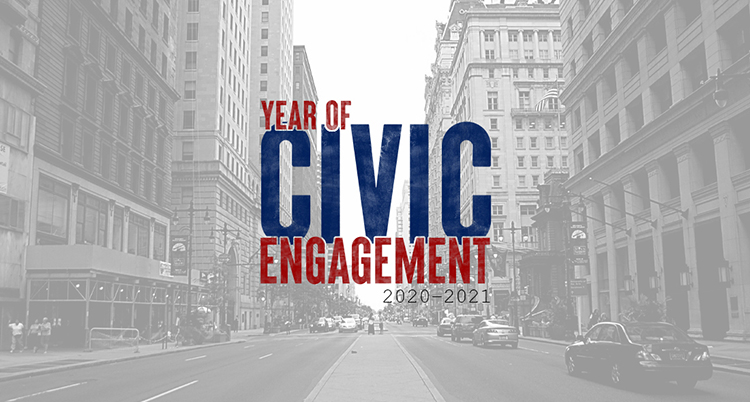
Year of Civic Engagement 2020-2021 graphic.

In fall 2020, Penn will welcome a new group of undergraduates: the Class of 2024. As always, they will participate in a number of activities welcoming them to, and preparing them for, this exciting next phase of their lives. But this is in many other senses, of course, a year unlike any other we have experienced: one that has called us to make sacrifices and take action in unexpected ways that continue to evolve.

In recognition of both Penn’s ongoing traditions and our commitment to facing current challenges, the President and Provost have selected the Year of Civic Engagement (YoCE) as Penn’s Academic Theme for 2020-2021. Programming for the year will be considerably expanded, with opportunities to participate open to the entire Penn community.

As President Amy Gutmann described it in her initial announcement, the year “will include programs, workshops, student-led dialogues, and opportunities to engage with the communities outside our campus, from our immediate West Philadelphia neighborhood to our surrounding city as it recovers from the pandemic, to the wider circle of our nation and our world. These activities will acquire particular potency in our US election year, in which we know many of you will be involved, which will span from the campaign and election in the fall semester to the inauguration and its aftermath in the spring semester. At the same time, the year will draw on Penn’s historic tradition of civic engagement. We were founded by Benjamin Franklin with a vision of a non-sectarian school to educate the leaders of a growing city, with a focus on practical impact on contemporary life.” Following, you can read a fuller description of the Year and its goals.

Honoring a 30-year old tradition, the Year of Civic Engagement will be introduced to our incoming first-year students through the Penn Reading Project (PRP), which will consist of four short pieces of writing, and one 30-minute film documentary, all of which will be available through Canvas:

  • James Baldwin: “My Dungeon Shook (A Letter to My Nephew)”
  • Benjamin Franklin: “Proposals Relating to the Education of Youth in Pennsylvania”
  • Martin Luther King, Jr.: “The Purpose of Education”
  • Toni Morrison: “Home” (from The Source of Self-Regard)
  • “Song of Parkland” (directed by Amy Schatz) 

Our incoming students will once again be assigned to small groups, where they will interact with each other and a Penn mentor who will serve as a group facilitator. But several factors will be new this year. Interaction will begin earlier—before students arrive on campus—and continue through the year. In addition to discussing the readings, participants will work in teams to develop and implement ongoing civic engagement projects. The role of PRP/YoCE facilitator-mentor will be open to all members of the Penn community, including faculty, staff, and upper division undergraduate and graduate students. Information will be circulated shortly on how to sign up.
For more on the Year of Civic Engagement, please contact: 

Office of New Student Orientation and Academic Initiatives

Provost-NSO-AI@pobox.upenn.edu

The Year of Civic Engagement (2020-2021)

Education for citizenship is perhaps the most significant purpose of American universities. Education is key to developing, maintaining and sustaining a culture of democracy, which is essential for democratic institutions, laws, and elections. Specifically, in a democratic society, higher education must educate not only able, but also ethical, empathetic, engaged, effective democratic citizens.

The civic and democratic purposes of universities have never been more important—and they have been in Penn’s DNA since its founding. As Benjamin Franklin wrote in 1749, when envisioning the institution that would become the University of Pennsylvania, developing in students “an Inclination join’d with an Ability to serve Mankind, one’s Country, Friends and Family; which Ability . . . should indeed be the great Aim and End of all Learning.”

Penn’s Compact 2022 continues Penn’s national leadership role in civic and community engagement. As President Gutmann stated: “Engagement with communities here and at home, across our country and throughout the world—civic engagement, for short—is at the heart of the Penn Compact 2022.”

Some of Penn’s most promising civic engagement initiatives involve partnerships between the University and our various communities. These partnerships certainly offer opportunities for community service. They also draw faculty, students, and members of the community together to help solve significant real-world problems. 

The development and implementation of these sustained, collaborative, mutually transformational partnerships provide rich opportunities for students to develop their skills as democratic citizens. They give rise to research activities that link the expertise within the University with the expertise outside its walls.  Penn provides its students a unique opportunity to put their ideals into practice and to learn by and through civic engagement and service to others, as well as reflection on their experiences.

The Year of Civic Engagement will build on Penn’s long tradition of helping students—from across all four of its undergraduate schools and over 90 majors—develop their civic identities, integrating it into their personal and professional lives in meaningful and fulfilling ways. This active, on-going exploration of their role as democratic citizens will include the following opportunities and more.

  • Participation in the Penn Reading Project.
  • Involvement in curricular, co-curricular, and extra-curricular university-community partnership and service in the United States and abroad.
  • Efforts to register voters and encourage participation in and around the November election. 
  • Faculty- and student-led reflections on the service experience.
  • Student-led dialogues designed to address contentious issues in robust, informed, civil and solutions-oriented ways.
  • Lectures and workshops focusing on both the practice and substance of democratic citizenship.                                                         

—David Fox, Director of New Student Orientation and Academic Initiatives

Events

Mind the Gap: Conversations about Life and Landscape Architecture

The Weitzman School of Design’s summer speaker series continues on Wednesdays through September 2. The talks, sponsored by landscape architecture, take place at 6 p.m. 

Each week, one of the speakers will take center stage to highlight what they think is most important be talking about now. Upcoming talks feature Brian Jencek of HOK on July 15 and Ignacio Bunster-Ossa of AECOM on July 22.

To register, visit https://tinyurl.com/mind-the-gap, and for more information, visit https://tinyurl.com/MindGapConvos

Update: Summer AT PENN

Children’s Activities

Penn Museum

Register: penn.museum/calendar

7/17   Summer Exploration Kit: Journey to Ancient Egypt; summer camp activities from home.

7/21   Global Voyagers: Explore the World!; 11 a.m.

Fitness and Learning

7/16   Philadelphia Bar Association Public Interest Brown Bag Series: Cultural Competency in Public Best Practice; noon; register: https://tinyurl.com/7-16-barevent (Penn Law). 

          Ophthalmology Seminar 2020: From Hemodialysis to Therapeutic Plasma Exchange; 5 p.m.; $99; register: https://tinyurl.com/vetseminar2020 (PennVet).

7/17   Mindfulness at the Museum; noon; info and register: https://icaphila.org (ICA). Also July 24, 31. 

7/22   Admissions Webinar For High School Students; noon; register: www.nursing.upenn.edu/calendar/#!event_id/3380/view/event (Nursing).

Special Events

Penn Museum

11 a.m. Register: penn.museum/calendar

7/15   World Wonders: A Trip to China and Beyond: Part 2.

7/22   World Wonders: Learn Egyptian Hieroglyphs.

Sports

Info: https://tinyurl.com/quakerclassics; to watch: www.youtube.com/PennSportsNetwork

7/17   Football vs. Brown; original broadcast: October 29, 2016.

Talks

7/16   Mechanical Etiologies of Dental Implant Complications and Disease and Their Treatment; Paul Rosen, dentist; 5 p.m.; register: https://primetime.bluejeans.com/a2m/register/ypydyszr (Dental).

--

AT PENN Deadlines

The Summer AT PENN calendar is online. To submit your events, email almanac@upenn.edu

‘Bee’ Sure to Visit Morris Arboretum for Fun

caption: The Goldenberg family enjoys one of Morris Arboretum’s new activities in the garden, Pollinator Impersonator, where visitors choose a pollinator to imitate and race toward a flower to do their job.

Morris Arboretum welcomes visitors back to the garden with exciting, learning inspired programming. Each month, from July-September, a new theme will highlight a different aspect of the garden such as pollinators, history and shade. With enriching and fun activities as the core elements, programming experiences will include staffed events, self-directed adventures and print-at-home worksheets to bring to the Arboretum for discovery in the garden. Advance tickets required for all visitors. Visit morrisarb.org/tickets

July is Celebrate Pollinators month.  In addition to the print-at-home activities available at morrisarb.org/learn there are three garden activities every day from 10 a.m.-1 p.m. daily (weather permitting).  

Pollinator Matching Game

Guides will discuss how pollinators - ants, bats, bees, birds, or butterflies visit specific flowers and how plants evolved to attract different pollinators. Then visitors have to guess which pollinator goes with which plant.

Be the Bee!

Run up the hill, stand in the “pollen” pile on the flower’s anther, run over to another flower, jump on the stamen to leave your pollen behind, then run or roll back down the hill through the flower’s pollen tube. 

Pollinator Impersonator

With the help of a guide, learn how to move like your favorite pollinator. Then line up to race against your friends to reach the flowers at the end of your lane. Visitors choose one (or more) pollinators to impersonate and move along lines chalk painted on the grass toward the appropriate flower (e.g. float like a butterfly toward the coneflower).  

Pollinator Passport – With information about pollinators and flowers printed at home, visitors can pretend to be a hungry pollinator searching for your favorite flower throughout the garden. Look for small signs by flowers showing the different pollinators they attract.

Pollinator Bingo – On the Arboretum website, download the Bingo cards and print them or play on your phone/tablet. See if you can find enough pollinators in the garden to fill your grid across, down or diagonally.

Additionally, this year’s garden wide scavenger hunt will run all summer long and will challenge visitors to find the LEGO® bees created especially for the Arboretum by the Colonial LEGO® Users Group placed throughout the garden. You can find the list of bees at www.morrisarb.org/learn

Crimes

Weekly Crime Reports

University of Pennsylvania Police Department Crime Report

Below are the Crimes Against Persons, Crimes Against Society and Crimes Against Property from the campus report for June 26-July 5, 2020. View prior weeks' reports. —Ed.

This summary is prepared by the Division of Public Safety and includes all criminal incidents reported and made known to the University Police Department for the dates of June 26-July 5, 2020. The University Police actively patrol from Market St to Baltimore and from the Schuylkill River to 43rd St in conjunction with the Philadelphia Police. In this effort to provide you with a thorough and accurate report on public safety concerns, we hope that your increased awareness will lessen the opportunity for crime. For any concerns or suggestions regarding this report, please call the Division of Public Safety at (215) 898-4482.

06/29/20

1:54 PM

108 S 40th St

Offender broke a window/Arrest

06/29/20

3:16 PM

3216 Chancellor St

Book bag, credit cards and gift cards removed from vehicle

06/29/20

7:50 PM

3600 Sansom St

Offender took complainant’s wallet

06/29/20

3:35 AM

4100 Spruce St

Unknown offender threatened to stab complainant with a knife

06/30/20

11:30 AM

3900 Market St

Offender struck his brother, fracturing his cheekbone

07/01/20

1:54 AM

3737 Market St

Violation of uniform firearms act and narcotics offense/Arrest

07/01/20

9:22 AM

3604 Chestnut St

Male exposed himself

07/01/20

9:28 AM

3701 Market St

Secured bike taken

07/02/20

8:50 AM

3600 Market St

Offender masturbated in public

07/02/20

9:16 AM

4039 Chestnut St

Unsecured package stolen

07/02/20

11:26 AM

3401 Grays Ferry Ave

Secured cameras stolen from construction site

07/04/20

12:05 AM

3400 Spruce St

Unsecured bike taken

07/05/20

5:04 PM

4101 Sansom St

Unsecured black bag taken from locker

07/05/20

1:40 AM

3900 Market St

Offender struck complainant in the face with a handgun

07/05/20

1:05 PM

4000 Ludlow St

Offender struck the complainant (girlfriend) with a handgun

07/05/20

3:47 PM

3400 Spruce St

Offender punched the complainant (girlfriend)


18th District

Below are the Crimes Against Persons from the 18th District: 11 incidents (4 aggravated assaults, 2 assaults, 2 indecent exposures, 2 robberies and 1 domestic assault) with 1 arrest were reported for June 26-July 5, 2020 by the 18th District, covering the Schuylkill River to 49th Street & Market Street to Woodland Avenue.

06/29/20

3:35 AM

4100 Spruce St

Aggravated Assault

06/29/20

12:08 AM

4500 Osage Ave

Robbery

06/30/20

11:29 AM

3900 Market St

Aggravated Assault

07/01/20

10:09 AM

3604 Chestnut St

Indecent Exposure

07/01/20

10:51 PM

4500 Larchwood St

Robbery

07/02/20

8:05 AM

3601 Market St

Indecent Exposure/Arrest

07/02/20

11:00 AM

4806 Market St

Assault

07/05/20

2:30 AM

3900 Market St

Aggravated Assault

07/05/20

1:13 PM

40th & Ludlow Sts

Aggravated Assault

07/05/20

3:47 PM

34th & Spruce Sts

Domestic Assault

07/05/20

6:11 PM

4133 Chestnut St

Assault

Bulletins

One Step Ahead: Termination Email Invite Scam

One Step Ahead logo.

Another tip in a series provided by the Offices of Information Security, Information Systems & Computing and Audit, Compliance & Privacy

Working from home became a new routine since the COVID-19 pandemic. Cybercriminals are taking advantage of every piece of news they come across, targeting employees working from home with fake termination phishing emails.

This fraudulent email appears to come from your organization’s Human Resources department or a manager. It contains a meeting invite asking you to join a virtual meeting to review an early retirement or termination package due to COVID-19 downsizing. This fake email caries an alarming subject line such as “Termination Review Meeting” and directs you to click on a link to join the virtual meeting. Clicking on this phishing link may direct you to a virtual meeting login page to steal your credentials. It is important that you:

  1. Verify the virtual meeting platform used by your School or Center. Directly contact your IT support group or your manager to verify if the message is authentic. 
  2. Hover over the from: email address to ensure it originated from the University of Pennsylvania (e.g., username@upenn.edu) or your School or Center (e.g., username@isc.upenn.edu). 
  3. DO NOT click on any link or attachment included in the email message; that click may install malware to your device enabling cybercriminals to steal your sensitive information. 
  4. Avoid sharing your School or Center's internal meeting links with those outside of your group. A shared public link could enable uninvited attendees to join your meeting, to post unsolicited information, or collect attendees' information.

If you receive an email invite to discuss early retirement or termination, or your think you may have fallen victim to such a scam, please report the incident to your School or Center IT support group, or contact the Office of Information Security at phishing@isc.upenn.edu

For additional information, visit OIS advisory COVID-19 scam–Be Aware of Fake Termination Email Invite at https://www.isc.upenn.edu/COVID19Scam-termination

--

For additional tips, see the One Step Ahead link on the Information Security website: 

https://www.isc.upenn.edu/security/news-alerts#One-Step-Ahead

Please Share Almanac

Like the last few months’ issues, this edition of Almanac is digital-only. Please distribute to your colleagues and encourage them to subscribe to receive the E-Almanac by visiting https://almanac.upenn.edu/express-almanac The email will include links to the newly posted material. 

No issues were printed to distribute across campus because of COVID-19. Almanac is distributed electronically each Tuesday.

Back to Top