Ezekiel Emanuel: $1 Million 2018 Dan David Prize Laureate
 Ezekiel J. Emanuel, Penn’s Vice Provost of Global Initiatives and chair of the department of medical ethics and health policy in the Perelman School of Medicine (PSOM) at Penn, has been named a 2018 Dan David Prize Laureate. Dr. Emanuel will receive the award at a ceremony on May 6 at Tel Aviv University in Israel.
The Dan David Prize recognizes and encourages innovative and interdisciplinary research and achievements having an outstanding scientific, technological, cultural or social impact on our world.
The Dan David Foundation, headquartered at Tel Aviv University, annually awards three prizes of $1 million (U.S.) in three time dimensions: Past, Present and Future. Dr. Emanuel will receive the 2018 Prize for the Present Time Dimension in the field of bioethics. This is the first time in its 17-year history that the Prize has been awarded for bioethics. The Present prize “recognizes achievements that shape and enrich society today.” Dr. Emanuel will share the bioethics prize with Baroness Mary Warnock, UK, and Jonathan Glover, King’s College London, UK. The Past award focused on history of science and the Future on personalized medicine.
The Dan David Prize laureates donate 10 percent of their prize money to postgraduate students in their respective fields, thereby contributing to the community and fostering a new generation of scholars. It is also unique in its outreach efforts in the wider community.
Dr. Emanuel’s contributions to bioethics are wide ranging, covering topics as diverse as end-of-life care, the ethics of research with human participants, the allocation of scarce resources, the physician-patient relationship, as well as health policy. Unique among bioethicists, he has been both an empirical and conceptual researcher and has worked to implement his ideas in public policies.
Dr. Emanuel, a globally renowned bioethicist, is a Penn Integrates Knowledge (PIK) University Professor, the Diane v.S. Levy and Robert M. Levy University Professor, professor of health care management and professor of medical ethics and health policy with appointments in PSOM and the Wharton School.
Warren Breckman: Sheldon and Lucy Hackney Professor of History
 Warren Breckman has been named the Sheldon and Lucy Hackney Professor of History. Dr. Breckman is a leading intellectual and cultural historian of modern Europe. He is the author of three books, Marx, the Young Hegelians, and the Origins of Radical Social Theory: Dethroning the Self; European Romanticism: A Brief History with Documents; and Adventures of the Symbolic: Post-Marxism and Radical Democracy. He was the executive co-editor of the Journal of the History of Ideas from 2006-2016 and a founding editor of Zeitschrift für Ideengeschichte.
Dr. Breckman has been a fellow of the Alexander von Humboldt-Stiftung and a member of the Princeton Institute for Advanced Study, and has served as visiting scholar at the École des Hautes Études en Sciences Sociales in Paris and the American Academy in Berlin. He has also received fellowships from the National Endowment for the Humanities, the Mellon Foundation and the Social Sciences and Research Council of Canada. At Penn, Dr. Breckman has served as Faculty Director of the Penn Graduate Humanities Forum, Topic Director of the Penn Humanities Forum, and as a member of the University Graduate Council.
The Sheldon and Lucy Hackney Professorship in History was created in 1993 by the University’s Board of Trustees in honor of Dr. Sheldon Hackney, then the outgoing president of Penn, and his wife, Lucy, for their many years of devoted service to Penn. The late Dr. Hackney (Almanac September 24, 2013) served as University president from 1981-1993 and went on to become Chairman of the National Endowment for the Humanities from 1993-1997 before returning to Penn’s history faculty until his 2010 retirement.
$5 Million for Penn Center for Inherited Cardiovascular Disease
The Penn Center for Inherited Cardiovascular Disease has received a $5 million commitment from Mark Winkelman and his family. The generous donation from Mr. Winkelman, a former chair of the Penn Medicine Board, will help support and build upon the center’s personalized, family-based approach to care and strengthen its research efforts.
The Center, which was created in 2015, aims to better treat and understand cardiovascular diseases caused by genetic abnormalities. Changes in the blueprint of the body, or the DNA, can lead to various types of heart disease including an abnormal heart muscle (cardiomyopathy), abnormal heart rhythm (arrhythmia) or enlarged aorta. Although many changes in the genetic code have been identified, there is much to learn about which changes later cause disease, posing a major challenge in patient care.
“For us, in the early stages of the Center, this generous donation from the Winkelman family is a real game-changer,” said Anjali Tiku Owens, medical director of the Center and an assistant professor of medicine in the Perelman School of Medicine at the University of Pennsylvania. “It will strengthen our ability to offer the patient-oriented, detailed and personalized level of care needed to treat patients with these diseases. It will also allow us to conduct cutting-edge research that may not have been funded through the traditional channels.”
The gift from the Winkelman family will be spread out over five years, starting in 2018, and will help support clinical care, additional faculty and fellows, outreach and education and much-needed laboratory and clinical research for inherited cardiovascular diseases. The Penn Center for Inherited Cardiovascular Disease is one of only a few in the country to address the unique needs of not only individuals with hereditary heart conditions, but also their families who may be at risk by providing genetic counseling and testing as well as appropriate follow-up care. Early recognition and treatment of these conditions can prevent heart failure or sudden death.
“I’m delighted that Mr. Winkelman shares our vision, and I’m incredibly grateful and excited to see what this gift will allow us to accomplish,” Dr. Owens added.
Mr. Winkelman, a member of the Board of Directors at Goldman, Sachs & Co, has a longstanding relationship with the University of Pennsylvania. Serving most recently as chair of the board at Penn Medicine for five years, and graduating with an MBA from Penn’s Wharton School, he is also a Trustee Emeritus of University’s Board of Trustees. “This cause is very near to our family and we are proud to make a gift to support the Penn Center for Inherited Cardiovascular Disease,” Mr. Winkelman said. “We are confident that the Penn Medicine team will advance the field through research discoveries and clinical applications. Our hope is that this gift will help provide resources for the team to continue their mission and change the lives of patients for generations to come.”
The Center takes an interdisciplinary approach to care and research that involves physicians and researchers from departments across Penn Medicine and Children’s Hospital of Philadelphia, including cardiology, genetics, surgery, radiology and obstetrics/gynecology. The center evolved from Penn’s Familial Cardiomyopathy Program, which began in 2011 when Dr. Owens joined the faculty at Penn with a vision for creating a multidisciplinary family-based clinic to treat inherited cardiomyopathies, including hypertrophic cardiomyopathy, arrhythmogenic right ventricular cardiomyopathy and dilated cardiomyopathy. Since then, the Center has expanded its clinical and research scope to include a wider variety of inherited cardiac diseases. For many patients with these diseases, earlier detection through genetic sequencing and testing could enable earlier monitoring and treatment with medications, devices and lifestyle changes.
The Center aims to improve the tools used to find early disease and to prevent it from progressing. In many cases of inherited heart disease, there is a 50 percent chance of passing on an abnormal genetic change from a parent with disease to a child, although not all individuals who inherit the abnormal genetic change will go on to develop the disease. One focus of the newly funded research will be to identify genetic, environmental or lifestyle factors that trigger onset of disease.
“With the Winkelman family’s partnership, the Penn Center for Inherited Cardiovascular Disease will not only take major steps to unravel which genetic changes cause heart disease, it will begin to demonstrate a model of truly personalized genetic medicine, focused on heart disease,” Dr. Owens said. “Once realized, this unique model would begin to transform the standard of care.”
Orphan Disease Center’s Pilot Grant Program for CDKL5 Deficiency Disorder: March 8
The Orphan Disease Center (ODC) at the University of Pennsylvania and the Loulou Foundation are pleased to announce the 2018 Pilot Grant Program for CDKL5 Deficiency Disorder (CDD). CDD is a monogenic, orphan condition characterized by treatment-resistant epilepsy and severe cognitive and motor disability. The Loulou Foundation and the ODC will provide a one-year grant for $150,000 (total cost) to support research related to CDD—the number of awards may vary.
They encourage researchers to review application materials and share this funding opportunity with those holding a faculty-level appointment who may be interested in this area of research. All applicants must first submit a letter of interest (LOI) to be reviewed for consideration of a full application submission. LOIs are due no later than Thursday, March 8, at 5 p.m. (EST).
LOIs can be submitted on the center’s website, http://orphandiseasecenter.med.upenn.edu/ which contain full application guidelines including the Loulou Foundation Patent Policy.
The ODC is seeking grant applications that progress the discovery or development of treatments or cures for CDD. They recognize, however, that many gaps exist in the basic understanding of CDKL5 and its role in neurologic development. Therefore, basic science projects that address these gaps are welcome, as long as they are tethered to the development of a potential therapy. While the RFA is broad in scope, priority will be given to grants that cover the following areas:
1) Novel therapeutic approaches for CDKL5 Deficiency Disorder (CDD), including but not limited to techniques in genome editing, RNA-based mechanisms, biologics and small molecule repurposing.
2) Approaches to validate phenotypes in CDKL5 function or disease pathophysiology through rescue of phenotypic deficits with pharmacological or genetic/gene therapy techniques. Phenotypic reversal in rodent models will focus on the use of adult (2 months of age or older) animals. In particular, approaches are encouraged that allow the identification of individual CDKL5 protein isoforms (arising from alternative splicing, alternative promoter usage, or post-translational modifications) which can rescue these phenotypes.
3) Systems biology and computational modeling approaches to provide a deeper understanding of CDKL5 function, downstream effectors, signaling, protein: protein interactors, or modifiers, including regulators of CDKL5 gene expression (transcriptional, post-transcriptional/RNA processing, translational, post-translational).
4) Novel imaging and functional approaches to phenotyping CDD in pre-clinical models or the clinical setting. A non-exclusive list of topics that would be responsive to this RFA is listed below:
- Functional/structural MRI; diffusion tensor imaging (DTI)
- Magnetic resonance spectroscopy (MRS)
- Stimulus-induced event-related potentials: impact of CDKL5 genetic/gene therapy or pharmacological interventionson deficits in stimulus-induced event potentials (visual, auditory, or other) in CDD disease models
5) Discovery and validation of CDKL5 biomarkers and their translation to the clinical setting.
The Center for Italian Studies Grants for Faculty and Students
Salvatori Research Fund: March 20
The Center for Italian Studies at Penn offers annual research grants endowed by the late Henry Salvatori, EE’23, to support Penn students and faculty whose research investigates Italian culture and society. The deadline for submissions is March 20 and awards will be announced by April 5.
This year’s Salvatori awards sponsor three specific types of research projects devoted to Italian topics.
Up to $3,000, for travel for dissertation or pre-dissertation research, conducted outside the United States (with exceptions) from May 1, 2018 to April 30, 2019.
Assistant professors: up to $1,000, to support supplemental research expenses, in particular, incidental publication costs. To be used between May 1, 2018 and April 30, 2019.
Associate and full professors: up to $2,500, to support the initial or exploratory phase of a research or curatorial project. Examples are: monograph, edited book, article, digital project, library cataloguing project, faculty research group, study day, grant application, outreach initiative, exhibition, performance, installation and video (the last five must include a research component). Preference is given to projects involving collaboration with other faculty members, at Penn or outside Penn. The fund needs to be used between May 1, 2018 and April 30, 2019. Requirements are: one public presentation at Penn during the spring 2019, and a report to be published electronically by the Center within the Penn Scholarly Commons platform by August 1, 2019.
As funds are limited, requests below the upper limit are encouraged. It is not possible to apply for two consecutive years. Applications are evaluated by a committee of at least three faculty members plus the director of the Center.
Applications (Word or PDF) should include: a two-page proposal (ca. 6,000 characters no spaces), an estimate of expenses and a timetable. Graduate students need to provide one letter of support from a standing faculty member in the most relevant department or program. Applicants and recommenders should send an email with the subject “Salvatori Awards 2018” to Mauro Calcagno, director, Center for Italian Studies, at mauroca@sas.upenn.edu by the March 20 deadline. The next call for applications will be in spring 2019.
Amici Prize: Undergraduate Research in Italian Studies: March 10
The Center for Italian Studies at Penn awards the Amici Prize, established in 1993, for a research project in Italian Studies to be conducted in Italy by a Penn undergraduate student, this year between May 1 and December 31, 2018.
The awarded sum is up to $1,500. The deadline for applications is March 10, 2018.
Applicants can propose a project in any field of Italian Studies with the support of their instructor/advisor who will advise and supervise the student. The project can originate from a class or be independent from it; it can be developed during an independent study but can also be pursued outside it. The outcome, which can take a variety of forms (paper, video, blog, etc.) will be shared with other Penn undergraduates, in ways arranged and coordinated by the Undergraduate Chair in Italian, together with the advisor. The Prize cannot be awarded to the same student in two consecutive years.
Applicants should send, via e-mail, a detailed project proposal (600 to 1,200 words) including a title, a description, an approximate budget, and a rough timeline for completion. The instructor/advisor will send, separately, his or her confidential letter of recommendation. Please submit these documents by March 10 as Word or PDF files attached to a message with subject “Amici Prize 2018” and addressed to Mauro Calcagno, director, Center for Italian Studies, at: mauroca@sas.upenn.edu

.JPG) Richard “Dick” A. Gibboney, professor emeritus at the University of Pennsylvania Graduate School of Education (GSE), died in Indianapolis, Indiana on January 24. He was 90.
Richard “Dick” A. Gibboney, professor emeritus at the University of Pennsylvania Graduate School of Education (GSE), died in Indianapolis, Indiana on January 24. He was 90. Ezra Simon Krendel, professor emeritus of statistics and operations research at the Wharton School, died February 1. He was 92.
 Penn Nursing’s Eileen T. Lake, the Jessie M. Scott Endowed Term Chair in Nursing and Health Policy, associate professor of nursing, associate professor of sociology and the Associate Director of the Center for Health Outcomes and Policy Research, has been named the Editor-in-Chief of the journal Research in Nursing & Health (RINAH). RINAH, which celebrates its 40th anniversary this year, is a top-tier, peer-reviewed journal that publishes a wide range of research to inform the practice of nursing and other health disciplines.
 Vandana Gopikumar, co-founder of The Banyan and The Banyan Academy of Leadership in Mental Health, will receive the 2018 Penn Nursing Renfield Foundation Award for Global Women’s Health for her work in helping women with mental health problems in India. She co-founded both organizations with Vaishnavi Jayakumar. Dr. Gopikumar will receive the award—which comes with a $100,000 cash prize—during an event at Penn’s Perry World House. See Special Events in the March AT PENN calendar for more details.
 Emily Steiner, professor of English in SAS at the University of Pennsylvania, won the CARA Award for Excellence in Teaching from the Medieval Academy of America’s Committee for Centers and Regional Associations (CARA). Dr. Steiner has transformed medieval studies at Penn. Through her intellectual vibrancy and careful close-readings she has guided undergraduate and graduate students through some of the most challenging aspects of the English canon. Her teaching explores the nexus of literary, devotional, legal, polemical and academic writing that shaped literary production during the fourteenth and fifteenth centuries and its reception.
 Composer Anna Weesner, the Dr. Robert Weiss Professor of Music at Penn, has won the Virgil Thomson Award in Vocal Music. The award, endowed by the Virgil Thomson Foundation and administered by the American Academy of Arts and Letters, recognizes an American composer of vocal works. Candidates were nominated by the Academy’s members, and the winner was chosen by a special jury of composers. The award will be given at the annual Ceremonial in mid-May.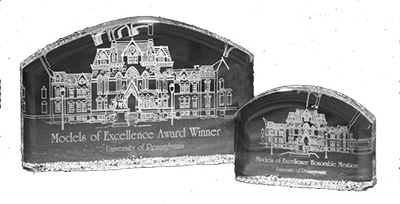
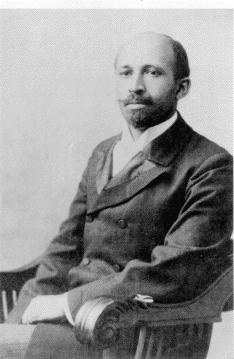 The 2018 Souls of Du Bois Conference will take place Friday, February 23 through Saturday, February 24 hosted by Penn’s Du Bois College House. The annual conference celebrates W.E.B. Du Bois’s 150th birthday and legacy of innovation in education through the arts, scholarship and the social media of his time. The Souls of Du Bois Conference brings modern day scholars and activists whose work continues Dr. Du Bois’s legacy, highlighting the beauty and struggles of Diasporan Black people through their life’s work.
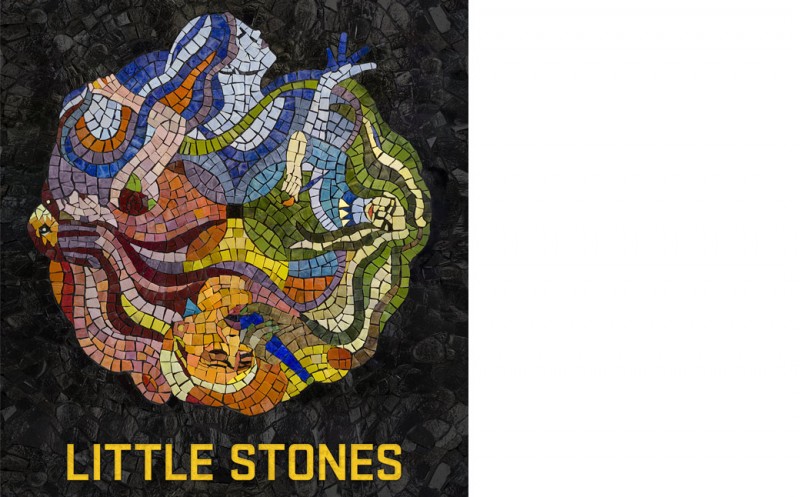 On Tuesday, February 27, at 7 p.m., Little Stones will be shown in the Harold Prince Theatre, at the Annenberg Center. Little Stones weaves together the personal narratives of four women from across the world using art to empower females and survivors of gender-based violence. The women contribute a stone to the mosaic of the women’s rights movement through their art.