Penn Medicine Center for Digital Health

Across the world, social media users leave a trail of clues about themselves each time they Tweet, post to Facebook, write a Yelp review and apply a filter or hashtags to their latest Instagram photo. Under the leadership of Raina Merchant, researchers and physicians at Penn Medicine are mining those clues to find what ails them – and how to fix it.
Dr. Merchant has been named an associate vice president for the University of Pennsylvania Health System and director of the newly created Penn Medicine Center for Digital Health.
“Connectivity and innovation are central elements of Penn Medicine’s strategic plan, and a large and increasing proportion of our patients engage with the world digitally,” said Ralph W. Muller, CEO of the University of Pennsylvania Health System. “Dr. Merchant’s visionary research is harnessing the power of this engagement to transform the way we deliver health care.”
The Center for Digital Health evolved from Penn Medicine’s Social Media Laboratory, led by Dr. Merchant since 2013. Her cultivation of partnerships from across the University—with Wharton, Annenberg and the School of Engineering and Applied Science—has mapped a strategy and process to systematically evaluate how social media platforms can affect health, and develop new ways for clinicians to improve care delivery through these channels.
Dr. Merchant, who is also an assistant professor of emergency medicine and has secondary appointments in general internal medicine and anesthesia and critical care, began her research career in emergency medicine focusing on cardiac arrest. In 2012, she led the MyHeartMap Challenge, a crowdsourcing contest that sent Philadelphians into the community to identify, photograph, and submit locations of lifesaving automated external defibrillators (AEDs). Using the data gleaned from contest participants, her team created a mobile app that maps AEDs throughout the city, putting them at the fingertips of bystanders who can act quickly to save a life when cardiac arrest strikes (
Almanac January 17, 2012).
Dr. Merchant describes her team’s research as probing “the social mediome”—a way of collectively describing people or groups based on their digital data merged with their health record data. Her work has demonstrated the value of mining Yelp reviews for information about patients’ experiences in hospitals, mapped ways in which social media may be harnessed for emergency preparedness and response, and shown that information donated by patients from their Facebook accounts may be paired with their electronic medical records to yield new insights about their health. New areas of research for the Center for Digital Health include identification of factors linked to depression and obesity, and studying social media to trace language changes that may be associated with Alzheimer’s or other types of cognitive decline.
She earned her bachelors degree from Yale and completed medical school and residency in emergency medicine at the University of Chicago. She came to Penn as a Robert Wood Johnson Foundation (RWJF) Clinical Scholar, joining the faculty in emergency medicine in 2010. She has served as a policy scientist for the Assistant Secretary of Preparedness and Response (ASPR) in the DHHS. In 2012, she was named one of the top 10 national leaders in health care under the age of 40 by the RWJF, and she has been named by Philadelphia magazine as one of the city’s top doctors under 40.
Two Faculty Endowed Chairs in Penn Arts and Sciences
Dean Steven J. Fluharty is pleased to announce the appointment of two faculty members in Penn Arts and Sciences to endowed chairs.
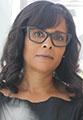
Camille Charles, professor of sociology, Africana studies and education, has been appointed Walter H. and Leonore C. Annenberg Professor in the Social Sciences. Dr. Charles is a distinguished scholar of the sociology of race and education. Her seminal book, Won’t You Be My Neighbor: Race, Class and Residence in Los Angeles, serves as a frequently-cited resource for scholars and students of racial residential segregation. Her coauthored works, The Source of the River: The Social Origins of Freshmen at America’s Selective Colleges and Universities and the follow-up study, Taming the River: Negotiating the Academic, Financial, and Social Currents in Selective Colleges and Universities, examine the educational origins of inequality and the possibilities for higher education to counteract social disadvantage. Her expertise as a quantitative researcher has positioned her to advise institutions of higher education on issues of inequality and its metrics.
Dr. Charles has served as chair of the University Faculty Senate and the department of Africana studies, as the director of the Center for Africana Studies, and as a member of the Provost’s Faculty Council on Access and Achievement and the Penn Arts and Sciences Planning and Priorities Committee, Diversity Council and Africa Planning Group.
The late Ambassador Walter H. Annenberg received Penn’s Alumni Award of Merit in 1991. He and the late Honorable Leonore Annenberg were both emeritus trustees of the University. The Annenbergs endowed many chairs in Penn Arts and Sciences and made countless generous contributions to the University. They also founded the Annenberg School for Communication at Penn in 1958.

Angela Duckworth has been named Christopher H. Browne Distinguished Professor of Psychology. Dr. Duckworth is an internationally-recognized scholar of positive psychology and the psychology of achievement. She is widely known for her role in developing and advancing the concepts of grit—the ability to maintain effort toward long-term goals—and self-control as factors in the pursuit and attainment of valued goals. Dr. Duckworth’s own passion is to use psychological science to help children thrive. She is a prolific author whose research is published in leading scientific journals, including the Journal of Personality and Social Psychology, Developmental Psychology, Proceedings of the National Academy of Psychology, and the Journal of Positive Psychology. Her first book, Grit: The Power of Passion and Perseverance, debuted as an immediate New York Times bestseller, reaching No. 1 on both the Education and Business lists.
Dr. Duckworth is a recipient of a MacArthur “genius grant” fellowship (Almanac October 1, 2013). She is also founder and scientific director of the Character Lab, a nonprofit located on Penn’s campus whose mission is to advance the science and practice of character development.
This chair was created by a gift from Christopher H. Browne, C’69, who served Penn as a trustee and chairman of the Board of Overseers in SAS. The Browne chairs recognize faculty who have achieved an extraordinary reputation for scholarly contributions, who have demonstrated great distinction in teaching, and who have demonstrated intellectual integrity and unquestioned commitment to free and open discussion of ideas.
From the President: Penn Will Not Bend
President Trump’s recent Executive Order is injurious to our work and inimical to our values. The damage already done to the lawful freedoms and opportunities of our students and colleagues, here and around the world, is undeniable and indefensible. This Order will weaken the promise of educational opportunity, intellectual discovery, and global engagement that so distinguishes American universities.
I am the daughter of a Jewish immigrant who fled Nazi Germany. My grandfather was an immigrant. My son-in-law is an immigrant. My family’s story is part of a proud and productive American story, as is yours.
Immigration strengthens the fabric of this nation and our University. Immigrants spark innovation, launch new businesses, and enrich our culture and arts. They are a precious national resource and invaluable to Penn.
We must stand together, united in our support of beloved colleagues, students, friends, and families who, no matter where they come from or how they worship, have contributed so much to our University community and to this country.
We are heirs to Penn’s heritage as the nation’s first secular university, where all religions are welcome. We are heirs to the genius and humanity of Ben Franklin.
As such, we must not and will not remain silent.
We stand for open-hearted compassion and open-minded opportunity. We will remain unyielding in our allegiance to our fundamental principles and to each other. Penn will not bend.
Staff across the University are right now assisting our affected community members with legal counsel and other resources.
In addition to those efforts, we will do everything in our power, speak to every friend and ally, and leave no stone unturned in our efforts to urge President Trump to change course and rectify the horrible damage this Order has caused.
—Amy Gutmann, Penn President
Related: Letter About Immigration From College and University Presidents
Letter About Immigration From College and University Presidents
Penn President Amy Gutmann expounded upon her recent condemnation of the United States President Donald Trump’s immigration ban by adding her name to this letter critical of the ban. Christopher Eisgruber, Princeton’s president, wrote the original draft of the letter with Penn’s President Gutmann and then asked others to sign on. It was signed by 46 other college and university presidents and chancellors including three who have had Penn ties.
Thursday, February 2, 2017
President Donald J. Trump
The White House
United States of America
Dear President Trump:
We write as presidents of leading American colleges and universities to urge you to rectify or rescind the recent Executive Order closing our country’s borders to immigrants and others from seven majority-Muslim countries and to refugees from throughout the world. If left in place, the Order threatens both American higher education and the defining principles of our country.
The Order specifically prevents talented, law-abiding students and scholars from the affected regions from reaching our campuses. American higher education has benefitted tremendously from this country’s long history of embracing immigrants from around the world. Their innovations and scholarship have enhanced American learning, added to our prosperity, and enriched our culture. Many who have returned to their own countries have taken with them the values that are the lifeblood of our democracy. America’s educational, scientific, economic, and artistic leadership depends upon our continued ability to attract the extraordinary people who for many generations have come to this country in search of freedom and a better life.
This action unfairly targets seven predominantly Muslim countries in a manner inconsistent with America’s best principles and greatest traditions. We welcome outstanding Muslim students and scholars from the United States and abroad, including the many who come from the seven affected countries. Their vibrant contributions to our institutions and our country exemplify the value of the religious diversity that has been a hallmark of American freedom since this country’s founding. The American dream depends on continued fidelity to that value.
We recognize and respect the need to protect America’s security. The vetting procedures already in place are rigorous. Improvements to them should be based on evidence, calibrated to real risks, and consistent with constitutional principle.
Throughout its history America has been a land of opportunity and a beacon of freedom in the world. It has attracted talented people to our shores and inspired people around the globe. This Executive Order is dimming the lamp of liberty and staining the country’s reputation. We respectfully urge you to rectify the damage done by this Order.
Sincerely,
Robert L. Barchi, President, Rutgers, The State University of New Jersey
Joanne Berger-Sweeney, President, Trinity College
Lee C. Bollinger, President, Columbia University
Robert A. Brown, President, Boston University
Ronald J. Daniels, President, Johns Hopkins University
Nicholas B. Dirks, Chancellor, University of California, Berkeley
Adam F. Falk, President, Williams College
Patrick Gallagher, Chancellor, University of Pittsburgh
Amy Gutmann, President, University of Pennsylvania
Philip J. Hanlon, President, Dartmouth College
Ralph J. Hexter, Interim Chancellor, University of California, Davis
Kimberly W. Benston, President, Haverford College
George Blumenthal, Chancellor, University of California, Santa Cruz
Richard H. Brodhead, President, Duke University
Kimberly Wright Cassidy, President, Bryn Mawr College
John J. DeGioia, President, Georgetown University
Christopher L. Eisgruber, President, Princeton University
Drew Gilpin Faust, President, Harvard University
Howard Gillman, Chancellor, University of California, Irvine
Andrew Hamilton, President, New York University
Sam Hawgood, Chancellor, University of California, San Francisco
Rev. John I. Jenkins, President, University of Notre Dame
Pradeep K. Khosla, Chancellor, University of California, San Diego
David W. Leebron, President, Rice University
Wallace D. Loh, President, University of Maryland, College Park
David Oxtoby, President, Pomona College
Daniel R. Porterfield, President, Franklin & Marshall College
Hunter R. Rawlings III, Interim President, Cornell University
Peter Salovey, President, Yale University
Mark Schlissel, President, University of Michigan
Barbara R. Snyder, President, Case Western Reserve University
Samuel L. Stanley Jr., President, Stony Brook University
Claire E. Sterk, President, Emory University
Marvin Krislov, President, Oberlin College
Ron Liebowitz, President, Brandeis University
Anthony P. Monaco, President, Tufts University
Christina H. Paxson, President, Brown University
Carol Quillen, President, Davidson College
Clayton Rose, President, Bowdoin College
Michael H. Schill, President, University of Oregon
Valerie Smith, President, Swarthmore College
Debora L. Spar, President, Barnard College
Sonya Stephens, Acting President, Mount Holyoke College
Marc Tessier-Lavigne, President, Stanford University
Satish K. Tripathi, President, University at Buffalo
Henry T. Yang, Chancellor, University of California, Santa Barbara
Mark S. Wrighton, Chancellor, Washington University in St. Louis
Nicholas S. Zeppos, Chancellor, Vanderbilt University
Related: From the President: Penn Will Not Bend
Penn Global Calls for Proposals 2017
Penn Global is excited to announce the 2017 Call for Proposals for the Penn China Research & Engagement Fund and the Global Engagement Fund.
The Penn China Research & Engagement Fund (Penn CREF), launched in March 2015, is a five-year, $10 million competitive matching program designed to stimulate and support activity in China and engagement with the Penn Wharton China Center. All Penn faculty and senior administrators are eligible to apply. Proposals for Penn CREF are due by April 17, 2017. For additional details about and submission instructions for Penn CREF, please visit our website at: https://global.upenn.edu/global-impact/penn-china-research-engagement-fund
The Global Engagement Fund (GEF) Annual Program seeks to seed creative projects that will further Penn’s global initiatives in the key regions of India, Africa, Latin America and the Caribbean. All Penn faculty and senior administrators are eligible to apply. Proposals for the Global Engagement Fund are due March 17, 2017. For additional details about and submission instructions for GEF, please visit our website at: https://global.upenn.edu/gef
We strongly encourage faculty and administrators who are interested in applying for either fund to contact global@exchange.upenn.edu with any questions and/or requests to schedule a brief meeting to further discuss your ideas. We also strongly encourage you to share this notification with other faculty and staff who may be interested in these opportunities.
We look forward to learning of your ideas and working with you in the coming months. Please email global@exchange.upenn.edu with any questions.
—Zeke Emanuel, Vice Provost for Global Initiatives
—Amy E. Gadsden, Executive Director, Penn Global and Penn-China Initiatives
Jacob Levernier: Bollinger Fellow in Library Innovation
The Penn Libraries announces the selection of Jacob Levernier as the new Bollinger Fellow in Library Innovation. The Fellow helps the Penn Libraries by thinking creatively about their future and recruit some of the most talented recent graduates with interests in a wide array of topics that intersect with libraries.
Dr. Levernier, a recent University of Oregon PhD graduate, is a psychologist well versed in the study of cognition, with undergraduate minors in neuroscience, philosophy and classical studies. He has a vested interest in the future of libraries and data management. Dr. Levernier’s current research interests include morality mining, data management education, moral advancement throughout the lifespan, open-source and open-access development and education, and the evolution of imagination.
Dr. Levernier will carry these interests into his work with the Libraries’ Technology Services division. Here, he will collaborate with collection curators, metadata specialists, business analysts and IT developers to study fundamental challenges in discovery, content delivery, assessment and information presentation. Joe Zucca, Penn Libraries’ director of strategic initiatives & library technology services, said “The Penn Libraries host a vast archive of data that reveal the interactions of scholars with information, that provide a unique lens on the research interests and behaviors of information consumers. The job of the Bollinger Fellow will be to mine these data for signals and patterns that inform acquisitions, service provision, and new strategic directions for the Library.”
During his two-year fellowship, Dr. Levernier will be uniquely positioned to interact with Penn Libraries’ systems, users and vast archives of data. These interactions will lead to applied research that may influence catalogs and cataloging practice, researcher profiling systems, human interface design, repository tools and the use of social media to understand information-seeking behavior and the use of data.

 University of Pennsylvania senior Lucy Chai of Acton, Massachusetts, was awarded the Churchill Scholarship from the Winston Churchill Foundation. The scholarship is awarded annually to American students to fund a year of master’s study in science, mathematics and engineering at Churchill College at the University of Cambridge. Ms. Chai will graduate in May with a bachelor’s degree in engineering from Penn’s School of Engineering & Applied Science.
 The University of Pennsylvania School of Engineering and Applied Science has awarded Daniel Koditschek, the Alfred Fitler Moore Professor in the department of electrical and systems engineering, with the Heilmeier Research Award. The award recognizes scientifically meritorious work that also had high technological impact and visibility.
 The University of Pennsylvania’s Megan S. Ryerson has received the Transportation Research Board’s 2016 Fred Burggraf Award. The international award recognizes the year’s best research paper by researchers 35 years of age or under.
 The TIAA Institute has awarded Kent Smetters, Boettner Professor in the department of business economics and public policy at the Wharton School, and Felix Reichling of the Congressional Budget Office, with the 21st annual TIAA Paul A. Samuelson Award for Outstanding Scholarly Writing on Lifelong Financial Security.
 Benjamin F. Voight, an assistant professor of systems pharmacology and translational therapeutics and of genetics in the Perelman School of Medicine at the University of Pennsylvania, has received the Presidential Early Career Award for Scientists and Engineers (PECASE).
 Douglas C. Wallace, professor of pathology & laboratory medicine at the University of Pennsylvania Perelman School of Medicine and the Michael and Charles Barnett Endowed Chair in Pediatric Mitochondrial Medicine and Metabolic Disease at Children’s Hospital of Philadelphia, was named the 2017 recipient of the Franklin Medal in Life Sciences from the Franklin Institute.
 Karen Glanz, the George A. Weiss University Professor in the department of biostatistics & epidemiology at the University of Pennsylvania and director of Penn’s Center for Health Behavior Research, has been appointed to the advisory council for the National Heart, Lung and Blood Institute. Dr. Glanz will serve a four-year term.


 On Wednesday, February 15, from 12:30-2 p.m., the University of Pennsylvania’s School of Social Policy & Practice (SP2) Dean John L. Jackson, Jr. will lead a panel of experts as they examine child welfare and explore methods and means to ensure the prosperous future of our youth.