
Welcome Back from the President: Connections
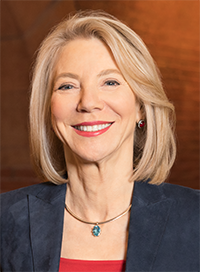 Whenever first-time visitors come to campus, I introduce them to Penn by describing the University’s great natural advantage: everyone and everything is only a short walk away. By virtue of being so geographically compact, we at Penn are also naturally inclined to be intellectually connected. It’s not only natural, it’s also essential to our academic mission. With the bold goal of advancing knowledge for good, we have been building the infrastructure to ensure that crossing disciplines to discover new, eye-opening perspectives on the most profound problems is no more challenging than crossing Locust or Woodland Walk.
Over the past year, we have been advancing our connectivity on an even more ambitious scale with our far-flung alumni across the globe. Since it launched last spring, The Power of Penn campaign has given alumni, parents and friends new opportunities to engage with the University with events here on campus and abroad. On a rollout tour visiting cities across the US, in the UK, and in China, I was joined by a rotating cast of star Penn faculty from across schools and disciplines, delving into discussions that ranged across the many areas of knowledge and discovery that animate intellectual life on campus. Nearly 4,000 members of the extended Penn family joined us at these wonderfully successful events. Elsewhere, regional alumni clubs have sponsored nearly two dozen local events featuring notable Penn alumni speakers, bolstering connections between the University and local communities.
These connections that knit the greater Penn family to the ongoing work of the University serve to remind those at a geographical distance how the discovery, research and teaching underway here on campus have important repercussions all around the world. By the same token, they also serve as an important reminder to us in Philadelphia, underscoring just how much our work here on campus matters to others. Our intellectual passions give us purpose, but it is these connections—with our colleagues, our peers, and with others of the Penn family both near and far—that so often imbue a deep sense of meaningfulness and global community in what we do.
With the start of the new academic year, we are set to begin an entirely new effort focused on making new, deeper and more meaningful connections within our undergraduate student population, tying their studies and service to a more robustly engaged ideal of citizenship. We’re calling this effort Paideia, a term that references the ancient Greek ideal of “education of the whole person.” Our new Paideia program enables everyone receiving a Penn undergraduate degree to be fully prepared and engaged in the new, evolving, and sometimes daunting demands of twenty-first century citizenship. Built on foundational courses focused on wellness, service, and citizenship, Paideia will emphasize informed civil discourse and deliberation, incorporating activities that will connect Penn students with others from diverse local and global communities to focus on productively engaging across personal, cultural, and ideological divides.
We are tremendously grateful to the Stavros Niarchos Foundation for generously supporting Paideia. Paideia will combine courses and co-curricular experiences that focus on bridging differences to find productive commonalities, an enormously important competency that enables students both to serve others and to thrive themselves. Many Penn students have told me how thrilled they are that we are emphasizing citizenship, service, and wellness in a specific Penn educational program open to students across all four of our undergraduate schools. They share my appreciation that fostering wellness, citizenship and service in educating the whole person at the university level has never been more important. Democracy and civil society depend upon free and robust dialogue across social, cultural, economic, and political divides. Paideia ultimately aims to provide as many Penn undergraduates as possible with the knowledge and skills, ethical frameworks, and experiences necessary to be informed, engaged and effective citizens. Among the many aims of a great university, none is more essential than fostering these lines of communication and the robust civil expression of divergent views.

—Amy Gutmann, President