
Provost’s Award
Since 1988, The Provost’s Award for Teaching Excellence by Non-Standing Faculty has been awarded to two members of Penn’s Associated Faculty or Academic Support Staff, one in the non-health schools and one in the health schools.
The Provost’s Award for Distinguished PhD Teaching and Mentoring has been awarded to two members of Penn’s Standing or Associated Faculty in any school offering the PhD since 2004.
For Teaching Excellence by Non-Standing Faculty
Health Schools
 James Treat, associate professor of clinical pediatrics and dermatology in the Perelman School of Medicine, has taught at Penn since 2008. For this “true pediatric dermatology rock star,” the awards come “year after year,” testimonies to his ability to inspire medical students, residents and fellows. Dr. Treat distinguished himself as a teacher and mentor “even as a resident,” says a colleague, and he has “continuously set himself apart as an educator.” A former student marvels that he has “the remarkable ability to teach during a patient encounter” and adds that he was the “motivating factor” in her pursuit of a career in pediatric dermatology. Even with his vast body of knowledge and “incredible clinical acumen,” this voracious reader “never feels he knows enough” and is a “life-long learner.” Another former student adds that Dr. Treat’s “infectious enthusiasm” is matched only by his teaching creativity, including “innovative, computer-based tele-dermatology” that allowed students to practice their descriptive and diagnostic skills in a collaborative environment. Colleagues describe a “master” in the use of new technologies to assist learning. A former trainee who is now a colleague notes: “Jim never misses an opportunity to teach and help others develop into better doctors. The best I can do to thank him is to attempt to do the same.”
Non-Health Schools
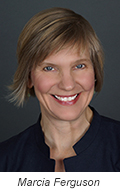 Marcia Ferguson, senior lecturer and director of theatre arts in the School of Arts & Sciences, has taught at Penn since 1999. This “innovative director” is an “ever-evolving artist” in both the theater and the classroom. Her contributions to diverse student theatrical productions, notes a colleague, are “immeasurable” in terms of time, commitment and inspiration, while her “love of performance” and deep understanding of theater create a classroom that “somehow feels relaxed in the context of serious academic and performance challenge.” Numerous current and former students make note of an energetic presence who is simply “a joy to be around,” with a tangible “passion for education” that “helped us pave the way to the elation of storytelling.” One former student marvels at “the confidence she exuded,” a feeling that “made me want to strive to be a more intelligent and commanding woman.” A colleague adds that Dr. Ferguson offers a striking combination of “historical research, innovative theater craft and theoretical inquiry,” producing students who are “clearly inspired” by her work. Says one admirer: “I only hope that Penn continues to recruit and honor the Marcia Fergusons of the world.”
2016 Provost's Award for Distinguished PhD Teaching and Mentoring
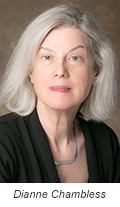 Dianne L. Chambless, professor of psychology in the School of Arts & Sciences, has taught at Penn since 2002. A clinical psychologist with a “national reputation,” Dr. Chambless is a mentor of unmatched quality who is “instrumental in shaping young scientists’ careers.” A colleague notes that she sets “very high expectations” for her students, yet balances this with a supportive approach that allows them to “develop and pursue their own interests.” A long-time colleague makes particular mention of Dr. Chambless’ support for women graduate students, noting her track record of helping to place women in academic positions and continuing to mentor them throughout their careers. A current graduate student adds that while Dr. Chambless is always available to answer questions if necessary, she also “skillfully guides me through the process of determining the answers for myself.” A former graduate student adds that she “cannot imagine a more worthy recipient” of this award, marveling at a mentor with professional integrity, rigorous teaching, and challenging and effective supervision. This student says that, for her, difficult situations are always addressed with a simple question: “WWDD—What Would Dianne Do?” Another former student agrees, noting that “I owe my success—as well as much of my life satisfaction—to Dianne.”
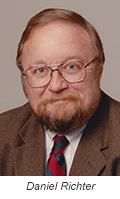 Daniel K. Richter, Roy F. and Jeannette P. Nichols Professor of American History in the School of Arts & Sciences, has taught at Penn since 1999. A former graduate student, now a colleague, describes Dr. Richter as the “single biggest contributor to my own career success,” and not simply because he “has a ‘big name’ in the field.” He makes himself “endlessly available to students” and is widely regarded as a mentor who “picks them up if they stumble, and pushes them to do their absolute best.” A current doctoral student adds that, “mentoring students is his top priority,” and his actions as teacher and advisor “have shown this to be true.” Another former student notes that Dr. Richter made his “intellectual growth a priority” and paid particular attention to his teaching assistants, using the TA program “as an opportunity to mentor graduate students in the art of teaching.” Colleagues make special note of his dedication of time and effort in helping students find teaching positions, with one remarking that Dr. Richter “invests in the serious business of placing students” and has a “great record of job placement.” Another colleague sums it up: Dan Richter not only trains students, but “socializes them within the field.” His leadership has “inspired me and many others” to emulate his example.