Penn’s Gargoyles: Genial Gothic Gremlins
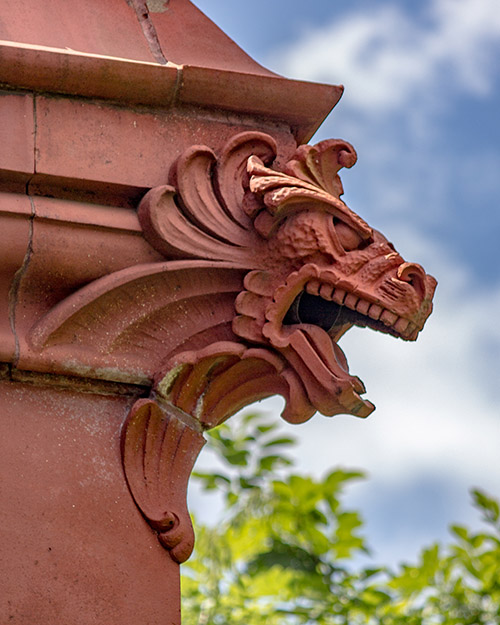
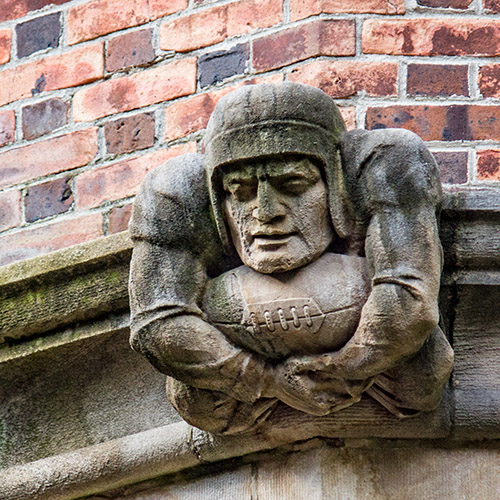
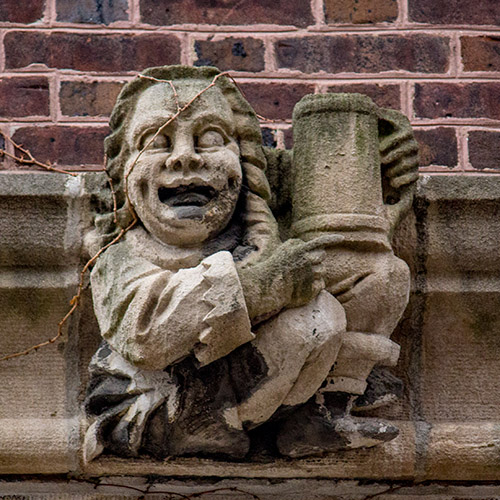
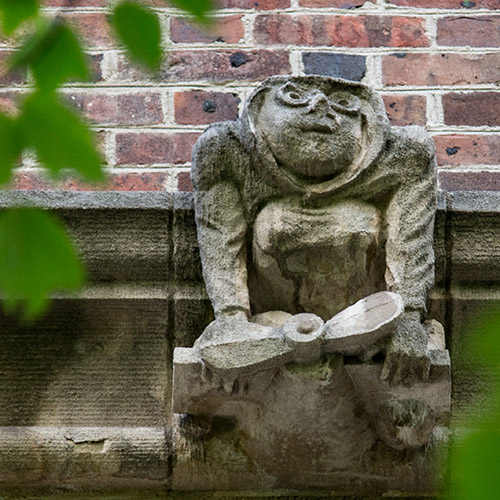
Penn has a varied enough selection of notable architecture from the last 150 years that certain sub-genres of it have slipped under the radar of most modern photographers and history buffs. Such is the case with Penn’s selection of gargoyles, which adorn the exteriors of nearly 20 buildings on campus.
Penn’s gargoyles are actually bosses, uncut stones placed on outer edges of buildings to be carved into ornamental forms. (The word “gargoyles” originates from the French word “gargouille,” meaning “throat”; literal gargoyles serve as building gutters or downspouts. Bosses, meanwhile, serve a purely ornamental purpose.) Bossage (the art of carving these ornamental figures) came into being in the thirteenth century as an artistic device to conceal unevenly-laid stone; in the sixteenth century, bosses became an artistic hallmark of Elizabethan architecture. Bosses are also known as grotesques, named after figures found in ancient Roman cellars and grottoes.
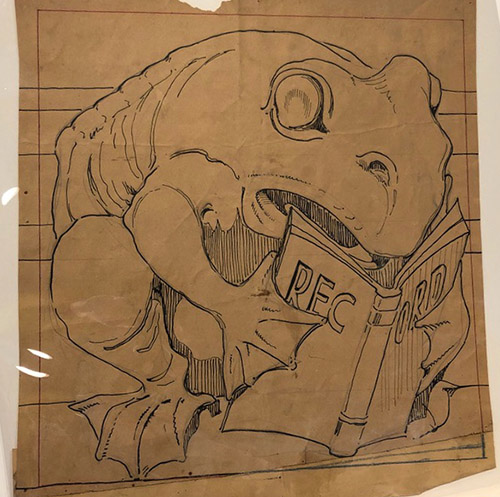
In the 1890s and the first couple decades of the twentieth century, Penn engaged Philadelphia architects Cope and Stewardson to design several University buildings. With their design for the Quadrangle, whose first section opened in 1896, Cope and Stewardson emulated several vintage eras of English architecture in a style that became known as Collegiate Gothic. In a delightful homage to Elizabethan architecture, they incorporated several dozen bosses into their design. They worked with sculptors Henry Plasschaert and John Joseph Borie (a Penn architecture alumnus) and stone carvers Edmund Wright, Edward Maene and assistants to turn these uncut stones into sculpted figures. Cope and Stewardson approved elevation views and clay models of each proposed boss, which was then carved over a period of three to four days from a fourteen-inch square piece of Indiana limestone that had been incorporated into the Quadrangle.
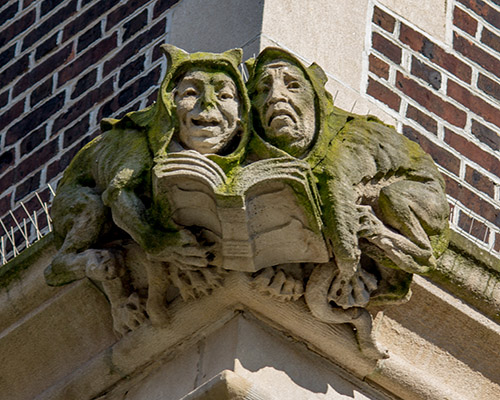
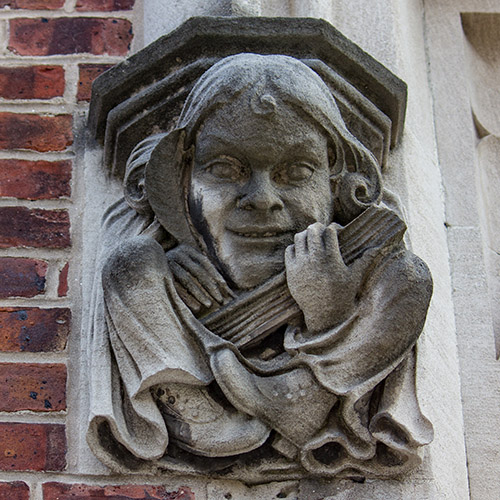
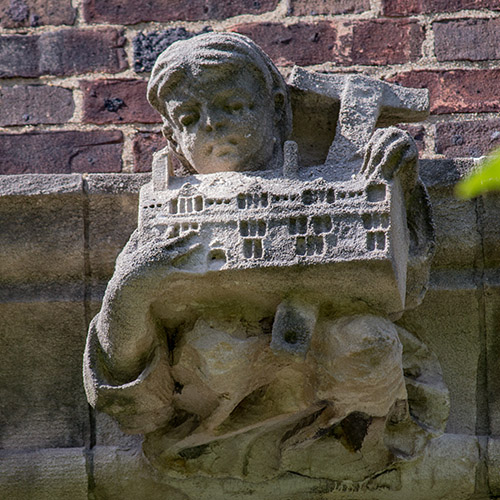
Mr. Plasschaert and his carvers kept the mood of these bosses whimsical. Parodic figures are abundant, such as a grotesque animal biting the corner of a block of stone, or an architect dressed in an elf costume carrying a basket of fruit. A variety of mythical creatures and bizarre monsters are on display, as is the occasional reference to academic activity, like the creatures brandishing tragedy and comedy masks atop the Mask and Wig clubhouse, or a monkey clutching a scroll labeled “diploma.” Many bosses don mortarboard caps or carry shields in a reference to campus life. Others refer to classical sculptures or fairy tales. As the Quadrangle continued to be expanded, its architects continued to add bosses, though sections built after 1928 abandoned the tradition.
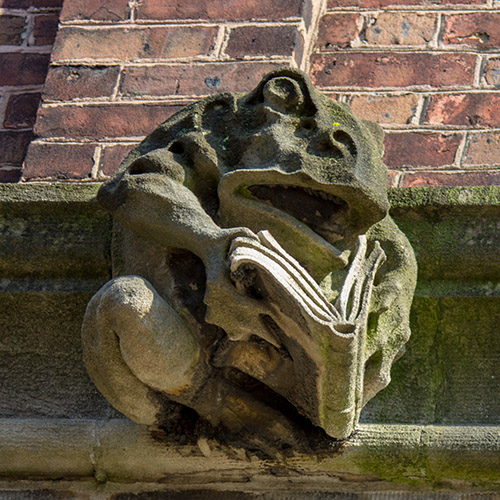
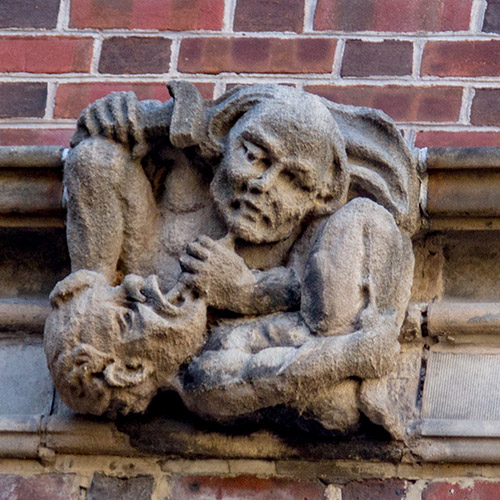
While the Quadrangle has the most concentrated usage of bosses on campus, it is by no means the only place on campus they can be found. As early as 1888, Frank Furness had incorporated gargoyle-like appendages into his design for the University Library (now the Fisher Fine Arts Library). John Windrim included a particularly dynamic series in his design for Penn Dental’s Evans Building (1911-1915), including figures reading books and pulling teeth from other creatures’ mouths. Cope and Stewardson incorporated bosses into the John Morgan Building (1904) and their successors, Stewardson and Page, included two bosses flanking the front doors of Fisher-Bennett Hall (1925). Contemporary accounts show that the public was delighted by these sculptures and that sightseers made them popular attractions on Penn’s campus.
After the 1920s, architectural fads nationwide shifted away from the ornamental and towards the modern, so bosses fell out of favor. Since then, weathering and ivy growth have caused some of Penn’s sculptures to deteriorate, but the majority of these unique sculptures are still preserved, mostly intact, for architecture buffs to enjoy. The Philomathean Society has estimated that some 450 gargoyles, grotestques and bosses can be found around the interior and exterior of the Quadrangle, and many more are visible elsewhere on campus. Katherine Kruger, a staff member in the Office of the University Secretary, has launched a photo series of Penn’s bosses that, so far, has encompassed nearly 20 buildings on campus. The photos on this page were taken by Ms. Kruger; to see more of her photos, visit https://www.instagram.com/penn_gargoyles/.
![caption: This trio, who adorn a corner on the Quad exterior, hold aloft a P (for Penn) and the University’s motto from 1898 to 1932, Literae Sine Moribus Vanae (letters without morals [are] useless). Today’s motto is slightly different. The owl, a symbol of wisdom, is a common motif throughout Penn’s gargoyles and bosses.](/uploads/img/Quad_Exterior-3.jpg)