
Penn Engineering: Three Faculty Appointed to Named Professorships
A scholarly professorship, or named faculty position, is one of the highest honors a faculty member can receive from an academic institution. Such an appointment increases a faculty member’s distinction and validates the individual’s work, elevating their influence at Penn and beyond. In fiscal year 2024, Penn Engineering appointed the inaugural recipients of three recently established scholarly professorships.
André DeHon: Boileau Professorship of Electrical Engineering
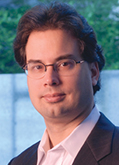 The inaugural recipient of the Boileau Professorship is André DeHon, a professor of electrical and systems engineering (ESE) and of computer and information science (CIS). His research is in the area of computer architecture, with a focus on reconfigurable computing, FPGA (Field-Programmable Gate Array) architectures, and the development of systems that allow for flexible, programmable hardware. Dr. DeHon’s work aims to make hardware more adaptable and efficient by designing architectures that can be dynamically reprogrammed to suit various computational tasks.
The Boileau Professorship of Electrical Engineering was established by Oliver C. Boileau, Jr., EE’51, GEE’53, who died in 2007, and his wife Nan Eleze Boileau, who died in 2023.
Oliver Boileau earned his bachelor’s and master’s degrees in electrical engineering from Penn Engineering. A retired senior aerospace executive, Mr. Boileau was elected to the National Academy of Engineering (NAE) in 1979, for his “contributions to the technical and cost management of major aerospace programs and to national defense.” He received the D. Robert Yarnall Award from the Penn Engineering Alumni Society in 2001. The Boileaus also named the Boileau Laboratory on the fifth floor of Penn Engineering’s Levine Hall.
Mayur Naik: Misra Family Professorship
 The first member of the faculty to hold the Misra Family Professorship is Mayur Naik, a professor of computer and information science, whose work spans areas like program analysis, formal verification, machine learning for software systems, and parallel programming. Dr. Naik’s research focuses on programming languages, software engineering, and systems, with particular interest in developing tools and techniques to make software more reliable, secure, and efficient.
The Misra Family Professorship was established by Rajeev Misra, ME’85, GEN’85. Mr. Misra earned his bachelor’s degree in mechanical engineering and his master’s degree in computer science from Penn. Mr. Misra is the CEO and co-founder of One Investment Management (OneIM) and a member of the Penn Engineering Board of Advisors. His other gifts to the school include the Misra Laboratory in the Singh Center for Nanotechnology, the Shalini and Rajeev Misra Professorship, the Shalini and Rajeev Misra Presidential Professorship, and the Rajeev and Shalini Misra Laboratory in Amy Gutmann Hall. Mr. Misra also hosts an annual Penn Engineering reception at his home in London, England.
Arjun Raj: Richard K. Lubin Professorship
 Arjun Raj, a professor of bioengineering, is the inaugural recipient of the Lubin Professorship. Dr. Raj’s research focuses on understanding how gene expression is regulated at the single-cell level. His lab uses cutting-edge techniques, including single-molecule RNA imaging and other quantitative approaches, to study the stochastic (random) nature of gene expression and how it affects cellular behavior and development.
The Richard K. Lubin Professorship was established through the support of Richard K. Lubin, CHE’67, and the Richard K. Lubin Family Foundation. Mr. Lubin earned his bachelor’s degree in chemical engineering in 1967. As a prominent business leader in the Greater Boston area, he co-founded Berkshire Partners and currently serves as a senior advisor. Mr. Lubin has demonstrated a lasting commitment to enriching society by promoting initiatives in education, medicine, and arts and culture through his philanthropy.
His contributions to Penn Engineering include the Richard K. Lubin Galleria in the Singh Center for Nanotechnology and the Richard K. Lubin Laboratory in Skirkanich Hall.