
Franz Matschinsky, Biochemistry and Biophysics
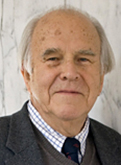 Franz Maximilian Matschinsky, a former professor in the Perelman School of Medicine’s department of biochemistry and biophysics and “the father of glucokinase research,” passed away on March 31. He was 90.
Dr. Matschinsky was born in 1931 in Breslau, Poland, an agrarian community where he grew up tending his family’s farm. In 1946, in the aftermath of World War II, Dr. Matschinsky and his family were exiled from the Polish region of Silesia and fled to Westphalia, Germany. Living away from farm life for the first time, Dr. Matschinsky devoted himself to academics and graduated from Werl Mariengymnasium (a high school) in 1953. He then went on to graduate from Albert Ludwig University in Freiburg, Germany, with a BS in basic medical science in 1955, then from Ludwig Maximilian University in Munich with an MD in 1958. He moved to the United States in 1963 to study at Washington University in St. Louis, where he researched the metabolism of the insulin-producing pancreatic islets and discovered the essential sensing role of glucokinase, work that was crucial for scientific understanding and treatment of diabetes mellitus.
After fulfilling a term professorship at Washington University, Dr. Matschinsky became a visiting professor in biochemistry and biophysics at Penn in 1976, and a full professor there the following year. He was an influential faculty member at Penn, chairing the department of biochemistry and biophysics during the 1980s and serving on a Penn faculty-wide working group on faculty development from 1988-1989. Dr. Matschinsky continued his groundbreaking research at Penn, winning a University Research Fund grant in 1986 to study A High-Field, Wide-Bore In Vivo NMR Spectrometer. In 1983, he became the director of Penn’s Cox Institute of Diabetes Research, which was soon thereafter renamed the Diabetes Research Center and which was the predecessor of today’s Institute for Diabetes, Obesity, and Metabolism. In 1985, he was designated the Benjamin Rush Professor of Biochemistry and Biophysics, a chair he held until 2004.
Dr. Matschinsky’s achievements were recognized throughout the diabetes research community—in 1995, he won the Banting Medal for Scientific Achievement from the American Diabetes Association. In 2020, he won the prestigious Rolf Luft Award from the Karolinska Institutet in Sweden, which recognized his “discovery that glucokinase (GK) is the sensor controlling glucose-stimulated insulin secretion in the pancreatic beta cell.” According to his award citation, “current knowledge on the role of GK in the beta cell and thereby how GK translates changes in blood glucose concentration into adequate insulin release and thereby regulation of blood glucose homeostasis and why this chain of events is not working properly in diabetes is to a large extent based on work conducted by Dr Matschinsky over the years.” During his final years, Dr. Matschinsky continued to conduct research and publish articles on the biochemical basis of fuel sensing by pancreatic islet cells.
Dr. Matschinsky is survived by his children, Benno, Tanja Matschinsky Ross, and Stephan; his siblings, Rosel Habel and Benno; and seven grandchildren. A memorial service was held for Dr. Matschinsky and his wife, Elke, who predeceased him in 2019, on April 21. Memorial donations may be made to https://www.breastcancer.org/ and the Diabetes Research Institute Foundation (https://www.diabetesresearch.org/).