
Edward S. Cooper, Medicine
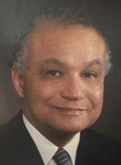 Edward Sawyer Cooper, an emeritus professor of medicine in the Perelman School of Medicine, died on December 12, 2025. He was 99.
Dr. Cooper was born in 1926 in Columbia, South Carolina. He earned a BA from Lincoln University in 1946 and an MD from Meharry Medical College in 1949. After completing a medical internship and residency at the Philadelphia General Hospital (PGH), he served for three years as a captain and the first Black chief of the medical services at the U.S. Clark Air Force Base Hospital in the Philippines. He then returned to Philadelphia, where he accepted a position as medical program director at the former Mercy-Douglass Hospital (where he once treated Dr. Martin Luther King. Jr., who had been stabbed in the chest with a letter opener) and as president of the PGH medical staff. In 1958, after completing a National Institutes of Health (NIH) fellowship in cardiology, he joined the faculty of Penn’s School of Medicine.
During his time at PGH, Dr. Cooper noticed that, while the hospital’s patient base was both Black and white, most stroke patients were Black, and their strokes were largely caused by brain bleeds and uncontrolled hypertension. Dr. Cooper set out to study this discrepancy. At Penn, he initially served as an instructor and attending physician, but joined the tenure track in 1964 as an assistant professor, becoming an associate professor in 1970 and a full professor in 1973 (the first Black faculty member at Penn’s School of Medicine to do so). In the late 1960s, Penn received a $1 million federal grant to establish a stroke research center at PGH, with Dr. Cooper as its co-founder. Dr. Cooper went on to serve for a year (1973-1974) as chief of medical services at PGH. After PGH closed in 1977, the stroke clinic relocated to Penn, where Dr. Cooper continued to teach for another two decades before retiring and becoming emeritus in 1995.
Dr. Cooper’s research informed fellow physicians and the public about the high prevalence of strokes in America’s Black population and other understudied groups. He was among the first researchers to emphasize the similarity in the risk factors for strokes and heart disease, such as high blood pressure and cholesterol, and the need for better control of these risk factors. Dr. Cooper lectured widely, published extensively in medical journals and served on their editorial boards, and co-authored a book, Stroke in Blacks: A Guide to Management and Prevention, that brought new prominence to a condition that had been downplayed in previous medical literature. He held leadership positions at the National Institutes of Health, the Board of Trustees of Rockefeller University, the American College of Physicians, the National Medical Association, the Association of Black Cardiologists, the U.S. African Development Foundation, the American Foundation for Negro Affairs, and the boards of the Hospital of the University of Pennsylvania and Independence Blue Cross. He received honorary degrees from Meharry Medical College and the University of South Carolina, and a professorship at Penn now holds his name (and his portrait, painted by the late Bernett L. Johnson, hangs on the second floor of Stemmler Hall).
Dr. Cooper was heavily involved with the American Heart Association (AHA), where he served as the chair of the newly formed Stroke Council, chair of the writing committee of the influential AHA statement “Cardiovascular Disease and Stroke in African-American and Other Racial Minorities,” and as a member of the AHA Board of Directors. In 1993, he became the first Black president of the AHA, working hard to increase public and professional support for prevention and optimal treatment of both strokes and heart disease. The AHA awarded him its highest national award, the Gold Heart Award, and an award was established in his name, given annually at the Philadelphia AHA Heart Ball.
Dr. Cooper is survived by three children, Lisa Cooper Hudgins (James), Jan Ada Cooper (Gregory DeGruy), and Charles Wilder Cooper; four grandchildren; and seven great-grandchildren.
In lieu of flowers, the family requests donations to the E. Sawyer Cooper, Jr. Endowed Scholarship Fund. Donate online at https://giving.apps.upenn.edu/fund?program=MED&fund=041514 or via a check made out to the Trustees of the University of Pennsylvania and sent to Penn Medicine, Development and Alumni Relations, 3535 Market Street, Suite 750, Philadelphia, PA 19104.