
Ancient Egypt: From Discovery to Display at Penn Museum
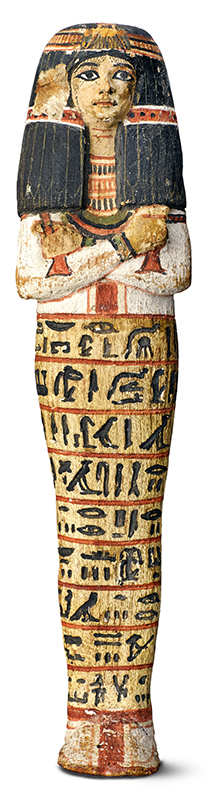 Opening February 23, Ancient Egypt: From Discovery to Display provides visitors to the Penn Museum a once-in-a-lifetime opportunity to walk in the shoes of an archaeologist. Explore the journey that artifacts take on their way to museum display, from excavation to conservation to storage and research. More than 200 fascinating objects, many of which have never been on view before, are included throughout the three-part, 6,000-square-foot exhibition. Eventually, these objects will become a part of the re-envisioned Ancient Egypt and Nubia Galleries, a much-anticipated cornerstone of the Penn Museum’s Building Transformation (Almanac November 14, 2017).
“Unlike most exhibitions about ancient Egypt, Ancient Egypt: From Discovery to Display provides an insider’s look into how objects are excavated, conserved and stored—treating visitors to a unique experience of the Museum’s world-renowned Egyptian collection as they prepare for the renewal of the full Ancient Egypt and Nubia galleries,” said Jennifer Houser Wegner, exhibition curator.
In the exhibition’s first stop, visitors are introduced to what life was like in ancient Egypt through objects representing gods, royalty and everyday individuals. Highlights include a wooden stela (memorial sculpture) from 662–525 BCE that honors two versions of a sun god and a life-sized memorial statue depicting the overseer of priests. Then, visitors begin to “peel back the layers,” as they follow artifacts through their journeys—in reverse.
In the second gallery, Museum-goers will get a closer look at breathtaking artifacts from the Old Kingdom, also known as the “Age of the Pyramids,” starting in 2613 BCE, through the time of Cleopatra’s death in 30 BCE. Objects in this “visible storage” section include two magical model boats (a sailboat and a rowboat) featured in the critically-acclaimed Smithsonian book History of the World in 1,000 Objects, a stunning turquoise-colored glazed ceramic-ware necklace, the 2,000-year-old mummy of a young woman and a child mummy that was recently CT scanned in partnership with the Children’s Hospital of Philadelphia (CHOP).
The final, highly-popular gallery, also known as the Artifact Lab, will provide visitors with an opportunity to learn more about excavation and to observe conservators in action as they work to preserve Egyptian artifacts, including the mummy of a 40-year-old named Hapi-Men and his dog, exquisite gold jewelry worn by the ancient Egyptians and an intricate model of the throne room of the Palace of Merenptah (the 13th son of Ramesses II), the columns and portals of which will be erected at full height in the Ancient Egypt and Nubia galleries. They’ll also be able to ask questions of the conservators during “Open Window” timeframes: Tuesdays-Fridays, 11-11:30 a.m. and 1:30-2 p.m., and Saturdays-Sundays, noon-12:30 p.m. and 3-3:30 p.m.