
2025 Perelman School of Medicine Teaching Awards
The Leonard Berwick Memorial Teaching Award
This award was established in 1981 as a memorial to Leonard Berwick by his family and the department of pathology. It recognizes “a member of the medical faculty who in their teaching effectively fuses basic science and clinical medicine.” It is intended that this award recognize outstanding teachers, particularly among younger faculty.
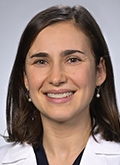 Erica Baller is an assistant professor of psychiatry at the Hospital of the University of Pennsylvania (HUP), where she engages in clinical care, research, and didactic teaching. She completed her undergraduate studies in computer science and psychology at Yale, earned a master’s degree in physiology from Georgetown, and received her medical degree from Drexel University, where she was inducted into the Alpha Omega Alpha Honor Society. She completed her psychiatry residency at Penn, followed by a consultation-liaison psychiatry fellowship at Massachusetts General Hospital and a neuropsychiatry T32 fellowship at Penn. At HUP, Dr. Baller teaches residents to care for medically ill patients with neuropsychiatric disorders. As PI of the Baller Lab, she focuses on applying neuroimaging methods to study mood, anxiety, and cognition in patients with intracranial diseases, particularly multiple sclerosis. She also serves as director of neuroscience education for the department of psychiatry’s residency program. Since her residency, Dr. Baller has been deeply involved with the National Neuroscience Curriculum Initiative (NNCI). A 2016 NNCI Scholar, she now serves on its Assessment Task Force and Brain Trust, a leadership group shaping the initiative’s vision. Her teaching materials have been used in 178 countries and are now incorporated into primary care training in Canada. She has contributed over 15 educational modules to the NNCI—more than any contributor aside from the founders—and has mentored Penn residents in developing neuroscience teaching materials used internationally.
Robert Dunning Dripps Memorial Award for Excellence in Graduate Medical Education
 This award was established by the department of anesthesia in 1984. As a pioneer in the specialty of anesthesia and chair of the department from 1943 to 1972, Dr. Dripps was instrumental in the training of more than 300 residents and fellows, many of whom went on to chair other departments. This award recognizes excellence as an educator of residents and fellows in clinical care, research, teaching, or administration.
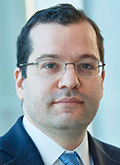
Award recipient Robert Roses is a professor of surgery. He graduated from Dartmouth College in 1997 and from Tufts Medical School in 2003. He completed his surgical residency at the Hospital of the University of Pennsylvania and his surgical oncology fellowship training at MD Anderson Cancer Center. He has been a member of the surgical faculty at Penn since 2012.
Blockley-Osler Award
 Created in 1987 by the Blockley Section of the Philadelphia College of Physicians, this award is given annually to a member of the faculty at an affiliated hospital for excellence in teaching modern clinical medicine at the bedside, in the tradition of William Osler and others who taught at Philadelphia General Hospital.
Chadwick Johr is an associate professor of clinical medicine at the Perelman School of Medicine (PSOM), where he serves as the director of the Penn Sjögren’s Center, an associate program director of the Penn-CHOP combined residency program in internal medicine and pediatrics, and one of six Measey preceptors (a longitudinal role in which he teaches medicine and doctoring skills to medical students). Dr. Johr attended Penn State University for his undergraduate and medical studies, then moved on to Brown University to complete his combined residency training in internal medicine and pediatrics before a brief stint as a hospitalist at the Children’s Hospital of Philadelphia. He then completed an adult rheumatology fellowship at the University of Iowa Hospitals and Clinics, where he remained as a member of the faculty for two years. In 2011 Dr. Johr joined the rheumatology faculty at Penn. Dr. Johr served on the Sjögren’s Foundation Board of Directors from 2017 to 2021 and is a two-time Penn Pearls awardee. He revels in teaching learners practical skills in both the inpatient and outpatient settings, with a strong preference for chalk-talks over PowerPoint.
Scott Mackler Award for Excellence in Substance Abuse Teaching
This award was established in 2000 by the Penn/VA Center for Studies of Addiction and the department of psychiatry. Scott Mackler is remembered for his excellence in teaching medical students, residents, postdoctoral fellows, nurses, and other Penn faculty in many different departments in the area of substance abuse.
 Judy Chertok is an associate professor and director of addiction medicine in the department of family medicine and community health at the Perelman School of Medicine. Dr. Chertok earned her undergraduate degree from Brown University in 2003 and her medical degree from the Columbia University College of Physicians and Surgeons in 2007. She completed her residency and chief residency at New York Presbyterian Hospital in 2010. After spending six years as the associate program director of family medicine, she started the Fellowship in Addiction Medicine in 2023 and serves as its program director. She is a family medicine and addiction medicine specialist and maintains an active practice at Penn Family Care, Prevention Point Philadelphia, and Penn Presbyterian Medical Center. She initiated and continues to lead the medication for opiate use disorder program at Penn Family Care and co-founded the addiction consult service at Penn Medicine. She also works with Prevention Point Philadelphia in the mobile overdose surge bus program to provide mobile community outreach, including harm reduction services and addiction care in communities throughout Philadelphia. She has developed educational programs in addiction medicine for fellows through the fellowship in addiction medicine; for residents, including a robust experiential curriculum in family medicine including community work; for medical students, including a now-universal shadowing program in outpatient addiction medicine and an elective on the consult service; and for practicing physicians through her work providing coninuing medical education (CME) in opioid use disorder.
Dean’s Award for Excellence in Clinical Teaching
The Dean’s Award for Excellence in Clinical Teaching was established in 1989 to recognize clinical teaching excellence and commitment to medical education by outstanding faculty members from affiliated hospitals. One or more Dean’s Awards are given annually, the recipients being selected on the advice of a committee of faculty and students.
 Mona Al Mukaddam received her medical degree from the American University of Beirut in Lebanon and her master’s degree in translational research from the University of Pennsylvania, where she also completed her endocrinology fellowship. She is an associate professor in the departments of medicine and orthopaedic surgery, and she directs the Penn Bone Center, which is based in the division of endocrinology. Under her leadership, the Penn Bone Center serves as a comprehensive educational resource for learners at all levels, including patients, nurses, pharmacists, medical students, residents, and fellows. Dr. Al Mukaddam’s commitment to teaching has been recognized with the Edward Rose Teaching Award, which she received twice, in 2017 and in 2021. She is a world-renowned expert in fibrodysplasia ossificans progressiva (FOP) and is the principal investigator on industry-sponsored clinical trials in FOP, which led to the first and only FDA approved treatment for FOP. She is a founding member of the International Clinical Council (ICC) on FOP, which was established to consolidate a global voice and publish guidelines for the best practices for clinical care and research in FOP. She has received the Radiant Hope Foundation Clinician Scientist Award in FOP and is involved in the development of CME programs at the Clinical Endocrinology Update, at the American Society of Bone and Mineral Research (ASBMR), and at various nonprofit organizations.
 Ashok Linganna is an associate professor of medicine and an academic hospitalist in the Perelman School of Medicine. He came to Penn in 2015 after completing his internal medicine residency and chief residency at the University of California, Irvine and obtaining his medical degree from Drexel University College of Medicine. Since arriving at Penn, he has focused his energy on the needs of undergraduate and graduate learners. He currently serves as the co-director of the sub-internship for internal medicine and the associate director of undergraduate medical education in the Perelman School of Medicine. Recently, he has taken on roles relating to psychological safety as the head of the wellness group in the division of hospitalist medicine and as a pathway mentor for students matriculating into internal medicine residencies. He obtained his master’s degree in medical education from Penn in 2018 and has won multiple institutional awards for his educational skills.
 Elizabeth Moore is an assistant professor in the department of psychiatry. She graduated from Harvard College in 2009 with a degree in human evolutionary biology and attended medical school at Penn, then completed her psychiatry residency at UCLA. During her residency, she was a resident informaticist and chief resident of medical education. She has published research on social determinants of health and graduate medical education, including a curriculum for psychiatry residents who are caring for people experiencing homelessness and a wellness initiative in a homeless clinic that is staffed by interprofessional trainees. She then stayed at UCLA for the National Clinician Scholars Program, during which she completed her master of health policy and management and pursued quality improvement and research projects focused on homelessness and serious mental illness. Her first attending job was at the VA in West Los Angeles. In 2022, she moved back to Philadelphia and became an inpatient psychiatrist on the Spruce 6 floor at Pennsylvania Hospital, where she leads the QI curriculum for the psychiatry residents. She is also the medical director of quality improvement in the department of psychiatry. In 2024, she was inducted into the Gold Humanism Honor Society by her medical students. She loves discussing the complexities of mental illness, the healthcare system, patient preferences, and social determinants of health with medical students.
 Jennifer Olenik practices at the Corporal Michael J. Crescenz VA Medical Center as an academic hospitalist and at HUP as a palliative care attending physician. She also serves two roles in PSOM—as co-director of the internal medicine sub-internship and as the direct patient care curriculum director of CARE-7, PSOM’s novel four-year palliative care curriculum, which she helped create, implement, and evaluate. Dr. Olenik is passionate about helping students and residents become the best doctors they can be, focusing on skillful communication, clinical reasoning, and patient-centered humanistic care. She has translated her unique dual clinical training into a medical education career focused on advanced communication skills for trainees across the undergraduate and graduate curricula. On clinical service, her learners celebrate her efficient, yet effective use of the Socratic method to facilitate clinical reasoning reflection, as well as her use of spaced repetition to reinforce on-the-fly teaching. Dr. Olenik earned her medical degree from the Perelman School of Medicine and completed her internal medicine residency, chief residency, and palliative medicine fellowship at the University of California, San Francisco.
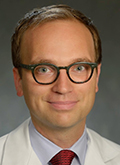 Colin Quinn received his medical degree from the University of Virginia School of Medicine and completed his internship and residency training in neurology at Penn. Subsequently, he completed his fellowship training in neuromuscular neurology at Brigham and Women’s/Massachusetts General Hospital in Boston. After completing his fellowship, he served as a clinical instructor and research fellow at the University of Massachusetts, where he worked to design and perform clinical trials for patients with amyotrophic lateral sclerosis (ALS). He returned to Penn as a faculty member in 2014. Dr. Quinn has won awards for his teaching as a neurology resident and, twice, as a faculty member at Penn. He led the creation of the Philadelphia VA ALS clinic, which provides care for veterans with ALS throughout the Mid-Atlantic region. The neurology department has expanded its resident and neuromuscular fellow rotations at the VA specifically to allow students to work with Dr. Quinn. His enthusiastic and compassionate approach has raised the bar for neurological care and teaching within the VA medical center and beyond.
 Anna Weiss is an associate professor of clinical pediatrics in the Perelman School of Medicine and an attending physician in the division of emergency medicine at the Children’s Hospital of Philadelphia (CHOP). Dr. Weiss received her BA in history and literature from Harvard University and an MSc in Russian and East European studies at Oxford University, where she was a Rhodes Scholar. She received her MD from the Perelman School of Medicine and later her MSEd in medical education at Penn’s Graduate School of Education. Dr. Weiss completed her residency and chief residency in pediatrics and her fellowship training in pediatric emergency medicine at CHOP. She has held numerous roles in medical education at CHOP and Penn, including as associate director of education and director of research in education in the CHOP division of emergency medicine, as associate program director of the CHOP pediatric residency program, and as an academic director of the master’s program in medical education at Penn GSE. She directs and co-founded the Center for Leadership and Innovation in Medical Education (CLIME) at CHOP.
Her research focuses on the critical role of psychological safety in the clinical learning environment and on the importance of trainee and supervisor identities in shaping trainee outcomes. Colleagues note that “[Dr. Weiss’] personal vision to transform medical education in a manner that is sensitive to the psychological safety of learners will undoubtedly shape the next generation of physicians at a pivotal moment of healthcare across the country.” One trainee wrote, “What I think is most unique about Dr. Weiss’s talents is how she is not only an excellent clinician, but also unusually adept at imparting life lessons and coaching on interpersonal relationships and communication that benefit people in both clinical and non-clinical environments. She provides incredible mentorship on how to balance a happy life outside the hospital with [a] clinical career.”
Dean’s Award for Excellence in Medical Student Teaching by an Allied Health Professional
 This award was established in 1997 to recognize outstanding teaching by allied health professionals (e.g. nurses, physician’s assistants, and emergency medical technicians). The recipient is selected on the advice of a committee composed of faculty and students.
Tanner Katz is a psychiatric nurse practitioner at the Children’s Hospital of Philadelphia. He splits his clinical time at CHOP between the medical behavioral unit and the behavioral health integrated program’s consultation and liaison service. Mr. Katz obtained his undergraduate bachelor of science in nursing from the University of Pittsburgh and subsequently earned his master of science in psychiatric-mental health nursing from the University of Pennsylvania. Before coming to CHOP, Mr. Katz started his nurse practitioner career working at an outpatient psychiatric practice based in Abington, Pennsylvania. Mr. Katz since been a psychiatric nurse practitioner at CHOP for the past three and half years. While at CHOP, he has been nominated for a Daisy Award for Excellence in Nursing and CHOP’s Advanced Practice Provider of the Year Award. Mr. Katz’s areas of clinical interest include diagnosis and treatment of first episode psychosis and management of pediatric catatonia.
Dean’s Award for Excellence in Basic Science Teaching
 The Dean’s Award for Excellence in Basic Science Teaching was established in 1988 to recognize teaching excellence and commitment to medical student teaching in the basic sciences. One or more Dean’s Awards are given annually, the recipients being selected on the advice of a committee of faculty and students.
Joshua Baker is an associate professor of rheumatology and epidemiology at the University of Pennsylvania and the Corporal Michael J. Crescenz VA Medical Center, where he cares for patients with rheumatic diseases and conducts research focused on identifying and addressing modifiable risk factors to improve clinical care. He directs the Introduction to Epidemiology course for first-year medical students and has taught in the “MDTI” course for the past 12 years. Dr. Baker also mentors students, residents, fellows, and junior faculty in both research and career development. He finds teaching and mentorship to be among the most rewarding aspects of his work and deeply values the privilege of serving in these roles—especially in an environment that recognizes and supports their impact.
Dean’s Award for Excellence in Clinical Teaching by Housestaff
 This award was established in 2015 to recognize clinical teaching excellence and commitment to medical education by outstanding housestaff. One award is given annually. The recipient is selected on the advice of a committee of faculty and students.
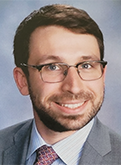
Nathan L’Etoile graduated in 2016 with a degree in biology from Saint Joseph’s University, where he developed a deepening curiosity about microbiology. He received his medical degree from the Sidney Kimmel Medical College at Thomas Jefferson University, where he served on the committee overseeing the transition to a new curriculum at the medical college. Dr. L’Etoile was inspired by the culture of learning he found while teaching in infectious diseases, and he carried that spirit into his residency at CHOP, educating junior residents and medical students about infectious disease. A rewarding part of his job is educating fellow clinicians and students on infection prevention, expansion of access to vaccines, and the recognition and management of vaccine-preventable illnesses. Dr. L’Etoile has given lectures and small group lessons to undergraduate students, medical students, pediatrics residents, and residents at the Hospital of the University of Pennsylvania. He has been recognized with the Senior Resident Teaching Award and the Willilam Potash Fellow Teacher of the Year Award by the Children’s Hospital of Philadelphia. Learning from and educating his peers has been one of the chief joys of his medical career.
Special Dean’s Award
The Special Dean’s Award was established in 1990 to recognize outstanding achievements in medical education by faculty members—particularly in the creation of new and innovative educational programs. The senior vice dean for medical education, Suzanne Rose, in consultation with the Teaching Awards Selection Committee, selects faculty who have made unique contributions and demonstrated exceptional support and innovative planning across all educational programs.
Dr. Rose is proud to present this award to the inaugural Undergraduate Medical Education Leadership Team (UMELT) in recognition of their resilience, innovative spirit, and exceptional support of Perelman School of Medicine students during COVID and other challenging times.
 DaCarla Albright is the associate dean for student affairs and wellness and a professor of clinical obstetrics and gynecology at the Perelman School of Medicine. As an undergraduate at Washington University in St. Louis, Dr. Albright completed a dual degree in biology and French, then completed a master’s degree in French there. Dr. Albright received her medical degree from the University of Michigan Medical School, followed by a residency in obstetrics and gynecology at Sinai Hospital of Baltimore. She has been a practicing academic obstetrician and gynecologist for nearly 25 years. As a member of the American Congress of Obstetricians and Gynecologists and the Association of Professors of Gynecology and Obstetrics, her academic interests are strongly focused on medical education, formerly serving as the associate clerkship director for the core clinical ob/gyn clerkship at the Perelman School of Medicine. In 2019, before her appointment in Penn’s division of student affairs, Dr. Albright was appointed to serve as its assistant dean for wellness. As a result of her excellence in teaching and her empathetic approach to medical care, Dr. Albright was awarded a Perelman School of Medicine Penn Pearls Teaching Award in 2017 and a Gold Humanism Honor Society Faculty induction in 2018. She was a 2021 AOA Honor Society faculty inductee and became a fellow of the College of Physicians of Philadelphia the same year. Dr. Albright has been recognized annually since 2018 as a Philadelphia Top Doc and as one of Castle Connolly’s Exceptional Women in Medicine. Dr. Albright currently serves as a member of the department of ob/gyn faculty and resident wellness committees, and is passionate about physician wellness and professional development.
 Nadia Bennett is an associate professor of clinical medicine and an academic hospitalist at the Hospital of the University of Pennsylvania and Penn Presbyterian Medical Center. She also serves as the associate dean of the clinical and health systems sciences curriculum at the Perelman School of Medicine. Dr. Bennett earned her undergraduate degree from Johns Hopkins University and her medical degree from the University of Maryland, and then completed her residency in internal medicine at Duke University Medical Center. Her academic focus is undergraduate medical education, with particular interests in curriculum development, health systems sciences, clinical reasoning, and bedside teaching. From 2013 to 2019, she served as the internal medicine clerkship director before assuming her current leadership role. She also serves as director of the clerkship practicum and associate director of the Introduction to Health Systems Sciences course. She has won numerous teaching awards during her tenure at Penn, including the Provost’s Award, Penn Pearls Award, Blockley-Osler Teaching Award, and Maurice Attie teaching award. She has also been inducted into AOA, the PSOM Minority Hall of Fame, and the Gold Humanism Honor Society.
 Anna Delaney is the chief operating officer of undergraduate medical education and holds a BS in psychology from Saint Joseph’s University and an MBA from West Chester University. With over two decades of experience in academic operations, Ms. Delaney oversees human resources, facilities, and financial management for the Academic Programs Office. She has played a key role in major institutional initiatives, including curriculum reform, implementation of digital learning platforms, and the development of simulation and standardized patient programs. Previously, Ms. Delaney served as chief administrative officer and director of the curriculum office, where she led scheduling, educational support, and strategic initiatives that improved the efficiency and consistency of medical education delivery.
 Horace DeLisser is a professor of medicine in the pulmonary, allergy and critical care division of the department of medicine and the Perelman School of Medicine’s associate dean for community engagement, networking, and enrichment. He has been deeply involved for a number of years in advancing medical student, resident, fellow and faculty presence and opportunity at Penn. Additionally, he has developed and overseen the professionalism and humanism curriculum in PSOM.
In these roles, he has implemented innovative approaches for the teaching of relational medicine, social medicine, and the medical humanities as well as for promoting a community of excellence at Penn.
 C. Jessica Dine is an associate professor in the division of pulmonary, allergy, and critical care and associate dean of assessment, evaluation, and medical education research at the Perelman School of Medicine. Dr. Dine’s clinical focus is on consultative pulmonary medicine. Her education role focuses on learner assessment and evaluation, faculty evaluation, and program evaluation across the medical education continuum.
Dr. Dine received her medical training at Perelman School of Medicine and subsequently completed her residency, chief residency, and pulmonary fellowship at the Hospital of the University of Pennsylvania. She received a master of health policy research during her fellowship training.
 Dennis Dlugos is a professor of neurology and pediatrics in the Perelman School of Medicine; associate dean for the science and discovery curriculum at PSOM; and director of the epilepsy program at Children’s Hospital of Philadelphia. He received his MD from Columbia University’s Vagelos College of Physicians and Surgeons in New York. He went on to complete his internship in pediatrics at the National Naval Medical Center in Bethesda, Maryland; a residency in neurology/child neurology at the University of Pennsylvania Medical Center and CHOP; and his fellowship in epilepsy at CHOP. Dr. Dlugos is an international leader in translational epilepsy therapeutics, a field that has progressed due to advances in neurogenetics, neuropharmacology, neurophysiology, neuroimmunology, and clinical trial design, and he uses this cutting-edge experience when designing curricula and teaching at PSOM. Articles authored or co-authored by Dr. Dlugos have been published in Neurology, Annals of Neurology, Lancet Neurology, Epilepsia, Lancet, Nature, the New England Journal of Medicine, and other journals. Dr. Dlugos has received NIH and other research funding since 2001 and has helped train more than 30 pediatric epilepsy fellows. He has lectured extensively throughout the U.S., Europe, South America, and Asia.
 Jennifer Kogan graduated summa cum laude with a BA in psychology from the University of Michigan in 1991, where she was inducted into Phi Beta Kappa. She graduated from Penn’s School of Medicine in 1995. She then completed her internship and residency in internal medicine and a general internal medicine clinician-educator fellowship at Penn. She remained at Penn as a faculty member and became a professor of medicine in 2016. Dr. Kogan serves as the senior associate dean for undergraduate medical education in the Perelman School of Medicine. In this role, she helps oversee all aspects of the undergraduate medical education program, including curriculum and assessment. Her prior roles at Penn have included clerkship director of the internal medicine clerkship, director of undergraduate medical education in the department of medicine, assistant dean of faculty development, and associate dean of student success and professional development. She is the founder and director of the Measey Medical Education Fellowship at Penn and founder and director of the PSOM medical education area of concentration, and she founded and directed the Perelman School of Medicine’s primary care pathway program. Dr. Kogan is a general internist who sees patients and preceptor students in her office. Dr. Kogan’s research is focused on assessment in medical education, particularly feedback, competency assessment, and developing and assessing the effectiveness of new approaches for faculty development in workplace-based assessment. She is a national leader in medical education; she previously served as president of Clerkship Directors in Internal Medicine (CDIM) and served on the board of directors of the Alliance of Academic Internal Medicine. She collaborated for more than 10 years with the Accreditation Council for Graduate Medical Education (ACGME), conducting research focused on rater training faculty development, and has regularly taught in the ACGME’s assessment course for residency and fellowship program directors. She is also a mentor with the National Board of Medical Examiners SEEF Fellowship Program and is on the research advisory board of Intealth. Dr. Kogan was a recipient of the Lindback Award for Distinguished Teaching in 2017 and was inducted into the Penn Gold Humanism Honor Society in 2022.
 Jon Morris is the Ernest F. Rosato–William Maul Measey Professor of Surgical Education and vice chair of education in the department of surgery at the Perelman School of Medicine. A graduate of Saint Joseph’s University (summa cum laude, 1979) and Georgetown University School of Medicine (1983), Dr. Morris completed his surgical training at Case Western Reserve University and a research fellowship at Johns Hopkins Medical Center. Dr. Morris has dedicated his career to surgical education, serving as program director of the general surgery residency at the Hospital of the University of Pennsylvania (2003–2018) and as associate dean for student affairs at the Perelman School of Medicine (2005–2020). A past president of the Association of Program Directors in Surgery, he is also a ten-time Philadelphia Magazine “Top Doc” and the recipient of numerous awards for teaching excellence, including the Lindback Award, the Blockley-Osler Award, and the Dripps Memorial Award. In recognition of his enduring impact, the department of surgery established the Jon B. Morris Faculty Teaching Award in 2021. He currently serves as director of the Center for Surgical Health, continuing his commitment to mentorship, equity, and clinical education.
 The late Judy A. Shea was a member of the division of general internal medicine and the department of medicine and was associate dean for assessment and medical education research in the Perelman School of Medicine. Dr. Shea earned a BS in psychology from Kearney State College, an MS in family and human development from Utah State University, and a PhD in human development and family studies from Pennsylvania State University. She went on to build a distinguished career at Penn Medicine, where she ultimately became the Leon Hess Professor of Medicine in the division of general internal medicine. Dr. Shea received numerous prestigious honors throughout her career. At Penn, she was awarded the Special Dean’s Award (2007), the FOCUS Award for the Advancement of Women in Medicine (2009), the Arthur K. Asbury Outstanding Faculty Mentor Award (2018), and the Christian R. and Mary F. Lindback Award for Distinguished Teaching (2020). Nationally, she was recognized with the Society of General Internal Medicine Career Achievement in Medical Education Award (2011), the Hubbard Award from the National Board of Medical Examiners (2011), the AAMC NEGEA Distinguished Educator Award (2016), and the AAMC Merrell Flair Award (2018). Throughout her career, Dr. Shea was deeply committed to mentoring faculty and fellows in designing and executing impactful research projects. Her work focused on psychometric evaluation tools and the development of measures assessing aspects of health, including health literacy, patient satisfaction, and quality of life. She was widely regarded as the Perelman School of Medicine’s expert in quantitative survey research and qualitative methods, including focus groups and interviews. Her contributions were instrumental in Penn’s leadership in medical education research.
 Neha Vapiwala earned her undergraduate degree with a double major in biology and Hispanic studies from Johns Hopkins University, then taught high school science and algebra for a year before coming to the Perelman School of Medicine as a 21st Century Scholar. She completed her residency training at Penn, serving as chief resident before joining the faculty. Dr. Vapiwala is currently the Eli Glatstein Professor in Radiation Oncology and vice chair of education in the department of radiation oncology, and associate dean of admissions at the Perelman School of Medicine. She specializes in the management of patients with genitourinary (GU) cancers, serving as the department’s first chief of GU oncology. Her research interests focus on biological and technological improvements in radiation therapy, and she has led multiple prospective clinical trials. Dr. Vapiwala also holds leadership positions in multiple societies and committees, including the NCI Prostate Cancer Task Force, the JAMA Oncology editorial board, and the ECOG-ACRIN cooperative trial group. Dr. Vapiwala is also president-elect of the American Society for Radiation Oncology and an elected member of the nominating committee of the American Society of Clinical Oncology. In addition to her work in GU oncology, Dr. Vapiwala is a recognized leader in undergraduate and graduate medical education. She previously served as president of the Association of Directors of Radiation Oncology Programs and as chair of the Accreditation Council for Graduate Medical Education’s Residency Review Committee for Radiation Oncology.
The Michael P. Nusbaum Graduate Student Mentoring Award
 The Michael P. Nusbaum Graduate Student Mentoring Award was established in 2017 to honor Dr. Nusbaum as he stepped down from his role as associate dean for graduate education and director of biomedical graduate studies.
This year’s recipient of the Michael P. Nusbaum Graduate Student Mentoring Award is Akiva S. Cohen, a professor of anesthesiology and critical care medicine. Dr. Cohen serves on the academic review committee, which is the primary body that advises first- and second-year students, helps students find the best courses for their schedules, and assists them in finding the perfect lab to begin their research. Many students turn to Dr. Cohen for advice and mentorship. In addition, his enthusiasm and commitment to his research trainees and his holistic approach to mentee success set his mentorship apart. His approach and philosophy align with the mentoring values of BGS that Dr. Nusbaum established during his time as director.
The Jane M. Glick Graduate Student Teaching Award
 The Jane M. Glick Graduate Student Teaching Award was established in 2009 by the Glick family in remembrance of Jane Glick and her dedication to the biomedical graduate studies (BGS) programs.
This year’s recipient of the Jane M. Glick Graduate Student Teaching Award is Kurt Engleka, an adjunct assistant professor of cell and developmental biology.
Dr. Engleka’s leadership role and persistent efforts in the design and delivery of the foundational BGS core course, BIOM 6000 Cell Biology, has made the course one of the best-designed courses in the BGS curriculum. His efforts to not only deliver this content in a way that prepares graduate students for their research careers, but also to incorporate the concepts of rigor, reproducibility and experimental design, set the stage for success for BGS students taking this course. His dedication to these efforts exemplifies the type of scientist/educator that Jane Glick represented.