News

Michael D. Barber: CEO of Penn Medicine Lancaster General Health

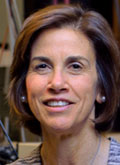
caption: Michael D. BarberMichael D. Barber has been named the chief executive officer of Penn Medicine Lancaster General Health (LG Health), after assuming the role of interim CEO last year. He became LG Health’s chief operating officer in 2023 following a 27-year tenure on the senior leadership team at Penn Medicine’s Chester County Hospital (CCH).

“Throughout Michael’s long career at Penn Medicine, he has distinguished himself as a skillful consensus-builder who drives operational excellence and successful execution of important organizational change,” said Michele Volpe, COO of the University of Pennsylvania Health System (UPHS). “In an era of transformative change for health care, he brings both the strategic vision and operational expertise to ensure that LG Health continues to lead and care for the Lancaster County community long into the future.”

Mr. Barber will lead LG Health’s facilities, which include Lancaster General Hospital and Women & Babies Hospital, the Downtown and Suburban outpatient pavilions, an array of additional outpatient and urgent care services, and a network of more than 500 primary and specialty care physicians operating across more than 40 offices in Lancaster, Lebanon, and Chester counties. LG Health has become an epicenter for advanced care through its integration with other Penn Medicine facilities, offering the most cutting-edge treatments—including proton therapy and CAR T cell therapy for cancer at the Ann B. Barshinger Cancer Institute—to patients close to home.

“Among Michael’s greatest leadership strengths is his ability to bring people together around a common purpose and shared goals,” said UPHS CEO Kevin B. Mahoney. “He is well-respected for his steady, thoughtful leadership and approachable nature. As a receptive listener, and through his engagement with community and business leaders, he is strengthening partnerships to continue LG Health’s longtime commitment to improve the health and well-being of people in Lancaster County and beyond.”

Previously, as CCH’s Chief Operating Officer, Mr. Barber led the largest expansion in the hospital’s history, a $290 million patient tower that included nearly 100 new private rooms and expanded surgical and cardiovascular services. He was also instrumental in developing CCH’s 72-bed Lasko Tower, enhancing the hospital’s cardiology, maternity and orthopaedic services.

Mr. Barber began his Penn Medicine career as CCH’s Senior Vice President of Human Resources, where he made important contributions to employee support and the implementation of a new patient care delivery model.

Mr. Barber holds a master of health administration from Saint Joseph’s University and a bachelor of science in business administration from Virginia Commonwealth University. He is a board member of the Pennsylvania Chamber of Business and Industry and of the Economic Development Company of Lancaster County. He also serves on the boards of Lancaster Behavioral Health Hospital and Lancaster Rehabilitation Hospital.

Ribbon-Cutting Ceremony for Newly Renovated Stuart Weitzman Hall

caption: Weitzman School dean Fritz Steiner, alumnus and donor Stuart Weitzman, W’63, and Penn President J. Larry Jameson at the February 5, 2026 ribbon-cutting for Stuart Weitzman Hall.

At a ribbon-cutting ceremony on February 5, the Penn community gathered in the Gordon Gallery of the newly reopened Stuart Weitzman Hall, surrounded by photographs that celebrate the building’s 134-year history and make up the Building Stories: Time and Change at Weitzman Hall exhibition.

“It’s like you can touch time in here,” said Weitzman School of Design Dean Fritz Steiner of Penn’s historic campus, in his opening remarks.

Weitzman Hall is a nearly 40,000-square-foot space that serves as an interdisciplinary hub for research and teaching in the Weitzman School, while also serving as the headquarters for the department of fine arts. The adaptive reuse project, which is targeting a LEED Platinum certification and was completed in 17 months, includes flexible spaces on the first and fourth floors, 2,700 square feet of exhibition space, a creative space, and fine arts studios.

The exhibit follows an evolution of the building that has seen it operate as everything from a children’s orphanage to a physics laboratory.

“Our lives are deeply enriched by the buildings and landscapes created by previous generations; in their variety of sizes, styles, and uses, they add a wonderful texture to our world,” said Dean Steiner, referring to architects’, landscape architects’, and preservationists’ inherent, optimistic instinct to invest in the future. “They remind us that people who designed and occupied them had their own dreams of a greater future.”

Originally designed by Philadelphia architects Cope and Stewardson, the building was renovated, redesigned, and executed in a collaboration between KieranTimberlake, PORT Urbanism, preservationist Dominique Hawkins, and Penn’s Division of Facilities and Real Estate Services.

“Weitzman Hall is a microcosm of what design education should be,” said Stephen Kieran, a lead architect on the project alongside James Timberlake, both of whom are Weitzman alumni and faculty members. “What we are celebrating today is a living, breathing, mixing bowl—a neighborhood of artists, landscape architects, urban planners, preservationists, architects, faculty, and most importantly, research centers.

“In an increasingly virtual world, we in this profession believe that space still matters—perhaps now more than ever.”

Mr. Kieran described the new space as “in equal measure old and new,” highlighting the two buildings that have been joined together: one (original) entrance inviting guests through the historic building on 34th Street, and another through the new addition along Smith Walk that makes the space more accessible to curious passersby—many from the nearby School of Engineering and Applied Science.

“Together, each entry, one old and one new, welcomes us into the story that continues to be written,” Mr. Kieran added. “Thank you for the opportunity to give this building of enduring value back to the place where we began our architectural journey.”

Penn President J. Larry Jameson remarked that celebrations of new buildings are not only about looking back in the past, but “focusing very much on the future.”

He also highlighted how Weitzman Hall works in tandem with other recently opened, interdisciplinary Penn buildings like Amy Gutmann Hall, the Vagelos Laboratory for Energy Science and Technology, and Tangen Hall.

“As I see the campus getting transformed with each of the buildings I mentioned, I can see the kinds of work that goes on in these buildings changing: the entrepreneurship that happens in Tangen Hall, the collaboration that happens in Amy Gutmann Hall and the Vagelos Lab, and that’s also going to happen here,” President Jameson said. “I’m so excited about the faculty and students in the Weitzman School of Design, who will undoubtedly work differently than they ever have before, and in ways we can’t even predict now.”

The ceremony closed with remarks from donor and fashion designer Stuart Weitzman, the school’s namesake, who lit up with excitement about the space’s transformation and acknowledged the “phenomenal job” of all involved.

The legacy of Weitzman Hall’s adaptive reuse lives on this semester with Mr. Kieran’s and Mr. Timberlake’s graduate architecture studio, Architecture of Renewal, in which they are teaching about the process of adaptive reuse and asking students to identify their own historic structure in Philadelphia to redevelop.

Architects and enthusiasts interested in an in-depth documentation of Weitzman Hall’s adaptive reuse journey, including interviews with those involved in the project, can read more at the Weitzman School of Design website.

Adapted from a Penn Today article by Brandon Baker, February 9, 2026.

New Requirements for Engaging Independent Contractors and Service Providers

On February 23, 2026, Penn will implement changes to its policies and processes related to the procurement of services from independent contractors. While many of these updates primarily affect administrators, it is imperative that worker classification and contracting be completed, approved, and fully executed before any services begin.

This requirement applies not only to individuals engaged as independent contractors, but also when engaging consulting companies and students (whether paid as employees, hourly workers, or in other service-providing roles).

Why This Matters  

If an individual begins work before worker classification and contracting are completed and approved—or if they are classified incorrectly—it can create serious issues for both the individual and the University.

Potential Risks of Noncompliance

For the individual performing services (including students):

  • They may be paid in a way that violates visa, residency, work authorization, or student employment eligibility requirements.
  • Their ability to legally work, study, or remain in the country could be negatively impacted.
  • Their payment may be delayed while the issue is corrected.

At a minimum, these risks can negatively affect the individual’s experience and willingness to work with the University in the future.

For the University:

  • Penn could face significant tax, labor, employment, or immigration law violations or sanctions.
  • Failure to comply may result in financial penalties, repayment obligations, or required corrective actions. Monetary penalties/obligations will be the responsibility of the department in which the violation occurred.  
  • Noncompliance may lead to heightened government scrutiny of the University and its programs, as well as reputational harm.

Bottom Line

To protect both the individual providing services (including students and independent contractors) and the University, worker classification and contracting must be completed and approved before any services begin.

—Penn Procurement Services

Deaths

Aaron Katcher, Oral Medicine in PDM and Psychiatry in PSOM

Aaron H. Katcher, M’56, INT’63, a emeritus associate professor of oral medicine and behavioral science in Penn Dental Medicine and of psychiatry in the School of Medicine, died on January 6 in Cedar Hill, Texas. He was 94. 

Dr. Katcher earned his medical degree from Penn’s School of Medicine in 1956. The next year, he joined the school’s faculty as an assistant instructor of psychiatry. In 1963, after completing his residency and internship at Penn, he was promoted to instructor, and two years later, he joined the tenure track as an associate professor. In 1968, he also joined the faculty of Penn’s School of Dental Medicine, as an assistant professor of oral medicine and behavioral science. He later became an associate professor in both schools and also taught in the School of Arts & Sciences. While at Penn, Dr. Katcher served as a member of the Penn chapter of the American Association of University Professors, and, in 1986, won the Human of the Year award of the American Pet Product Manufacturers Association. Dr. Katcher retired from Penn at the end of 1991. 

To Report A Death

Almanac appreciates being informed of the deaths of current and former faculty and staff members, students and other members of the University community. Email almanac@upenn.edu.

Governance

From the Faculty Senate Office: Faculty Senate Executive Committee Agenda

The following agenda is published in accordance with the Faculty Senate Rules. Any member of the standing faculty may attend SEC meetings and observe. Questions may be directed to Patrick Walsh, executive assistant in the Senate Office, either by telephone at (215) 898-6943 or by email at senate@pobox.upenn.edu.

Faculty Senate Executive Committee Agenda
Wednesday, February 25, 2026
3-5 p.m. ET

  1. Financial Update and Budget Planning
    Discussion with Mark Dingfield, Executive Vice President, and Trevor Lewis, Vice President for Budget Planning & Analysis and Interim Vice President for Finance & Treasurer

  2. Update from the Division of Public Safety
    Discussion with Kathleen Shields Anderson, Vice President for the Division of Public Safety

  3. Finalize the Minutes of December 10, 2025, and January 28, 2026

  4. Report from the Tri-Chairs

  5. Reports from Constituencies

  6. Internal Discussion

  7. New Business

From the Office of the Secretary: Agenda of the University Council

Wednesday, February 18, 2026
Hall of Flags, Houston Hall
4–6 p.m.

  1. Welcome.
  2. Approval of the minutes of January 21, 2026.
  3. Follow up comments or questions on Status Reports.
  4. Focus Issue: Penn Libraries: Advancing Faculty and Student Success.
  5. Focus Issue: Faculty Perspectives on Artificial Intelligence in Teaching and Research.
  6. Responses to New Business topics raised at the January 21, 2026, University Council meeting.
  7. Announcement of Open Forum.
  8. New Business.
  9. Adjournment.

Honors

Dominique Malone Boni: E. Barrett Prettyman Fellow

caption: Dominique BoniDominique Malone Boni, L’26, has been selected as an E. Barrett Prettyman Fellow, a criminal defense fellowship administered by Georgetown Law. She is the first Penn Carey Law graduate to receive the Prettyman Fellowship since 2016.

Established in 1960, the competitive program annually awards two-year fellowships to three recent law school graduates focused on providing high-quality representation to adults and adolescents accused of crimes. Fellows also receive rigorous training in criminal trial advocacy and clinical teaching.

“One of the greatest honors I’ve experienced is being an advocate that someone can count on during one of the most traumatic times of their lives—someone in their corner when every other actor in the system seeks to dehumanize them,” said Ms. Boni. “Being a Prettyman Fellow allows me to not only serve those facing incarceration, but to give back to communities that helped me get here by teaching the next generation of advocates and engaging in the best possible training to be the advocate my future clients deserve.”

During the first year of the program, fellows engage in intense criminal law, evidence, and trial practice classes, which culminates in representing clients in local courts in Washington, D.C. In year two, fellows continue to maintain caseloads while working as a clinic supervisor in one of three of Georgetown Law’s clinics—the Criminal Defense & Prisoner Advocacy Clinic, Criminal Justice Clinic, and Juvenile Justice Clinic—where they also teach and mentor law students. After the program, fellows are awarded an LLM degree in advocacy. 

Nader Engheta and Karen Winey: National Academy of Engineering

caption: Nader Enghetacaption: Karen WineyTwo Penn Engineering faculty members have been elected to the National Academy of Engineering (NAE), one of the highest professional honors accorded to engineers, bringing the total Penn Engineering NAE faculty membership to 16. Nader Engheta, the H. Nedwill Ramsey Professor of Electrical and Systems Engineering, and Karen Winey, the Harold Pender Professor of Chemical and Biomolecular Engineering and of Materials Science and Engineering, join a distinguished group of 130 new members and 28 international members who comprise the NAE Class of 2026.

Dr. Engheta, known for pioneering work in metamaterials and photonics, has been elected for “contributions to the development of metamaterials and their applications.” The Engheta Group is focused on the physics and engineering of fields and waves and the various features and characteristics of wave-matter interaction in metamaterials and metasurfaces.

Dr. Winey, a leading researcher in polymer-based nanostructured materials, has been elected for “contributions to understanding and advancing polymer nanocomposites and ion-containing polymers.” The Winey Group employs a variety of experimental and computational tools to probe the structural and physical properties of advanced polymers, with current interests that focus on nanoparticle and polymer dynamics in electrochemical devices.

The 2026 class brings the total U.S. membership to 2,534 and the number of international members to 356. NAE membership recognizes individuals who have made outstanding contributions to engineering research, practice or education, including significant contributions to the engineering literature. It also honors those who have pioneered new and developing fields of technology, made major advancements in traditional engineering fields, or implemented innovative approaches to engineering education.

Celine Finley: Linda Leibowitz School Counselor Scholarship

caption: Celine FinleyPenn GSE student Celine Finley has been chosen as the first-ever recipient of Penn GSE’s Linda Leibowitz School Counselor Scholarship, an honor she calls both “exciting” and deeply motivating. Named in honor of a 22-year School District of Philadelphia counselor and longtime co-director of GSE’s school and mental health counseling program, the $3,500 one-year scholarship is awarded to an outstanding student in that program who is doing an internship in a Philadelphia public school.

In her internship at Benjamin Franklin High School’s Education Opportunity Program (ELP), Ms. Finley supports adults returning to finish their high school degrees. But now she has received support for her own academic journey.

“I was so excited to be chosen because I feel like I closely align with the ideal candidate as someone who has a passion for school counseling and education,” said Ms. Finley.

Ms. Finley’s internship at Benjamin Franklin High School is part of her graduate studies in Penn GSE’s executive-format school and mental health counseling MSEd program. Because the students she counsels are older than typical high schoolers, their needs can extend far beyond academics.

Many students, she said, need access to food, housing, or social services. “We’re not just trying to make sure you get your diploma,” said Ms. Finley. “We want to make sure you’re set up for success.” As she approaches her May graduation, Ms. Finley says her program’s clinical training has shaped her into a more reflective, adaptable practitioner. 

Her goal after graduation is to secure a permanent school counseling position in Philadelphia—possibly in an elementary setting—where she can continue the work she loves. Ms. Finley is grateful for the Leibowitz scholarship helping to fund her final year of graduate school while she works, and she hopes that the recipients who come after her will be similarly supported so they can continue to serve the local community.  

“I’m hoping that the scholarship creates opportunity for future counselors to pursue their passion without feeling like there’s a financial barrier,” said Ms. Finley. “I think the SMHC program breeds a lot of great counselors, and maybe the scholarship will help inspire us to keep counselors in Philly.”

Penn: Top Producer of 2025-2026 U.S. Student Fulbright Recipients

The University of Pennsylvania has been recognized as a Top Producing Institution by the Fulbright U.S. Student Program, one of the colleges and universities with the highest number of awardees for 2025-2026. Last year, 19 Penn students and alumni were offered Fulbright grants to 16 countries.

The Fulbright Program, founded in 1946, is the U.S. government’s flagship international educational exchange program, awarding grants to fund as long as 12 months of international experience. The U.S. Student Fulbright offers graduating seniors, graduate students, and recent alumni the opportunity to pursue graduate study, conduct research, or teach English.

“For decades, the Fulbright has transformed the lives and careers of Penn students, helping them expand their horizons around the globe,” said Jane Morris, executive director of the Center for Undergraduate Research and Fellowships (CURF). “The Fulbright U.S. Student Program fosters mutual understanding and builds connections across international borders and is an exceptional opportunity for students to continue to grow.”

Most 2025-2026 Penn-affiliated recipients applied for the Fulbright with support from CURF. The list of Penn students and alumni who have been offered Fulbright awards for the 2026-2027 academic year will be announced later this year.

Penn Nursing: #1 in NIH Funding

With $17.9 million in awards from the National Institutes of Health (NIH), Penn Nursing re-takes the lead for research funding for the 2025 government fiscal year among U.S.  schools of nursing.

“Being ranked first in NIH funding among all schools of nursing underscores the vital role our faculty have in improving health,” said Antonia M. Villarruel, the Margaret Bond Simon Dean of Penn Nursing. “From exploring the complexities of opioid behavior to leveraging telehealth, our faculty and students are turning rigorous discovery into practical, clinical applications. This achievement belongs to our entire community, whose dedication ensures that Penn Nursing remains at the forefront of clinical excellence and transformative research.”

Penn Nursing’s research portfolio covers a broad range of topics, including:

  • Examining the role of central amylin receptor in opioid mediated behaviors
  • Using telehealth for PrEP deployment through community partnerships
  • Examining photo biomodulation therapy in head and neck cancer survivors with chronic lymphedema
  • Studying differences in hospital nursing resources as drivers of patient outcome disparities 
  • Examining an AI enabled fall prevention intervention
  • The study of digital HIV interventions for at-risk youth

“This recognition is a testament to the creativity and dedication of our faculty, trainees, and staff,” said George Demiris, associate dean for research and innovation. “Penn Nursing leads with a people-centered research enterprise that transforms discovery into real-world solutions for today’s most pressing health challenges.”

Weitzman School Faculty: 2025 Architectural Awards

At the annual Innovation Conference in New York City in October 2025, architect and Weitzman School lecturer Tom Phifer was celebrated as the inaugural Architect of Record for a lifetime of achievement in the profession and exceptional work published in Architectural Record magazine. At the same event, Neri&Hu Design and Research Office and Weiss/Manfredi were recognized by the editors of the magazine for some of the best recent projects—built and unbuilt—across 14 categories.

Neri&Hu, the firm co-founded by Rossana Hu, the Miller Professor and chair of architecture in the Weitzman School, was honored in the “Unbuilt (Firm)” category for Shanfeng Les Roches School, a multi-purpose cultural quarter anchored by a vocational institution founded in collaboration with the Swiss hospitality academic of the same name. Located on the eastern tip of Chongming Island, which is across the Yangtze River from Shanghai, the project includes 205,000 square feet for a diverse program that features a black box theater, an art center, a bookstore, retail and restaurant spaces, and a guest faculty dormitory and hotel. The school is currently under construction.

“Neri&Hu’s submission pushes ideas to an extreme to provoke and advance our collective dialogue about contemporary architecture,” said DS+R Partner Benjamin Gilmartin.

Weiss/Manfredi, the firm led by Marion Weiss, the Graham Professor of Practice, and Michael Manfredi, earned an honorable mention for the Schwartz Reisman Innovation Campus in Toronto. Located at a critical juncture between the University of Toronto’s campus, the historic legislature grounds, and the city’s growing Discovery District, this 13-story building establishes a new gateway to Queen’s Park along University Avenue and frames the heart of the university’s campus.

“I’m up here today standing on the shoulders of others,” said Mr. Phifer when accepting the Architect of Record award at the October event. “I absolutely love being an architect. I love working with clients and consultants. And I love nothing more than working with my remarkable team—these are the folks that make it happen.”

Jonibek Muhsinov: Gates Cambridge Scholarship

caption: Jonibek MuhsinovPenn senior Jonibek Muhsinov has been awarded a Gates Cambridge Scholarship to pursue a PhD in psychiatry at the University of Cambridge in England.

From Key West, Florida, Mr. Muhsinov is majoring in biochemistry and biophysics in the College of Arts & Sciences. He is submatriculating to also receive his master’s degree in bioengineering from the School of Engineering and Applied Science.

Mr. Muhsinov is one of 26 Gates Cambridge Scholars chosen this year from the United States. This year, 76 recipients will be chosen as new scholars worldwide. The scholarship covers the full cost of studying at Cambridge for as long as four years, as well as additional discretionary funding.

At Cambridge, Mr. Muhsinov plans to study psychiatry with a focus on translational autism research. At Penn, he has worked in the Fuccillo Lab, investigating the anatomy of striatal interneurons and their role in value-based decision-making. He has been a math teaching assistant, chemistry learning assistant, and Weingarten Center tutor, and is a Vagelos Molecular Life Sciences Scholar.

Mr. Muhsinov also serves as a co-director of the student-run Bridge to Math at Penn, leading a summer program and year-round study halls and events to support freshman students’ transition to college. He is a residential advisor in Harnwell College House and participates in the Penn student chapter of Special Needs Undergraduate Swim Lessons. He also continues to serve as chair of Keys Tutoring, a tutoring program he founded while in high school.

Mr. Muhsinov is Penn’s 36th Gates Cambridge Scholar since the program’s first class in 2001. Founded in 2000 with a donation to University of Cambridge by the Gates Foundation, the scholarship’s mission is to “build a global network of future leaders committed to improving the lives of others.” More information about the Gates Cambridge Scholarship is available from Penn’s Center for Undergraduate Research and Fellowships.

Features

Unearthing Memories of Global Solidarity: An Exhibit by the Center for Advanced Research in Global Communication

caption: Still from “A Non-Coincidental Mirror” (2024) by Carmen Amengual. Courtesy of the artist.

In the theater at Public Trust, just blocks from the Center for Advanced Research in Global Communication (CARGC) at the Annenberg School for Communication, an audience watched a meditation on the 1973 Third World Filmmakers Meeting in Algiers. Onscreen, filmmaker Carmen Amengual rifled through her mother’s archives, reading letters about her involvement in the Meeting—an effort to build solidarity between Asian, African, and Latin American filmmakers and define how cinema fits into the political struggle of the so-called Third World.

Ms. Amengual’s film, A Non-Coincidental Mirror, is one of several multimedia works included in CARGC’s recent exhibition at Public Trust. Entitled Non-Aligned Visions, the exhibit is a collection of contemporary artistic explorations of 1960s and 1970s transnational movements inspired by the Non-Aligned Movement, an alliance across the Global South aimed to facilitate equality across political, economic, and cultural arenas.

“The artists featured in this exhibit use forgotten archives as living resources for contemporary political imagination,” said co-curator Sima Kokotović, a postdoctoral fellow at CARGC who studies the Non-Aligned Movement’s media initiatives. “By reminding us of the work that decolonial movements did to build a more equitable world, the artwork in the exhibit provides a sense of hope that we can build new movements and make greater progress now.”

Works in the exhibit not only explore the Third World Filmmakers Meeting, but also the Organization of Petroleum Exporting Countries (OPEC), the first oil alliance between oil-producing countries of the Global South; the formation of the United Arab Republic in 1958 and the Pan-Arabist philosophy of Egyptian president Gamal Abdel Nasser; and the intertwined anti-colonial struggles of India and Africa under Portuguese rule.

Presented in partnership with the Visible Evidence conference and Penn’s department of cinema & media studies, Non-Aligned Visions features four films: Ms. Amengual’s A Non-Coincidental Mirror, Essa Grayeb’s The Return of Osiris, Suneil Sanzgiri’s Two Refusals (Would We Recognize Ourselves Unbroken?) and Sanaz Sohrabi’s An Incomplete Calendar, along with archival materials.

Over two nights, Ms. Amengual, Mr. Grayeb, Mr. Sanzgiri, and Ms. Sohrabi screened and discussed their work with Dr. Kokotović and co-curator Eszter Zimanyi, CARGC’s research director.

At the exhibit’s opening, Mr. Grayeb screened a clip of his film that reconstructs President Nasser’s 1967 resignation speech through meticulous editing of Egyptian films and television series produced between 1976 and 2016. This speech marked the symbolic collapse of Pan-Arabism for many people, he noted, and the work questions how defeat and resilience can coexist in memory. Mr. Grayeb spoke about how seeing Nasser’s portrait on walls in Arab homes, both in films and in reality, was a constant of his youth and a part of what inspired him to explore Pan-Arabism and its visual artifacts.

While showing clips of his film, Suneil Sanzgiri spoke of his time investigating his family’s legacy of resistance in Goa, India—learning about his father’s youth in a Portuguese school in Goa, his grandmother’s legacy of freedom fighting, and becoming enamored with the story of Sita Valles, a political activist who was born in Angola to Goan parents. His film Two Refusals (Would We Recognize Ourselves Unbroken?) explores the intertwined anti-colonial struggles of Goa, Mozambique, Angola, and Guinea-Bissau, all former Portuguese colonies, through the story of a woman haunted by Adamastor, a storm cloud titan from Portuguese mythology.

After showing her film, Ms. Amengual spoke of the lengths filmmakers went to organize the 1973 Third World Filmmakers Meeting in Algiers and the 1974 meeting in Buenos Aires. Her work not only explores her mother’s archives, but also seeks to reconstruct an unfinished documentary once envisioned by the Meetings’ organizers, she said.

At a separate screening, artist-scholar Sanaz Sohrabi shared her feature-length film-in-progress, An Incomplete Calendar, which explores the formation of the Organization of Petroleum Exporting Countries (OPEC) in 1960. Ms. Sohrabi draws on archival material like promotional films, newsreels, and even a choral record produced by OPEC to chart how diverse cultures were connected through the desire to have oil sovereignty. She discussed traveling to the Central University of Venezuela to speak with former members of the university’s concert choir who performed on the 1980 record, Rhymes and Songs for OPEC, a multilanguage musical representation of OPEC’s member states.

Drs. Kokotović and Zimanyi were moved by the reactions the exhibit prompted—how the exhibit not only connected artistic projects across borders, but also encouraged visitors to consider how these transnational solidarities have shaped the world we live in.

“The exhibit doesn’t just document what happened; it insists on what remains possible,” said Dr. Zimanyi. “If the twentieth century’s decolonial movements sought to build a more equitable world, these films remind us that the work of creating that world remains unfinished.”

Adapted from an Annenberg School for Communication article by Hailey Reissman, February 5, 2026.

caption: Still from “An Incomplete Calendar” (2025) by Sanaz Sohrabi. Courtesy of the artist.

Events

Energy Week at Penn

Energy Week at Penn, an annual event that encompasses five days of energy-focused events across campus, will take place from February 23-27, 2026. It is hosted by the Kleinman Center for Energy Policy and the Vagelos Institute for Energy Science and Technology. The event lineup explores topics such as AI and data centers, clean energy finance, labor impacts of the energy transition, and more. 

For the full 2026 event schedule, visit https://energyweek.upenn.edu/.

Morris Arboretum & Gardens Celebrates 45 Years of the Annual Moonlight & Roses Gala

Morris Arboretum & Gardens will hold its annual Moonlight & Roses gala on Friday, June 5, 2026, at 5:30 p.m. The event provides a beautiful forum in which to recognize excellence and leadership in environmental stewardship. This year’s honorees are longtime member Ellen Nalle Hass and Bartlett Tree Experts.

The gala, held on the arboretum’s stunning grounds, directly supports the arboretum’s work as a renowned public garden and as a center for plant science research and educational programming for all ages. The honorary chairs of the 2026 event are Cameron and John Soroko. 

VIP tickets for the 2026 gala are available now, and formal invitations will be mailed in April. If you are interested in sponsoring the event, please contact Kristen Casalenuovo at kcasal@upenn.edu. For more information and to purchase tickets, visit MorrisArboretumGala.org.

Update: February AT PENN

Conferences

20        (Un)Making the (Abyssal) Womb: A Symposium Centering Afro-Latinas’ Roles in Culture, Inheritance, and the “Monstrous” Gestation of Worlds Otherwise; will feature rich discussions that culminate in a critical dialogue about the future yet to be born and Afro-Latina women’s role in its labor; 9 a.m.-8 p.m.; room 543, Williams Hall; register: https://www.unmakingtheabyssalwomb.com/ (Anthropology, English, Philosophy, Africana Studies, Penn Global, Spanish & Portuguese, Wolf Humanities Center, CLALS).

            Penn Intellectual Property Group Annual Symposium: Critical Orbit: Regulating the Next Generation of Space Technology; panels will address how intellectual property strategy, regulatory oversight, and governance considerations influence the development, financing, and deployment of emerging space technologies; all day; Michael Fitts Auditorium, Golkin Hall; register: https://tinyurl.com/pipg-conf-feb-20 (Penn Intellectual Property Group).

22        Ancient Judaism Regional Seminar; a graduate-student-led forum that fosters relationships between graduate students and faculty working on topics broadly related to the study of ancient Jews and Judaism; 9 a.m.-5 p.m.; classrooms L1 and L2, Penn Museum (Katz Center for Advanced Judaic Studies, Religious Studies, Classical Studies).


Films

24        King Coal: Power Reels, Energy on Film; depicts the journey of a coal miner’s daughter, exploring Appalachia’s dreams and myths, untangling the pain and beauty; 4 p.m.; room 114, Claire Fagin Hall (Energy Week at Penn, Kleinman Center for Energy Policy, Cinema & Media Studies).


Fitness & Learning

18        Black History Head Wrap Workshop; a Black History Month Head Wrap Workshop featuring music, food, and hands-on head wrap tutorials; come celebrate culture, creativity, and community together; noon-1:30 p.m.; room 108, ARCH (La Casa Latina, Makuu: The Black Culture Center).

19        Cafecito Con Casa Latina; a space for conversation, curiosity, and communidad; noon; suite G12, 3601 Locust Walk (La Casa Latina).

            ACK Arranging Night; a cappella arrangers are invited to a collaborative arranging night; bring an arrangement you’re proud of to show off, or bring one you’re working on to get advice and feedback; 6 p.m.; Griski Room, Houston Hall (Platt Performing Arts House).

25        Penn Dental Medicine Career Fair 2026; allows students and residents to seek opportunities and explore options as they look to develop their future career goals; 11:30 a.m.-1 p.m.; Schattner Atrium and Pavilion, Penn Dental Medicine; more info on vendors: https://www.dental.upenn.edu/news-events/events/career-fair-2026/ (Penn Dental Medicine).


African American Resource Center

Info: https://aarc.upenn.edu/events.

18        AI & the Dream: Technology in Service of Humanity; 6 p.m.; Zoom webinar.


Center for Undergraduate Research & Fellowships

Various locations. Info: https://curf.upenn.edu/events.

17        Durham University: Postgraduate Study in the U.K. Information Session; learn about how to receive a master’s or PhD in the U.K., including the differences in the U.S. vs. U.K. higher education systems, the postgraduate application processes, funding opportunities, life in the U.K., Durham-specific programs, and requirements for all interested students; noon; room G08/09, College Hall.

20        Grant-Writing Workshop; learn how you can better position yourself to be a competitive applicant for the College Alumni Society Research Grant, Holtz Fund, Barthmaier Award, or one of the many other grants available; 3 p.m.; room G08/09, College Hall.

24        Research Careers Outside Academia; panel event where students can hear from professionals who have applied their research training to careers outside of academia; 5 p.m.; Zoom webinar.


Morris Arboretum & Gardens

In-person events at Morris Arboretum & Gardens. Info: https://www.morrisarboretum.org/see-do/events-calendar.

20        Community Weeds; a participatory workshop on practical approaches for controlling invasive plants, planting for resilience, and adapting to change; 1-4 p.m.; fee: $40/general, $35/members.


Penn Libraries

Various locations. Info: https://www.library.upenn.edu/events.

24        Ask Us About Podcasting; learn about podcasting and the resources available through the Vitale Media Lab at Penn Libraries; noon-2 p.m.; the ARCH.

            Reimagining Illumination: Make Your Own Paper Circuit; create a mini holographic light-up constellation shadow boxes based on artwork from a Netherlandish astronomy book from Penn’s collection; 2 p.m.; room 623, Van Pelt Library.


Music

21        Penn Masala Presents the 30th Year Anniversary Show; a celebration of 30 years of Desi A Capella and the continued legacy of Penn Masala’s music; in their biggest show of the year, Masala is debuting their newest mixes as well as featuring throwback fan-favorites; 5 p.m.; Irvine Auditorium; tickets: $11-$14 (Platt Performing Arts House).


On Stage

19        Penn Glee Club Presents: Around the World (in Eight Glee Days); follows four friends as they make an unwitting journey around the world, visiting Rome, South Africa, Japan, and more; on their quest to return home, they encounter fierce battles, scary storms, stunning nature, and above all: beautiful music; 8 p.m.; Iron Gate Theater; tickets: $8-$15 (Platt Performing Arts House). Also February 20, 7 p.m.; February 21, 6 p.m.

20        iNtuitons Presents: Oedipus Tyrranos; a classic Greek tragedy originally written by Sophocles that follows the story of Oedipus, the King of Thebes, and his tragic fate in the effort to avoid fate; 8 p.m.; lobby, Platt Performing Arts House; tickets: $5-$8 (Platt Performing Arts House). Also February 21, 2 and 6 p.m.


Readings & Signings

19        North: The Future of Post-Climate America; Jesse M. Keenan, Tulane University; noon; Perry World House and online webinar; register: https://tinyurl.com/keenan-reading-feb-19 (Perry World House).

            Morir Sonyando (Die Dreaming): Play Excerpt Reading & Discussion; reading of an excerpt of the work by award-winning playwright Erlina Ortiz, followed by a discussion with the creative team; 5 p.m.; lobby, Platt Performing Arts House; register: https://tinyurl.com/ortiz-reading-feb-19 (Gender, Sexuality & Women’s Studies).


Kelly Writers House

In-person events at Kelly Writers House. Info: https://writing.upenn.edu/wh/calendar/0226.php.

18        A Conversation; Wendy Ruderman, Philadelphia Inquirer and Philadelphia Daily News; noon.

24        Piers Plowman Performed; Tekla Bude, Michael Calabrese, and Emily Steiner, English; 5:30 p.m.


Special Events

18        Chinese New Year Open House; celebrate Chinese New Year with CEAS and Penn Chinese Language & Culture Club and learn about upcoming events and opportunities; try your hand at making your own mooncakes and do some paper cutting; enjoy musical instruments, calligraphy lessons, and food and tea; 1:30-5 p.m.; room 642, Williams Hall (Center for East Asian Studies).


Talks

17        “Maintaining” the World Order: Architecture and the Labor of Liberal Internationalism; Olga Touloumi, Bard College; noon; Plaza Gallery, Meyerson Hall (Architecture).

            Higher Geometric Class Field Theory and Moduli Spaces of Zero Cycles; Nick Rozenblyum, University of Toronto; 3:30 p.m.; room 4C6, DRL (Mathematics).

18        Using Partial Identification to Enhance Epidemiologic Studies; Elizabeth Diemer, PSOM; 9 a.m.; room 11-102, 3600 Civic Center Boulevard, and Zoom webinar; join: https://pennmedicine.zoom.us/j/98976330974 (Biostatistics, Epidemiology & Informatics).

            Animals and Emergency Preparedness; Lisa Murphy and Cynthia Otto, Penn Vet; noon; Zoom webinar; register: https://tinyurl.com/murphy-otto-feb-18 (Penn Vet).

            Towards Discrete Diffusion Models for Language and Image Generation; Sanjay Shakkottai, University of Texas at Austin; noon; room 414, Gutmann Hall, and Zoom webinar; join: https://upenn.zoom.us/j/95008740148 (AI-enabled Systems: Safe, Explainable, and Trustworthy).

            Meeting the Wolf at the Gate: Teaching Lawyering Skills in the Age of AI; Stephanie Davidson, Willamette University; 3 p.m.; Zoo webinar; register: https://tinyurl.com/davidson-talk-feb-18 (Penn Carey Law Biddle Speaker Series).

            Harnessing Biological Asymmetry: Engineered Protein Sensors for Scalable Isomer Analysis; Simon d’Oelsnitz, Harvard Medical School; 3:30 p.m.; Wu & Chen Auditorium, Levine Hall (Chemical & Biomolecular Engineering).

            Stochastic Protection and Soliton Teleportation; Xiaoming Mao, University of Michigan; 3:30 p.m.; room 2N3, DRL (Physics & Astronomy).

            There is Room; Lap Chi Kwong and Alison Von Glinow, architects; 6:30 p.m.; Plaza Gallery, Meyerson Hall (Architecture).

19        Special Briefing on Addressing the Housing Crisis: Innovative Solutions from Across America; William Glasgall, Volcker Alliance; Susan Wachter, Wharton School; Hannah Blitzer, S&P Global Ratings; Eric Goldywn, New York University; Laurie Goodman, The Urban Institute; Paul Steenhausen, California Legislative Analyst’s Office; 11 a.m.; online webinar; register: https://tinyurl.com/iur-panel-feb-19 (Penn Institute for Urban Research).

            Policing, the Vulnerable Community, and the Doorman Fallacy in the City of Philadelphia; Jerry Ratcliffe, criminology; noon; room 403, McNeil Building (Criminology).

            Rapid Evolution in a Changing World: Linking Plant Traits to Ecosystem Carbon Cycling; Thomas Mozdzer, Bryn Mawr College; noon; room 109, Leidy Laboratory, and Zoom webinar; join: https://tinyurl.com/mozdzer-talk-feb-19 (Biology).

            Transformers Meet In-Context Learning: A Universal Approximation Theory; Yuxin Chen, statistics & data science and electrical & systems engineering; noon; room 414, Gutmann Hall (Penn AI, IDEAS Center; Statistics & Data Science).

            The Economics of Language; Valerio Capraro, Middlesex University London; 1 p.m.; Zoom webinar; register: https://tinyurl.com/capraro-talk-feb-19 (Center for Social Norms and Behavioral Dynamics).

            Decolonizing Afghanistan: Countering Imperial Knowledge and Power; Paula Chakravartty, New York University; Nivi Manchanda, Queen Mary, University of London; Wazhmah Osman, Temple University; Hosai Qasmi, Hosa Counselling and Research; Marya Hannun, University of Exeter; Robert Crews, Stanford University; and Sabauon Nasseri, Beloit College; 3 p.m.; Zoom webinar; register: https://tinyurl.com/middle-east-center-talk-feb-19 (Middle East Center).

            Living Biolectrics: Polymer Materials Enabling Adaptive Neural Interfaces and Electroceutical Therapies; Rylie Green, Imperial College London; 3:30 p.m.; Berger Auditorium, Skirkanich Hall (Bioengineering).

            In the Ruins: Writing the Catastrophe: Trauma and Responsibility Across the Generations; Karim Mattar, University of Colorado at Boulder; 4:30 p.m.; room 623, Williams Hall (Comparative Literature & Literary Theory).

            Reading the Corpus: Metaliterary Inversions in Martial’s “Epigrams”; Johanna Kaiser, classical studies; 4:45 p.m.; room 402, Cohen Hall (Classical Studies).

20        On the Spatial Determinants of Educational Access; Margaux Luflade, economics; noon; room 202, 3700 Walnut Street (Graduate School of Education).

23        Epistemology/Ontology; Emily Ng, Katherine Moore, and Andrew Carruthers, anthropology; noon; room 345, Penn Museum (Anthropology).

            LifexCode: Digital Humanities Against Enclosure: Exploring the Ecosystem at Work; Jessica Marie Johnson and Nadejda Jahi Webb, Price Lab for Digital Humanities; noon; room 623, Williams Hall (Price Lab for Digital Humanities).

            Powering the Future: Energy Storage, Conversion and Fuel Production; Deep Jariwala, electrical & systems engineering and mechanical engineering & applied mechanics; Anthony Shoji Hall, materials science & engineering; Aleksandra Vojvodic, chemical & biomolecular engineering; 1 p.m.; Wu & Chen Auditorium, Levine Hall; register: https://pennengdean.wufoo.com/forms/sct8gq80amg7ck/ (Energy Week At Penn).

            Structure-Preserving Parametric Finite Element Methods for Geometric PDEs and Applications; Weizhu Bao, National University of Singapore; 4 p.m.; room 4C6, DRL (Mathematics).

            Polar Erratics; Hester Blum, Washington University in St. Louis; 5:15 p.m.; Class of 1978 Orrery Pavilion, Van Pelt Library (Workshop in the History of Material Texts).

            Fake Literature as a Cultural Problem: The Cases of the “Tolstoy Prophecy of WWI” and “False Stalin”; Ilya Vinitsky, Princeton University; 5:30 p.m.; room 209, College Hall (Russian & East European Studies).

24        Property Optimization for High Temperature Aerospace Materials; Elizabeth J. Opila, University of Virginia; 10:15 a.m.; Wu & Chen Auditorium, Levine Hall (Mechanical Engineering & Applied Mechanics).

            Penn on the Frontlines: Lessons from Trauma Care on the Ukraine Battlefront; Col. Jennifer M. Gurney, chief of Joint Trauma System in the Defense Health Agency; Stephen J. Kovach, Penn Orthoplastic Limb Salvage Center; Benjamin “Kyle” Potter, orthopedic surgery; Vasyl Strilka, Ministry of Health of Ukraine; noon; Perry World House and online webinar; register: https://tinyurl.com/pwh-talk-feb-24 (Perry World House).

            Asian American Studies Today; Pawan H. Dhingra, Amherst College; Martin F. Manalansan IV, Rutgers University New Brunswick; Anita Mannur, American University; 6:30 p.m.; room 403, McNeil Building (Asian American Studies Yoonmee Chang Memorial Lecture).


Economics

Info: https://economics.sas.upenn.edu/events.

17        Liquidity in the Supply Chain: Factoring and Welfare; Bernardo de Moura, economics; noon; room 200, PCPSE.

18        Universal Pre-Kindergarten and Female Labor Force Participation; Maggie Isaacson, economics; noon; room 200, PCPSE.

            What Can Measured Beliefs Tell Us About Monetary Non-Neutrality?; Hassan Afrouzi, Columbia University; 4 p.m.; room 101, PCPSE.

24        Signaling with Plausible Deniability; Daniel Rappoport, Georgetown University; 4 p.m.; room 100, PCPSE.


GRASP Lab

Info: https://www.grasp.upenn.edu/events/.

18        Unlocking Generalist Robots with Human Data and Foundation Models; Junyao Shi, computer & information science; 3 p.m.; online webinar.


This is an update to the February AT PENN calendar, which is online now. To submit events for future AT PENN calendars or weekly updates, email almanac@upenn.edu.

Crimes

Weekly Crime Reports

Division of Public Safety
University of Pennsylvania Police Department Crime Report

About the Crime Report: Below are the Crimes Against Persons and/or Crimes Against Property from the campus report for February 2-8, 2026. The Crime Reports are available at: https://almanac.upenn.edu/sections/crimes. Prior weeks’ reports are also online. –Eds.

This summary is prepared by the Division of Public Safety (DPS) and contains all criminal incidents reported and made known to the Penn Police, including those reported to the Philadelphia Police Department (PPD) that occurred within our patrol zone, for the dates of February 2-8, 2026. The Penn Police actively patrol from Market Street to Baltimore Avenue and from 30th Street to 43rd Street in conjunction with the Philadelphia Police.

In this effort to provide you with a thorough and accurate report on public safety concerns, we hope that your increased awareness will lessen the opportunity for crime. For any concerns or suggestions regarding this report, please call DPS at (215) 898-7297. You may view the daily crime log on the DPS website.


Penn Police Patrol Zone

Market Street to Baltimore Avenue and from 30th Street to 43rd Street

Crime Category

Date

Time

Location

Description

Assault

02/02/26

7:40 PM

51 N 39th St

Patient made threats toward hospital staff


02/06/26

4:14 PM

4200 Chestnut St

Complainant reported being assaulted while walking home; unknown offender left the area

Auto Theft

02/05/26

3:00 PM

3335 Woodland Walk

Theft of a secured e-bike taken from bike rack

Bike Theft

02/06/26

5:49 PM

211 S 40th St

Theft of a secured bicycle from bike racks

Disorderly Conduct

02/06/26

8:08 AM

4001 Walnut St

Subject cited for disorderly conduct/Arrest

Fraud

02/02/26

1:06 PM

316 S 40th St

Complainant reported unauthorized transactions on credit card

Retail Theft

02/03/26

6:14 PM

4233 Chestnut St

Retail theft of alcohol


02/04/26

3:55 PM

3604 Chestnut St

Retail theft of consumable goods


02/04/26

6:48 PM

4233 Chestnut St

Retail theft of alcohol


02/04/26

1:42 AM

3744 Spruce St

Retail theft of consumable goods


02/05/26

5:10 AM

3604 Chestnut St

Retail theft of tobacco products; offender fled the area


02/05/26

10:52 AM

4233 Chestnut St

Retail theft of alcohol


02/06/26

9:38 PM

4233 Chestnut St

Retail theft of alcohol


02/06/26

1:30 PM

4233 Chestnut St

Retail theft of alcohol; offender fled the area


02/08/26

9:18 AM

3604 Chestnut St

Retail theft of tobacco products; offender fled the area

Robbery-Gun

02/07/26

7:56 AM

3800 Spruce St

Robbery by implied firearm/Arrest

Theft of Building

02/03/26

7:28 PM

3945 Chestnut St

Package theft from apartment building’s common area mail room


02/03/26

2:40 PM

2930 Chestnut St

Package theft


02/04/26

4:57 PM

2930 Chestnut St

Theft of complainant’s credit cards and money


02/04/26

8:04 PM

51 N 39th St

Theft of a phone from nurse’s station on fourth floor


02/04/26

12:08 PM

3333 Walnut St

Theft of headphones from building


02/06/26

4:22 PM

3417 Spruce St

Theft of a wallet from unattended bag in room


02/07/26

9:22 PM

3335 Woodland Walk

Theft of delivered food from lobby area

Theft from Vehicle

02/06/26

2:01 PM

3401 Spruce St

Theft of complainant’s cellphone from inside his unsecured work truck


Philadelphia Police 18th District

Schuylkill River to 49th Street & Market Street to Woodland Avenue

Below are the Crimes Against Persons from the 18th District: 2 incidents were reported for February 2-8, 2026 by the 18th District, covering the Schuylkill River to 49th Street & Market Street to Woodland Avenue.

Crime Category

Date

Time

Location

Assault

02/06/26

4:16 PM

4233 Chestnut St

Robbery/Arrest

02/07/26

8:26 AM

S 38th & Spruce Sts

The Division of Public Safety offers resources and support to the Penn community. DPS developed a few helpful risk reduction strategies outlined below. Know that it is never the fault of the person impacted (victim/survivor) by crime.

  • See something concerning? Connect with Penn Public Safety 24/7 at (215) -573-3333.
  • Worried about a friend’s or colleague’s mental or physical health? Get 24/7 connection to appropriate resources at (215) 898-HELP (4357).
  • Seeking support after experiencing a crime? Call Special Services - Support and Advocacy resources at (215) 898-4481 or email an advocate at specialservices@publicsafety.upenn.edu
  • Use the Walking Escort and Riding services available to you free of charge.
  • Take a moment to update your cellphone information for the UPennAlert Emergency Notification System
  • Download the Penn Guardian App which can help Police better find your location when you call in an emergency.
  • Access free self-empowerment and defense courses through Penn DPS.
  • Stay alert and reduce distractions; using cellphones, ear buds, etc. may limit your awareness.
  • Orient yourself to your surroundings. (Identify your location, nearby exits, etc.)
  • Keep your valuables out of sight and only carry necessary documents.

Bulletins

McCabe Fund Awards for Fiscal Year 2027: Call for Applications

The McCabe Fund Advisory Committee is calling for applications from junior faculty in the Perelman School of Medicine (PSOM) and the School of Dental Medicine for the annual Thomas B. and Jeannette E. Laws McCabe Fund Fellow and Pilot Awards. 

The McCabe Awards were established in 1969 through a gift from Thomas B. and Jeannette E. Laws McCabe to the Perelman School of Medicine. The purpose of this gift is to support junior faculty (assistant professors) who initiate fresh and innovative biomedical, clinical, and surgical research projects. This opportunity is open to clinical (CE and AC) track faculty. Tenure and research track faculty are not eligible to apply. 

Eligible faculty are those who have received either limited or no external research funding while in their first through third years on the faculty at the PSOM or the School of Dental Medicine at Penn. Junior faculty in these schools should contact their department chair for information and application forms. The guidelines and instructions to determine eligibility are also available on the PSOM website: https://www.med.upenn.edu/evdresearch/mccabe-fund.html.

The deadline for submission is Friday, May 8, 2026. The McCabe Fund Advisory Committee will select the winners at its annual meeting in June. 

Last year there were nine winners of Fellow Awards of $50,000 each: Meghan Anderson (Medicine), Eva Berlin (Radiation Oncology), Leena Chehab (Pediatrics), Daniel DePietro (Radiology), Neha Jariwala (Dermatology), Kendall Lawrence (Surgery), Sahily Reyes-Esteves (Neurology), Elizabeth Sonnenberg (Surgery), and David Tischfield (Radiology).

There were sixteen Pilot Award winners, who received $20,000 each: Seema Anandalwar (Surgery), Victor Babatunde (Radiology), Christopher Chesley (Medicine), Duy Dao (Surgery), Christine Forke (Family Medicine and Community Health), Saya Jacob (Medicine), Andrea Jones (Pediatrics), Catherine Kulick-Soper (Neurology), Ajay Kumar (Radiology), Emily Lebow (Radiation Oncology), Kimberley Lee (Medicine), Alicia Long (Large Animal Emergency & Critical Care, Penn Vet), Ghazal Quinn (Medicine), Lingshu Yin (Radiation Oncology), and Jiayin Zheng (Biostatistics & Epidemiology).

Please note that, effective this year, the McCabe Fund Award Program will offer a single award type, the McCabe Fund Award, with a fixed funding level of $50,000 per award. The previous Fellow and Pilot Award categories have been discontinued as part of programmatic updates.

Back to Top