|
Robert S. Blank, Emeritus Trustee
Albert Pepitone, Psychology
Robert S. Blank, Emeritus Trustee
Robert S. Blank, L’65, Emeritus Trustee at the University of Pennsylvania, died on April 30. He was 75 years old.
Mr. Blank was the son of two Penn graduates, noted Alzheimer’s disease fundraiser Ruth Saler Blank, Ed’37, and Pennsylvania state representative Samuel A. Blank, W’29, L’32. He earned his undergraduate degree from Cornell University, then graduated from Penn Law in 1965.
He began his career as an assistant US attorney. He was an associate in mergers & acquisitions with Goldman Sachs and an associate at Blank, Rome, Klaus & McCauley, the prominent law firm founded by his father. In 1971, he joined Whitney Communications Company, where he eventually became co-chairman and co-chief executive officer. He was also a partner of its subsidiary, Whitcom Partners.
Mr. Blank joined Penn’s Board of Trustees in 2000. He served on the Budget & Finance, Development, Student Life and Audit & Compliance Committees, as well as the Proxy Subcommittee, which he chaired from 2005 to 2009. He also served on the Penn Medicine Board, where he sat on the Executive Committee and chaired the Audit Committee. He was an emeritus member of the Board of Overseers of Penn’s Law School, where he was a member from 2002 to 2011, and a former Overseer of the Wharton School, where he also served on the Undergraduate Executive Board. The Law School presented him with its Distinguished Service Award in 2009.
He made several gifts to Penn in honor of his parents, including the Samuel A. Blank Endowed Professorship in Legal Studies at the Wharton School, the Samuel A. Blank Endowed Professorship at the Law School and the Samuel and Ruth Blank Classroom in Jon M. Huntsman Hall, a gift he and his wife, Nancy, made with their children.
Mr. Blank gave generously to Penn Law, Wharton and Penn Medicine, providing support for faculty, undergraduate and graduate financial aid and athletics. In 2013, he gave to Penn in support of a lecture program, a laboratory and a conference room in memory of Kenneth L. Kershbaum, a cardiologist at Pennsylvania Hospital.
He was also a member of the Penn Alumni Board of Directors, the Penn Alumni Council and the Parent Leadership Committee. Most recently, he served on the Steering Committee of the Making History campaign, which raised $4.3 billion.
Mr. Blank is survived by his wife, Nancy; their children, Wendy, C’98, Samuel, C’01 and Matt, C’03, L’07, WG’08; and seven grandchildren. In lieu of flowers, donations can be made to either Memorial Sloan Kettering (http://giving.mskcc.org/) or New York Presbyterian Hospital (http://www.nyp.org/giving).
|
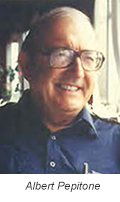
Albert Pepitone, Psychology
Albert Pepitone, professor emeritus in the department of psychology at Penn, died in suburban Philadelphia on March 17. He was 93 years old.
Dr. Pepitone’s contributions to the field of social psychology opened up areas of research that significantly broadened its scope, particularly by calling attention to cultural issues. He earned his BA from New York University and his MA from Yale, then entered the aviation psychology program of the Army Air Force, where he worked on the selection and training of personnel. After working for the Commission on Community Interrelations in New York and briefly studying at the Massachusetts Institute of Technology, he followed Leon Festinger, a social psychologist noted for cognitive dissonance and social comparison theories, to the University of Michigan, where he completed his doctoral dissertation (published in 1950) on the effects of motivation on social perception. He came to Penn in 1951, rose through the ranks and helped to maintain social psychology as an area represented in the department.
Dr. Pepitone studied a great variety of topics, including beliefs about justice and fair distributions, group cohesiveness, hostility, quantitative aspects of judgment, interpersonal attraction and the use of “nonmaterial beliefs,” such as the belief in fate, to interpret life events. When possible, he took a cross-cultural approach to these topics. His concern for issues of perceived justice and injustice extended to practical applications, such as judgments of appropriate punishment for crimes. His book, Attraction and Hostility: An Experimental Analysis of Interpersonal and Self Evaluation, was published in 1964 and re-issued as a new edition in 2006.
He also contributed to the overall discussion of the nature and purpose of social psychology. He believed human behavior to be multi-determined, and that a micro-analysis of any one facet (the psychological, the biological or the social) was terribly inadequate. He was fascinated by animal behavior and was a serious student of history, sociology and politics. Whether discussing the migratory patterns of birds or the impact of Marxism on later social movements, he was constantly making connections and bridging areas of understanding. His view of social psychology was similarly broad in scope. He saw individuals in their sociocultural worlds from this complex, multi-layered perspective. This view was his most significant contribution to the field.
His distinguished career included Fulbright research fellowships to the University of Groningen in the Netherlands and the National Institute of Psychology in Rome. He also held visiting professorships to the University of Rome, the University of Venice and the University of Bologna. He lectured in Italian and spoke several languages. He was elected president of the Society for the Psychological Study of Social Issues (1975), the Society for Cross-cultural Research (1978) and the Society for Personality and Social Psychology (1983). He retired from Penn in 1992 but remained active in research.
For many years, Dr. Pepitone and his wife, Emmy, also a social psychologist and a professor at Bryn Mawr College, opened their Ardmore home to faculty, colleagues and graduate students from Penn and Bryn Mawr for conversation on far-ranging topics.
He is survived by his three daughters, Leslie, Jessica and Andrea; and six grandchildren. |
____________
To Report A Death
Almanac appreciates being informed of the deaths of current and former faculty and staff members, students and other members of the University community. Call (215) 898-5274 or email almanac@upenn.edu
However, notices of alumni deaths should be directed to the Alumni Records Office at Room 517, Franklin Building, (215) 898-8136 or by email at record@ben.dev.upenn.edu |