|
Edward W. Brennan, Accounting
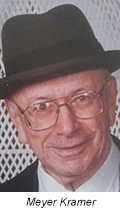
Meyer Kramer, Law School
Christopher Jones, Penn Museum
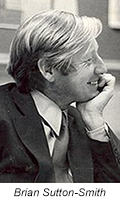
Brian Sutton-Smith, Graduate School of Education
Yotaro Kobayashi, Former Trustee
Edward W. Brennan, Accounting
Edward W. Brennan, W’48, W’66, a retired associate professor of accounting at Penn, died on August 29. He was 93 years old.
Dr. Brennan earned his AB in accounting (cum laude) from St. Francis College in Loretto, Pennsylvania in 1943. He served for three years with the US Army Air Force during World War II. He then earned his MBA in accounting from Penn in 1948, his JD from Temple University School of Law in 1952 and his PhD in finance from Penn in 1966.
Dr. Brennan joined the Penn faculty as an instructor in accounting at the Wharton School in 1948 and was promoted to assistant professor of accounting in 1956. He became an associate professor of accounting in 1971.
During his time at Penn, he served as chair of the Wharton School roster committee, as chair of the taxes committee for the University Senate from 1958-1959 and as a member of the Faculty Grievance Commission from 1976-1977. He also served as a pre-law advisor, a curriculum advisor for MBA accounting majors and business manager for the University of Pennsylvania Law Review. He took early retirement from Penn in 1987.
Dr. Brennan is survived by his wife, Elizabeth R., and his daughter, Patricia.
|
Meyer Kramer, Law School
Meyer Kramer, L’44, a former instructor at Penn Law, died on June 24 at a nursing home in Brooklyn, New York after a long battle with dementia. He was 96 years old.
Mr. Kramer was born in Russia and grew up in Centerville, Iowa. He graduated from rabbinical school at Yeshiva University in New York City in 1941, then from the University of Pennsylvania Law School in 1944.
In addition to practicing law, he was a lecturer in legal writing at Penn’s Law School for three decades.
He also served as a rabbi in Northeast Philadelphia at Adath Zion from 1951-1967, at Beth Telfilath Israel from 1967-1972 and at Bustleton-Somerton Synagogue from 1972-1975.
Mr. Kramer is survived by his son, Doniel; his daughters, Rena, CW’71, GEd ’73, Tamar and Shira; 14 grandchildren and 16 great-grandchildren.
|
Christopher Jones, Penn Museum
Christopher Jones, a Maya archaeologist and epigrapher most noted for his investigation and discovery of part of the historical record preserved in the inscriptions at the famous site of Tikal, Guatemala, died September 3 at his home in Kimberton, Pennsylvania after a long illness. He was 77.
A research associate (1973-2001) and following retirement, an active consulting scholar in the American section at the Penn Museum, Dr. Jones earned his BA at Harvard College and his MA and PhD (in anthropology, 1969) at the University of Pennsylvania. His dissertation, The Twin-Pyramid Group Pattern: A Classic Maya Architectural Assemblage at Tikal, Guatemala, was based on his four years of excavation (1962-1965) with the Museum at Tikal, under the direction of William Coe. In addition to his fieldwork there, he directed site-core excavations at Quirigua, Guatemala, another Penn Museum project (1976 and 1977).
“We are greatly saddened by the loss of Christopher Jones,” noted Julian Siggers, the Williams Director of the Penn Museum. “We are fortunate that he left behind such a large and important body of work building upon our understanding of the ancient Maya.”
At the Penn Museum, Dr. Jones was actively engaged in the ongoing research and massive publication efforts of the site of Tikal—one of the largest ancient cities in the Americas and the capital of one of the most powerful polities, or city-states, of the ancient Maya in the Classical period (AD 200-900)—where the Penn Museum conducted excavations (1956-1970). He was one of a small number of scholars who was both a fine epigrapher and a skilled excavator. At Tikal, where he succeeded in deciphering complex king lists and dates, a dynastic history from the famous city, he also illuminated the nature of the important East Plaza through his careful excavations and key publication on this research.
Although his work and publications were scholarly, Dr. Jones delighted in sharing his love and knowledge of the ancient Maya with a broader public whenever the opportunity arose. He was instrumental in the creation of the Penn Museum’s long-running annual Maya Weekend, which began in 1983 and was one of the most popular programs to bring Maya archaeology and epigraphy to the public. For many years he led tours of Maya sites in Guatemala, Belize and Mexico for the Penn Museum, Wilderness Travel and the Smithsonian Institution.
Dr. Jones is survived by his wife, Leslie; four sons, Edward K., William P. (Christina Ewig), Frederick W. (Christine Achterman-Jones) and Ashton G. (Stelia Nappi); seven grandchildren, Moses, Carson, Gabriel, Zachary, Samson, Sebastian and Quinn; his brothers, Peter H. (Hal) and Nicholas (Sue); and his sister-in-law, Suzanne.
A memorial service will be held at 11 a.m. on Sunday, October 18 in the Widener Lecture Hall at the Penn Museum. Contributions may be made in his name to the Penn Museum, 3260 South Street, Philadelphia, PA 19104, or to the Schuylkill Friends Meeting, 37 N. Whitehorse Road, Phoenixville, PA 19460.
|
Brian Sutton-Smith, Graduate School of Education
Brian Sutton-Smith, a lauded developmental psychologist and emeritus professor in the Graduate School of Education (GSE) at Penn, died on March 7 from complications of Alzheimer’s disease in a nursing home in White River Junction, Vermont. He was 90 years old.
Dr. Sutton Smith (he adopted the hyphen later in life) was born in Wellington, New Zealand. He studied education at Wellington Teachers College, then earned his bachelor’s degree and his master’s degree in educational psychology from Victoria University of Wellington. He came to the US as a Fulbright scholar in 1952 and studied at the University of California, Berkeley. He completed his doctorate in educational psychology at the University of New Zealand in 1954.
Dr. Sutton-Smith taught at Bowling Green State University in Ohio and Columbia University Teacher’s College in New York, then joined the University of Pennsylvania faculty in 1977. He became professor emeritus in 1994. He was GSE’s recipient of the Excellence in Instruction Award for 1988-1989 (Almanac September 5, 1989), given for “contributions to teaching and learning.” He was program head of interdisciplinary studies in human development at GSE, and was also professor of folklore in Penn’s School of Arts & Sciences. He taught social development and expressive development, aesthetics, play, games, narrative and children’s folklore.
He wrote three young adult novels in the 1940s, and later, approximately 50 books that included Child’s Play (with R. E. Herron, 1971), The Study of Games (with Elliott M. Avedon, 1971), How to Play With Your Children (and When Not To) (with his wife, Shirley, 1974), Toys as Culture (1986) and The Ambiguity of Play (1997).
In 2003 he received a Fulbright Senior Specialist grant to lecture and consult at the Australian Centre of the University of Melbourne and at the Museum Victoria (Almanac March 18, 2003). Dr. Sutton-Smith received lifetime achievement awards from the Association for the Study of Play, which he helped to found, and the American Folklore Society. He was a scholar in residence at the Strong Museum, a national museum of play in Rochester, New York, and his large collection of research materials on play is located there.
Dr. Sutton-Smith is survived by four daughters, Emily, Leslie, Mary and Katherine Moyer; and 10 grandchildren.
|
Yotaro Kobayashi, Former Trustee
Yotaro (Tony) Kobayashi, WG’58, a former member of the Board of Trustees at Penn, died of chronic empyema in Tokyo, Japan on September 5. He was 82 years old.
Mr. Kobayashi was born in London, England. He earned his bachelor of arts in economics at Keio University in Japan in 1956 and his master of business administration at the Wharton School of the University of Pennsylvania in 1958. Upon the completion of his studies, he returned to Japan to join the Fuji Photo Film Co. Ltd. (now Fujifilm). In 1963, he began working at Fuji Xerox, the firm’s newly launched joint venture with the American company Xerox. He rose to the position of president and chief executive officer of Fuji Xerox in 1978 at the age of 44. He was appointed chairman and CEO in 1992 and chairman of the board in 1999. He became chief corporate advisor in 2006 and retired in 2009. During his tenure, Fuji Xerox expanded its sales territory, greatly developed its product line, brought about innovations such as the first multifunction printer/copier and in 1980 received the Deming Prize, Japan’s highest quality award. Because of Mr. Kobayashi’s strong interest in balancing the needs of the company with those of individual workers and the broader community, the firm also launched Japan’s first social-service leave program and broke new ground in family care leave and parenting leave.
At Penn, he served on the Board of Trustees from 1998 to 2002 and was a member of the Honorary Degrees and Awards Committee. From 1991 to 2005, he was an Overseer of the Wharton School. In addition, he served as a member of Wharton’s Dean’s Council from 2004 to 2008 and had been a member of the Executive Board for Asia since 1991. The University also benefited from his service as president of the Wharton Club of Japan and a member of the Penn Alumni Council and the Penn Alumni Board of Directors. He was a popular speaker on campus, opened many doors for the University in Japan, generously supported the Wharton School and was a driving force behind the creation of Wharton’s US-Japan Management Studies Center. For his extraordinary dedication to Wharton, he received the Wharton Alumni Association’s highest honor, the Alumni Award for Distinguished Service, in 1989.
Mr. Kobayashi is survived by his wife, Momoyo, and his children, Kaku, Chiho and Maki. |
____________
To Report A Death
Almanac appreciates being informed of the deaths of current and former faculty and staff members, students and other members of the University community. Call (215) 898-5274 or email almanac@upenn.edu
However, notices of alumni deaths should be directed to the Alumni Records Office at Room 517, Franklin Building, (215) 898-8136 or by email at record@ben.dev.upenn.edu |

.jpg)
-deceased.jpg)