|
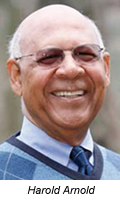
Professor Arnold, SP2
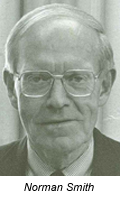
Dr. Smith, Music
Professor Arnold, SP2
Howard D. Arnold, Sr., associate professor emeritus and former associate dean in the School of Social Policy & Practice, passed away March 3 at age 79.
Born and raised in Philadelphia, Professor Arnold earned a bachelor’s of arts degree in sociology and psychology from Penn State University in 1956 and a master’s degree from the Penn’s School of Social Work in 1963.
Professor Arnold’s early career encompassed 12 years of service with the Pennsylvania Department of Public Welfare where he spearheaded innovative programming aimed at eradicating urban poverty, including “Operation Alphabet.” Similarly, he devoted his evenings to the United Neighbors Association of South Philadelphia, working directly with gang members to improve their lives. He also worked for the Philadelphia Crime Prevention Association before coming to Penn.
Professor Arnold began teaching in Penn’s School of Social Work in 1969 as a lecturer; he was appointed assistant professor in 1970 and in 1972, became their first African-American tenured professor. He served three terms as associate dean before retiring in 2000.
In addition to teaching, Professor Arnold helped establish the Du Bois College House and served as its first faculty master (1974-1977 and 1980-1981). He was also a member of the Senate Executive Committee and held numerous committee and task force roles at the University and School level, including past chair of the University’s Affirmative Action Council. He lead the Office of Affirmative Action (OAA) from 1996-1997.
Professor Arnold was a co-founder of the Black Faculty and Administrators (later known as AAA). AAA was one of the powerful voices that saw a need and helped establish the African-American Resource Center (AARC). “He was a steady, wise leader, who had a quiet, gentle yet powerful way of commanding respect, teaching, mentoring and helping others to reach their goals,” said Valerie Dorsey Allen, director of AARC.
Among his many accomplishments, Professor Arnold led the way in developing a curriculum that reflected more broadly the issues of poverty, racism and cultural differences.
Professor Arnold is survived by his, wife Gudrun; son, Howard, Jr.; daughter, Jeanne Arnold, SW’80, GRD’06, AARC’s former director and OAA former executive director; step-children, Usha and Christopher Tandon; grandchildren, Regis and Kellen Mann, Nolan Arnold and Alex, Cassandra and Kit Wheeldon; and brothers, Charles and James.
Contributions may be made to Penn Memory Center. Attn: Barbara Overholser, 3615 Chestnut St., rm. 236, Philadelphia, PA 19104. Make checks payable to Trustees of the University of Pennsylvania and write “ADC-PMC” on the memo line.
Dr. Smith, Music
Dr. Norman E. Smith, professor emeritus of music in the School of Arts & Sciences, passed away March 5 at age 82.
Dr. Smith was born in Benton, Arkansas on November 4, 1931. He earned his undergraduate degree from Hendrix College in 1953 and his doctorate in 1964 at Yale University, where he studied with William Waite and Leo Schrade. He was appointed assistant professor in the department of music at the University of Pennsylvania in the same year, remaining here until his retirement in 2000.
Noted as being a star teacher in the department of music, Dr. Smith was a recipient of the Lindback Award in 1991 (Almanac April 16, 1991). He taught his year-long survey of the history of music for non-majors in a way that gave rise to ongoing correspondence with dozens of students that sometimes lasted for decades. “The subject of their letters often was their gratitude for the treasure Dr. Smith had introduced to their lives with a level of enthusiasm that inevitably was seductive,” said Dr. Lawrence E. Bernstein, professor emeritus of music. “Among those students are some whose names we would recognize in the field: Tom Brothers, Jesse Rodin and David Rothenberg, all of whom had their initial exposure to early music in this course. Dr. Smith’s graduate courses were equally influential. His two-semester seminar on paleography achieved a legendary status. So rich were the content and underlying methodology of this course that at least one student returned to audit it for a second time years after completing her PhD.”
Dr. Smith served as director of graduate studies in the department of music from 1967-1983. “In this capacity, he shepherded doctoral students through the program and sustained the curriculum with the same meticulous care that distinguished his scholarly work,” said Dr. Bernstein. “More important though was the humane dimension he brought to this role. Many a graduate student suggested that Norman carried out his responsibilities as graduate chair in ways that made him the backbone of their sanity at a most vulnerable stage of their lives. Dr. Smith’s capacity to listen with empathy offered a model that cried out for emulation by his colleagues (even if, deep down, we all knew we couldn’t even come close to attaining his levels of achievement in this arena).”
“Few scholars anywhere could match the depth of Dr. Smith’s understanding of early polyphony,” said Dr. Bernstein. “His widely cited corpus of articles on this repertory treats its sources, notation, style, compositional process and the relationship between text and music at an extraordinary level of meticulous care. His work shed important light on the forces that gave rise to the emergence of the motet.”
A memorial is being planned and details will be published in Almanac.
Related: Memorial for President Emeritus Sheldon Hackney: March 27
|