
Pullout: Report of the Provost's Committee on Distributed Learning
DEATHS
To the University Community, on the Death of Steven
Murray
It is with deep regret and great sadness that we write to inform you of the death of Steve Murray after a long illness. Steve was a gifted colleague, but most importantly, a wonderful friend. He was completely devoted to Penn and his long and tireless efforts on behalf of the University will continue to benefit generations of students, members of the faculty and the staff. We will miss him.
Steve came to the University in 1974 as Director of Transportation and Communications. He was promoted to Director of Business Services in 1982, Associate Vice President in 1987 and Vice President for Business Services in 1992. Under his marvelous leadership and guidance, the Division of Business Services experienced continuous growth, establishing itself as an effective and innovative organization that provided high-quality service to the campus community.
No one in the University administration was more admired and respected by his colleagues. He continually demonstrated a unique ability to accept responsibility for areas in financial and organizational distress and make them successful, in spirit as well as in a fiduciary sense. That is precisely why the Division of Business Services now encompasses the University of Pennsylvania Book Store, Computer Connection, Dining Services, Housing Services, the Ice Rink, Mail Services, the Morris Arboretum, Penn's Children Center, Penntrex, PennCard Center, Publication Services, the Sheraton University City Hotel, Telecommunications, Transportation and Parking, and Voicemail. Clearly, we and so many others had an extraordinary level of confidence in him and his many and varied skills. We have all benefited from his counsel, and we came to depend on him time and again. He never, ever let us down.
His accomplishments at Penn were many. Among the most recent are the new Food Services model that will dramatically enhance our food service programs and facilities; the Residential Operations Department that will oversee the implementation of the College House Program; and the development of the University of Pennsylvania Bookstore and The Inn at Penn at Sansom Common.
Steve was a 1968 graduate of the University of New Hampshire, where he received a bachelor's degree in political science. He received a master's degree through Wharton's Executive M.B.A. program in 1982.
Our thoughts and prayers are with his wife, Barbara, and son, Craig.
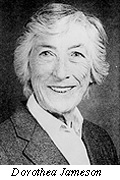 Dorothea Jameson, Pioneer in Color Perception
Dorothea Jameson, the University Professor of Psychology who was one of the world's foremost theorists of color and vision, died on April 12 at the age of 77, in New York City where she and her colleague and husband of some 50 years, Dr. Leo M. Hurvich, had lived since retirement from Penn.
A 1942 alumna of Wellesley College, Professor Jameson began work on sensory processes during her second year in college and, graduating into the World War II research environment, continued to work on perception as a research assistant at Harvard, where one of her main projects was aimed to improve the accuracy of visual rangefinders. There she met Leo Hurvich, and they began the collaboration that would take them to Eastman Kodak in Rochester, to the psychology department of NYU, 1957-62, and to their longtime academic home in Penn's department of psychology and Institute of Neurological Sciences.
Beginning as a research associate during a time when Penn had a nepotism rule, Dorothea Jameson was named full professor upon the rule's discontinuation, and in 1975 she was awarded an endowed chair as University Professor of Psychology. She also held visiting positions at Rochester and Columbia Universities.
A member of the National Academy of Sciences, she served on many of its committees and boards, chairing the psychology section in 1983-86 and the NAS-NRC Commission on Human Resources' Committee on Fellowships and Associateships in 1979-80. Among her many other professional and scholarly roles were her service on the visiting committees of MIT, Maryland, and Harvard; on the U.S. National Committee for the International Union of Psychological Science; and on the Woods Hole Oceanographic Institute Corporation Board.
Professor Jameson won the 1971 Warren Medal of the Society of Experimental Psychologists; the 1972 Distinguished Scientific Contribution Award of the American Psychological Association, and the 1973 Godlove Award for Research in Color Vision of the Inter-Society Color Council. The following year she received the Wellesley College Alumnae Achievement Award for Scientific Research. She also won the Edgar Tillyer Award of the Optical Society of America in 1982; the Deane B. Judd Award of the Association Internationale de Couleur in 1985, and the Hermann von Helmhotz Award of the Cognitive Neuroscience Institute in 1987. The State University of New York conferred upon her the honorary degree Doctor of Science in 1989.
During her career Professor Jameson published some 95 papers in her field, writing freqently with Leo Hurvich, in a collaboration that Columbia Professor David H. Krantz, who took his Ph.D. with Professors Jameson and Hurvich 35 years ago, described as "remarkable for quality, length, and equality of contribution." As they moved to Eastman Kodak in 1947 and married in 1948 to begin their pioneering and profound study of color perception, Dr. Krantz's memoir continues,
"The dominant scientific orthodoxy of that time decreed that subjective appearance could not be studied scientifically at all, and that mechanisms of color perception could not be bidirectional, since the visual responses depend merely on the count of light photons captured by each visual pigment in the retina. Jameson and Hurvich were the first to use subjective appearance of colors as a guide to rigorous, quantitative experimentation.
"In the 19th century, the physiologist Ewald Hering had emphasized the bidirectionality of color attributes: any single color might appear either reddish to some degree or greenish to some degree or neither, but never both at once, and likewise for yellowness/blueness. Jameson and Hurvich recognized that bidirectionality could be used as the basis of a measurement method. The redness of a light could be measured by the intensity of a standard green light that must be mixed with it to cancel exactly the reddish appearance; similarly, the yellowness could be measured by the intensity of a standard blue needed to cancel exactly the yellowish appearance. Using such measurements, they proceeded to construct a quantitative model, opponent-color theory, that embraced all the known facts of color vision: facts about color matching, color discrimination, contrast, adaptation and color weakness or color blindness, as well as the subjective appearance of colors. Theirs was the first truly comprehensive quantitative model. For a time it was controversial and widely misunderstood; today, bidirectional color responses have been much studied physiologically, in part because the functional importance of bidirectionality could be understood from the opponent-color theory. Despite much additional physiological information, there is still no comprehensive model with the scope of their original theory.
"The projects that she undertook independently of Leo tended to focus either on visual physiology or on modern art. On the physiological side, she paid close attention to advances in visual physiology and on their implications for perception. The discovery of bidirectional processes in fish retina led her to undertake her own studies of color vision in fish. Another main interest was the function of retinal nerve cells that integrate inputs over different-sized areas and their role in perceptual averaging of colors versus perceptual contrast. She was an art lover who also had strong intellectual interests both in the history of art and in the relationships of visual effects found in art works to the physiology of vision. To mention one example, she pointed out how the differences in area of integration between peripheral and central retina contributed to the aesthetic effects obtained by impressionist painters.
"Jameson's students, colleagues and friends will greatly miss her gentle manner, her luminous, probing intelligence, her scientific wisdom and her love for truth."
Professor Jameson's survivors, in addition to her husband, are two brothers, Robert and Richard; a sister, Marie Cooper; and her nephews and nieces.
Marvin Wolfgang, World Leader in Criminology
Dr. Marvin E. Wolfgang, the world-renowned criminologist who was professor of criminology, legal studies and law at the Wharton School, died of pancreatic cancer on April 12 at the age of 73. A member of the University for almost 50 years, starting with his enrollment as a graduate student, he was the founding director of the Sellin Criminology Center, president of the American Academy of Political and Social Science, and one of the world's most cited authors in his field.
As a pioneer of quantitative and theoretical criminology, Dr. Wolfgang defined the boundaries of the sociology of crime. In 1994, the British Journal of Criminology acknowledged Dr. Wolfgang as "the most influential criminologist in the English-speaking world." His re-search and critical commentaries appear in more than 30 books and 150 articles. Three books among his classic and most influential work:
The Measurement of Delinquency (1964), co-authored with his mentor Thorsten Sellin, is an authoritative analysis of the importance of criminal statistics and the development of scientifically precise methods by which the severity of crimes can be measured and studied. The Subculture of Violence (1968), with his noted Italian colleague and friend Franco Ferracuti, is a theoretical treatise on the causes and correlates of violent behavior, which remains-30 years after it was published-the definitive exposition of society's responsibility for breeding violent criminal behaviors. Delinquency in a Birth Cohort (1972), with Thorsten Sellin and Robert Figlio, is considered Dr. Wolfgang's greatest scholarly accomplishment. It details the juvenile careers of a group of boys born in 1945, who spent their youth in Philadelphia. His conclusion that a small number of chronic offending juveniles account for a disproportionate amount of crime has influenced legislative bodies, law reform commissions, and criminal justice policy makers around the world.
Until his death, he was engaged in a ten-year longitudinal study of juvenile delinquency in the People's Republic of China, based on his birth cohort studies in Philadelphia and San Juan.
Professor Wolfgang supervised more than 100 doctoral students, many of whom are now deans, chairs and professors at universities and institutions throughout the world.
Academics and practitioners from many disciplines acknowledged his contributions by electing him president of the American Society of Criminology and to membership in the American Philosophical Society. He was also the associate secretary general of the International Society of Criminology, a consultant to the President's Commission on Law Enforcement and Administration of Justice, a member of the U.S. Department of Health, Education and Welfare's Panel on Social Indicators, the director of research for the Presidential Commission on the Causes and Prevention of Violence, a member of the Advisory Committee on Reform of the Federal Criminal Law and a member of the National Commission on Obscenity and Pornography. A strong opponent of the death penalty, he was gratified, his family recall, that his research findings were used in the landmark U.S. Supreme Court decision in Furman v. Georgia (1972), which held that the death penalty as then applied was unconstitutional.
A recipient of two Guggenheim Fellowships and a Fulbright Scholarship, Dr. Wolfgang also received the Dennis Carrol Prize from the International Society of Criminology, the Roscoe Pound Award of the National Council on Crime and Delinquency for distinguished contribution to the field of criminal justice; the Hans von Hentig Award of the World Society of Criminology; the Edwin Sutherland Award of the American Society of Criminology; and the Beccaria Gold Medal for outstanding contribution to criminology from the German, Austrian and Swiss Society of Criminology.
He also received the honorary doctor of law degrees of the City University of New York and the Academia Mexicana de Derecho Inter-nationacional. In 1993, Dr. Wolfgang was the first recipient of an award established in his name by Guardsmark, Inc. for distinguished achievement in criminology.
Marvin E. Wolfgang was born November 14, 1924, in Millersburg, PA. After serving in the U.S. Army in Italy during World War II he took his B.A. from Dickinson College in 1948, and began his teaching career at Lebanon Valley College in Annville, PA. Meanwhile, he enrolled as a graduate student at Penn, taking his M.A. in 1950 and his Ph.D. in 1955. He joined the faculty in 1952, where he continued teaching until his recent illness, occasionally taking visiting professorships such as those of the University of Cambridge, the State University of New York at Albany, Rutgers University and Hebrew University in Jerusalem.
Dr. Wolfgang is survived by his wife, Dr. Lenora D. Wolfgang, a professor at Lehigh University; his daughters, Karen W. Swanson and Nina V. Wolfgang, two grandchildren, Kirk and Kyle Swanson; and a sister, Patricia W. Mignogna of Lynchburg, Virginia.
Susan Coslett Memorial: April 23 on the Green
Friends and colleagues are invited to gather on Thursday, April 23 at
5 p.m. to pay tribute to Graduate School of Fine Arts Assistant Dean Susan
Coslett, who passed away on March 29. The commemoration will begin on the
Green between Meyerson Hall and Van Pelt Library, where a flowering tree
will be planted in Susan's memory. A reception will follow in the Reading
Room of Fisher Fine Arts Library. All are welcome to attend and share memories
of Susan. The GSFA has established a traveling fellowship in her name. It
will be presented for the first time at the GSFA award ceremony on May 17.
The School hopes to make this fellowship an annual award which will provide
support for a student to visit gardens and landscapes, as Susan loved to
do.
Almanac, Vol. 44, No. 30, April 21, 1998
FRONT PAGE | CONTENTS | JOB-OPS | CRIMESTATS | BETWEEN ISSUES | APRIL at PENN